Being Old and Observing the Young

By James Wallace Harris, Wednesday, March 30, 2016

The older I get, the further away I get from the young. It’s not intentional on my part. They’re just leaving me behind.

When Audible.com has a sale, I buy audiobooks about unfamiliar subjects and subcultures to check out. Recently I bought I, Justine: An Analog Memoir by Justine Ezarik. Ezarik is a young woman who goes by the name iJustine, and is supposedly well known on the Internet, but completely unknown to me. Her book turned out to be well worth the $4.95 sale price, because of its many insights of growing up in a unique subculture. I love books about computer history, so this volume was more than a web celebrity’s personal story. The times, they keep a changing—I’m reading more books about people born in the 1980s, growing up in the 1990s. I think I first took note of this generation with Ernest Cline’s Ready Player One.
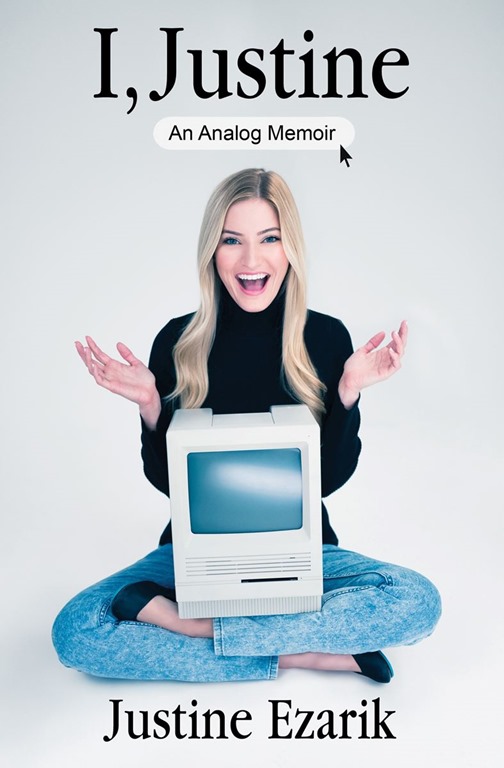
I Justine

iJustine makes her living doing what she loves. Totally geeking out on with Apple computers, gadgets and gaming, establishing a career by making her fan-girl life public, especially on YouTube. She even live-streamed herself for a while, which I found bizarre, and still spends most of her time making videos about her daily life, friends and digital life. I, Justine chronicles how she developed her internet celebrity business. iJustine, born in 1984, and now 32, is a Millennial.

iJustine is young, but not that young, because she also reports on the generation coming up behind her, which aren’t always her fans. iJustine describes a lot of nasty animosity in her world, which I occasionally encounter online. I find that very hard to understand. iJustine is an attractive young woman, who I would think guys would want to flirt with, instead some guys hate her, sending her the social media equivalents of hate mail, death threats, and even calling the police on her (swatting). There’s a lot of Gamergate type misogyny around her online world. I assume most of her time is spent having fun, being friends with nice people, and I just remember the bad stuff from her book.

I find the hateful incidents in her story disturbing, in the same way I find Donald Trump scary. iJustine herself is wholesome, polite, upbeat, and leans towards the silly side. She’s an extreme fan of Apple, working in a subculture that’s beyond my comprehension. I’m old, and only see digital life as an outsider. Reading I, Justine made me realize just how far away I am from being young. Although, my peers think I’m up-to-date because I know about computers and they don’t, being tech-savvy isn’t the whole story. I also wonder about how iJustine feels about aging. She says her target audience is preteen and teen girls. She’s half my age, and her audience is now half her age. At what age does a young woman start to appear too old to that audience? I wonder when she gets to be 64, will iJustine have trouble relating to the very young growing up in the 2020s? And can our culture keep mutating so frequently?

Since I don’t play video games, and don’t own a gaming console, that puts me on the other side of a huge generation divide. I was about to buy a new iPad so I could read my digital magazines better, but I’m now wondering if I shouldn’t buy an Xbox instead, just to see if I can get into video gaming. iJustine got her granny to play Call of Duty , and I assume she must be older than I am. I must be iJustine’s parents age. Maybe if Susan and I had had kids we’d have grown up with a succession of video gaming consoles too.

Now there’s growing excitement about VR. Virtual reality has zero appeal to me. I suppose this will put me two degrees away from the young. Or two-and-half since I’m a half-ass user of social media. I’m not quite Amish, but it seems I exist halfway between the Pennsylvania Dutch and hip hop America. What’s beyond VR life? Jacked in cyborgs?

Most of my friends live on the edge of the Internet. We all have smartphones. Most of us are now cord-cutters, watching TV off of Roku. I read ebooks and audiobooks, I listen to music via Spotify and Pandora. Half of my friends even use Facebook. We have adapted. But I, Justine showed me how far away I’m still from the digital norm. Like I said, I live on the shallow end of the net, while the young thrive in the deep end. There’s a big difference. I don’t comprehend the pithy (and often nasty) world of Twitter. And there’s a whole host of social media apps that I can’t even name, much less understand what they do.

That’s not saying I won’t catch up. Quite often subcultures become dominant. I’ve read many essays written at the dawn of the television age, resisting that change, and TV watching became universal. Yet, I can’t imagine wearing a VR headset. Will people start tuning out of reality for longer and longer periods of time? That seems no more practical than LSD back in the 1960s.

I support David Brooks notions about character and manners. All too often, iJustine reported having to deal with people who are rude and uncivilized. Is that becoming the new social norm? I’ve had to deal with some of those people blogging, and it’s stressful. I worry the more we interconnect through social media, the more we drop self-controls, letting raw emotions hang out. That can’t be good. At least not for dwelling in the Hive Mind.

I’ve had two friends my age whose bosses asked them if they had ADD. And other friends who said young coworkers would push them aside to do a task, not in an unfriendly way, just impatient to see the task finished quicker. Which makes me wonder if young people see us as moving too slow, or think we can’t comprehend. More than once I’ve been dismissed as just an old white guy. That doesn’t hurt my feelings, but it makes me wonder if there’s a cognitive gap.

By the way, my wife and women friends tell me to stop writing about my age, and hide that I’m old. My guy friends are like me, unconcerned about age. My lady friends warn me young people don’t want to read about old folks. Of course those women want to think they are still young. My wife plays video games, loves Facebook, and her and her friends are always texting and sending selfies.

There was a scene in I, Justine that was kind of sad. iJustine worshipped Steve Jobs, and the one time she got near him, Steve probably recognized her, and ran away. Maybe Steve was feeling too old to deal with a crazy young fan. I’m sure iJustine is a nice young normal woman, but her world does seems a bit hectic, sometimes mean spirited, fast changing, often silly, and way too videoized. Yet, if you just look at her videos, iJustine seems quite normal, if a bit goofy, and so maybe all the problems are with how the young communicate with each other—the snarky Tweets, the extreme expressions of emotion, the black hat hacking, doxing, swatting, phishing, misogyny, death threats, and all the endless ways they treat each other like they didn’t understand the person on the other end is a real person, and not some video game character to destroy.

JWH
The Williamson Effect–Losing Interest in Life

By James Wallace Harris, Monday, March 28, 2016

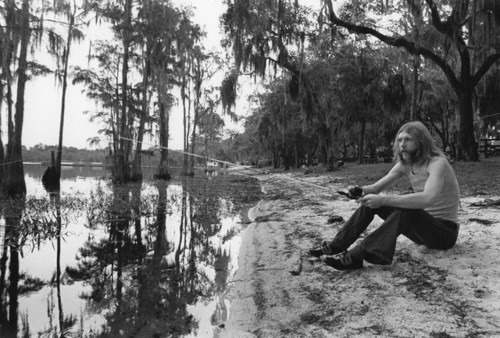
A friend of mine, before he died, called me to talk about life. His name was Williamson, and he was depressed. This was back on the first night of the Gulf War. Williamson said something then, a quarter century ago, that has always stuck with me. He said he was down to loving only two things in life. Benny Goodman and Duane Allman. I had gone to see The Allman Brothers with Williamson when Duane Allman was till alive. That was a long time ago. Williamson and I were buddies for a while in the 1970s, and we went different ways when I got a steady job.

Duane Allman Fishing 

Williamson hated working, always telling friends, “A job a good way to waste a life.” He spent his life avoiding the old nine to five, choosing to pursue endless hobbies and schemes hoping they’d pay off. They never did. I was surprised to hear from Williamson in August of 1990. The decades had changed him, and he was quite bitter. He called me a few times after that, and then disappeared. I heard later he died under mysterious circumstances.

I now worry when a friend tells me they are getting tired of things they used to love. I call it The Williamson Effect. I’m known to be a naturally happy person, even though I love to write about depressing subjects. I don’t know if I’m happy because of genes, or because I’m constantly searching out new things to love. Whenever I hear a friend suffering from The Williamson Effect I encourage them to try new things, especially music. I’m always amazed how a new artist and their music can revitalize my thinking.

I tried to convince Williamson that there was more to music than Benny Goodman and Duane Allman. He only sneered and belittled my then current favorites. Benny Goodman and Duane Allman are still on my main Spotify playlist, but so are Katy Perry and Sarah Jaffe, and I’m still living.

JWH

Fascinating Documentary About A Woman I Didn’t Know

By James Wallace Harris, Sunday, March 27, 2016

My wife called and said she wanted me to watch a documentary with her. My wife hates documentaries. I love documentaries, and always beg my wife, and lady friends, to watch them with me. They won’t. They always say, “Let’s watch TV!” but they never mean documentaries. Or westerns. Anyway, I said sure. At least it wouldn’t be a romantic comedy. I’m still glad I agreed.

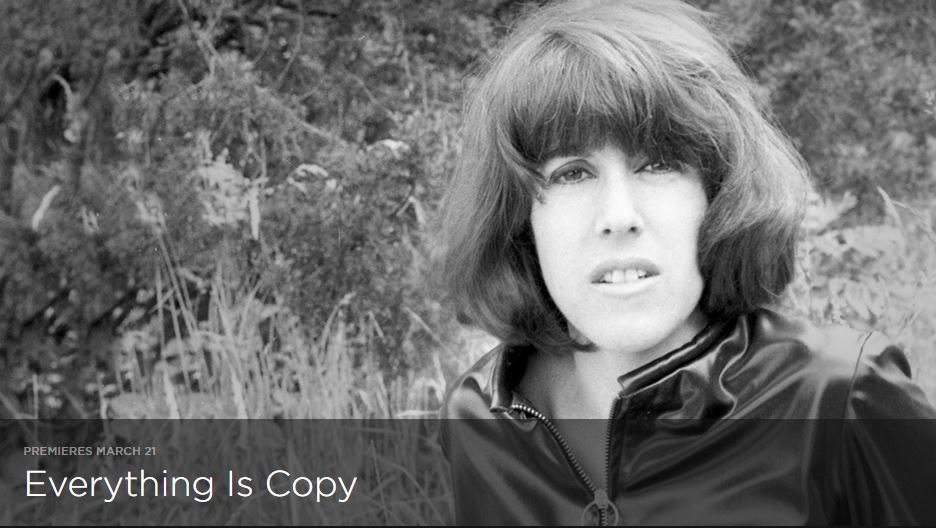
Do you know who Nora Ephron is? I didn’t. The name was oddly familiar, but I couldn’t put a face to the name, or a list of accomplishments. “Oh, you know, she did When Harry Met Sally, and Sleepless in Seattle,” why wife prompted. Uh-oh. Yeah, there’s a reason why I love documentaries. Anyway, I watched Everything is Copy, the new documentary on HBO about Nora Ephron. I was glad I did. Even though Ephron is famous for writing the kind of movies my wife watches over and over again while I do something else, her story was compelling. It turns out, Nora Ephron was an exceedingly fascinating a person. She was a writer, and one much loved by writers I love, and I love documentaries about writers, even ones I don’t read.

Nora Ephron HBO - Everything is Copy

I went to the library the next day and got two Nora Ephron books, I Remember Nothing and other Reflections and I Feel Bad About My Neck. I’ve read four essays so far, and I’m impressed. I was hoping for some of meanness that her friends talked about in the documentary. Unfortunately, no stealth barbs have shown up yet. I think I need to track down her magazine work from the 1970s, because she seems to have mellowed before she died. The show did say that.

Ephron had a long career, and for a while in the 1960s she was a journalist for the New York Post, learning the newspaper business. She was at the airport when The Beatles arrived in 1964, and broke the story about Bob Dylan getting married in 1966. Then wrote for Esquire and New York, mastering magazine writing during the legendary times in the 1970s that Tom Wolfe and Gail Sheehy wrote for them. Evidently, Ephron knew all the famous feminists back then, and wrote a column about women. Although Esquire is behind a pay wall, it does offer an audio version of “A Few Words About Breasts” from May, 1972—scroll down to see it. (I may have to subscribe to Esquire so I can read it’s back issues.)

Everything Is Copy covers Ephron’s early life, her Hollywood screenwriting parents, all her marriages, including the marriage to Carl Bernstein, her careers in New York City, her careers in Hollywood, and how she kept her fatal illness from all her many friends. Ephron’s story is mostly told by her older famous friends, or by younger famous friends reading her work, which only illustrates just how amazingly rich her life was. I’m sorry I wasn’t a fan from way back. Maybe I’ll even watch her movies, now that I have some background to understand them. (No promises, Susan.)

I don’t know if I should admit this, but I sometimes find biographies of successful women more fascinating than their work. I read three biographies of Louisa May Alcott before I read Little Women. And I’d rather read about Virginia Woolf than read her novels, even though I do admire her novels. Now that I think about it, there are male authors I’d rather read about than read. Aldous Huxley is one. Ephron was one of those writers whose life was far more exciting than her own stories, at least to me.

Anyway, this woman is going to always be famous for romantic movies that my wife loves, but I don’t. She actually deserves to be remembered for doing so much more. I’m sure most people know that. I didn’t. Sorry. I’m not knocking her movies, I’m just not her target audience. So, if you don’t like Ephron’s movies, I still highly recommend seeing Everything is Copy, especially if you’re the fan of documentaries like those on American Masters, the PBS series. And as documentaries go, it was very well written and filmed, the kind that’s intriguing even if you’re not interested in the subject itself.

JWH

A Vote for the GOP is a Vote Against the Earth

By James Wallace Harris, Friday, March 18, 2016

64% of Americans say they worry about global warming in a March 16th Gallup poll. That’s an eight year high, and up from 55% in 2015. 59% now think global warming has already begun, as oppose to 31% thinking it will happen, and 10% who think it will never happen. 41% of those polled now believe global warming is a serious threat in our lifetime, and 65% believe humans are the cause. Even Republicans are worried (40%), believing global warming has already begun (40%), will be a serious threat in our lifetime (20%) and is due to people (38%). But their worry hasn’t grown as fast as Democrats. 84% of liberals fear global warming, 77% think its begun, 58% think it’s a serious threat in our lifetime, and 85% think we’re to blame. See Gallup site for changes in opinions over time.

energy policy

With a clear majority of Americans worrying about global warming, even believing we’re the cause of our problems, you’d think we’d want to fix things before they got worse. On the same day as the Gallup poll, Business Insider published “the energy plans of the top 4 presidential candidates.” The Democrats want to save the planet, but the Republicans continue full-speed ahead to use Earth up. (Sarah Palin’s “Drill, Baby, Drill” is still their rallying cry.)

I understand why the Republicans want to ignore global warming. Trillions of dollars are in the ground and the plutocrats who own those resources don’t want to give up that wealth. But what about the rich people who own South Florida, Manhattan, or living along the coasts of our nation? Digging up one rich guy’s treasure, means sinking somebody else’s fortune.

New projections estimate between 4.3 and 13.1 million Americans could end up climate refugees before the end of the century. Miami is already sinking, even though Marco Rubio stood in his home state and blatantly made all kinds of silly denials. Was Rubio the first Republican to be victim of his party’s stance against global warming? Could he have carried Florida if he hadn’t said such asinine lies of self-interest? Who knows.

The GOP lost it’s presidential bid in 2012 because they didn’t foresee rising diversity in the U.S. They’ve spent the last four years fighting immigration and gerrymandering. Many states even tried to bar African-Americans from voting. But what if they’ve built another Maginot Line?

What if beliefs in climate change foils the GOP in 2016? Should they be thinking, “It’s the climate, stupid!” The GOP is making the choice quite clear—vote for Republicans and we’ll keep doing what we’ve always been doing.

And I could link to thousands of articles about how we’re screwing over the Earth, but I don’t think I need to. Everyone knows already, even the conservatives. You don’t need to be a liberal to know which way the wind is blowing.

JWH

The Fiction at the Bottom of Our Souls

By James Wallace Harris, Thursday, March 17, 2016

  • Can we trust who we think we are?
  • Can we assume our convictions are correct?
  • Why are we so passionately convinced our version of reality is the right one?
  • Is fiction truer than memory?
  • How does fiction consumed in childhood affect the way we perceive reality?

Of your earliest memories, which do you favor: remembered events or stories? I can dredge up some exceeding vague memories from when I was three, but lately I’ve been reading about scientists studying memory that makes me doubt what I recall. I know what I think of as actual events might not be recordings of reality, but memories of memories of memories. Every time we replay an old memory, science now thinks, we record over the original memory with the impressions of remembering that memory. (Watch “Memory Hackers” on PBS NOVA or The Brain with David Eagleman.)

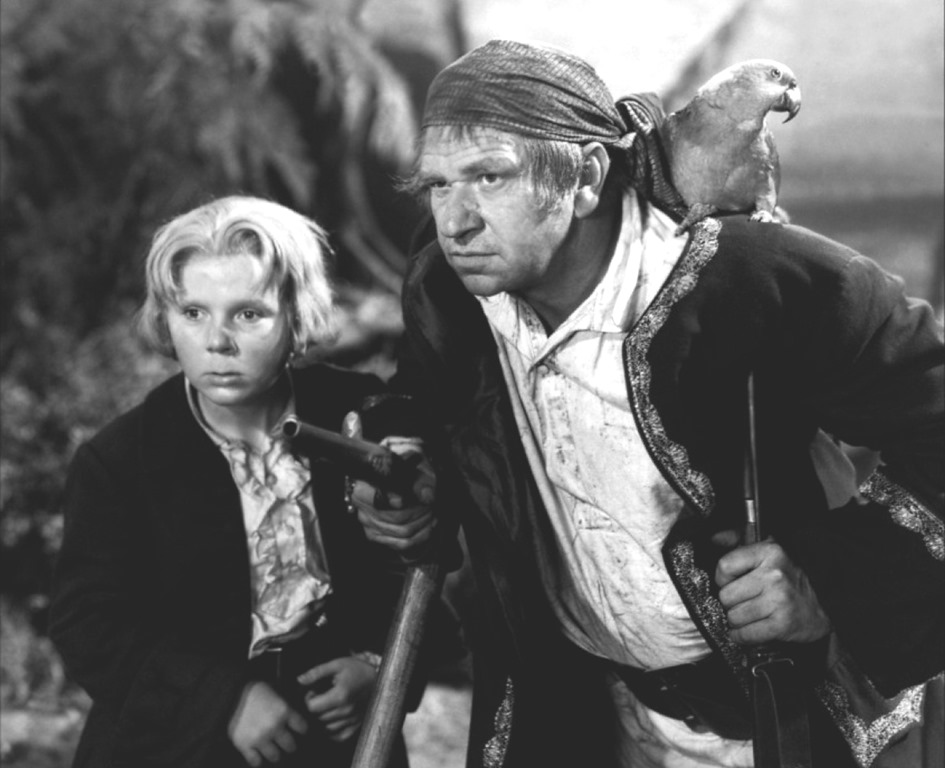
Treasure Island

There is nothing in my memory bank as vivid as the photo above.

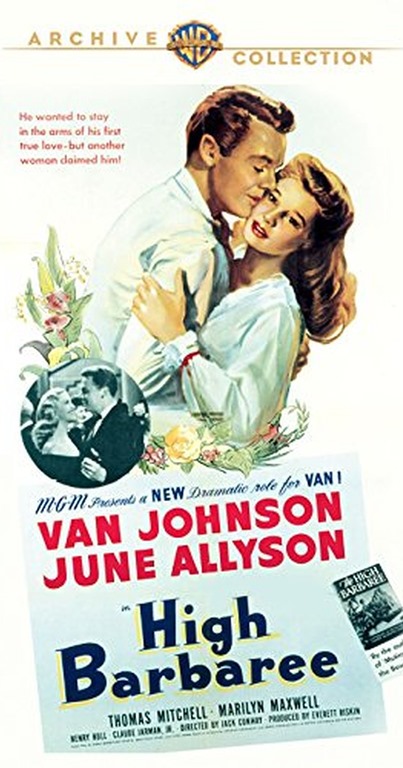
Mixed in with all my memories of reality are memories of fiction. I was born in 1951, but my earliest memories of television come from 1954-55. A few years later, are memories of seeing my first movie on TV, High Barbaree. I’m sure I saw others, but its the one I remember. My late 1950s memories are filled with black-and-white science fiction films and Johnny Weissmuller’s Tarzan flicks.  Around 1959 I encountered Treasury Island, the first book I remember reading.

I have many memories of external reality growing up in the 1950s, but I also have more memories from television. Because I’ve seen those TV shows & old movies repeatedly over the years and decades, and often reread my favorite books, those fictional memories have gain vividness, while my real life memories fade. Is it any wonder that Turner Classic Movies has become so meaningful to the social security set?

I once returned to the house I lived in when I was four. I think of age four as the beginning of my personality.  When I stood on that sidewalk in front of that house, I felt like I was at the Big Bang beginning of my existence. From 1955 till today, I have two kinds of memory. What happened in my life and what happened in stories. In terms of deciding which programmed my soul more, I’m undecided.

Robert Silverberg has a wonderful essay, “Writing Under the Influence” in the March 2016 Asimov’s Science Fiction about how a favorite fantasy story he discovered in childhood influenced two novels he wrote as an adult (Son of Man, Lord of Darkness). The story, The Three Mulla-Mulgars, by Walter de la Mare, from 1919, is one I’ve never heard of before. Folks at GoodReads gush about how delightful this forgotten fairytale is to read. I snagged a free Kindle edition from Amazon and hope to read it soon.

I highly recommend reading Silverberg’s essay. I love people’s reading histories. Unfortunately the link to read the essay online will quit working when the next issue comes out. You can get Asimov’s at your newsstand, or from Amazon as a Kindle ebook.

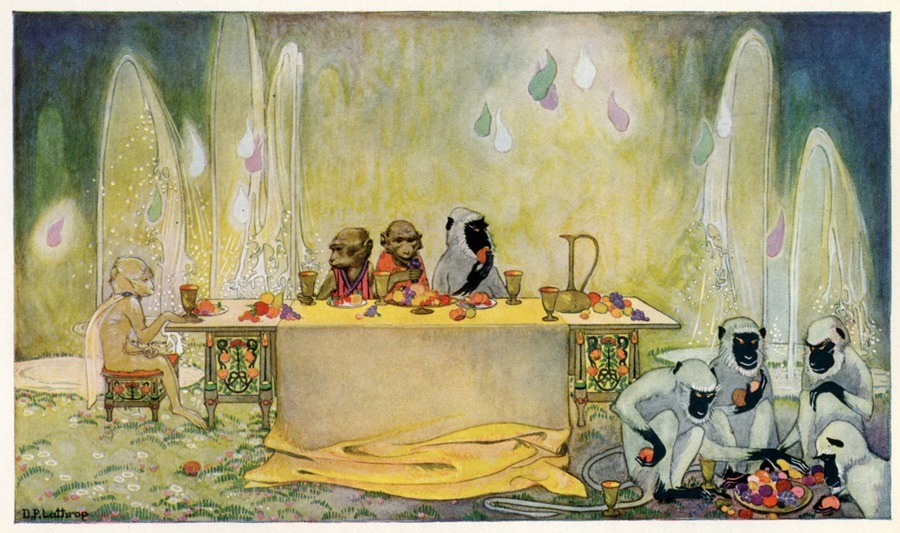
dorothy-lathrop-three-royal-monkeys

Here’s one of the original Dorothy P. Lathrop illustrations from The Three Mulla-Mulgars, from a collection of them at 50 Watts.

Partly why Silverberg’s essay resonates so deeply with me is because he describes how an earlier true-life African explorer narrative, The Strange Adventures of Andrew Battell of Leigh, in Angola and the Adjoining Regions figured in The Three Mulla-Mulgars. I’m fascinated by how stories inspire stories. Or how writers are inspired by authors from earlier generations. The memories of authors are encapsulated into their stories, and we share their memories by reading, and their memories as passed on through us. And if we write stories, using older memories from those we’ve read, those memories are rerecorded for another generation, much like brain memories, and just as distorted.

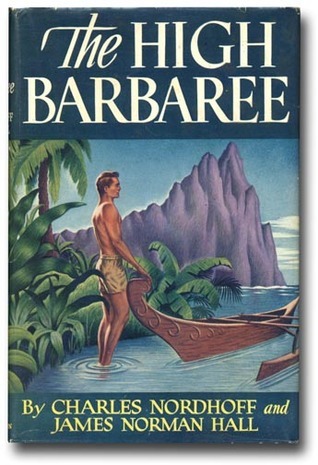
High BarbareeHigh Barbaree Movie

I’ve often fantasized about writing a story based on my memory of my first encounter with fiction. My earliest memory of seeing a movie is waking up in the middle of the night, and watching the all-night movies with my dad. This was before I went to school, and I didn’t comprehend movies, acting or fiction. All I can remember is a scene of two kids who were friends being separated, when the girl and her family moved away. Even at that young age, that had already happened to me more than once, because my father was in the Air Force. It was a strong fictional emotion bonding with my own remembered emotions.

This was when I was too young to remember the title of movies. Years later I saw the movie again, and that’s when I memorized its name, High Barbaree, with Van Johnson and June Allyson. I was in the sixth grade. I used to trust my memories from that age, but I don’t anymore. I caught High Barbaree again in my twenties, after I got married. This time it occurred to me that it might be based on a book. I wasn’t able to find the book until the internet age, and AbeBooks.com. It was then I discovered the book was written the same guys who wrote Mutiny on the Bounty, Charles Nordhoff and James Norman Hall, and they also have a fascinating history. I was also able to track down a biography of those two writers at that time too, In Search of Paradise by Paul L. Briand, Jr.

Between the original novel, and the biography, I learned High Barbaree was about memory, and a fictionalized autobiography of sorts for James Norman Hall. Hall was writing about how our souls are formed by early memory and fiction. He was remembering the writers who influenced him. His memories became my memories, and if I could ever write a novel, their memories would get passed down, along with some of mine. I guess I am a believer in the collective unconscious.

It’s now possible to buy High Barbaree on DVD, but I’m not sure I can recommend it. It’s slight, sometimes silly, and very sentimental. The book is more serious, and fits the memories I have of seeing the story as a child. Or at least, that’s how I remember it now. I know my original impressions, however vaguely they were recorded by my brain, have been lost to rewriting by all the times I’ve recalled that memory. Each time I’ve watched that film again, dwelled on those memories, reread the book, or written about all of this, I’ve recolored those deep original memories with newer philosophical musings.

I used to believe we could discover the truth of history. I used to think memories were real and trustworthy. Now I doubt the reliability of neural recordings, and any collective knowledge we have about actual history. We constantly rewrite our own memories, and we constantly rewrite history. For example, the new book by Bart Ehrman, Jesus Before the Gospels, has more than convinced me that it’s absolutely impossible to know anything about Jesus as a real person in history. Ehrman’s analysis of history and memory applies to recent historical figures as well, where we have solid documentation, like for Abraham Lincoln or Albert Einstein. All these revisiting and new recordings have written over any real history that happened.

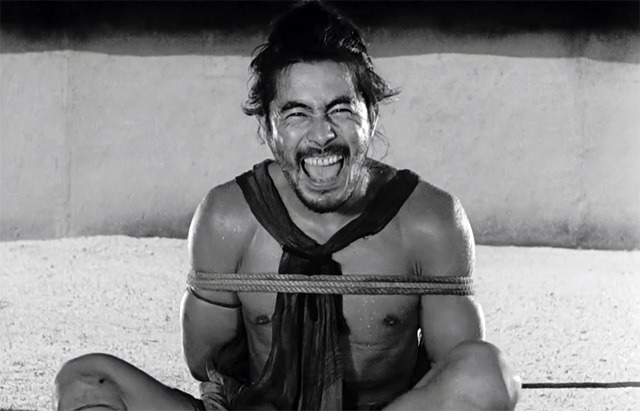
rashomon

The best nonfiction is still fiction. I’ve taken classes and workshops in creative nonfiction, and I know from experience I can’t write the absolute truth.  Memories are just stories we tell ourselves about fleeting impressions of the past poorly etched in our brains. Our minds are not DVRs. And even if they were, how often have you seen a video in the news where people argue over what actually happened? Realty was never our version of events—it’s always the Rashomon effect.  Even if we average out all the eyewitnesses, we can never definitively say what happened.

All during 2016, we hear folks wanting to be president tell stories they swear are true. And we’ll vote for the candidate whose stories match our own stories the best. All of those stories were shaped by the fiction everyone encountered growing up. Remember how Ronald Reagan used to blend movie scenes into his recollections? I used to think he was a doddering old man, but now I wonder if he wasn’t wiser than he appeared. We’re all going to look like silly old fools someday, dwelling on fleeting memories of our past, poorly remembered. But that doesn’t mean the stories we tell ourselves and others don’t have a kind of elegant logic. It won’t be the truth, but if we could only get our stories to work together, it might be true enough.

My reality is colored by stories I encountered in my early years, like High Barbaree. Just like Robert Silverberg’s reality was colored by The Three Mulla-Mulgars, which he discovered when he was young. We might think the fiction at the bottom of our souls are merely stories, but I’m not so sure anymore. Those early tales had a butterfly effect on shaping who we became. We can’t understand reality in black and white certainty. But we do make sense of our external existence by storytelling, and so we need to understand the truth of that.

JWH