Philip K. Dick–The Penultimate Truth

At the online book club Classic Science Fiction, we had a series of posts discussing whether or not a book should stand alone or if it helped readers to know about the writer and why they wrote their fiction to fully appreciate the story.  Most of the members wanted books to be completely self-contained and did not want to know about the author.  If fact, many readers worried if tales about the writer were slanderous or gossip it might unfairly color their appreciation of the story.  They were responding to my comments about Radio Free Albemuth and how I judge Philip K. Dick to be crazy.  My response was that certain writers like PKD, Proust, Fitzgerald, Kerouac, Wolfe and other autobiographical novelists almost demand knowledge of the writers to fully appreciate their work.

Let me say upfront that if you are reading just for entertainment, books have to be standalone and self-contained.  No knowledge of the author or literary history should be required.  And I do read for entertainment, but for me it’s the foundation to the house, and the real architectural design to be admired is what fiction says about reality.  I’m just not interested in one dimensional fiction.  The novelists I love the most are natural philosophers and reporters.  Now that doesn’t mean I want pontification in fiction – no, fiction is about catharsis, not messages.  To me the best philosophical stories are those where the author is invisible behind the scenes, and their characters, setting and conflicts presents the reader with a deeply emotional experience, whether tragic or comic.

I used to think that only Dick’s last novels were about his personal experiences, but after watching Philip K. Dick-The Penultimate Truth  I now think different, and realize he was always autobiographical to some degree.  Philip K. Dick is very close to Jack Kerouac in that their novels are spiritual journeys that try to make sense of their troubled souls.  Although this documentary about PKD is framed with a cheesy X-Files setup of two FBI like agents brainstorming from boxes of evidence about who Philip K. Dick was, it’s actually a perfect metaphor for Dick’s life.  FBI agents were watching PKD, and he was obsessed with being watched.  You can view this documentary online at YouTube, or get it from Netflix, or follow the link to Amazon above and buy it.  I highly recommend this film.

Here’s the first of nine parts on YouTube:

The documentary gathers three of Dick’s five wives (Kleo Mini, Anne Dick, Tessa Dick), many of his girlfriends, and several of his closest friends (Ray Nelson, Tim Powers and K. W. Jeter) to talk about him while the agents pin photos on a wall as if they were trying to solve a crime.  Some people like to think that PKD actually experienced mystical events and they are unexplained revelations of truth, but I don’t.

All through the documentary they show clips from a speech Dick gave in Metz, France in 1977, that to me is conclusive evidence that Dick was crazy.  He essentially confesses his madness in front of the audience.  His girlfriend that was with him at the conference, Joan Simpson, said the speech was quite horrible and she wished she could have been anywhere else.  She said the French audience was kind to him, but she felt they had been greatly disappointed too, because they expected his wild stories to be creative rather personal visions that Dick confessed to believe.

Now I’m not saying we should write off PKD as a man lost in madness.  As K. W. Jeter says about The Transmigration of Timothy Archer, that Phil provides a critical self-portrait and realizes before he dies that he had been crazy, and as Jeter would like to think, he didn’t die insane, and had finally accepted this reality.

This is an excellent documentary that expertly summarizes the life and work of Philip K. Dick in 89 minutes.  Philip K. Dick was a major explorer of reality and he ventured to some very dangerous places, but ultimately he comes back to report that we shouldn’t go where he’s been.  PKD is a teacher about what it means to explore madly divine concepts.  He is a professor of paranoia and Gnosticism.  We like to think that penultimate realities don’t exist, but Philip K. Dick traveled into them and wrote mission reports back to us.

Here’s the thing.  If you are sane and have a firm grasp of reality, those penultimate gnostic worlds don’t exist, but if you have a weak understanding of this reality they do exist, and they are very real.  It’s not that Dick’s mad ideas explain the ultimate reality because they don’t, but they do explain penultimate realities that we really don’t want to visit.  What’s sad, tragic and troublesome is the people who ask if what PKD experienced was real in our ultimate reality – those people are too close to a penultimate reality, and to them Dick’s visions explains a reality they see but we don’t.  Anyone familiar with mentally ill people will recognize many of the belief systems Dick explored.

Reading Philip K. Dick’s books are a study in madness, and not philosophy, religion or even science fiction.  They are meta-fiction, autobiographical, epistemological,  and a form of exegesis.  PKD even kept a journal he called The Exegesis.  I believe that at times Dick fully believed his visions, but at other times he questioned his sanity.  Many people read his books as science fiction and find them entertaining.  Dick was good a writing fiction.  At the entertainment level many of his books are self-contained stories that work without knowing anything about his life, but the more you know about PKD, the more you see something different about his work, and you see that he was an explorer of penultimate realities.

And when I say “penultimate reality” I’m not riffing on PKD’s titles.  I’m talking about people with gnostic mindsets.  To them, they seek the ultimate truth, or hidden knowledge.  They think they are living in a penultimate reality and are being told lies, and this reality is a sham, and the real reality is a secret being kept from them.  Such thinking has always been a part of various religious sects in world history.  PKD is a modern Gnostic.  Conservative religions don’t like to discuss this, but madmen are often the driving force of the early stages of their religions.  People with mystical instincts are attracted to seers like Philip K. Dick as a form of validation, and Dick knew this.  He was seduced by his own visions too.

Christianity rejected Gnosticism in the early centuries of the common era, but the modern faithful also believe this reality is a penultimate reality.  And this is why we should read Philip K. Dick, he’s a modern day example of a prophet, mystic, seer, writer of revelations, like those in the Bible and other holy books.  If you believe in science, this is the ultimate reality, and mystic people are crazy, now and then.  If you believe this is a penultimate reality, then Dick was a visionary, and from my perspective, you are a tortured soul like he was.  Because any believer in hidden knowledge finds this reality confusing and upsetting.

This is why I say books by Philip K. Dick aren’t just for entertainment and escapism.  You need to know as much about PKD as possible to decipher them.  Sure you can read them as far out science fiction and just consider them weird ass stories to be amusing.  But my fear is some PKD fans live in a penultimate reality, and see Dick as a mystic and that’s really scary.

For me, the real reason to read Philip K. Dick is to study the madness of metaphysical worlds and to avoid them.

JWH – 6/4/11

Freedom of Religion versus Freedom of Women

I want to be totally upfront and declare that I absolutely support the American ideal of freedom of religion.  I agree that mosques should be built wherever they want.  On the other hand, I wonder why I’m in the minority on this issue when so much of the country is consesvative and should be supporting this American ideal too.  Why aren’t they? 

In New York City people are fighting over building a mosque.  In Afghanistan Islamic people are stoning young people for being in love.  Is there a connection?  By the ideals of America,  citizens of the U.S. are free to pursue whatever religion they desire, so why not let mosques be built anywhere?  Or are the majority of Americans who are against mosque building really just anti-Islamic?  Who really wants to support a religion that treats its people as barbaric as the Taliban?  The Taliban is Old Testament thinking, and that’s troublesome at so many levels.

On the other hand, we’re trying to liberate Afghanistan from Taliban rule.  Now if we lived in the Star Trek universe, and Afghanistan was another planet, we’d be forbidden by Federation laws of interfering with a primitive society.  Is it even possible to modernize an Old Testament society like Afghanistan?  And if anyone wonders what Biblical times were like they only need to watch news reports about life under the Taliban.  We have had pretty good success in Iraq, but that society had already been modernized to a great degree.  Is it even possible to bring 7th century Afghanistan into the 21st century?

The Taliban recently killed humanitarian aid workers with the claim they were spreading Christianity.  We of course said, no, no, no, they were just giving medical treatment to the people.  But I don’t think Americans understand, our modern laws and government are shaped by two thousands years of Christianity, so just liberating Afghans politically is Christianizing them.  Now I know Christians will hate this, but to the Old Testament mind of the primitive culture of the Taliban, liberal philosophy and Christianity are one and the same.

I’m an atheist, so I don’t have a dog in this religious fight.  However, I’m a strong believer in American ideals, so I completely support freedom of religion.  I believe freedom of religion also means freedom from religion.  The ethical question here is:  Do we Americans have the right to force our freedoms on Afghanistan?  That’s too complicated an ethical question for me to grasp.

The Taliban is one aspect of the Islamic world, although it’s larger than it appears to be.  The leaders of Iran, and many other Muslim countries have the same mindset.  From my perspective, radical Islamic terrorists should be policed by Muslims who claim to know the true meaning of Islam, but that’s not happening at all.   The trouble is the Islamic world is openly or secretly supporting the radical Muslims.  Thus, I must assume the anti-mosque people of America are really responding to this kind of thinking and not necessarily a religion.  We don’t like Taliban Islam because it’s also an oppressive political system, and the Islamic people of the world has done a terrible job of selling the virtues of true Islam.

By the ideals of the American way of life, President Obama is right, any religion should be able to build houses of worship essentially anywhere.  We shouldn’t paint all Islamic people by comparing them to the Taliban.  What’s ironic is atheists and liberals are defending the rights of Islamic people in America, and it certainly would help mainstream Americans to be more liberal and American idealistic if mainstream Muslims were aggressively weeding our their radical elements.

The Islamic world needs to convince us the Taliban doesn’t equal Islam.  They need to do it damn fast.  And they need to prune their radicals, otherwise we will always think Taliban equals Islam, because that’s all we see of Islam.  And if the Taliban really equals Islam, even liberals like me will want to put a dog into the fight because they are making us choose between freedom of religion over freedom of individuals, especially women, and I’ll always choose freedom of individuals first.

What do we do?  What are the options?

  • Continue on the current path and hope to bring a western style government to Afghanistan
  • Leave Afghanistan and let the Muslim world do as it wants as long as it doesn’t attack the western world.  (Divided but equal cultures.)
  • Declare a modern crusade of liberalism and convince Muslims to modernize their religion

I was thinking we could succeed in Afghanistan like we did in Iraq.  Set up a police force and army – get a semblance of stability going and then leave.  But after reading “In Bold Display, Taliban Order Stoning Deaths” in the New York Times this morning, I’m changing my mind.  It’s either pull out and let those people alone, or declare a new crusade.  This is a hard issue to deal with, just read “Afghan Women and the Return of the Taliban” in Time.  Do we keep fighting to liberate the women?  Its freedom of religion versus freedom of individuals.

We are horrified by the primitive justice of the Taliban, even though they live exactly like people lived in the Old Testament, which is deemed holy by most Christians.  But remember Jesus and how he stopped the stoning of the woman?  We can’t ask the Taliban which of them is without sin.  That’s a pivotal moment in the origins of liberal thinking.  Conservatives might hate liberals, but we’re all flaming liberals compared to the Taliban.

Which is more important, personal freedom, or freedom of religion?  What would this woman say?

time_cover_0809

If we could poll all the women in Afghanistan and ask them if we should crush out the Taliban how would they vote?  And are we ready to spend the money on such a war?  I tend to believe Americans don’t care enough to spend the money, and if there wasn’t a terrorism threat, they’d be happy to ignore the Muslim world.  If there was no terrorism threat, they’d probably wouldn’t care how many mosques were built in our country.  But as long as Islam the religion looks exactly like the Islam of terrorism most Americans won’t be mosque friendly, and may even be willing to spend their tax dollars on a long term war.

We’re in a vicious cycle right now.  For every terrorist we kill, and especially for every innocent bystanders we kill, terrorist armies grow.  The larger their armies grow, the more we fill the skies of the Islamic world with drones and cruise missiles.  One side needs to break the cycle.  If we call off our crusade, will they call of their jihad?  I don’t know.  I don’t think we can convince them to pull back, but I wonder if mainstream Islam can?  Maybe the people wanting to build the mosque in New York City should consider building mosques in Afghanistan, northern Pakistan, Yemen or Iran and preach a better Islam.  If we allowed a mosque in New York City, would they try?  Or should we hold up the lease until we see change in the Islamic world?

I understand why the majority of Americans don’t want the mosques in New York City and elsewhere, they equate Islam to our enemy, and the mainstream Islamic world has done nothing to disprove that.  Why?  And are the Muslims coming to the western world fleeing Islamic oppression, like the Puritans on the Mayflower, seeking a new way of life, or are they bringing Old Testament thinking to the New World?

Like I said, I’m an atheist and firmly believe in America’s ideal of freedom of religion.  In America anyone can believe what they want, and it’s unethical and un-American to attack that ideal.  Christian theocracy is evil, but so is Islamic theocracy.  Unfortunately, the Islamic world has no sense of freedom of religion, and theocracy seems to be the only politics Islamic people want.

Building mosques in America is a very complicated philosophical issue.  I see both sides of the issue, but I’m no longer sure which one I’m on.  Obama is right, but I sympathize with the people who protest against him.  I think the liberals of all religions need to weed out their intolerant and xenophobic beliefs.    

JWH 8/17/10

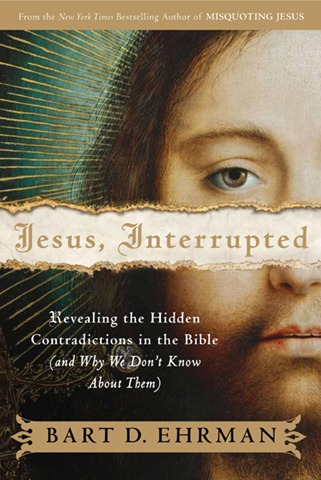
Jesus, Interrupted by Bart D. Ehrman

I believe The Bible can be a very dangerous book.  For most people The Bible is a book they read occasionally, and use it for inspiration to be a good person.  There are better books to teach ethics but we can overlook that like we can overlook casual drinking, a minor indulgence.  I use the drug metaphor very intentionally, because I believe The Bible alters people’s mind and how they see reality.  Because some people take The Bible too far, into cocaine, heroin and LSD levels of use, and they become addicted, deluded and cut themselves off from reality.

The Bible can be like a computer virus that infects the minds of those who read it.  This is true of any religious literature.  The Bible does not describe reality. The Bible can not predict the future.  And most important, The Bible does not describe God (if there is a creator), at best The Bible presents very ancient theories about God.  In terms of philosophical theology, it is very important to separate the concept of God from any description about God.  Holy books captures how people thought thousands of years ago and that’s a huge danger because people minds become paralyzed by seeking closure on mysteries that will never be solved.  It’s mental quicksand.

The reason why I call myself an atheist is because I’ve never heard a definition of God that I could accept.  If there is a God he is unknowable in the same way that a bacteria in our blood can never know who we are.  People want a personal God, and that’s understandable, because life is scary and we’d love to have a spiritual parent to protect us.  But that’s a dangerous desire because it causes people to avoid real sources of strength, other people and ourselves.

There are many reasons why people seek religion and embrace holy books:

  • They want answers about reality (knowledge)
  • They want to know how life began (ontology)
  • They want a history and genealogy
  • They want instructions on how to be a good person (ethics)
  • They want to worship and be thankful (appreciation of life)
  • They want rules for equal justice for all people (law and order)
  • They want to know the future (prophecy)
  • They want a promise of protection (security)
  • They want an afterlife 

The reason why holy books like The Bible are so dangerous and powerful is our minds are extremely powerful.  Holy books transmit powerful memes.  All books do, but holy books come with extra-strength memes.  The concept of God is a meme.  Once an idea is let lose in culture it’s very hard, if not impossible to erase.  What happens instead is people alter memes.  Think of a virus mutating.  If you study just The Bible you’ll actually come up with dozens, if not hundreds of meme variations for the original meme for God, which was created thousands of years before the Jews existed.  There is no one God in The Bible.  There is no one Jesus, which brings us to the book Jesus, Interrupted by Bart D. Ehrman.

Jesus-Interrupted

Many people divide the world into the secular and the divine.  Believers in divine knowledge think its more important than down to Earth knowledge.  That’s an illusion.  The divine is a meme too.  Beliefs are more powerful than reality.  In fact, all we have is beliefs.  What we want is to keep beliefs that validate reality and jettison fantasies, but religious beliefs can’t be validated, but how you got them can.  That’s what Bart D. Ehrman is doing in his writing.

For example, do you believe that Jesus is a divine being?  Who gave you that idea?  How old were you?  Why did you believe them?  Where did they get the idea?  What Ehrman is doing in Jesus, Interrupted is working on a cold case that goes back 1900 years.  Where did the origin of the meme that Jesus was divine come from?  He calls this research a historical approach to Bible study. 

Jesus, Interrupted is a significant book on many levels, but proving that will be difficult because what he says challenges people’s beliefs.  Bart D. Ehrman is most famous for his book Misquoting Jesus, but this newer book is even more exciting to read, that is, if you find history and academic research exciting.  Ehrman claims he is not trying to be sensational with his books on The Bible, and claims he is only relating what any mainstream seminary teaches.  Ehrman is the James A. Gray Distinguished Professor at the University of North Carolina at Chapel Hill.  He started out as an evangelical Christian but after many years of studying The Bible became an agnostic.  Since I’m an atheist, reviewing a book about The New Testament written by an agnostic will be hard to convince Christians the value of reading Jesus, Interrupted.

I don’t ever expect Christians to give up their faith.  I figure most will ignore this book, but I expect others will combine the knowledge that Ehrman provides with their faith and create a new synthesis.  Whether this leads to a new reformation is another issue, but in cruising around the net trying to find reactions to Ehrman I was surprise by some reactions of the faithful.  Some reviewers say Ehrman goes too far, others just dismiss him, but others have jumped in and started their own analysis using his historical approach to test and validate Ehrman’s ideas.

Ehrman says many times in his book that he has no wish to destroy anyone’s faith, but anyone with a deep faith in The Bible being the absolute word of God will be tested by Ehrman’s books.  Ehrman started out as a person believing God inspired The Bible and it had no errors, but his desire to study it deeply and thoroughly led him to believe that it is the work of men, chock full of errors, forgeries, and contradictions.  I think anyone examining the historical evidence will also conclude that men wrote The Bible without guidence from God.

The next logical step in theology is to ask how God might inspire men to write about the metaphysical.  I don’t believe in the divine, but most people do.  I expect them to keep looking for the doorway between the physical world and the spiritual world.  And that’s okay.  Religion is deeper than memes, and I expect humans to always invent new and better religions.  Some atheists want to throw off religion and God, but that’s like being a vegetarian wanting the rest of the world to give up eating meat.  Evolution is a nasty word to the righteous, but everything evolves.

So why should agnostics and atheists even concern themselves with this book?  Ehrman still believes The Bible is the greatest book ever written and still provides inspiration.  For me, I want to understand Christians and how they evolved in history.  Jesus, Interrupted is a quick survey of the first four hundred years of Christianity and how The New Testament was written.  I think it explains why we have hundreds of different Christian faiths, and it also explains part of the psychology of conservatives and liberals, something Ehrman wasn’t intending.

Ehrman says most people study The Bible devotionally, but for the last two hundred years scholars have applied a historical approach to understanding it.  Ehrman also says most people only read The Bible randomly, just studying a few lines here and there.  Even if you read it vertically, from top to bottom, Ehrman believes you will miss much of what’s in The Bible.  He recommends studying it horizontally, comparing one gospel against another, or how one incident is depicted by multiple writers.  Jesus, Interrupted focuses almost exclusively on The New Testament except where gospel writers claim events were foretold in The Old Testament.

When you study the gospels this way you quickly see they conflict.  And not in minor narrative details, but in great theological differences.  In fact, much of what Christians believe today does not come from The New Testament at all, but from later theologians.  What many Christians might be shocked at is the gospels were not written by the disciples that knew Jesus, but educated people writing decades later, living in another country, speaking a different language than what Jesus and his apostles spoke.

The reason why there are so many conflicting stories in The Bible is because it was written by many different people, each with their own agenda.  I cannot do justice to the vast research the Ehrman puts into his book, so don’t trust me, and read Jesus, Interrupted for yourself.  Then read reviews by people who oppose Ehrman, and there are plenty.  Interpreting The Bible is a academic black hole that I want to avoid, but I do think it’s possible to study The Bible without falling into its gravity well.

I think there will be many different audience reactions for this book.

  • Atheists will get a good overview of Christianity, but also find intellectual support that The Bible is not a divine communication to the human race.  If they have any residual guilt about religion from early Sunday School programming, this book will help deprogram those feelings.  I found the book a fascinating history, explaining much of Western culture in a surprising way.  It was a real page turner for me.
  • Liberal Christians will expand their theological foundation and maybe invent a new synthesis.  Ehrman explains how new theological concepts developed in the first few centuries of the common era shaped The New Testament, but Christian evolution did not stop there.  Christianity is always evolving and diverging, and modern Christianity has little resemblance to Jesus and his times.  I think Ehrman’s book should have been called The Evolution of Christ.  I think books like this, using historical studies to examine spiritual doctrine, will inspire some folks to invent new theological memes.
  • Conservative Christians can choose to ignore the book, or counter it.  I think Christians constantly redefine and reinvent God.  God is a mutating meme.  Creationism and Intelligent Design are fundamentalist adaptations to their philosophy from reacting to science.  I expect similar ideas generated from reacting to historical studies of The Bible.  Theological evolution does not have to be logical, for example, look at the doctrine of the Trinity.  Essentially, a monotheistic religion accidently reinventing polytheism while trying to rationalize how a human could be the one and only God.  And don’t get me wrong, I’m not making fun of this theology – it’s a deadly serious pursuit by some folk to grapple with reality, but my point is religion doesn’t stand still, it’s constantly being reinvented to jive with current knowledge.
  • Believers from other religions will find a concise overview of The New Testament that might quickly explain the diversity of Christian faiths and sects.

Everyone feels like they are an expert on The Bible, even if they’ve only read a few passages.  I think the historical studies of The Bible will up the ante for anyone getting into the game.  Ehrman claims that most mainline ministers know what’s in this book already, but they seldom preach this knowledge to their parishioners.  I don’t know if that matters. 

Most people only want simple answers.  They are happy with a very few concepts to embrace.  There is a God.  There is a heaven.  Believing in Jesus is the way to heaven.  Period.  No more study.  This covers all the bases for this life and the next.  As long as these believers stay out of politics I don’t want to challenge their beliefs.  Don’t read this book. 

No use confusing the simple faithful by trying to explain that heaven is a theological invention that came well after Jesus.  Nor should we cloud the water by proving the God of Moses is not the God of Paul, even though some modern apocalyptical Christians want to bring back an Old Testament genocidal God.

Ehrman proves The Bible can be a black hole of academic study, but it’s also an endless engine that justifies hatred and intolerance.  Ehrman illustrates this with a quick lesson in how Christianity created anti-Semitism.  And I certainly wanted to read more about the development of the Orthodox Church at the expense of heretical sects.

Jesus, Interrupted is an important book beyond Bible studies because it explains so much modern psychology.  Rush Limbaugh is not just a conservative Republican, but an apostle of orthodoxy attacking the heretical liberals.  What Ehrman shows is Swift Boating a technique well illustrated in The New TestamentJesus, Interrupted unintentionally shows a relationship between the Bible belt and conservative thinking and behavior.  If someone like Lee Atwater had lived in the first century he might have written a gospel to get his point across.

Liberals who want to understand why conservatives are the way they are should study Jesus, Interrupted carefully.  I always assumed Republicans got their rhetorical skills from the Greeks, but that is only half-right, and they might have studied classical Greeks, but they also learned rhetoric from the Greek speaking writers of  the New Testament.            

JWH – 6/8/10

Does Jesus Matter?

When I became an atheist at 13 I figured I wouldn’t have to worry about who Jesus was anymore, and I could stop reading The Bible.  Around age 55, I returned to reading The Bible, to understand its place in history and to find out why so many people claimed it was so significant.  I’m still not religious, or even spiritual, but The Bible is like the world’s hardest jigsaw puzzle, you start to put a few pieces together and you get hooked.

In this week’s issue of The New Yorker, Adam Gopnik describes the latest crop of books about Jesus in, “What Did Jesus Do?”  I highly recommend you taking the time to read this essay.

Gopnik claims ten books came out about Jesus in just one month.  I always figured Jesus was a real historical person, that we have very little actual evidence about him, and that there is a difference between Jesus the philosopher and Christ, the deity with infinite aspects.  I might be right or wrong about all points.  In fact, there are so many interpretations of who Jesus the real person was that I have to wonder if I shouldn’t write him off as unknowable.

The trouble is about 2 billion people want to define reality by their interpretation of Jesus.  Would reading all of these books that Adam Gopnik surveys put enough puzzle pieces together to produce a consistent view?  No, you won’t get a conclusive answer to who was the historical Jesus, but your sense of history and reality would be greatly expanded.  Here are links to some of the books he reviewed, and some others I ran across.

And there is no end in sight.  I put “Jesus” in the search box at Amazon, and then set the order to date, and there were over twenty pages of books scheduled to be published.  So I have to ask, should I even study a subject that produces so many opinions?

I know the faithful will say Jesus is someone I should study forever, but I don’t think that’s true.  He either had a definite message or he didn’t.  I also know the faithful will claim the definitive message is found by reading The Bible, but that’s also not true, because of the zillions of books trying to interpret The Bible.

And why try to understand Jesus and not all the other religious figures who have thousands of books written about them?  I do know from the many books I’ve already read, that the more one studies Jesus, the more one tries to understand him in a historical and political context and not as a metaphysical being.

In other words, if we can get a clear picture of the time in which he lived, it reveals much about what he supposedly said.  Studying history is fascinating, but why spend so much time on one person in one tiny portion of the globe for one very short period of time?  Wouldn’t it be more important, and even more spiritual, to study now?  Let’s assume Jesus was an astute observer of life, and his message was different from the teachers of his time, because he was revolutionary, choosing not to look backwards. 

All religions eventually come up with the golden rule.  The basic direction of religion is to inspire people to be better people.  Do we really need to know about people and their problems 2,000 years ago, when we have plenty of people and problems now?  My guess is people would be more Christian if they forget the past and just worked and studied in the present to improve their own lives and help other people around them.

The only real reason to study Jesus is to study biblical history and that eventually leads to studying ancient politics and sociology.  I think the reason why there is so much scholarship on the historical Jesus is because his life is such a delicious mystery.  And if you study biblical times you’ll eventually migrate into classical studies and the study of prehistory.  It’s a deep well to fall into.  Obsessive scholars even take up ancient Greek and Latin.  Eventually these studies turn into the psychoanalysis of the western mind.  Look what happened to Bart D. Ehrman.  He started off as a Evangelical Christian and now he’s almost a  pure historian.

I’m not the kind of atheist that wants to convert the faithful to the scientific worldview.  I don’t want to argue The Bible with others.  I can live with an indifferent reality, but most people need the comfort of answers, even if they are fantasies.   I wish the religious wouldn’t kill each other, or go on jihads and crusades, but I can’t do much about that.  Attacking their beliefs doesn’t do much good.  I do think I contemplate many of the same concepts Jesus is said to have meditated on, and seek many of his same goals, but I just don’t believe any of the stories written about him after he died. 

I’m willing to accept Jesus as a philosopher, say like Plato.  But does he matter?  Not to me.  But then neither does Plato.  In terms of leading a good life one only needs to endlessly explore the golden rule.  The study of history is like the study of science, it is meant to explore the nature of reality.  In this content Jesus is the most famous person in history, and understanding why does matter.

JWH – 5/25/10

The Bible: A Biography by Karen Armstrong

Karen Armstrong presents a precise history of how The Bible was written and assembled and then she concisely chronicles how Jews and Christians have used The Bible for the last 2,000 years in her short volume, The Bible: A Biography, from Atlantic Monthly Press.  Armstrong’s narrative runs just 229 pages – it’s intense, scholarly, and very readable.  If there’s a better short one volume overview of The Bible let me know, but for now, this is the book I’ll recommend to anyone who wants to study The Bible in a historical context.

The Bible is not a single book, but an anthology of narratives written over hundreds of years, by many writers, with some text blended together by unknown editors from multiple earlier sources.  The books of The Bible are not always in chronological order, and most of the main characters are presented differently by various writers.  How do you sum up the most read, most written about, book in history?

To understand the scope of Karen Armstrong’s task, I thought I’d list pertinent Wikipedia articles.  Reading these articles will enhance your understanding and enjoyment of The Bible: A Biography.  Whether you are among the fundamental, faithful or unbelieving, The Bible is completely woven into the fabric of Western society and history.  The Bible is actually the Rosetta Stone between prehistory and history, between oral tradition and the dawn of writing.  Studying religious texts written down in the Iron Age reveals concepts first formulated in the Bronze age, giving clues to the childhood psychology of homo sapiens.

Take the time to read these articles even if you don’t buy Karen Armstrong’s book, but I really recommend her elegant digestion of this vast intellectual feast.  I was especially impressed with her whirlwind survey of how The Bible has been used to back so many different belief systems, and inspired so many philosophers and philosophies.

I read Armstrong’s book first, and now I’m going back researching all this stuff on Wikipedia.  I wish I had found a review like this one, telling me to read the Wikipedia articles before I read Armstrong’s book because I think I would have been even more impressed with her writing.  I just finished listening to the unabridged version of this book and I’ve already started back at the beginning and I’m now reading a hardback copy with my eyes.

Edward R. Hamilton Booksellers has the hardback edition remaindered for $5.95.

The Bible: A Biography is part of a series from Atlantic Monthly Press called Books That Changed the World.  Other books in the series are:

  • The Republic by Plato
  • The Prince by Machiavelli
  • Origin of the Species by Charles Darwin
  • Rights of Man by Thomas Paine
  • The Qur’an
  • The Iliad and The Odyssey by Homer
  • The Wealth of Nations by Adam Smith
  • On War by Clausewitz
  • Das Kapital by Marx

JWH – 1/27/10