The Emerging Mindset of Not Owning Movies

by James Wallace Harris, May 5, 2023

Ideas for this essay began when my Blu-ray player died. I got on Amazon to buy a new one, and then I asked myself: When was the last time I viewed a movie or TV show from a disc? When was the last time I bought one? I went and looked through our bookcase which has five shelves of DVDs and Blu-rays. Most have not been played in years, and some have never been played or even opened. I bought them because wanted to own them.

I realized that owning movies has a mindset. I’m trying to decide if I need to change that mindset.

This essay isn’t aimed at film fans who actually collect movies with a purpose. Nor is it about minimalism and getting rid of stuff. What I’m talking about is how buying movies changed us. We had one pop culture mindset before VHS tapes and DVDs, another afterward, and an even newer mindset is emerging with streaming. And those mindsets say something about our individual psychology.

Before the advent of the VCR, the main way to see a movie was when it was at the theater or rerun on television. If you wanted to see a specific film you might have to wait years. I used to go to science fiction conventions and one of their highlights was the film room where they’d run classic science fiction movies all weekend. There were also film clubs and festivals, but those were for serious film buffs. And a few people, usually rich ones, collected movies on film.

For the most part, people didn’t own movies and they had a mindset about how they watched movies. Starting in the 1980s, the VCR became popular. This created two industries – selling movies on tape, and tape rental stores. That’s when people really got into owning their favorite films and a new mindset emerged.

It changed society. Not everyone collected movies, but it was pretty common. Then came the DVD and it caused even more people to want to own movies. Most people just rented films and Blockbuster became part of popular culture too. Still, a fair percentage of people wanted to own movies.

Now we have streaming. Streaming has killed the movie rental store. A few still exist, but that way of life is now dead. And I think a lot of people have stopped buying movies on DVDs, Blu-ray, and 4k. Diehard fans still collect, but ordinary people have stopped.

Susan and I bought a lot of films on DVD and Blu-ray over the years. A few years ago we gave bags of them away to friends and the library. But we kept one bookcase of our favorites. Now I’m wondering if we even need to keep those.

Whenever I want to see a specific movie I can usually find it streaming on one of the subscriptions I already own, or on one of the free streaming services that use ads. Or I’ll rent it on Amazon. And if JustWatch can’t locate what I want, I’ll check YouTube, and pretty often, those forgotten films are usually there. It’s extremely rare that I can’t find a movie on the net.

For decades I believed if I really wanted to see a movie that wasn’t easily available I had to buy it. And it annoyed me when there was something I wanted to see and it wasn’t streaming or for sale. There’s a psychological component to that, maybe not a good one.

For the past few years, the only time I bought a movie or TV show on DVD/BD was because I couldn’t get it anywhere else. And most of those shows were oddities that I could have easily gone without seeing. Still, it’s weird of me to go to such lengths to acquire something I wanted on a whim.

But I’m also thinking about something else. Why do I feel I should see a specific film or television show when I want to? It’s because, in the 1980s and 1990s, we took on the mindset we could own movies and television shows. Previously, the mindset was movies and television shows were ephemeral. That fate would present us with what we needed to see. Owning is a mindset that says we can control reality.

Streaming presents a new mindset. What is the new mindset it creates? Is it one of a library in the cloud? A universal library? Well, actually, it’s a bunch of libraries in the cloud with different fees and requirements to use them. For music, I depend on Spotify, it is an almost universal library of songs and albums. Subscribing to a combination of three to six subscription services like Netflix, HBO Max, Apple TV, Hulu, etc. will get you a library of thousands of movies and television shows. Apple News+ gets me access to hundreds of magazines. Scribd and Kindle Unlimited get me access to countless books and audiobooks.

The trouble with this new mindset is you have to maintain lots of subscriptions. Subscribing to a bunch of services gives the illusion of owning a giant library. And I think that’s why I subscribe to so many services. It gives me the illusion I own all these movies, television shows, albums, books, audiobooks, etc. But do I even need to feel like I own a library?

I do have some friends who have tremendous discipline and only subscribe to one movie/TV streaming service at a time. Their mindset is different. My mindset is to pretend I own the Library of Congress. Their mindset is to enjoy everything at a branch library before switching to another branch library.

But I’ve been thinking about the mindset I had back in the 1960s when I watched movies and TV shows based mostly on serendipity. Back then, when I wanted to see a movie, we looked at the movie section in the paper and picked out something to see. Or we turned on the TV when we wanted to watch TV and flipped through the channels till we settled on something. I didn’t try to find something very specific or seek the very best of the best of all time. I had a small selection and picked whatever struck my mood at the moment. I didn’t read reviews, check ratings, or study books. I accepted what reality offered.

In 2023 I usually have a target in mind and go looking for it. I’d read about what others are watching and recommending, and decide that’s what I want to see. My friend Linda recommended The Diplomat, and I rejoined Netflix to watch it. It’s not like I didn’t already have thousands of shows and films to see on Prime, Hulu, BritBox, AppleTV, and Peacock.

Susan hates when we have company and we all decide to watch a movie together. The act of deciding what to watch drives her up the walls. And often our guests get frustrated too because there are so many choices and we’ve all developed highly individual tastes. Back in the old days, people were more willing to watch whatever was on with each other. Owning movies I think changed us all.

We all became aficionados of exactly what we loved. We all conditioned ourselves to seek out movies that pushed our own unique emotional buttons. We moved away from going with the flow. Owning movies changed us. It conditioned us to specialize and be picky. It made us want to watch exactly what we wanted to watch.

Oh, I’m sure millions of people subscribe to Netflix and when they want to watch something click it on and then scroll around until they find something to watch. They never got conditioned to seek something specific. I did. I didn’t collect to complete a collection. I bought movies because I wanted to be able to watch what I wanted when I wanted. Streaming does a better job of getting me what I want, when I want, without owning it.

However, I’m now asking myself is that good? What if the mindset we had back in the 1960s was actually better for us psychologically? Both owning and streaming fulfill our desire to control reality. What if going with the flow isn’t a better way? That would be more like Eastern philosophy.

I am not a hoarder, not as people see them on TV. But when it comes to books and movies, I guess I was. Owning a library of anything is a kind of specialized hoarding. There’s a psychology behind that. I’m wondering if late in life, at 71, I shouldn’t alter that psychology.

JWH
If You Love Collecting Anything, You’ll Love Bathtubs Over Broadway

by James Wallace Harris, Sunday, May 19, 2019

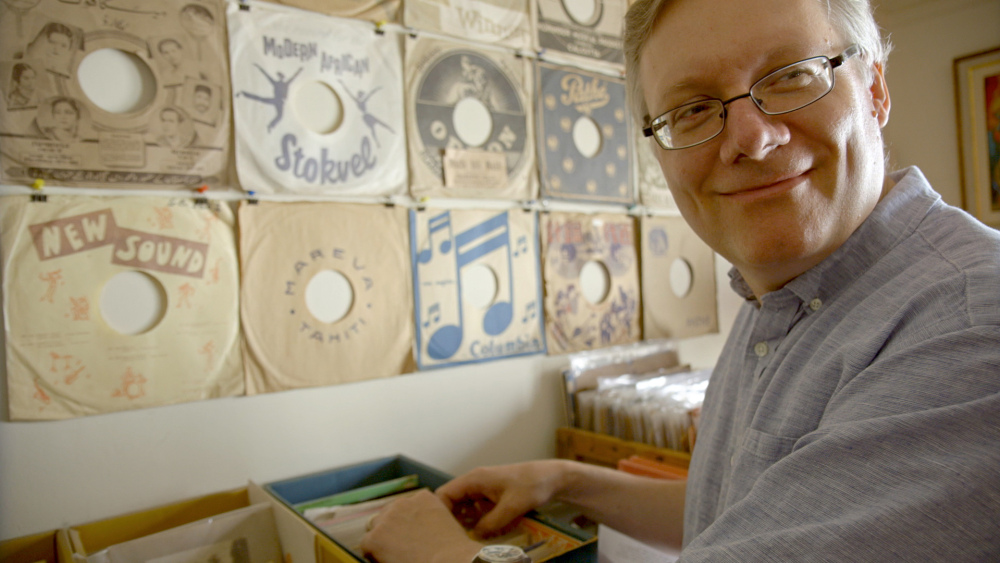
Steve Young was a comedy writer for the David Letterman Show. One of Young’s extra duties was finding oddball records that Dave could make fun of on the show. Because of this Young discovered an extremely rare kind of LP – musicals produced for corporate sales conventions. At first, these songs were the butt of jokes on the Letterman show but soon Young fell in love with the songs, lyrics, performances, and eventually the performers. Young began to passionately collect these records for himself. The history of his collecting, and how it led him to discover the history of the industrial musical is told in the award-winning documentary, Bathtubs Over Broadway, currently playing on Netflix and for rent at Amazon. It has a 100% Fresh rating at Rotten Tomatoes.

Last night I had friends over to watch a movie. I tried to get them to see Bathtubs Over Broadway. I’ve tried for weeks to get any of my movie watching buddies to see it with me. My friend Linda saw it at a film festival in Denver and told me it was wonderful. We ended up watching The Bookshop instead, hoping it would be one of those feel-good indy English flicks, but it wasn’t. So after Mike and Betsy left, I stayed up late watching Bathtubs Over Broadway by myself.

I do admit the title sounds awful, but to all my friends who wouldn’t watch this movie with me – HA! You don’t know what you missed.

Of course, maybe it’s just me. I thought Bathtubs Over Broadway was a heartwarming documentary about becoming a pop culture collector. But then I have a slight collecting habit myself. I love tracking down old science fiction anthologies, so I know the excitement of finding a rare item.

Steve Young said before he started collecting the industrial musicals he had no friends in his life other than family at home at coworkers at work. Once he started sleuthing these LPs he befriended other collectors – weird guys like himself. I also know the importance of finding someone else who shares an obscure interest in a microscope aspect of reality.

What’s most inspiring about Bathtubs Over Broadway was the length Steve would go to find these rare LPs. The heyday of industrial musicals was in the 1950s, 1960s, 1970s, and Young discovered some of the composers and performers were still alive. At first, he contacted them hoping they’d have more records he could collect, but ended up making wonderful friends and learning a unique aspect of American history.

Bathtubs Over Broadway might sound kitschy and camp, and it is, but it’s also uplifting, moving, inspiring, educational, and enlightening.

Don’t let the title mislead you into missing it.

p.s.

In case you want to know more, Steve Young and Sport Murphy wrote a whole book on industrial musicals – Everything Coming Up Profits: The Golden Age of Industrial Musicals. Follow this link to hear songs, see videos, and read more history after watching Bathtubs Over Broadway.

Everythings Coming Up Profits

JWH

Collecting Great Westerns

by James Wallace Harris, Tuesday, July 26, 2016

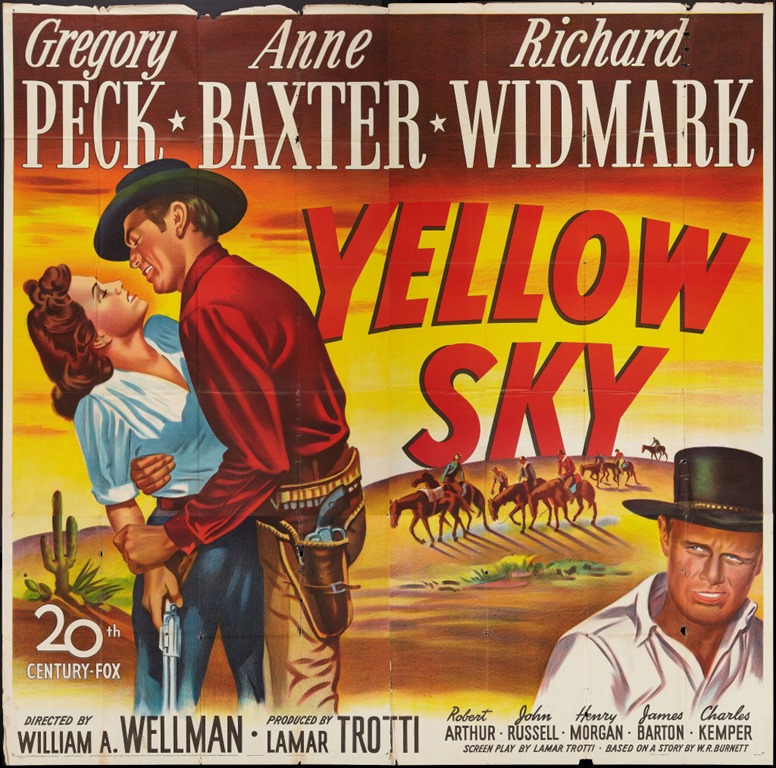
Yellow_SkyMy primary goal here is to identify and remember all my favorite westerns. Because I focus on collecting, this page will be updated periodically. I also want it to be of use to others, so I’m adding links. Clicking on the year will take you to a description of the film (to Wikipedia until I can write my own reviews). Titles will link to Amazon. The letter grades represents my reaction to the film, and not a critical judgment. Many films won’t have a grade until I see them again. I’m going to also list the format of the discs I own, but that’s only useful to me. Most of these films I’ve seen once, for many, twice, and some, many times. I will eventually add television westerns.

Finally, I want to analyze why I love westerns and what makes a good western. That will happen in the future. Today, I’m just starting with a list. I’ll eventually add content after the listing. I’ll also write reviews to films and link to them when I get time.

Westerns represent a philosophy, reflected in the genre. I’m a liberal, so explaining why I love a genre that’s so conservative will take some effort. Westerns portray details about history, while revealing changing attitudes towards history. Eventually I want to rate both historical value and how well each film fits the genre. For now, I’m going to use a very simply list format to make it easy to expand and edit. In the future, I’ll convert the list to a table, add film cover images, and other annotations.

I should point out I only collect films I enjoy rewatching. There will be many omissions. That means I either don’t like the film, don’t think its fits the genre, or is set outside of the 19th century.

My Favorite Westerns:

  1. The Big Trail (1930), John Wayne, A+, [Blu-ray]
  2. Cimarron (1931), Richard Dix, Irene Dunne, B+, [DVD]
  3. The Plainsman (1936), Gary Cooper, Jean Arthur, A
  4. The Texas Rangers (1936), Fred MacMurray, Jack Oakie, B+, [DVD]
  5. Destry Rides Again (1939), James Stewart, A+, [DVD]
  6. Dodge City (1939), Errol Flynn, A+
  7. Jesse James (1939), Tyrone Power
  8. Stagecoach (1939), John Wayne, A+
  9. Union Pacific (1939), Joel McCrea, Barbara Stanwyck, A+, [DVD]
  10. Santa Fe Trail (1940), Ronald Reagan, Errol Flynn
  11. The Westerner (1940), Gary Cooper, Walter Brennan, A+, [DVD]
  12. They Died with Their Boots On (1941), Errol Flynn, B+, [DVD]
  13. Western Union (1941), Robert Young, Randolph Scott, Dean Jagger, A-, [DVD]
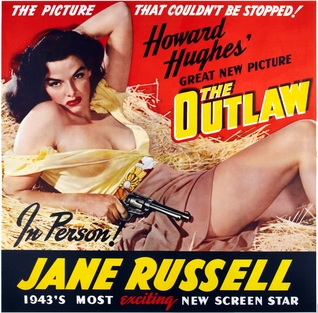
  14. The Outlaw (1943), Thomas Mitchell, Jane Russell, B-
  15. The Ox-Bow Incident (1943), Henry Fonda, Dana Andrews, Harry Morgan, A+
  16. Tall in the Saddle (1944), John Wayne
  17. Along Came Jones (1945), B, Gary Cooper, Loretta Young [DVD]
  18. Duel in the Sun (1946), Gregory Peck, Joseph Cotton, Jennifer Jones
  19. My Darling Clementine (1946), Henry Fonda, Victor Mature, Walter Brennan, A+, [DVD]
  20. Angel and the Badman (1947), John Wayne, Gail Russell, A+
  21. Ramrod (1947), Joel McCrea, Veronica Lake
  22. 3 Godfathers (1948), John Wayne, B+, [DVD]
  23. Blood on the Moon (1948), Robert Mitchum
  24. Fort Apache (1948), John Wayne, Henry Fonda, B+, [DVD]
  25. Four Faces West (1948), Joel McCrea
  26. Red River (1948), John Wayne, Montgomery Cliff, Walter Brennan, A+
  27. The Treasure of the Sierra Madre (1948), Humphrey Bogart, A
  28. Whispering Smith (1948), Alan Ladd, Robert Preston, A-, [DVD]
  29. Yellow Sky (1948), Gregory Peck, Anne Baxter, Richard Widmark, A+, [DVD]
  30. She Wore a Yellow Ribbon (1949), John Wayne, B+, [DVD]
  31. Broken Arrow (1950), James Stewart, B+, [DVD]
  32. The Gunfighter (1950), Gregory Peck, A, [DVD]
  33. Rio Grande (1950), John Wayne
  34. Winchester ‘73 (1950), James Stewart, Shelley Winters, A+, [DVD]
  35. Rawhide (1951), B+, Tyrone Power, Susan Hayward [DVD]
  36. Westward the Women (1951), B+, Robert Taylor
  37. Bend of the River (1952), James Stewart, B, [DVD]
  38. The Big Sky (1952), Kirk Douglas, B+
  39. High Noon (1952), Gary Cooper, Grace Kelly, Thomas Mitchell, A-
  40. Rancho Notorious (1952), Marlene Dietrich, B
  41. Man in the Saddle (1952), Randolph Scott, B
  42. Hondo (1953), John Wayne, [Blu-ray]
  43. The Naked Spur (1953), James Stewart, A-, [DVD]
  44. Shane (1953), Alan Ladd, Jean Arthur, A+, [DVD]
  45. The Far Country (1954), James Stewart, Walter Brennan, B+, [DVD]
  46. Garden of Evil (1954), A-, Gary Cooper, Susan Hayward, Richard Widmark, [DVD]
  47. Johnny Guitar (1954), Joan Crawford, B
  48. River of No Return (1954), Robert Mitchum, Marilyn Monroe, B+, [Bluray]
  49. Vera Cruz (1954), Gary Cooper, Burt Lancaster, B+
  50. A Lawless Street (1955), Randolph Scott
  51. The Far Horizons (1955), Fred MacMurray, Carlton Heston, Donna Reed, B
  52. The Man from Laramie (1955), James Stewart, B
  53. Ten Wanted Men (1955), Randolph Scott, Richard Boone
  54. The Searchers (1956), John Wayne, Jeffrey Hunter, A+, [DVD]
  55. Seven Men from Now (1956), Randolph Scott, Gail Russell, Lee Marvin, A-, [DVD]
  56. 3:10 to Yuma (1957), Glenn Ford, Van Heflin, A
  57. Decision at Sundown (1957), Randolph Scott, [DVD]
  58. Forty Guns (1957), Barbara Stanwyck, C+
  59. Gunfight at the O.K. Corral (1957), Burt Lancaster, Kirk Douglas,  B+
  60. Night Passage (1957), James Stewart, Audie Murphy, A, [DVD]
  61. The Tall T (1957), Randolph Scott, Richard Boone, Maureen O’Sullivan, B+, [DVD]
  62. The Tin Star (1957), Henry Fonda, Anthony Perkins, B+
  63. The Big Country (1958),  Gregory Peck, Jean Simmons, Carroll Baker, Charlton Heston
  64. Buchanan Rides Alone (1958), Randolph Scott, [DVD]
  65. Cowboy (1958), Glenn Ford, Jack Lemmon, B+
  66. The Law and Jake Wade (1958), Robert Taylor, Richard Widmark, A, [DVD]
  67. Man of the West (1958), Gary Cooper, [DVD]
  68. Saddle the Wind (1958), Robert Taylor, Julie London, B+
  69. Day of the Outlaw (1959), Robert Ryan
  70. The Horse Soldiers (1959), John Wayne
  71. No Name on the Bullet (1959), Audie Murphy, [DVD]
  72. Ride Lonesome (1959), Randolph Scott, [DVD]
  73. Rio Bravo (1959), John Wayne, Dean Martin, Ricky Nelson, B+, [Blu-Ray]
  74. Comanche Station (1960), Randolph Scott
  75. The Magnificent Seven (1960), Yul Brynner, Steve McQueen, Eli Wallach, A
  76. The Unforgiven (1960), Burt Lancaster, Audrey Hepburn, Audie Murphy, A
  77. The Comancheros (1961), John Wayne
  78. One-Eyed Jacks (1961), Marlon Brando, Karl Malden
  79. Two Rode Together (1961), James Stewart, Richard Widmark, Shirley Jones, B+
  80. The Man Who Shot Liberty Valance (1962), John Wayne, James Stewart, Lee Marvin, B+
  81. Ride the High Country (1962), Randolph Scott, Joel McCrea, A-, [DVD]
  82. A Fistful of Dollars (1964), Clint Eastwood
  83. For a Few Dollars More (1965), Clint Eastwood
  84. The Sons of Katie Elder (1965), John Wayne, Dean Martin
  85. El Dorado (1966), John Wayne, Dean Martin
  86. The Good, the Bad and the Ugly (1966), Clint Eastwood
  87. Nevada Smith (1966), Steve McQueen, A
  88. The Professionals (1966), Burt Lancaster, Lee Marvin
  89. The Rare Breed (1966), James Stewart, Maureen O’Hara, Brian Keith, B
  90. Hombre (1967), Paul Newman, Fredric March, Richard Boone
  91. Once Upon a Time in the West (1968), Henry Ford, Charles Bronson, Jason Robards
  92. Butch Cassidy and the Sundance Kid (1969), Paul Newman, Robert Redford
  93. The Wild Bunch (1969), William Holden, Ernest Borgnine, Robert Ryan, [Blu-ray]
  94. Chisum (1970), John Wayne
  95. A Man Called Horse (1970), Richard Harris
  96. Little Big Man (1970), Dustin Hoffman, A+, [Bluray]
  97. McCabe & Mrs. Miller (1971), Warren Beatty, Julie Christie, A-
  98. Jeremiah Johnson (1972), Robert Redford, Will Geer, A+, [DVD]
  99. Ulzana’s Raid (1972), Burt Lancaster
  100. High Plains Drifter (1973), Clint Eastwood
  101. Pat Garret and Billy the Kid (1973), James Coburn, Kris Kristofferson, B+
  102. The Missouri Breaks (1976), Marlon Brando, Jack Nicholson
  103. The Outlaw Josey Wales (1976), Clint Eastwood
  104. The Shootist (1976), John Wayne, Ron Howard, Lauren Bacall, A-
  105. Heaven’s Gate (1980), Kris Kristofferson, Christopher Walken, Jeff Bridges
  106. The Long Riders (1980), David Carradine, Stacy Keach, Dennis Quaid
  107. Pale Rider (1985), Clint Eastwood
  108. Silverado (1985), Kevin Kline, Kevin Costner
  109. Lonesome Dove (1989), Robert Duval, Danny Glover, Tommy Lee Jones, A+, [Blu-ray]
  110. Dances With Wolves (1990), Kevin Costner, A, [Bluray]
  111. Unforgiven (1992), Clint Eastwood, Gene Hackman, Morgan Freeman,  A+
  112. Tombstone (1993), Kurt Russell, Val Kilmer, Dana Delany, A
  113. Wyatt Earp (1994), Kevin Costner, Dennis Quaid,  A, [Blu-ray]
  114. Riders of the Purple Sage (1996), Ed Harris, Amy Madigan, A-
  115. Open Range (2003), Robert Duval, Kevin Costner, A
  116. 3:10 to Yuma (2007), Russell Crowe, Christian Bale, A
  117. The Assassination of Jesse James by the Coward Robert Ford (2007), Brad Pitt, [Blu-ray]
  118. Appaloosa (2008), Ed Harris, Viggo Mortensen, A+
  119. True Grit (2010), Jeff Bridges, Matt Damon, A
  120. The Revenant (2015), Leonardo DiCaprio A+

Westerns I want to see:

  1. The Covered Wagon (1923)
  2. The Iron Horse (1924)
  3. Tumbleweeds (1925)
  4. Pursued (1947)
  5. Wagon Master (1950)
  6. The Shooting (1966)
  7. The Great Silence (1968)
  8. The Hired Hand (1971)
  9. The Claim (2000)
  10. Meek’s Cutoff (2010)


JWH

7 Uses for Goodreads Other than Reviews and Ratings

By James Wallace Harris, Wednesday, June 1, 2016

I struggle to manage my always growing, ever changing, collection of books, and my constant craving to read more. And I don’t have a vast library, like some of my bookworm friends. Counting physical books, ebooks and audio books, I have around two thousand titles. Enough to be unsure of what I own. Enough to make them a problem to find. And I own more unread books than I have time to read during the rest of my life. That should condition me to stop buying books, but it won’t.

I’ve been testing various book databases for years, but never committing to any. I tried Goodreads’ book database system a couple of times, but always disliked it. However, I’ve now decided it’s the best compromise for my needs.

goodreads 

Most people zip over to Goodreads to read reviews and ratings. Do they know it’s a free database for managing book collections? Goodreads represents the wisdom of crowds, with some books actually having millions of ratings. Because of this group knowledge, Goodreads is essential to bookworms. The fact that it’s own by Amazon, where I buy most of my books, including paper, ebook and audio, makes it’s hard to ignore.

I’m going to skip reviewing all those social aspects of Goodreads, and focus on tools for organizing books into useful collections. This can range from cataloging your personal library, keeping track of books you want to buy, or even tracking all the books on your favorite subject. Goodreads is a general purpose tool that has to be customized for specific uses, yet it’s not always obvious how. My recommendation is to just stick with Goodreads until it starts working for you. Everyone customizes it differently. Take each task you normally do on paper or program, and do it on Goodreads. Eventually, you’ll see the magic in its madness.

By thinking about all the ways I make lists of books, I’ve been able to adapt Goodreads for my needs. It’s not always a perfect fit, but I assume Amazon will keep refining Goodreads, and the bumps I stumble over will be fixed, and the features I desire will show up. I have to trust Amazon because it houses my digital library. This means hoping it will stay in business until I die.

Lifetime Reading Lists

I wish I had kept a list of every book I’ve ever read since I read Up Periscope during the summer before 4th grade. Beginning in 1983 I did start logging everything I’ve read, and it’s been great – well worth the effort. Goodreads is a good tool for this. However, if you reread books, and like to track each reading by date, Goodreads won’t do that smoothly. The clunky solution is to add a different edition of a book for each reading, but that messes with your total read numbers. I currently list books I read in both Google Sheets and Goodreads, to get all the functionality I want. It would be more efficient if Goodreads was my only tool, but I can’t replicate all the functions I now get from the spreadsheet.

The core functionality of Goodreads database is to track books you’ve read, are reading, or want to read. Goodreads even offers a nice stats feature to track your reading productivity. If you don’t want to use Goodreads to track the books you own, its basic features are very nice and straight forward. If you do use it as a personal card catalog, you have to understand it also tracks books you don’t own (unless you’ve keep every book you’ve ever read and bought every book you plan to read).

This can be confusing. Think of Goodreads as a system for tracking books you want to remember, whether that’s to remember what you’ve read, what you own, what you hope to own, what you’ve studied, and so on. You enter in all the titles you want, and then tag them accordingly. One tag is ownership. Another tag is read. You can make up your own tags – such as beautiful-covers.

You never want to delete a book you’ve read, even if you’ve given it away. You need the entry to remember you’ve read the book. And you’ve got to add a book if you plan to read it, even if you don’t own a copy.

Books Database

Over the decades I’ve tried many programs for listing the books I’ve own, but none of them worked the way I wanted. I’ve even tried writing my own program. Because of smartphones, it’s obvious that on-the-go viewing is a must feature, and that’s beyond my programming skills. Goodreads practically invalidates all other efforts because of this. It’s possible to keep my books in Excel, Access or commercial book database programs, and then export listings to Dropbox, to check on my phone while book shopping, but the Goodreads app is always up-to-date. That feature alone makes it a winner.

That’s not to say Goodreads is the perfect books database. How it looks, how it’s organized and how it creates reports is not how I would have designed them. But it does most things I want, and getting the job done without dedicating my life to Python programming sealed the deal. Plus, I can export .csv files to programs that can create fancy reports if I want.

Goodreads has two kinds of “bookshelves” – their term for categorizing your books. The first is exclusive, which means all books have to be tagged in one, and only one, of those shelves. Goodreads start you off with read, currently-reading, to-read. I added discard (so I can track books I once owned but didn’t read) and reference (for books I don’t plan to ever read). Any book I add to the system has to be read, currently-reading, to-read, reference or discard. Then Goodreads allows as many non-exclusive shelves readers want to create. Books can be shelved in multiple non-exclusive shelves. For example you could create shelves called fiction, science-fiction, anthologies – and put The Science Fiction Hall of Fame on all three.

The best thing about Goodreads is the barcode scanner built into its iOS/Android apps. It’s an extremely fast way to enter books, as long as the books have a visible bar code. For some damn reason, used book dealers have an annoying habit of pasting their tracking label over the ISBN barcode. You can also enter books manually with the ISBN number, or by title. Those are quick too, but nowhere near as fast as the barcode reader. I can do 40 books in two minutes – that’s their batch limit. You hit upload, clear the batch, and do 40 more.

Most books are already in the system, so you’re actually just linking to existing records. You only have to create a new record for rare out-of-print titles not in the Goodreads system. That’s more work, especially if you want to upload a scan of the cover. Which I do. I’m fanatical about cover images. One of the annoying restrictions of Goodreads is I can’t upload better images for books added to the system by other members.

Goodreads has a feature to let you tag books you’ve purchased from Amazon. I wish they also offer that feature for books I bought at Audible and ABEBooks, companies Amazon also owns. I’ve been hoping Amazon would mass add records for Audible editions, because now I link to CD editions of the same book. Who owns CDs anymore? I dread linking over 800 titles by title searches.

Collector’s Database

Book collectors want to track exact editions, and Goodreads does this. This is both good and bad. Probably most bookworms don’t care about such exacting details. They just want to know they have a copy of Pride and Prejudice, and whether or not they’ve read it. I wish Goodreads allowed for a generic title entry. I’d probably use one for most books. I don’t usually care if I “own” a 1st edition hardback or the 7th paperback edition, but I am picky about what cover I see. I want the cover I remember, or the cover I love best, and that means picking the edition with the right cover. What’s annoying, is the right edition will have no cover, a bad scan, or the wrong cover. Even when I own the right cover, I’m not allowed to alter other people’s cataloging. And Goodreads fights you if you try to create another edition with similar publishing details.

The cataloging features for Goodreads is probably good enough for most book collectors, but not good enough for serious book collectors. That should improve over time as more exacting users join the system. I wish Goodreads could tie into the Internet Science Fiction Database, which has great edition information. I also wished Goodreads would link to Wikipedia, because as I study my collection, or catalog books, I often want to know more about the book. Such synergy of two great tools would be fantastic.

Want Lists

Most bookworms make lists of books they want to read, and have various methods of keeping track of those books. Because Goodreads doesn’t assume the books you add are ones you own, it’s perfectly adaptable as a Books Wanted list manager. Because it’s tied to the social and database features at Goodreads, it’s the most elaborate Want List ever. You can add library books, or even books you see at bookstores, with the scanner feature. Although my local independent bookstore will chase patrons out if they think they’re checking Amazon for prices.

It’s quite easy to fill up your Goodreads database with books you want to read because one of the exclusive fields is “to read.” If you want to use Goodreads to track the books you own, you have to check the “owned books” check-box.

Card Catalog

Some bookworms own enough books that they wish they had a Dewey Decimal system to help them find books. You can create non-exclusive shelves to track book location, even if they are stored in boxes. Just label each of the shelves on your real-world bookshelf, say shelf-01 through shelf-24, and then create a virtual shelf for each in Goodreads. Then tag each book by the shelf they are on. Or shelve books by subject on your actual bookcases, and then create subject shelves in Goodreads. You can also create box-001, box-002, …, if you have zillions of books in the attic.

This takes work and discipline. The more you use Goodreads, the more anal attentiveness becomes part of your personality. And you can use Goodreads as little, or as much as you want. At first Goodreads seems like a very disorganized mess, but eventually you realize it’s looseness offers great flexibility.

Scholarship

Because Goodreads is not just a database for books you own, it’s very useful for organizing books in a variety of ways. Let’s say you’re getting your master’s degree, you can use Goodreads to organize all the books you need to know to pass your comps. It doesn’t matter if you if you don’t own them, or even borrowed them from a library. You can create an exclusive shelf called “research” and tag all the books there. You can even use non-exclusive shelves to organize them into categories, like 19th-century-America, 20th-century-America, 18th-century-Britain, 19th-century-France.

Reading Challenge

I want to read all the books on the Modern Library Association 100 Best Novel list. I created a non-exclusive shelf and added all one-hundred books. Then I marked those books read, to-read, currently-reading. By using the “select multiple” button,  clicking on the plus next to “read” and “modern-library-100” – I can see how many of the 100 I’ve read – 39.

This last trick reveals a flaw in Goodreads. Often I want to reread books. If I mark a book “to-read” it’s removed from the “read” shelf. But that ruins things for tracking books read. And I can tag a book “currently-reading” that I’ve read many times before. I wish Goodreads had a tracking system for remembering each time I’ve read a book, when, and what format. In my spreadsheet I track author, title, date published, date finished, format. Format includes hardback, paperback, ebook, library hardback, audio book, etc.

I don’t know of any alternative to Goodreads that does as much, so I’m going to stick with it for now. I assume the momentum behind it will make it even more useful in the future. It’s a shame that Amazon monopolizes my book world, but the practicality of why is too overwhelming.

JWH