Memories Imagine the Darndest Things

by James Wallace Harris, 7/10/23

This essay is about remembering something that never happened and the theories I’ve developed to explain my memory hallucination.

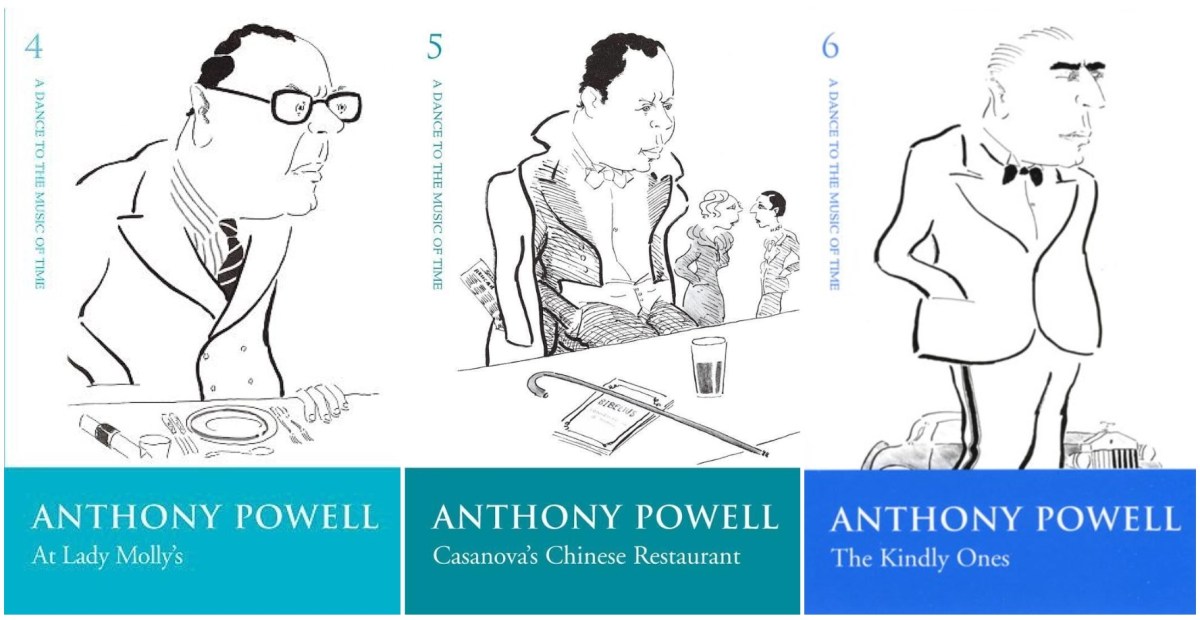
While reading The Kindly Ones by Anthony Powell, the sixth novel in a twelve-novel series called A Dance to the Music of Time, I had the constant feeling I had read it before. Several scenes throughout the novel seemed so familiar that I felt like I had studied them over several readings. I always assumed it was because I had twice watched the four-part miniseries based on the books. I’m sure that accounts for the general sense I’ve read The Kindly Ones before, but not the intense sense of remembering specific scenes. Yesterday I replayed the portion of the miniseries that deals with the most remembered scene and it merely skims over a very long detailed scene in the book.

A Dance to the Music of Time is about Nick Jenkins and his life from the 1920s through the 1960s. It’s not a Roman à clef but Anthony Powell based Nick on his own life. It’s a fictional exploration of memory, so it’s rather ironic that I’m having memory problems reading it.

There were many scenes that felt I had read before, but I just assumed they were in the miniseries. However, one scene was intensely vivid and familiar. It was the long scene where Nick Jenkins met Bob Duport years after Nick had had an affair with Duport’s wife Jean That affair was chronicled in an early novel in the series. So those pages recall events that happened in earlier novels, but it also has much new information that wasn’t in the earlier novels. The most vivid scene involved Nick wanting to avoid the subject of Jean, but Bob slowly getting around to talking about her. Bob starts describing the men he knew Jean had affairs with and what they were like. Bob kept making a case that Jean was attracted to men who were assholes and even admits to being one himself. Nick doesn’t know if Bob is intentionally insulting him or accidentally torturing him.

In recent years I have become distrusting of my memory for many reasons. The first is, memories often feel faulty. But that sense of faultiness is the kind we associate with dementia. I’m now exploring memory delusions.

I’ve read a number of books about the limitations of memory, and I’ve come to assume memories are unreliable. The best book I’ve read on this is Jesus Before the Gospels by Bart D. Ehrman. You wouldn’t think a book about Jesus would be the best place to learn about the limitations of memory, but it’s the best I’ve found.

If the television miniseries wasn’t where I acquired my pre-knowledge of that scene in The Kindly Ones, where did it come from? My first thought was to wonder if I had read the book before? I checked my reading log, a listing of books I’ve read since 1983, and it wasn’t there. Now, there have been times when I forgot to record a book read, but I don’t think that happened in this case. Why would I read the sixth book of a series out of order?

Another possibility is I listened to it in my sleep. Books 4-6 are in a combined edition on my Audible edition, a total of 21 hours. Theoretically, I could have fallen asleep and my unconscious mind heard it. This happens all the time. But I wake up, usually, in minutes, but no more than an hour, and shut off the book. I always scroll back to a scene I’m positive I listened to the day before. I’m almost positive I didn’t let this whole book play while I was sleeping with The Kindly Ones. Because of an overactive bladder, the longest stretch I can sleep at night is two hours.

I do have a wild and crazy theory. What if certain human experiences become part of what Jung called our collective unconscious? I know this is New Age woo-woo, but it’s a thought. It might explain why some people think they are reincarnated, or some instances of Deja vu.

I have two less wild theories, ones I think might be closer to the truth. One involves prediction, and the other involves resonating with tiny universal fragments.

The novels in A Dance to the Music of Time feel like an autobiography. The novel series is not a Roman clef, but they were inspired by Powell’s own life and the people he knew. I’m thinking they create such a detailed sense of Nick Jenkins, especially after six novels, that when I got to the scene with Bob, I felt like I was Nick, and the encounter felt so real that I had experienced it as if I was remembering it.

The second theory is somewhat like the basis of holograms. If you cut one up, it will still show the whole picture, just fuzzier. Even a tiny fragment of a hologram will still show the entire image, but just very fuzzy. This second theory suggests that any scene involving a man meeting the husband of the woman he had an affair with will trigger a resonating memory response. I can’t recall any specific similar scene in fiction or real life that matches this, but that doesn’t mean I haven’t and just don’t remember it.

This hologram fragment theory might explain all Deja vu experiences. Our mind remembers things in generalized tokens, and sometimes we confuse the token from one event with another. If you think about this, you’ll probably recall this happening to you. The other day I asked Susan if I had gotten the mail, and she said, yes, you got a book. I said, no, that was yesterday. I was quite positive. I even convinced Susan that it was true. A few hours later I remembered that yesterday was the 4th of July and there was no mail. I have a “got the mail” token in my brain and it makes me feel like I’ve always gotten the mail. But it’s not really specific to any single event of getting the mail.

A recent episode of 60 Minutes on Google’s AI called Bard offers another theory. Bard was asked to explain inflation, which it did, and offered five books on the subject with descriptions of the books. When CBS fact-checked that list days later they discovered the books didn’t exist. CBS asked Google about this. They were told this was an AI phenomenon called hallucination. Evidently, AIs will just make up shit whenever they feel like it. Maybe what I experienced was a memory hallucination.

Google’s Bard performed another scary feat. It taught itself to read and write in a language it wasn’t trained on, and without being asked. Maybe my brain just tricked me into thinking I had read this book before?

And there’s one last idea. Last night I dreamed of a variation of an episode of a TV show Susan and I watched last evening. The dream didn’t involve characters from the TV show, but people I know. But the dream put me, and people I know in the same exact situation. Have you ever wondered how our brain can generate so much endless dream content? What if the same mental mechanism that generates dreams also creates our memories and beliefs? What if that mechanism works like Bard?

I’ve always liked Roman à clef fiction, or fiction that is highly biographical. I’ve always been obsessed with memory. I’m ready to finally read Proust, who is the authorial authority on fictionalizing memory. Some people compare Anthony Powell to Proust, others hate that comparison. Proust fans don’t think Powell was heavy-duty enough. I think they each had their own approach to remembering their life. Powell may have been an extrovert and Proust an introvert, and the differences in their prose were caused by that and not the quality of writing. But I also think the differences involve the different ways of how memory works.

JWH
Will the Real Charles Dickens, Please Stand Up?

by James Wallace Harris, Saturday, July 7, 2018

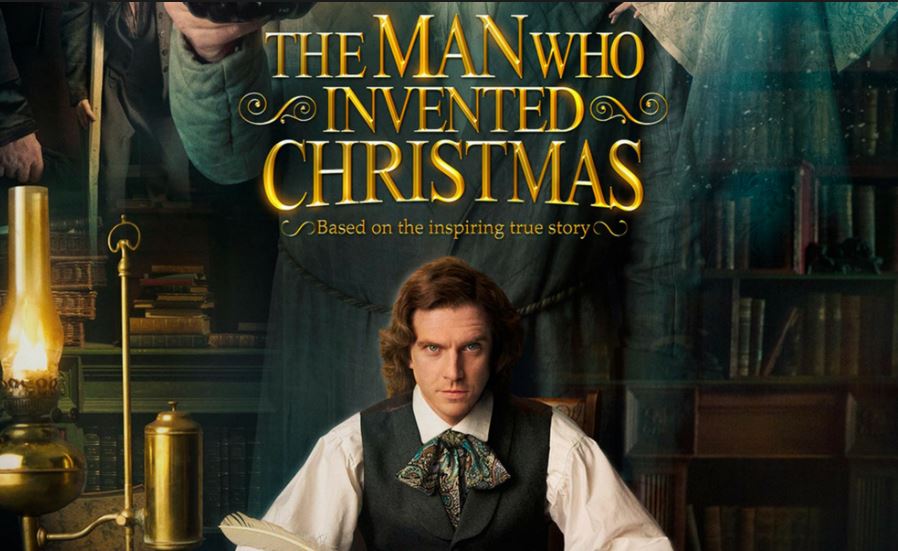
The other night I saw The Man Who Invented Christmas, a delightful film about how Charles Dickens wrote A Christmas Carol. When it was over I asked myself: How much of it was true? I’ve read one short biography of Dickens in the past, Charles Dickens: A Life by Jane Smiley. So I knew some details in the movie were based on truth. But I doubted its facts fit history in the same way the screenwriter presented them.

The Man Who Invented Christmas

After watching the film, I read Mr. Dickens and His Carol, a novel by Samantha Silva. Silva spent fifteen years working on this story, originally written as a screenplay. Her novel featured a more complicated story than the film The Man Who Invented Christmas but invents and fictionalizes a great deal more. The movie is lighthearted and fun, focusing on Dickens’ economic problems and how they inspired him to write A Christmas Carol in a few weeks. The film shows Dickens being haunted by the imaginary characters he created, and I’m sure that’s how many readers picture writers discovering their characters.

Silva’s novel creates a made-up fantasy life for Dickens, that worked to explain the psychological needs that drove him to write A Christmas CarolMr. Dickens and His Carol by Samantha Silva does not even attempt to be historically accurate, creating a fantasy about writing a fantasy. Although her novel was entertaining enough to keep me reading, I was never sure if it was ethical just to make up a fictional alternate history for a real person. Isn’t it a kind of flattering libel? Isn’t it just cashing in on another writer’s fame? Dickens might have loved it, and he might not, but I believe he’d likely want a cut of the royalties.

The film had questionable points too. Over the last decade, I’ve noticed a growing number of novels and movies based on real lives. I find them both compelling and disturbing. I feel we need to ask hard questions about fictionalize biographies?

  • Should we expect biographical fiction to be essentially true?
  • Aren’t these writers just cashing in on famous names?
  • What responsibilities do historical fiction writers have for teaching history?
  • Should we assume all fictional history is just fun fantasy?
  • Is it fair to historical people to remember them as fantasy characters?
  • How do we verify the fictional facts?

With two competing fictional biographies covering the same event, I felt compelled to hunt down facts.

The film, The Man Who Invented Christmas is based on a non-fiction book, The Man Who Invented Christmas: How Charles Dicken’s A Christmas Carol Rescued His Career and Revived Our Holiday Spirits by Les Standiford. This book covers recorded history. But should we assume since the movie is based on it, the movie will be historically accurate? Like novelists, screenwriters invent, and both are selling entertainment to make a buck. My guess is most of the movie is made up.

Now I needed real history to judge my fictional histories. I got out my unread copy of Charles Dickens: A Life by Claire Tomalin, a substantial biography. The Dickens I found here for 1843 was completely unlike to two fictional Dickens in 2018. Sure, some of its details were sprinkled in the two fictional stories but Tomalin’s black and white facts did not paint either colorful Dickens I saw in the film or novel. And each of the colorful Dickens is distinctly different too. For example, in one Dickens confides to his groom, and in another to a young maid. In one, his wife is part of the story, and in the other Dickens’ wife is conveniently shuttled off to Scotland. In each, we meet two different inspirations for Tiny Tim. In one, Dickens is the spendthrift, in the other, Dickens blames his wife.

I’d like to think when I read a historical novel or watch a historical film, I’m actually learning history. But whenever I read history books after imbibing a fictional version of the past, I’m always disappointed. Last year, both Dunkirk and The Crown felt very real historically, but were they? I haven’t read anything to verify them yet.

My memory of Dickens will always be historically corrupted by the visual Dickens of the film, played by a charming Dan Stevens (Matthew of Downton Abbey fame). Silva’s fantasy Dickens will always intrude when I reread Great Expectations and David Copperfield. Is either fair to the real Charles Dickens? Don’t I have a duty to study the recorded facts we have on Charles Dickens? Will the real Charles Dickens, please stand up? Or will we always create an endless parade of make-believe Charles Dickens?

I found both Inventing Scrooge by Carlo DeVito, a well-reviewed book on the specific subject, and the non-fiction book version of The Man Who Invented Christmas by Les Standiford, to be more digestible than the Tomalin biography for knowing how Dickens wrote his most famous story. Her biography was too large, complex, and detailed. I’m not ready for her graduate course just yet, but what I read was damn impressive.

I do want to know the real Charles Dickens. But I found comparing the two nonfiction books on the writing of A Christmas Carol to be revealing about the struggle to understand history. Nonfiction writers must speculate too, even if it’s just in the way they present their facts. When reading nonfiction we must also distrust what we read. We should always be skeptical.

I found the two fictionalize Dickens very entertaining. I don’t think they shouldn’t exist. However, I would say we should never enjoy a fictional account without balancing it with a nonfictional account. To answer my questions:

  • Never assume any fact in fiction is true.
  • Yes, writers are cashing in by using ready-made, well-known characters.
  • Novelists who write historical fiction should always produce an afterward that explain their research and delineate their speculation.
  • Assume all historical fiction is fun and we should get real history from nonfiction.
  • I bet most historical figures would be horrified and amused by how they are remembered. Many would be mad enough to sue if we time traveled them to the present. Which probably explains why so many want their letters and papers burned, or why they work so hard to preserve them.
  • The only way to verify fictional facts is to read multiple nonfictional sources. We can never know what historically happened. There are real people that I’ve read many biographies written about them, and I’d say four is the minimum to start getting a decent feeling for what they might have been like. And that’s only a might of.

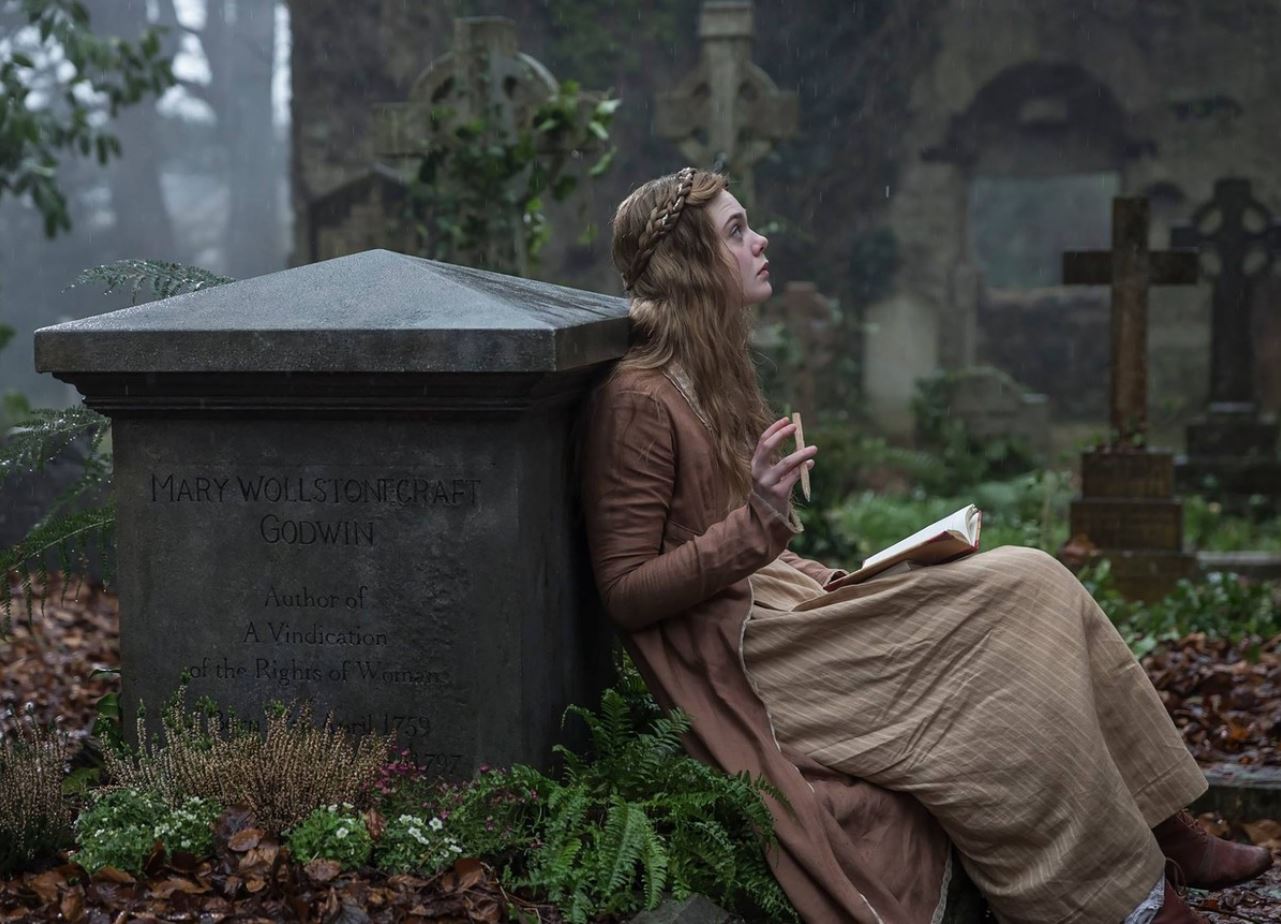
Then, I saw another historical film, Mary Shelley (2017). Even though this was a bomb at the box office, I greatly admired it. I really wanted to believe it was true. My wife and I both enjoyed the movie thoroughly, and we didn’t fathom why it’s gotten such a low Rotten Tomato score of 36%.

I want to believe Mary Shelley accurately portrayed Mary Shelley because it shows her as a determined, strong-willed woman, that succeeds against a culture that wanted to crush her. If we love a story about history, we want it to be the truth, don’t we? The film makes me want to know more about the real creator of Frankenstein’s monster and the author of the first real science fiction novel. I guess that impulse is a credit to historical fiction.

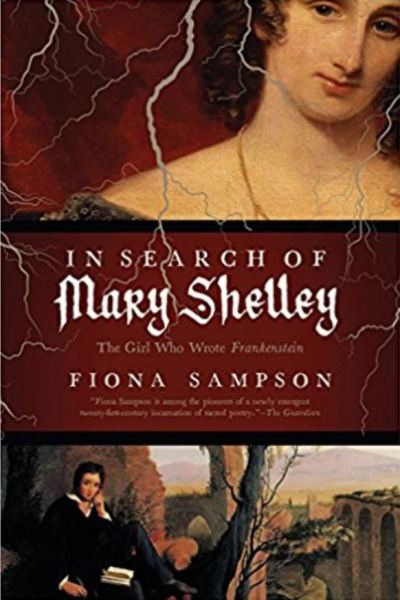
Now I need to go read In Search of Mary Shelley, a new biography by Fiona Sampson.

In Search of Mary Shelley by Fiona Sampson

Mary Shelley 2017

JWH


The Ghosts That Haunt Me

Most people are haunted by dead relatives – parents, aunts, uncles, grandparents, siblings – but the ghosts that haunt me the most, are people I never knew.  Since I’m an atheist I don’t believe in real visitors from the other side. I don’t expect my Jacob Marley to come calling on Christmas Eve.  On the other hand, there are a number of dead people that won’t leave me alone.

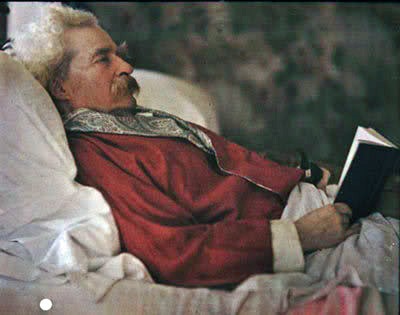
Mark-Twain-by-Alvin-Langdon-Coburn

I am mostly haunted by literary figures.  The first one to do this, starting when I was a kid was Samuel Clemens.  For some reason, reading about Mark Twain was always more powerful than reading his fiction.  It started with his autobiography.  I was a kid with my life in front of me, reading about a very successful man writing about his life behind him.  Samuel Clemens led both a charmed and tragic life.  His wife and two of his three daughters died before he did, and Clemens took this very hard.  Clemens always had a sharp tongue for the human residents of Earth, but towards the end, his writing turned bitter to the point of viciousness.  I was born naïve and became a skeptic by twelve, and Clemens writings fueled my conversion to disbeliever.  I have never experienced the tragedies Clemens experienced, so I’ve yet to become bitter, a burden I hope to avoid.

Twain didn’t finish an actual autobiography, but two versions of an autobiography appeared after he died that were heavily edited collections from his voluminous autobiographical writings.   Over the decades the University of California Press released various collections of Twain’s writings, with more and more material that hadn’t been published in his lifetime.  I first got a taste of Twain’s unpublished writing as a teen with Letters from the Earth, coming out in 1962 that I didn’t read until 1968 or 1969.  Over the decades many biographies about Twain have appeared and he would haunt me again and again.

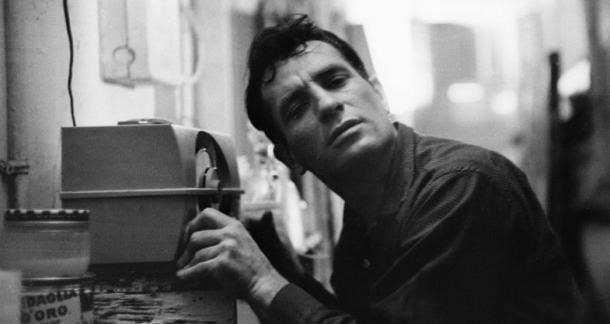
kerouac

Jack Kerouac was the next literary specter to haunt me, beginning in my twenties.  Jack died in October 1969, the fall I started college, the same year as the first Moon landing and Woodstock.  That was around the time I read The Electric Kool-Aid Acid Test by Tom Wolfe.  I can’t remember if I read that first, which led to reading On the Road, of if reading On the Road led to reading The Electric Kool-Aid Acid Test. Kerouac was a character in Wolfe’s book.

Kerouac was a writer like Proust and Thomas Wolfe (not Tom), who wrote books that were thinly disguised accounts of their own life.  I didn’t know this until I read the Ann Charters Kerouac: A Biography in the early 1970s.  That’s when Kerouac really began haunting me.  I’d read his books, then another new biography, and then reread the novels, and then another biography.  Kerouac became a 10,000 piece puzzle that I’ve never finished.

Even before Philip K. Dick died in 1982 he was a legendary character.  I remember reading about his paranoid theories in The Rolling Stone magazine, and stories about him in science fiction fanzines.  My college roommate even had dinner with Dick and his wife at a convention in the 1970s.  As soon as the biographies came out, I started reading them.  Like Kerouac, no matter how many puzzle pieces I found, the image I had of PKD was always shifting.  Like Twain and Kerouac, Dick was another troubled soul.  Why am I so haunted by people so torn up by their lives?

There is a book of conversations with PKD called What If Our World Is Their Heaven?  That title captures PKD’s kind of spookiness.

Louisa-May-Alcott

I read a biography of Louisa May Alcott before I read her famous book Little Women.  I started off reading about the American Transcendentalists, and found Louisa.  I read two Louisa May Alcott biographies before finally getting to Little WomenLittle Women was my mother’s favorite childhood book.  She tried to get my sister and I to read it when we were kids but I didn’t want to read a girl’s book.  But I was willing to watch Katherine Hepburn and June Allyson play Jo in the movie versions.  Over time Louisa May Alcott started haunting me too.  Another troubled soul.

Other writers haunt me too, Heinlein, Hemingway, Fitzgerald, Wells, Lawrence, Huxley, but so far I’ve only read one biography each for them.  Writers don’t appear truly ghostly until I’ve read several biographies and start reading their letters.  I have read many books on Wyatt Earp, but his appeal is different.  He doesn’t haunt me – maybe because he wasn’t a writer.  Or maybe he wasn’t a troubled soul like Twain, Kerouac, Dick and Alcott.  I’ve always loved biographies, they were among the first type of books I learned to read.  But most subjects of the biographies I read never lingered in my psyche like these four.

Interestingly, the lives of Clemens and Alcott overlapped, as did Kerouac and Dick.  Clemens and Alcott both became successes after the Civil War, becoming famous for writing about their childhoods.  Kerouac and Dick both wrote a lot of books in the 1950s that affected readers in the 1960s counter culture.  All four of them have had their share of film success – with their fictional work, and as characters themselves.  I am not the only person they haunt, not by a long shot.

There is a 1968 Burt Lancaster movie called The Swimmer based on a 1964 short story by John Cheever.  The story begins when a man at a pool party tells his friends that he thinks he can swim all the way home because there’s a pool in every yard across the suburbs to his house.  I think a wonderful account of American history could be written by just writing a series of biographies of all the American writers that span the centuries back to colonial times.  We’re used to history being about politics and war, conquest and invention, economics and industry, but I think there are many ways to look at the evolution of our culture, and the lives of these writers give a much different, and for me, a more real insight into the living through history.

I believe these writers haunt me more than the memories of my ancestors is because my relatives never wrote down their thoughts.  If my dad had written about his life, I think it would be a whole lot like Jack Kerouac’s.  They were both restless men and died miserable drunks.  I’m sure my mother and her mother loved Louisa May Alcott because their lives seemed much like hers.

For some people, the promise of prosperity never lives up to their unfolding lives, and that’s very hard to take.  Ambitious idealists usually have a long way to fall.  I’m currently reading The Unwinding by George Packer.  For all its shiny glory, the American Dream is hard to achieve.  Packer chronicles many Americans who have succeeded or failed, or both, in the last four decades.  What’s amazing about this book is the diversity of the people it presents.  Every American has a different American Dream.  I think we’re all haunted by past Americans.  I think we’re all inspired by our personal ghosts.

JWH – 9/4/13 – Happy Birthday Janis

Robert A. Heinlein – In Dialogue with His Century – 1907-1948

If there was ever a big fish in a little pond, it is Robert A. Heinlein.  Science fiction is a very small pond, and despite all its success at the movies and television, written science fiction remains a tiny ghetto in the world of fiction.  Robert A. Heinlein is a towering figure in the tempest-in-a-teapot world of fandom, but outside that small subculture Heinlein is little known.

William H. Patterson, Jr. has written the first half of a massive authorized biography of Heinlein called Robert A. Heinlein – In Dialogue with His Century – Volume 1 – Learning Curve – 1907-1948. The biographical narrative goes through page 473, while appendices and notes continue through page 594, and the index ends on page 622.  This is a well researched biography, and as I read it, I felt I learned as much about American life from 1907-1948 as I did about Heinlein.  Patterson studied the politics and social norms of the time to put Heinlein in context, and that greatly enriches the story.

Now here’s the problem.  Patterson wants to make Heinlein more influential than I think he was, not an uncommon trait of biographers.  However, Heinlein had some very devoted fans, who after his death have become even more fanatical about the importance of Heinlein’s work.  This reminds me of Jesus and his followers after his death.  Most of what is attributed to the historical Jesus was actually invented by his followers.  This kind of remaking the real man into a miracle worker may be happening to Heinlein.

I’ve been following Patterson’s work on Heinlein for over a decade, first on alt.fan.heinlein newsgroup and then with his Heinlein Journal.  Virginia Heinlein selected Patterson and gave him access to Heinlein’s papers.  Robert and Ginny Heinlein had burned a lot of his papers after he left his second wife, but evidently there were plenty left, because this is a very detailed biography on Heinlein’s early life.  I can’t wait for the second volume.

Heinlein always seemed such a secretive person that I was expecting little about his actual life and more about his fiction.  Instead, Patterson’s biography is mostly about Heinlein, and surprising little about his writing.  Patterson talks about Heinlein struggling to write, but mainly in relation to Heinlein needing a paycheck.  The book ends just as Heinlein is starting to become more financially secure, so his story is almost one of struggling for over forty years to become a overnight success.  Heinlein overcame economic hardship and a lifetime of poor health to succeed and fail at many ventures before becoming a science fiction superstar.

Any Heinlein fan should love this book.  However, I think Patterson wants Heinlein to be far more important than he is.  If you look closely to Patterson’s sentences, especially in his introduction, but throughout the book, he adds a strong Heinlein bias.  Patterson obviously feels Heinlein is significant outside of science fiction and I have to question that.  Patterson says on page 15 of his Introduction,

And even among this select group of writers-cum-culture-figures, Heinlein is unique.  He galvanized not one, but four social movements of his century:  science fiction, and its stepchild, the policy think tank, the counterculture, the libertarian movement, and the commercial space movement.

I’m sorry, but I just don’t buy this.  When you read books about the 20th century you just don’t see Heinlein mentioned, mainly because they seldom mention science fiction.  And the parenthetical statement crediting think tanks to science fiction, is bizarre itself.  And frankly, Heinlein’s impact on the counter culture, libertarian and commercial space movement has got to be extremely minimal.  The logic is almost equal to: powerful leaders drink whiskey, thus the twentieth century was galvanized by whiskey.

Heinlein was a substitute father figure to me growing up.  I love many of his books, enough to read and reread them.  I’ve read most of what he wrote at least twice.  Yet, I give him very little credit as to influencing me.  Heinlein was a major influence on science fiction, and strangely enough Patterson’s doesn’t show that in his biography.

Now I assume Patterson did this on purpose, knowing that so many other books have already been written about the history of science fiction, and no book has been written on the history of Heinlein the man.  Heinlein, and his hardcore fans always wanted to separate his fiction from the man, claiming readers shouldn’t extrapolate ideas about Heinlein from his stories.  I think this new biography will be the Rosetta Stone for decoding Heinlein inside his fiction.

Alexei Panshin’s legacy appears to be totally despised by the Heinlein fanatics because he offended the master with the first book on Heinlein, Heinlein in Dimension, back in 1968.  I think its still the best quick overview of Heinlein’s fiction from 1939-1966, but that Panshin book continues to enrage the Heinlein disciples.  They see it as trashing Heinlein, even though I thought it was a young man’s love letter to his hero.    Panshin’s later book, The World Beyond the Hill, does explain Heinlein’s influence during the golden age of science fiction, covering the same period of Patterson’s biography.  Both of these books won Hugos, although Panshin got a Hugo for fan writing while he serialized Heinlein in Dimension in fanzines.

Like I said, if you want to know Heinlein the man, read Robert A. Heinlein: In Dialogue with His Century, but if you want to know about Heinlein’s influence on SF, read Heinlein in Dimension and The World Beyond the Hill.  Now I expect this will change.  Because the authorized biography has finally come out, and especially after the second volume appears, I expect a new writer to put all the sources together and write a new story by story survey of Heinlein’s fiction.  And if that writer is well read in science fiction, I think he or she will be the one to explain Heinlein’s influence on the genre.  Oddly enough, I wonder if that could be Alexei Panshin?  Boy, wouldn’t that piss off the hardcore Heinlein followers.

After you finish reading the Patterson biography, go over to The Critics Lounge and read some of Panshin’s later essays, especially “When the Quest Ended.”  Which biographer do you prefer, Patterson, the authorized explorer of Heinlein, or Panshin, the shunned fan? 

Heinlein’s real legacy is his impact on the little world of written science fiction.  When I was growing up in the 1960s most science fiction fans considered Heinlein the top dog of the field, but today you can ask young people reading science fiction what writers they love and often Heinlein doesn’t even get listed.  But that’s deceptive, because those young people often pick writers that were influenced by Heinlein.  Those writers are the true disciples and children of Heinlein.

As much as Patterson would like to think that Heinlein greatly influenced the counter culture, libertarianism and commercial space companies, I just don’t think he did.  Those are separate worlds and some of their members might have read and loved Heinlein’s books, but they had their own shapers and makers.

William Patterson’s biography of Robert A. Heinlein is a must read for anyone who loves Heinlein’s fiction.  We finally get to know the Wizard behind the Oz Heinlein created.  After finishing the biography I wanted to start with Heinlein’s first story and read them all again, till his last, and examine his writing in light of the new biography.

JWH – 9/6/10