Why It’s So Important to Remember What I Read in 2021

by James Wallace Harris, 12/30/21

Reading is my sixth sense, how I explore the larger reality I can’t observe with my classic five senses. Every year I can only read so many books, making it important to wisely select the novels, nonfiction books, short stories, and articles I do read. Reading changes me. I shape myself by what I read. Each year I work to become more conscious by what I select to read. However, this self-improvement effort is very much like my efforts to eat healthily and avoid junk food. I’m never a saint.

At seventy, my mind is becoming like an old suit with moth holes. Words and thoughts leak out of my consciousness through little missing places eaten away by the moths of time. Remembering is something that’s become very important to me, as much as sex was on my adolescent mind.

The Reading List by Sara Nisha Adams is the 52nd and last book I read in 2021. It’s an accomplishment to read so many books in one year. And 52 is a good number. It means I averaged one book a week, and that’s a nice reading pace.

I’ve always wanted to be one of those superbookworms who could read 100 or 200 books a year, but my mind and memory can’t handle that much new content. I like to think one book a week is what my mind can handle, but I’m probably fooling myself.

52 is probably too many but I’d hate to read less. I feel I did a pretty good job of picking worthwhile reads, ones I still remember reading at the end of the year, but I have to admit, some of them were not necessarily the best books I could have picked. I will try harder next year. The problem is the conflict between reading books that expand my awareness, and books that soothe my soul.

One way to remember the books I read in 2021 is to remember my favorites, the ones I’d recommend. Links are to essays I wrote during the year.

New Fiction

New Nonfiction

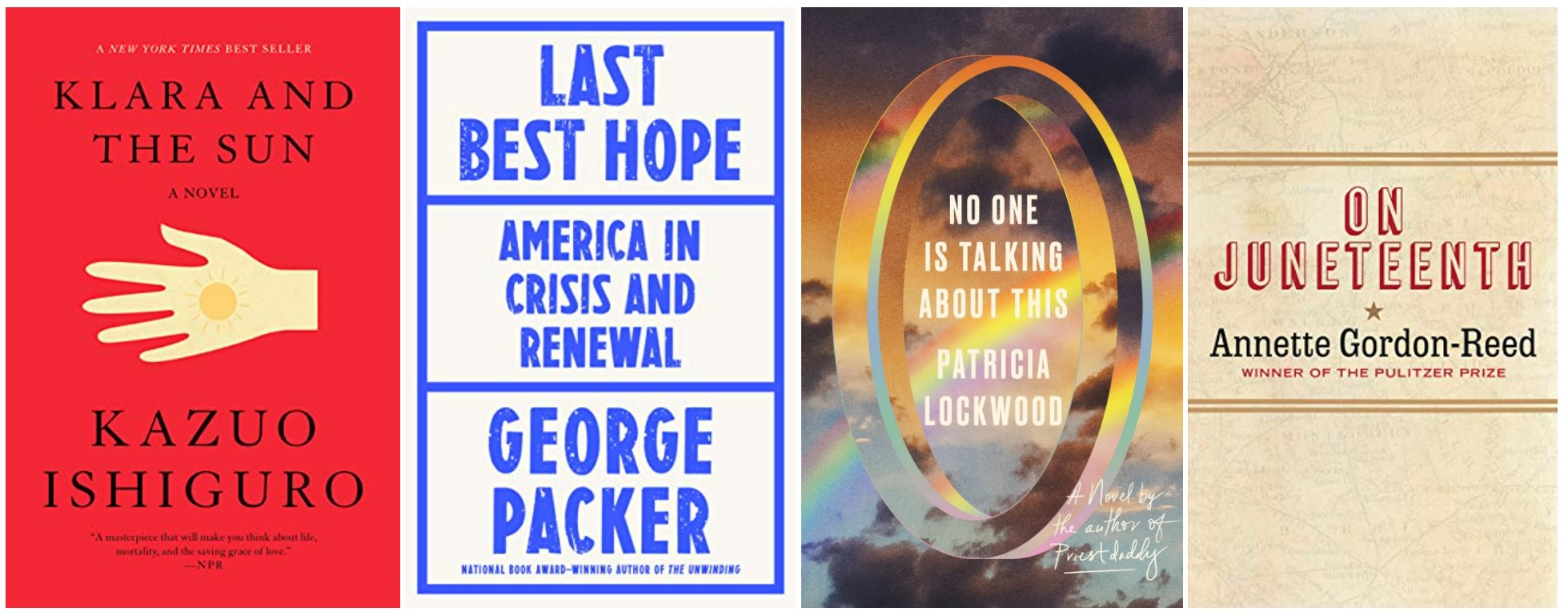
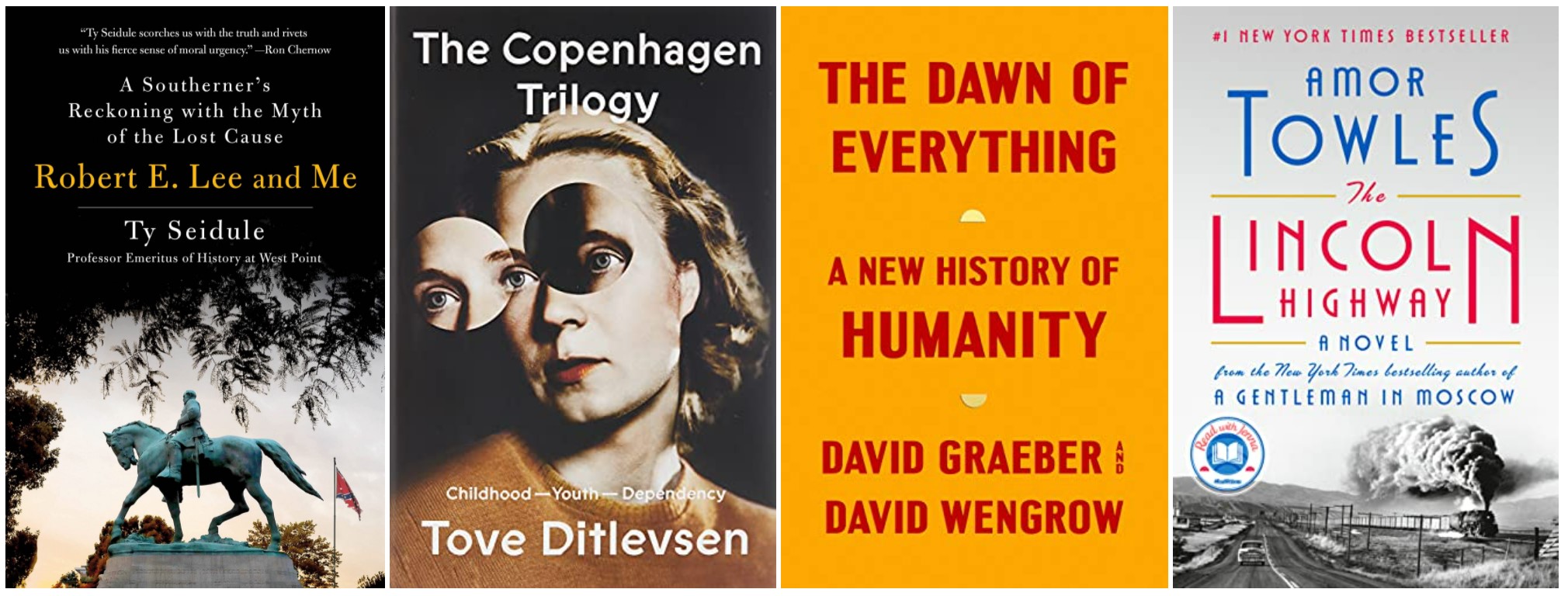
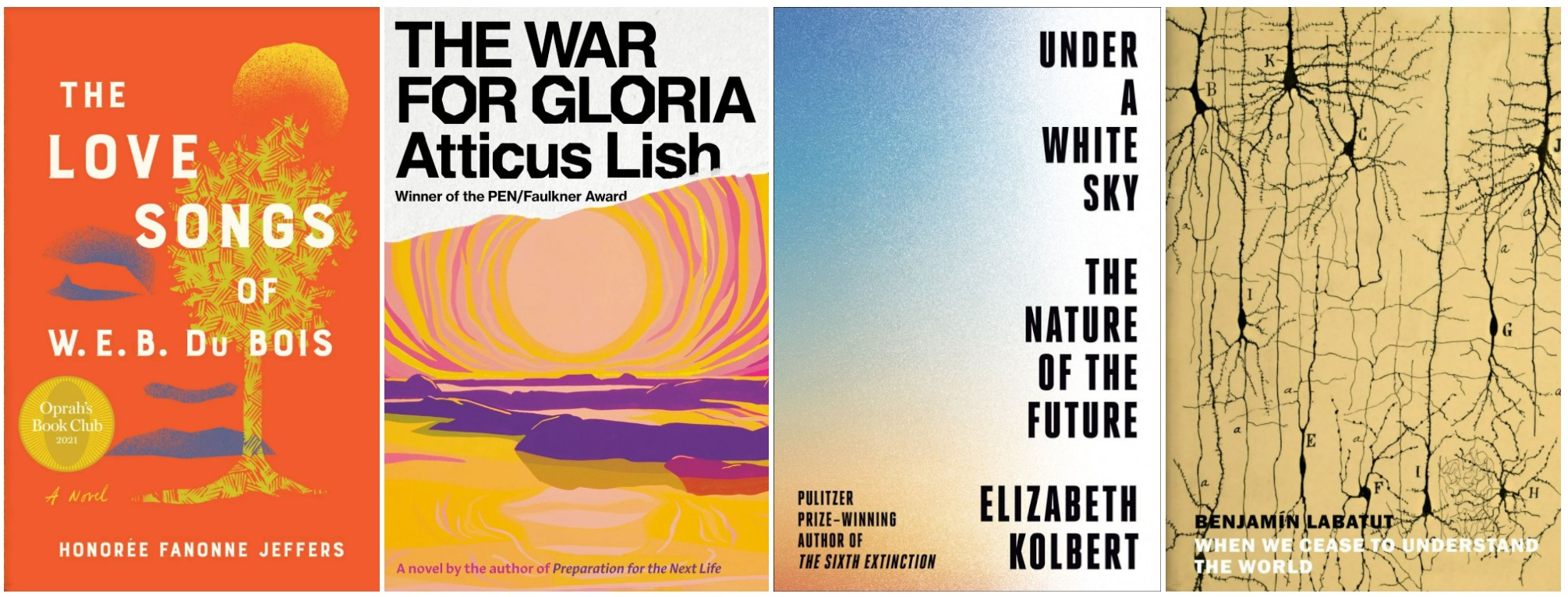
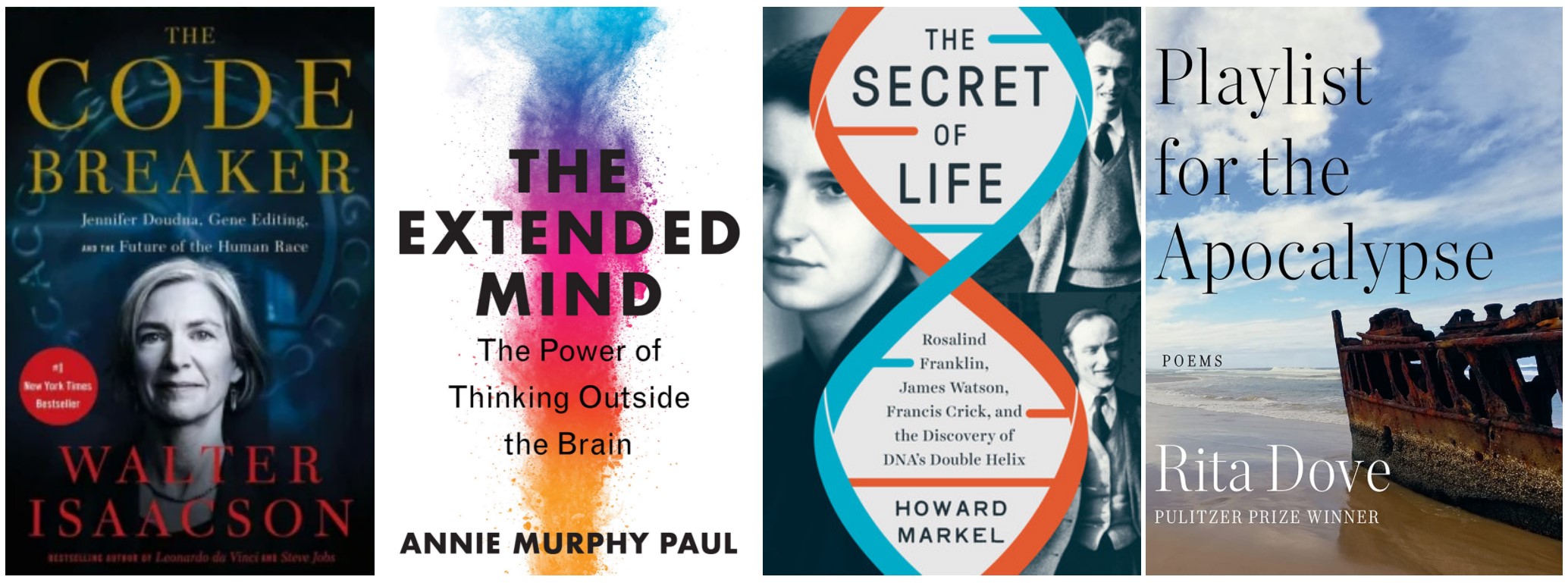
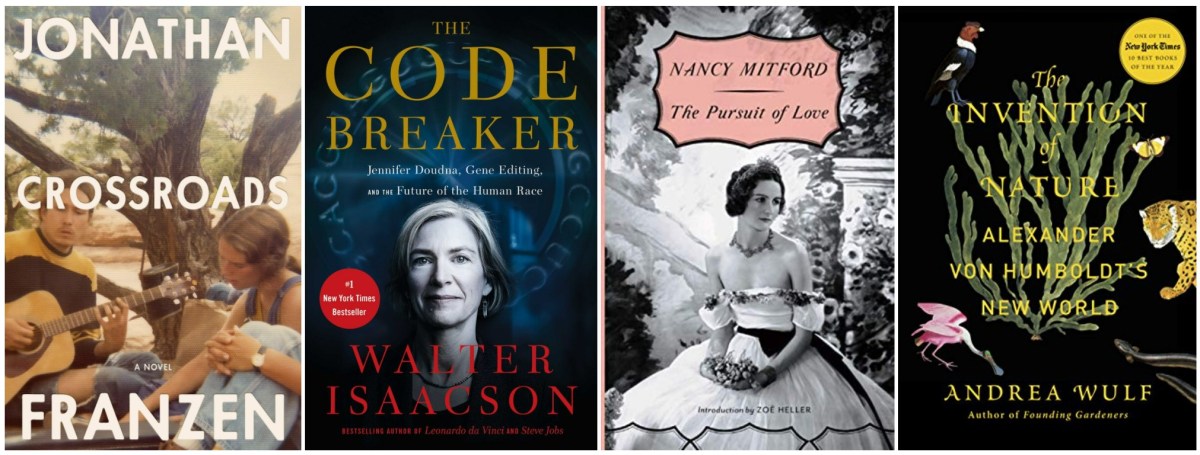
  • The Code Breaker – Walter Isaacson
  • Robert E. Lee and Me: A Southerner’s Reckoning with the Myth of the Lost Cause – Ty Seidule
  • Last Best Hope: America in Crisis and Renewal – George Packer
  • The Premonition: A Pandemic Story – Michael Lewis
  • Under a White Sky – Elizabeth Kolbert

Old Fiction

Old Nonfiction

  • The Invention of Nature – Andrea Wulf
  • Evil Geniuses – Kurt Andersen
  • The Art of Dying Well – Katy Butler
  • Hackers – Steven Levy
  • The Sisters – Mary S. Lovell
  • LikeWar: The Weaponization of Social Media by P. W. Singer

Another way to remember is to recall why I read certain books. I’m in a two-person book club with my friend Linda, I’m also a member of an online nonfiction book club, I’m in a Facebook group that reads science fiction anthologies, I have a personal reading goal to read all 25 volumes of The Great SF Stories edited by Isaac Asimov and Martin H. Greenberg, I like to read science fiction novels, I love to read popular science books, and I enjoy reading some contemporary and classic fiction.

Two-Person Book Club With Linda

  • Evil Geniuses: The Unmaking of America – Kurt Andersen
  • Horseman, Pass By – Larry McMurtry
  • 21 Lessons for the 21st Century – Yuval Noah Harari
  • Leaving Cheyenne – Larry McMurtry
  • The Art of Dying Well – Katy Butler
  • Robert E. Lee and Me – Ty Seidule
  • The Code Breaker – Walter Isaacson
  • Elderhood – Louise Aronson
  • Last Best Hope: America in Crisis and Renewal – George Packer
  • Crossroads – Jonathan Franzen
  • The Premonition: A Pandemic Story – Michael Lewis

Linda went on to read several more Larry McMurtry books, but I just couldn’t keep up with her.

Online Nonfiction Book Club

  • Underland: A Deep Time Journey – Robert MacFarlane
  • The Sisters – Mary S. Lovell
  • Robert E. Lee and Me – Ty Seidule
  • The Invention of Nature – Andrea Wulf
  • Noise (didn’t finish) –
  • Uncanny Valley (read in 2020) – Anna Weiner
  • Ten Lessons for a Post-Pandemic World –  Fareed Zakariia (didn’t finish)
  • Fermat’s Enigma – Simon Singh (didn’t finish)

I had read The Sisters, Uncanny Valley, and The Invention of Nature on my own and nominated those books. I skipped four books this year: Entangled Life by Merlin Sheldrake, Forgetting by Scott A. Small, Kindred by Rebecca Waggs Sykes, A Promised Land by Barack Obama.

Nonfiction I Picked

  • Hackers – Steven Levy (reread)
  • Yesterday’s Tomorrows – Mike Ashley
  • LikeWar: The Weaponization of Social Media – P. W. Singer
  • A People’s History of Computing in the United States – Joy Lis Rankin
  • Fifth Avenue, 5 A.M. – Sam Wasson

I love reading about the history of computers, and the history of science fiction. Fifth Avenue, 5 A.M. is about the making of Breakfast at Tiffany’s. I also love reading about pop culture history.

Facebook Group – Best Science Fiction and Fantasy Short Fiction

  • Year’s Best SF 1 – ed. David Hartwell
  • Orbit 1 – ed. Damon Knight
  • The Very Best of the Best ed. Gardner Dozois
  • The Year’s Best S-F, 5th Annual Edition – Judith Merril
  • The Dark Side – ed. Damon Knight
  • World’s Best Science Fiction 1968 – ed. Donald Wollheim
  • The New Space Opera ed. Gardner Dozois
  • The Year’s Best Science Fiction 3rd Annual – ed. Gardner Dozois
  • The Big Book of Science Fiction – ed. Ann and Jeff VanderMeer (58% finished)

This group gets me to read a great deal of science fiction short stories. We discuss one short story a day, but I don’t read every day’s story. Still, probably over 200 stories. I really enjoy this group, and I’m learning a tremendous lot about the history of short science fiction. I’ve probably read over 400 short stories this year because of other SF anthologies and magazines I read on my own.

The Great SF Stories

  • The Great SF Stories 16 (1954) – ed. Asimov/Greenberg
  • The Great SF Stories 17 (1955) – ed. Asimov/Greenberg
  • The Great SF Stories 18 (1965) – ed. Asimov/Greenberg

I’ve been working through this 25-volume series since 2018. I’ve become immensely fond of this series. It’s a shame they are out of print. I own all twenty-five in paperback, but I read them on my iPad from pdf copies found on the internet. I keep hoping the Facebook group to vote to read the entire run. We do start volume 25 on the 29th of this month. I’d love to finish off the series in 2022, but that would be reading 7 more volumes in 2022 and that probably won’t happen.

Science Fiction

  • The Ministry of the Future – Kim Stanley Robinson
  • The Man Who Fell to Earth – Walter Tevis
  • Klara and the Sun – Kazuo Ishiguro
  • Children of Ruin – Adrian Tchaikovsky
  • The Clockwork Man – E. V. Odle
  • Past Master – R. A. Lafferty
  • Of Men and Monsters – William Tenn
  • Lords of the Psychon – Daniel F. Galouye
  • The Dying Earth – Jack Vance
  • The War of the Worlds – H. G. Wells
  • Danny Dunn and the Anti-Gravity Paint – Abrashkin & Williams
  • A Gift of Time – Jerry Merritt
  • The Best of Walter M. Miller, Jr. – Walter M. Miller, Jr.
  • To Say Nothing of the Dog – Connie Willis

That’s a total of 26 science fiction books. Far more science fiction than I believe I should be reading. Each year I tell myself I should read less science fiction and more other kinds of books, but I can’t seem to break my life-long science fiction addiction.

General Fiction

  • Horseman, Pass By – Larry McMurtry
  • Leaving Cheyenne – Larry McMurtry
  • The Girl on the Boat – P. G. Wodehouse
  • The Pursuit of Love – Nancy Mitford
  • Love in a Cold Climate – Nancy Mitford
  • Don’t Tell Alfred – Nancy Mitford
  • Crossroads – Jonathan Franzen
  • The Corrections – Jonathan Franzen
  • The Reading List – Sara Nisha Adams

I’m disappointed that I didn’t read a new 19th-century classic. Last year I read War and Peace. I did read The War of the Worlds, but I’ve read it a couple of times before. I had planned to read Madame Bovery.

2021 Books

  • Klara and the Sun – Kazuo Ishiguro
  • Yesterday’s Tomorrows – Mike Ashley
  • Robert E. Lee and Me – Ty Seidule
  • The Code Breaker – Walter Isaacson
  • Last Best Hope – George Packer
  • Crossroads – Jonathan Franzen
  • The Premonition – Michael Lewis
  • Under a White Sky – Elizabeth Kolbert
  • The Reading List – Sara Nisha Adams

Each year I aim to read a certain number of books that come out during the year. Nine is pretty good for 2021, but I’m going to aim for 12 in 2022.

JWH

The Post-Doom Reading List

by James Wallace Harris, 12/23/21

I’m listening to a wonderful book right now, The Reading List by Sara Nisha Adams which came out in August. It’s set in London. Someone is going around leaving little notes that say:

Just in case you need it:

- To Kill a Mockingbird
- Rebecca
- The Kite Runner
- The Life of Pi
- Pride and Prejudice
- Little Women
- Beloved
- A Suitable Boy

The novel is about the people who find those lists, read the books, and how reading changed their lives. Any bookworm should love this book, and most Goodreads reviewers do. I highly recommend the audiobook version because the narrators do the ethnic accents which make the book extra charming.

This inspires me to create my own list of favorite feel-good novels. If I went around leaving a list of books for people to read in these trying times, my eight would be:

We’re living through some hard times and I appreciate books with characters who overcome big difficulties. I’m moving into what I call my Post-Doom Philosophy. I’ve concluded that humanity will not solve its existential problems. Just not in our nature. And it will be better to concentrate on uplifting outselves.

I’m reminded of The Myth of Sisyphus by Albert Camus. Our present situation is beyond absurd, one I can’t change. I accept that we’re already in a collapsing civilization, we just don’t know how long it will take before a new paradigm shift emerges. Some civilizations collapse in decades, Rome took centuries. Everyone eventually dies, and all civilizations eventually collapse. We can’t wish either away. We’ve always had the problem of what to do in our last years of life, and just by coincidence this century, we’ll also have to consider what to do in the last decades of our civilization. It’s an interesting philosophical and spiritual challenge.

Just because the future looks bleak we shouldn’t feel all gloom and doom.

My friend Linda and I have a two-person book club where we read mostly nonfiction books together and discuss them on the phone each Sunday afternoon. We’ve read many books about the problems of the world. Linda just texted me asking if we could avoid such books in 2022 and pick books like The Soul of the Octopus by Sy Montgomery. She wants more delightful books. I couldn’t agree more.

If you were making a list of eight nonfiction books to leave around to inspire people, what would they be? What would your list of favorite inspiring novels be?

JWH

Identifying the Best Books from 2021 to Read in 2022

by James Wallace Harris, 12/18/21

December is the time when we get loads of best-books-of-the-year lists. I enjoy looking at all those lists because I love finding the books that are the most recommended. I can’t read everything. I can’t even read everything that’s great.

I’m lucky to read 4-6 new books as they come out during the year, and sometimes they are among the ones critics have loved. That’s satisfying. For any given year I probably read 10-12 of its best books, that’s including fiction and nonfiction. That’s out of thousands of books published each year, so I get a microscopic sampling of books published. That’s why I work to find the best books, and by best, I mean the most talked about, the most recommended, the most newsworthy books.

I read on average one book a week, or 52 books a year. Most of them are older books, usually from the 20th century, sometimes from the 19th, and on rare occasions even older. I don’t want my head stuck completely in the past, so I try to read 10-12 books each year from the most recent two years. I usually discover a handful of books as they appear during the year, and then identify several more to read in the following year from the end-of-the-year lists.

Over time I’m discovering the most useful best-of-the-year lists. Here are the lists I’m using this year:

Books We Love – NPR. NPR lists over 2,800 books, but they provide a filtering system to help you zero in on the ones you might prefer. Their site has yearly lists back through 2013. Just the button for Staff Picks lists 179 books, that’s way too many. What I do is study the covers. And then go on to other best-of-the-year lists. It’s like the old TV quiz show Concentration, I try to spot covers again from memory. But instead of finding the pair, I try to find covers that are shown on the most lists.

Of their Staff Picks I’ve already discovered the following during 2021:

New York Times Critics’ Top Books of 2021. This is another very long list. But they also offer another shorter list, The 10 Best Books of 2021. Sadly, the long list doesn’t include cover photos, so it’s harder to play my Concentration cover game, so reading the short paragraphs about them is important. And The New York Times even offers an even longer list, 100 Notable Books of 2021, this time with covers. The critics at the Times picked many of the books the NPR critics picked, and many books I’ve already heard some word of mouth. These are the ones I want to try so far:

Vogue, Vulture, and Time have recommendations that are often similar to NPR and The New York Times. Time also recommends another book I’ve already read: The Code Breaker by Walter Isaacson. That makes me feel I did pretty good finding books coming out during 2021. And they recommend Empire of Pain: The Secret History of the Sackler Dynasty by Patrick Radden Keefe that’s been on most of these lists. I’m just not interested in that subject, but with so many recommendations I feel maybe I should try it. These lists also reinforce the books I list above that I already want to read.

Publishers Weekly has a website system like NPR that recommends way too many books to consider but has a filter system to narrow things down by genre and interest. Their database goes back to 2010, and their lists have links to the original reviews. Once again I’m seeing the same covers of books I’ve been wanting to read, but I’ve spotted two additional books to add to my list from their Top Ten List: All That She Carried: The Journey of Ashley’s Sack, A Black Family Keepsake by Tiya Miles and The War For Gloria by Atticus Lish. I’ve been remembering those two covers from the lists I’ve been seeing, and their descriptions are enticing.

I believe I’ve found a total of 23 books from 2021 that interested me most, and I’ve already read 7 of them. That leaves 16. I doubt I’ll get all 23 books read in the coming year. It depends on how many 2022 books attract my attention first, or how mired in the past I become. If I read all 23 that will double my normal current book consumption habit.

There is one last list to mention, Goodreads Choice Awards 2021. These are voted by members of Goodreads. Sometimes the bookworms pick the same books as the critics, and sometimes not. However, this list at Goodreads uncovers a lot more fun genre titles.

Lastly, I’ve discovered that if I keep these recommended novels in mind, sometimes they appear in sales at Bookbub, or in the Kindle Daily Deal, or on Audible. Also, many of them come to Scribd, a book subscription library. I think of Scridb as Netflix for books. Five of the sixteen books I want to read are already available at Scribd. It’s a bargain at $9.99 a month.

JWH

Can We Build Tornado-Proof Houses?

by James Wallace Harris, 12/15/21

The recent tornado in Mayfield, Kentucky has me worried. I’m old, retired, and have health issues, so having my home destroyed would be immensely stressful. I feel so sorry for people in disasters like this, but especially when I see old people having to be helped because they are so helpless. I fear being helpless.

One thing I noticed in the pictures from Mayfield is some buildings survived the devastation. My friend Connell told me after Hurricane Andrew hit Miami they realized how houses were poorly constructed and made changes to the building codes. The newer homes are much more hurricane-resistant. I’m wondering if the same kind of codes can be applied to protect homes from tornadoes.

However, I don’t want to wait for new building codes or move to a new house. I doubt there are practical retrofit possibilities. One of the things that trouble me about tornadoes and other forms of weather damage is having to leave my home. If the house is a complete loss, there’s no choice, but what if there’s only some damage? Say a tree crushes one side of the house. I’d want to rebuild, and I wouldn’t want to leave my partially good house either.

So I’ve been thinking of something else. People use to have storm cellars. What if I could have a tiny home or a mother-in-law wing addition to my house that was built to strict specifications, could it survive a tornado? Something that Susan, the cats, and I could live in while our house was being rebuilt, or when storms are about to happen. Would this be practical? And how much would such a building cost?

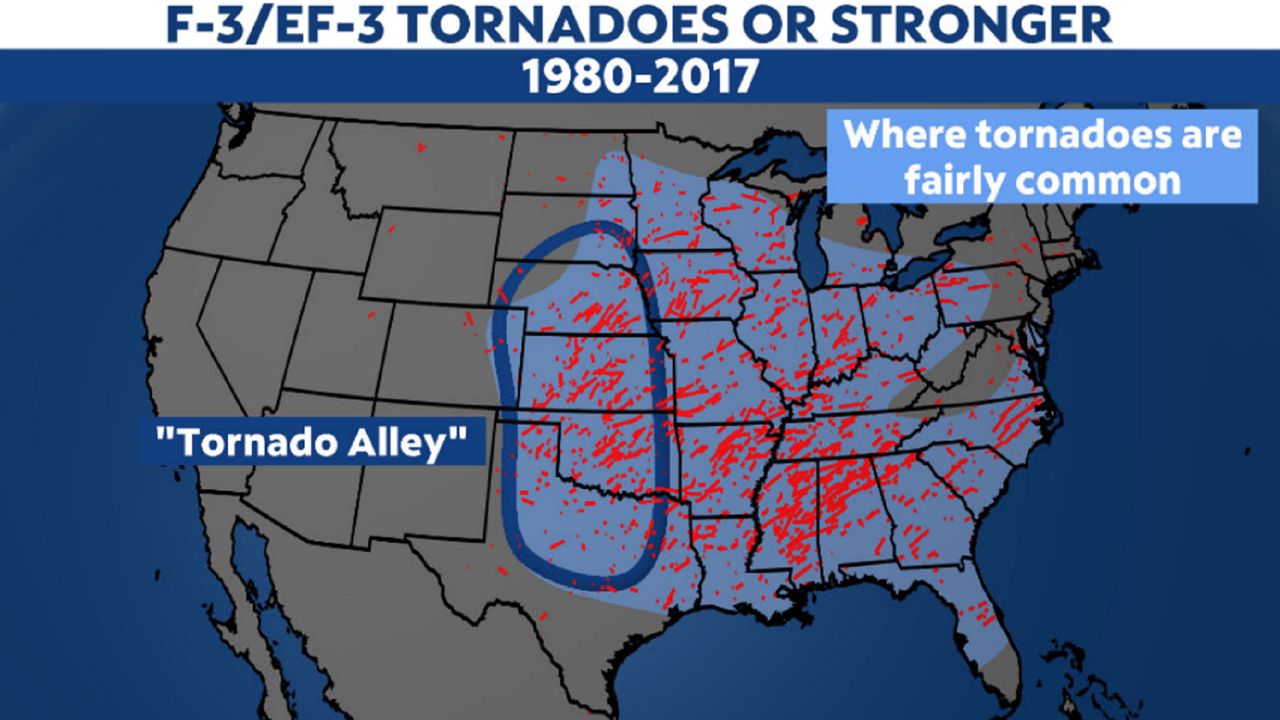
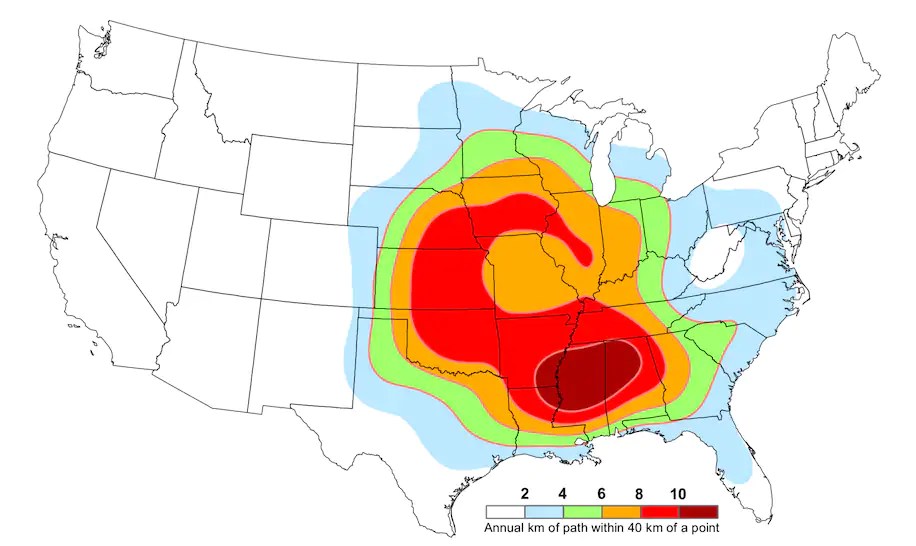
Is Tornado Alley Shifting to the Southeast?

I’m starting to see reports that Tornado Alley is shifting to the east, with some maps putting it where I live in Memphis, Tennessee. Other people are saying it’s not shifting with widening.

This article says tornado alley is an outdated concept and suggests a new shape.

Then I saw this article about high winds. Now that’s pretty scary.

How big would a lifeboat house or addition have to be? Should it be partially underground? Or could it be built with concrete blocks and a steel frame to withstand most weather-related disasters? It would need to have a bathroom and shower, but otherwise, everything could be in one room, including a kitchenette. Should we assume water and sewer systems survive most disasters? What about gas lines? Or should it be totally self-sufficient?

This is something to think about. Maybe it’s a business opportunity for a new industry. Could a prebuilt pod be designed and mass-produced to reduce the cost of such a need? Basically, a tank-like RV or small house trailer that could be partially buried might be a good design.

Remember the bomb shelter craze of the 1950s and 1960s? Maybe we’ll have a new climate change shelter craze?

JWH

What Am I Hearing?

by James Wallace Harris, 12/4/21

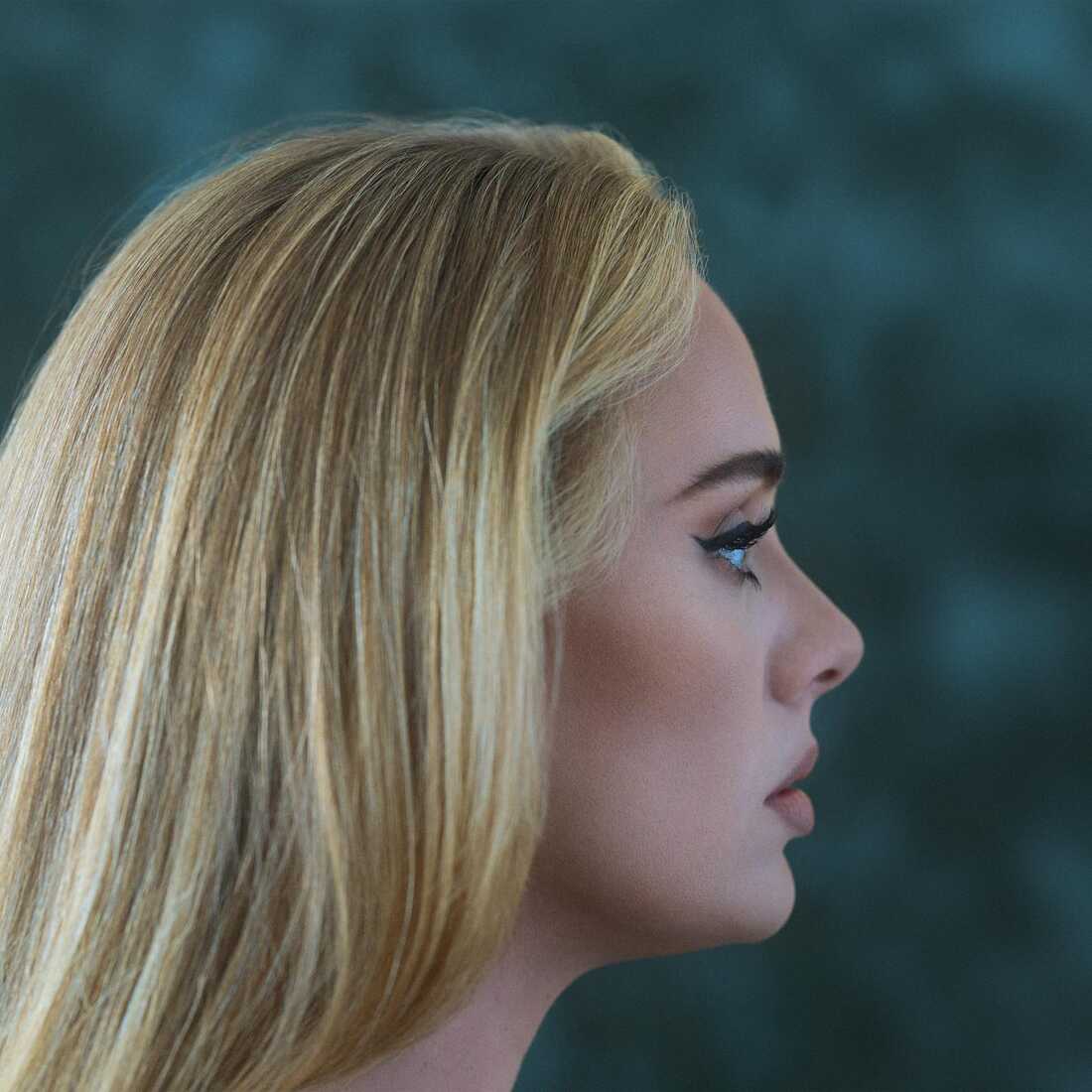
I got the new Adele album on CD on the day it came out. It’s called 30, but evidently, her face is so famous she needs neither her name nor the album title on the cover. The songs are beautiful, different, and produced and engineered with tremendous sound quality. 30 is not 25, or 19. Adele is exploring new musical territory.

However, this isn’t a review of Adele’s new album. Nor is it a review of the four audio systems I used to play that album. It’s about a quest to hear everything possible in a sound recording. And I mean more than just frequency response. I struggle to pull everything I possibly can out of this album.

We think we listen with our ears. Audiophiles are on a never-ending quest to improve their playback systems. In this regard, I’m only a cheap-ass audiophile. The Holy Grail for audiophiles seems to be reproducing the sound the producers heard when making the record. Is that even possible? Didn’t the producers and sound engineers add magic we’d never hear live in the studio?

I’ve been watching Peter Jackson’s The Beatles: Get Back on Apple TV+. It’s a 3-part, 468 minute documentary about watching the Beatles create music. My takeaway is the Fab Four sound a lot different from what we hear on their albums. What I’m hearing when listening to 30 is probably a far cry from what it would be like to stand in the studio and listen to Adele sing.

I’m also listening to at least four works of art at once. We have Adele’s voice, we have the musicians, we have the producer’s creation of those two works, and we have the lyrics that we decode with our experience and emotions. And this album is full of emotion, especially about the breakdown of her marriage.

All your expectations of my love are impossible
Surely, you know that I'm not easy to hold
It's so sad how incapable of learning to grow I am
My heart speaks in puzzle and codes
I've been trying my whole life to solve
God only knows how I've cried
I can't take another defeat
A next time would be the ending of me
Now that I see
   --- "Love is a Game"

I'm having a bad day, I'm having a very anxious day
I feel very paranoid, I feel very stressed
Um, I have a hangover, which never helps, but
I feel like today is the first day since I left him that I feel lonely
And I never feel lonely, I love being on my own
I always preferred being on my own than being with people
And I feel like maybe I've been, like, overcompensating
And being out and stuff like that to keep my mind off of him
And I feel like today, I'm home and I wanna be at home
I just wanna watch TV and curl up in a ball and
Be in my sweats and stuff like that, but I just feel really lonely
I feel a bit frightened that I might feel like this a lot
   --- "My Little Love"

When I play 30 on my four different systems the songs sound slightly different, and each makes me feel different. 30 also makes me feel different depending on which room I’m listening in, and how loud I’m playing it. If I play “My Little Love” in the den, my largest listening room, on my Bluesound Powernode 2i with Klipsch RP-5000F speakers at a loud volume I feel surrounded by music and singing. It feels closest to what I imagine hearing Adele in a small club might sound like. It also has the greatest emotional impact. And this is just streaming the song via Spotify. I believe part of this experience is due to the acoustics of the room and partly due to the Klipsch speakers, which seem particularly good for vocals.

When I play the CD in my computer room, which is probably 12×20, using the Bose 301-V speakers connected to a Yamaha WXA-50 amplifier/DAC and Pioneer DV-563A CD player it sounds almost as good, but has a much less emotional impact. The soundstage is good, but I have to keep the speakers up high on top of Billy bookcases from Ikea. I hear more bass, probably because of the 8″ woofers, and the speakers being close to the wall. It’s a really good sound, and I hear different things in the recordings that I don’t notice in the den.

I also have another system in the computer room, an Arylic A50+ streaming amplifier with Sony SSCS-5 speakers. It has a brighter sound, still surprisingly pleasing for such a low-cost system and 30 makes me feel different listening to it. Finally, I have two paired Echo Studios in my bedroom. If I play them loud enough, I hear a slightly different sound, where I notice even other details, especially since I listen to these speakers as I fall to sleep and often wake up hearing music in a dreamy state.

In all four systems, I sometimes focus on the music, sometimes on Adele’s voice, and sometimes on Adele’s words. Sometimes I even think about how the song sounds compared to other music eras.

When I listen to music I concentrate on it with the same intensity I concentrate on a movie at the theater. If I’m in the right mood, I achieve a kind of reverie where I forget my body and that heightens my thoughts and senses. I can’t get any of my friends to listen to music with me. They all like listening to music when they are doing something, and think it’s weird I want to zone out. I remember when I was young, I’d listen with other people and we’d all space out like we were in an opium den. Of course, we were smoking dope back then. (I remember getting one older guy high who loved music and he claimed he heard things he never noticed before. But wasn’t it always there? Isn’t it just a matter of paying attention?)

I’m sure we all hear music differently. But I keep wanting to hear more as if my current equipment is leaving out sounds I should be hearing. Listening to audiophile reviewers makes me wonder how much I’m missing. I keep thinking my experience would be greater if I only bought more expensive equipment. But that might be me fooling myself.

I keep telling myself I will find more if I just listen with a greater focus on the equipment I already have. I keep telling myself I will hear more if I read and study how the music was put together. I keep telling myself I will hear more if I keep asking “What am I hearing?” I spend too much time watching reviewers of stereo equipment when I should be watching videos or reading books by people who study the music. That what I hear will be improved by upgrading my brain with training. That what I’m hearing is mostly determined in my brain.

(Yet, I yearn for a Cambridge EVO 150 and Klipsch Cornwall IV speakers.)

JWH