Growing up in the 1960s I was programmed to love rock music by AM radios. I never developed an ear for classical music. Last night, three lady friends and I, attended the opening performance for this season of the Memphis Repertory Orchestra. I tried hard to get into the music. It’s not that I hated what I heard, it was enjoyable, even fascinating, but I didn’t get the emotional response from that music that I do from pop music. I’m trying to figure out why.
I thought the performances last night were very good, and plan to attend again. I’m intrigued once again with classical music.
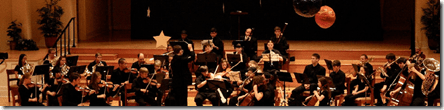
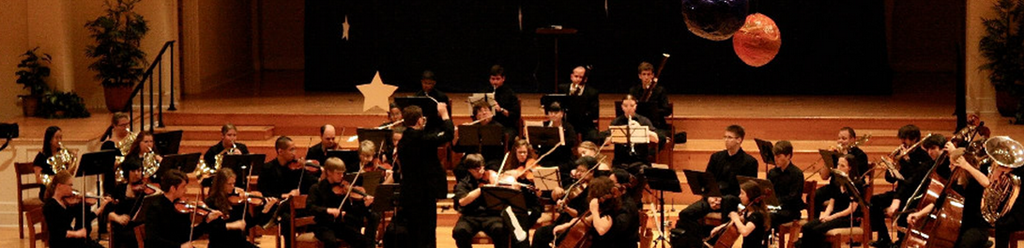
The last performance, “Les Preludes” by Franz Liszt, was my favorite of the evening. I got into it. I could close my eyes and forget my body, and let my mind flow with the music, and it was fairly exciting, going through a range of sounds that often evoked comparisons to real world sounds, like sheets of rain, or movie soundtrack imagery, like a city coming alive in the morning. But even though the music was pleasant and thought provoking, it didn’t push any of my emotional buttons like I’m used with rock music. Why?
I’m not blaming classical music here, I’m blaming me. After reading The Mind’s Eye by Oliver Sacks, I’m all too well aware of my perceptual limitations. This is a brain issue. I know other people find this kind of music deeply moving and emotional. Somehow my upbringing has made me colorblind to classical music.
Pop songs are short, usually have a strong backbeat that you can dance to, and they have a hook, a catchy phrase or melody that’s repeated. The emotional mood of a pop song is usually singular, although there’s a few famous examples, like “Hey, Jude,” “A Day in the Life” and “Stairway to Heaven” that change moods in mid-song. Pieces performed last night constantly shifted gears, and only rarely, did a short sequence push one of my buttons. The second soprano, at one point sang a snippet of verses, that I wished someone would make into a whole pop song.
I would guess that fans of classic music must find pop hits musically terse and boring, if not monomelodic. Symphony music is obviously polymelodic.
Classical music is like a long speech and sometimes I’m moved by a few catchy phrases here and there, but for the most part I’m indifferent to most of what’s being said. It’s like listening to a foreign language speaker and occasionally hearing a word I know.
Classical music pieces are like novels with many scenes and pop songs are like short poems that hit you hard with one epiphany.
I would say a symphonic composition is like listening to an entire album of songs that must be perceived as a wholeness. Parts of a classical composition that thrills me often lasts for just a few bars, sometimes only one, and never the 3 minutes common to a pop song.
Obviously, to appreciate classical music requires a different mindset. I assume I am just too poorly educated to appreciate classical music, both in its technical nature, and in the training of my ear for listening enjoyment. I also assume if I worked at it, I could learn to love classical music. I should be embarrassed to admit this, but even pop fluff like Katy Perry or Ke$ha are thousands of times more exciting to me than any classical piece I’ve ever heard, and Bob Dylan is so far beyond them, that I’m in a different world.
My musical upbringing made me primarily attuned to the sound of the guitar, bass, and drums, and secondarily to organ and piano. Later on I picked up a feel for the saxophone, mandolin, banjo, steel guitar, fiddle, trumpet and other instruments as folk, country and jazz influenced rock. Eventually I worked backward in time through jazz and big band eras and acquired a taste for their sounds. I have always liked symphonic music when it was played as movie soundtracks, but I’ve never been able to feel for music written before the 1920s.
To be completely honest, I’ve never learned to love jazz and big band like I do rock and pop, but I have learned to crave their sounds, to hunger for the feelings their tunes pull out of me. Maybe one day I’ll be able to say I’m in the mood for a classical piece.
When I say feel for music, I mean, it makes me high. It stimulates my emotions. I crave it like a drug. So far, classical music doesn’t get me high.
Classical music was a lot more popular in its day, but I’m not sure if it the common folk often hummed its tunes. Few people got to hear Mozart’s compositions in his day, unless it was in church. Folk music was probably more popular, or music from taverns and dances.
I’m mostly a self-educated person, even though I have a college degree. I’ve read books about other places and times where the main characters were cultured, very well educated and spoke beautifully of the emotional depth of classical music pieces they loved. That has often inspired me to buy classical music, but it just never worked. I never felt what the characters described. I’ve bought two separate recordings of Glenn Gould’s Goldberg Variations, decades apart, because of the powerful written descriptions I’ve read about his performances. Each time I was painfully disappointed. I could sense their intellectual achievement but they were cold and passionless to me. Simone Dinnerstein warmed up the Goldberg Variations quite a bit, but not enough to make them hit songs with me. Maybe Roy Bittan should give them a go.
I know classical music offers greatness, I just can’t perceive it. Over the decades I keep trying. I’ve bought a couple dozen classical CD sets over the years trying to perceptually break on through to the other side. Haven’t made it yet. Last night performance encourages me to keep trying.
I went with three women to the performance last night, Ann and Anne, and Robyn, a woman who teaches and performs classical music. I grilled her for information, and I asked her about her tastes in pop music. I got the feeling she doesn’t share my passion for rock and pop that I do. Were we each conditioned to like only what we grew up listening to? Is it genetic? I wished I could have telepathically tuned into the heads of my three companions to see how they each perceived the performances. Just how different are our inner worlds? Are classical and pop music such distant lands that they are each alien landscapes to the other? Are classical music lovers mentally different from me?
Of course, we all have our own unique collection of passions. I am never moved to yell or high-five a friend over a football play on television. I absolute love Breaking Bad, a television show my wife feels only psychopaths could embrace. My friend Peggy thinks about dancing the bop or shag all the time, but I’m never moved to get up and boogie. My wife and her family are mesmerized by golf games on TV, while I sit around wonder where’s the Kool-Aid I should have drank to feel such happiness.
Maybe I’ll never love classical music, but I’ll keep trying.
I do worry that learning to love classical might change the way I love rock. Does it work that way?
JWH – 9/2/12




 Auxiliary Memory