This is Colossal

Colossal: Art & Visual Ingenuity is a web site that visually amazes.  And although it has 275,000 likes on Facebook, I’ve only recently discovered http://thisiscolossal.com.  I wish I had a talent to be artistic.  I think of artists are people whose profession is to create beauty, and I love to look at beauty.

I thought I’d show some of the artwork that amazed me recently at Colossal.  My tastes resonate with about one out of ten posts, so visit the site to see more variety of artwork.  Especially since my tastes are so narrow.  One easy way to keep up with Colossal is to subscribe to their weekly email newsletter.  If I was rich I’d travel the world just to look at all this art in person.

Harold Ross developed a technique of lighting night scenes with a LED flashlight.  Read about the details at his blog.
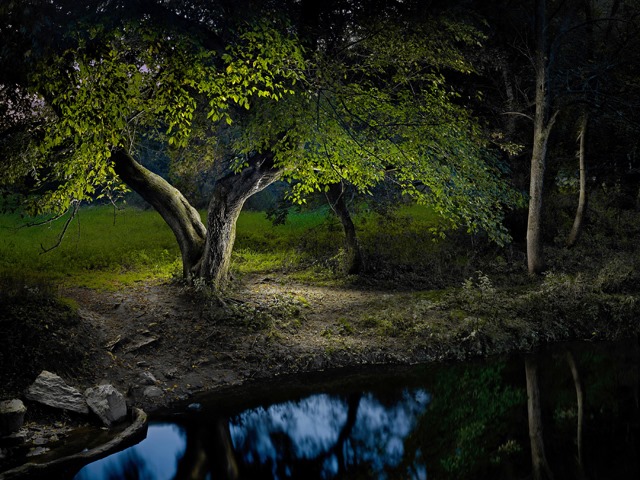
Untitled#21

One of the things I love about Colossal is they provide videos about how artists work.  Here is one about Amy Casey.

Some art doesn’t even look like what people think about as art, as in this video Hyperdrive.

Some art, like this installation by tomás saraceno, allows for people to become part of the canvas.
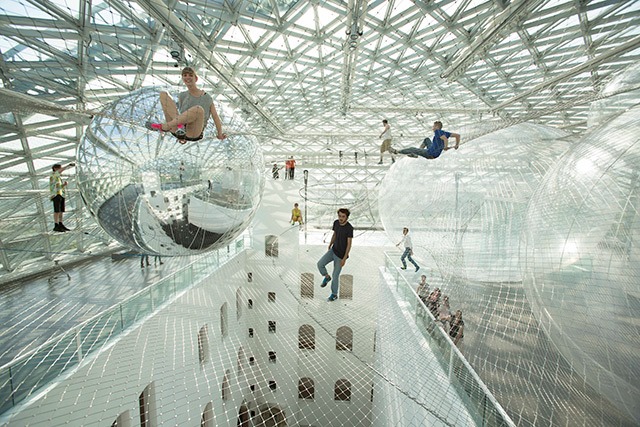
orbit-6

This photograph, of a single image, by Bela Borosdi requires a video to really appreciate.  Who would imagine creating such a work?

bella-1

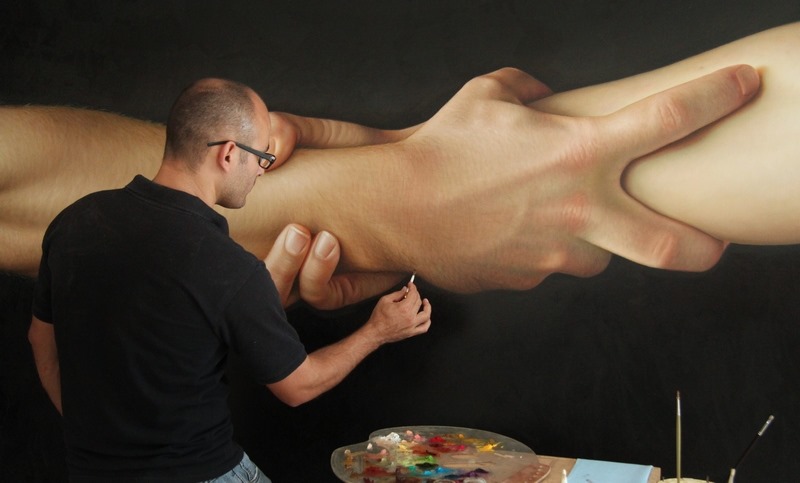
I love super-realistic artists like omar ortiz.  What kind of skill, power of concentration, and patience does it take to create such works?
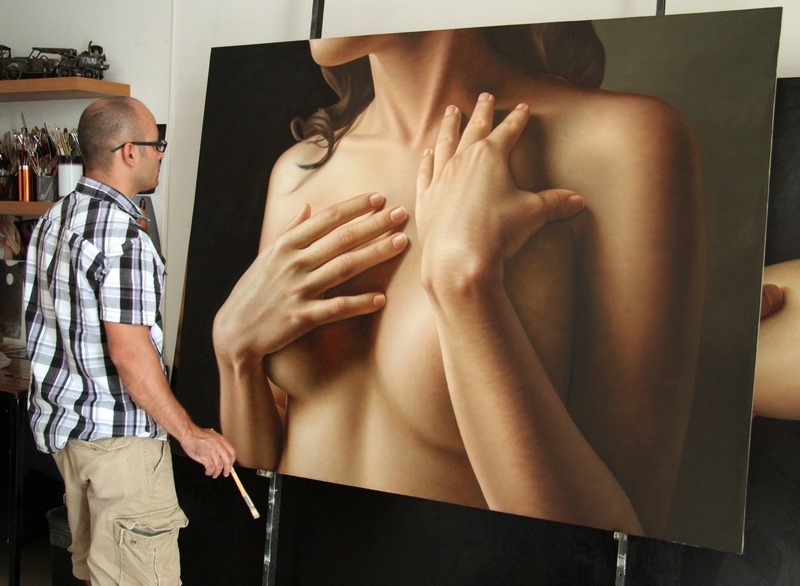
aun-sin-titulo-oleo-sobre-lino-140-x-180-pintor-02

tumblr_mollft9kAL1qbmgeto5_1280

Some art moves, so other than being there, we need video to show it off.   In Cloud Light by Anthony Howe.

Elizabeth Patterson produces paintings that distort my sense of reality.
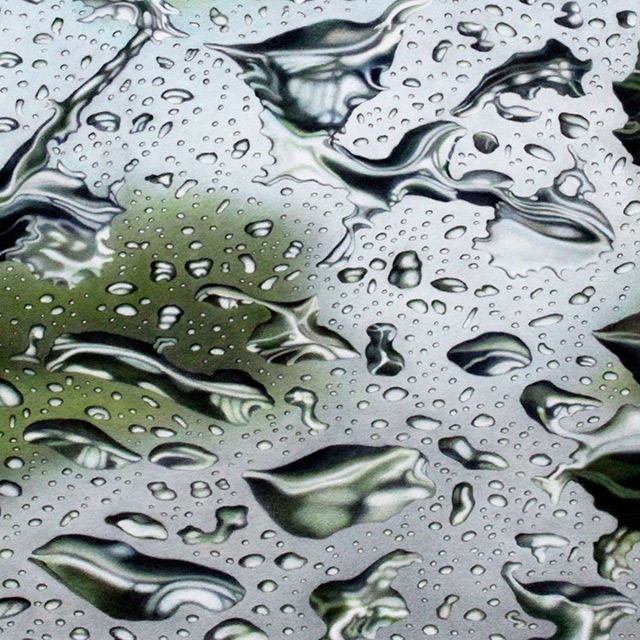
patterson-4

Lisa Park’s work is science fictional.

Sometimes art isn’t created but caught in life with a photograph, as Rakesh JV does at this face painting festival.

facepainting

Sometimes art is being at the right place at the right time.  This video is by Mike Olbinski.

Some artists work on a very big scale, such as JT Singh, who calls himself an urban graphic explorer.

Here JT Singh is giving a TED talk.

Here Singh captures Vietnam.

Here Brusspup uses science to create art.

Some artists like Jon Smith can find beauty in making something and then breaking it.

bulb-2

Gil Bruvel makes metal blow in the wind.
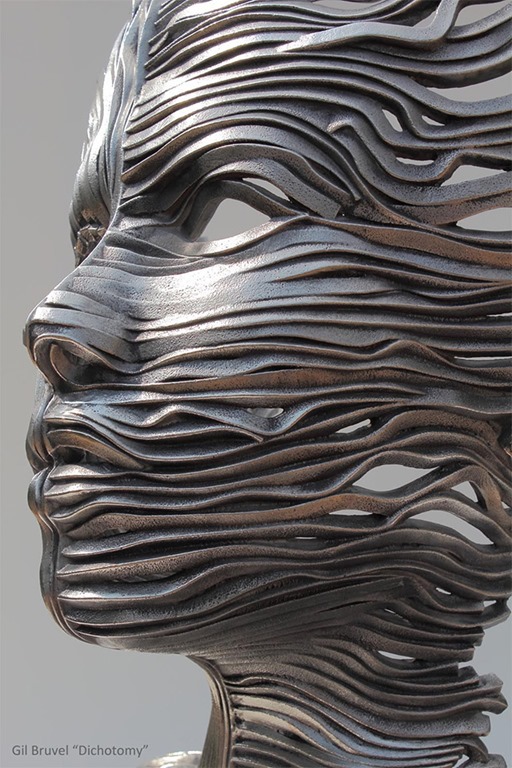
gil-2

This is just a very small taste of what’s at Colossal.  If you love art, if you love to indulge our eyes in beautiful visuals, if you love creativity, if you love to be amazed at the infinite powers of human invention, then look at this site daily.

If I had the time I’d save these images and videos and make a slide show for my big screen TV.  I already save images I like to a folder that my computer uses for wallpaper backgrounds.

JWH – 6/29/13
Reality is Not About Us–Philosophy in a Photograph

Sometimes I get very philosophically excited by a picture, but I find it very hard to put my reaction to it into words.  The whole picture is equal to a thousand words kind of thing, but for me, some pictures could generate a hundred thousand words, or even millions. 

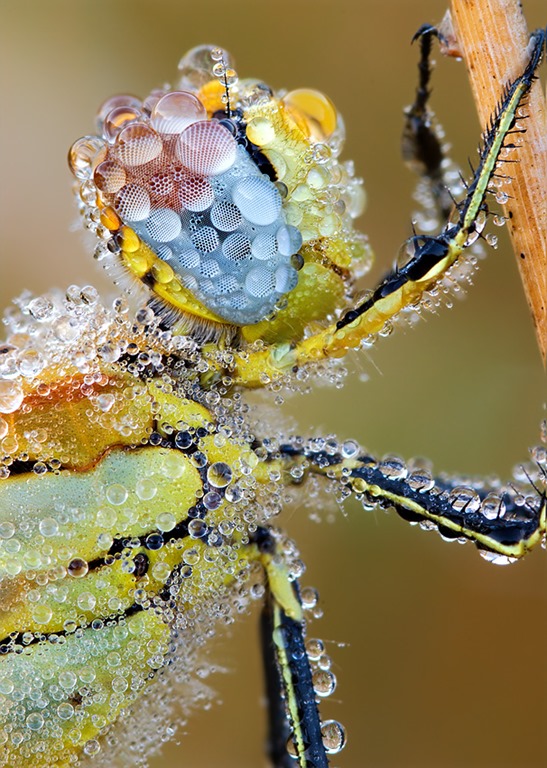
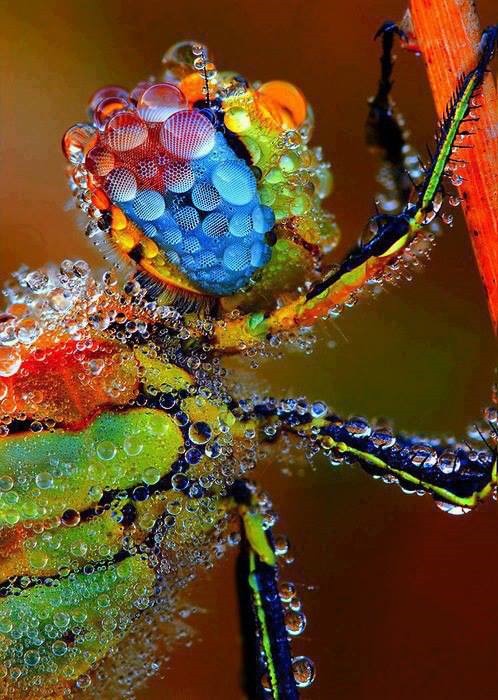
Here’s a photo I found and sent to several of my friends.  It’s a dragonfly covered in dew.  Philosophically, I’m fascinated by the idea this reality wasn’t meant just for humans, and reality is experienced by an infinity of minds perceiving it in infinite ways.  This is one of the many reasons why I don’t believe in God.  God is too small of a concept to encompass all of reality.  God is too anthropomorphic, to human self-centered, to be a meaningful hypothesis when you study all of reality.  The reason why I embrace science is because science is a better tool for understanding the truth about reality, even though I know that even science is too puny to do the job completely.  Science just handles big numbers far better than theology.

dragonfly-color-intense

Our human senses are so limited when it comes to looking at reality.  For example, look at this second photograph of the same image, taken from the photographer’s web site.  This is from Martin Amm Photography, and is color corrected differently.  The first picture had been color saturated to make it more intense.

dragonfly-in-dew-original

Now don’t get the idea that the second photograph is the way the dragonfly really looked at the moment the camera snapped the picture.  First off everyone sees things differently, and everyone’s monitor color calibrates differently.  But even back in the reality from which the photo was taken the photographer saw the dragonfly differently from what he photographed, and the birds nearby waiting to eat the dragonfly saw it differently too.  And the insects on the same branch saw the dragonfly completely different too.  There is one huge reality, but all the beings in it see it differently, in an infinite number of ways.

To begin to understand how complex seeing is, and I mean beyond just the tiny window of visual light that humans use, we have to study the electromagnet spectrum.  On a recent PBS NOVA, “Earth From Space” they had a scientist report that if the electromagnet spectrum was measured from New York to Los Angeles, then the part the human eye sees with would be the size of a dime.

Size matters.  Our view of reality is distorted by our size and the size of our senses.  When humans invented the concept of God, our awareness of reality was much smaller, and we pictured God as being the biggest thing we could imagine.  All our cherished concepts, God, heaven, hell, love, hate, justice, good, evil are measured by human scale senses.  As human minds progressed beyond theology into philosophy and then into science, we saw the reality around us expand further and further.  At one time God was the biggest thing we could imagine, and then science gave us the universe, an object whose size is beyond our best imaginations to fathom, but it can be measured.

I use the word “reality” to label everything rather than the word “universe” because scientists are now speculating that our universe might only be one of an infinite number of universes.  When I say “reality” I mean the whole she-bang, and not just the big bang.  When I say the word “God” isn’t a big enough concept to convey reality I’m  not just being an atheist, but I’m making a philosophical statement about numbers, size and reality.

Humans generate ideas constantly, but most of our concepts don’t hold up against reality.  Take the concept of heaven.  Many people believe when they die they will go somewhere else, somewhere beyond reality.  Where is heaven?  How big is it?  How far do we have to go to get there?  How many people are there?  How many animals?  What about plants and insects?  What about intelligent beings from other worlds?  Does the dragonfly above deserve everlasting life too?  Reality is huge, but how big must heaven be?  If everything in this reality gets to live again, how big must heaven be?

By one estimate, over 107 billion people have lived on Earth, and that doesn’t count Neanderthals and earlier forms of hominids.   Is heaven and hell crowded now with all those people?  What about their favorite pets? What about all the billions to come?  Just how big is heaven?  Heaven is described in The Book of Revelation and even given with measurements.  Depending on we interpret the ancient measure, heaven could a large shopping mall about the size of Australia.  Did you know the Bible describes heaven as a building, and living in heaven would be indoors?

See what I mean when I say our concepts about reality are too puny to be realistic.  People who study Zen Buddhism are taught to look at reality without using all their bullshit concepts.  If they say something stupid they are caned about the head and shoulders.  If we had a Zen master walking behind us all day, we’d get whacked in the head constantly.  We’re always bullshitting ourselves.

It’s very hard to use words precisely.  We have so many bogus words.  We have too many words that distort our view of reality because of their anthropomorphism.   I find it helpful to stare at photographs and try to forget the words.  Or just stare at reality and try not to explain what I’m seeing.  But that’s a failure too.  You see, we do have a sixth sense, one that the dragonfly doesn’t have, and that’s language.  We see with words.  Learning to use the correct words, without distorted concepts, is a way to focus our inner sight on reality.  We can see reality, in our limited fashion, but we must wash the bullshit off our eyes first.

Does this begin to show you why I got excited by seeing the photograph of the dragonfly?  I’ve written about a thousand words now.  Tomorrow I could write a different thousand words on meditating on the same photograph.

JWH – 6/27/13

Visual Inspiration

Usually I am excited by words and concepts.  I am a lifelong bookworm, so I’m obsessed with black marks on white backgrounds.  Living in my head is my constant way of life, thinking wordy thoughts, even to the point of neglecting the colorful details of the external world around me.  But during the day I’m often startled by something visual that inspires me.  I love looking at the trees outside my window, which sets just above my computer monitor that I am typing at now.  I have two windows, the one looking into the internet and the other out onto the world.  The world is full of color, but because of my neglect of noticing it, I’m all the more moved by art.  And maybe, I prefer seeing reality though art rather than viewing reality directly. 

I love catching something visually fascinating as I drive to work each day – the structure of a church steeple, the outline of tree branches against the sky, the way shadows and glare affect my sight.  I wish I could turn what I see into art. I wish I was the kind of guy that hiked in nature and captured it artistically.  Because I spend so much time indoors, most of my visual stimulation comes from the computer screen or the television.

Every once in a while I see art that blows my mind, and generates a flood of thoughts.  The other day I found this computer animation that set my neurons on fire.

Be sure and play this in full screen mode at the highest resolution your computer can handle.  I’ve watched it many times now and it just gets better and better.  This visuals makes me think of mathematics and musical harmony.  This video is like seeing music.  This video is like seeing mathematics as if math wasn’t an abstraction of nature.  “Oscillate” was created by Daniel Sierra for his MFA Computer Art thesis, and you can see more about this work here.

What I find so inspiring about “Oscillate” is that it’s a visual abstraction that makes me see science.  All paintings, no matter how realistic, are an abstraction, in the same way that words and concepts are an abstraction about reality.  Art mimics the world.  “Oscillate” mimics abstract thoughts.  Daniel Sierra imagined seeing animated sine waves much like how classical Greeks imagined mathematics, but instead of putting his thoughts into words, he created a computer animation.

On one hand this video is like abstract art, it doesn’t look like the real world.  But I see it as a realistic painting of an actual abstraction in the real world.

JWH – 6/26/13

Why Blog?

This will be my 671st post.  I must be approaching or just passing my millionth word written, so I think it’s time to evaluate why I blog.  When I started I wrote whatever I felt like and didn’t worry if anyone read what I wrote.  Sometimes I’d ask my wife Susan or a friend to read something, but for the most part I considered my blog a diary that I left around opened.  I’m interested in a lot of things my friends aren’t, so I used blogging as an outlet for discussing various topics I had no one to talk about with.  I guess that might mean I use blogging as kind of therapy.  Blogging is also a great way to practice writing, organize thoughts, and learn to research – sort of junior journalism.  All of these various purposes are great so long as I don’t think too much about being read.

During the last year I’ve been getting more readers.  Mostly by accident.  Sometimes I write about a subject that people are researching on Google, like encrypting files for Dropbox, or science fiction books from the 1950s.  I have a few friends that actually follow what I write, but you can count them on one hand.  I do have 468 followers on WordPress, but I think that’s mostly due other bloggers wanting to attract readership themselves.  But it does make me think about what I write.  If I hit the publish button and hundreds of people get an email then what I write can be an annoyance or entertainment.  That thought has made me delete most of the posts I’ve written lately.

My friend Annie has even been critiquing my posts, with comments like, that one rambled on for far too long, or you didn’t stick to your point, or that topic was boring.  I don’t disagree with her assessments either.  If I’m going to write something people will be reading then I have a responsibility to make it worth reading.  And this presents some problems.

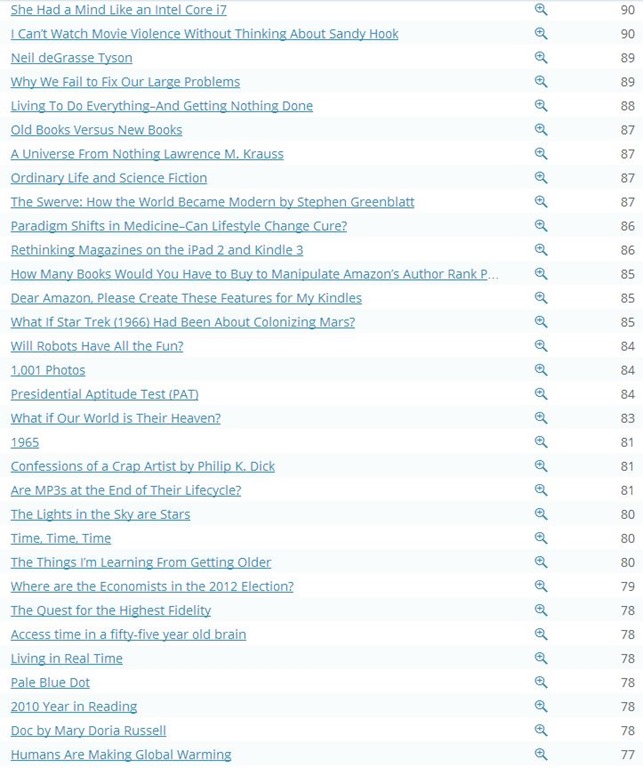
There are three kind of readers on the internet:  browsers, subscribers and searchers.   Some people get to my pages because writers link to me, others subscribe and get everything I write, but most people read what I’ve written because it’s something they Googled or Binged.  Just look at my stats.  (You might need to click on the image to make it large enough to read.)

stats

I get the most  hits for writing about something specific, like a Toshiba netbook or LG Blu-ray player.  But I also write about a lot of topics few people are interested in.

stats2

Most of my favorite essays I’ve written get few readers.  That’s because they are personal and personal essays don’t get hits.

If I want lots of readers then I’d need to write about something that lots of people want to read about.  Well, that doesn’t actually work either.  Writing about what everyone else is writing about gets damn few hits.  The key to getting search engine hits is to write about something few people have written about, but enough people want to read about.

The key to get subscriber hits is to always write about a specific topic and find fans for that topic.

I don’t do ether.  I write about whatever interests me at the moment.  That’s good for me but bad for regular readers, and gets few search engine hits.

What I need to do is decide what kind of writer I want to be – at least when it comes to blogging.

JWH – 6/25/13

What Makes You Cry?

I don’t cry, not the boo-hoo kind of weeping, I’m more of a Mr. Spock when it comes to emotions.  But I do get misty-eyed from time to time, and as I’ve gotten older, those wet eyed moments come more often.  What makes us cry?  And obviously, we all cry for different reasons.  Yesterday my friend Mike sent me a video, “Bittersweet Melodies” by Feist, that choked me up.  If I wore mascara it would have run.  It had gotten to Mike too.  I forwarded the link to some of my friends and to the online book clubs I’m in.  So far I’ve heard from about fifteen women and a handful of men.  Men get choked up.  Women think its nice, clever, but no tears.  I’m waiting for more responses, but so far it’s quite gender specific.

Like I said, it doesn’t take a rocket scientist to observe that everyone has different buttons to push to turn on the waterworks.  But of my  small sample, it seems the Feist video worked with men but not women.  So here’s an experiment, watch this video and let me know how you reacted.  Do you think it’s just clever, or does it choke you up?

[The original photographs used in the video can be found here and here.]

Before and after pictures of people getting older is a definite emotional button for me, but understanding why, is harder to explain.  The wistful Feist song does create an emotional mood, but it’s the photographs that poke me in the heart.  Why?  Well a couple of anecdotes might help.

When I was a little fella, I remember this time I had to get a shot.  I was in a full blown bawling meltdown and the doctor and my mom were trying to get me to cooperate and get punctured.  I remember the doctor patiently waiting for me to settle down. 

When I had calmed down a bit he said, “You don’t have to cry.”

I don’t think I said anything, but I was thinking, “Huh?”

He again said, “You don’t have to cry.”  He had gotten my attention.  Then he came closer and whispered, “You can choose not to cry.”

I thought about it for a moment, turned off the faucets in my eyeballs and let him give me the shot.  I was amazed I didn’t have to cry.  I remember consciously choosing not to cry the next time my mother switched me, and when my dad gave me the belt.  I then learned not crying enraged my parents who would switch and belt harder because of my lack of reaction.  Not crying had a kind of empowerment.  I went with it.

Babies cry, I believe, because they have no other outlets for communicating their needs.  I think as adults we cry when we have no other ways to express what we feel.  Most of the time we do, so we don’t cry.

The other anecdote from childhood that is useful for this topic is about separation.  To kinds of separate.  As a kid my family moved around a lot.  A whole lot.  I’d always make a best friend wherever we moved, but ultimately, that friendship would be torn apart, just something beyond my control.  Starting at an early age, looking back and thinking of lost friends always choked me up.  I think that’s why most people cling to the idea of heaven – they can’t bear that they will never see some people again.  That’s why death tears us up, we can’t communicate our feelings of loss and separation.

When I was very little, I woke up in the middle of the night and went out to the living room where my dad was watching all-night movies.  He let me stay up and I watched a film about two kids being separated when one family moved away, then they were reunited during WWII, in the Pacific.  I was too young to understand this, I just felt it.  That film burned into the core of mind, at the bottom of all my memories.  Years later I caught it again, when I was old enough to remember its name, High Barbaree, and the actors, Van Johnson and June Allyson.  Eventually I learned that it was based on a book by the same name, written by Charles Nordhoff and James Norman Hall, the writers of The Mutiny on the Bounty.  The story was about the last memories of a dying man, but of course, in the Hollywood version, he’s rescued from death.  His dying thoughts were about his childhood and teen years.  I think men feel separated from their young selves, in a way that women don’t.  I know there are no hard and fast gender generalities, but this one sort of works.

The key to my deepest emotional buttons are encrypted in that movie and book.  Events in that story resonate at the core of my being.  And that reveals probably my most powerful emotional button, the desire to return to childhood.  We can return home, to the physical location where we grew up, but we can’t return to the state of mind when we called it home.  I wonder if my lady friends didn’t respond to the Feist video because they don’t have that urge to return to childhood.  Women want to be young again in body, but guys want to be young again in mind.

I’ve read there are two kinds of people, those that would pay anything to relive their adolescence, and those who would pay anything to erase the memories of those same years.

“Bittersweet Melodies” is incredibly wistful to me.  When I really like a person I want to see photos of when they were kids.  I want to know what they did when they were kids, and where they lived.  Sometimes I think our true souls are the ones we had at age twelve.

JWH – 6/17/13