Do Judge Books By Their Covers!

by James Wallace Harris, Sunday, November 6, 2016

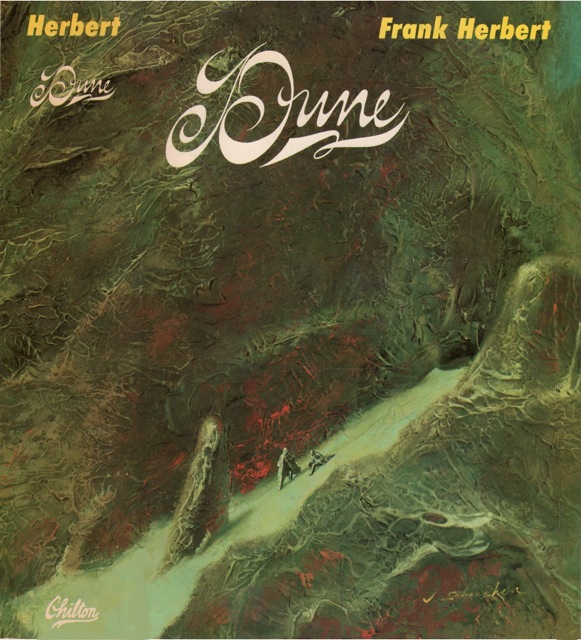
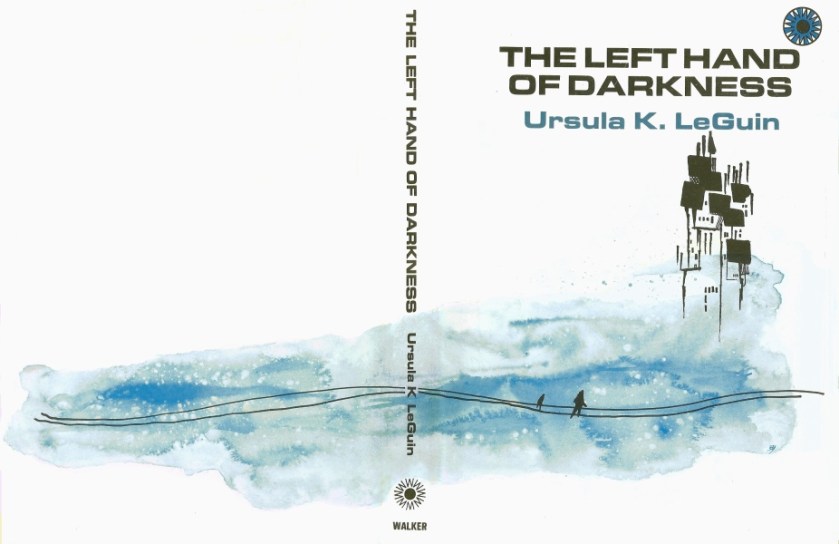
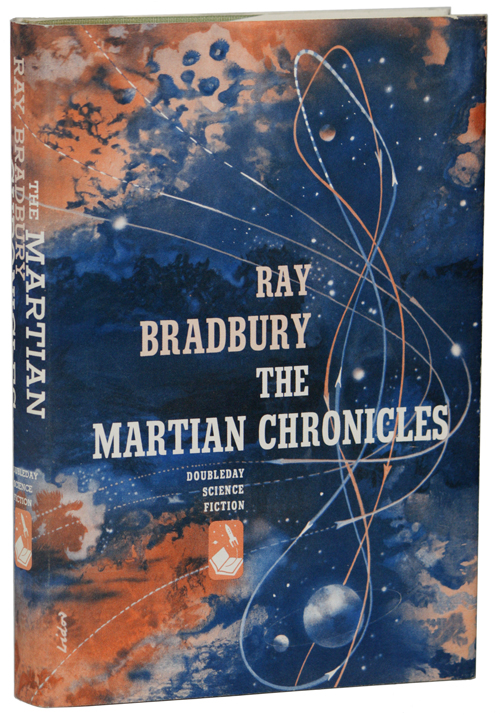
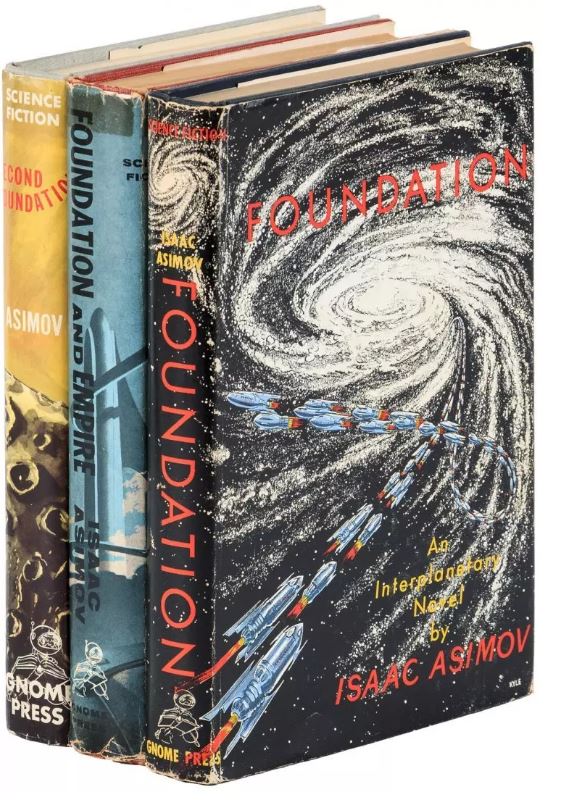
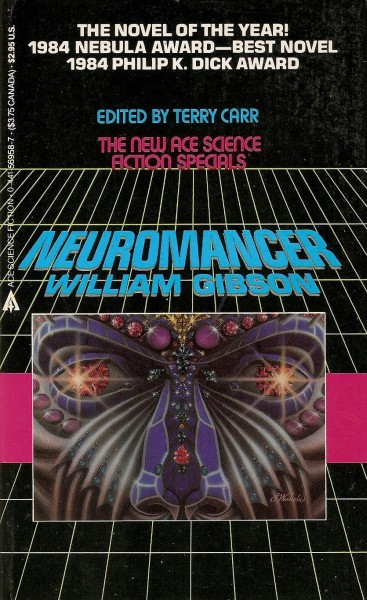
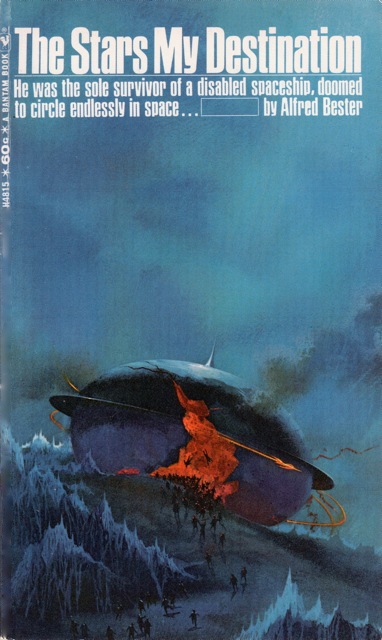
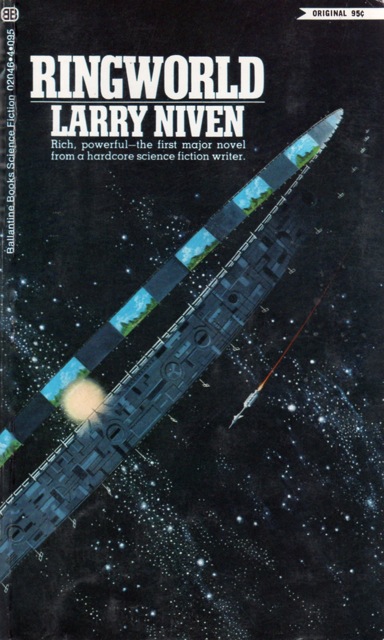
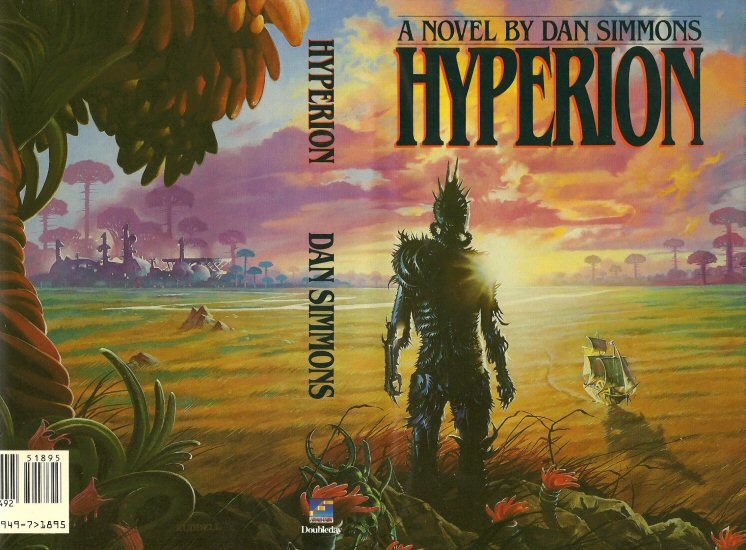
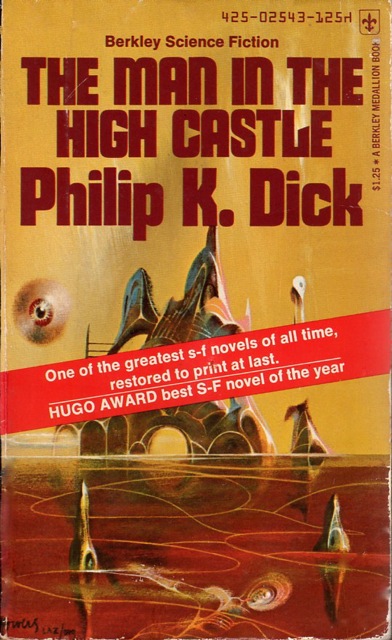
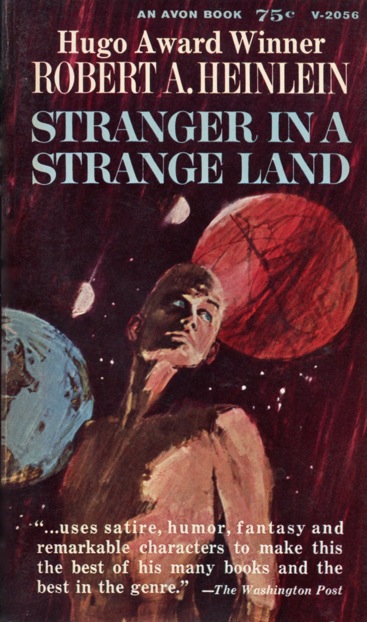
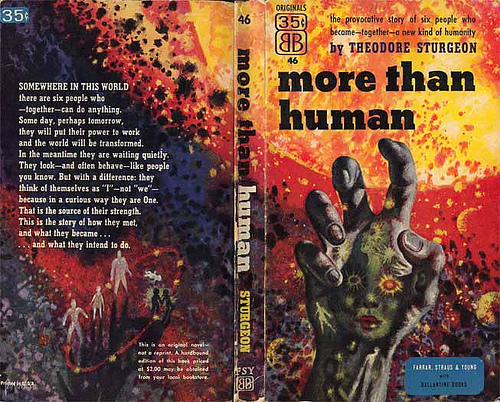
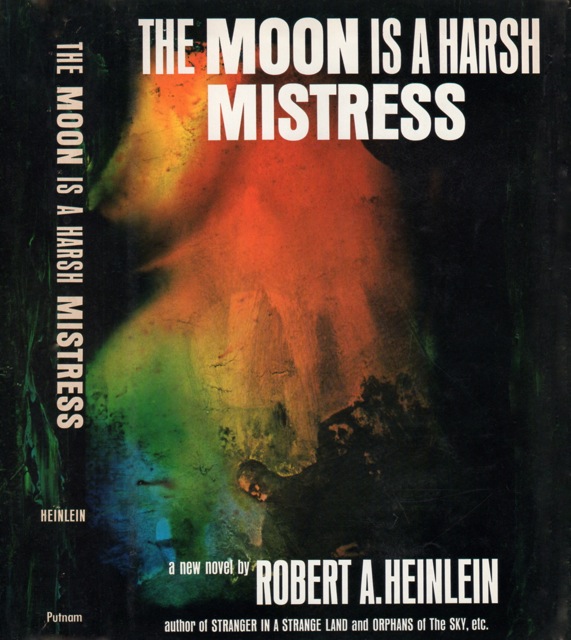
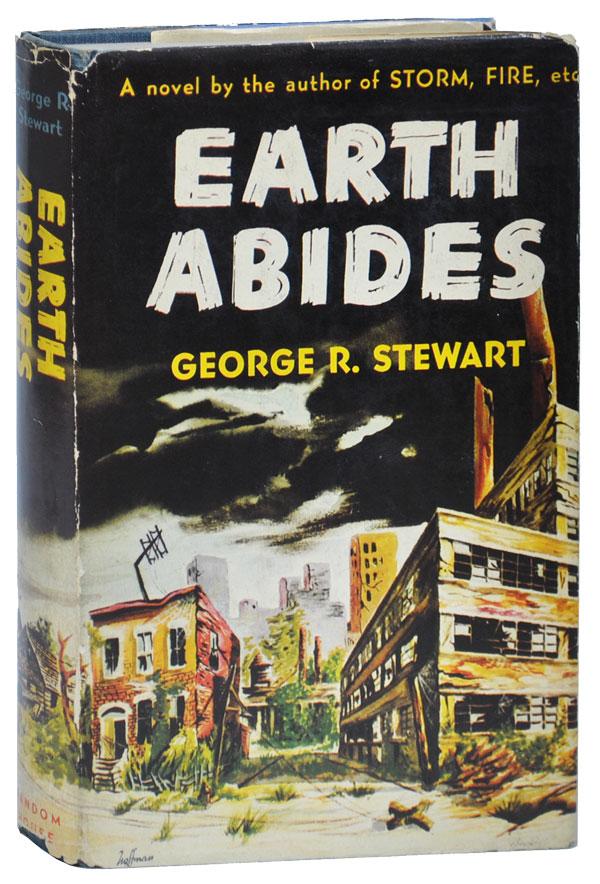
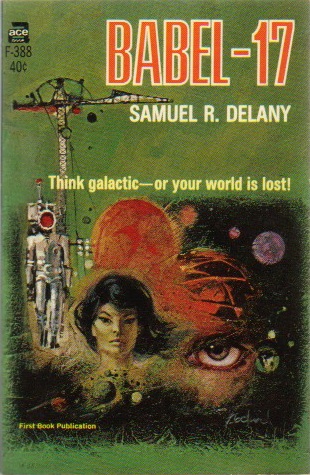
I created a page for the Classics of Science Fiction where readers could shop for the books at Amazon. And because I love book covers, I listed the books by cover images. However, those are their current covers, and not the ones I grew up seeing. I thought many of the modern covers were ugly, uninspired or garish. So I decided for my blog to collect the covers that I remembered and loved best. Many are the covers I first saw at libraries in the 1960s. That was a long time ago, when I was still a kid. So maybe it’s just nostalgia. But to me, these older covers seem more enticing. Which ones would make you want to buy the books?

Now for some honesty. As I searched for the covers I remembered, I realized for the most part the covers that I feel best are the ones I first discovered when young. Does that mean they are better covers? I don’t know. Y’all decide. Maybe I’m remembering the past better than it was. Or maybe covers that came out in the 1980s and 1990s imprinted on young people the same way covers imprinted on me when I was a teen in the 1960s. I was lucky, because my favorite library, at Homestead Air Force Base, had many of the Gnome and Shasta titles from the 1950s.

001-dune

002-a-canticle-for-liebowitz

003-the-left-hand-of-darkness

004-childhoods-end

005-nineteen-eighty-four

006-the-martian-chronicles

007-the-foundation-trilogy

008-neuromancer


009-the-stars-my-destination011-the-demolished-man012-ringworld013-hyperion014-the-man-in-the-high-castle015-ender-s-game016-stranger-in-a-strange-land030-more-than-human032-lord-of-light036-the-moon-is-a-harsh-mistress037-starship-troopers038-the-windup-girl041-do-androids-dream-of-electric-sheep044-way-station045-earth-abides051-city083-babel-17097-double-star134-the-end-of-eternity

Are Americans Two Distinct Species?

by James Wallace Harris, Saturday, November 4, 2016

Should we divide America into two countries as a social experiment? If we allowed liberals and conservatives to have complete control over their own nation, would that produce two happier populations? Would the citizens of each nation end up mostly agreeing on how to govern themselves? Would the majority in each culture be calmer and more satisfied? I’m wondering if Americans aren’t really two distinct species:

  • Homo sapiens liberals
  • Homo sapiens conservatives

The extreme polar views expressed in the 2016 U.S. presidential election convinces me they are. I was just reading “Why Republicans Still Reject the Science of Global Warming,” and its stark description of political differences only reinforces such speculation. Science often describes two species of animals that to my eye look the same, but have adapted to the environment differently. When I listen to my Fox News loving friends, I feel they are a completely different kind of people. They are so passionately confident about being absolutely right. Then again, I feel the same way about my liberal views. Are we both seeing the same reality dramatically different because we’re different creatures that only look similar on the outside?

[ File # csp6502397, License # 2856694 ]
Licensed through http://www.canstockphoto.com in accordance with the End User License Agreement (http://www.canstockphoto.com/legal.php)
(c) Can Stock Photo Inc. / iqoncept

What would happen if we separated these two species? What would happen if all the conservatives move west of the Mississippi, and all the the liberals to the east? So each would create a government government according to their philosophies. In the west they’d form a free market nation, with a small government based on The Bible, and in the east they’d build a secular nation, with a big socialist government. Would the citizens in each new nation then be happy?

Would these two nations then evolve dramatically differently? Would the mating of conservatives with conservatives, and liberals with liberals, further enhance their distinct differences? In thousands of years, would the citizens of each country look physically different? I know this is an impossible experiment to perform, but it sure would be fun to see the results.

I might have an idea for a science fiction novel here.

Would the western states pursue an anti-science legal system, moving away from urban society, back towards small town rural living? Would easterners pursue science, becoming cyborgs, and create high-tech super cities?  Would westerners allow diversity? Or would they move towards a conformity of looks and culture? Would easterners mutate into even newer forms of post-humans, genetically enhancing themselves even more? Would westerners become like the Amish, and halt the acceptance of technology? Would easterners run their nation on renewable energy and give up fossil fuels? Would the western states build a giant wall around their country, and reject globalism? Would they still build a large world-spanning military?

I could imagine the westerns states slowing their pace of living as they settled on a ideal conservative lifestyle, whereas easterners would embrace everything new and diverse, enjoying rapid change.

I can envision the westerners creating a Christian theocracy, although it would be a strange one where everyone would carry a gun. And eastern Americans would build a non-religious culture that oddly enough would appear like the meek had inherited the Earth.

And you know what’s funny. If conservatives created their own nation, I can’t imagine them ever electing Donald Trump as their leader. He neither acts, nor looks like someone that would fit in the west (or the east).

JWH

How Many Readers Avoid Books Based on a Writer’s Gender?

By James Wallace Harris, Thursday, November 3, 2016

I often see comments on the web where readers attack book list makers for not having enough titles by women or people of color. Sometimes the comment sections get rather heated over the topic, especially when people using Twitter get involved. How common is this sentiment? Statistically we know that women and people of color aren’t represented equally in society. How often do readers avoid books because of their prejudices? How often do buyers select books to read based on their desire to promote equality? Today, far more women and people of color are succeeding on the bestseller lists than ever before. Is that because some readers are choosing to purchase books by writers to promote diversity, or because readers are interested in great stories and pay little attention to authors? My best guess is readers are mostly indifferent to who wrote a book, all they want is to forget the world and immerse themselves in a compelling work of fiction.

Hugo award novel 2016

I bought The Fifth Season because it won the Hugo Award this year, and it got amazing reviews. I do assume there are readers out there that chose not to buy this novel because it was written by a woman, but how many people still think that way? I suppose the misogyny of the Donald Trump campaign is evidence that the figure could be large, but looking at lists of best sellers and books that have been made into movies recently, I wonder how large.

I do believe movies, television shows, and novels can spread the acceptance of diversity. But how many people consciously choose a book to broaden their outlook? I’m not sure if book lists created to promote diversity have much impact. I do think what has impact is success. A blockbuster movie or bestselling novel that brings people closer together will change society. But does making lists of them help change society?

As a list maker, I have some evidence to apply towards these questions. After reading many essays and comments by people advocating there should be more women writers on lists of science fiction books, I created a list of science fiction  books by women writers for the new version 4 of Classics of Science Fiction. Our list is generated by studying 65 other lists, and we’ve been doing this for over thirty years. The trend we see is more women writers are being read. However, I’m not sure readers are selecting books to read because they are written by women. I think more women are writing great stories readers want to read.

When I look at our stats page, the only list that people are interested in is the Classics of Science Fiction by rank. We also offer the list ordered by author, title and year published, plus this time, the most popular science fiction books by women writers. Any list other than rank gets damn few hits. Our lists aren’t that popular to begin with, so I tend to doubt many readers buy books based on lists, other than best seller lists. And our rank list is somewhat like a bestseller list, books that succeed over time. Readers seem interested in long term popularity, but that might be nostalgia. I think most readers prefer new books. I don’t see any indication in our stats that readers focus on authors. The popularity of a novel is everything. I do know authors have fans that read all their books, but our readers don’t seem to care to check our author list to see which books by their favorite writers made the list.

I’m disappointed that our list of science fiction by women writers gets so few lists. I thought it was a well made list. Promoting great stories worthy of reading. I hope the lack of hits isn’t because science fiction readers are prejudice against women writers. The most popular book on our rank list by total citation lists, The Left Hand of Darkness by Ursula K. Le Guin, had been on 43 of the 65 lists we studied. I like to assume it proves most readers aren’t bias by gender, but favor great storytelling.

I’m a lifelong liberal. I’d like to believe I’ve never avoided a book because a woman wrote it. But I have to admit that growing up I read very few science fiction books by women writers. As a teen I read Andre Norton, Leigh Brackett, Zenna Henderson, Ursula K. Le Guin, Anne McCaffrey, Madeleine L’Engle, Judith Merril, C. L. Moore, and a few other women writers. But to be completely honest, none of my favorite science fiction novels back in the 1960s were written those women. My two favorite authors growing up were Robert A. Heinlein and Samuel R. Delany. I knew little about them personally. Second tier was Philip K. Dick, Arthur C. Clarke and Isaac Asimov. I didn’t like all their books, but the SF books I loved best were mainly by these five guys. Did their gender influence me? I don’t know. I do know my current all-time favorite novel is The Signature of All Things by Elizabeth Gilbert. And even though I think Gilbert is a fascinating woman, her book is my favorite novel because of the story.

And to be totally upfront, I wrote this essay to get people to read the list, “Science Fiction by Women Writers,” and hopefully try the books on it. I like list making. I want them to be useful. But I’m also learning the limits of their appeal and value. Lists are very popular on the web, but I’m starting to wonder if readers are becoming indifferent to them.

JWH

How Much Time Do You Spend Escaping Reality?

by James Wallace Harris, Monday, October 31, 2016

I often worry if I spend too much time escaping reality. Mostly I check out via television, books or daydreaming while listening to loud music. However, sometimes I just enjoy a sensual nap even when I’m not tired. I don’t allow myself drugs or alcohol, and my heart doesn’t allow mindless gluttony. I wonder why escapism wasn’t one of the original seven deadly sins? Or does sloth cover it?

Reality can be relentless. Sometimes we want to turn it off. What’s you’re preferred method? Some people have perfect lives. They love every moment of living. Other people need occasional breaks from reality. They want to take a few hours off and think about something different. Then, there are the sad souls, who need to completely abandon their wretched fates. From hobbies to heroin, how do you switch channels on reality?

desert2

This makes me think about all the ways we interact with reality:

  • Manipulate reality for our needs (gather food, find mates, clean house)
  • Study reality (science, history, journalism, philosophy)
  • Admire reality (meditate on the beauty of nature, enjoy works of art)
  • Add to reality (create a beautiful work of art)
  • Destroy/create (Cut a tree down to build a house)
  • Mess with our perception of reality (drugs, fantasy, delusions)
  • Turn off (sleep, become unconscious, inward meditation)
  • Escape (create an alternate reality in your head for entertainment)

I’m using the word reality in a specific way. It’s everything that’s outside of myself. I like to think of conscience beings as black boxes floating in an infinite objective reality. We exist in our box of subjectivity, gathering input through our senses, constructing a model of reality. Much like the Holodeck in the old Star Trek show. We never perceive reality directly, only by interacting with our model. Reality is too vast to actual grasp or perceive directly, but being realistic means working with an effective model. Escapism is when we consciously choose to ignore our inputs from the external reality and use our modeling mechanism to create fantasies. I’m never sure if escapist fantasies are how we wish reality was, or if we just prefer our substitute models of realities?

When I was growing up, I used science fiction to escape reality. My parents were alcoholics that should have divorced. Instead, they dragged my sister and I around the country hoping to find greener grass for themselves. I don’t blame them in the least, because I know they were just coping with reality the best way they could. Because of their alcohol abuse and my own experiments with drugs, I know about the paths of chemical escapism. But for this essay I’m not going to explore them. Those are negative forms of escapism. Are there positive forms of escapism? Is reading a great novel a positive form of escape? Or is it still an unhealthy negative way of dealing with reality?

Should we always face up to reality? Should we continuously keep our eyes focused on living in the now? When J. K. Rowling wrote her Harry Potter books was she escaping reality, or creating an artistic work of art for reality? Or a little bit of both? Happy people are often people who spend most of their time concentrating on being creative. Is building a house more reality based than writing a science fiction novel? Is a news junky living more realistically than someone who binges on The Walking Dead? Both spend endless hours watching TV.

Does watching TV always equal escapism? What about compulsive novel reading? Is taking a two-week Mediterranean cruise escaping reality or embracing it? Is sleep the body’s natural form of escapism, or a neutral state when we cease to exist in reality or subjectivity? We are taught by mindfulness instructors our thoughts get in the way. That idle brain chatter keeps us from seeing reality. They claim sitting quietly, ignoring our thoughts, but observing reality intently, is the best way to live in the now. Is that true? When is reading Gravity’s Rainbow by Thomas Pynchon a better choice?

Is living in the now, with a razor sharp focus on our inputs from reality more important than being creative?

Last night, my TV-buddy Janis and I binged on the first three episodes of Good Girls Revolt, an original series on Amazon, about women working at a fictionalized Newsweek in 1969. It’s based on the nonfiction book, The Good Girls Revolt: How the Women of Newsweek Sued Their Bosses and Changed the Workplace by Lynn Povich. The show is very entertaining – but it’s also making a statement about reality. So was this three hours of TV watching escapism or education? The story reminded me of Gail Collins’ When Everything Changed: The Amazing Journey of American Women from 1960 to the Presentbecause dozens of women changed reality by pursuing lawsuits for equal treatment under the law. However, did Janis and I improve the accuracy of our models of reality what watching Good Girls Revolt? Or were we each escaping from other things we should be doing? Both of us have projects and obligations that would have benefitted from those three hours.

Is living a binary condition – where we exist either interacting with reality or hiding from it? Aren’t our ambitions about how we wish to alter reality? Isn’t the desire to get rich, laid, or fed essentially wanting to alter reality? Think about that for a moment though. Picture yourself as an amoeba, swimming around looking for something to eat or mate (assuming amoebas mate). Our soul is programmed to interact with reality like any other creature in existence. Could escapism just be another bodily function? Could we be programmed to find food, shelter and mates, and when not doing either, just kill time?

Take virtual reality (VR) – which we’re told is the next big thing in entertainment. Could there be a more perfect form of escapism? Isn’t VR a rejection of reality? They should market it as AR – alternative realities. Who really wants to simulate actual reality? What people want are better realities to take their minds off the fact their bodies exist in a reality of growing threats.

If you start thinking about it, are most of the great forms of escapism based on alternative realities. Books, movies, comics, television, are all designed to move you mind out of reality into an artificial construction. Think of it as Noah Ark for your mind. You read a science fiction novel hoping when you finish reality will be more appealing, and you’ll want to get back to work.

Which reminds me of all those people who want to travel to other planets. Isn’t space travel the ultimate form of escape? Wasn’t the film Interstellar all about escape? Time to toss Earth in the trash heap and head someplace new. I’m a lifelong science fiction fan, but that philosophy seems ugly to me. If we can’t build a perfect civilization on a paradise planet, why think we could do better elsewhere?

Look at the explosion of heroin addiction, the expanding acceptance of legal marijuana, the endless stories of designer drugs, or just sit in your car outside a liquor store and watch the steady flow of customers. I suppose the folks who can’t find comfort in fiction turn to chemicals.

Of course, healthier people have work and hobbies, and rich folk have conspicuous consumption. People with talent have art, invention and science, Caring people have charities to keep their minds focused. But if you’re sick and poor, what do you have?

What’s amazing is the small number of people actually working on solving the world’s problems. Most people pick escapism instead. You’d think working on solving our problems would be an overwhelmingly attractive form of escapism. It could keep our minds busy for the rest of our lives. Of course, I still can’t get over the fact that 7 billion minds lack the imagination to turn this planet into heaven. Evidently, as a species we’re pretty bad at parallel processing – or cooperation.

It’s rather ironic that Iraq and Syria, once cradles of civilization, are now our best examples of civilization collapse? People over there are about as close to reality as it gets. Maybe the purpose of civilization is to provide security from external reality, so we have time to indulge in artificial realities. Work is essentially manipulating reality. Play can be enjoying reality, like swimming at the beach, but quite often play is indulging in artificial realities – television, movies, plays, books, games, sports.

Traditionally, work is a virtue, and play is a vice, or at best a short vacation from work. Western culture teaches that reality is something we conquer, and idleness is a sin. Is that still true? I’m retired, and don’t have to work anymore. Many people do think of retirees as a burden on society. A large segment of the working age population can’t get work. Maybe we need to make new ways to interact with reality, and consider them new virtues.

JWH

My New Binge Worthy Show: The Detectorists

By James Wallace Harris, Tuesday, October 25, 2016

Normally I watch new TV shows with my friends as a reason to get together socially. For a while now, I don’t have the patience to watch a lot of TV by myself. But last night my friend Mike told me about a series he’s watched three times already: Detectorists. I watched by myself the first six 30-minute episodes before going to bed at 12:32am. I was hooked. So far this charming British TV show has racked up 13 total episodes. It’s quite binge worthy, but it won’t be a long one. The show is about two English guys, Andy and Lance, who love to search for buried treasure with their metal detectors. Mostly they find old nails, low value coins, beer can flip tabs, and Matchbox cars. They hope to find gold from an ancient Saxon burial.  Andy and Lance belong to Danebury Metal Detecting Club (DMDC), along with six other eccentric endearing oddballs. Their rival club is even stranger.

Detectorists

The show is about metal detecting, but not excessively so – just enough to get me to price metal detectors on Amazon, but maybe not enough to turn me into a detectorist. I love shows about quirky sub-cultures, and this show is a doozy. It’s also beautiful, funny, endearing, and quite observant about ordinary people and their lives. The show also makes me want to move to rural England.

You can catch Detectorists on Netflix. Here’s a trailer. I thought I just let y’all know, at least my TV addict friends who are looking for another show to shoot up – especially one without gun porn. Warning, they do swear though. Not much, not as much as the women in my life. Another reason to love this show – the characters are ordinary looking, even homely, and definitely not CGI/surgically engineered beauty clones. This might be odd for me to say, but shows that promote gun lust and absurdly beautiful characters have jump the shark for me.

JWH