I like to think our minds are like the mixing boards you see in recording studios, with dozens of sliders, each for a different cognitive ability. Think of the autism spectrum as one slider, and artistic ability, spatial perception, and mathematics as other sliders. I’m not sure how many mental spectrums exist, but I’ve been thinking about a possible spectrum to consider – handling complexity.
It’s obvious some people handle complexity better than others. People who can’t handle complexity want everything to be black and white. To them, everything is binary – for/against, male/female, good/evil, theism/atheism, rich/poor and so on. These people seem to have made up their minds early in life and will defend their beliefs with great tenacity. It’s easier for them to build an array of defense mechanisms than it is to deal with complexity. Successful people handle complexity and thrive. However, if you can’t handle complexity can you recognize people who can?
Ever since Donald Trump was elected I’ve been trying to understand why people like him. My current theory is neither Trump nor his follows can handle complexity. Trump’s simplex approach to problems resonates with their own simplex relationship with reality, and they find that comforting.
Republicans have taken an ostrich’s head-in-the-sand, ass-in-the-air approach to complexity. Denying complexity is their great survival mechanism. However, to solve the world’s problem involves dealing with complexity. We need leaders who place high on the handling complexity scale.
Trump is low on the scale, seeing reality in terms of black and white. People like voting for candidates like themselves. We need to vote for people who are higher on the handling complexity scale than ourselves. But how do we pick people who have cognitive skills we can’t imagine? How do we pick a person whose solutions might not make sense to us?
One way is to judge how they’ve handled complexity in the past. Trump has zero political, diplomatic, or leadership skills. His businesses have very few employees. He has no handling of complexity skills at all. Millions of people voted for him because he handles complexity in the same way they do – which is at a simple gut-level.
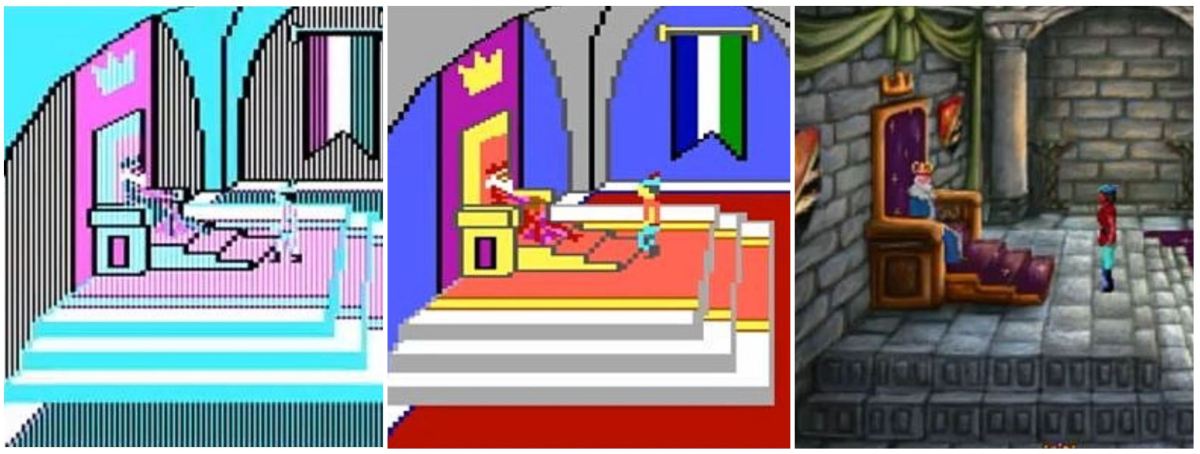
Most people see the world with a binary vision. Most voters see the political spectrum as left and right. That’s incredibly simple-minded. Just seeing the world in a grayscale of 16 adds great complexity, but it’s still extremely low on the complexity scale. Remember when computers only had 16 colors and how bad computer games looked? At the time we thought it an amazing step up from black and white (or black and green) monitors. Then when graphic cards went to 256 colors images started to look somewhat realistic. It wasn’t until graphics cards could handle millions of colors did photographs begin to look realistic. (The above graphic is CGA, EGA, and VGA.)
People have an extremely difficult time juggling 16 variables. We embrace ideas like the Myers-Briggs scale, trying to pigeonhole people into 16 types. The Myers-Briggs scale has its appeal because it vaguely works — but does it really?
Take climate change. Its complexity is immense. Even computer models that track millions of variables can only paint a rough picture of what is happening. Simplex people prefer accepting a blowhard’s opinion on climate change who has no understanding of the complexity of climate change over scientists with supercomputers and billions of dollars worth of scientific measuring devices. Why? Because binary thinkers prefer binary solutions.
We can’t solve complex problems with binary solutions. We need an army of PhDs who have armies of supercomputers working with artificial intelligence to even begin to understand climate change. Why don’t we require such expertise from our politicians? Isn’t our country’s social/economic/political structure nearly as complex as the weather? Why don’t we expect all politicians to have PhDs in political science? Why shouldn’t the highest political jobs require the greatest political experience? Shouldn’t a president at least have the experience being a governor or senator, if not a whole lot more?
How can we possibly expect a person with no experience to succeed at a job that requires the most experience? How can we expect a person who has no ability to handle complexity to succeed in a job that requires the most understanding of complexity?
Only a simplex person would vote for another simplex person.
Think of it this way. Say you’re a betting person and want to win some money on a football game. There are two teams. One team consists of professional football players, and the other team is made up of regular guys who believe they can play football. Who’re you going to put your money on? Or imagine you need brain surgery. Who will you pick? The surgeon with the most experience, or some egotistic guy who thinks anyone can do brain surgery?
by James Wallace Harris, Tuesday, December 31, 2019
This is the 12th year I’ve been doing these “Year in Reading” posts. They’re really written for my poor memory because I can’t imagine anyone caring about a list of books I’ve read. It’s a ritual where think about my reading habits and contemplate what I might want to read in the next year. At the end of last year I said, “Other than gorging on short science fiction, I’ll make no promises for 2019.” I think that’s the first time I’ve actually done exactly what I said I was going to do regarding my reading predictions.
This year I won’t list the books I’ve read. I’m being lazy because it takes a lot of work to create that HTML table. I’ve started using Goodreads to track my reading so here’s my 2019 summary for those who care. It’s much more visual anyway since it displays the list by the covers.
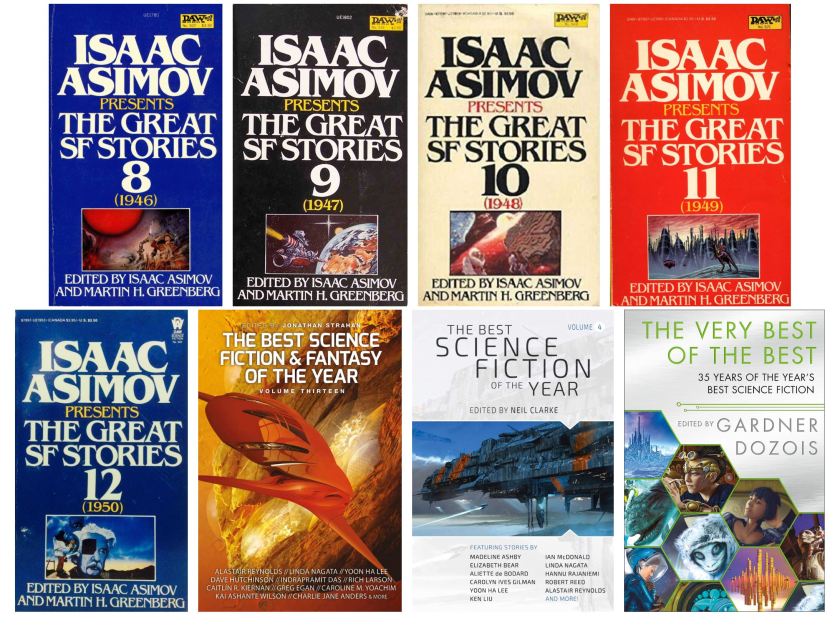
This year I read many anthologies and author collections of science fiction short stories. I’m guessing well over two hundred stories. I also read several books about the history of science fiction. I’ve separated my obsession with science fiction to another blog. I’m starting to wonder if I read too much science fiction, especially older science fiction.
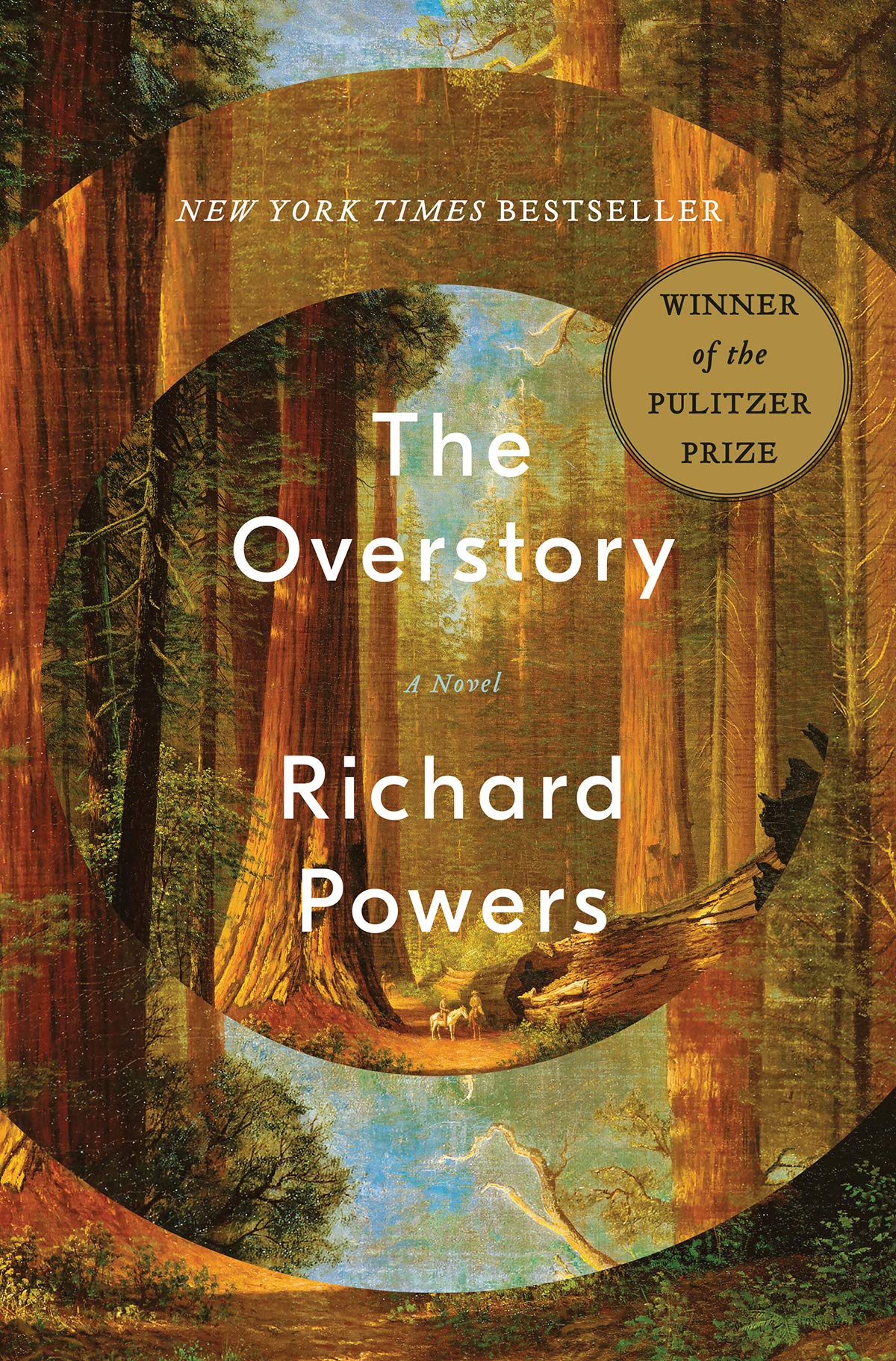
What’s interesting is when I look over the books I read in 2019 the books that stand out the most weren’t science fiction. I’d have to say my novel of the year was The Overstory by Richard Powers. I was also very impressed with The Handmaid’s Tale by Margaret Atwood.
Picking my favorite nonfiction book is harder, so here’s my three-way tie:
Since I don’t feel like spending a lot of words on describing these books I thought I’d link to reviews that do:
I will say that I wish I could remember what’s in these books. It bothers me that I read intensely fascinating nonfiction books and then quickly forget it. I’ve written about this forgetting angst before. My best existential solution is to tell myself that feeling knowledgable about these subjects while I read them is good enough. This is my second reading of the Hugo Award-winning The World Beyond the Hill, and it’s already fading away. I hate that.
Quite often when I reread one of these Year in Reading posts I discover so many titles that I no longer recognize at all. And I’m not even talking Alzheimer’s forgetting, but merely mundane I’m-getting-old forgetting. Part of my problem is I chase too many squirrels. One comforting aspect of focusing on old science fiction this year is the feeling that I’m becoming knowledgable about something. It is a rather useless academic territory to claim, but at least it feels familiar when wandering around in the same small land.
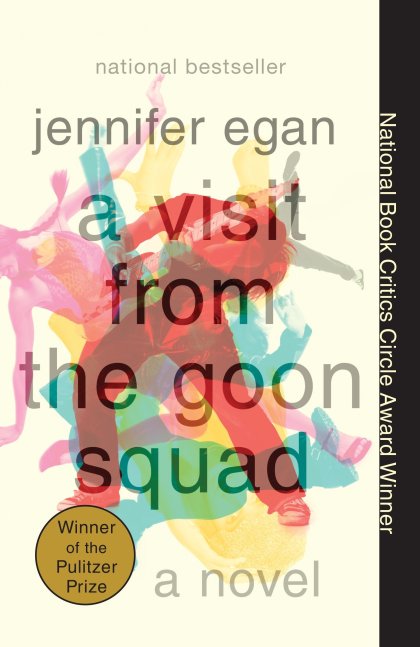
I assume next year I will continue exploring deeper into the history of science fiction. However, I would like to broaden my reading somewhat. At the end of this year, I read A Visit from the Goon Squad by Jennifer Egan because several best-of-the-decade lists praised it. This literary fix-up novel (13 short stories that have connections) was far better written than any science fiction I read and does broaden my reading experience, but I’m not sure I cared. Still, I might try some more contemporary literary fiction in 2020.
I feel in my waning years that I need to specialize in a few subjects because I can’t maintain a coherent sense of a generalist. On the other hand, I am impressed by how many Jeopardy clues trigger lost facts to pop out of my head. There’s a jumble of knowledge in there, I just can’t organize or quickly access it.
More and more I’m impressed by people who can explain things in detail. The ability to quickly recall bits of information and string them together into a verbal narrative is a skill I envy. I’d love to be able to describe what I read in a coherent speech when my friends ask me about what I’ve been reading.
Next year when I read a book I truly admire I hope I will study it, write a concise summary, and then develop that into a little speech. I wonder if the act of preparing a micro-lecture will help me remember more?
I recently noticed sites making lists of the best novels of the decade, so I decided to see if combining the lists would show which novels were standouts and try to read them. The pictured novels above are the books I have read and loved most from the lists below. I don’t read many mainstream literary novels, just six from these five lists. Maybe I should try to expand my reading mind and try more different books. I imagine a steady diet of science fiction is warping my sense of reality.
I only used Paste’s top 20 books to keep the focus tight. It’s worth following these links to read about the various titles.
This first group, are novels on more than one list. A Visit from the Goon Squad made it to 3 of the 5 lists. I guess I really need to read that one. Life After Life was also on three lists, and I have read it. It’s quite impressive. All of these books are ones I’ve seen on many lists over the years, so the consensus of fans makes me think I should give them a try.
These books are in no order. * = read and – = bought but not read
A Visit from the Goon Squad (2010) by Jennifer Egan (EW, LitHub, Time)
Life After Life (2012) by Kate Atkinson (EW, Paste, Time) *
The Flamethrowers (2012) by Rachel Kushner (EW, LitHub)
Sing, Unburied, Sing (2017) by Jesmyn Ward (EW, Time, Paste)
My Brilliant Friend (2011) by Elena Ferrante (Esquire, Time) –
The Sympathizer (2015) by Viet Thanh Nguyen (Esquire, LitHub)
The Underground Railroad (2016) by Colson Whitehead (LitHub, Paste)
Fates and Furies (2015) by Lauren Groff (EW, Paste)
Lincoln in the Bardo (2017) by George Saunders (Esquire, Paste) *
Swamplandia! (2011) by Karen Russell (Esquire, Paste)
The Fifth Season (2015) by N. K. Jemisin (LitHub, Paste) –
Station Eleven (2014) by Emily St. John Mandel (EW, Paste) *
Little Fires Everywhere (2017) Celeste Ng (Time, Paste)
These books only made it to one of the five lists. They are probably great books to some people, but I feel less of an urge to try them over the above group. However, I thought The Overstory was fantastic and wondered why it didn’t make it to more lists.
Exit West (2017) by Mohsin Hamid (EW)
Commonwealth (2016) by Ann Patchett (EW)
A Brief History of Seven Killings (2014) by Marlon James (EW)
Normal People (2019) by Sally Rooney (EW)
Gone Girl (2012) by Gillian Flynn (Time)
Americanah (2013) by Chimamanda Ngozi Adichie (Time) –
Tenth of December (2013) by George Saunders (Time) –
The Sellout (2015) by Paul Beatty (Time)
The Nickel Boys (2019) by Colson Whitehead (Time)
There There (2018) by Tommy Orange (Esquire)
Less (2017) by Andrew Sean Greer (Esquire)
The Thousand Autumns of Jacob De Zoet (2010) by David Mitchell (LitHub)
Train Dreams (2011) by Denis Johnson (LitHub)
The Buddha in the Attic (2011) by Julie Otsuka (LitHub)
The Tiger’s Wife (2011) by Téa Obreht (LitHub)
Salvage the Bones (2011) by Jesmyn Ward (LitHub)
All My Puny Sorrows (2014) by Miriam Toews (LitHub)
Dept. of Speculation (2014) by Jenny Offill (LitHub)
The Sellout (2015) by Paul Beatty (LitHub)
A Little Life (2015) by Hanya Yanagihara (LitHub)
Outline (2015) by Rachel Cusk (LitHub)
Imagine Me Gone (2016) by Adam Haslett (LitHub)
The Overstory (2018) by Richard Powers (LitHub) *
In the Distance (2018) by Hernan Diaz (LitHub)
Trust Exercise (2019) by Susan Choi (LitHub)
Milkman (2019) by Anna Burns (LitHub)
Circe (2018) by Madeline Miller (Paste)
Homecoming (2016) by Yaa Gyasi (Paste)
The Leavers (2017) by Lisa Ko (Paste)
The Way of Kings (2010) by Brandon Sanders (Paste)
Wolf in White Van (2014) by John Darnielle (Paste)
The Water Dancer (2019) by Ta-Nehisis Coates (Paste)
The Goldfinch (2013) by Donna Tartt (Paste) *
The Night Circus (2011) by Erin Morgenster (Paste)
Family Life (2014) by Akhil Sharma (Paste)
Swing Time (2016) by Zadie Smith (Paste) *
The Wise Man’s Fear (2011) by Patrick Rothfuss (Paste)
If you’ve read any of these books and can recommend them, leave a comment.
by James Wallace Harris, Saturday, November 23, 2019
I’ve been studying Plato. Plato is good for the soul but hard on the ego. Humans often lack the ability to distinguish fact from fiction. Our superpower is self-deception. As children, we are told stories that we desperately cling to for the rest of our lives. We adapt to reality by making up explanations that usually end up being fictional. And when our stories clash with reality, the odds are we embrace the story. We aren’t rational. We are rationalizing creatures. We seek what we want by lying to ourselves and the people around us.
Anyone who follows the news knows this.
If a noise wakes us up in the middle of the night we don’t rush outside to investigate it. We start making up explanations trying to imagine what the noise could be. We tell ourselves its a burglar. Or if we’ve seen a raccoon lately, we’ll say to ourselves that Rocky is in the garbage can. Or its the wind, or a fallen tree limb. We can’t help ourselves. Instead of saying we don’t know we imagine that we do. Generally, we imagine wrong.
Nassim Nicholas Taleb called this tendency the narrative fallacy in his book The Black Swan. Neuroscientists call it confabulation. As children, we ask how the world was created and our parents tell us answers to the best of their abilities. How we are raised determines a lot of what we believe. If you were brought up a Southern Baptist more than likely their ideas about God are what you’ll believe for the rest of your life. However, if you were kidnapped at birth and given to a Muslim family in Saudi Arabia you’d grow up believing their local variation of the origin story.
Psychologists and philosophers talk about deception and self-deception. We like to think this problem belongs to other people. Our intuition tells us we’re right. We feel right. But are we?
We want to believe what we learn growing up is the truth. Few people are intellectual rebels that reject their upbringing. Not only will you maintain your beliefs, but you will also rationalize and lie to defend those beliefs.
A good percentage of humans learn to lie to get what they want. Conscious lying sometimes involves knowing the truth but working to suppress it. Liars are different from bullshitters. To a degree, liars are conscious of their lying. Bullshitters, as defined by Harry G. Frankfurt in his philosophical essay “On Bullshit” often don’t know they are lying, or even know what is true. Their grasp of reality is usually tenuous. They have told so many lies they don’t know what’s true anymore, but they have learned they can say anything to get what they want. Their concept of reality is so fluid that it changes from moment to moment.
The trouble is we bullshit ourselves all the time. We are especially dangerous to ourselves and others when we think we know more than we do. This is called the Dunning-Kruger Effect. People who suffer from this cognitive ailment are clueless about their own lack of knowledge. They firmly believe they are smart and wise.
We have so many built-in brain functions for fooling ourselves that I have to wonder if it’s even possible to know the truth if it came up and tapped us on the shoulder.
Most people dismiss philosophy as abstract useless wordplay. I just finished reading Plato in the Googleplex by Rebecca Goldstein and I’ve developed a new respect for Plato and philosophy. Goldstein came up with a very clever gimmick for presenting Plato’s philosophy. She imagines him alive today going on a book tour in America. She has his ancient words respond to our modern conundrums by fictionalizing Plato in different settings arguing with people of varying beliefs. I really recommend listening to this book on audio because these discussions are quite dramatic and effective. When Plato goes on a conservative talk radio show it’s hilarious. But I think my favorite encounter was between Plato and a neuroscientist who was going to scan his brain. The section where he’s on a panel with two opposing authors dealing with education was also quite brilliant.
However, the gist of Plato at the Googleplex is to question what we know and think we know. I’ve been lucky to be the kind of person that’s usually gone against the current, but I realized in later years my skepticism has not always protected me from bullshit. I’m acquiring new levels of doubt as I age realizing my own persistent gullibility.
For example, as a life-long science fiction fan, I’ve had high hopes for the future. I realize now that many of my cherished science-fictional beliefs are no better than what the faithful believe about God, Heaven, angels, and life-after-death.
And there is one cherished concept I have to reevaluate. I’ve always believed that humans would one day overcome their problems with confabulation. 2,400 years ago Plato concluded that only a small percentage of humans would ever be able to tell shit from Shinola. He felt only a few could ever understand what philosophy teaches. I’ve always wanted to assume that we’re evolving, our knowledge is growing, and our abilities to educate are improving, so eventually, that percentage would be much greater.
That belief might be self-deception. But it might not.
We have to honestly ask ourselves can philosophy be integrated into the PreK-12 educational system so the majority of the population understands their problem with confabulation? This is to assume we can be totally different from who we are now as a species. Are we hardwired so we can’t change, or are we adaptable to change if we can find the right educational path?
This experiment would require raising a generation without fiction. That includes both God and Harry Potter. No Easter Bunny, Tooth Fairy, or Santa Claus. We’d have to stop lying to our children, or letting them play with lies and fiction. They’d have to grow up on nonfiction and documentaries instead of fiction, television, and movies.
Children’s entertainment would be limited to sports, games without a fictional narrative component, arts, crafts, and other hobbies. When kids ask why we can only give them answers that we know. For example, if they ask why everything is here we can only answer we don’t know. If they ask who made the world, we can only answer what we know from observable cosmology and geology.
It’s too late for me. I can’t give up fiction. I love it too much. I too addicted. I should be building my own robots and programming them instead of reading science fiction about robots. I wish I was, but it’s so much easier just to dwell in fictional worlds where intelligent robots exist, or we’re colonizing the solar system, or we’re creating utopias.
Fiction offers an infinity of virtual realities we prefer over actual reality. I believe our chronic confabulation is caused by wanting reality to be different from what it is. Buddhists call that desire. Eastern religions teach we should accept reality, whereas western philosophes promote shaping reality to our needs and wants. Western thought is active, it’s all about conquering reality. When we fail we lie to ourselves. Probably we suffer from such great confabulation because we seldom get what we want. It’s easier to have romantic fantasies or watch porn than date than to actually seek out our perfect match.
I think the path lies between the East and West. We shouldn’t be completely passive in our acceptance, but we shouldn’t want absolute control either. It would be interesting to know how people think a thousand years from now. Will they have a more honest relationship with reality? There could be a good science fiction story in that, but then it would be fiction. Maybe there’s another kind of acceptance too. Maybe we have to accept that we are amazing confabulating creatures. It will be a shame when such an imaginative species goes extinct.
And I’m not excusing myself from self-delusion either. My liberal friends and I believe Republicans are only out to reduce taxes and regulations at any cost. That they are either deluded about Trump, consciously lying to get what they want, or they are confabulated by his bullshit. Anyway, they ware willing to back Trump at any cost because Trump gets them what they want.
Like I said, I’m willing to consider this a liberal narrative fallacy. I believe its possible Republicans could be seeing a truth we liberals don’t. However, their stance on climate change suggests they are blind to science. I believe scientific consensus is as close as we ever get to the truth, and I could be wrong about that too. I also know that even though I accept what science says about climate change I don’t act on their conclusions. Oh, I do a token amount, what’s convenient for my consciousness. But if climate change is real, then none of us are doing what it takes to avoid it.
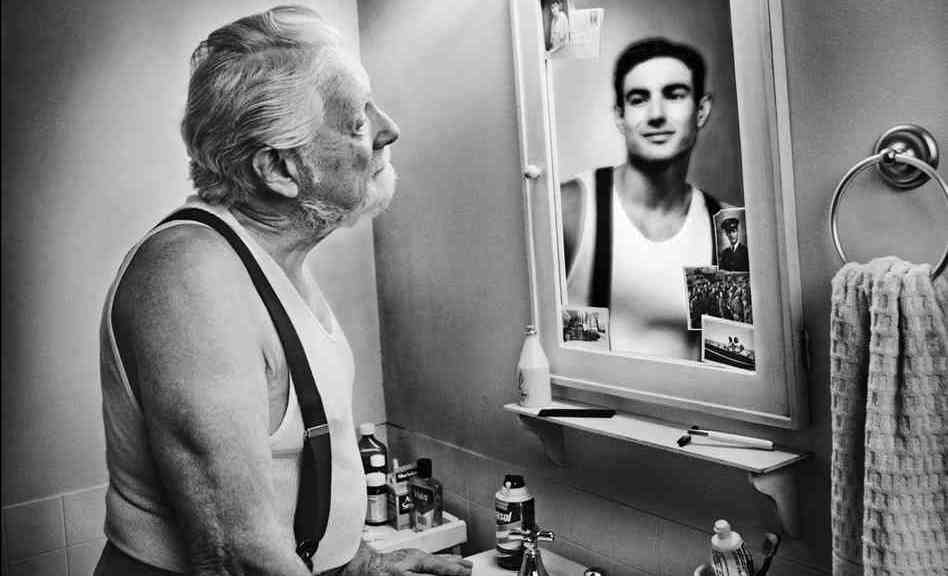
Looking in the mirror and seeing who we really are is hard. That’s what Plato was all about.
by James Wallace Harris, Monday, November 18, 2019
Audiophiles are obsessive creatures who try to create Nirvana on Earth by assembling the perfect sound system but frustratingly never reach paradise because they’re always seeking another allusive component that promises to be the final Holy Grail of High Fidelity. I would love to be a genuine audiophile but I just don’t have the Right Stuff to be an audionaut. (My spelling checker suggested “audio nut” for the last word, how appropo.)
Reason To Be #1 – You Really Love Music
Now you have to love music way more than the average music listener. You have to ache to hear recorded music at its fullest fidelity. Most music fans are happy to just have music on in the background of their lives. Audiophiles listen to music like they were at the theater watching a great movie or play. They don’t want any talking. It’s all about hearing music with 100% concentration. But it’s even more than that. You also want to know everything about the music, how it was created artistically and technically, and how it fits into the history of music in general. Audiophiles become scholars of music.
Reason Not To Be #1 – Requires Loving Music Too Much
The love of how the music was made or how it could be played back becomes so obsessive that it overshadows the joy of listening to music. Audiophiles love the details to death, especially technical details. There’s nothing wrong with amassing such knowledge, but at some point, I realize it could become an all-consuming black hole of scholarship.
Reason To Be #2 – You Desire Higher Fidelity
I want to hear the music recordings played so I hear everything. The average music fan is perfectly happy with a smartphone and a pair of earbuds. Buying a pair of good headphones is the first step on the road to becoming an audiophile. Once you realize you can hear more details from your favorite songs you go on a quest to upgrade your equipment. It’s knowing when to stop that determines your sanity. As much as I enjoy listening to music on headphones, I really love hearing it played loud so the music fills the room with a soundstage and all the performers and their instruments seem separated spatially.
Reason Not To Be #3 – You Need To Hear What No One Else Can
This is where audiophiles begin spending thousands, tens of thousands, even hundreds of thousands trying to recreate what they believe is what the music sounded like in the studio when it was recorded. It depresses the hell out of me when I hear an audiophile claim that an $18,000 cable made a night and day difference. I worry that I’m hearing musical sludge and don’t know it. I hate feeling like if I was only rich like Bill Gates I could hear my favorite songs as they were meant to be heard. When extreme audiophiles talk about how much better they hear music they make me want to go back to listening to AM radio.
Recently I watched a documentary on Johnny Winter that was made just before he died. At one point he wants the film producer to hear the music he loved growing up. So he plays an old blues record on a portable stereo in his living room that looked like it came from an elementary school in the 1950s, with detachable speakers. While he was playing a scratchy old record on this crappy record player his face lit up like he was experiencing enlightenment. I remember back in 1965 listening to music on a tiny transistor radio with a single earpiece. I was so happy with Top 40 AM back then that I nostalgically consider 1965 to be the peak of popular music. Of course, over a lifetime I have bought one music system after the next seeking to hear that same music in greater high fidelity. But watching Johnny Winter, who probably had the money to own a good audiophile system looked so happy listening to his favorite music in such lo-fidelity that it made me realize that love of music isn’t about equipment.
Reason To Be #3 – The Desire to Hear New Music
Most people imprint on the music they heard growing up as teens and end up playing those same tunes over and over again for the rest of their lives. Audiophiles continue to seek out new music from all genres and historical periods until they die. Audiophiles can branch out of the generation they were born into to psychically dig music from other generations and other cultures.
Here’s a video Michael Fremer, a senior editor at Stereophile magazine, talking about his favorite 100 analog albums. Fremer is an extreme audiophile. I love watching his videos, and this one is very inspiring because of his passion for these particular albums. I’m going to play everything on his list because I want to hear what excites him so – just not from the same source. The video is also evidence of why not to become an audiophile. Pay attention to what he knows and what it would take to play what Fremer loves. This is a long video, and he doesn’t start his countdown until he first gives a lecture on LPs’ ability to last. That should have been a separate video.
Reason Not To Be #3 – The Desire to Hear New Music by Specific Recordings
Fremer is extremely knowledgable and I love learning from him. He’s not snobbish, but he is rather crusty in his opinions. He appears to really admire 45rpm double LPs, a format I didn’t even know existed until watching the video, and Google seems to know little about that format too. Fremer often claims certain reissue 45rpm LPs are by far the absolute best presentations of certain classic albums, but these editions are $50-100, or more. Fremer is an LP snob and the way he talks it makes you feel if you aren’t listening to these exact LP pressings you are wasting your time. I’m going to listen to these 100 albums, but not the actual LP.
My preferred music format is streaming music via Spotify. This horrifies audiophiles, although some audiophiles are beginning to accept Tidal because it streams at CD quality. I’ve tried getting back into LPs twice in recent years and I just don’t like messing with the turntables or LPs. This probably means I can’t be an audiophile according to the faith of most audiophiles.
Reason Not To Be #4 – Money
Some audiophiles spend huge piles of money seeking High Fidelity. In another Fremer video, he talks about having to take out a bank loan to buy his amplifiers, and the guy doesn’t look poor. He also talks about using two $18,000 cables – but he got those on loan. Most true audiophiles spend a great deal of money on their sound systems. There are low-end audiophiles, but I expect true audiophiles consider them pretenders. On the other hand, some people consider themselves audiophiles if they merely like to tinker with sound. One German audiophile I watched recently on YouTube recommended using a $35 Raspberry Pi as a foundation for a music streamer. And I know people who build their own speakers. So it is possible to spend little, and still, claim to be an audiophile. However, I tend to think real audiophiles read audiophile magazines and buy audiophile-grade equipment.
Reason Not To Be #5 – Never Ending Quest for New Equipment
Audiophiles tend to be people who are never satisfied. One of my favorite audiophile YouTubers is Steven Guttenberg, who calls himself The Audiophiliac. In one of his videos, he was talking about “The Last DAC/AMP/Reciever/Speakers/Turntable You’ll Ever Buy/Need” type of discussions and columns. You could see Steve turning green under the gills just thinking about not wanting new equipment. The idea of finding the right sound system you’d keep for the rest of your life or even 5-10 years just goes counter to the audiophile credo of always wanting newer and better.
I just bought a new sound system for my computer room. I realize my old system was 20 years old. My new system is a Yamaha WXA-50 streamer with a built-in amplifier and Bose 301 Series V speakers. It cost me around $750 and I expect that system to last a long time. I took weeks picking it out. I wanted audiophile speakers, but all the reviews of bookshelf audiophile speakers said not to put them against the wall. Audiophiles believe bookshelf speakers should be put on stands. (Then they aren’t bookshelf speakers, are they!) I only have one place to put speakers in this room, on top of my bookshelves. The Bose speakers were designed to be real bookshelf speakers, so I bought them. I’m very happy with them too.
Reason Not To Be #6 – Buying Bose Speakers
I watched a lot of YouTube videos by audiophiles reviewing speakers and boy do they look down their noses at Bose. In fact, I set out specifically not to buy Bose speakers to replace the Bose 201 speakers I currently owned. I wanted to buy Klipsch, Elac, Wharfdale, and other speakers admired by these reviewers but they all insisted they had to be set out from the wall on stands. When I saw a video about how Bose speakers were designed to work from bookshelves I said, “Fuck it, I’m buying Bose again.”
Reason Not To Be #7 – I Don’t Hear What They Hear
Ultimately I don’t think I can be an audiophile because either my ears aren’t good enough, or my cognitive ability to discern audio details is lacking. Or maybe I just can’t see the ghosts they do.
I went back to LPs twice in recent years because audiophiles keep claiming they sounded better. Records did sound different, even a pleasant different, but I heard more details from my CDs. I bought the equipment to play SACD years ago. Yes, they sounded better, but only if I was concentrating intently. Then when high-resolution FLAC files came out I tried them on a new receiver that was supposed to decode them. I bought Moondance by Van Morrison as my test. I compared it to a remastered CD and Spotify. I thought the CD sounded best, but I was perfectly happy with Spotify if I cranked up the volume.
Time and time again I heard audiophiles claim the difference is night and day to them, but the difference to me at best is the difference between the daylight at 2:00pm and 3:00pm.
I’m happy when the music fills the room and each performer and singer stands out. I love it when I can hear the texture of each instrument. I love it when I have enough high fidelity that allows me to easily focus on just one instrument when I want to. But most of all, I love it when music just sounds good.
I want to be an audiophile within reason. I believe one problem real audiophiles have promoting optimal sound systems is they focus too much on individual components when the total sound is depended on a gestalt setup. Reviewers should review whole setups so it’s easier for buyers to acquire and set up a system that should work together. Constantly reading/watching reviews of the gadget of the moment is becoming stultifying.






 Auxiliary Memory