Living in Real Time

If you’ve ever gotten used to having a DVR (digital video recorder) for your TV, you’ll know what I mean about living in real time.  The HTPC (home theater PC) I built to record TV shows stopped working the other night.  I went out to the living room to watch the news and my computer was dead.  No news.  No electronic TV guide.  I had to watch TV in real time by clicking around the channels to see what was on.  I ordered a new power supply, but that apparently wasn’t the problem.  I took everything apart and put it back together and it started working again.  Then it stopped again.  Maybe the memory is flaky – I don’t know.

Every now and then, the electricity goes out and I’ll have to live without power for a few hours, and on some occasions a few days.  Sometimes I’ve had to live without internet.  Time seems to flow at a different rate when you live without electricity, the internet, cable TV, or TV without a DVR.  Some people go crazy when they don’t have their smartphones. 

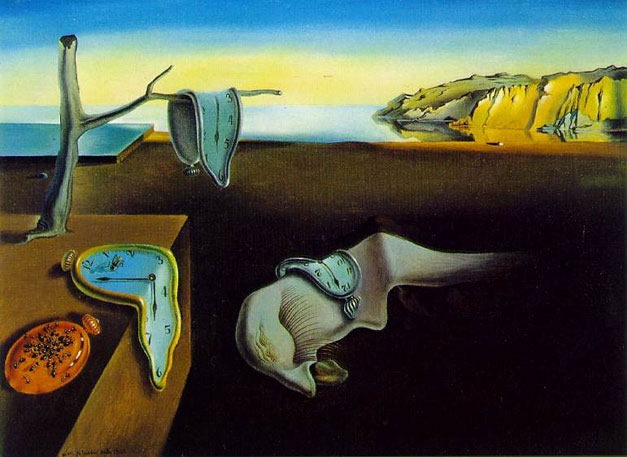
All our gadgets alter our sense of time.

dali-persistence-of-time (1)

I recently read Anna Karenina by Leo Tolstoy and I was struck by how little technology they had in their lives, and how slow information flowed.  The Russians were having a war with the Turks and the news came by telegram to newspapers.  Each day people waited for new news of the war, and discussed the latest telegram.  People in the 1870s Russian traveled by train, horse, cart and carriage.  If they wanted to know what a friend was doing they had to wait days for a letter.  It took weeks and even months to travel from one place on Earth to another.

Time works different when I have to be in my den chair at a specific time to watch a TV show.  Normally I like to watch TV starting after 10pm, until about 11:30pm.  I watch recorded shows, Netflix or a DVD/BD disc.  I rarely watch TV live.  Watching TV in real time is a total pain.

Now there is Netflix/DVD/BD time, DVR time and real time.  Netflix and discs are old stuff just waiting to be watch whenever I feel like it.  DVR is recent stuff, waiting to be watched when I feel like it.  And real time is always now.  DVR time lets me time shift and actual watch more TV.  I seldom feel like watching TV in real time, but PBS has several amazing documentaries every week I want to watch.  I’m over 100 documentaries behind in my DVR watching because they produce them faster than I can watch.  Those shows just wait for me on my 1.5 terabyte hard drive.  My HTPC watches TV for me.  Watching TV on my time schedule seems to make time go faster.  I never have enough.

I’m wondering what my life would be like if I don’t fix my HTPC.  Will I confirm to TV time, or will I just abandon the TV and only watch Netflix and discs?  When I was young this would have been an impossible situation.  Young people have to see movies opening night.  They have to watch new TV shows when they air.  There’s an impatience to see things first.  Years ago I had to be home Sunday nights to watch shows like The Sopranos and Deadwood live on HBO.  Then I gave up HBO and waited about a year for them to come to DVDs.  I think I could do that because I had gotten older and had the patience to wait.  I no longer had to live in TV time, in real time.

Are DVDs real time, or slower than real time?  The illusion is all this technology is speeding up time and real time is slow.  That’s how it feels, but is it really?  Is watching 2 hours of TV really any different if you’re watching it live, DVR, DVD or Netflix?  It’s still two hours of TV?  Somehow watching TV with commercials in real time seems very slow.

I remember when I got my first punch-the-clock job when I was 16, and had to work after school and didn’t get home until around 10pm.  This was back in the second year of the original Star Trek and I hated missing that show.  But work broke me of the TV habit for many years.  The DVR allows us to maintain the TV habit without having to show up on time.  Maybe I just need to kick the habit completely and live in real time.

JWH – 4/26/12 

1959 by Fred Kaplan and Kind of Blue by Miles Davis

If you have a Spotify account you can listen to Kind of Blue while you read my review.   Visit this link and it will launch Spotify and play the album. If you don’t have Spotify, request a free account here.  Having at least the free Spotify account means you can always try a new album when your friends rave about a new album discover.  Kind of Blue was first released in 1959.  I’ve included YouTube versions of its five songs below.

I am becoming more and more fascinated and entertained by history – but not the history they teach in school, but the everyday history of people, inventions and art.  We take every new thing for granted, as if it sprung fully formed new on the scene.  Take the hit gadget of the moment, the iPad.  It was far from the first tablet computer, and the concept goes back to at least to the Dynabook imagined by Alan Kay in 1968.  Nor could the tablet computer exist without the integrated circuit which was patented in 1959 by Jack Kilby, hence the connection to the book I want to talk about, 1959 by Fred Kaplan.

In 1959 Kaplan writes several related essays about how 1959 was a pivotal year for all of us who have been living since.  Essentially, you can do this for any year, but Kaplan makes a good case for 1959.  Whether it’s birth control, jazz, Fidel Castro, atomic warfare, Beat writers Kerouac and Ginsberg, Motown, integrated circuits, Malcolm X, Vietnam, Grove Press, or any of the other happening events of 1959, they all impact on us today.  Everything evolves, and everything trails a history, and the past gives birth to the now.

Never heard of Grove Press?  Well, it took on U.S. censorship and since then we’ve had sex and dirty words in books and movies.  Now you might not think that’s a good thing, but it is a pivotal change in society.  What Kaplan is getting at is you could experience pop culture before 1959 it would be much different from anything you know now.  Not unknown, because everything before is still around, but it would be missing a lot of stuff that’s come out since.

This is hard to explain.  I lived before cell phones were invented, in any form.  People who grew up with cell phones can’t imagine what life was like without them.  What Kaplan is trying to explain in a series of essays is what life was like before 1959, and what came out that year that has changed everything since.

One of the essays that really stood out for me was the one on Miles Davis and his sextet recording Kind of Blue.  It’s easy to understand the impact of technology.  Kaplan writes about the invention of the integrated circuit and we’ve been living with the technology it generated ever since, from computers to high definition TVs.  That’s obvious.  But can you understand the impact of a kind of “new technology” in music?  I struggle for that, but it’s pretty obvious if you spend time listening to Kind of Blue.  Most young people today will not understand the roots of their favorite music, but their favorite musicians who create the music will.

I find it tremendous fun to time travel via pop culture.  For most of us baby boomers, we were kids in the 1950s, and our memories of the times are fleeting and tainted by TV.  It’s easier to remember Leave It To Beaver than the politics of Dwight Eisenhower.  I was born in 1951, so I lived through most of the decade, but I have few memories of it.  I do remember the 1960s vividly, but putting the puzzle pieces of the 1950s together makes the 1960s make more sense.

Kind of Blue is a transition marker in the art of music.  If you like to play the six degrees of separation game, it will link you to many cool people.  It’s both a tipping point and a crossroads.  You can listen to the music, but it’s also fun to read about its history.

Kind-of-Blue

Kind of Blue is considered to be one of the best jazz albums of all time, and the best selling jazz album.  A 2001 NPR report claims it sells 5,000 copies every week.   There are no words to describe how beautiful this album is, that’s why I provide the link to Spotify above.  The album has a fascinating history that you can read at Wikipedia or listen to on this NPR documentary – I won’t try to rephrase that history since these sources do it so well.

As I read 1959: The Year Everything Changed by Fred Kaplan, a columnist for Slate magazine and also columnist on jazz at Stereophile magazine, I realized the Kaplan had a gift for music history.  I thought the chapter on Kind of Blue in 1959 was full of wonderful historical details and the his descriptions of music are very precise and vivid.  It’s very hard to describe music in words.  Check out Kaplan’s video introduction to the book in this video clip at Amazon.  It opens with music from Kind of Blue, Kaplan will give you a better idea of his enthusiasm for writing about 1959.

I turned eight in 1959, and I was living in New Jersey, out in the country, where I was oblivious to the world at large.  I’m not sure we even had a TV set at the time.  Kaplan covers a quirky view of 1959, but one I can identify with because all the topics later impacted my life.  I didn’t discover Kind of Blue until the late 1980s.  I was reading Kerouac and Ginsberg in the late 1960s.  Fidel Castro took over Cuba in 1959, and I spent most of my youth growing up in Miami living with the results, so I’m like one degree away from that chapter, plus I spent the 1960s loving hits from Motown which was started in 1959.  I never knew I had so many connections to 1959 until I read this book.

Kaplan is right about 1959, people and inventions from 1959 have slowly weaved themselves into the fabric of my life over the last 52 years.  I wished I had been given a record player and the LP of Kind of Blue when I was 8, because I grew up with AM rock n roll and that has shaped the musical tastes of my lifetime.  I wonder if I was exposed to jazz at 8 if I would have been a different person.  For the most part I don’t even like jazz, but I love Kind of Blue, and Time Out by the Dave Brubeck Quartet, another masterpiece of jazz from 1959.

I have been able to travel back in time to enjoy the jazz of the 1920s and 1930s, and through the swing era of the 1940s.  Then came Bebop, which was beginning of modern jazz and although I can admire it intellectually, I don’t feel it.  I feel the same way about most classical music.  Neither kind moves me emotionally.

Miles Davis worked with Charlie Parker, one of the pioneers of Bebop, and then Davis moved on to Hard Bop, which brought R&B, gospel and blues into jazz.  I bought several Art Blakey and John Coltrane CDs in the 1980s trying to get into this era of jazz.  Again, I could semi-enjoy this kind of jazz, but something was missing.  Why?

Why was Jack Kerouac and his Beat buddies so blown about by jazz of the 1940s and 1950s?  It drove them insane with excitement, but it’s all too cool emotionally for me.  Then comes 1959 and Miles Davis and Dave Brubeck produce two albums that turn me on, but also turn on a zillion other people to jazz again.  When I read Kaplan’s chapter on Miles Davis I wanted to go back and try to get into those jazz years I can’t connect with.  My friend Mike who got into jazz about the same time as I did broke the barrier and left me behind.

For those of you who didn’t take the time to join Spotify, here’s “So What” the first cut off of Kind of Blue.  It really helps to have good speakers to enjoy the textured loveliness of these tunes.

Maybe the reason why I dig this new direction in jazz is because it jettisons so much of the old forms of jazz.  Miles Davis and Bill Evans prepared very little in the way of musical notation for the musicians to follow.  Fred Kaplan explains what they are doing in words, but these seven musicians are improvising from very little structure, mainly just the mood of the piano.  I wish I understood music to know what they are doing, but I don’t.

All I know is this music lights up my mind.  I highly recommend getting a copy of Kind of Blue and play it when you are ready to just relax and listen.  Let your mind go with the music.  It’s very different, yet this album has influenced many artists since.  I really got into The Allman Brothers in 1969, and even got to see them before Duane was killed.  Duane Allman loved Kind of Blue and claims it influenced his music.  In can feel “In Memory of Elizabeth Reed” in “Freddie Freeloader” which you can play here:

“Blue in Green” is so moody that it feels more like a soundtrack for a story, or music for a modern dance piece.  This third track was the final song recorded in the March 2, 1959 session.  Give it a listen:

The final two cuts were performed on April 22, 1959.

“All Blues,” the first cut on the back side of the LP, picks up the tempo and is the longest cut on the the album (11:31), and my favorite, but sadly it’s cut short here on YouTube because of the 10 minute limit.

The last track, “Flamenco Sketches.”  This is so far from modern pop music that I’m not sure if young people will be able to get into this kind of music at all.  I think one reason why I love this Miles Davis over his earlier work is because the music is slower.  I couldn’t handle the frantic tempo of Bebop, nor did I relate to the old tunes being blended into Hard Bop.  This music is as modern as NASA, the agency that was created just a year before in 1958.  This music is light-years away from the teen idols I was hearing on the radio at the time.

Is this really the sound of 1959?  The music of bomb shelters and revolutions in Cuba?  It certainly sounds like music for books by Jack Kerouac and Alan Ginsberg, but how many regular Americans listened to this album?  I’m sure its as esoteric as Zen Buddhists to mainstream America, yet it was significant to our culture.

Us baby boomers can’t let go of the 1950s.  Look at TV shows like Mad Men, that started with 1950s ad men confronting the beginning of the 1960s or the film The Tree of Life, which tries to put the 1950s in context of the whole history of the universe.  Or read a book like The Life and Times of the Thunderbolt Kid, which is a nostalgic memoir of the times by Bill Bryson.

I wonder what people from generations after us baby boomers think of the 1950s.  It must be as alien as the 1920s are to me, the decade my parents were children, or the 1930s, the decade they were teens.

Kind of Blue was a musical experiment.  A few other albums after it pursued the same techniques, but as far as I know, it’s a dead end for a trend, yet fleeting pieces of its sound show up in music all the time.  Modern pop music is almost a rigid formula – I almost ache to hear something new and different.  What musical experiments are going on now in 2011 that will be written about in the 2060s?

JWH – 7/30/11
Sorry Bookstores, It was True Love while it Lasted

Time waits for no one, as an old song goes.  When I was a kid I used to marvel at talking to adults who told me about growing up without television.  That just boggled my mind.  And my grandmother, who was born in 1881, would tell me about life before the automobile, airplane, radio, Polio vaccine, refrigerator, and indoor plumbing.  I just could not fathom such living.

It never occurred to me then that I would live long to hear young people extol technology they couldn’t live without, or I’d have to face big transformations in my life.  Personal computers, the internet, ebooks, GPS, cell phones, VHS, CD and DVD players, Facebook, texting, Twitter are inventions that change our society at an unrelenting pace.

Two of my favorite pastimes growing up were shopping for records and books.  I loved record and bookstores.  Whenever I’d visit a new city I’d seek out its best bookstores and music shops.  I really miss flipping through bins of LPs two or three times a week.  CDs were an exciting invention, but their tiny size ruined the love of the album cover.  Now even CDs are disappearing and I quit shopping at music stores years ago.  I got used to it.  Time rolls on.

My greatest identity in life is as a bookworm, and sadly bookstores are failing all around me.  Sales of hardbacks and paperbacks are way down from one year ago.  Yesterday, the local paper said my favorite bookstore is likely to go under unless the landlord makes major concessions to a liquidator that bought it.  And that’s partly my fault.  I’m reading and buying more books than ever, but I get them from Audible.com or Amazon.com, or used from ABEBooks.com (all three owned by Amazon).  For every ten books I read, nine I listen to, and one I read.  And that one I read is mainly in paper form now, but my Kindle will probably supplant that.  Time marches on.

Read “What Is a Book? The Definition Continues to Blue” for one of many ways in how publishing is evolving.  I get the feeling I’m living in times like when books went from scribe produced scrolls to Guttenberg printed volumes.  I’ve been messing around with ebook readers since the 1998 Rocket ebook.  Visionaries back then predicted a quick transition to ebooks, so I’ve sort of been expecting the change.  But when it was announced recently that hardback sales were down 43% from a year ago, and paperbacks down 41.5%, I was shocked it was really happening.  Kindles, Nooks and iPads are the future of books. Oh, I don’t think they will disappear, people still ride horses and buy LPs, but time is relentless, and change comes whether we want it or not.

I wonder if books will become collector items now?  But I’ve changed too, and I’d like to get rid of my book collection.  If I retire and start moving around the weight of my collection will be a heavy burden.  Ditto for my CDs.  Digital is just too damn convenient to ignore.  I loved bookstores, but I actually made more bookworm friends online than I ever did at a store.

And there are unimagined kinds of changes too.  Who could have predicted that a whole generation would grow up stealing their music, books and video?  They think everything should be free.   Did communism win after all?  If someone had told me as a teenager that bookstores and record stores would disappear and everything I wanted could be had for free on little gadgets I would have imagined a science fictional dystopian future.  Nor could I have pictured a future where kids wouldn’t sit around and listen to records together, but instead choose to live in their own little iPod worlds.

Time will continue to march relentlessly forward regardless of my wishes.  On one hand I want to feel wimpy and cry over the bookstores, but on the other hand I want to say “Fuck you time, bring it on, I can take whatever comes.”  If the bookstores close I won’t read any less.  I’m sure magazines and newspapers will be reborn as beautiful swans on future tablet computers.  And I’m sure super multimedia books will dazzle us and we’ll think of hardbacks as quaint as parchment.

I do miss the record store, but I don’t regret they are gone.  I’m listening to far more music than ever with my subscription to Rhapsody.  Instead of owning 1,500 albums, I have access to millions.  The internet is better than any newspaper or magazine that’s ever published.

It’s like when I was a kid talking to old people – I pitied them for having to grow up in a world without TV.   Well, I’m not going to feel self-pity because time bulldozed over my nostalgic habits.  Sorry bookstores, it was nice while it lasted.  I expect someday to talk to children and tell them how I used to read by holding words printed on paper and their little minds will boggle at the thought of such primitive living.

NOTE:  I sat down here to write a cry in my beer post lamenting that I might be losing my favorite bookstore Davis-Kidd.  I truly love bookstores, but as I wrote and rewrote I realized time has already changed me and I was just feeling nostalgia.  Don’t get me wrong, I expect bookstores to be around for years to come, but their days are numbered.  Time changes everything, and time does not stop.  I hate that so much in my life is no more or has changed beyond recognition, and it’s okay to feel a twinge of weepiness for the old days now and again, but I also know it would be unhealthy to cling to the past.

JWH – 4/23/11

Dear Me

Dear Jimmy Age 10

If you would study more and watch less television I could finish college.

Love Jim Age 22

———-

Dear Jim Age 16

If you could run away to California it sure would be nice remembering the Monterey Pop Festival.

Love Jim Age 52

———

Dear Jim Age 22

I’m watching the Flintstones – you guys leave me alone!

Love Jimmy Age 10

———

Dear Jim Age 35

You need to start putting away money for our retirement, I’m running out.

Love James Age 72

———

Dear James Age 72

What’s in it for me?

Love Jim Age 35

———-

Dear Jimmy Age 10

Turn off that goddamn TV.

Love Jim Age 25

———-

Dear Jim Age 25

Make me.  You sound like Dad.

Love Jimmy Age 10

———-

Dear Jim Age 35

I know two women who told me I should have hit on them when we were younger.  Show me some money and I’ll tell you who they were.

Love James Age 72

———-

Dear Jim Age 17

You should hitchhike to Bethel, New York this summer.  Don’t worry about buying tickets, just remember the name Woodstock.

Love Jim Age 52

———-

Dear Jim Age 17

Tell me the secrets of getting laid

Love Jim Age 16

———

Dear Jim Age 100

Are you there?

Love James Age 77

———

Dear Jim Age 16

Ask one of the older Jims, and then let me know.

Love Jim Age 17

———

Dear Jim Age 15

The Beatles are coming near you, think you can steal $40 for tickets and bus money.

Love Jim Age 52

———-

Dear Jim Age 13

Quit reading so much science fiction, girls don’t like it.

Love Jim Age 21

———

Dear Jim Age 13

Stop reading that science fiction all the time – take up sports.  Boy am I out of shape.

Love Jim Age 45

———-

Dear Jim Age 13

Do you think you could get some older guys to place bets for you at the track?  I need  money to buy science fiction books.  I’ve read all the SF books at the library.

Love Jim Age 14

———-

Dear Jim Age 13

Get your head out of that goddamn book and do something real.

Love Jim Age 57

———-

Dear James Age 99

Are you there?

Love James Age 77

JWH – 9/17/10

Inventions Wanted: Universal Photo Database

I often wish I had photographs of certain people or places from my past.  I constantly damn myself for not chronicling my life better.  I’ve even wondered if anyone else might have photographed those people and places.  This gave me an idea for a great invention, the Universal Photo Database (UPDB).

I have lots of old photos of my mother and father, and some of my grandparents, with a few of my aunts and uncles and my cousins.  If there was a UPDB, I could submit my pictures to it, along with the names of the people in the photos.  Then if anyone in the world put in a search, for example “George Delany Harris,” my father, they’d find the photos I uploaded.  It’s not likely people would be searching for him, but he was in the Air Force for twenty-four years and maybe old service buddies wondering what happened to their old pal would.  On the other hand, other people might have photos of my dad that I’d like to see.

Jimmy-Patty-Becky-Jody-Christmas-1958

[Jim Harris (me), Patty Piquet (spelling?), Becky Harris (my sister) and Jody in front of house in Lake Forest subdivision, Hollywood, Florida, Christmas, 1958.]

When I was growing up, we’d often go outside to take the photos to have good light.  Us kids would stand on the sidewalk in front of the house, often grouped in gangs of friends.  Photos for the UPDB could also be tagged by location, such as Maine Avenue, Homestead Air Force Base.  My sister and I had a bunch of friends on that street but no photos, so maybe Arthur or Alice, or Gary and Gerry, if such a UPDB existed could post their family photos, and if I searched on “Maine Avenue” and “Homestead Air Force Base” and (1961 or 1962) I’d find them.

Or I could search for “Lake Forest” “Hollywood, Florida” 1958-1963 and I could find photos of the old subdivision where I grew up.  Facebook has accidently created a beginning of a UPDB for the Lake Forest (Hollywood, FL) Historical Appreciation Society.  The group has 90 photographs, some of which seem to come from the era when I lived there, so obviously, this idea of mine might have widespread appeal because there are other people feeling nostalgic for that neighborhood too.  Multiply that desire by millions and billions of people and you’ll see the potential.

Patty---Mike---Becky-April-1959

[Patty Piquet (spelling?), Michael Kevin Ralph and Becky Harris (my sister) in front our house in Lake Forest subdivision in Hollywood Florida, April, 1959.  Patty and Mike, are y’all out there?] 

The tremendous popularity of Facebook is due to nostalgia I think, but so far its technology is based on simple groupings allowing people to reconnect with old acquaintances.  A UPDB with key fields based on names, locations and dates would redefine our interest in the past, and it could be used for other purposes other than wistful remembering.  Think what it would mean to biographers, writers and reporters?

My favorite science fiction writer is Robert A. Heinlein.  What if every fan photo, interview photo, magazine photo, fanzine photo, convention photo ever taken of Heinlein was uploaded into the UPDB along with information, memoirs, interviews, etc. linked to the photos, wouldn’t that create a wonderful library of information for researchers and fans to study?

Also, how often do you find old family photos where you don’t know all the folks in the shot?  Uploaded those photos to the UPDB and someone might identify the mystery faces.  Or how often do you clean out old closets and drawers and throw away ancient photos?  That’s history buried in the landfill – ain’t that a crying shame?  Every photo is a snapshot of reality from a unique time and space location, and who knows what value it might contain.

Most libraries have a special collections department that collects local photos, but they are impossible to use without visiting each collection in person.  Imagine if all the special collection photos where uploaded to the UPDB?  Or old archive photos from newspapers and magazines?  Or all the school photo annuals?

Imagine if Google Maps was cross-referenced to the UPDB where you could zoom in and see photos based on location and time period?  What a fantastic mash-up that would make.  Now that we live with pocket telephones that have built-in cameras, wouldn’t it be easy to create photo diaries of our lives?  Especially ones with GPS tech built in that could date/time/location stamp each photo?

When I was growing up, buying a roll of film for the Kodak Brownie was a rare event.  For most years of my life I doubt there were no more than 2-3 photos taken of myself, and some years none.  There is a small chance I’m in other people’s photos.  During the decades of my parents life, they probably went years without being photographed.  And their parents and grandparents were probably only photographed a handful of times during their whole lifetime.  If we don’t make an effort now, those photographs will soon disappear.

On the other hand, the current digital generation will have hundreds, if not thousands of photographs of themselves, so they will overwhelm the UPDB and techniques will be needed to weed out the photos worth saving.  One of my favorite blogs, Times Goes By written by Ronni Bennett has a top masthead of 10 photos of Ronni taken across her life that makes a wonderful timeline image.  I wish that everyone I meet on the web had a linked page with a similar timeline photo of themselves.  At minimum, each person should have a photo for each year of their life.  Go look at Ronni’s photos – doesn’t that time dimensional aspect add so much to your immediate impression of her?

Everyone is amazed by what the Internet does now – I’m waiting to be blown away by what it will do in five years, or ten years.  Imagine and contemplate what Facebook could be in 2015?  or 2025?  Picture me singing and smiling like Al Jolson, “You ain’t seen nothing yet!”

JWH – 11/25/9 (My birthday – age 58)