My Favorite Free Newspapers and Magazines on the Web

When The New York Times put up a paywall I stopped reading it.  I love The New York Times, but $180 a year is outrageous for what was once free.  I was even more shocked at that the same content costs even more to read on a tablet or smart phone.  I found ways around their monthly page limits, but ultimately I just gave up trying to regularly read the paper.  I’m not against newspapers and magazines charging money for their content, I just think it needs to be a fair price.  Of course a fair price is like beauty, and is set in the eyes of the beholder.  $15 a month might be the right price for upscale New Yorkers, but not to me.  If The New York Times charged $29.95 a year for digital subscriptions, I’d be a subscriber.  Instead I decided to go looking for other sources of news.

By the way, I have a weird concept about periodical pricing.  A newspaper that produces 365 editions a year sounds like it should cost more than a magazine that produces twelve issues a year.  But I can only read so much per day, and only involve with myself with so many periodicals.  On average, I read about as much from a daily newspaper as I do from a weekly or monthly journal, so in my mind, they each require a reading grazing fee, which should be about equal.  The difference between magazines and newspaper titles is not quantity, but quality of writing and the amount I can read.  Since I can only read an hour or less a day on periodical publications, I’m not willing to spend more than $15 a month total for my newsy reading.

As long as some publishers offer free content I’m going to consider it first.  The internet is full of free content, but which free source of essays and articles are the best?  What content is worth paying for if it was reasonably priced?  I pay $9.99 a month to Rdio for streaming digital music.  I subscribe to The Rolling Stone Magazine and The New York Review of Books on my iPad.  I’m open to paying for more content, but the price has to be right.

Commercial newspapers and magazines generally produce the best writing anywhere because they pay professional writers.  In searching for the best content on the web, I tend to find the highest concentration of quality writing at print magazine and newspaper sites.  These free sites are so good I would pay for them if I had to and the price was right.

And paywalls sites still offer lots of free content. The New York Times is very generous by allowing readers following links to read full articles.  Other sites, like New Scientist suck readers in but quickly cut off the flow of free words.  But even NS will offer some free complete reads.

The sample articles I use come from my Evernote clippings or from my Twitter feed, which I use to remember articles I read and like.

the-atlantic

The Atlantic

Far and away, my favorite free online magazine is The Atlantic.  Their website provides content from their print magazine along with original content written just for the web.  I subscribe to their daily updates which recommends 3-5 articles to read each day.  The Atlantic’s web reporting equals their top tier print reporting.


latimes-books

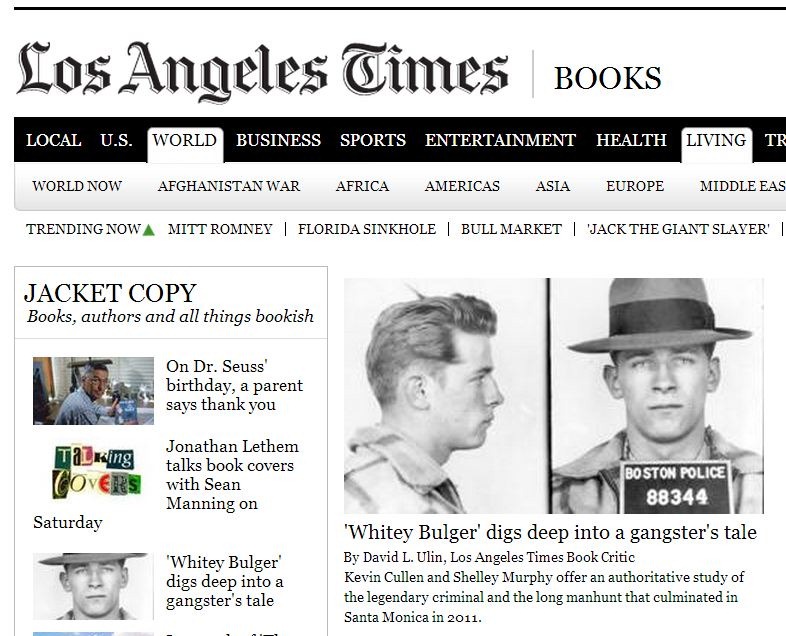
Los Angeles Times

I started noticing the Los Angeles Times when Zite frequently sent me there to read book reviews.  Zite is a tablet app that does for article reading what Pandora does for music.  You thumbs up and down what you read and Zite finds more of what you like.  The LA Times evidently is writing more of what I like to read.


Cv1v3__06CV0

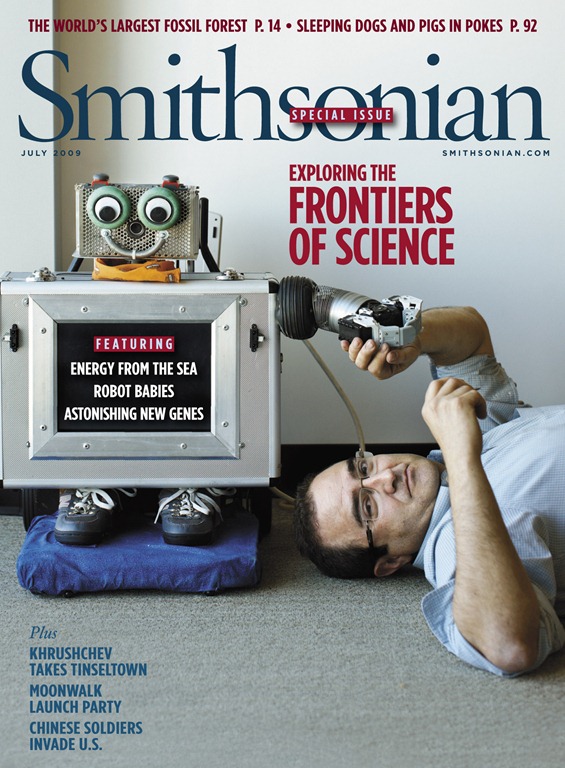
The Smithsonian

I can’t figure out if content for The Smithsonian is blocked or if they just end every article with “subscribe now for more coverage” to scare you into thinking there’s more to be had if you plunk down some dollars.  I keep finding plenty of free stuff to read.  Fascinating stuff.  Actually, more great stuff to read even if I read 24×7.  Here is the listing for the last March, 2013 issue.  And here is the start of the archive section.


the-guardian

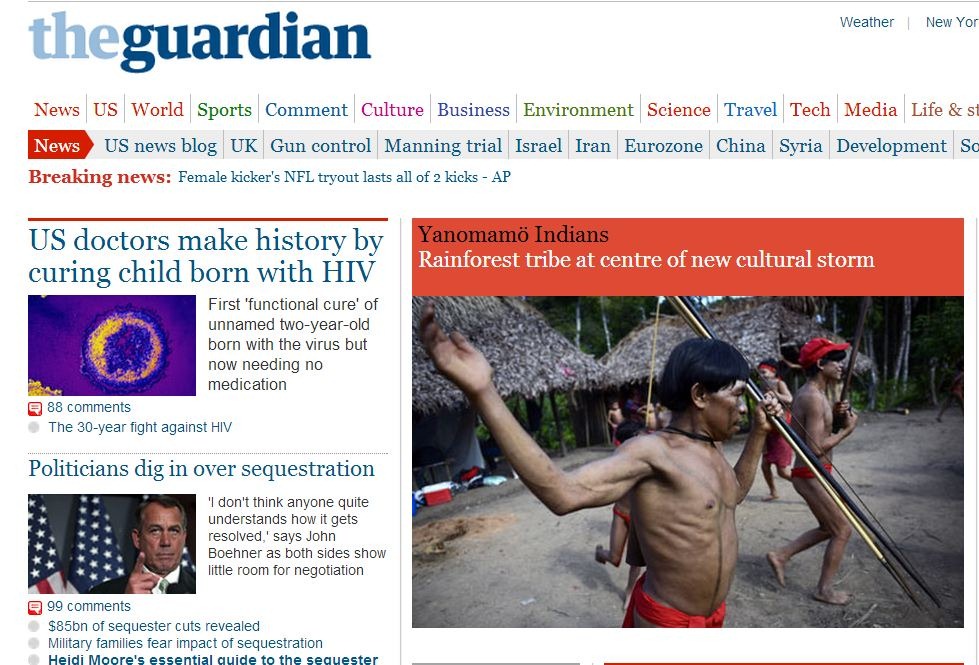
The Guardian

The Guardian is another newspaper that Zite often takes me to.   Zite and Google links me to foreign newspapers, which is one of the great pluses of the world wide web.  Zite knows I love book reviews and both the LA Times and The Guardian reviews a lot of books.


brain-pickings

Brain Pickings

Brain Pickings isn’t a commercial newspaper or magazine, but it’s so professional that it should be.  Maria Popova is a professional writer who has created a beautiful web site that she calls “human-powered discovery engine for interestingness.”  Brain Pickings is classy blog written by a professional writer with amazing graphic design skills.  I wish Auxiliary Memory was 1/100th as good.


edge

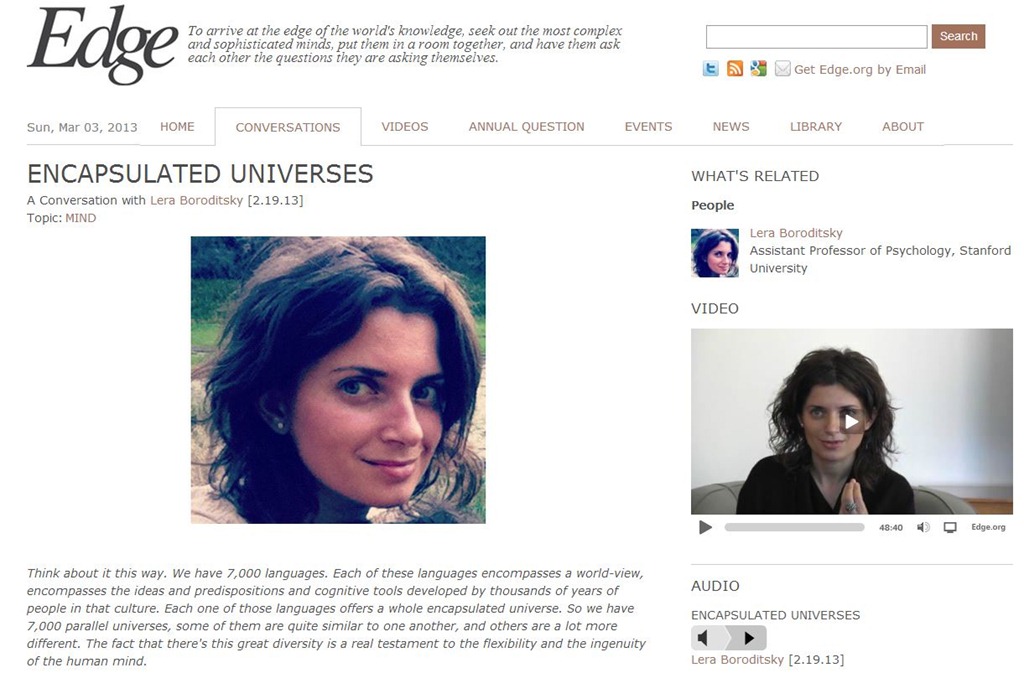
Edge.org

John Brockman’s Edge.org is where the world’s smartest people hang out.  The site is built around conversations with cutting edge thinkers, but it also focuses on the latest science books.  The conversations are often a narrative overview of a current project.  Edge.org is not a newspaper or magazine, but the quality of content is so great that it competes well with professional journalism.  The contributors are major science writers and philosophers, writing about research on the front lines of new knowledge.


Most sites on the web are free.  It’s hard to imagine that pay sites can compete with so much quality free content.  My six favorite sites are just a drop in the gigantic WWW bucket.  My goal is to find the right mixture of reporting that gives me the best puzzle pieces for mapping reality.  All too often we read news that is immediately forgotten.  I want to read articles that educate me with a lasting impact.  In fact, I often think reading less on the internet is better.

Like junk food with empty calories, the web is full of junk data and empty facts.  Brilliant articles that are available for all to share should have a great impact on our society.  It used to be people had to buy books and journals to get quality information.  Now all seven billion of us have access to a tremendous amount of free knowledge.  We can all be renaissance men and women.  The quest is to find the needle in the haystack article to read each day that makes a lasting impression.

Tools like Zite let me quickly review 20-30 newly published articles each day, out of thousands.  But the real goal, is to find the single article that’s worthy of study, contemplation and memory.

However, there is a problem with this system.  It only gets me the free articles.  What if the best articles still cost money?  Is the best knowledge being shared today, or withheld?

JWH – 3/3/13
Books That Show Us Reality–The Power of the Red Pill

We live in strange times. 

Science is under attack by the faithful.  Most people prefer fiction over fact.  We know more about the nature of reality than ever before, yet few people want to look reality in the eye.  Everyone claims they want to know the truth, but do they?

It’s like in the movie The Matrix, when Neo is offered the red and blue pill.  Morpheus tells Neo the red pill will show him the truth and the blue pill will return him to forgetfulness.  On this planet, most people take the blue pill.

What if you wanted to take the red pill? 

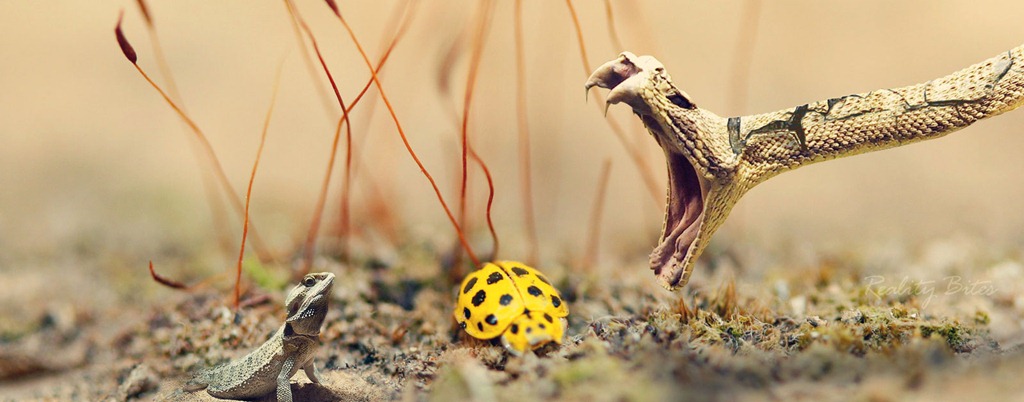
Naturally, a red pill to reveal the truth does not exist.  But there are read pills, called books, that do.

Reality-bites

Up until the middle of the 20th century, an exemplary education involved the knowledge of the great books of the western world.  For the last fifty years we have been rejecting the great books kind of education, but we haven’t substitute a new canon.  A well educated person no longer has to know Greek, Latin and French, or the defining books of the classical world.  Science started in the 17th century, got up to speed in the 19th, and launched into orbit in the 20th. 

Yet few inhabitants of planet Earth embrace scientific thinking.  Fear of oblivion push many into the opium of religion, and most of the rest hide out in escapists fantasies and games.  Science is the only path to the truth, but few follow it.

What we need is a new set of great books, a new canon, whose content will define a well educated person.

I want to create a new definition of education.  Let’s start with a cockroach.  When you go into your kitchen in the middle of the night and turn on the light and see a cockroach run for his life, think about what it knows.  Think about what reality is to a cockroach.  The poor little fella knows nothing of physics, biology, history, mathematics, literature, or even language.  He has no tools to describe or analyze reality.  He’s a tiny little machine with sensors that help him search out food.  He also has a sensor that tells him to run for cover when the light goes on.  He doesn’t know your foot is about to squash his little body.  His awareness of reality is without thoughts.  His potential for education is nil.

Now, lets step up to a border collie.  Her awareness of reality is far richer than the poor cockroach.  We’re not sure if dogs think or have a language, although recently scientists claim that dogs can learn a couple hundred words, but they don’t perceive words like we do.  Our border collie is well adapted to education and can be trained to do all kinds of work and tricks.  She is even eager to learn.  But alas, she knows no more of physics, biology, history, mathematics, literature than our friend the cockroach.

We all approach reality like the blind men caressing separate parts of an elephant and speculating about the whole animal.  Some creatures can perceive more of reality than others.  Educated humans with all our senses are able to see the elephant complete in many dimensions,  even all its component molecule and atoms, and even trace its origin in its evolutionary past.  We see a lot of reality, but far from all – and nothing blocks us from seeing further.

Cosmologists see the largest aspects of reality.  Particle physicists see the smallest parts of reality.  Yet neither see the ultimate largest or smallest.  Our universe is probably one of an infinity of universes, so there is no end to big, and probably there is no end to small either.

Science has turned on the light, and scurrying humans can see it all, from immensely tiny particles to the furthest reaches of the universe, from the Big Bang until now.  Yet most people choose to hide in the cracks of darkness.

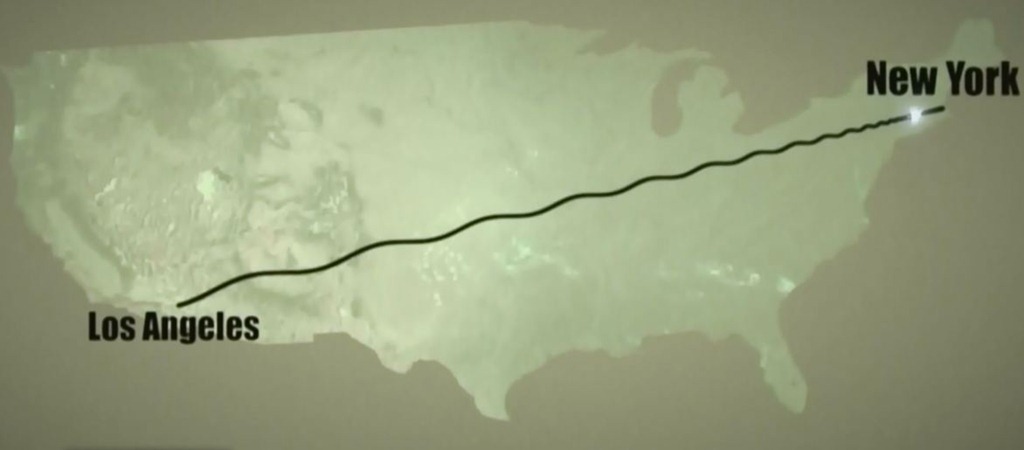
On a recent PBS show NOVA, “Earth From Space” they showed a map of the US with a squiggly ling running from New York to Los Angeles to represent the size of the electromagnetic spectrum.  The scientist interviewed explained the visual part of the spectrum we use to see would be about the size of a dime.  We have built new senses to see all of reality, we are way beyond biology.  We are now cyborgs.  But for the average human, there is little knowledge of our true capabilities.

spectrum

My definition of education is learning to see as much of reality as possible.  Unfortunately, most homo sapiens hide from reality, lost in their fantasies of religion, desires, fictional diversions, games, routines, habits, impulses, etc.  We are closer to the cockroach when we spend so much time pursuing food and sex.  We are like the border collie when we learn to work and earn a living.  But we are the most human when we’re examining the scope of existence.

Now to the great books.  Books are a tool like the telescope, microscope, or interplanetary robot, they let us see further.  If we read the right book, we’ll add details to our personal model of reality. We never see reality directly, but model it in our minds.  Tragically, humans are prone to delusions and fantasies that distort their models of reality.  Think of the wretched conspiracy theorist who builds highly distorted views of reality, or the faithful who shape reality by ancient Bible stories that pander to their fear of oblivion by promising eternal life.

Yes, it’s easier to take the blue pill and forget.  Taking the red pill requires a lot of study and work.

A great education is developing an internal model of reality that closely mimics our external reality.  A great education is learning about all the models of reality that failed.  Plato’s model of reality is abysmally wrong, yet we still study Plato.  Science is a long history of getting it wrong, but it’s cumulative history is a collection of good working models.  The theory of evolution is one of the most successful models of reality ever imagined.  Evolution is now the key tool for understanding how reality works.  Evolution explains change, and reality is constantly changing.

It’s time to get to the nitty gritty of this essay. 

What books are the red pill for showing the truth about reality?  My knowledge and experience is limited, so I can only make a crude guess.  What I’d like to see a collective development of a canon of great science books.   The Scientific Canon needs a small set of introductory books that will illuminate the uninitiated into the world of science.  Then it will need a more extensive list of books for further study.

Coming up with a list of introductory books will be hard.  It won’t be like religion, with The Bible or Quran, where one book will do, science will take many.  And where do we start?  At the beginning with The Big Bang and cosmology, the science of the very big?  But to understand cosmology requires understanding particle physics, which is the study of the very small.  Science really doesn’t make sense without understanding evolution.  It really helps to grasp how unintelligent design, in a random chaotic system, can produce order even when the second law of thermodynamics exists.  Entropy is such a backasswards slippery concept to mentally wrestle.

Developing the Scientific Canon will be hard.  Obviously our school systems are failing at the job, even when they have a captured audience and powerful textbooks.  Can anyone list twelve books that will give the average person a basic grasp of science?  Even with a longer list, like Harold Bloom’s Western Canon list, how well verse in science can a reader become without knowing mathematics?  Is a scientific understanding beyond most people?

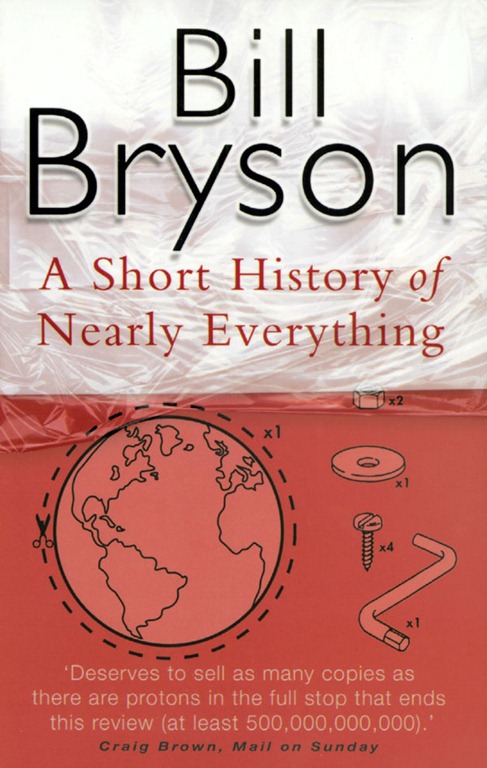
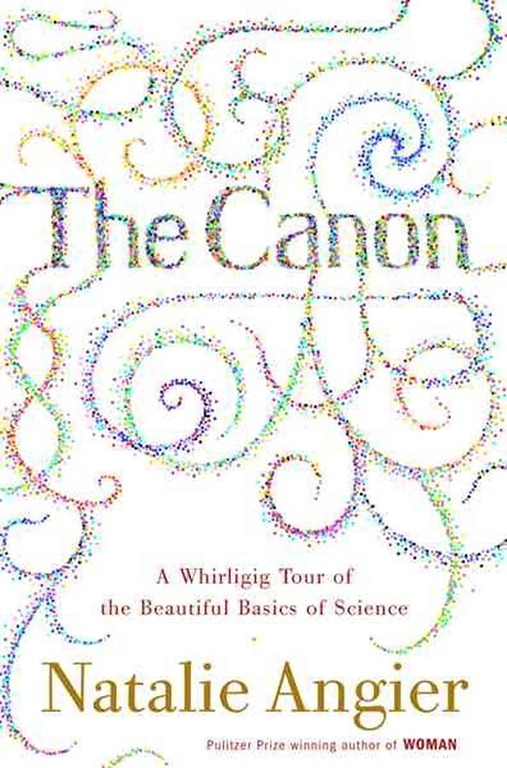
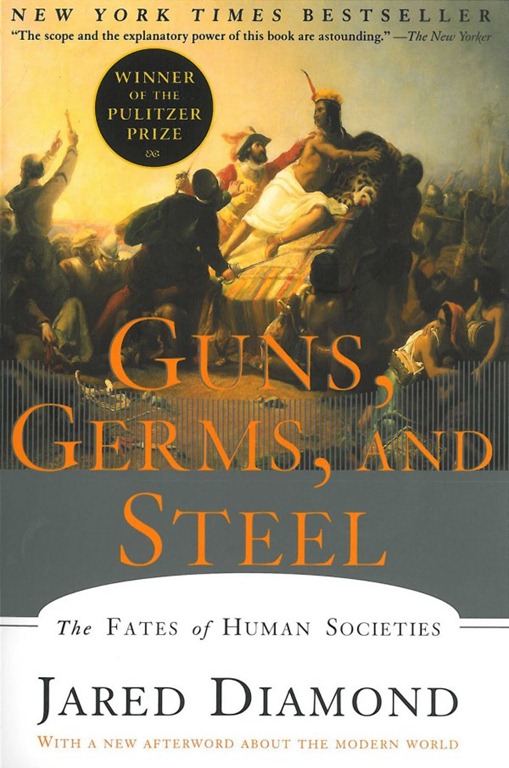
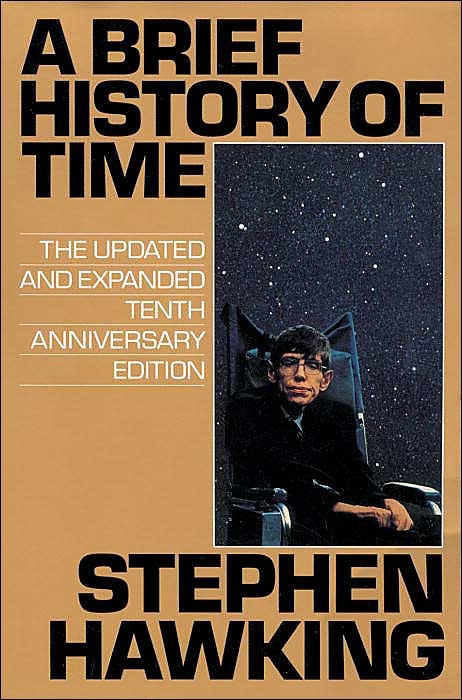
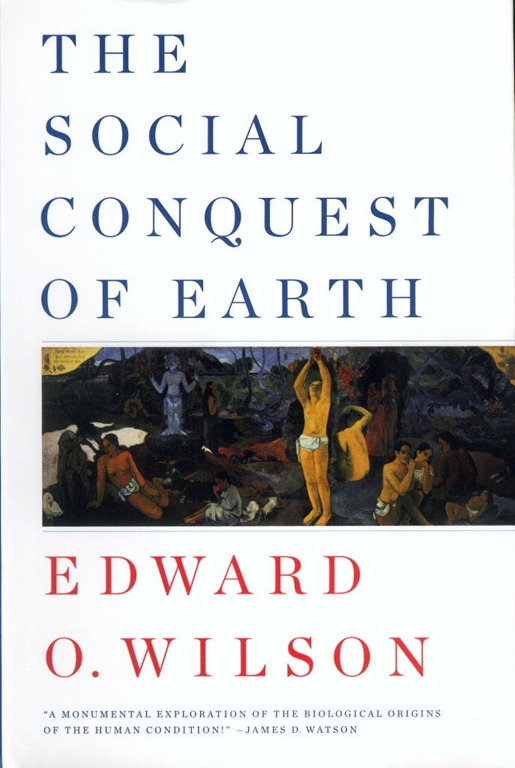
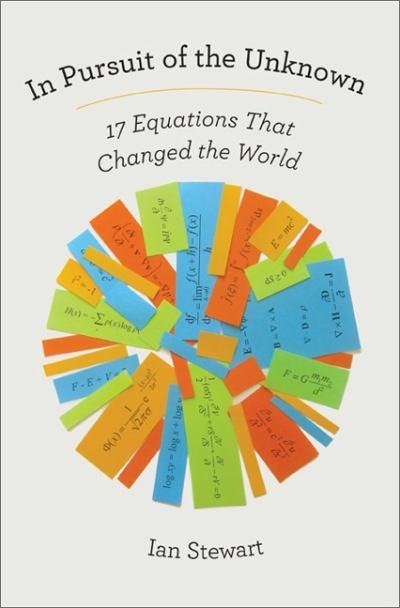
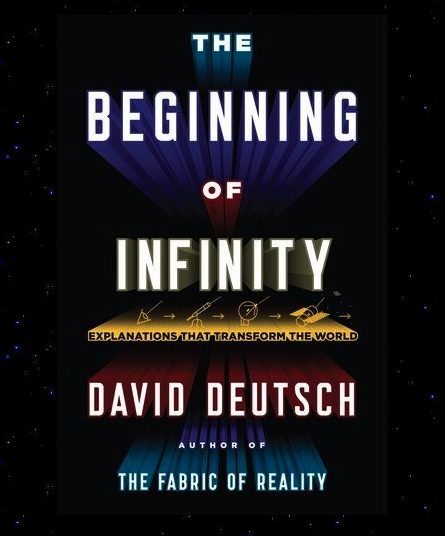
Here are some books I’ve been very impressed with, but I can’t claim are the best volumes for the introductory list.

A-Short-History-Of-Nearly-Everything

the-canon

the-elegant-universe

ontheoriginofspecies

DawkinsGreatestShowCover

guns-germs-and-steel

first-three-minutes

A Universe from Nothing

brief-history

the-edge-of-physics

the-information

the-selfish-gene

social-conquest-of-the-earth

in-pursuit-of-the-unknown-17-equations-that-changed-the-world

wonderful-life

beginning-of-infinity

your-inner-fish

surely-you-must-be-joking

JWH – 2/15/13

Life of Pi–Is God the Better Story?

Director Ang Lee and screenwriter David Magee have done an excellent job of adapting Yann Martel’s 2001 novel Life of Pi to film.  When I read the book back in 2004 I thought at the time it would never be made into a film because the novel was too cerebral, too narrative heavy, plus, how could anyone get a tiger to do all that acting?

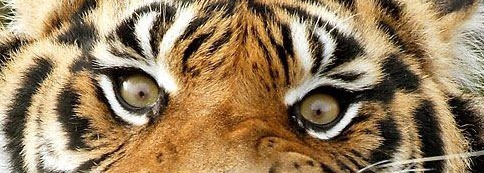
bengal-tiger

Life of Pi the film covered a surprising amount of the content of Life of Pi the book.  So far I can think of just three scenes I missed.  First, story of Pi’s family running into Pi’s three religious leaders.  Second, showing how Pi used turtles to survive, and finally, the scene where Pi is blind and hears people in another life raft.

Still, Lee and Magee beautifully succeeded with capturing the philosophical heart of the novel.  If you loved the book, go see the film, you’ll be surprised by how well it was filmed.

Is God the Better Story?

If you haven’t read the book or seen the movie, don’t read beyond this point if you plan do either, because I’m going to analyze the philosophical statement of the book and it will spoil the story.

In the main story, a boy from India, Piscine Molitor Patel,  who wants to be called Pi, is shipwreck in a lifeboat with a zebra, orangutan, hyena and a tiger named Richard Parker.  Martel tells us this story very realistically and we are expected to believe it happened. But along the way, Martel takes us through scenes that are very hard to believe, like the carnivorous island with the meerkats.

Yann Martel has crafted a Zen kōan into a novel.  Most kōans are short, “What is the sound of one hand clapping.”   Yann Martel essentially asks, “Is God the better story?”

At the beginning of the novel and movie, in a pseudo introduction, the author is told by an older Pi, that he can tell the author a story that will make him believe in God.  Yann Martel creates two stories, one very long, elaborate, fantastic, awe inspiring – and brutal, and a second that is short and brutal.  We are asked which one we prefer.  Martel is right, everyone, including realists like me, will pick the story with Richard Parker, the Bengal tiger.

So where does God come in?  How can this story make us believe in God?  Analyzing fiction for symbolism is tricky, but for me, Richard Parker represents God though analogy.  At the end of the film and novel, when Pi has told his long fabulist story to two Japanese insurance investigators they refuse to believe him.  So Pi tells a shorter, ugly version that we know is true, but hate to believe.  Then Pi asks the investigators which story they prefer.

We all want to believe in the story where Richard Parker existed because it’s a better story than the one of madness, murder and cannibalism.

So what about the prediction at the beginning, that the story will make us believe in God?  I believe Yann Martel uses the desire to believe in Richard Parker as a stand in for God, creating an analogy, that the readers and audience must make on their own.  Pi desperately wants to believe in God.  Pi asks us to believe in Richard Parker because the story of surviving in a lifeboat with a tiger is a better story than going mad and surviving alone.

The whole point of the novel is to trick the reader into the question:  Which story do you prefer.  Of course everyone prefers Richard Parker to be real.  By transference, we’re ask to accept that belief in God is the better story, just like how we want to believe that Richard Parker existed.  We’re never explicitly told that wanting to believe in Richard Parker is the same as wanting to believe in God, but I feel it’s obvious.

Yann Martel tells us people prefer religion over reality because the story of God is a better story than reality.  And I ask:  “Is this why people refuse to accept the fact of evolution because they prefer the story with Richard Parker – oh, I mean God?”

The novel is an elaborate metaphor to explain why people believe in God.  It doesn’t say that God exists.  Nor do we know what Yann Martel believes.  It just says people prefers belief in God because it’s a better story than how we see reality directly.

What the novel is tricking us into confessing is that the belief in God, no matter how unbelievable that story might be, that it’s a better story than reality.  That when we’re pushed to the ends of our physical and mental limits, we want God even if he’s cruel, vicious and indifferent.  That the belief in God is what gets us through this life.

Has Yann Martel stacked the deck?  Is God the better story?  Yes, reality does sometime involve madness, murder and cannibalism.  And even in the God story, people die, animals are cruelly killed and eaten, people suffer.  If the audience was given the Richard Parker story, and a documentary about the evolution of the universe with cosmology and the evolution of life on Earth with evolutionary biology, is God still the better story.  I don’t think so.  Richard Parker is like a magician’s diversion.  If you could watch this movie and blot out the tiger, the reality of Earth is magnificent!  Richard Parker and God divert our attention to our fantastic reality.

God is only the better story when you don’t understand reality.  Richard Parker is ferocious, terrifying, cruel, indifferent and doesn’t answer prayers.  No matter how much Pi loves Richard Parker and wants his recognition, Richard Parker ultimately refuses to acknowledge Pi’s existence.

So why is God the better story if Richard Parker just walks away from us?  I know many people who have long given up religion but haven’t given up on God.  They say that God must have created us but walked away from the universe and is no longer involved.  Personally, I’m confident there is no God and the size, age and origin of reality is beyond our understanding.  I find it far more comforting to know the rules of our local universe and not feel the need to blame a superior being for bad things or beg for good things.  If a bacteria, shark, drunk driver hurts me badly, I just accept it was the luck of the draw and not a judgmental deity deciding I had done something wrong.

Where the metaphor of Richard Parker breaks down is Pi can see Richard Parker, and we never see God.  It’s actually easier to believe in Richard Parker than it is to believe on God.  Life of Pi is a wonderful novel.  I’ve read I twice now.  And each time I want to believe the Richard Parker story, even though I know the truth is the story about cannibalism.  How many times will I have to read this book before the realistic story is the better story?

What if the novel and movie had been about a boy that survived 227 days on the ocean and had endured the incident with cannibalism and madness and survived.  No tiger, no zebra, no hyena, no orangutan, just Pi, his mom, the Frenchman and the Buddhist sailor?  It would have been brutal, but the success of Pi surviving the ordeal would have been just as magnificent.

Why do we want a better story?  Santa Claus is a better story than parents buying kids Christmas gifts from Target.  The tooth fairy is a better story than throwing milk teeth in the garbage.  Heaven is a better story than dying.  But why is God a better story than reality?  Is God a better story than evolution?  If you understood evolution and cosmology, God isn’t the better story.  God is a simpler story, and God’s story is endlessly confusing and contradictory.  It’s just God is fantastically powerful like Richard Parker.

Even though I disagree with Yann Martel’s assertion, I love his fiction.  See, that’s the real revelation in this.  Fiction is the better story, and Life of Pi is very good fiction.  Humans embraces fiction with an intense passion.  Richard Parker is a better character than a cannibalistic Frenchman.  And for many people, all the stories about God, are a better story than the brutal aspects of reality.  However, there is nothing in fiction that comes within light years of evolution.  All stories about God are just crude children stories compared to the complexity and beauty of evolution.  Evolution is just as brutal as the Old Testament God – it’s just not personal.

Here’s the final kōan:  Did Yann Martel write this story to make us atheists or make us believers in fiction?

JWH – 11/28/12

Rethinking the Great Books of History

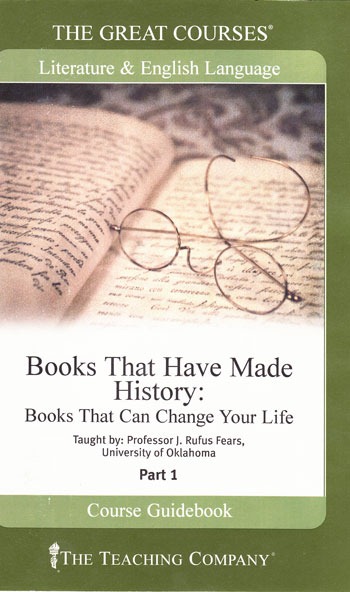
I am listening to “Books That Have Made History:  Books That Can Change Your Life” from The Teaching Company, taught by Professor J. Rufus Fears and I’m wondering if the “classic” books of history are being oversold.

great-courses

I’m a life-long bookworm.  I got my degree in English Literature.  I study books about books, such as those by Harold Bloom, and I even study the Bible as literature although I’m an atheist.  I wish I had the time to master the great books.  And I started listening to these lectures expecting to expand on my knowledge of the great books of history.  However, Dr. Fears is making me think otherwise.

Books That Have Made History is a popular course for The Great Courses, but I think it has a fatal flaw.  And I’m not the only one to criticize this series, just read the customer reviews at the site.

Dr. Fears approaches these 36 lessons with the assumption the greatest books of history have great moral lessons to teach.  He expects great books to explore and answer four questions:

  • Does God or do gods exist?
  • What is fate?
  • What do we mean by good and evil?
  • How should we live?

Dr. Fears teaches these books with a firm belief in the answers.  He teaches each title by fitting them into his own theological beliefs.  In his opening lecture he discusses Dietrich Bonhoeffer and how he was imprisoned by the Nazi’s and hanged on April 9, 1945.  Dr. Fears said Bonhoeffer and the judge that sentenced him to die both read and studied the same classic books of history, and asks:  How did they come to such morally different conclusions?

Dr. Fears assumes the great books of history have answers to the great questions of history.  I think he’s wrong. 

Dr. Fears assumes there is a God, there is good and evil, that we’re expected to live by definite rules, and we have a fate or destiny in our lives.  I think he’s wrong.

Dr. Fears refuses to believe that the universe is accidental, that there is no good or evil, that there are no moral laws embedded in the universe, and the universe expects nothing from us.   I think he’s wrong.

Dr. Fears advocates The Iliad was the Bible for the ancient Greeks like the Christian Bible is for the western world, and that Homer was a singular real person.  I disagree.

Dr. Fears believe Moses was a real historical figure and there’s amble historical and anthropological evidence to support his story.  I disagree and even think many Jewish scholars disagree.

Now my point is not to say I dislike this lecture series because I disagree with the professor.  I’m asking why we should read the great books of history?  If they exist for the reasons Dr. Fears suggests, then I say, let’s forget them.  I’m dead tired of trying to puzzle out truth about reality from ancient thinkers.  I’m willing to read their books to understand the evolution of mankind and its history, but I have no interest in acquiring their beliefs.

Dr. Fears believes studying these books are valuable and relevant to teaching modern people how to think and act.  I think that’s wrong.  I think that’s why our world is confused and full of conflicting belief systems.

Great books make you think about life and reality, but they should give no answers.  Explicit answers are dangerous.  We live in the 21st century and we need to study the moment.  Now it’s actually impossible to study the current “now” in books, since books take years to write.  But for example, if you are studying cosmology, anthropology, or geology, or another other science, you really need to be reading books written in the last five years, and no more than 10 year old.

History and biographies can have a trailing edge of maybe 25 years, but that’s because some topics don’t get written about all that often.

If you’re studying the great books of history, I believe they should be read as primary sources to supplement current historical research.  Your research efforts should go into studying how and why they were written in context of their times, and not use them for acquiring personal beliefs.

This represents a schism in approaching reality.  If you believe that science has been the only consistent human endeavor to answer questions about reality, ancient knowledge will only be superstitious beliefs and endless philosophizing.  If you believe in God, then ancient writings are a goldmine of potentially revealed secrets.  Books That Have Made History falls in the later category.  My thinking falls in the former, so these lectures have little value to me.

However, they do make me ask:  Should or can we write current books that summarize good and ethical behavior for people to study?  If people are wanting to read books about how to live their lives in a “proper” manner, can’t we come up with something a little more current and based on contemporary knowledge?

JWH – 9/12/12

Studying Science in My Retirement Years–Breaking the Science Barrier

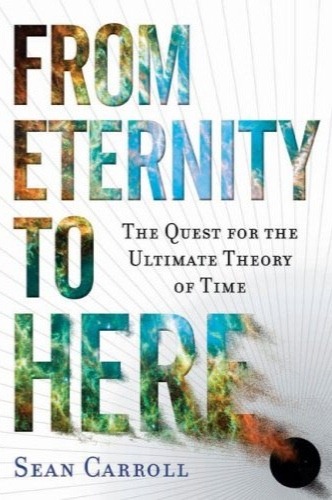
I am listening to From Eternity to Here by Sean Carroll and although I can understand his words I doubt I understand what he’s trying to tell me.  The book is about time and entropy, and how they are seen from classical physics, relativity, and quantum physics.  I read and listen to a lot of science books, but I believe there’s a science barrier that I can’t break through.  I’ve also been reading Brian Greene and Lawrence M. Krauss, whose books often overlap what Carroll is covering.  These books are fantastic, both in the quality of writing and research, and in scope of topic.  They take the reader to the edge of space and time and describe the cutting edge of scientific knowledge.

The fruits of my study show a murky comprehension at best.  I can understand science at the level Galileo and Newton understood it, but 21st Century science is magical and closer to science fiction, lots of razzle-dazzle.  I’d like to truly see where science is pointing.  I’d like to grasp the experimental logic of how scientists got there.

From-eternity-to-here-2

I’m sixty years old and I never stopped trying to understand reality.  The older I get the more sure I am that religion has nothing to say about the nature of reality.  In recent years I’ve come doubt the validity of philosophy.  Logic and rhetoric can be very seductive, but also deceptive.  I am quite confident that science is the only system that explains reality. 

But I’m not sure I can understand science’s explanation!

What’s hilariously ironic, is we believers in science must take so much of what we’re taught about science on faith.

a-universe-from-nothing

I struggle to make sense of quantum physics.  I wish they’d stop talking about cats and talk about actual experiments.  When science writers try to convey quantum physics they end up talking in metaphors that just don’t make a lot of sense.  Black holes and cosmology have a conceptual reality that makes sense, even though I can’t understand why information won’t be destroyed if it fell into a singularity.  I was very lucky to read The Information by James Gleick before reading these books, because information theory does make sense to me, just not at the quantum mechanics level yet.

When little kids ask their mommies where everything comes from and their moms answer “God created everything” – that’s a big convenient cheat.  Moms really don’t know or don’t want to take the time to explain what science has learned about the nature of reality.  The truth is out there, at least part of it, and it’s not what Fox Mulder and Dana Scully discovered with the help of Chris Carter, or anything you can learn from prophets and their religions, or even from Plato and Aristotle, and their philosophical descendants.

the-hidden-realities  

If you want to know the truth you have to study science.  It’s the only game in town.  Trust me.  I’ve read hundreds of books searching for the truth, and it all distills down to that.  Religion and philosophy can take you down years of blind alleys.

How badly do you want to know the truth?  Bad enough to study math?  Yeah, I thought so.  At 60, I don’t think I can go back and pick up where I left off after my B in Calculus I.  Without being a math whiz, how close can we come to really understanding science?  Without math, how close can anyone get to understanding what science has to teach?  I don’t want to accept science on faith.  Nor should anyone else.

In school and college I studied physics, chemistry and biology.  I know a fair history of science and great experiments, and how we gained the scientific knowledge we have up until around Einstein.  This is classical science.  It’s the science at the world’s eye view of things, where most experiments can be repeated in the classroom.  I’ve explored the larger world of astronomy with telescopes and books, and the mechanical universe makes sense too.  It’s when cosmology melds with particle physics and the quantum reality that my mind fails to grasp what’s going on.

Since I never had my own personal atom smasher, I’ve never really understood how scientists know what they know about the zoo of sub-atomic particles, much less quantum physics.  Because this world is invisible, and exploring it is so mathematical, science writers often resort to analogies, metaphors, similes, and thought experiments to explain this frontier of reality.  These stories sound wonderful, but they don’t help me see what’s really happening.  Classical experiments in gravity, optics and electricity have a immediate truth to them that doesn’t work when studying particle physics.  Chemistry is abstract, but models of molecular bonds help picture it.  The microscope gives biology a direct view.  Animations of the sub-atomic world help me picture things, but I’ve been told my whole life these animations are wrong.

What I need to do is go back to the 1600 and retrace all the experiments that were done to set the stage for particle physics.  That might help me conceptualize quantum mechanics.

I did find Following the Path of Discovery – Repeat Famous Experiments and Inventions – Hands on Activities for High School and College Students.

I once bought a CD-ROM copy of Scientific American’s “The Amateur Scientist” but I can’t find it now.  Too bad, it’s out of print and selling for $852 used.  But it contains the complete run of the “The Amateur Scientist” from Scientific American.  That would be a great way to spend my retirement years, doing those experiments myself.  But DIY science has gone out of fashion.  SciAm dropped “The Amateur Scientist” in 2001.  Heathkit and Edmund Scientific gave up on budding scientists years ago.  Make Magazine has rekindled the old DIY craze, but it’s not quite the same.

The big movement in Education now-a-days is STEM (Science, Technology, Engineering and Mathematics).  Maybe it will reignite a rediscovery of science learning through teaching classic experiments.

PBS should create a television series on historical science experiments.  There’s lots of stuff on the net about fun science experiments, like what Steve Spangler does, but that’s not what I’m talking about.  PBS NOVA comes close sometimes, but they don’t follow an experiment step-by-step, but instead create a historical summary of it.

And I might not need to see historical experiments performed to understand particle physics.  Studying the history of quantum mechanics from the beginning, starting with Michael Faraday, might do the trick.  I’m reading 21st century books when I might need to read 19th century books first, or good histories of that period.

I’ve often wondered if I should start a reading program that covered the history of science.  My problem might be I’m reading about modern science without enough historical foundation in science.

If I was an ambitious blogger I’d create a timeline of science history, and then link the best science books I could find to the timeline.  Maybe someone has already done that?  So far I haven’t found such a timeline, so I might get to work on it.  It would be a great retirement project that could take years.

Here’s an example.  In 1838, Michael Faraday noticed a strange light arc between the cathode and anode in a glass tube.  It took science until 1897 to discover this light was electrons.  At the time science thought atoms were the smallest bits of matter.  What are the best science books that cover those years and experiments?  How would I arrange such books on a timeline?  What other science experiments were going on between 1838-1897 that should go on the timeline too.  What books cover their history?

I’m rearranging my books right now, so this gives me an idea.  I want to start a reading project that starts with 1600 and moves forward in time.

JWH – 8/22/12