The Future 101: Science Fiction

I’ve been thinking about the future, but in a different way.  Can we understand the future in any meaningful way?  Now, I don’t mean the actual future that will unfold, but the concept of the future as a feature of reality.  Asking “What is the future?” is more like a Zen kōan than a scientific inquiry.  We think of time as the 4th dimension, as one long continuous stretching of three dimensional space.  And because of science fiction we picture traveling  to other points in time as if they were another spatial coordinate.  I think this is a false concept that corrupts our sense of the past and future.

Another problem we face, is we think of time personally.  Consciousness experiences the now, so it feels like the past is our life before now, and the future is what happens next.  But if the Earth is sterilized by a gamma ray burst in the next minute, reality would continue without us, and so would the future.  Although we experience time as self-aware beings, time exists outside ourselves.  We might exist in the future, and we might not.

Time exists without our consciousness being aware of it.  A tree has very limited awareness of its moment in existence, but its there in the now, and it has a past and future.  Our conscious mind observes the now, remembers the past, and anticipates the future.  Science fiction is the literature about anticipating the future.  We like to think that science fiction both prepares us for possible futures, and helps us build specific futures.  For example, science fiction warns us against the singularity, yet inspires us to build intelligent robots.

The trouble is we don’t take the future seriously.  If we did we would eat healthy and not alter the carbon dioxide ratio in the atmosphere.  We regularly interact with the future, like a squirrel burying nuts, or humans going to the grocery store to buy a week’s groceries, but reaching into the future has a limited range.  Instead of using science fiction to prepare us for the future, we’ve often turned it into Coca-Cola and cotton candy, empty calories to enjoy in the present moment of now.  Our immediate desires always overwhelm any knowledge we might have about the future.  Dealing with the future requires tremendous discipline that most of us lack, including myself.

One analogy that has occurred to me is to think of our brain as a CPU which is the now.  The past is everything written on the hard disk, and the future is the output we’re going to write to the hard disk.  Over time that contents of the hard disk changes.  The now is the main loop of our programming, just idling through the processing cycles.  If we want to interact with the future, we have to write something out to the hard drive, or delete an old file.

Most of us have great expectations about the future.  Some of us worry about the future.  Between dreamers and doomsayers, we find all hopes and fears.  Tomorrow is often pretty much like today, but ten years from now will be more surprising than how memories of ten years ago feels now.  Everything we want is in the future because everything we have is now.  When we throw the dice we want to win big and not come up snake eyes.  We’re all futurologists in that we hope to plan our future accomplishments and predict the obstacles.

SF-logo

We want to know the future even though we know we can’t.  We predict the future even though we know we’ll be wrong.  We just can’t help ourselves.  Some people believe in crystal balls, others in statistics, but some turn to science fiction.  Science fiction plays on the same dichotomy as most people feel about the future—some SF writers write about what they hope will happen, and others write about what they fear will happen.

For over a century before space travel writers wrote about humans traveling to the Moon, planets and to other star systems.  Did science fiction writers predict that humans would travel in space, or did they inspires people to build rockets and space capsules?  Would space travel ever been invented if we hadn’t dreamed about it first?  Some people believe the future already exists and its just a matter of waiting for it to play out.  Others believe the future does not exist, only the now exists, so whatever the future will be won’t be determined until we reach that now to be.

From my personal experience, and reading piles of science books, I don’t think the future exists yet.  Nor do I believe time travel is possible.  I’m a now person.  However, I do think we can interact with the future in limited ways.  On the other hand, I’m not sure our many fantasies about the future do anything at all.

Ever since I was a kid I’ve always said, “The future is everything I never imagined” even though I spent all my time trying to imagine the future.  Now that I’m living in the future, or a future now, it feels like any fantasy I had wiped out its possibility of coming true.  Sort of a weird corruption of the Uncertainty Principle.  I pictured myself going to Mars, so I never went to Mars.  I pictured humans going to Mars, so no one made it to Mars.  Sorry guys, to jinx things.   My mother had a variation on this theme.  She believed worrying about something bad will happen would keep it from happening.

Most of us will wake up tomorrow and find the future, and we’ll do that on average 30,000 times.  Each time a little surprise—until the day we don’t.  Now will cease to exist.  What divides us from the rest of the animals on this planet is we have hopes for the future.  We all want something from the future.  If we’re a child, we want Santa to bring us something exciting, if we’re a teen we want to fall in love and lose our virginity, if we’re in our twenties we want to graduate college and find a great job, and so on, until our only hope is to have a tomorrow, any tomorrow.  Some people want to be rock stars in the future, and others just want more to eat, and some just hope to keep existing.  To me happiness is having something to look forward to, even though it might not happen.

Science fiction books are fantasies about the future, some about things we want to happen, and some about things we hope won’t happen.

The common assumption is science fiction does not predict the future, but speculates on possible futures.  The truth is science fiction is a bunch of wild ideas that we find entertaining and has no relationship to the actual future even when it’s seriously speculative, extrapolating on current events, and is of little use for preparing us for the future.  Science fiction is fun escapism from the present for the most part, and occasionally insightful observations about the here and now.  Nineteen Eighty-Four by George Orwell is a brilliant use of science fiction, but does it help us with the future, or help us with how we live now?

Robert A. Heinlein took himself quite seriously as a writer of speculative fiction.  He thought three books expressed his ideas best:  Starship Troopers, Stranger in a Strange Land and The Moon is a Harsh Mistress.  I doubt he meant to be remembered for starting military SF, creating a hippie Bible, and not starting a popular catch phrase about free lunches.  I’ve read these books many times and I don’t think they say anything about the future at all, but a whole lot about Robert A. Heinlein.  He wanted them to be about freedom and responsibility, but I’m not sure even that comes through.   Stranger in a Strange Land was Heinlein’s idea of 1990 from 1960.  Many people think it’s about the 1960s.  After living through both times I don’t feel its about either, but it seems to say a whole lot about Heinlein’s pet ideas and peeves.

I’m starting to wonder if science fiction is about no time at all, like The Song of Ice and Fire series by George R. R. Martin.

I’m reading Capital in the 21st Century by Thomas Piketty.   I don’t think we can predict the future, but I also think the only way to talk about the future is through statistics based on knowing a whole lot data about the past.  I’ll write The Future 101:  Statistics in the future. (Is that a prediction or plan?)  But for now, I shall ask, “How many science fiction novels study the past to extrapolate the future” like Piketty?  I think the common quick answer will be:  Many.  However, I think that’s wrong.  If a science fiction writer writes a well thought out book about people living in the year 2114 and how global warming has changed the world, is that really doing the same thing that Piketty is doing with all his graphs and data sets?  It’s obvious that it’s what climate scientists are doing, but is it the same thing for novel writers?

I don’t think so.  Is there any past science fiction novel about our times that sounds anything close to what’s happening now?  Climate scientists have been graphing changes in average world temperature and CO2 concentrations for decades, and our current temperatures and concentrations fall nicely on their graphs.  Is this predicting the future?  Maybe that’s as close as we can come to predicting the future.  The thing about graphs is they do change, and sometimes surprisingly so, but there’s always a reason why the numbers do something different that changes the direction of the curve.  Being able to say what those things will be ahead of time is really predicting the future.  And we can’t do that.

We can predict rising CO2 concentrations, but we can’t predict what we will do about them

Scientists had hoped twenty years ago that humanity would have heard their warnings and changed their habits so their curves would have reversed direction.  They were hoping to change the future.  Science fiction writers writing about the future of humans colonizing the solar system and the galaxy were hoping they were influencing such a future to happen.  Has that happened?

Science fiction never wanted to predict the future, it never has.  Science fiction has always been about shaping the future.  And strangely, isn’t that what we do all the time.  When Apple rolled out the iPhone didn’t they shape the future?  Without Amazing Stories and Astounding, would we have the space programs we do have today?  Did “The Man Who Sold The Moon” shape the future to produce SpaceX?  I don’t know.  That’s why I writing this essay.

The future is relentless, it’s always coming.  Everything in the now makes the future.  A tree making a seed effects the future.  When we buy groceries how much is just putting food in a shopping cart and how much is reaching into the future to make Thursday’s night dinner?  If we knew that, we’d know how much science fiction influences the future.

JWH – 6/19/14
When I Was A Martian

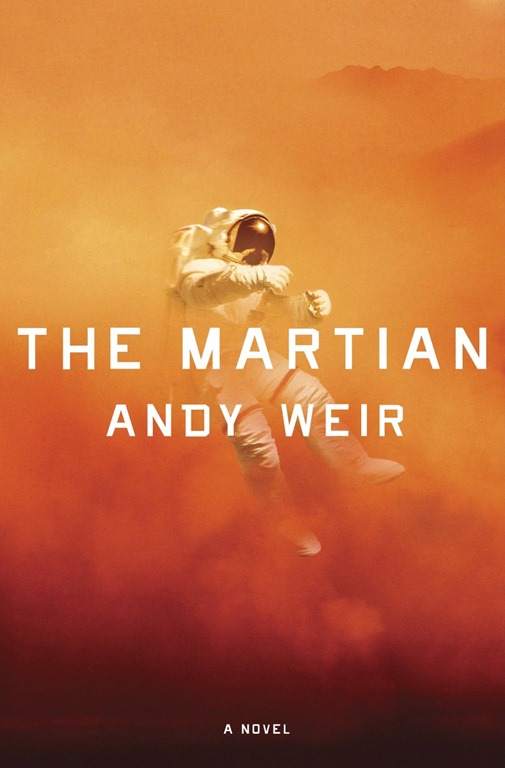
A popular new book out now is The Martian by Andy Weir, his first novel, about an astronaut Mark Watney stranded on Mars after his fellow crewmen think he’s dead and they have to leave quickly to save their own lives.  Watney is part of the Ares 3 mission, and his story is very much like last year’s film, Gravity, where a solo astronaut must use his scientific wits to stay alive for hundreds of days in an environment that relentlessly keeps trying to kill him.  Watney is like a modern day Robinson Crusoe.  The Martian is a bit of a publishing sensation because it started out as a free ebook at the author’s web site, later became a 99 cent Kindle ebook, then a New York Times bestseller published by Crown, and finally is being promised to be made into a major motion picture.  The story is as good as the book’s success.

I raced through The Martian because it was a riveting read despite the fact that it’s very technical.  If you’ve ever dreamed of being an astronaut on a mission to Mars, then this book is for you.

The Martian

Watney thinks of himself as a Martian, because he’s the only living being on Mars.  When I was a kid I used to pretend I was a Martian.  Back in the 1950s, flying saucers were a big thing with the nutty folk, and when I heard that some flying saucer conspiracy crazies thought the U.S. Air Force kept secrets about UFO’s at Wright-Patterson AFB, where I was born in 1951, I imagined that I was secretly a Martian raised by my human parents who didn’t know their real kid had been swapped by Air Force brass.  If was a fun fantasy to explain why I was so different from my mother, father and sister.

I don’t know when I first heard about Mars, but it seems like it’s always been something I knew about, like dinosaurs.  I’m sure Mars was programmed in my brain before I could even talk, by Saturday morning cartoons and Saturday afternoon science fiction movies.  By the late 1950s when I started reading books for fun, I immediately searched out books on Mars, both fiction and nonfiction.  Before the summer of 1965 I had read enough books on Mars to have endless fantasies about ancient dead cities and the exotic aliens that had built the canals.

Red-Planet

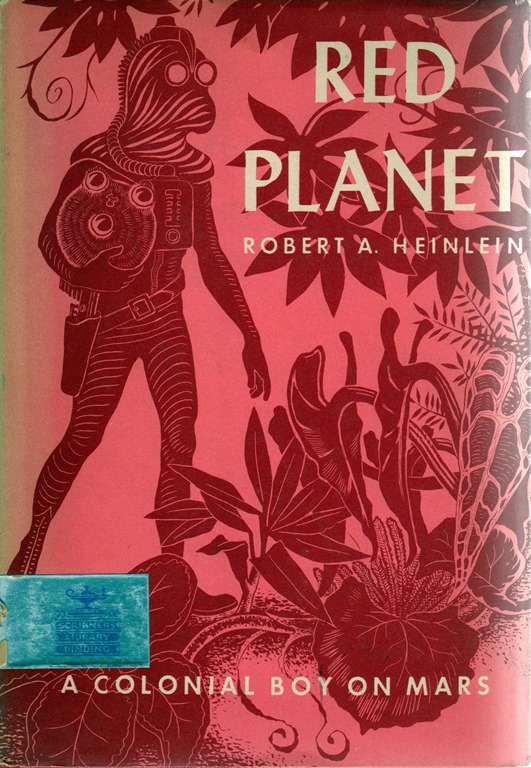
I had read many books about Mars, but the one that really hooked me on science fiction was Red Planet by Robert A. Heinlein, the first Heinlein book I ever read, back in 1964.  I was twelve when I read that book, the legendary Golden Age of Science Fiction.  By the time I turned 13 that same year, on November 25th, I had read every Heinlein book I could find.

mariner7-04_07b

It was a crushing blow by mid-July 1965 when the Mariner 4 spacecraft flew by Mars and took a handful of grainy black and white photos that invalidated all my science fictional dreams.  Mars was as dead as the Moon, and the beautiful canals were replaced by goddamn craters.  Heinlein’s speculative fiction about Mars was now just fantasy novels like the Oz books.  No more old ones, no more Willis, and no more Barsoom.

stranger-in-a-strange-land

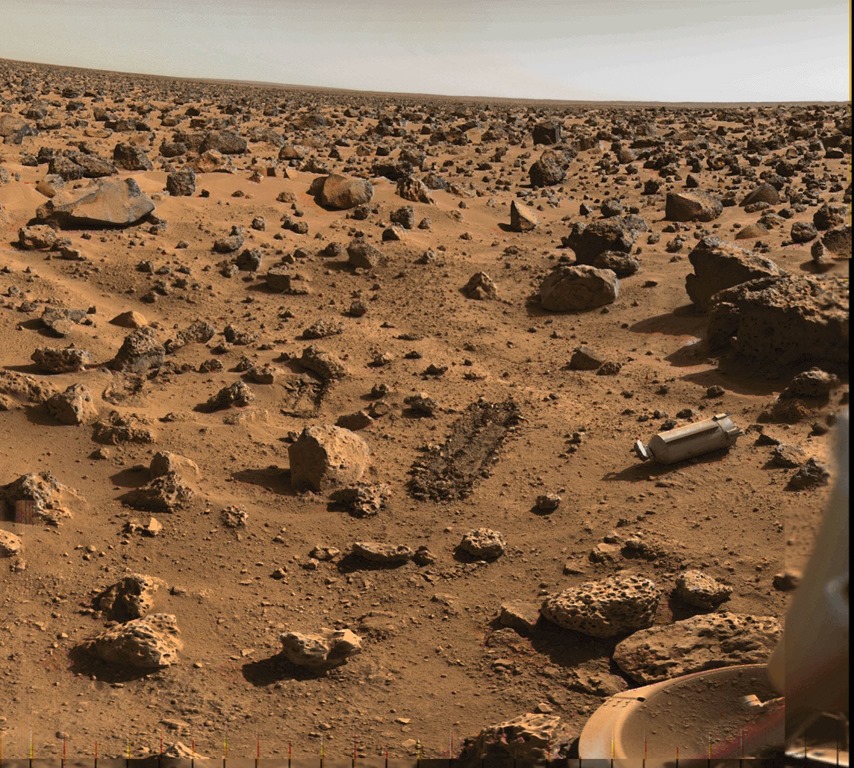
By high school, and the Moon landing in July of 1969, I knew Mars was cold and inhospitable, but for some strange reason I still wanted to go there.  I still wanted to be a Martian.  I was so excited by Viking 1 and 2 landing on Mars in 1976, that I continued to dream that I might get to Mars someway, even though I was much too old to believe such bullshit.  Over the years NASA landed many spacecraft on Mars, each filling out the real details of the planet that so mesmerized me as a child.   Mars is very well explored.  It’s not a very nice place for humans.  It’s very cold, with plenty of radiation, and no real air to breathe.

Caseformars

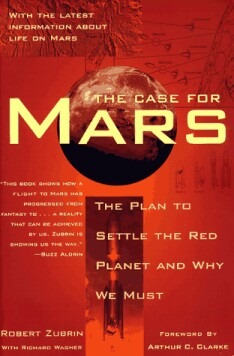
After the Apollo program in the 1970s I just assumed NASA would land men and women on Mars in my lifetime.  Boy was I wrong.  In 1996 Robert Zubrin came out with The Case for Mars that made a whole lot of sense about how to get to Mars.  His ideas are the basis of the Ares missions in The Martian.  I thought for sure such a brilliant, logical plan would lead to real missions.  But nothing has ever come of Zubrin’s dreams either.  The Mars Society is ever hopeful, but I don’t believe manned missions to Mars will happen before I die.

I no longer want to be a Martian.  That’s my main criticism of Andy Weir’s book—even though it’s a very realistic book, it never describes how harsh the Martian environment is, and how unpleasant it would be to try to live there.  Weir doesn’t convey the brutal cold or the relentless radiation, or the insidious regolith.  Only a mad geologist could love Mars.  The real Mars has no romance.  It’s definitely not an exotic destination of fictional adventure.  It’s a dead world, a world of rocks and more rocks.

I even wonder why astronauts would want to go there, or why thousands would sign up to be one-way colonists.

That’s the trouble with the romance of space travel, and the dreams of science fiction.  Every place were we could land that’s not Earth is just rocks.  Rocks and radiation, and freeze-in-an instant cold, or melt-the-flesh hot.  I guess I’ve just gotten old.  Old guys don’t like cold.

mars_surface_vik2_big

I used to be a Martian.  I used to be a Martian when we knew nothing about Mars.  The older I get the more I realized that Earth is the only place that humans can live.  And dang if we aren’t hell bent on turning Earth into Venus.

JWH – 6/10/14

Nova by Samuel R. Delany–Reading Science Fiction in 1968 and 2014

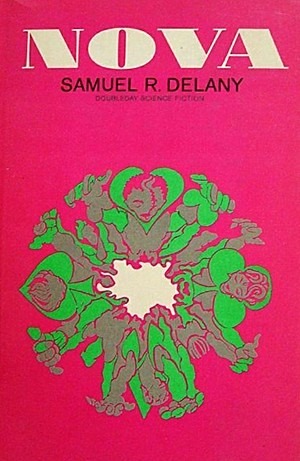
Rereading a novel I loved reading almost a half-century ago is an interesting experience.  Nova by Samuel R. Delany was a novel that dazzled my teenage self in 1968, but has lost its sense of wonder for my older self in 2014.  I’d be awful curious to know how 17-year-olds today reading Nova feel about the book.  Is the magic being 17, or 1968?  Delany was only 25 when he completed Nova, so he was much closer to my age than than Robert A. Heinlein, my favorite science fiction writer at the time.   Heinlein was 44 years older than me, so Delany was an exciting young writer that spoke to my generation.  Delany was the same generation as The Beatles, the generation before the Baby Boomers, and the generation we grew up admiring, the one that made the 1960s.  Nova in 1968 was to science fiction what The Jefferson Airplane was to the Frank Sinatra and Judy Garland generation at the time.  It rocked.

Nova(1stEd)

It’s very hard to separate my memories of Nova from the times when I first read it, the 1960s.  Nova came out around the time of The White Album by The Beatles, Crown of Creation by the Jefferson Airplane, Wheels on Fire by Cream and Electric Ladyland by Jimi Hendrix.  So that music is what I listened to when I first read Nova.  This was also around the time I went to see Apollo 8 launch at Cape Kennedy in December of 1968.  I was in the 12th grade and I was very excited about the future, but worried about things like the Vietnam war, the generation gap, race relations and looming overpopulation.  Both Bobby Kennedy and Martin Luther King, Jr. had been assassinated in 1968.  To make matters worse, the Chicago Democratic Convention happened that summer and society seemed to be in chaos. 

To say the country was divided is a vast understatement.  Even the world of science fiction was split into the Old Guard and New Wave, with lots of flaming rhetoric spewing between the two.

Set in the year 3172, the galaxy is divided into the Earth controlled Draco Federation, and the younger rebellious Pleiades Federation.  Nova is about a mad power quest by Lorq Von Ray of the Pleiades to control the market in Illyrion, a heavy element of Delany’s invention that powers space travel and intergalactic commerce.  It’s extremely rare.  Von Ray learns that Illyrion is produced in abundance in the heart of a star and gathers a motley crew to fly through a nova as it happens.  Von Ray and his rich family is hated by Prince Red and his sister Ruby, the heirs of an opposing wealthy family who also want to control the supply of Illyrion.

This is 1940s Planet Stories space opera, but with 1960s counter-culture swagger. Nova is colorful, epic and full of super-science sense of wonder in a New Age Science Fiction novel.  When I read Nova in 1968 it was tremendously exciting.   I wanted it to be a map of the future.  Like most of Delany’s stories from the 1960s, it features a young wanderer, The Mouse, who plays an exotic musical instrument, a sensory syrynx, and an intellectual vagabond Katin Crawford who is writing a novel.  Back then Delany often had characters writing novels and poetry inside a novel so he could comment on the meta-fiction nature of things, as well as explain the psychohistory on such things as Tarot cards.

The story has a good deal of backstory before getting down to the real mission of flying into a nova to set up the rivalry between the Von Rays and Reds, and explain the backgrounds of Mouse and Katin.  The trouble is the story has more color than plot, and the older me wasn’t as dazzled by the adventure.  All the characters are cyborgs that fly the ship by jacking into sensors that sail the starship on fictional interstellar energy currents.  The 17 year-old-me hoped we’d eventually discover such magical properties of outer space that would allow people like me to travel between the stars like we fly between cities now.  My 62 year-old-self knows all this is make-believe Santa Clausing.  The story is still readable, but it’s gone from an exciting science fiction tale to a colorful fantasy fiction.  My younger self should have known better, but I was awful hopeful about the Final Frontier in 1968.  And I was bedazzled by hippie dreams.

Interstellar space is so much more real to me now, with it’s extremes of temperatures, varieties of lethal radiations, and most importantly, its brutally vast distances.  Science fiction sorely needs to rethink how we’re going to explore the galaxy.  Nova’s kind of scientific speculation is as practical as building giant canons to send people to the Moon.  I don’t blame Delany for how things have changed, because Nova makes an exemplary example of 1960s science fiction.  The science of Nova is quickly becoming as quaint as the science of The Skylark of Space, so such stories reflect how we used to dream of living in a very different universe.

JWH – 6/3/14

Forgotten Science Fiction: All Flesh Is Grass by Clifford D. Simak

I’m not sure how many young science fiction readers know about Clifford Simak.  When I was growing up, he wasn’t a top tier SF writer, but a legendary author of City and Way Station.  He was loved well enough for the Science Fiction Writers of America to select Simak as their third SFWA Grand Master.  If you look at his list of novels, there’s not many famous ones besides City and Way Station.  He won a Hugo for Way Station, and Hugos for the novelette “The Big Front Yard” and his short story, “Grotto of the Dancing Deer,” which also won a Nebula.  I remember seeing Simak at a science fiction convention when he was pretty old, and was surprised by how little attention he got from the younger fans.  I thought he was great.

all-flesh-is-grass

Clifford Simak wrote a different kind of science fiction.  A kinder, gentler science fiction.  His characters were adults, ordinary people from the mid-west, and his stories often had the feel of small any town America.  City, a fix-up novels of  eight short stories written from 1944-1951, was a hauntingly beautiful series of tales told by intelligent dogs and robots about the legends of long gone humans.  You just don’t get more sense of wonder than that.

I read several of his “other” novels from the SFBC in the 1960s, but I’ve forgotten those.  Then in recent years I’ve read The Visitors (1980) and Cosmic Engineers (1939) for the Classic Science Fiction online book club.  I really liked The Visitors for its unique take on an alien invasion.  So for this month, we’re reading All Flesh is Grass from 1965.  It’s one of Simak’s many novels that don’t even have an entry in Wikipedia.

all-flesh-is-grass-1978

That’s too bad, because All Flesh is Grass is pretty good, and it has an interesting distinction – it’s about a small town that wakes up to find itself enclosed in a dome—yeah, like the Stephen King novel and TV series, Under The Dome, from 2009.   King had started his novel in 1972 and tried again in 1982.  I have no idea if King knew about the Simak book, but they have similar themes too—being cut off from the world makes people act different, and of course, there’s the mystery of who put the dome over the town and why?

I’ve always been fascinated by authors who think up similar ideas separately and then to see how they execute them.  Often the idea itself dictates much of the story.  If you were going to write a story about a group of humans enclosed in a dome,  wouldn’t you pick a small town?  Wouldn’t you use ordinary people, but involve the local politician, police and doctor?  Wouldn’t everyone be wondering why, and be upset because of the disruption in their lives?  Wouldn’t there be scenes of outsiders and insiders talking to each other at the wall?  I did search the internet to find an essay on dome stories, but didn’t find one.  I did find several forums where people mentioned other dome stories.  It’s a growing micro-sub-genre.

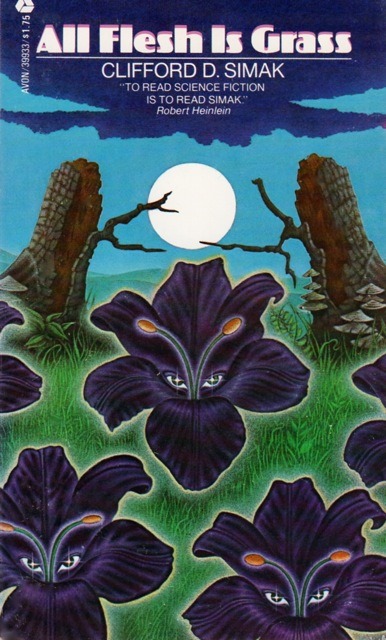
All Flesh Is Grass is a difficult book to describe.  Note the covers.  The top one is from the first edition hardback.  The second is the 1978 paperback edition I read.  But look at the cover from this British edition.  They obviously want to promote the book as science fiction, but it’s not your typical SyFy adventure story, so the publishers tacked on a cover that visually translate science fiction to the contemporary mind.

all-flesh-is-grass-spaceship

There are no space ships in All Flesh is Grass.  It’s about a failed real estate agent, Brad Carter, who lives in a small town, Millville,  that gets caught up in a mystery one day when he’s driving out of town and his car hits an invisible barrier.  Like The Visitors, All Flesh Is Grass is about a different kind of alien invasion, and if you look at the first two covers you will get hints as to what the invaders are like.  But they don’t invade Earth in spaceships.  Simak’s story feels more like one Ray Bradbury would have written in the 1950s, with a touch of Philip K. Dick.  It’s a kind of science fiction that has disappeared—as far as I know.

When I was growing up and reading science fiction in the 1960s as a teen, certain books had a quaintness to them.   Authors like E. E. Smith, Edmond Hamilton, and Ray Cummings wrote stories that seemed very old.  They wrote pulp stories from the 1930s.  Their style of writing, common phrases, wording, slang, etc. was just old enough to feel out-of-date old fashioned.  1965 Simak reads that way now.   Not like 1930s, because the story has a definite 1950s feel.  And the ending is painfully hokey.  Yet, All Flesh Is Grass was a pleasure to read, at least for me.  I’m just curious if anyone born after 1980 would find it fun.

Science fiction seems to change every decade like society.  Pop culture is always evolving and mutating.  Reading Simak’s science fiction feels so quaint, like looking at an Amish town, or characters out of a 1940s black and white movie.  But All Flesh is Grass is still about the awe of making first contact, still about encountering something that’s very alien.  Still imagining unimagined possibilities.  Simak’s mind goes way beyond little green men in flying saucers.

Ultimately, All Flesh is Grass is slight.  A 254 page paperback that was quickly written and quickly read.  That’s the problem with most science fiction, even today—it’s churned out.  King’s Under the Dome is 1088 pages.  Modern science fiction readers want long stories, either big books, or at least trilogies.  Today we remember authors by the series they write.  The novels I’ve been writing about as Forgotten Science Fiction were stand alone stories, that were short, quickly written for a few bucks.  They were consumed and forgotten.

Yet, I remember these old SF books from the 1950s, 1960s and 1970s, and so do a few others, like my blogging friend Joachim Boaz at Science Fiction and Other Suspect Ruminations.  They are a unique art form.  The ones I like, and I think my friends at the book club like too, are the ones that use science fiction as a way to think about certain kinds of ideas.  The stories are more like The Twilight Zone and The Outer Limits than Star Wars or modern science fiction.  I have to admit they aren’t great literature, and maybe their appeal is only nostalgic, yet, they wonder about reality in the same way I did growing up.

JWH – 5/14/14

The Two Faces of Science Fiction

Science fiction has always had two different faces that confounds efforts to define it in a distinct manner.  Science fiction first evolved as a literary branch of philosophical speculation which produced stories, often crudely told, about possible inventions, speculation about distant worlds and their inhabitants, and extrapolation about the future.  Speculative science fiction is pretty much based on “What if?”  Writers could imagine the impact of change, or wonder about unexplored areas of reality.  Eventually, some of this speculative science fiction produced concepts that became popular, generating global memes, and then other writers wrote adventure science fiction using these concepts as if they were religious icons.  Often adventure science fiction based on original speculative ideas have no new speculation on their own.  A spaceship is just a spaceship, and alien is just an alien.

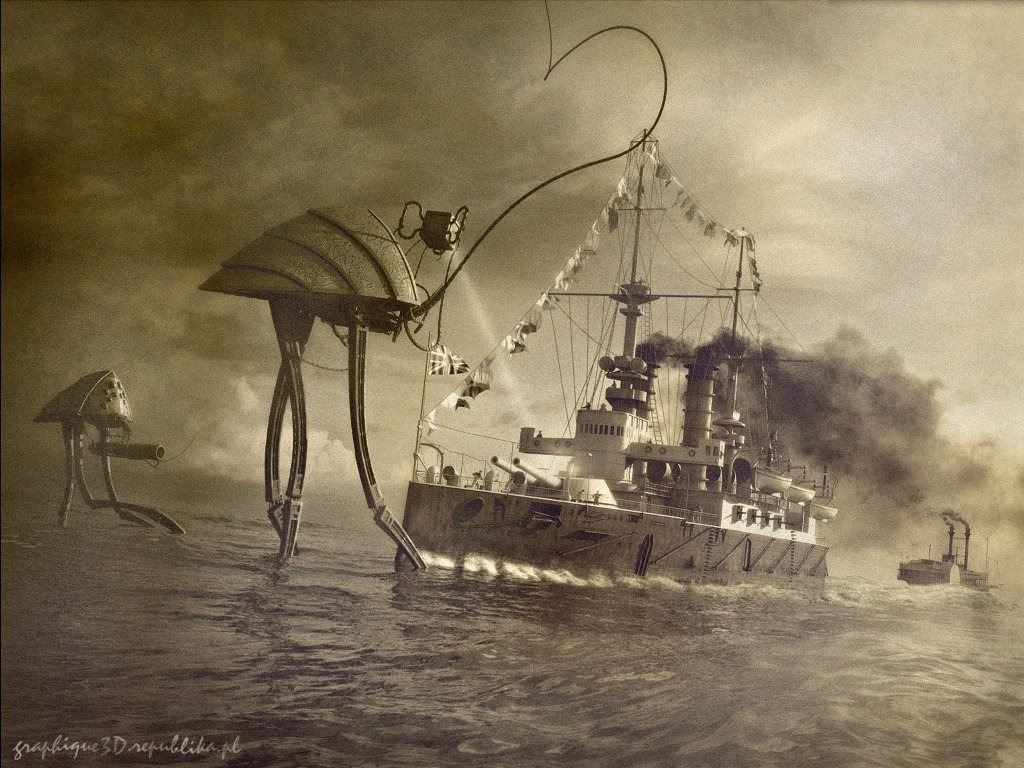
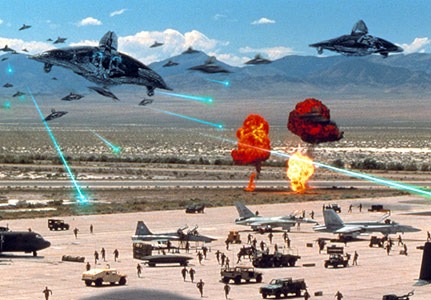
Think of H. G. Wells two most famous stories, The Time Machine, and War of the Worlds.  In the late Victorian age they were both highly philosophical speculations.  Then Edgar Rice Burroughs comes along and turns Mars into a romantic adventure destination that had no relation to reality.  A modern comparison is to The War of the Worlds and the film Independence Day, which has little or no speculation.  It’s all adventurous fun.

war_of_the_worlds_battleship_w1
area51-independence-day-attack

Another good example is Star Trek and Star Wars.  All fiction needs some action, so Star Trek was given a wagon train to the stars framework, but many episodes were built around various kinds of speculation.  Star Wars on the other hand plays homage to the galactic empire of The Foundation series, while cherishing the fun of Saturday afternoon serials inspired by Planet Stories types of adventures.  As hard as I try, I can’t think of one bit of speculative science fiction in all of Star Wars.  That’s not a criticism, but a way of defining Star Wars as the ultimate example of adventure science fiction.

DataTNG
C3P0

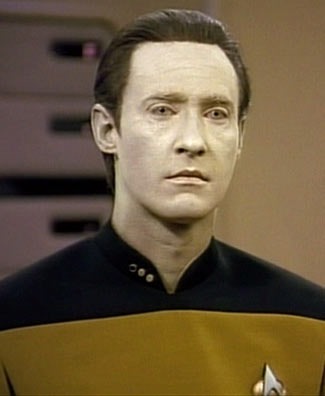
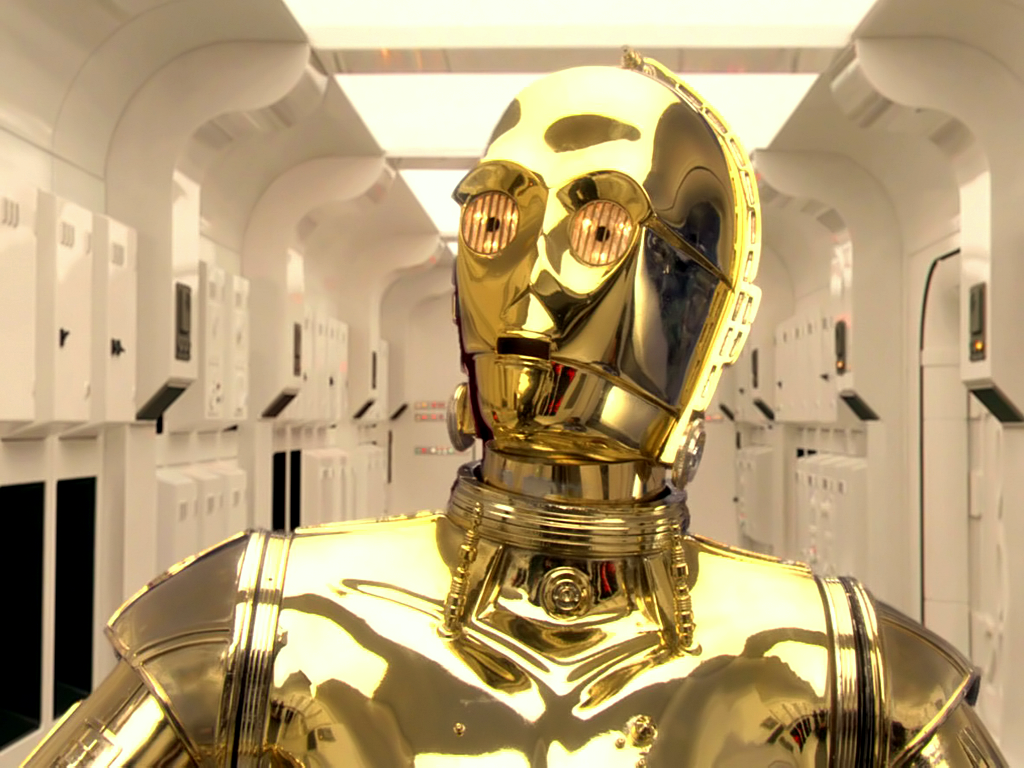
Think of how many episodes of ST:TNG where the plot was written around speculation about Data’s body, mind and abilities.  In Star Wars, C-3P0 is a very interesting character, with lots of personality traits, but there’s no speculation about his scientific origins – he’s just a colorful character in an adventure story.  Star Wars offers no lessons in artificial intelligence.  For the most part, Data is mainly used as a stock character for adventures too, but sometimes Star Trek did speculate.  In Isaac Asimov’s early robot stories he spent more time speculating, in his later ones, especially the novels, he spent more time using robots as characters having adventures.

Modern science fiction tends to be mostly adventure based.  When H. G. Wells started writing, few writers had explored many science fictional concepts, so Wells appeared to be a genius inventing science fictional idea after another.  Up until the 1960s, science fiction writers churned out speculative science fiction because there was plenty of undiscovered ideas to imagine.  Now that’s getting harder.  Since the 1960s, science has become an extremely popular entertainment genre, so most writers just take old SF memes, give them a new paint job, maybe even go all Baroque in styling, and create adventure science fiction.

We still get new speculative science fiction, in both books and movies.  My two favorite recent examples are The Windup Girl by Paolo Bacigalupi and the film Gattaca.  Life on Earth is always evolving and changing, so there’s always new content to speculate about, plus science is always advancing, giving new ideas for extrapolation.

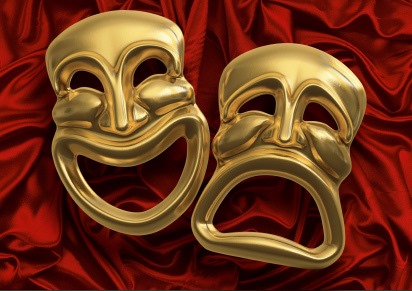
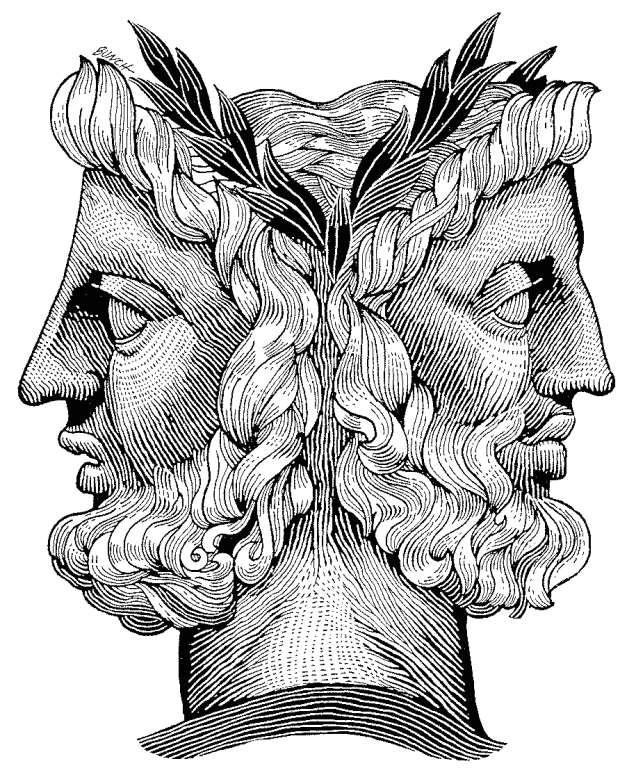
Science fiction has always suffered from a schizophrenic approach to reality though.  Why are post-apocalyptic and dystopian stories so popular with kids today?  They present horrible worlds where the characters have big adventures.  Isn’t that odd?  In the 19th and early 20th century, such novels were warnings about the future and fears about paths society might take.  Now such scenarios are escapist fun!  WTF!?  Science fiction is often like the comedy-tragedy masks, or the Janus god head.  No kid would daydream of living in the world of Nineteen Eight-Four, but I bet a lot of kids picture themselves inside the world of The Hunger Games.

comedy-tragedyjanus1

Serious speculative science fiction tends to illustrate worlds that few would fantasize about living in.  Who would want to live inside The Handmaid’s Tale by Margaret Atwood or The Sparrow by Mary Doria Russell.  But what about Dune by Frank Herbert or Starship Troopers by Robert A. Heinlein, or even Ender’s Game by Orson Scott Card?  Yet, how many adventure books have been written that take worlds similar to the ones these books describe and make them into fun adventure stories?  Like the contrast between education and entertainment, some writers aim for edutainment, but most just give us escapism.

Heinlein was speculating about serious ideas, but most military SF since then have been theme park rides.

Here’s the dilemma for writers.  True speculative science fiction isn’t escapist fun, whereas adventure science fiction is.  So if you want to sell lots of books, and maybe get your story made into a blockbuster movie, you’ll aim for adventure science fiction – but if you want literary recognition, and the chance of creating a classic the survives, you’re better off writing speculative science fiction.  They teach Frankenstein, Brave New World, and Nineteen Eighty-Four in schools, but not adventure science fiction.  Which sold more movie tickets, Spiderman 2 or Transcendence?

When I go to the bookstore, or flip through Locus Magazine, or read about new books at SF Signal, I’m enticed by myriads of thrilling stories, ones that promise epic adventures, with colorful sexy characters, involved in addictive complicated plots, the kind of books that are escapist fun to the hilt.  And I’m not against reading these kinds of books.  But what I miss, are the speculative science fiction books.  They seem few and far between nowadays.  Is that because they don’t sell, or are a bummer to write, or what few people want to read?  To me, speculative science fiction is the real science fiction, and all the other stuff is fantasy fun.

I’m working on a new edition of The Classics of Science Fiction and I’ve always used a statistical method to create the list before.  But this time, I’m thinking about creating it as a history of speculative science fiction.  Yesterday I discovered  Radium Age Science Fiction at HiLo Books, and essays on Pre-Golden Age Science Fiction by Joshua Glenn at io9.com.  Most of these books are now forgotten, but they were at the time, attempts to write serious speculative science fiction.  I wonder if I can create a Classics of Speculative Science Fiction in chronological order starting with Mary Shelly’s Frankenstein, or even earlier books if I can discover ones that fit my concept, and then move towards the present showing an evolution of speculative science fiction?

Instead of creating another list of the most popular books of science fiction, I want to create one that showcases books that introduced the best science fictional ideas.  I think as kids, when we first discover science fiction, we’re hooked on the far out ideas, but later on, we become addicted to the escapism.  When we’re thinking about ideas, we’re exploring reality.  We want to know how reality works, and how we can adapt it to our own needs and desire.  Later on, we read science fiction to escape reality, because we’re disappointed with its limitations.

This provides two faces of our own psychology.  Now that I’m old, I wonder if I sold out sometime in the last fifty years.  That I sold my sense of wonder for a sense of illusion.

JWH – 5/6/14