The Robert Sheckley Tontine

by James Wallace Harris, Wednesday, November 29, 2017

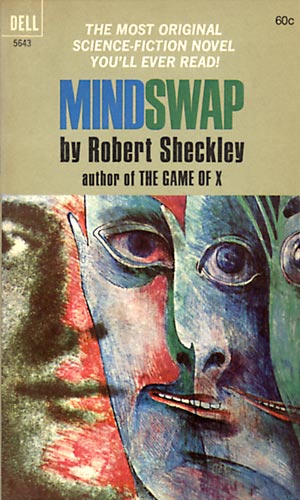
Mindswap by Robert SheckleyMonday, my buddy Mike and I were going up and down the isles of the science fiction section at Barnes & Noble looking to see if our old favorites were on the shelves. There were a few books each for Heinlein, Asimov, and Clarke, the Big Three SF writers of our childhood. But for many of the classic SF authors that we fondly remembered, none of their books were available. The last writer I looked up was Robert Sheckley. No luck. It’s sad to think modern readers won’t be discovering Mindswap or Untouched by Human Hands.

Generally, when science fiction fans today think of comedy SF they think Douglas Adams and his Hitchhiker’s Guide to the Galaxy series. But before Douglas Adams, there was Robert Sheckley. I worry that the number of Robert Sheckley fans is growing quite small.  Sure, a few new readers discover him, but that’s offset by older fans dying at a much quicker pace. The memory of his stories are like a tontine, and one day his last reader will be the only person on Earth to remember Marvin Flynn and The Theory of Searches, or any of the other wonderfully weird tales Sheckley wrote.

Much of Sheckley’s work has been reprinted in ebook editions and some of them have even gotten the audiobook treatment. Here’s the thing about books in general – most will be forgotten. Very few books are remembered over the long haul of time. I hate that. Of course, if we spent all our time cherishing old writers we’d have no time for new writers. Who are the new absurd comedy writers of SF today? Who follows in the footsteps of Robert Sheckley and Douglas Adams? I’d like to read them. I’m all for progress and time marching on, but I hate to see books I loved being forgotten. So I’ll just mention a few Sheckley titles to try.

My favorite Sheckley novels are Mindswap and Dimension of Miracles. Even though these works are still in copyright, you can hear them on YouTube. I recommend you buy them from Audible or if you prefer reading with your eyes get the Kindle editions at Amazon. But for now you can give them a test spin via YouTube:

Actually describing Sheckley is hard, so I’m glad these audiobooks are on YouTube to do that work for me.

And here’s The Dimension of Miracles with a wonderful introduction by Neil Gaiman. It’s well worth listening to his introduction – I might not convince you to read Sheckley but Gaiman might.

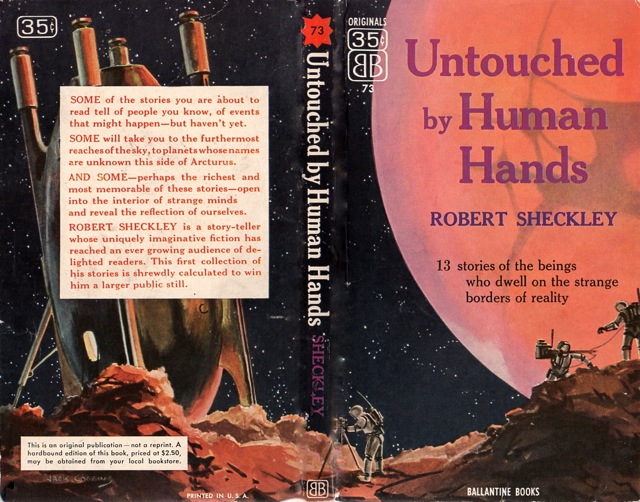
Sheckley was a very prolific short story writer, and reading his collections captures the essence of science fiction of the 1950s and 1960s. Sheckley explored every science fictional concept through an absurd lens of humor, often giving insights into human nature that serious science fiction failed to find. Only one of his collection, Untouched by Human Hands is available on audio. Listen to the first story, “The Monsters” on YouTube and if you like it go buy the whole collection at Audible. The story is about first-contact from an alien’s POV. There are 13 unique tales here that should tickle your funny bone and impress your intellect. Sheckley constantly reminds us we see reality with a too narrow perspective.

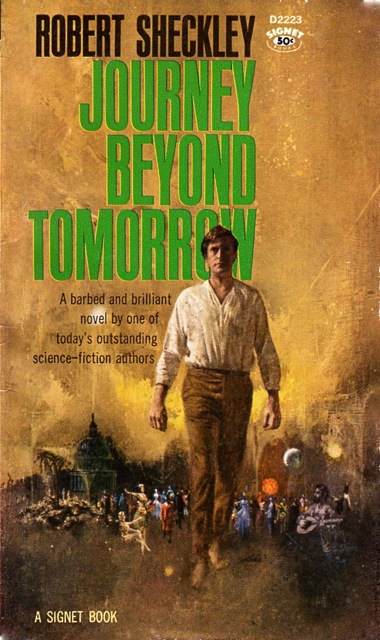
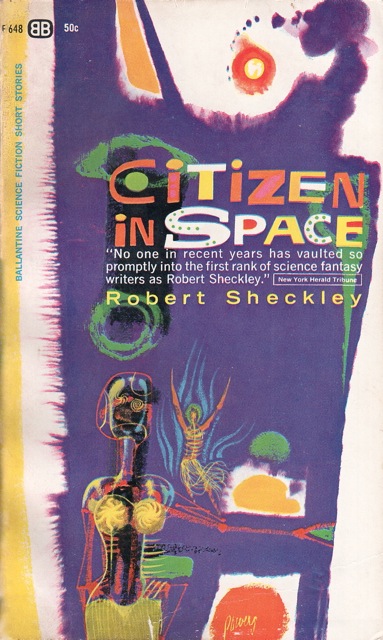
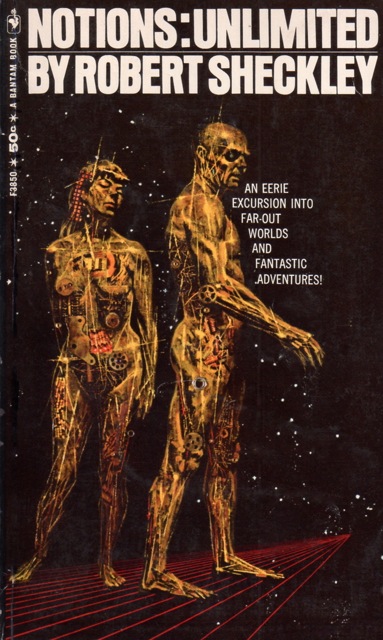
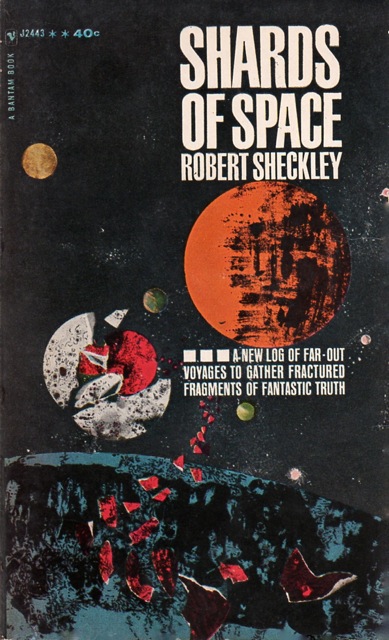
Like I said, many of Sheckley’s novels and collections are available as ebooks, and they are reasonably priced. Just for my own fun, I’m going to include covers I first saw half a century ago that make me feel nostalgic for his books today.

Untouched by Human Hands by Robert Sheckley

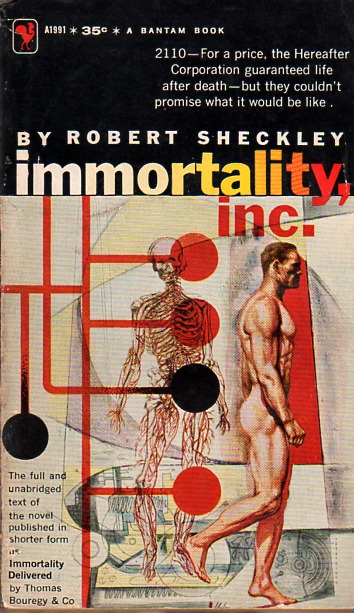
Immortality, Inc. by Robert Sheckley

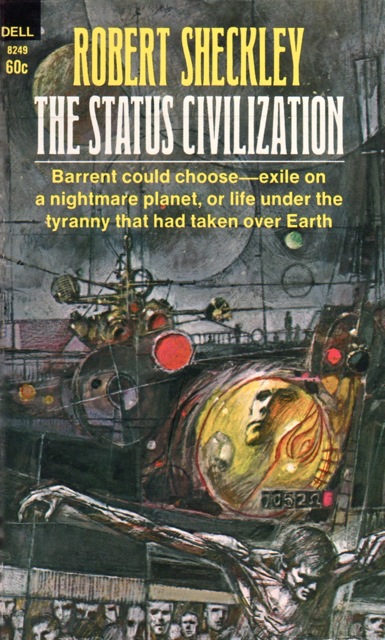
The Status Civilization by Robert Sheckley

Journey Beyond Tomorrow by Robert Sheckley

Citizen in Space by Robert Sheckley

Notions Unlimited by Robert Sheckley

Shards of Space

Probably one old guy’s nostalgia isn’t enough to inspire new readers. I love that Philip K. Dick’s short stories are being produced as Electric Dreams, a video anthology for Amazon Prime. Sheckley’s short stories deserve that same kind of treatment, and that might resurrect his work. When Mike and I were checking the shelves at Barnes & Noble we found quite a lot of PKD titles. Back in the 1960s, I loved PKD but I never would have imagined he would be the science fiction writer of our generation to be remembered.

Young people who have discovered old reruns of The Twilight Zone or love the new anthology show Black Mirror should try reading science fiction short stories from the 1950s and 1960s. Back then science fiction stories had a lighter touch than they do today, more focused on far-out ideas and less on being literary.

Here is one example of a Sheckley story that’s always stuck with me. Sunday I tracked it down. It’s called “The Language of Love” and is in the collection Notions: Unlimited, about a young man, Jeffrey Toms, who meets a girl, Doris, and falls in love. She wants him to tell her he loves her. He wants to tell her. But he wants to express his feelings precisely, and fears using the word love is imprecise. He says people say they love pork chops, how can he use the same word for his feelings for her? So he learns about a dead race of aliens across the galaxy that had specialized in the language of love. Jeff travels to their world and finds an old scientist there, George Varis, who had studied this alien culture and Jeff spends months learning the language of love. Here’s what happens when he returns to Doris:

“Oh, Jeff,” she said, very softly. “Oh, Jeff.”

Toms simply stared, unable to say a word.

“It’s been so long, Jeff, and I kept wondering if it was all worth it. Now I know.”

“You—know?”

“Yes, my darling! I waited for you! I’d wait a hundred years, or a thousand! I love you, Jeff!”

She was in his arms.

“Now tell me, Jeff,” she said. “Tell me!”

And Toms looked at her, and felt, and sensed, searched his classifications, selected his modifiers, checked and double-checked. And after much searching, and careful selection, and absolute certainty, and allowing for his present state of mind, and not forgetting to take into account climatic conditions, phases of the Moon, wind speed and direction, Sunspots, and other phenomena which have their due effect upon love, he said:

“My dear, I am rather fond of you.”

“Jeff! Surely you can say more than that! The Language of Love—”

“The Language is damnably precise,” Toms said wretchedly. “I’m sorry, but the phrase, ‘I am rather fond of you’ expresses precisely what I feel.”

“Oh, Jeff!”

“Yes,” he mumbled.

“Oh damn you, Jeff!”

There was, of course, a painful scene and a very painful separation. Toms took to traveling.

He held jobs here and there, working as a riveter at Saturn-Lockheed, a wiper on the Helg-Vinosce Trader, a farmer for a while on a kibbutz on Israel IV. He bummed around the Inner Dalmian System for several years, living mostly on handouts. Then, at Novilocessile, he met a pleasant brown-haired girl, courted her and, in due course, married her and set up housekeeping.

Their friends say that the Tomses are tolerably happy, although their home makes most people uncomfortable. It is a pleasant enough place, but the rushing red river nearby makes people edgy. And who can get used to vermilion trees, and orange-and-blue grass, and moaning flowers, and three wrinkled moons playing tag in the alien sky?

Toms likes it, though, and Mrs. Toms is, if nothing else, a flexible young lady.

Toms wrote a letter to his philosophy professor on Earth, saying that he had solved the problem of the demise of the Tyanian race, at least to his own satisfaction. The trouble with scholarly research, he wrote, is the inhibiting effect it has upon action. The Tyanians, he was convinced, had been so preoccupied with the science of love, after a while they just didn’t get around to making any.

And eventually he sent a short postcard to George Varris. He simply said that he was married, having succeeded in finding a girl for whom he felt “quite a substantial liking.”

“Lucky devil,” Varris growled, after reading the card. “‘Vaguely enjoyable’ was the best I could ever find.”

I hope whoever will be Robert Sheckley’s last reader hasn’t been born yet. We need to keep the Robert Sheckley Tontine going.

JWH


Science Fiction I Want to Hear Before I Die

by James Wallace Harris, Friday, November 24, 2017

I love listening to science fiction read by great audiobook narrators! It’s standard today for popular books to have an audiobook edition, and audiobook publishers have done an excellent job producing audiobooks for popular SF books from the past. Unfortunately, there’s a great deal of science fiction I want to hear that’s still not available. I assume audiobook publishers need to make a buck and are hesitant to produce stories they think won’t sell. Can’t blame them, but what if there are overlooked markets with enough potential customers to generate a profit? Shouldn’t we make our wants known?

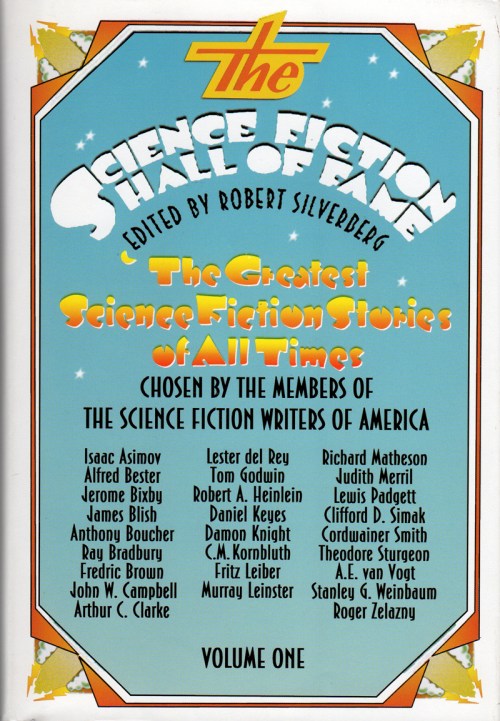
The-Science-Fiction-Hall-of-Fame-Volume-One---Edited-by-Robert-Silverberg

For my 64th birthday, I wrote “64 Classic Science Fiction Books I Want to Hear” for SF Signal. For my 65th birthday, I wrote, “65 Classic Science Fiction Books I Want to Hear” for this blog. If you study the two lists you’ll discover they haven’t changed much, and I’ve only gotten to hear a few of my wishes. Sadly, most of their titles are still my wishes. The big gift this year was The Left Hand of Darkness coming out on Audible. And John Brunner’s The Sheep Look Up will be available on the 28th. Now I’ve got to beg for The Jagged Orbit and The Shockwave Rider – Brunner needs to be remembered for more than his brilliant Stand on Zanzibar.

John Brunner

Although I won’t get them for my birthday this year (tomorrow), Recorded Books will soon be releasing The Science Fiction Hall of Fame – volume 1 in December, and volume 2a and 2b sometime in early 2018. Not sure when they will come to Audible. This is tremendously exciting because classic short science fiction has been mostly missing in action on audio. The Science Fiction Hall of Fame comes in at #1 on GoodReads Best Science Fiction Anthology list.

I was especially grateful this past year to finally hear books by Samuel R. Delany.  (Babel-17, Nova, Dhalgren).  Now I’m begging for Aye, and Gomorrah: And Other Stories by Delany, and Empire Starmy personal favorite. It would be fantastic to hear the complete shorter works on of Samuel R. Delaney like they’ve done for Philip K. Dick, Arthur C. Clarke, J. G. Ballard, and C. M. Kornbluth. Other complete short story projects I’d love to hear are the stories of Clifford Simak and Robert Sheckley!

By the way, here’s a sample of Sheckley on audio. It’s hilarious.

I’m still shocked I can’t listen to books by these authors:

  • Eleanor Arnason
  • Alfred Bester
  • Michael Bishop
  • Pat Cadigan
  • Zenna Henderson
  • R. A. Lafferty
  • Maureen F. McHugh
  • Eric Frank Russell
  • James H. Schmitz
  • William Tenn
  • James Tiptree, Jr.
  • Wilson Tucker

I can identify four areas of science fiction for publishers to consider: diversity, short fiction, classics, and rediscoveries. Until the 21st-century American science fiction readers mostly read stories written by white males from English speaking countries. Audiobook publishers should search out science fiction written by women, writers of color, or foreign language SF in English translation.

I don’t believe the science fiction genre intentionally excluded women and minorities. When I was growing up science fiction was viciously sneered at by the literary establishment. The genre paid very little, and many believed it only appealed to adolescent social outcasts. I don’t think woman and minorities wanted to write SF. After Star Trek (1966) and Star Wars (1977), science fiction slowly became more popular with the general public. That’s when SF began attracting serious attention, and women and minority writers took more interest. It hurts my feelings today when so many essays about classic science fiction come with trigger warnings about classic science being dominated by white male writers. It’s a complicated issue to judge the past by today’s standards. Any story from the past must be read carefully, but I don’t believe they should be rejected out of hand.

The heart of science fiction has always been the short fiction. For decades novelists did their apprentice work in pulp and digest magazines. However, short fiction has never been popular with the book-buying public. Now that we listen to fiction on smartphones, short fiction should be a perfect for on-the-go “reading.” It would be great to have audiobook editions of the popular magazines. Every year we have several large best-of-the-year anthologies published. These also need to be produced in audio. And we need to hear retrospective anthologies that collect older short stories and theme anthologies of original short stories.

Most of the classic novels of science fiction already have audiobook editions, some are even in their second editions, yet there are a handful of obvious classics that we can’t hear. Finally, there are older books that are no longer read, but if brought back might make exciting rediscoveries. I have trouble reading classic literary novels from the 19th-century but love listening to them. I’m wondering if audiobook editions of Victorian-era science fiction might rebuild reputations.

The stories I hope to hear have a very small potential audience, and thus financially risky to produce. Bestsellers tend to always be new books. Recognized classics stay in print and readers discover them as their tastes mature, promising slow but steady sales. For the past twenty years, I believe audiobook publishers have discovered another market, a nostalgia market, with books appealing to older readers who want to hear their favorite stories they read in their teens and twenties. However, that catch-up market will eventually dwindle. My worry is audiobooks currently in print will go out-of-print (out-of-audio?). The great thing about Audible.com is they keep those out-of-audio editions I bought in the past available to me in my library. But will they for the rest of my life?

Herland by Charlotte Perkins GilmanI want to hear the science fiction books that have historical and literary value because I’m an amateur scholar of science fiction history. I’d love when forgotten books are rediscovered and become recognized classics, but that doesn’t happen often. Herland by Charlotte Perkins Gilman is a great example. My interests are like feminists who mine the past for women writers, or African-American scholars who want to unearth novels written by black authors which reveal perspectives previously ignored by history. Older science fiction novels represent forgotten perspectives too. Often these old SF stories are poorly written, but not always, but they reveal speculative ideas that are anthropologically valuable, clues to our past hopes and fears about the future.

Since I joined Audible.com in 2002 and began listening to books, I’ve learned that hearing a story read by a professional narrator is the absolute best way to showcase the writing virtues of a book. I feel writing skills (or lack of skills) are magnified when properly read aloud. A good audiobook narrator will get closer to the best possible presentation for a book, revealing all the aspects the author worked so hard to add, especially ones that are so easily skimmed over by visual speed readers. Dialog becomes dramatic, long narrative passages are richer sensually and intellectually, we can clearly hear the voice of the author, as well as voices of the characters, and we can feel the writing style. Most authors are poor narrators, which is why we want professionals.

I consider an audiobook edition of an old book a kind of validation. It helps stories from past eras to find new readers. Plus, we gain a sense of literary history. My inner reading voice is not very good, and it always sounds contemporary, and a good narrator can make a 19th-century novel sound like the 19th-century, or even a 1940s pulp fiction story sounds like a 1940s film noir movie. Many older stories that I read with my eyes feel dated, quaint, or even clunky, come alive with a skilled audiobook narrator. This was vividly illustrated recently with Frankenstein Dreams, an anthology of 19th-century science fiction that has a wonderful audio edition.

My goal for this essay is to point to science fiction that isn’t in print on audio that audiobook publishers might consider. These titles still have a nostalgia audience or possibly be a thrilling rediscovery to entice new readers, justifying taking a chance on them. In terms of science fiction literary history, I doubt there’s even fifty of us in the world today, and most of them probably still prefer reading over listening. However, I believe the audience for historical science fiction could be expanded greatly if more young people heard stories like “The Machine Stops” by E. M. Forster on their iPhones.

I use Audible.com as my reference for being audio-in-print. There may be amateur readings on the web, or professional readings not sold through Audible, but such rarities are hard to track down. For the past two years (2015 and 2016) I’ve published lists of SF books I wanted to hear on audio as my birthday wish. I recommend that potential audiobook publishers scan these lists for possible consideration. Only a few titles have gotten audiobook editions since they came out.

Most of the legendary classic science fiction novels of the 19th-century have multiple audiobook editions, especially for Mary Shelley, Jules Verne, and H. G. Wells. I’m only learning late in life that there was a great deal more science fiction published in Victorian times than we remember.

The books I recommend are based on how they are remembered today. I’ve published two lists of science fiction based on the popularity of being on multiple best-of lists. The Classics of Science Fiction and Science Fiction by Women were created from the most popular books found on 65 Best Science Fiction lists published between 1949-2016. HiLoBrow.com has also assembled lists of science fiction books by historical periods: Scientific Romances (1864-1903), Radium Age Sci-Fi (1904-1933), Golden Age Sci-Fi (1934-1963) and New Wave Sci-Fi (1964-1983). I also use Anatomy of Wonder: A Critical Guide to Science Fiction edited by Neil Barron (all editions). Barron’s book is a library reference tool for collection building.

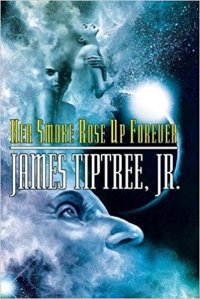
Her Smoke Rose Up Forever by James Tiptree Jr. (Alice Sheldon)Like I said, Audible.com sells most of the famous science fiction published in the last two hundred years. Most of what’s missing is obscure, but there are some amazing exceptions. I just can’t believe Alfred Bester’s two legendary novels; The Demolished Man and The Stars My Destination aren’t available on audio. I assume for legal reasons. And why haven’t we heard any James Tiptree Jr. (Alice Sheldon) or Joanna Russ (two famous feminist science fiction writers)? Her Smoke Rose Up Forever, Tiptree’s best-of short story collection is a must. Russ’ The Female Man is still in print on paper so why not audio? That book was #24 on the Classics list and #7 on the SF by Women Writer’s list. But also, I think her And Chaos Died should be considered. It was originally an Ace Special and nominated for a Nebula.

Native Tongue by Suzette Haden ElginMost books on the Science Fiction by Women list are available on audio, but that’s because they are generally recent books. The further back in time we travel the fewer women science fiction writers we get to hear. Woman writers weren’t common, but there were more than most readers remember. Zenna Henderson’s lovely People stories from the 1950s and 1960s need to be heard, now collected as Ingathering: The Complete People Stories. Also, Native Tongue (1984) by Suzette Haden Elgin (expanded to a trilogy). And I really, really want to hear Women of the Iron People by Eleanor Arnason.

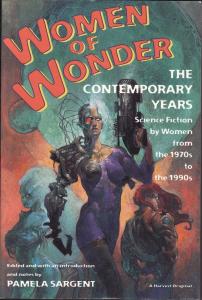
Scholars are rereading the old pulps looking for women writers. Sisters of Tomorrow: The First Women of Science Fiction edited by Lisa Yaszek would be a fascinating collection to hear. The trouble with anthologies is getting permissions to reprint on audio. From now on, anthologists should try to always get permission. It would be fantastic if we could hear Pamela Sargent’s two-volume science fiction by women anthologies: Women of Wonder: the Classic Years: Science Fiction by Women from the 1940s to the 1970s and Women of Wonder: the Contemporary Years, Science Fiction by Women from the 1970s to the 1990s. Both are long out of print so it might be hard to get the audiobook reprint rights.

Women-of-Wonder-The-Classic-YearsWomen-of-Wonder-The-Contemporary-Years

There are classic anthologies that deserve audio production like Dangerous Visions edited by Harlan Ellison that’s still in print, so they have a chance. But most of the famous anthologies of the past, like Adventures in Space and Time edited by Healy and McComas, are long out of print, and it’s doubtful I’ll ever hear them. That doesn’t mean new anthologists couldn’t re-anthologize those stories.

The Big Book of Science Fiction edited by Jeff and Ann Vandermeer is a new epic retrospective anthology covering science fiction history. I’m crying that it’s not on audio. Why? Why? Why? However, at 1,218 pages it’s probably too expensive to produce, but it’s shorter than the complete Sherlock Holmes collections which are one credit at Audible. I would gladly pay 2 credits for it! The Vandermeers have created a monumental anthology that is diverse and worldly. I beg the audiobook gods to produce it.

So Long Been Dreaming edited by Nalo Hopkinson and Uppinder MehanBefore the 21st-century science fiction had very few African American writers or writers of color from any country. GoodReads has a great list of African American Science Fiction to study. Most of the newer novels are on audio. A great way to deliver audiobook diversity in older science fiction is by producing anthologies. Dark Matter: A Century of Speculative Fiction from the African Diaspora edited by Sheree R. Thomas would be an excellent choice, as well as its sequel Dark Matter: Reading the Bones. Also, consider So Long Been Dreaming: Postcolonial Science Fiction & Fantasy edited by Nalo Hopkinson, or Octavia’s Brood: Science Fiction Stories from Social Justice Movements edited by Adrienne Maree Brown and Walidah Imarisha. (Update 11/27/17 – Octavia’s Brood is available at Audible.)

After listening to Frankenstein Dreams edited by Michael Sims I wanted to hear more science fiction by 19th-century writers. His anthology made me realize that the Victorians could have discussed many science fictional ideas we assumed were first thought up in the 20th century. An obvious wish is to hear Scientific Romance: An International Anthology of Pioneering Science Fiction edited by Brian Stableford. I really admire Stableford’s insight into the evolution of science fiction, especially his four-volume book, New Atlantis: A Narrative History of Scientific Romances.

Two novels from the 1800s that I’d like to hear are Across the Zodiac (1880) by Percy Greg about using anti-gravity to go to Mars, and Caesar’s Column (1890) by Ignatius Donnelly, a best-seller American utopian. Some of its ideas seem to foreshadow what we’re experiencing today. I was tremendously impressed by Looking Backward (1888) by Edward Bellamy when I listened to it last week. Sure, it was mostly lecturing, but it was incredibly creative.

A Voyage to Arcturus by David LindsayThe early part of the 20th-century was a happening time for science fiction, but many of its quasi-famous stories are now forgotten. A Voyage to Arcturus (1920) by David Lindsey is an early interstellar travel yarn, a favorite of Robert A. Heinlein, that is religiously philosophical like C. S. Lewis’ Out of the Silent Planet. A classic pulp fiction adventure is The Girl in the Golden Atom (1922) by Ray Cummings. I read a beat-up copy that I found in a tiny, dusty, small-town library in 1966. I thought it would be fun to try it again. Emperor of the If (1926) by Guy Dent was an early alternate history story, and The Young Men are Coming (1937) by M. P. Shiel, a story of flying saucers and fundamental religion.

My last want is Before the Golden Age (1974) edited by Isaac Asimov, a huge anthology of science fiction stories from the 1930s. These are the stories Isaac Asimov remembered loving growing up, and they are wonderful. The stories aren’t sophisticated, but they do have tremendous enthusiasm for their ideas. Science fiction has a different feeling for each decade, and we’ve mostly forgotten 1930s science fiction. Most of the retrospective anthologies we’ve seen in recent decades seldom anthologize stories from the 1930s (or even the 1940s). Most of the currently recognized classics of science fiction short stories come from the 1950s and later. When I was growing up, the classic stories were mostly from the 1940s and 1950s. I ache to hear these old 1930s stories read by a narrator who can properly dramatize them.

66 Books I Want to Hear for My 66th Year

H=Hardback  T=Trade paper  M=Mass market  E=ebook  *=OOP

    1. A Voyage to Arcturus (1920) by David Lindsay – HT
    2. Phoenix (1926) by Lady Dorothy Mills – OOP
    3. The World of Null-A (1948) by A. E. Van Vogt – TE
    4. The Voyage of the Space Beagle (1950) by A. E. Van Vogt – T
    5. Bring the Jubilee (1953) by Ward Moore – TE
    6. The Demolished Man (1953) by Alfred Bester – TE (published 12/5/17)
    7. A Mirror for Observers (1954) by Edgar Pangborn – H
    8. Mission of Gravity (1954) by Hal Clement – TE (as Heavy Planet: The Classic Mesklin Stories)
    9. Cities in Flight (1955) by James Blish – E
    10. Citizen in Space (1955) by Robert Sheckley – E
    11. The Stars My Destination (1956) by Alfred Bester – TE
    12. Wasp (1957) by Eric Frank Russell – E
    13. The Lincoln Hunters (1958) by Wilson Tucker *
    14. Rogue Moon (1960) by Algis Budrys – E
    15. The High Crusade (1960) by Poul Anderson ME
    16. Hothouse (1962) by Brian W. Aldiss – E
    17. Davy (1964) by Edgar Pangborn – H
    18. Empire Star (1966) – T (combined with Babel-17)
    19. The Witches of Karres (1966) by James H. Schmitz – ME
    20. Dangerous Visions (1967) ed. Harlan Ellison – TE
    21. The Einstein Intersection (1967) by Samuel R. Delany – TE
    22. Camp Concentration (1968) by Thomas Disch – TE
    23. Past Master (1968) by R. A. Lafferty – T
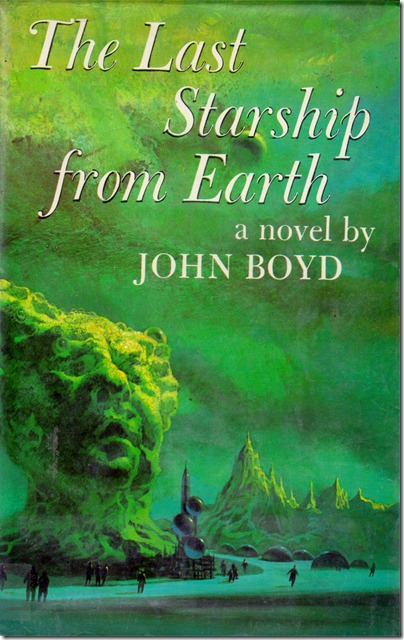
    24. The Last Starship from Earth (1968) by John Boyd – *
    25. Behold the Man (1969) by Michael Moorcock – T
    26. Bug Jack Barron (1969) by Norman Spinrad – TE
    27. Macroscope (1969) by Piers Anthony – HTE
    28. And Chaos Died (1970) by Joanna Russ – *
    29. The Year of the Quiet Sun (1970) by Wilson Tucker *
    30. The Doors of His Face, The Lamps of His Mouth (1971) by Roger Zelazny – TE
    31. The Fifth Head of Cerberus (1972) by Gene Wolfe – TE
    32. The Listeners (1972) by James Gunn – T
    33. Before the Golden Age (1974) edited by Isaac Asimov – *
    34. A Martian Odyssey and Other Science Fiction Tales (1974) by Stanley G. Weinbaum – *
    35. The Centauri Device (1974) by M. John Harrison *
    36. The Female Man (1975) by Joanna Russ – T
    37. The Shockwave Rider (1975) by John Brunner – TE
    38. Trouble on Triton (1976) by Samuel R. Delany – TE
    39. On Wings of a Song (1979) by Thomas M. Disch – E
    40. Ridley Walker (1980) by Russell Hoban – HTE
    41. No Enemy But Time (1982) by Michael Bishop – E
    42. Native Tongue (1984) by Suzette Haden Elgin – TE
    43. Stars in My Pocket Like Grains of Sand (1984) by Samuel R. Delany – TE
    44. Ancient of Days (1985) by Michael Bishop – TE
    45. The Falling Woman (1986) by Pat Murphy – E
    46. Mindplayers (1988) by Pat Cadigan – TE
    47. Grass (1989) by Sheri S. Tepper – TE
    48. Her Smoke Rose Up Forever (1990) by James Tiptree, Jr. – T
    49. A Woman of the Iron People (1991) by Eleanor Arnason – E
    50. Sarah Canary (1991) – Karen Joy Fowler – TE
    51. Synners (1991) by Pat Cadigan – TE
    52. China Mountain Zhang (1992) by Maureen F. McHugh – TE
    53. Ammonite (1993) by Nicola Griffith – TE
    54. The Rediscovery of Man (1993) by Cordwainer Smith – H
    55. Galatea 2.2 (1995) by Richard Powers – TE
    56. Ingathering: The Complete People Stories of Zenna Henderson (1995) – H
    57. Women of Wonder (1998) (2 volumes) edited by Pamela Sargent – OOP
    58. Holy Fire (1996) by Bruce Sterling – TE
    59. The Book of the Long Sun (1993-96) v.1 and v.2 by Gene Wolfe – T
    60. The Good Old Stuff (1998) edited by Gardner Dozois – T
    61. Dark Matter: A Century of Speculative Fiction from the African Diaspora (2000) edited by Sheree R. Thomas – HE
    62. The Complete Science Fiction of William Tenn Volume 1 &
      2
      (2001) – H
    63. Aye, and Gomorrah (2003) by Samuel R. Delany – T
    64. Strange Relations (2008) by Philip Jose Farmer – M (The Lovers, Flesh, Strange Relations omnibus)
    65. The Big Book of Science Fiction (2016) edited by Jeff and Ann Vandermeer – TE
    66. Sisters of Tomorrow (2016) edited by Lisa Yaszek and Patrick B. Sharp

    the-last-starship-from-earth-by-john-boyd_thumb

    JWH

22 Dumb Fantasies I’ve Tried to Believe

by James Wallace Harris, Tuesday, October 31, 2017

Fantasyland by Kurt AndersenHave you been depressed since last November? Does the institutionalization of anti-science horrify you? Do you feel irrational politicians have hijacked our country? Does your soul ache because liberal compassions are under siege from conservative prejudices? Do you wonder if our collective mind has blown a gasket? Then you need to read Fantasyland: How America Went Haywire: A 500-Year History by Kurt Andersen. This book will not solve our problems, but it does explain how our nation has been crap-believing crazy for five centuries. Fantasyland is the most entertaining, informative, and comforting nonfiction book I’ve read in years. Fantasyland soothes my America-is-collapsing anxiety by reporting on all the dumbass fantasies Americans have embraced since Jamestown.

Because I can’t cast any first stones, reading this book makes me want to list all the stupid concepts I’ve tried to embrace in the last sixty years. We’re all suckers for fantasylands. We all hope to find saviors that will rescue us from our mundane lives. The desire to better ourselves, to create, to build an ideal world is one of the admirable qualities of our species. However, to live a life of delusion is sad.

Fantasyland proves hope for a better future depends on getting clean with reality. Recognizing we have a fantasy addiction is the first step. We need to simplify the serenity prayer, “God, grant me the serenity to accept the things I cannot change, Courage to change the things I can, And wisdom to know the difference” to “I seek wisdom to know the difference between reality and fantasy.”

As I read Fantasyland I constantly used it to condemn the conservatives for ruining our society with their delusions. However, I have my own delusions, we all do. I thought it might be fun to confess the history of my personal fantasylands. This inspired many questions as I wrote this essay we should consider.

  1. Should we lie to children, especially during their formative years, even if it’s in fun?
  2. At what age, if any, is make-believe safe?
  3. Should schools teach how to discern fantasy from reality?
  4. Does the Constitution protect us from other people’s delusions and fantasies?
  5. Do people have a right to believe anything they want?
  6. How do we teach history to convey the lessons of failed fantasies?
  7. Is fantasy in books, television, and movies a cause of our personal delusions?
  8. Aren’t most fantasies promoted by people trying to make money or at least validate their own delusions or egos?

An Abbreviated History of My Fantasies

Looking backward, I realize books often sold me on a new fantasyland. We seldom originate our own fantasies. As Kurt Andersen reports in Fantasyland, America was created by people with either a fantasy for finding gold or a fantasy for establishing a religious utopia. Evidently today, we have a greater abundance of fantasies to choose from, especially with mass media and the internet inspiring us. I wonder, without all our fantasies would this country be quiet and dull – or would it?

The Age of Magic (My Early Years)

#1 – Easter Bunny

I doubt the Easter Bunny is my first fantasy belief, but I’m listing it first because it’s the most embarrassing, even for a little kid. I can’t believe I ever believed a large rabbit went around hiding chocolate bunnies and colored hens’ eggs. Damn, I must have been a gullible toddler.

#2 – The Tooth Fairy

Okay, I was old enough to lose teeth, I should have been skeptical that any creature would pay a quarter for a rotten tooth. I can barely remember when this happened. I hope I actually didn’t believe what my parents were telling me, and that all I wanted was that change under my pillow.

#3 – Santa Claus

I was a total dumbass for the guy in the red suit. I remember being red face hot when a little girl put me down for being so stupid as to believe in Santa Claus. In my defense, I started first grade a year earlier than I should, so all the other kids were a year older than me. But still, I should have thought this through logically, there were plenty of clues.

#4 – Oz and Magic

I discovered the Oz books by L. Frank Baum when I was ten. I had been watching the annual showing of The Wizard of Oz since I was four. Oz was a fantasy world with magic that I wanted to exist. I have read there was a period when American librarians banned Oz books because they felt Oz books gave children unrealistic expectations about life. In my case, they were dead on.

#4 – Jesus/God

If parents really want kids to accept Jesus and God as the literal truth, they shouldn’t tell us about #1-3 first. It only sets us up to be skeptical about all invisible beings. My road to atheism began at age 11 when I got Baptized and I didn’t see the light. It totally confused me when Christians said one thing in church but did the opposite Monday through Saturday. I became a complete atheist by the 8th grade.

This ends my period of wanting to believe in magic. Maybe it’s something all kids want. I find it strange that the most fundamentalist of Christian believers reject the concept of magic when Bible stories are full of magic. God created the Earth with words. My rejection of magic was so strong I rejected all fantasy stories in favor of science fiction. It wasn’t until my fifties that I was able to enjoy fantasy novels like Harry Potter just for fun.

The Age of Science (Junior High)

#5 – Science Fiction

Science fiction was supposed to be the opposite of fantasy. When I was young I believe all the classics themes of science fiction were theoretically possible. Over the years I’ve slowly become a disbeliever to many of them, like faster-than-light travel, time travel, galactic empires, brain downloading, scientific immortality, etc. I still cling to intelligent robots or AI machines with conscious minds will be built someday.

#6 – Becoming an Astronaut

By the 8th grade I had exchanged religion for science fiction. This led me to an array of beliefs that would take me the rest of my life to realize were irrational. The first, the belief I would grow up and work in space took a long time to get over. Back in the 1960s, I was totally in awe of NASA and faithfully followed Projects Mercury, Gemini, and Apollo. Sputnik went up just before I started Kindergarten and Apollo 11 landed on the Moon just after I graduated the 12th grade. I had even gone to watch Apollo 8 launch Christmastime 1968, during my senior year. Sometime in my high school years, I learned astronauts had to have 20-20 vision, and I was a four-eyed geek with thick lenses. I still fantasized that science could fix my eyes, or NASA would eventually hire people with glasses. After reading Tom Wolfe’s famous book, I realized I never had the right stuff, and never would. It galled me when rich people started buying their way to space, but if I’m honest with myself, even if I was a billionaire I would never leave Earth. Space travel is just too inconvenient and uncomfortable for me.

#7 Becoming a Scientist

Probably the greatest regret of my life is not becoming a scientist. This was not an impossible dream – theoretically. However, even though I took biology, chemistry, and physics in high school, I just couldn’t devote myself to those subjects and work hard. Nor could I apply myself to math. I eventually got through calculus, but only with a half-ass effort. I even went to a tech school majoring in computer science in 1971, but I never could commit to studying hard. I wanted to have fun. I hated the classroom. One of the dumbest fantasies I had about myself involved being a disciplined scholar of science. I was always more science fiction fan than a scientist. Being successful at any pursuit requires hard work, concentration, and grit. My biggest fantasy in my life has been believing I could make myself acquire those qualities.

#8 – The Final Frontier

Instead of believing in heaven like most folks growing up in the south, I believed mankind’s was destined to travel across the solar system and out into the galaxy. That was my teenage religion. For most of my life, I believed colonizing space was our species purpose in existence. I’m now an atheist to that idea. We might travel to Mars or a few other places in the solar system, and even build colonies on the Moon and Mars, but I doubt much will come of it. Going to the stars is a fantasy for humans. I currently believe robots are destined to be interstellar travelers, but that too might be a fantasy.

The Counter Culture (High School and Early College Years)

#9 – Hippies and the Counter Culture

I remember in 1967 after reading about the march on the Pentagon standing at my school bus stop arguing with my longhair buddies about how the counter-culture was going to revolutionize America. In 1968 The Electric Kool-Aid Acid Test by Tom Wolfe and The Rolling Stone magazine started defining a new fantasyland future for me. It also introduced me to Jack Kerouac, who drew me backwards into an older fantasyland.

#10 – Expanding My Mind with Drugs

The 1960s had another impact on me. Besides science fiction and NASA, I loved rock music and drugs. So did many in my age cohort. I was influenced by Aldous Huxley, Timothy Leary and Richard Alpert and believed psychedelic drugs were the doors of perception. I sought transcendence with chemicals. I wanted them to take me as far as John Lilly claimed they took him, out into the galaxy to meet other beings – see The Programming and Metaprogramming of the Human Biocomputer. Yeah, if you mix belief in science fiction with acid it produces some far out fantasies, but really no different from mixing religion and faith.

#11 – The Beats and On the Road

I was completely romanced by Jack Kerouac and his on-the-road philosophy. I started hitchhiking around Miami when I was in high school, and continued when I went to college in Memphis. I did two short trips across states, one with my friend Connell. I learned I preferred the comforts of home. However, to this day, I still enjoy reading Kerouac. I see him as a tragic figure who followed many paths I wanted to follow but didn’t because I was either too scared or too smart. Kerouac was my father-figure substitute. My dad and Jack were horrible alcoholics that died within months of each other, both still in their forties. If I had gotten only my father’s genes that would have been my fate. I have a huge psychic connection with Kerouac.

#12 – Becoming Bob Dylan

Another absurd fantasy involved buying a guitar and harmonica and teaching myself to play and write music. This is an absurd fantasy because I can’t carry a tune, or even remember the words to favorite songs I’ve heard hundreds of times. I’m sure most kids have rockstar/sportstar/moviestar/writer/artist type fantasies. Probably every kid dreams of being famous for something. Fame is possible, certainly more possible than dying and going to heaven. Sadly, fame comes to about as many people as those winning big jackpots in Lotto.

#13 – Communes

At the end of the 1960s and beginning of the 1970s the idea of intentional communities began spreading through the counter culture. I loved the idea, and had brief stints in two communal groups. I quickly learned I loved privacy, personal possessions, and having my own way. This was a very short-lived fantasy, but it still affects me. I now dream of living in a high-rise retirement community where all my friends each have an apartment.

#14 – Back to Nature

After realizing I wasn’t suited for group living I dreamed of buying my own land and escaping the rat race. I just didn’t want to join the 9-to-5 world. My bibles were Mother Earth News, Five Acres and Independence, and The Whole Earth Catalog. Several of my buddies had this dream too, but after several failures at handy crafts, gardening, and fixing machinery, reality taught me something different. I loved Henry David Thoreau, but I only read Walden and not his biography. I should have. The back to nature fantasy hadn’t worked for him either. This fantasy still returns to me occasionally, like the other night when I watched the beautiful documentary, Off the Grid.

#15 – Carlos Castaneda

I loved these books that were supposed to be anthropological. Even though I gave up Christianity, I was still gullible to other religious ideas. I figured there might be some truth in old spiritual studies. Castaneda mixed sacred drugs and the wisdom of indigenous people, and that had the appeal of promising ancient wisdom. I learned a lot, but mostly the wisdom of what to avoid.

#16 – Hinduism and Ram Das

Be Here Now really hooked me. Ram Das (aka Richard Albert) convinced me to open my mind to Hinduism. I even read The Bhagavad Gita, took up yoga, joined some New Age groups with Hindu teachers, and read a bunch of books about the sacred literature of India. I just never could believe. I tried.

#17 – Buddhism, Zen Buddhism, Alan Watts

I had been reading Alan Watts since I started reading Jack Kerouac. Ram Das further encouraged me to accept Buddhism. I liked Zen Buddhism because it seemed the least magical/metaphysical of all religions. I still admire Zen and meditation for their anti-bullshit methods of perceiving reality, but Buddhism has its fundamental side too, that can be just as dogmatic, and miracle driven as Christianity. Theoretically, I believe a reality-based religion is possible, but so far I haven’t found one.

#18 – Spiritualism, Channeling Seth

For a brief period, I read books about communicating with other beings by mediums like Jane Roberts. My science fictional fantasies were susceptible to alien beings communicating with us through other dimensions. John Lilly promoted this idea, and he was a scientist (although zonked out on drugs) and the great science fiction philosopher of the 1930s, Olaf Stapledon, also promoted these ideas. I soon rejected astral worlds because they were too inconsistent.

#19 – New Age Psychologies

Back in the 1970s there was almost a new psychology of the month coming out of California. I wanted to go and try things like EST, Rolfing, primal screaming, etc. I might have been converted if I could have gotten to Los Angles, but I didn’t. I just read the books, joined a local New Age community and subscribed to New Age Magazine. Like spiritualism, I gave up hope on these therapies because there were too many of them that offered conflicting truths.

My Work Years

By the end of the 1970s I got into microcomputers, and spent all my time thinking about computers. For the next 36 years I was preoccupied with being married, hanging out with friends, working, computers, science fiction, music, movies, television, and other down-to-earth pursuits. I read lots of nonfiction books, and slowly began developing more mature philosophies about life. However, I eventually learned of other fantasylands I had tried to find.

#20 – Romance/Sex/Love

Over the years I realized our society is gaga over romantic love. Love stories program us for romantic fantasylands. Gender stereotypes and sexual desires cause us to see each other in very unreal ways. It’s very hard not to objectify the people we want sexual. All these desires lead us to countless fantasylands.

#21 – Political Solutions

We all have fantasyland beliefs on how to solve our political problems. I used to believe we could come to a rational agreement on how to govern society. That’s a huge fantasy. I keep hoping it’s not, but all the evidence says it is.

#22 – We Can Solve Our Big Problems

We have all the knowledge and technology we need to save the planet, but the reality is human nature won’t let us use that knowledge and technology. We all fantasize that humans have always survived so we always will. I think that’s our most dangerous fantasy. It’s a shame that two-thirds of us are deluded by childlike belief in a heavenly father. It keeps us from growing up and taking responsibility. It’s a shame that two-thirds of us believe lying to preserve personal beliefs is wiser than accepting the wisdom of science and giving up those beliefs.

Finding Reality

If we study our fantasylands, we’ll see we’re all looking for place to exist that rejects reality. We’re an adaptable species that can live in a variety of environments. We’re also clever beings that can adapt to any environment for our physical needs. Our failure comes from trying to pretend reality is something that matches our mental needs. Our superpower is the ability to delude ourselves. Our brains have countless cognitive skills to paint over reality, deny evidence, and to allow us to see our beliefs as real. It’s probably a survival mechanism, a way to cope as individuals. But it means we fail to cooperate in our shared reality by agreeing on its actual details.

JWH



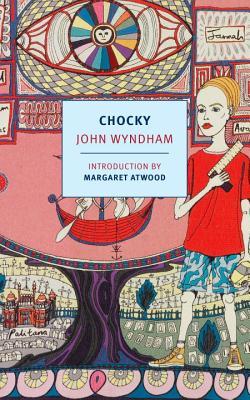
Cozy Science Fiction: Chocky by John Wyndham

by James Wallace Harris, Friday, October 27, 2017

What makes for good storytelling? How is a science fiction story different from other kinds of stories? Chocky, John Wyndham’s last novel published in 1968 is a story about a David and Mary Gore and their two children Matthew and Polly, living in England in what appears to be the quainter side of the 1960s. I imagine its time and setting looking somewhat like the Father Brown mysteries on PBS. The story is told by David. It’s rather prosaic, with a light literary touch. David relates how he met Mary. How she came from a big family and the pressure they felt to have a big family too. When they apparently can’t they adopted Matthew. Then, Polly, a girl is born. The story jumps ahead a few years to give the history Polly’s imaginary friend when she was four, and how that problem was resolved. Then the story jumps again to the present when Matthew is twelve, much too old for imaginary friends, and how he acquires one anyway. Most of the novel is about the family difficulties caused by Chocky, Matthew’s mysterious invisible companion.

Chocky by John Wyndham

Wyndham’s novel Chocky could be considered a mainstream literary novel, a nice quiet little story about family life in mid-century England. What makes it science fiction is who we think Chocky might be. The mystery genre has a sub-genre called cozy mysteries. Chocky could be a cozy science fiction novel. But what does that mean? There’s already a sub-genre in science fiction called cozy catastrophes. Many of them are by English writers by the way, and I believe many cozy mysteries are set in England too, but an Anglophile appeal is not a defining attribute of a cozy novel.

I’m sure there is no international standard for cozy novels but for me, the size of the setting, number of characters, and scope of the plot are important factors. So a story about a single alien invader impacting one family makes it a cozy tale. I guess that also makes E. T. the Extra-Terrestrial a cozy, but Chocky is much smaller and quieter than that story. The story loudness knob for science fiction movies is usually cranked to 11. Gattaca and Her being level 3 exceptions. Chocky is about a 1 or 2, and I found that exceedingly pleasant.

I’m not sure if science fiction fans even crave cozy science fiction novels. Science fiction plots are inherently big, thundering, and exciting. Mostly mystery fans who love cozy mysteries love them because they are quiet, with simple murders usually solved by ordinary folks, with tame storytelling for sex, violence, and crude language. Chocky fits that bill nicely. Chocky is currently in print from NYRB Classics, the prestigious paperback line from New York Review of Books. As of today, NYRB Classics only publishes 13 science fiction novels, most of which are on the quiet side, and many from England. Maybe the NYRB editors admire cozy science fiction too.

I doubt Wyndham intended Chocky to have an ambiguous ending, but if you were skeptical and tried hard, the science fiction could be removed the story. I imagine if there were a sub-genre cozy science fiction, that would be one of the defining characteristics, the science fictional element would be painted lightly onto a story of ordinary life. Examples might be The Age of Miracles by Karen Thompson Walker or Station Eleven by Emily St. John Mandel, both gentle post-apocalyptic tales that are a far cry from Mad Max rip-roaring tales of civilization’s collapse where it’s kosher to blast away anyone you want with your modified AK-15.

When I was younger I loved loud science fiction. Now I’m drawn to the cozier side of its storytelling. I think loud storytelling, both in books and movies became popular in the 1960s. I love westerns and constantly seek out old ones, and I’ve discovered the kind I like best were made in the late forties into the middle fifties. Westerns are a genre that depends on violence, but starting in the late 1950s they began cranking up the violence too until they became a kind of gun-porn by the 1960s. Special effects, relentless action, and comic book violence have ruined movie science fiction for me. I guess that’s why I enjoyed discovering Chocky so much.

Be sure and read Margaret Atwood’s introduction to the new edition of Chocky, “Chocky, the Kindly Body Snatcher.”

JWH


Blade Runner 2049 – The Evil of Heartless Sequels

by James Wallace Harris, Wednesday, October 11, 2017

Normally I don’t write “reviews” of works I dislike. Why waste time on bad art, huh? I prefer to promote creative work I admire. However, in trying to understand why I disliked Blade Runner 2049 I asked myself, “What did I love about the original?” It came to me instantly – the voiceover. In that moment I realized Harrison’s Ford narration in the original film was the heart of the story. That insight also explained why Ridley Scott detested the voiceover. The narration must come from a human, and Scott wanted Deckard to be a replicant.

Blade Runner 2049-2

Before seeing Blade Runner 2049 I watched Blade Runner (final cut) with a friend. I explained the history of all the versions to her and offered to show her whichever one she wanted. She picked the final cut. Normally, I always rewatch the theatrical version, which is how I first saw the film back in 1982. Whenever I see one of the director’s cuts the viewing is always a letdown. They have the same sterile quality Blade Runner 2049 has.

Blade Runner 2049 is directed by Denis Villeneuve, with the story by Hampton Fancher and Michael Green. However, it feels like a Ridley Scott baby. Scott has always argued that Rick Deckard was a replicant and Blade Runner 2049 vindicates that idea to the point that I think of this film as an expression of his ideas.

Back in 2008, I wrote “Is It Time To Remake Blade Runner?” which was really a plea to film Do Androids Dream of Electric Sheep? as the story was written by Philip K. Dick. I believe the book deserves a truer conversion to film than Blade Runner. I can’t document this, but I believe Ridley Scott bragged that he hadn’t even read the novel when making the movie. Don’t get me wrong, I loved the original theatrical version of Blade Runner, but I don’t consider it very PKD.

When the screenwriters changed androids to replicants something else got changed. In the book, androids are soulless creatures who look like humans but completely lack empathy. They are self-aware but are also psychopathic sociopaths. I believe PKD intended them to be symbolic of inhuman humans. Blade Runner is about artificial creatures that were meant to be soulless slaves that have accidentally evolved empathy. We’re supposed to feel for them. And I did with the Harrison Ford voiceover.

Without the voiceover, both films are just action flicks of heartless machines killing heartless machines. Why has Riddley Scott never understood the Romeo and Juliet beauty of having a love story between lovers from two opposing houses? In Blade Runner 2049 we are taken on a meaningless thrill ride where it’s impossible to tell human from replicant – and I really didn’t give a shit either. There are a few touching scenes in Blade Runner 2049, but they are so artificial as to cause existential angst. At times we feel for K, our replicant protagonist, but the scenes are so obviously manipulating us that it’s hard to genuinely care.

In Blade Runner 2049 it becomes obvious the real problem is our lack of understanding of replicants. They are called skin jobs. That implies they are machines covered in skin. But that’s not true. In both movies, they bleed. In Blade Runner 2049 they seem to be artificially produced biological creatures that can’t reproduce on their own, and the goal of the mad scientist Niander Wallace (Jared Leto) is to create a Nexus model that is self-replicating. But what’s the fucking point of that? Humans are self-replicating, and we have plenty of them.

Wallace wants a new process to produce less costly slaves. The government obviously backs him as long as replicants don’t act like real humans. However, we also learn replicants have secretly organized into a slave rebellion. But why secret? What good is a secret mass-movement? Isn’t it obvious that replicants aren’t soulless machines?  Do any moviegoers feel the replicants aren’t equal to people? That makes the whole point of the film a straw man argument. Truly pointless. It’s funny, but Jared Leto’s character is the most inhuman character in the film and he’s supposed to be human. Or will Ridley Scott pull another juvenile joke and claim everyone in this film was a replicant.

Our world is full of robotic slaves now. They don’t have consciousness. They don’t look human. They lack any kind of consciousness. A major theme of science fiction has always been about when robots become conscious. Generally, these science fictional robots are shown as looking human. I guess SF writers assume we can’t empathize with them if they don’t look like us. By the way, the film Her did a fantastic job of overcoming this problem.

We’ve always wanted to build robots that look like us, and that’s a problem. We want them to do our work, but we worry about robots becoming self-aware as us. If they do, we can’t keep them as slaves, and we fear they may become better than us. The TV show Humans is exploring this same topic. The trouble is Blade Runner 2049 adds absolutely nothing to this topic. The film only confuses the issues in its razzle-dazzle. It lacks both a heart and a brain. Almost every character is violent and action-oriented.

Blade Runner 2049

PKD’s original novel, Do Androids Dream of Electric Sheep? isn’t about action. His androids are conscious, self-aware beings that lack empathy. Rachel is alluring and beautiful, but a cold-blooded killer. Dick’s theme wasn’t robot suffrage. PKD believed the androids in his story deserved to be destroyed because without empathy they are evil, and in doing so infers that humans without empathy are evil too. PKD’s story wasn’t about killing androids but identifying inhuman humans.

Do Androids Dream of Electric Sheep? is vastly more complicated than Blade Runner. If I could film it I would give it the look of 1959 films, because I believe PKD formative decades were the 1940s and 1950s. Its future setting would be very retro-future. It would have the Penfield mood organs and Mercerism. And the story would focus on philosophy and psychology rather than fights and shooting. The film must keep Iran, Deckard’s wife. And it needs the fake police station, having Deckard doubt himself, and eventually proving he’s human. And it needs the artificial religion of Mercerism.

Blade Runner leaves so many fascinating concepts out from the original novel. First off, Rick Deckard isn’t a tough-guy like Harrison Ford, but a married man trying to save his marriage. Their livelihood depended on the bounty from killing androids. The novel opens with their marital squabbling, and the use of mood organs. Mood organs are personal devices for controlling psychological states. People in this future use them to subtly control how they interact with other people, cope at home and work, and explore hundreds of emotional states. PKD uses this imaginary device to dissect human nature. The book is stuffed with observations about what it means to be human. Blade Runner uses none of that. PKD was obsessed with psychiatry, psychology and philosophy and his stories constantly explore those subjects. The Blade Runner movies only faintly hint at the issues PKD brought up in endless ways.

Blade Runner 2049 does not define humans or replicants. We can’t tell them apart. In fact, the evil scientist who creates the replicants acts like a heartless AI, and K, the Ryan Gossling character, who we know is a replicant, when left alone is humanly hung up on an AI girlfriend (who may be a future descendant of Alexa).

Blade Runner 2049 fails horribly if you need a human story. For moviegoers who love eye candy, violence, and a rollercoaster plot, you’ll probably be happy enough.

What’s evil is trying to make millions by making a movie that lacks heart, based on a novel that struggles to define our hearts. Seems kind of heartless, don’t you think?

Blade Runner 2049 is chock full of touchstone analogs from the original Blade Runner. That felt manipulative like Ridley Scott wanted to push our emotional buttons as if we were replicants. Did he expect us to emotionally resonate with air hoses being pulled out, yucky eyeballs, pianos, giant billboards animated with Japanese women, microscopic photo scanning machines, bicyclists riding in parallel formation, machines that measure artificial minds, old abandoned apartment buildings, drinking whiskey from squarish glasses, women dressed like 1970s hookers, giant pyramid-shaped buildings, flying cars, sentimental photographs, umbrellas and rain, and so on.

Everything in Blade Runner 2049 seems set-up for additional sequels, but like his Alien franchise, they will probably continue to abuse the original. I’ve gotten so I hate sequels to books and films. There are few exceptions, but for the most part, sequels feel like they are conning me for my money.

JWH