by James Wallace Harris
I’ve been wondering if most science fictional concepts were invented in the 19th and 20th centuries and if we’ll just be reprocessing old speculative ideas during the 21st century?
Just now I was flipping through the listings of all the forthcoming and recently published science fiction on Audible.com. Most of the titles and authors were ones I had never heard of before. There’s tons of science fiction coming out, but after reading their blurbs I’m not sure if any of them offer new SF inventions. Well, if you’re young and haven’t read tons of science fiction, then there are lots of new ideas to encounter. But if you’re old and have been reading science fiction for decades it seems like all the ideas have been used before. Is it possible we’ve already explored the limits of science fiction?
 Fiction has been around for thousands of years and most plots are retreads. Quite often scholars of fiction try to consolidate plots into a limited standard number. When I first started reading science fiction in the 1960s it felt like an author would come up with a new SF idea, and then spin an old plot around it. For example, Ringworld, very neat idea, but the plot reminded me of Oz books. Regular folks go on an adventure, meet lots of strange folks, see lots of weird sights, then travel together until the story ends.
I’m not sure if Larry Niven invented the concept of a ringworld, but Wikipedia credits Olaf Stapledon for imagining the first solar megastructure which we now call a Dyson sphere. I’d think a ringworld would be a creative variation. Just in terms of solar megastructures how many original structures could be imagined and how many creative variations? I’m sure there are limits.
I thought the 1938 story “Helen O’Loy” by Lester del Rey was the first story of a man marrying a robot, but then this year I read “A Wife Manufactured to Order” by Alice W. Fuller from 1895, and I wondered just how old is the idea of building spouses to order? The second half of the 20th century has countless romantic stories between humans and robots. The idea is well-liked now, but when will it be too known to entertain?
A twelve-year-old kid could read a new story today about a love affair between a machine and homo sapien and think it a fresh concept. I guess that means science fiction in the 22nd century will still provide a sense of wonder even if the ideas it presents are actually very old. Of course, by then people might actually be marrying robots. Who writes about first trips to the Moon anymore? Will science eventually ruin all the practical science fictional ideas by actually constructing them?
 Yet, I wonder, even worry, that science fiction has run out of good ideas. I don’t mean good ideas for plots, which are endless, but good ideas like space travel, time travel, dimensional travel, intelligent life besides us, creating intelligent life, creating artificial life, digital realities, etc. I’m currently reading Arcadia by Iain Pears which blends fantasy, science fiction, philosophy, myth, and religion into one clever story. If feels very original because of its complexity of plot, but is it original in ideas? Arcadia is great fun, but I keep hoping Pears will surprise me with an original SF concept. Pears constantly delights me with creative twists and turns of his story though, and maybe that’s good enough for an old jaded reader.
Biology is more complex than the chemistry of cosmology and seems to offer unlimited permutations here on Earth. But still, I imagine there’s a limit to what biology can produce. Writing science fiction is a spin-off of biology, but ultimately, won’t it have limits?
Maybe artificial intelligence will surpass what biology can produce, but AI will exist in a reality of physics, chemistry, and biology and may develop a greater degree of complexity than we’ve seen in biology. If atoms and molecules had been intelligent could they have foreseen the creative complexity of biology? I doubt we can imagine what AI minds will create, maybe their own version of science fiction. But I’m wondering if we intelligent biological creatures have limits and if our science fiction also has limits.
If we evolve Homo Sapiens 2.0 and they are much smarter than us, will they find more to occupy themselves in this solar system and galaxy than we could? More intelligence might actually produce interstellar drives but isn’t colonizing another planet still just colonizing another planet? Is building a galactic empire the most complex thing we can imagine doing?
Olaf Stapledon back in the 1930s imagined some very far out SF ideas, many of which were recycled in Star Trek and Star Wars. Aliens with psychic powers is a very tired concept though. It’s closer to the magical hopes of religion than science. One problem with being an older science fiction fan is we eventually feel all the ideas we encounter in science fiction are old.
The result of this jadedness is a sense of confinement. The perfect story to illustrate how I feel is “The Star Pit” by Samuel R. Delany. I call it the aquarium effect. We pity poor fish that live in an aquarium because they have a barrier they can’t cross. We all live in an aquarium, but we don’t all know where the glass is.
I wonder if science fiction hasn’t already found all the aquarium walls that confine us but we can’t know it because of the limitations of our minds. One of our major flaws is we imagine more is possible then is possible. Religion blinds people to our real limits, and so does science fiction.
JWH


 Yesterday I was reading about David Cope and his computer program Experiments in Musical Intelligence (EMI) in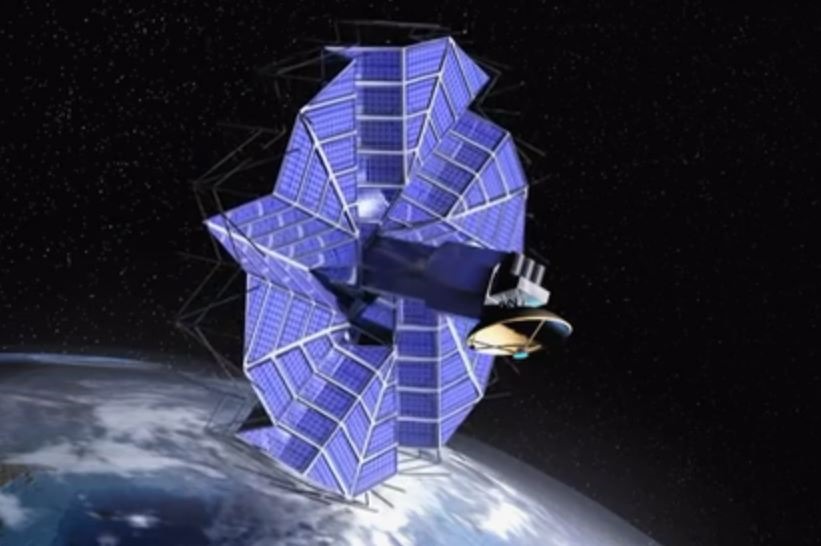


 Auxiliary Memory