Retiring

Back in November of 1977, I took a job with Memphis State University, as The University of Memphis was then called, and have worked there ever since.  If everything goes as planned, I shall retire next month, October of 2013.  The long middle portion of my life, my work years, will be over, and I’ll start on what I call the final third of life.  The first third is all about growing up and getting an education, the middle third about work, but I hope my retirement years will be more than just waiting to die.  I have big plans.  In fact, I’ve thought more about retirement than I ever did as a kid to pondering that childhood Koan, “What are you going to be when you grow up?”  For ten years now, I’ve asked myself, “What are you going to be when you retire?”

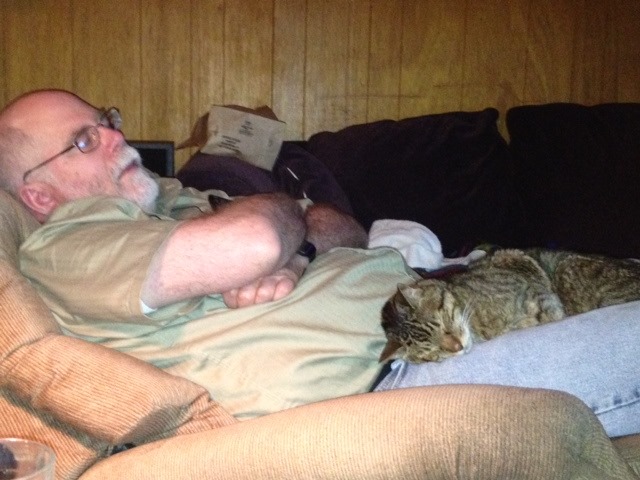
I hope it will be more than taking naps with my cat.
jim-and-nick

Strangely, reaction among my friends have been mixed to what I consider great news.  Many have pleaded I should keep working until age sixty-six.

Most of my work friends want me to stay.  I will miss them too, and hope to keep in contact.  I get the feeling they think once I’m gone, I’ll disappear.  I hope that’s not true.  A huge part of my social life has been work.  Some of these people seem to suggest that retiring is stepping down from life.  They are the ones that plan to work until their seventies or eighties.  Many have exclaimed, “Won’t you be bored to death?”

People at work who depend on me for help ask, “Who’s going to program my reports now?”  Luckily, I’m retiring just when IT decided to expand their sphere to all the computer related workers in the departments and colleges.  They have already assigned a programmer to come work with me for the next several weeks. 

My retired friends are the happiest to hear that I’m retiring.  They’ve already started their new life and are very happy.

I have great ambitions for retirement, but even if I never achieve any of them, I’m quite sure I’ll be happy just having more time to read, watch movies, television shows and documentaries and listen to a lot of music.  I read around fifty books a year, now, so I hope to expend it to 100.  I have a lifetime of book collecting on my shelves that are mostly unread.  I’ve collected enough unread volumes to last decades. 

I subscribe to a music service with over 20 million songs, and plan to roam up and down the history of music, studying classical, jazz, folk, world, etc.

I have countless art books, art DVDs, video art history courses that I want to study.

Now with free online courses given around the world, I want to study everything I never had time for but dream about. 

I’ve seen thousands of movies and documentaries, and I’ve still got thousand more I want to see.

Finally I have time – time, time, time!

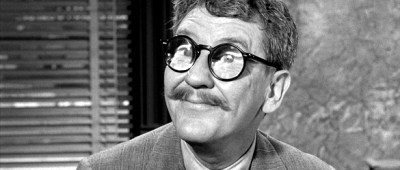
I hope I don’t break my glasses like Henry Beamis.
However, I want my retirement years to be more than just pursuing passive entertainment.  I’ve always wanted to write a novel, but whined I never had time.  Now it’s time to put up or shut up.  I have drafts of several novels I’ve written over the years that I’m anxious to finish.  I don’t plan to sleep in after I retire.  In fact, I plan to get up even earlier than I did for work, and devote my mornings to writing like it was a job.  After lunch it will be hobby time.

Because I was a programmer all my life, I’ve always dreamed of writing fun programs.  Apps for tablets and smartphones offers wonderful possibilities.  My friend Mike, also a programmer that will retire soon, and I, plan to work on some projects together, or at least concurrently. 

One of my major regrets of my first third years was not being disciplined enough to learn advanced mathematics.  I’m going to test the assertion, “You can’t teach an old dog new tricks” by studying math.  I plan to combine the desire to learn the Python programming language with study of math by programming all my homework problems into a graphical math system I develop myself.  I’d love to buy a 4k monitor and program a coordinate system to display beautiful geometric designs.  I’m currently reading Euclid’s Window, a book about the history of geometry and it’s impact on the sciences, and I’d like to understand this book at a deeper level than just racing over the narrative.

Scientific American used to run a column called “The Amateur Scientist” which described do-it-yourself experiments that could be done in a home workshop.  A few years back I bought a CD of the complete series, thinking they might be a wonderful retirement hobby activity.

There’s a guitar sitting in my room, that I’ve been meaning to learn to play for years.  I also wanted to learn to play chess and bridge.  Man, I’ve forgotten more things I want to do than I’ve written about here.

How can anyone ask if I will be bored?

To be honest with myself, I’m racing to do these things while I can, because my brain is winding down, my heart is wimpy, and physical wellbeing is declining.

JWH – 9/2/13
Retirement-Trading Money for Time

I’ll be 62 in November and I want to retire soon after that.  I don’t know if that’s prudent, because waiting until I’m 66 would get me a lot more money, but it’s what I want.  My friends Mike and Connell have always been industrious ants to my carefree grasshopper self.  Both have been tight with their money, never spending much, always saving and investing.  I didn’t start saving until late in life, but luckily I’ve been working for the state of Tennessee for over 35 years and have a pension coming.  Enough to live on if I spend wisely, something I’ve never done. 

Living like a grasshopper is possible before retirement, but after retirement its an ant’s life for sure.  I’ve got to learn to pinch pennies and that’s going to be a new lifestyle for me.  CouponBug here I come.  I expect those old adages like a penny saved is a penny earned, or waste not, want not, will become way more meaningful after my retirement.  

retirement

If I can’t change my spending habits this year, it’s probably a sign I shouldn’t retire.  Soon a fixed income will become a reality.  What they really should call it is a fractional income.  The fraction I must embrace is 6/10th.   Every month this year I need to prove my retirement worthiness by only spending 60% of what I normally spend.  Luckily, since Susan started working in Birmingham, I’ve been learning to cut expenses.  I think I’m close already, I just need to fine tune my penny pinching ways.

The trouble the 40% has to mainly come from causal fun expenditures, like eating out, cable TV,  buying tons of books and music, going to movies and plays, buying gadgets and computers, etc.  I could save hundreds a month if we sold the house and I got an apartment.  Susan works out of town and has her own apartment, but I live in house she grew up in that we bought after her parents died.  The cheapest way for me to live would be to sell the house and move to Birmingham, but I don’t want to do that because I have so many friends here.

When I look at my credit card statement it has lots of unnecessary charges.  Charges for stuff I can’t be buying after I retire.  If I was like Mike and Connell, I would have never developed such bad spending habits.  They’ve been telling me this for decades, I’ve just haven’t listened.  It’s amazing how much stuff we buy that we don’t need.  Or how much stuff we pay too much for, or how much stuff we just plain waste.  I buy $6 worth of grapes, but I let $3 worth go bad.

A word to the young, from a guy who didn’t listen.  Every dollar you spend now is a dollar you won’t have in the future.  Well, I never listened to that kind of talk either, but I guess every essay needs a message.

Essentially what I’m doing is trading money for time.  I’ve always wanted more time, here’s my chance.  Luckily I’ve never been one of those people who wanted to retire and travel the world and lead the good life.  I won’t have the money for that.  What I want is time to read and write,  I want to listen to music and write fun computer programs.  I want to systematically study the history of science and literature.  Maybe I’ll learn to play the guitar, but I always say that, and never do.

I’ve got 500 hardback books waiting to read, and 200 audio books queued up to be listened to.  I’ve got several novels, and hundreds of essays and short stories I want to write.

I want to spend a lot of time just snoozing and napping.  I actually want to read all those cool websites and blogs I’ve been bookmarking, and watch all those movies and documentaries in my Netflix queue.  Awhile back I bought the complete run of The Rolling Stone magazine on DVD.  I’d like to read all the record reviews and listen to those albums on Rdio.  Awhile back I bought a DVD of all the “Amateur Scientist” columns from Scientific American.  I’d love to go through them and do some of the experiments.  I want to program a time-line database.  I want to learnt to program in Python and write programs that teach me math.  I’d like to build my own super computer (by year 2000 standards) for modeling visual data.

I’m Henry Bemis and I finally have time enough at last.  I just hope my glasses don’t break.

Now this paradise of time is going to cost me.   Eating out for convenience won’t be practical.  Spending money to go out to a play or movie just to spend two hours with a friend will be wasteful.  Buying a new tablet or computer because it’s new and different will be an insane act.  I have four computers, an iPad, two Kindles and an iPod touch.  That’s a kind of CPU luxury will be silly in the future. 

I now buy 10 books for every one I read.  After I retire, I need to read 9 books for every one I buy.  I need to become a library patron again.

I’ve been living without cable for a couple years now.  For the price of Netflix and Hulu I have more great TV to watch than I can cram into a lifetime of 24×7 couch potato living. 

Many people I know have dropped their land lines and switched to a smart phone.  I’ve kept my land line and use a dumb cell phone that costs me about $8 a month.  My 12 year old truck just passed 71,000 miles, so I figure I can drive it another 20 years.  Susan began working out of town five years ago and I started cost cutting then, but now I’ve got to get deadly serious about not spending money if I want to live without working.

And in a way that’s such a weird concept, to live without working.  I’ve been working for four decades.  Will retirement be like my growing up years?  Or will I be growing down?

There’s more to preparing for retirement than just living cheap.  Work has always been a major social outlet, so I’ll need to psyche myself up for spending a lot more time alone.  Less money and fewer friends maybe, but hopefully do more with those fewer people, a lot more.  Most of my socializing costs money.  I need to invite people over.  I need to learn to cook for people and plan inexpensive activities at home.  Oh yeah, that means I need to learn how to cook and host parties.

My friend Peggy who recently retired says her problem is time management.  She says she never gets anything done because she always feels she has all the time in the world.  I hope that doesn’t happen to me.  Of course, I might be fooling myself.

That’s the thing about planning for retirement, you really don’t know what it will be like until after you retire.  Wouldn’t it be funny that I’ll finally get to give up the old 9-to-5 and then discover I was one of those guys who was happiest working until they died?  I don’t think I will be.  All the people I know that have retired have said retiring has been the best thing in their life and they are busier now than ever before.

JWH – 1/21/13

The Circle of Life–Coming Back to Where We Started

My sister Becky once remarked that we started off life living pretty much in one room, and then we spread into several rooms as we become toddlers, and then out of the house as we become kids, then off to school to find our group friends, and slowly we travel further and further from home, making more and more friends, but then as we get older, we travel less, and we start having fewer friends, and then we start staying in our house all the time, and finally we end up in one room again.

the-road-we-travel-400

If you live long enough you end up back in a crib with people changing your diapers.

My friend Peggy has started hanging out with other people in their sixties, at a dance club that’s a lot like a high school hangout.  Her friends have created a new subculture around old tunes and dances they learned in their teens. 

Many older people I know have begun reconnecting with childhood friends and schoolmates through Facebook.  We have an urge to return to friendship groups like we had in K-12.

Nostalgia means returning home.  I’ve reached an age when my peers look backwards.

I’ve also noticed something else about getting older – people want less from life.  Back in high school and college we all had such big ambitions about what we wanted to do when we grew up.  Now we want less and less.  We want to retire.  We often return to the hobbies we loved while growing up.

I’m reading books and watching television with the same passion I had in junior high.  And my passion for new music is much like I felt for music in the 1960s.  I listen to it alone in my room just like I did in 1965, and find the same immense pleasure  I once did.  Somehow I didn’t pass back through the phase of listening in groups of friends getting stoned.

I do feel somewhat different from other friends my own age – I like new music, and they dwell on the oldies, or stuff that sounds like it could have been on the charts in 1961-1969.  I know this will sound sacrilegious, but listening to The Killers at the moment is more meaningful than replaying The Buffalo Springfield.  I don’t think none of us are the same, or can become who we were, but so many of us are swimming towards the past like lemmings.

My older friends divide into two distinct groups:  those with children and those without.  The ones with children and grand children follow a different circle of life than those childless.  When I talk to friends with children, our conversations often remind me of talking to my parents and grandparents.  Talking to my friends without kids, often feels like we’re still back in tenth grade.

My wife Susan, and some of my other lady friends have gotten into watching TV shows from the 1950s and 1960s again.  I think we all are drawn to different aspects of the past we loved so dearly.  Or does watching old shows just recreate old feelings?

In my book clubs, we often talk about our favorite books, movies and TV shows from childhood.  All of us Baby boomers have commonality even though we’re all extremely different.  We will relive the 1960s one day at a time, each a 50th anniversary.

And getting old means becoming weak again like a child.  I can no longer lift and do things I once did.  Eventually we’ll get too old to drive, and finally we’ll get too old to even take care of ourselves.  Dementia and Alzheimer’s is like evolving mentally backwards.

Even sex seems to diminish, like we’re returning to a kind of re-virginal state.

It’s also hard to befriend people in a different part of the circle of life.  When we’re kids we play with other kids, when we’re teens, we hang out in gangs of teenagers, when we move away from home, we hang out with other single people, when we get married we hang out with other married people, when we have kids, we hang out with other people with kids.

I’m not old yet, but I already feel the urge to fly south to live in a 55 Plus community.

Should I fight this urge?  Or should I just go with the flow?  Do I have a choice?

If you’re around my age, 60, are you feeling this too?

JWH – 10/8/12

Are We Living Through an Economic Paradigm Shift?


Because of the economic crisis of the last two years, people and businesses are cutting back on their spending.  Our economy is based on consumer spending and I’m now talking to a lot of people who have sworn off spending like the used to when they lived heavily in debt.  On the news there are reports of companies sitting on large cash reserves.  Some economists had hoped the economy would have already turned around but consumer spending and jobs don’t reflect that.  In Detroit, the Big Three automakers are out of the red ink and into the black  by being leaner and meaner.  They are making more money selling fewer cars.

The economic booms of the past twenty-five years all coincided with an overheated economy of people spending beyond their means and investors going crazy over unwise investments.  Could we be moving into an era of caution?  In previous busts we turned the economy around fast by going back to spending freely, but we don’t seem to be doing that this time.

I notice a lot of things that might point to different trends.  Something like 80 million baby boomers are approaching retirement and they are finally realizing it’s time to save and not spend.  I know that’s how I feel.  But also, after a big economic crisis people fear insecurity and want to hang onto their dollars.  Remember how the Depression era people lived for the rest of their lives?  That generation was shocked by the easy spending of the Baby Boom generation.

The younger generations out there now live a lot more frugally than the Baby Boomers.  They often live with their parents longer, and they learn to adapt to lower paying jobs.  And they are heavily into credit card and school loan debt, so they don’t have the resources to spend freely.

The rising cost of living have made the retired generations living on fixed incomes already cautious about spending, and now that they lost a lot of their retirement capital they have to make every dollar go twice as far.

But there are other clues lying around too.  When the economic crisis hit, television, newspapers and magazines were flooded with advice on how to live with less and I think a lot of people took up this advice and now like living with less.  The most popular story at the New York Times at the moment is “But Will It Make You Happy?” about people who have downsized their life to find more happiness.  Psychologists are telling people owning things won’t make you happy, it’s what you do that does.  If this modern Thoreau like philosophy catches on it will put a huge dent into the economy.

Logic tells us if everyone lived by the best popular advice, saving money, spending wisely, eating well, this would be a tremendous shock to the economy.  To have 5% unemployment our economy has to run hot with overspending.

And look what the Internet has done to the economy.  Before the Internet there were many music stores in every city selling CDs, now they are practically gone.  People use to spend hundreds of dollars each month on their cable bills and now people are happy with Netflix.  People use to spend big bucks on software and now they want free open source programs.  Amazon is putting local bookstores out of business by underselling them, and now with Kindle, they are putting an even bigger hurt on them.  I pay Rhapsody $9.99 a month to listen to all the music I want, where I used to spend $100-200 a month on CDs.

My wife and I have always bought new cars, but we’re thinking about buying used next time because the cost of an average new car has gotten so high.

We try to spend when we can because we know it helps the economy, but we want to spend wisely, like house renovations, and we also try to buy new products that are energy saving.  The whole ecological movement is also making people spend less.

In the news pundits talk about a “New Normal” for the economy because things are not turning around quickly like economists expected.  It’s pretty obvious if we want the “Old Normal” we need to act like we did then and we’re not.  Maybe young people will, but I’m getting too close to retirement to spend without caution.  My new normal is to hang onto every buck I can, and when I spend a buck make it count.

The only solution for the government to counter this new normal is to spend like crazy to put people to work.  The New York Times is also running a story, “Defying Others, Germany Finds Economic Success.”  Germany took a different route out of the economic crisis and it appears to have paid off.  Beside spending wisely, they think they found a solution for unemployment.

Government officials here are confident they found the right approach, including a better solution to unemployment. They extended the “Kurzarbeit” or “short work” program to encourage companies to furlough workers or give them fewer hours instead of firing them, making up lost wages out of a fund filled in good times through payroll deductions and company contributions.

In my naive way, I’ve always wondered in bad economic times that instead of laying off ten percent of the population, why not just cut everyone’s pay by ten percent.  Then in boom times, pay people more.  It sounds like Germany is trying something like that and its working.

I’m not an economist, nor do I like watching all the talking heads on TV talk about the economy.  But like Bob Dylan said, you don’t need a weatherman to know which way the wind blows.  If we’re living in a new economic paradigm, then we might need to be patient.  Blaming the Democrats or the Republicans is pointless.  We need to break the old political and economic cycles.  The federal government should spend money on improving America.  That will create value worthy jobs. 

The improvements should be ones that the majority want.  What kind of infrastructure do we want?  We should reevaluate war spending.  Is there a cheaper way to fight terrorism?  Does illegal immigration help or hurt the economy?  I have no idea.  Does universal health care help or hurt the economy?  If we did away with Social Security and Medicare, millions would be put out of work, and most families would have to spend their savings taking care of their aging parents.  I think it’s pretty obvious that killing off these entitlement programs would devastate the economy and make everyone poorer.

We need to rethink common assumptions.  Is big government bad?   Would paying less taxes stimulate the economy?  I’m not so sure.  The federal government produces a lot of jobs, and those people who hold them spend a lot of money that create more jobs.  We know it’s impractical for everyone to work for the government.  We just need to know which jobs are best created from tax dollars and which jobs are best created from business dollars.

K-12 teachers, police, fire fighters and soldiers have traditionally come from tax dollars.  And it’s pretty obvious we have a lot more health care workers if they come from the tax dollar too.  Although it might be interesting to take a state, maybe Texas or Alaska, since they are so conservative, and do away with all civil servants and see what happens.  Would life be better if every road you drove was a toll road, and if you wanted teachers for your kids, you hired them yourself, and if you wanted protection from criminals you carried your own gun?

I’m just thinking out loud.  I’m predicting the economic recovery will take much longer than expected because new kinds of jobs need to be created.  I don’t think Republicans will bring about instant change in the new elections.  I’m guessing the economy will stay painful for a long time and that pain will shape a new economy.  Global warming started decades ago and it’s already shaping a new economy.  Over population started long ago too and the current illegal immigration patterns almost follow the laws of physics.  The same physical laws will explain the never ending melting pot of ethnic diversity.

The world’s population has doubled in my lifetime.  That’s bound to make a paradigm shift.  Too many conservatives want things the way they were when the population was half of what it is now.  That’s not possible.   We need to prepare for an economy with several billion more people, in an era of growing scarcity, and whacked out weather.  There’s no going backwards.  If we returned to the overheated economics of before we’ll never solve the global warming problem.  As it is, we’re like a bottle full of ants and mother nature is starting to shake that bottle vigorously.  It’s time to do everything we can to slow down and live cautiously.

JWH – 8/15/10

What I Want To Be When I Get Old

I’ve picked twelve areas of knowledge to pursue in the last third of life.  It’s a conscious effort to organize my thoughts and actions.  Twelve specialties sounds like too many, but I’ve selected them like building blocks to work together as a whole.  Essentially what I have done is analyze what I’ve been doing for years unconsciously and state them here publicly to make them clear to me.  The pains of aging remind me of my limited time left on Earth and inspire me to change.  What I’m really doing is deciding what I want to be when I get old.  

Areas of knowledge might sound too lofty.  I could say I have twelve self-improvement topics I want to study, or even call them twelve goals for going the distance.  We do not have the language to express ideas of self-programming.  I’ve always loved John Lily’s book title Programming and Metaprogramming in the Human Biocomputer, but sadly the book is about a great scientist going off the deep end with hallucinatory drugs and sensory deprivation.  But I digress.  Self-improvement is a vast topic for the publishing industry but has a poor connotation, but that phrase might come closest to my task.

I am a fat, lazy, late middle-aged man who has tumbled through life like big rolling weed acquiring random knowledge and wisdom through undisciplined osmosis.  Since I’m a programmer and work with computers, I think with cyber concepts, so picture an old PC that’s been running Windows XP for years.  This dusty old machine takes forever to boot up, and runs  slower and slower each day.  It’s time for a tune-up!  I want to delete all the clutter and crapware, cleanse the registry, run malware utilities, uninstall all the programs I don’t use, and decide on which programs are the most productive to keep.  I’m realistic.  I don’t expect to suddenly become a new Intel i7 machine running Windows 7, but I can make the old hardware run much more efficiently.

When we are young we have great ambitions about growing up.  We want to be somebody special and find the perfect mate.  During our middle years we expand our ambitions, seeking security, wealth and success.  But for the last third of life our goal is retirement, where we reduce our workloads and seek simple pleasures.  I say bullshit to that.  Maybe it’s because I didn’t find the success I wanted in youth and middle age that I hold out hope for an ambitious last third of life.

I’m not worried about the outward appearance of aging, the wrinkles, baldness, age spots or hobbled gait, what I’ve discovered that’s hard to see as a young person, is getting old is a state of mind that deals with wearing out mentally.  Avoiding pain, illness and injury becomes a relentless occupation.  My daily pains are minor compared to what I’ve seen in others, but the decline in health I’ve experience so far is wonderfully educational.  So for my first study goal is pretty obvious, and probably universal.

1. Maximize Health

I don’t need to become an authority or expert on this subject, but I do require major studying and practice.  Hell, I know the basics, eat right and exercise. Where I need to specialize is in the discipline of of mind over matter, or more precisely, mind over body.  I could greatly improve both the quality and quantity of my sunset years if I could lose weight.  I’ve been slowly gaining weight since my late twenties, and the only time I was actually able to lose poundage was due to illness, not a practical long term solution.  Of course, the secret to weight loss is knowledge many have sought and few have found.  I need to study books about the mind, and maybe even woo-woo subjects like yoga, meditation and will power.  This is one subject I wished I had mastered in childhood and practiced lifelong.

2. Enlightened Citizenship

I wanted to become an expert in green living, but I’ve decided that focus is too narrow.  I am deeply disturbed by partisan politics and our lack of will to make tough decisions about all our problems.  I believe in social democracy; we vote daily on countless issues with our every decision.  I am reading The Great Transformation by Karen Armstrong and I’m reminded of her description of how the ancient Chinese practiced their religion.  Instead of being concerned with invisible gods and abstract concepts of the sacred, these people sought perfection by improving the simple acts of everyday life.  In other words, how you clean your house is more spiritual than religious rituals you embrace. 

3. XHTML/CSS/PHP/JavaScript/JQuery/CodeIgniter

After thirteen years of programming in classic ASP  I need to learn a whole new suite of programming languages and tools.  This is putting me way out of my comfort zone, but it’s my chance to prove that an old dog can learn new tricks.

4. Internet Living

I’ve been living on the net since the mid-80s with BBSes, Genie, CompuServe and Prodigy.  I’ve embraced digital life.  I’m fascinated by it’s potential.  I don’t think we’ve seen anything yet, so I want to explore all the emerging possibilities and even write about what will happen in the future.

5.  Clear Writing

I want to be a much better writer.  I love blogging, but I want to go beyond dumping out my thoughts.  I’m a wordy bastard that can’t structure an essay, much less a book.  I need to remove the clutter from my sentences and learn to assemble  paragraphs into larger structures that build coherent ideas.  I’m best at 500-1,000 words, but I want to write larger essays and even a book.

6.  Techniques of Fiction

I’ve been trying to write fiction since a high school creative writing class.  Like my failure at dieting, I can’t break through the writing discipline barrier either.  I’ve taken many writing courses and workshops.  At best, I can crank out words, but except for one time in endless tries, I can’t reach the critical mass of fictional fusion.   I need to master the language of fiction in the same way I write a computer program, so the story works without major bugs.

7.  Robot Novel

I’m struggling to write the great American robot novel.  After space travel, time travel, and alien encounters, robots are about the most over-written topic in science fiction.  Yet, I believe I have a fresh idea if I can crank out 100,000 readable words of fiction.  Notice how specializations 5-10 relate?  I’m not going off in twelve different directions, but hope I’m pursuing twelve skills I can integrated into a synergy of effort.

8.  Evolution of Mind

To say anything fictional about robots will require understanding artificial intelligence, and AI has always depended on studies of the mind.  I find my library is full of books on robots, AI, mind and evolution.  I bought all those books because they were individually interesting, but now I’m going to read them as fuel for my novel.  If we are the pinnacle of intelligent life on Earth now, what will occupy that position in a million years?  Or a billion?

9.  Sense of Wonder

I’ve been a reader and scholar of science fiction my whole life.  People who adore science fiction claim its because it generates sense of wonder.  Sense of wonder has been around far longer than science fiction so it can’t claim exclusive rights, but I do believe that science provides a special kind of sense of wonder.  For too long now science fiction has been living off past glories.  It’s time to find new concepts that push our sense of wonder button.

10.  Cosmological Perspective

Our perceived position in the universe has always been very philosophical.  It is very hard to grasp our location in relationship to the rest of reality.  Even the shape of the universe is impossible to fathom.  If we are God’s supreme creation, why are we so small?  And can any religion or philosophy be valid that doesn’t fully incorporate our knowledge of cosmology?

11.  Learning in Old Age

What are the limits of acquiring new knowledge in an old brain?  Could I learn something in my last third years that I wasn’t able to learn in my first third years?  Could I go back and finish Calculus II, or learn to play the guitar?  There is a discipline barrier that I’ve never been able to crash through.  I find my wisdom grows as my body declines, but will I ever be wise enough to overcome the limitations of my body?

12.  Our Existential Relationship with Fiction

We can’t understand reality so we make up stories.  It is impossible to predict the future yet we constantly create fiction to envision what will come.  And I don’t mean science fiction.  These twelve areas of knowledge I am pursing are a fiction.  The odds are I’ll just get older, fatter, suffer more, watch even more television while waiting to die.  I invent fictions about how I will change myself and fight the inevitable.   But that’s my point about programming and metaprogramming in the human biocomputer.  Is life no more than meta-fiction?

* * *

These twelve topics of specialization are ambitious, but I don’t think impossible to achieve.  It will make me a Renaissance (old) man.  And success can be measured across a range of achievement levels.  No one gets out of here alive, so death can’t be considered a failure of life.  I am reminded of the many books I’ve read about Eastern religions where the last third of life is set aside for spiritual pursuits.  At the end of the rat race, wisdom is the only possession worth pursuing.  But I grew up with a Western world mindset.  Reality is a savage land meant to be conquered, not accepted like our friends, the Eastern gurus teach.

Christians love the concept of the eternal soul.  As an atheist I’m not sure souls exist, at least not in the past.  That doesn’t mean we don’t want to fashion our own souls.  That doesn’t mean we aren’t evolving towards creating souls.  Through discipline we program our identities.  Through metaprogramming we program our programming.

JWH – 2/27/10