Are You An Old Man Listening to Music By Yourself?

by James Wallace Harris, 4/10/23

None of my fellow Baby Boomers want to sit and listen to music with me anymore. What happened to y’all? When did you guys stop listening to music? I’ve read articles about how most people stopped listening to new music sometimes in their thirties — but when did you stop listening to the old music you love too? And by listening, I mean sitting down and listening with the same devoted attention you give a movie at the theater?

Sure, y’all will put Pandora on in the background sometimes. Or randomly listen to a playlist of the 37 tunes you bought on iTunes for your iPhone. And you might still get a kick out of seeing geezers from the past perform live. But when was the last time you bought a new album and just sat and listened to it? And when was the last time you sat and listened to an album with a friend?

Rock music defined the 1960s and 1970s pop culture. Most of y’all gave up on music after that. I was still crazy about music in the 1980s and 1990s. But I have to admit, it’s been harder to feed by habit in the 21st century. I mostly rely on old music now. (There are exceptions like Adele and Kings of Leon.)

My feelings are hurt that my wife and none of my friends no longer want to share music with me. The only people I know who still listen to music like me are guys I read about online or watch on YouTube.

The other day I was watching a YouTuber film at a trade show for audiophile equipment and I noticed something very interesting. The halls of this convention center were filled only with men, mostly middle-aged or older men. I watched carefully trying to spot a female in the crowd as the YouTuber visited one booth or dealer room after another. Didn’t see one female. But lots of grey beards and bald spots.

My wife and her friends still love going to concerts. Just the weekend before last, they went to see Journey and Toto at the FedEx Forum. She and her friends will spend big bucks to see ancient rock dinosaurs roam the Earth again. They’ll even travel hundreds of miles to see their favorite blasts from the past. But she doesn’t listen to the old albums from these same groups. Before she went to see Chicago I asked her if she’d like to listen to some Chicago albums with me. She just said, no.

I don’t like live concerts anymore. I saw Chicago when they were touring with their first album. I bought that first album the week it came out because it was a mysterious double LP with a Priced Right sticker that just intrigued me. It blew my leather sandals off.

Back then I haunted record stories, going to several each week. By the time I started college, I had 300 LPs in my collection.

When I blog about music I get a damn few hits. When I try to talk about music I’m excited about, I can tell I’m boring my friends. I know there are people who still love listening to music because of all the audiophile YouTubers. I’m especially amazed at younger guys who love and know so much about music from the 1960s and 1970s. Wait, I just remembered, there is one female record collector who produces videos for YouTube (Melinda Murphy). What a lucky guy her husband must be — assuming he enjoys sitting around listening to records with her.

I’m learning that as we get older we retreat into ourselves. Is that because we all have uniquely favorite things we like to do which seldom overlap with our friends? I consider myself damn lucky to have two friends who read science fiction.

My wife and friends love spending time with things I don’t enjoy anymore. I wonder if Susan’s feelings are hurt that I don’t watch sitcoms with her anymore. When we first got married we watched several each night together. I’ve lost my taste for them. So while she’s watching M.A.S.H., The Andy Griffiths Show, or Friends by herself in the living room, I’m listening to Buffalo Springfield or The Byrds by myself in the den.

So, are you an old guy who sits by himself listening to music?

(I’ve spent a fair bit of time dredging through old memories and I realize that I only knew a handful of people who would sit around a listen to music with me. I guess I’m wanting something that never happened much anymore. Mostly I listened to music with friends before I got married, and it usually involved getting high. Early in our married life, Susan would go record shopping with me, and even listen to what I bought afterward. I remember when I married Susan, she had a box of about 40 LPs, many of which I liked, and that impressed me. She even bought a few albums over the years and listened to them sometimes, sometimes by herself. We went to a lot of concerts together. But she slowly stopped buying CDs – except for The Foo Fighters. Now she listens to Spotify, but only rarely.)

JWH

[picture above was generated by Midjourney. The AI has a weird idea about stereo systems.]
Just Saying No To Vinyl – Going Back To CDs

by James Wallace Harris, 3/28/23

The big news in the music world is vinyl is outselling compact discs in sales. That’s because it’s for total sales and not total units. That’s not hard to believe when LPs go for $20-50 for regular releases, and much more for special editions. Yet, CDs seem cheaper than they’ve ever been. I’m going back to buying CDs. Fooey on the $50 LP.

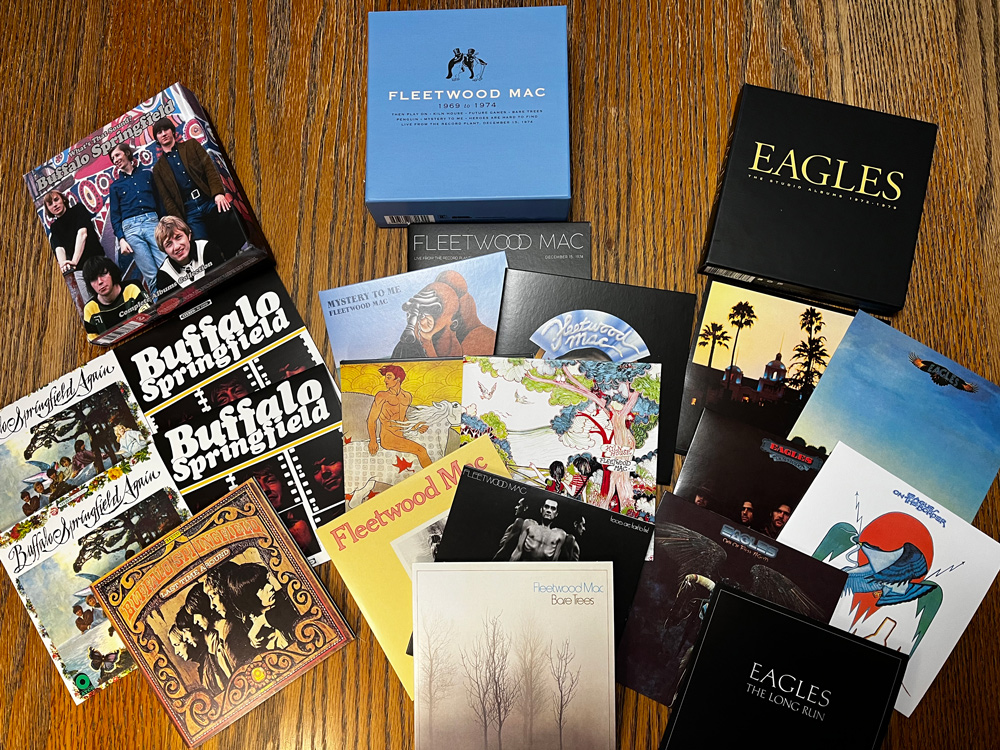
I just bought Fleetwood Mac- 1969 to 1974 on 8 CDs for $36.99. And Eagles, The Studio Albums 1972 – 1979 on 6 CDs for $27.88, and What’s That Sound? Complete Albums from Buffalo Springfield on 5 CDs for $26.39. The sound quality is impressive but the packaging is very cheap. Just cardboard sleeves for the CDs in a cheap cardboard box, no booklets or documentation.

I actually like these CDs in slim cardboard sleeves. I’m going to try and find a set of file drawers that will just fit them. Or maybe some miniature crates like how we use to store LPs. CDs in plastic cases take up a lot of room.

The Fleetwood Mac set seems to be all recent re-masters but I can’t be sure. Then Play On, one of the Fleetwood Mac albums has the same 18-cuts with bonus tracks as the remastered CD that Amazon sells as a single CD for $14.27. The Fleetwood Mac set has a sticker that says “Six studio albums re-mastered on CD for the first time. Plus a previously unreleased live performance from 1974, 20 bonus tracks, and 8 previously unreleased tracks.” That’s interesting because the box contains 7 studio albums and a live album CD. I ain’t complaining.

The Buffalo Springfield set has a sticker saying it was “Re-Mastered from the original analog tapes under the auspices of Neil Young.” Buffalo Springfield never sounded so good to me. Their original LPs and CDs always seemed thin sounding. The new set has Buffalo Springfield’s three original albums, with the first and second in both mono and stereo.

The Eagles set has six studio albums on CD, with no extra information, no extra cuts, and no claim to be re-mastered. But the CDs sound good.

For years I’ve been trying to get back into vinyl. I sometimes buy old LPs at the library bookstore for 50 cents each, and I bought a handful of new LPs when they were on sale. But I won’t buy them new anymore – they’re just too damn expensive, and still going up in price. And every time I hear a skip on an LP I want to give up vinyl completely – give away my records and turntable. No vinyl revival for me.

I like to play one or two whole albums each day. Sometimes in the afternoon when I’m tired, and sometimes after dinner when I’m tired and not ready for television. I’ve gotten so I enjoy hearing a whole album – and played loud. Susan is nice enough to indulge me for a couple of hours.

And I feel bad about always streaming music because I’ve read artists don’t get paid much through that system. I’m willing to buy new albums, especially if they are priced around $5-10. And I love these new bargain sets. Amazon has a bunch of them and I’m going to buy more. They are usually marketed under “Original Album Series” or “The Studio Albums” keywords.

I think the only Fleetwood Mac album I bought when it came out before they went big with Stevie Nicks and Lindsey Buckingham was Bare Trees. Over the years I’ve picked up a few albums with Peter Green and Bob Welch. I bought the 1975-1987 albums as they came out. It’s great to jump back and hear all the earlier albums. There is even a cheap box set of the earliest Fleetwood Mac albums that I’m going to buy.

These cheap box sets are a great way to really get into a group, and time travel to the past. There are quite a few artists and groups I didn’t listen to when they came out that I’m willing to try now because they now have an enduring reputation. I especially want to try a lot of jazz groups. I’ve already ordered a set of Weather Report albums on CD.

I have hundreds of CDs I’ve bought over the last forty years, but some weren’t mastered that well originally. I’m willing to buy CDs if they are priced low and especially if they’ve been re-mastered. I’d love to buy a cheap box set of Joe Walsh solo albums and James Gang albums. The old CDs I have sound thin and poorly mixed. I don’t see anything remastered for them currently.

So, it’s back to CDs for me. Just saying no to the vinyl revival. I know LPs are cool, and wonderful to look at and hold, but CDs sound better and are more convenient to use.

My plan is to explore a lot of music, especially albums that came out from 1960 to 1980. I’d like to buy all my favorite albums on CD and keep them in order by when they were originally released. I only want to buy albums I’ll listen to whole – from the first to the last track. I’m not interested in buying the greatest hits albums or compilations. I have Spotify for those songs.

Year Album Artist
12/05/1966 Buffalo Springfield Buffalo Springfield
10/30/1967 Buffalo Springfield Again Buffalo Springfield
06/30/1968 Last Time Around Buffalo Springfield
09/19/1969 Then Play On Fleetwood Mac
09/18/1970 Kiln House Fleetwood Mac
09/03/1971 Future Games Fleetwood Mac
03/00/1972 Bare Trees Fleetwood Mac
06/01/1972 Eagles Eagles
03/01/1973 Penguin Fleetwood Mac
04/17/1973 Desperado Eagles
10/15/1973 Mystery to Me Fleetwood Mac
03/22/1974 On the Border Eagles
09/13/1974 Heroes Are Hard To Find Fleetwood Mac
06/10/1974 One of These Nights Eagles
12/08/1976 Hotel California Eagles
09/24/1979 The Long Run Eagles

JWH

Why Do I Want Old Issues of Rolling Stone Magazine From the 1960s and 1970s?

by James Wallace Harris, 3/26/23

The other day I got the hankering to read old issues of Rolling Stone from the 1960s and 1970s and started trying to track them down. This morning I decided I needed to psychologically evaluate why I was doing this because I realized as I was still lying in bed that I don’t have enough time in life to read everything I want to read. So why waste reading time on these old magazines? That got me thinking about a Reading Bucket List and focusing on reading the most important books rather than just trying to read everything.

I might have ten more years, or it could be twenty or thirty, but the time to get things read is dwindling. For practical purposes, I’m going to assume I have ten years which will put me in the average lifespan range. Since I average reading one book a week, that’s 520 books. My best guestimate suggests I already own six times that many in my TBR pile. Or, put another way, I’ve already bought enough books to keep me reading for another sixty years. I need to stop chasing after more things to read like hundreds of old issues of magazines.

So why want to read a bunch of old magazines? Since I started contemplating the idea of a Reading Bucket List, I realized it’s not the number of books. This was my first useful revelation today. It’s the number of topics I want to study, including fictional explorations on those topics too.

Lately, I’ve been reading about the creation of the atomic bomb, the bombing of Hiroshima and Nagasaki in 1945, atomic bomb tests in the atmosphere, how the general public felt about nuclear war in the 1950s, and 1960s, and how all of that influenced science fiction novels and short stories. If I explored that subject completely I could use up my 520 books easily. Because I want to explore a number of topics before I die, I also need to limit how deep to get into them.

I see now that my Reading Bucket List won’t be a list of books, but a list of topics to study. So I need to change my bucket list name from Reading Bucket List to Topics to Study Bucket List. My fascination with topics usually doesn’t last long, just a few weeks or a couple of months. However, most of the topics I’m interested in are reoccurring. I’ve chased them my whole life and keep coming back to explore them some more.

(It might be valuable to make a list of these topics, but that’s for the future. Another project: see if I can create a timeline of how often these interests resurface.)

Let’s get back to the magazines. I believe writing the above paragraphs have already helped me see something important. I want to reread old issues of Rolling Stone with a specific goal. (One reason I write these blog posts is to think things through and see into myself.)

I want Rolling Stone magazines to find albums and groups I missed when I read Rolling Stone the first time they were coming out. This is part of a larger project of studying I’ve been piddling away at for decades. I started haunting record stores in 1965, but I never could afford to buy many albums each week. As I got older and had more money I’ve always tried to catch up by buying older records when I bought new ones, filling in the past. Now with Spotify, I can listen to almost any album from the past. But I need to know about the group or album to search for it and play it. I thought I’d read old record reviews and look for albums that are forgotten today but got good reviews back then.

My ultimate goal is to get a solid understanding of popular music from 1960 to 1980. Eventually, I want to add 1948-1959 and 1981-1999. And if I have time I’d like to learn about classical music. But I’ll define this topic as: What Were the Best Albums When I Grew Up? I figured Rolling Stone magazine from 11/9/67 to 12/31/80 could help me.

There are plenty of books on the best albums of all time, including from Rolling Stone, and I have many of them. But they tend to focus on the same famous albums and artists. I love when I find a song that’s been forgotten that really excites me. For example, recently I found “Harlem Shuffle” by Bob & Earl from back in 1963. I was listening to AM music at least eight hours a day back in 1963, but I don’t think I remember this song, at least not distinctly remember it. The title is familiar, and some of the lyrics, but then this song has been covered a number of times, including by The Rolling Stones.

Yesterday, I played “Harlem Shuffle” several times very loud on my big stereo with a 12″ subwoofer and it sounded fantastic. Boy did it press some great buttons in my soul. And that’s also part of my Topics to Study Bucket List. I grew up with certain buttons I liked pushed. I want to understand them. Studying music from 1960-1980 is working toward that. Studying science fiction that came out from 1939-1980 is another. But like I said before, making a list of all of them is for another day.

And wanting old issues of Rolling Stone is not a new desire. Back in 1973-74, I bought three huge boxes of old issues of Rolling Stone at a flea market. God, I wish I had them now, but I wouldn’t have wanted to drag them around for fifty years either. And earlier this century I bought Rolling Stone Cover to Cover, which featured every issue from 1967 to May 2007 on DVD. I still have it, but the discs have copy protection and the reader software stopped working after Windows 7. I’m thinking about setting up a machine, or virtual machine, and installing Windows XP on it to see if I can get it going again. But that will be a lot of work.

With some help from some folks on the internet, I’ve gotten the first 24 issues of RS on .pdf. I’m hoping to find more. If you have them and wish to share them, let me know. Or if you know of any other source. I’m also interested in learning about other magazines that reviewed music from 1960-1980. And I’ve already gotten some recommendations of less than famous bands to try. If you have a favorite forgotten album or group leave a comment. And now that I think about it, if you’re working on a similar project, tell me about your methods.

Ultimately, I want a list of all the albums I love most from 1960-1980. I might even buy them if I don’t own them already. I enjoy listening to one or two albums a day. Recent great discoveries were the first albums by Loretta Lynn and Etta James. I was surprised by how well they were produced, and how well everything sounds on my latest stereo system.

This week I discovered Amazon is selling CD sets that feature 3-8 original albums from certain groups for about the price of a single LP. Yesterday, I got in a set of Buffalo Springfield that was remastered under the supervision of Neil Young. 5 CDs for their three albums. (2 CDs are copies in mono.) I also ordered the first 6 studio albums of the Eagles, 7 albums from Fleetwood Mac’s middle period, and five albums of Weather Report. But these are famous albums. The real goal is to find forgotten albums I love as much as the classics of rock music.

JWH

Audiophile Music: What I Can Hear and What I Can’t

by James Wallace Harris, 10/18/22

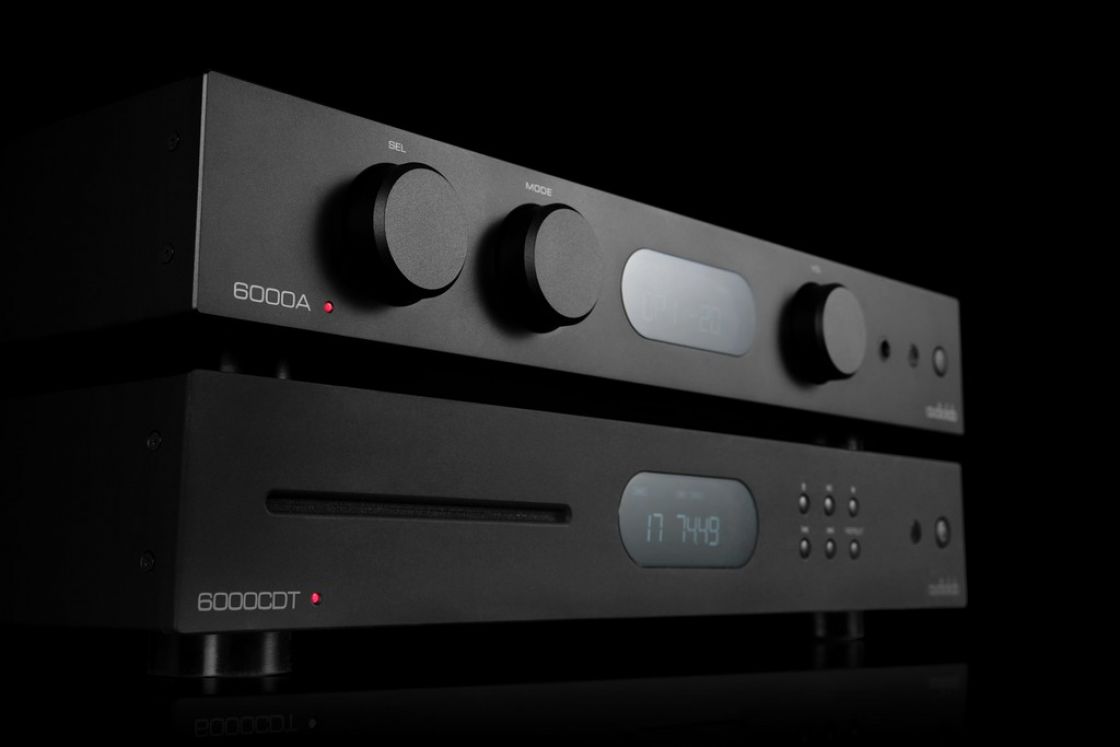
For the past couple of years, I’ve been following several YouTubers that review audiophile equipment. Audiophiles are a subculture of music fans who are fanatical about playback equipment: amplifiers, speakers, DACs, CD players and transports, turntables, headphones, streamers, etc. Most music lovers just get a system from Bose, Sony, Apple, Sonos, Yamaha, Devon, etc., and are happy enough.

Audiophiles are obsessed with every aspect of sound reproduction and are on a never-ending quest to find better equipment. Low-level would-be audiophiles like me spend four figures on a setup, while the hardcore aficionados spend five figures, and the rich dudes and they are always dudes, spend six figures on their equipment. The $64,000 question: Can they hear what they claim?

I love listening to music. One of my big regrets at this time in life is I don’t have any friends who want to come over and listen to music with me anymore. For most people, music is something they put on in the background. When I listen to music, I give it all my attention like watching a movie or reading a book.

When I was young, I and my friends would sit around and listen to albums. Back then I had friends who were like me and spend much of their income on buying records. But those were the years before I got married. And even in my early married life, Susan would go record shopping with me, and we’d listen to albums together. We also went to a lot of concerts. But at some point, Susan, and most of my friends lost interest in buying new records. Susan still loves going to concerts but if I ask her if she wants to listen to some albums from the bands she’s going to go hear with her friends she always says no. She only likes live music. And I gave up on live music years ago.

I consider albums are works of art that should be studied and admired. Audiophiles like to think they can buy equipment that will allow them to hear the music at a deeper level and I bought into that belief.

Listening involves two main factors. One is the limiting factor of our ears. What frequencies can they handle? As we get older, this degrades. The other factor is how much can we discern in what we hear. And that can be a lot. Have you ever considered how many details an artist who paints realistic scenes can see? Looking over my monitor out a picture window, I see mostly trees, but if I examine them closely, there is an infinity of details to be discerned. The same is true of listening to music.

Audiophiles make astounding claims, some of which are questionable. Back in the 1970s, I had a friend, Williamson who love the music of Duane Allman. He claimed when he listened to At Filmore East, a live album, he could hear when Duane adjusted the knobs on his guitar or amplifiers or changed a setting with a foot peddle. Is that even possible? Was Williamson just bragging, or lying? Or is such close study and listening possible?

Audiophiles often talk about listening to the decay of individual notes created by different instruments. They have a whole lexicon used for describing sound qualities. Many audiophiles claim they can tell the difference between records mastered with all analog sources and those that have digital recordings somewhere in the reproduction path. (Those people were recently embarrassed when they learned a company that claimed to sell expensive editions from all analog sources had been lying to them.)

After spending over a year researching reviews I bought a new stereo system that cost twice as much as my previous system. I knew I wouldn’t hear twice as much, but I hoped for a noticeable increase in sound quality. All the reviewers claimed the components I bought were superior to the ones I had. My new system sounds great, but so does my old one. They each sound different. But I don’t know if I can say one is better than the other.

Maybe these systems have gone beyond the level of my hearing ability and my ability to make finer discernments. I’m already losing interest in watching my audiophile reviewers, and they were my favorite thing to watch on TV for the past year. Many of those reviewers claim buying an $800 DAC would let me jump to the next level, but I wonder. And by the way, there’s a level of DACs beyond that in the $3,000-5,000 range they rave about, and more after that which run $10,000 and up. And those audiophiles swear they can hear so much more!

Can they? Could I?

I’ve already shifted my YouTube watching away from equipment reviews to album reviews. The LP came out in the late 1940s as record manufacturers shifted away from producing 78s. I’ve heard only a tiny fraction of albums that were produced since then. There are thousands of great albums to be discovered, so that’s what I’m working on now.

I’m beginning to realize how I’m different from most people. I spend most of my time focused on works of art: books, music, movies, TV shows, paintings, computers, etc. Most people like doing real things, eating, going out, socializing, exercising, being in nature, and interacting in the real world. I like the artificial world of art and abstraction. I guess that’s because I’m an introvert.

So every day I listen to a couple albums from over the last seventy years. I sit by myself and listen with all the discernment I can muster. I listen to people in the past express their creativity. I’m never sure if I hear everything they intended.

JWH

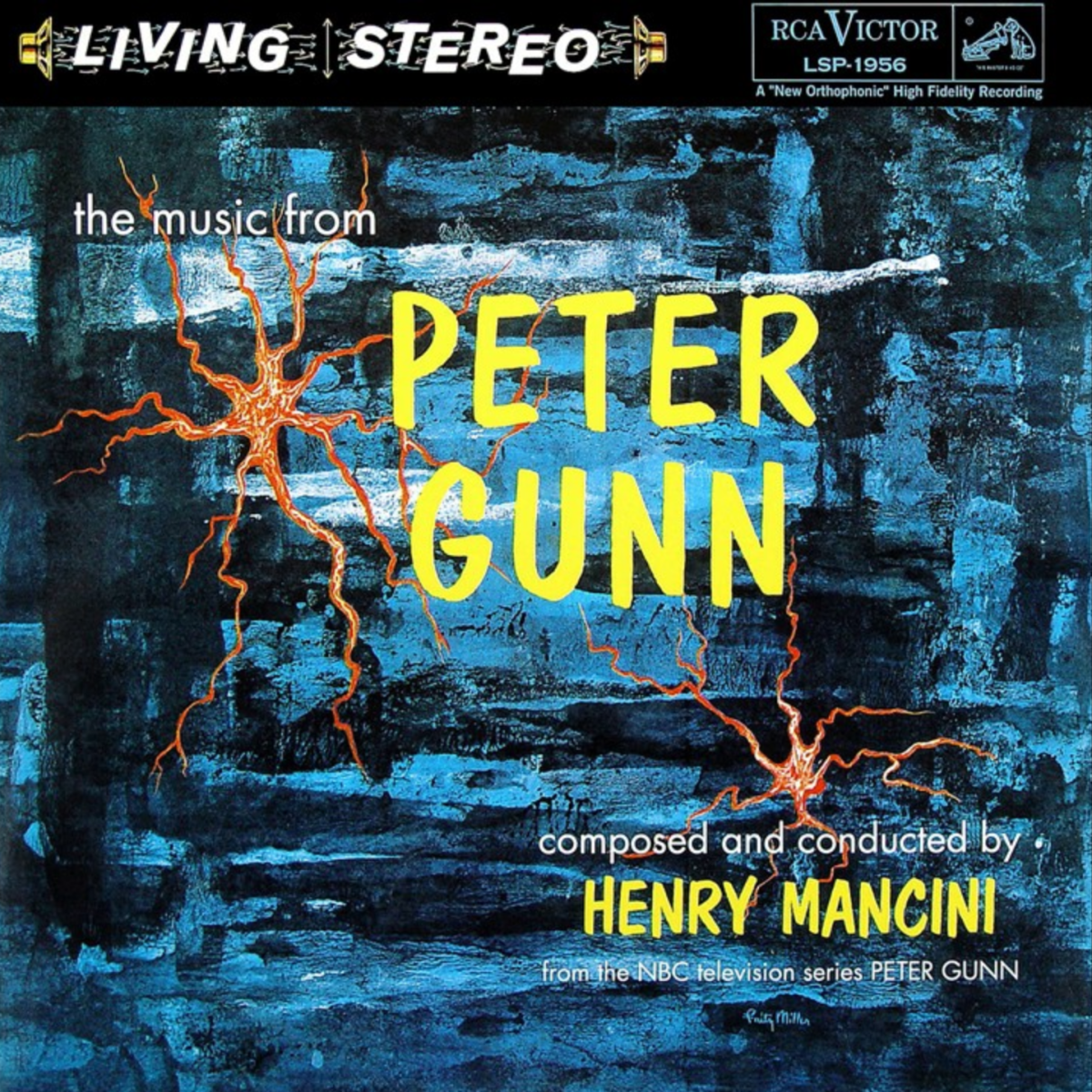
Did Henry Mancini Invent Spy Music When He Composed/Conducted The Music From Peter Gunn in 1958?

by James Wallace Harris, 9/20/22

The Music From Peter Gunn was composed and conducted by Henry Mancini and recorded on August 26, 31, and September 4, 29, 1958 for the TV show Peter Gunn that premiered on September 22, 1958. The original soundtrack was released in 1959 and won the very first Grammy award for Album of the Year that year, beating out Frank Sinatra, Ella Fitzgerald, and Van Cliburn.

The soundtrack was very popular, eventually earning a Gold Record. And the song, “Peter Gunn” has become iconic, inspiring many covers and interpretations. The album was so successful that RCA came out with More Music From Peter Gunn later that same year.

You can listen to a rearranged compilation of those two albums here while you read on.

But this brings up my second question for this essay: How many songs were recorded in those original sessions for the Peter Gunn TV show? The tunes on the YouTube video sound slightly different from the original album, and the lineup of songs are different too.

I have found these two albums that call themselves complete, but they are different. The first has the original two albums, plus two more albums on two CDs. The full description is here. The second is just the original two soundtracks on one CD.

The first album is described at Discogs as:

This release contains the complete original Henry Mancini albums "The Music From Peter Gunn" and "More Music From Peter Gunn", scores for the Blake Edwards' "Peter Gunn" TV series. Also included two further complete LPs presenting alternative versions of this music by Pete Candoli and Ted Nash, plus a single tune omitted from the companion volume "Shelly Manne & His Men Play Peter Gunn"

The second two albums are a mystery to me, even though I once owned the Nash LP. I now wish I hadn’t given it away. If anyone knows why the Ted Nash and Pete Candoli albums are considered part of the complete Peter Gunn, let me know below. Were they connected with the show? Were these songs alternated arrangements for the show?

I’ve heard a lot of reissues and even the ones that are supposed to be the Mancini originals often sound slightly to somewhat different from the original LPs, with a different lineup of tunes, and song titles. One thing that’s really confusing on Spotify, is the album they list as The Music of Peter Gunn & More From Peter Gunn is actually the soundtrack to the 1967 film Gunn … The One! – which has newer versions of some of the songs they used on the TV show, along with newer songs for the movie.

The original album feels like a special subgenre of cool 1950s jazz, the kind of jazz that people who hate jazz thinks of jazz and loves to hear. Mancini in his autobiography said, “The Peter Gunn title theme actually derives more from rock and roll than from jazz.” But the rest of the album does sound like jazz. I do wonder if all the guys who recorded at Blue Note considered it jazz? And did they resent its success?

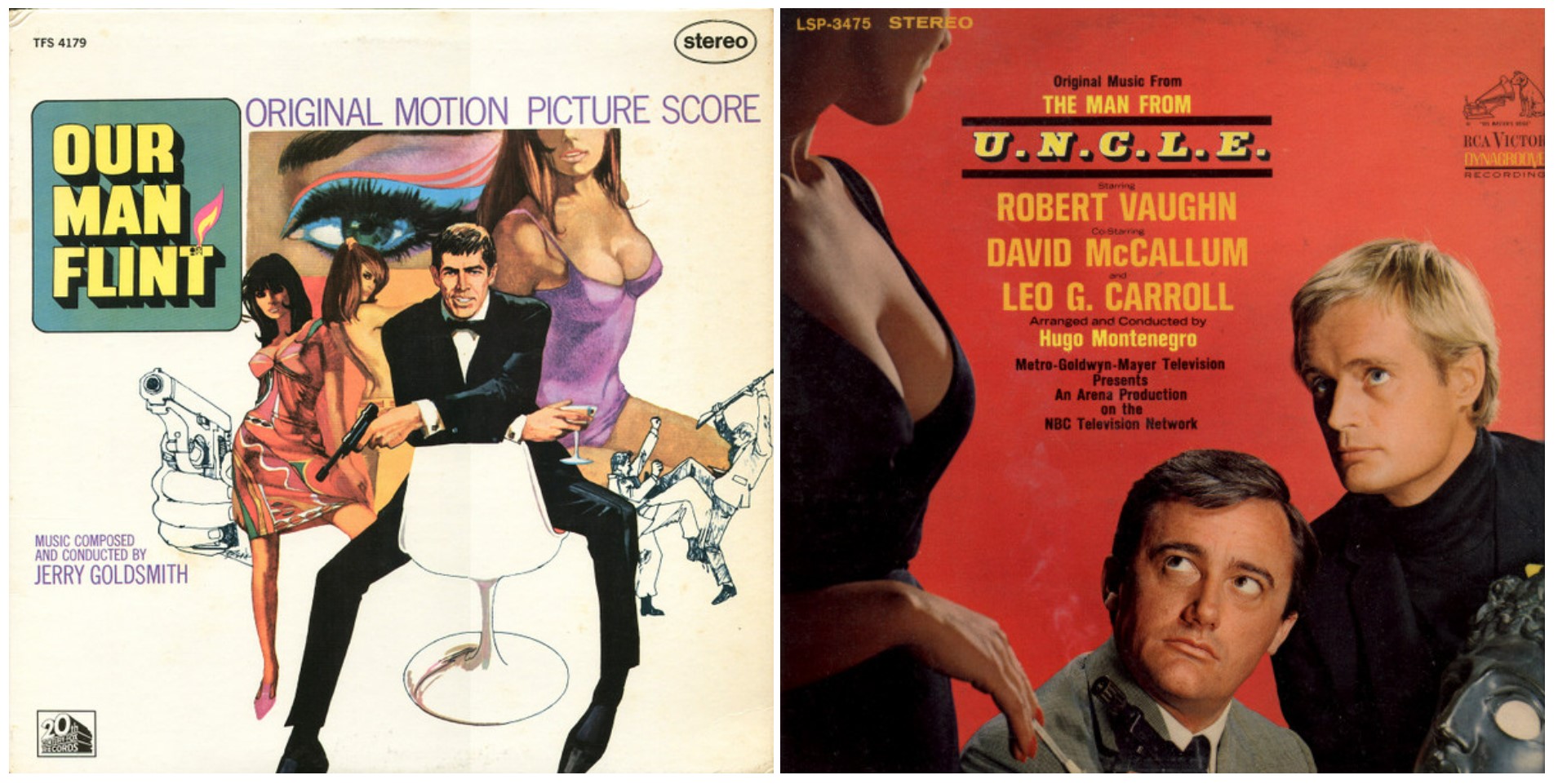
The first LP I bought with money I earned (from cutting lawns) when I was fourteen was the soundtrack from Our Man Flint, with its music composed by Jerry Goldsmith. I quickly acquired soundtracks for Goldfinger and Thunderball, composed by John Barry, and the soundtrack for The Man From U.N.C.L.E., which was arranged and conducted by Hugo Montenegro, but I believe at least the title tune was composed by Jerry Goldsmith.

I loved the music on these soundtracks and thought of them as Spy Music. I’m not the only one that uses that label. You can find playlists on Spotify under the title Spy Music, and even the All Music Guide has it as a category. The songs on these albums sound a bit like jazz, but I don’t know if the music would really be considered jazz. But I do like this music a lot.

When I started trying to find out how many songs were recorded for the original Peter Gunn show it occurred to me that Mancini’s music might be the origin of what I call Spy Music. It’s gotten me back into listening to Spy Music. When I get time I’m going to make my own playlist for Spotify. Some of the Spy Music playlists I’ve listened to use cover tunes. That bugs me. I want the originals, well, at least the songs from the original albums.

This bit of research is also making me want to research soundtrack music. For movies and TV shows, each scene only uses pieces of a song. Do composers write whole songs and then the editors clip out what they want. Or are composers given clips of scenes and asked to compose music just for them? Are soundtracks fleshed-out clips? And why are so many soundtracks missing from Spotify?

That’s why I wondered just how many songs were composed for the Peter Gunn TV show? Did Mancini just create a batch of tunes for Blake Edwards? Were Nash and Condoli on set arrangers? This blog quotes the whole chapter on Peter Gunn from Mancini’s autobiography, but it doesn’t answer all my questions. I’d love it if some YouTuber researched all of this and produced a 30-minute documentary that answered my questions.

Update: 9/22/22:

I got The Music From Peter Gunn – Complete edition, a 2-CD set in from Discogs today. Its booklet answers some of my unanswered questions.

The Pete Candoli and Ted Nash albums were recorded in 1959. It says the recording location for all the albums was Hollywood. I wonder if it was in the same studio? The first two albums were from RCA but the other two were from Dot and Crown, but they all could have been recorded in the same location. Many of the musicians were the same. Was the 1959 recording done to give the musicians their own album and chance to earn additional money, or were they extra recordings for the TV show?

JWH