Your Pop-Culture Fingerprint

Recently Entertainment Weekly ran “The 100 All-Time Greatest” issue about the best movies, television series, books and albums in the hearts of their editors.  There’s no scientific justification for such lists – they are fun but always biased.  Best-of-lists dredge up delicious memories of forgotten art, or make you growl WTF! at other choices.  For me the real value of such lists is to inspire me to try pop culture favorites I haven’t.  You never know when you missed something great, and finding great pop culture is what’s it all about.

Subscribing to Rdio lets me play most of the albums from their list.  This is why spending $9.99 a month for a music subscription service is such a fantastic bargain.  I’m going to try and play 2-3 albums a day until I get through the EW 100 album list.  I’m also going to use Netflix to go through their movie and TV show lists.  I wonder if statistics at subscription music services, Amazon, iTunes, Netflix will show a bump from the impact of the EW picks?

I did make a playlist of over 90 of EW’s Top 100 albums at Rdio.  If you’re a member you can play it, and if not, you can look at the list of songs.  The EW editors are probably much younger than I am, so their list of great albums follows a different generational path than I did, thus their list is a lesson for an old fart like me.  Over half the list is new to me, so I’m looking forward to playing a lot of potentially great albums.

You’d think such lists would match sales figures, but they don’t.  For example, Michael Jackson’s Thriller is by far and away the best selling album of all-time, but came in as #4 on the EW list.  I wonder how many of those 40+ million Thriller buyers would put it at the top of their favorite album list?  I suppose Spotify could tell us what albums are most played on their popular service, and that might be a realistic indicator of all-time greatness.  Ditto for YouTube plays.

However, in the end, it’s your own love for individual works of art that matter the most.  Just thinking about your own favorites should be a meditation of self-awareness, a survey of your own years, like your life flashing in front of your eyes before you die.

On the top of the EW album list sits Revolver, by the Beatles from 1966.  I’m playing it as I write this now.  It’s a great album, I’ve bought it three times in my lifetime – LP, CD, remastered CD.  But Revolver would never be my all-time favorite album.  I’m not sure it would even make my top 100 album list.  I love so many little albums, like Once in a Blue Moon by Nanci Griffith or Rodeo by Kirk Whalum that would rank higher, albums damn few people know about.

#2 on EW’s top albums was Purple Rain by Prince, #3 was Exile on Main Street by The Rolling Stones, #4 was Thriller by Michael Jackson and #5 was London Calling by The Clash.  All great albums, but none of them would be on my own personal Top 100 Albums of All-Time list.  I wish everyone made their own top lists of pop culture loves so when we make new friends we’d trade lists as a form of introduction.  I think what we love defines us better than anything else.  Even the things we choose to keep lists of also defines us.

My #1 album is Blonde on Blonde by Bob Dylan.  An album that didn’t even make it onto the EW list.  Strangely enough, it’s also from 1966 like Revolver.  I can go years without player Revolver, but I play songs from Blonde on Blonde almost every day.  That’s why I know its my #1 album.  I’m sure there are millions of music fanatics that never played it, or played it once and hated it.  I don’t expect my list to meet other people’s standards.

Bob Dylan - Blonde on Blonde - Vinyl

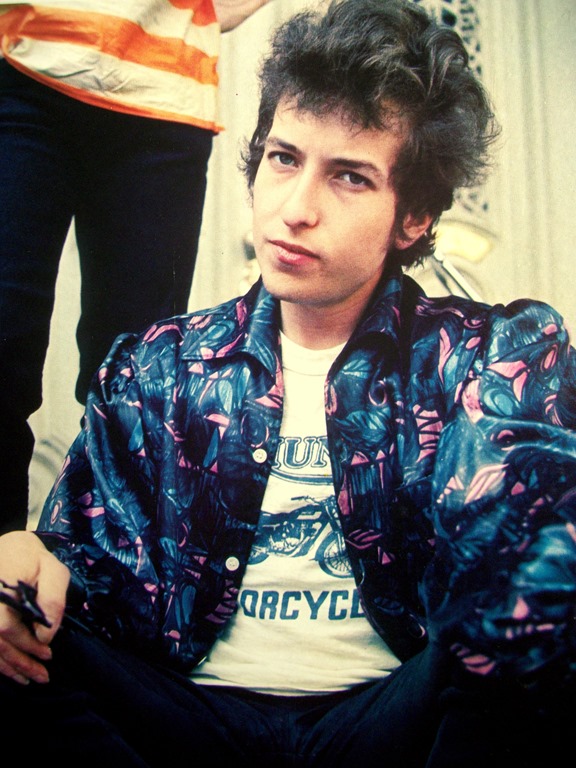
#2 would be Highway 61, Revisited by Bob Dylan, which did make their list.   But I have no idea what my #3-100 would be.  I just haven’t thought about it that much.  But reading the EW list makes me want to create my own list.  I don’t know if I have a 100 albums that are absolute favorites.  I’ve listened to thousands of albums, and I own 1200-1400 CDs but I’d guess less than 300 still appeal enough to play occasionally, and only a much smaller group would be ones I’d want to play from start to finish, which is the real indicator of a great album.  For example, from London Calling I only love one song, “Lost in the Supermarket,” so it’s doubtful it would be on my list.

Highway_61_Revisited

For an album to be called great I think we have to consider it as a whole.  It has to be more than just a collection of songs.  It doesn’t have to have a single theme like Sgt. Pepper’s Lonely Hearts Club Band, but it should have a coherent artistic wholeness.

Why I’m writing this essay is because I realized that if we each made a list of our favorite albums, each list might be as unique as fingerprints.  Out of 7 billion people, how many are likely to pick 100 albums and put them in the same order?  If we found two people with identical lists, would they also have the same political and philosophical views?  I don’t know, but it would be interesting if scientists would check that out for me.

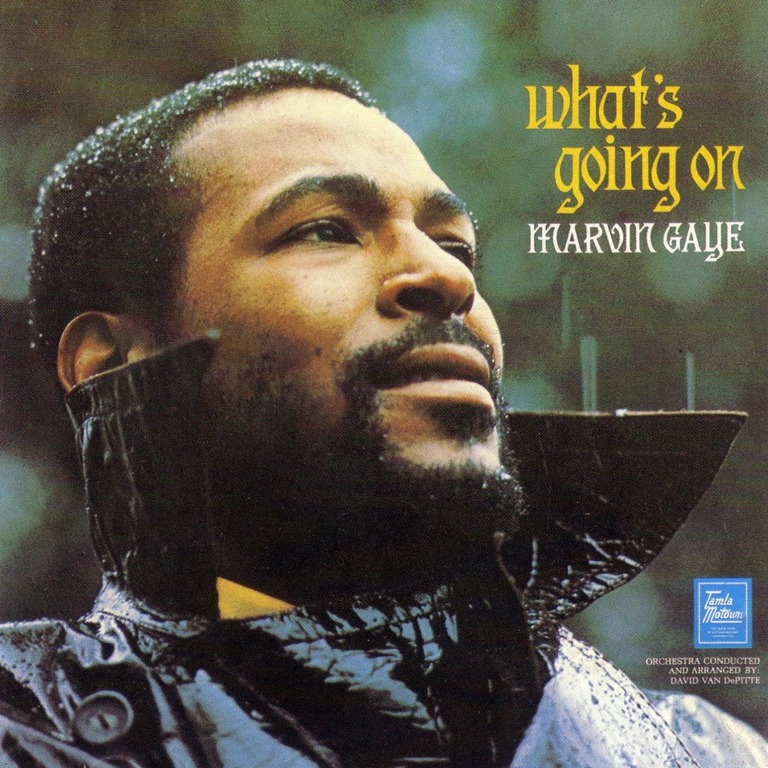
Making a list of favorite albums is actually very hard and time consuming.  It’s a terrible strain on the old noggin to try and sift through 50 years of album playing memories.  I’m thinking of going through my CDs and pulling out my favorites to put on one shelf together.  It might take me weeks or months to create my list, but it might help to physical hold the albums I love when it comes to ranking them.  Ranking isn’t absolutely important, but it’s part of the game.  Right now I’m thinking my #3 album would be What’s Going On by Marvin Gaye from 1971.
marvin-gaye-1971-whats-going-on-a

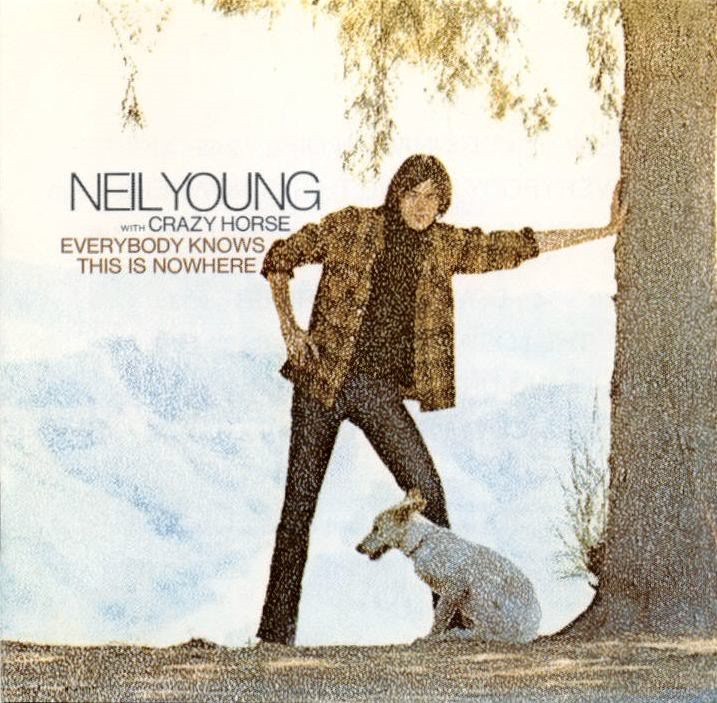
No, maybe I’m wrong, maybe Everybody Knows This is Nowhere by Neil Young would be #3.  When I make the final list, it’s going to be very hard to create an absolute ranking.
neil-young-everybody-knows-this-is-nowhere

The trouble is I love specific songs more than I do albums.  That’s why iTunes succeeds, and most people prefer songs over albums.  It’s also why greatest hits albums are so popular.  But I tend to think greatest hits are cheats on a best album list.  Two of my all-time favorite songs are “Fresh Air” and “What About Me” by Quicksilver Messenger Service.  Those songs were each on albums that I considered all filler except one song, so I’d hate to list them as two of my favorite albums of all-time.  If I had to pick just one of their albums it might be Shady Grove.
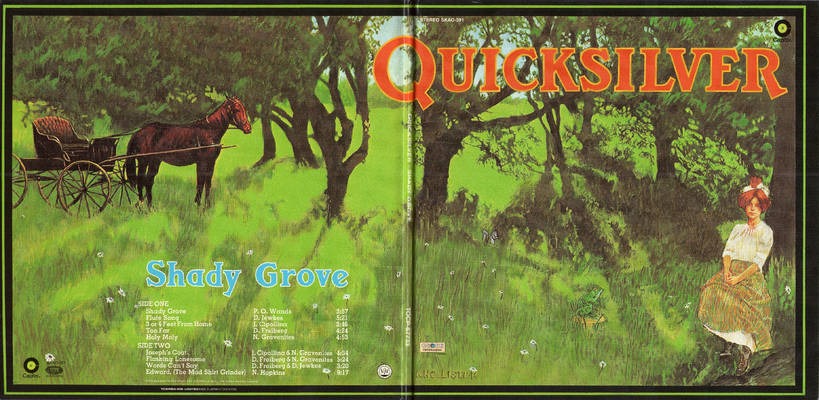
shady grove

I wonder how many albums on the EW list are there because of a single song?

I can remember two albums, both double albums I played obsessively for years, but I don’t anymore.  Should they count now?  When you make up an all-time best of list, is it the albums you love right now, or the ones you loved the most years throughout your life?  I don’t know if I’d pick any Beatles album now, but they were essential when I was a teen.  These two were very important to me for most of the seventies.

derekandthedominos-layla

allman-brothers

I think Layla and The Allman Brothers at Fillmore East would make my list, but I don’t know at what positions.

EW’s wasn’t very diverse when it came to musical styles.  I don’t remember any jazz, or much country, and little folk, and especially no classical.  And there were many big hits like Breakfast in America by Supertramp that I thought was conspicuous in their absence.   It would certainly find a place on my list.  They represent my psychic fingerprint for the music I love.

The albums I remembered while writing this essay are just a drop of water in lake of musical memories.  Here are what comes to me at the moment.  It will probably take me weeks to think about all my albums.  That will be fun, a fun trip down memory lane.
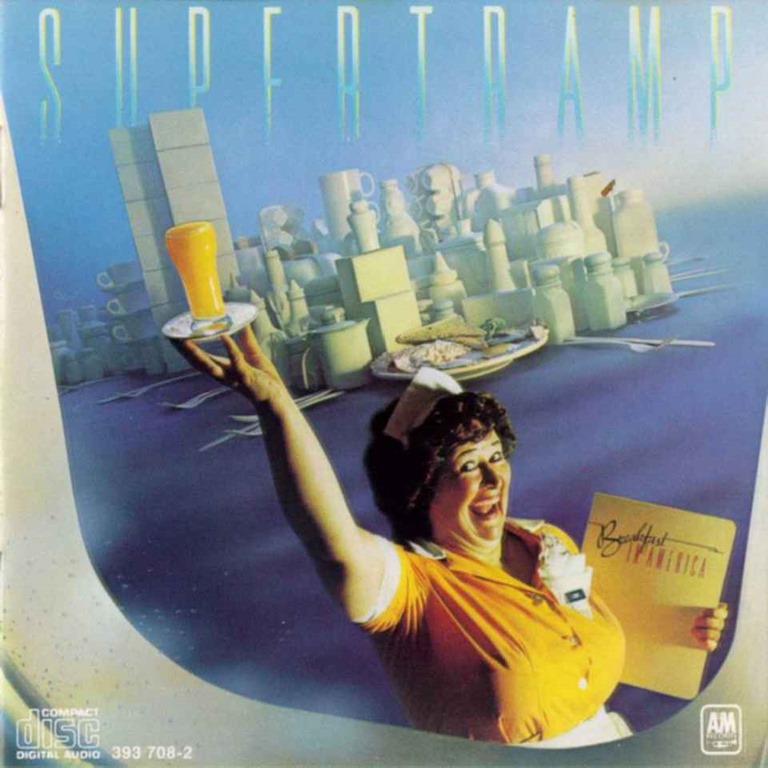
breakfast-in-america-portada

Nanci Griffith - Once In A Very Blue-Moon

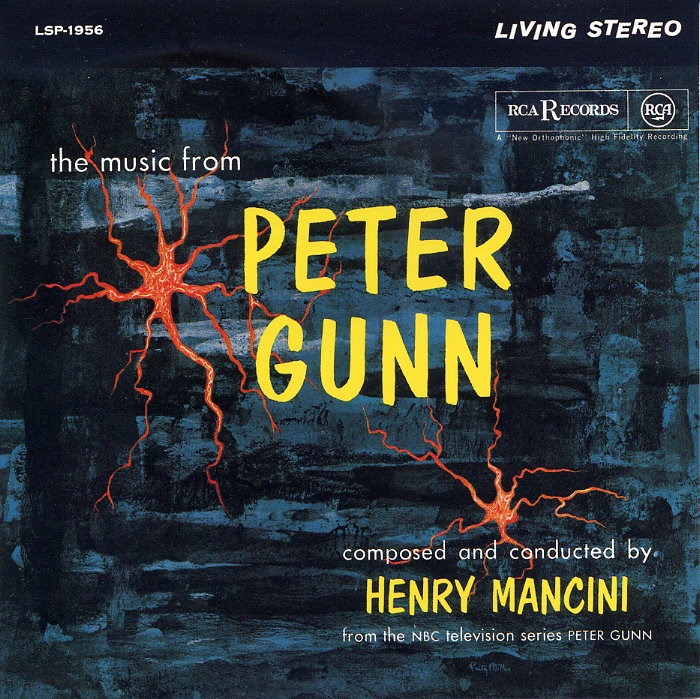
peter-gunn

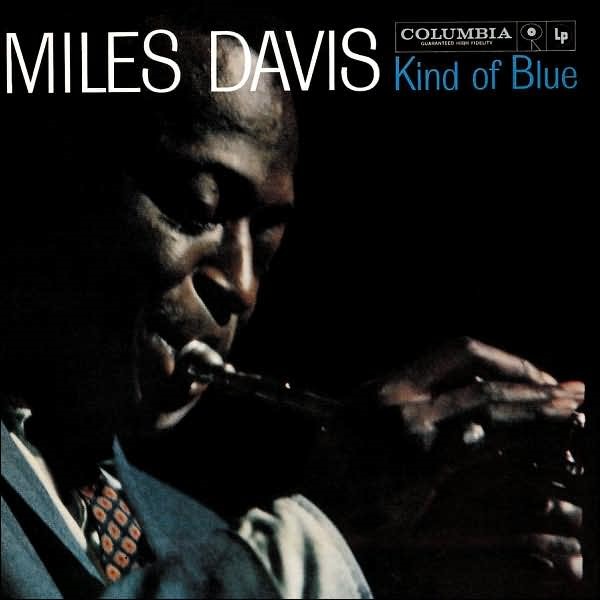
miles-davis-kind-of-blue

borntorun

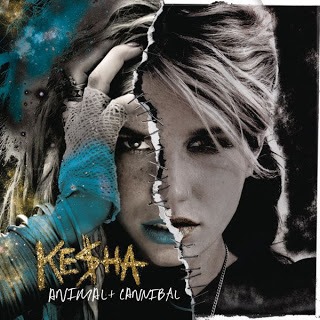
animal-cannibal

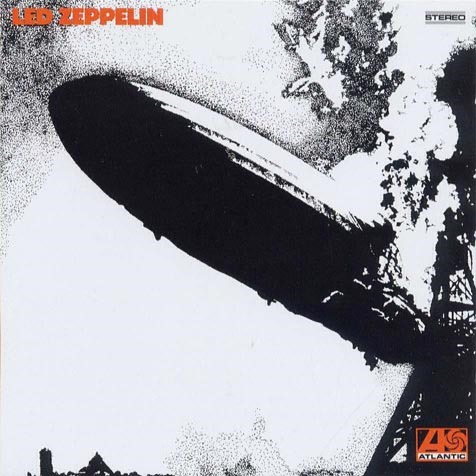
led-zeppelin

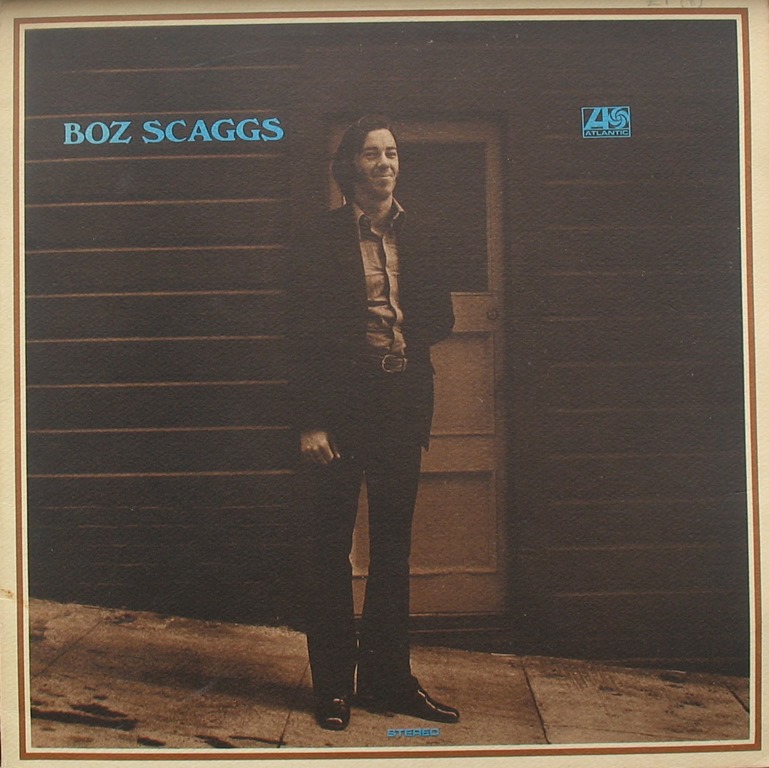
boz-scaggs

emeli-sande-our-versions-of-events-artwork

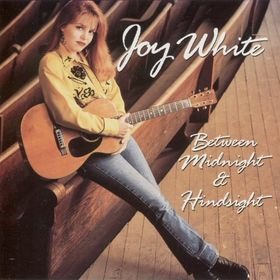
between-midnight-and-hindsight

JWH – 7/22/13

A Study in Fame–Bob Dylan

Our world is awash with famous people but how many are really worth the notice?  If you live long enough you’ll watch the famous coming and going, maybe not as fast as every fifteen minutes, but its amazing how many once famous faces I can no longer match a name in memory, or tell you if they are dead or alive. Think about it, how many people can you name that have stayed famous your whole lifetime?  One of the strangest of the famous that’s haunted me my whole life is Bob Dylan.

bob-dylan05

Dylan was born in 1941, and I was born in 1951, and he started recording in 1961, so he was in the generation just ahead of mine, who made an impression us boomers as we became aware of the world around us as teens.  Fifty years on, my demographic cohorts are in their sixties, and the generation that influenced us are in their seventies.  Many of the famous people that inspired my generation are forgotten or dead – or both.

Most folks are famous for a Warhol unit of time because they create only one noteworthy event on the world’s stage.  Bob Dylan has written hundreds of songs, an astounding output of artwork, but what makes many of them memorable is how they fit into history at large.  And if you didn’t like his singing, there have been hundreds of performers covering his tunes.  At one time I had a playlist on Rhapsody with over 100 cover versions of “All Along the Watchtower.”  Part of Dylan’s fame is due to influencing so many other people.

Not only is Dylan famous, but he’s legendary, infamous, and mythic.  Although most people won’t think of Bob Dylan when they think of the concept of fame, but if you read his biographies, and there are countless bios to read, you’ll see he’s a perfect example of someone suffering the fates of fame.

Plus Bob Dylan has toured the Earth like no other person in history.  Dylan played 2,000 concerts between 1988 and 2007, and he continues to tour at the rate of about 100 concerts a year.  His constant touring, which has gotten named the Never Ending Tour, will probably end when he dies.  Just look at his tour dates and locations.  Fans now follow Dylan from city to city like hippies used to follow The Grateful Dead.  Dylan tours like Sisyphus rolls rocks.

Has there been anyone in the history of the world that has traveled to more places than Bob Dylan?  Dylan has his own artistic empire of fame.

Yet, to the average person, how many people can name a Bob Dylan song?  He’s not that famous, not enough that all 7 billion people on Earth know of him.  Currently Dylan is only #65 on one of The Most Famous People of All Time lists.  But such lists are bogus, because there’s no real way to measure fame, other than maybe counting daily Google searches.

Of people who listen to rock and roll, Dylan is famous, to people that don’t, I can’t imagine his name coming up very often.

Fame is an odd concept.  Fame is both ephemeral and lasting.  If you look at the 2013 Time 100 list of most influential people of the moment, you won’t see Dylan, and you will see many names you’ve probably haven’t heard of before either.  How many people know of Elon Musk?  You’re famous if the media takes notice of you, whether its because you’re heroic, criminal, mad, inventive, creative, stupid, or whatever catches the public’s fancy at the moment.

Some people consider Bob Dylan a rock star, others a songwriter, and others a poet.  Fame for a poet really means how often are any of your carefully crafted lines quoted or memorized?  Fame for a songwriter is measured by how often do people sing and record your songs.  Fame for a rock star is measured by how many people swoon at your image holding an electric guitar.  Poetry is a dying art form, but poetry was never popularly consumed to begin with, but some poems have lasted a very long time.  A century from now, how many rock stars will actually be remembered?  How many figures from popular culture can you remember from 1913?  That’s after Mark Twain and before Charlie Chaplin.

The Independent gave “70 reasons why Bob Dylan is the most important figure in pop-culture history” on his 70th birthday.  Will any of those reasons be valid in 2113?

Go to this list of Dylan songs at his website, and see how many titles you know.  Then click on the song name and read the lyrics.  You’ll have to decide for yourself if the words will survive like the words of the great poets of the past.  Dylan has lead a legendary life.  I’m sure there will be novels and movies based on his adventures in the future.  Some have already come out.  But his real fame will come from his songs, and the seeds they plant in minds yet born.  Byron and Keats never imagined all the thoughts thought about their lines of poetry, and we can’t imagine what will happen to Dylan’s words in the future.  But my guess is they will be put to uses in ways we could never fathom even if time travelers came back and told us.

The-Ballad-of-Bob-Dylan

I just finished reading The Ballad of Bob Dylan by Daniel Mark Epstein.  It was a compelling read that kept me constantly wanting to find more time to read.  Among the many biographies of Dylan I’ve read, it’s among the best, although my favorites are still Positively 4th Street by David Hajdu and No Direction Home by Robert Shelton, now in a new edition.  Reading about Bob Dylan is like trying to study cosmology, it’s a subject of endless depth.

JWH – 7/14/13

What Makes You Cry?

I don’t cry, not the boo-hoo kind of weeping, I’m more of a Mr. Spock when it comes to emotions.  But I do get misty-eyed from time to time, and as I’ve gotten older, those wet eyed moments come more often.  What makes us cry?  And obviously, we all cry for different reasons.  Yesterday my friend Mike sent me a video, “Bittersweet Melodies” by Feist, that choked me up.  If I wore mascara it would have run.  It had gotten to Mike too.  I forwarded the link to some of my friends and to the online book clubs I’m in.  So far I’ve heard from about fifteen women and a handful of men.  Men get choked up.  Women think its nice, clever, but no tears.  I’m waiting for more responses, but so far it’s quite gender specific.

Like I said, it doesn’t take a rocket scientist to observe that everyone has different buttons to push to turn on the waterworks.  But of my  small sample, it seems the Feist video worked with men but not women.  So here’s an experiment, watch this video and let me know how you reacted.  Do you think it’s just clever, or does it choke you up?

[The original photographs used in the video can be found here and here.]

Before and after pictures of people getting older is a definite emotional button for me, but understanding why, is harder to explain.  The wistful Feist song does create an emotional mood, but it’s the photographs that poke me in the heart.  Why?  Well a couple of anecdotes might help.

When I was a little fella, I remember this time I had to get a shot.  I was in a full blown bawling meltdown and the doctor and my mom were trying to get me to cooperate and get punctured.  I remember the doctor patiently waiting for me to settle down. 

When I had calmed down a bit he said, “You don’t have to cry.”

I don’t think I said anything, but I was thinking, “Huh?”

He again said, “You don’t have to cry.”  He had gotten my attention.  Then he came closer and whispered, “You can choose not to cry.”

I thought about it for a moment, turned off the faucets in my eyeballs and let him give me the shot.  I was amazed I didn’t have to cry.  I remember consciously choosing not to cry the next time my mother switched me, and when my dad gave me the belt.  I then learned not crying enraged my parents who would switch and belt harder because of my lack of reaction.  Not crying had a kind of empowerment.  I went with it.

Babies cry, I believe, because they have no other outlets for communicating their needs.  I think as adults we cry when we have no other ways to express what we feel.  Most of the time we do, so we don’t cry.

The other anecdote from childhood that is useful for this topic is about separation.  To kinds of separate.  As a kid my family moved around a lot.  A whole lot.  I’d always make a best friend wherever we moved, but ultimately, that friendship would be torn apart, just something beyond my control.  Starting at an early age, looking back and thinking of lost friends always choked me up.  I think that’s why most people cling to the idea of heaven – they can’t bear that they will never see some people again.  That’s why death tears us up, we can’t communicate our feelings of loss and separation.

When I was very little, I woke up in the middle of the night and went out to the living room where my dad was watching all-night movies.  He let me stay up and I watched a film about two kids being separated when one family moved away, then they were reunited during WWII, in the Pacific.  I was too young to understand this, I just felt it.  That film burned into the core of mind, at the bottom of all my memories.  Years later I caught it again, when I was old enough to remember its name, High Barbaree, and the actors, Van Johnson and June Allyson.  Eventually I learned that it was based on a book by the same name, written by Charles Nordhoff and James Norman Hall, the writers of The Mutiny on the Bounty.  The story was about the last memories of a dying man, but of course, in the Hollywood version, he’s rescued from death.  His dying thoughts were about his childhood and teen years.  I think men feel separated from their young selves, in a way that women don’t.  I know there are no hard and fast gender generalities, but this one sort of works.

The key to my deepest emotional buttons are encrypted in that movie and book.  Events in that story resonate at the core of my being.  And that reveals probably my most powerful emotional button, the desire to return to childhood.  We can return home, to the physical location where we grew up, but we can’t return to the state of mind when we called it home.  I wonder if my lady friends didn’t respond to the Feist video because they don’t have that urge to return to childhood.  Women want to be young again in body, but guys want to be young again in mind.

I’ve read there are two kinds of people, those that would pay anything to relive their adolescence, and those who would pay anything to erase the memories of those same years.

“Bittersweet Melodies” is incredibly wistful to me.  When I really like a person I want to see photos of when they were kids.  I want to know what they did when they were kids, and where they lived.  Sometimes I think our true souls are the ones we had at age twelve.

JWH – 6/17/13

Four Little Girls Buy A Jimi Hendrix LP

I was flipping through the “new arrival” bins of used LPs at Spin Street when four teenage girls, all looking about fifteen, showed up to paw through the albums too.  I heard one excitedly tell the others she found a Herman Hermits LP.  My first thought was how did a 2013 teen even know about a 1963 teenybopper group?  I was mildly annoyed at these little girls because they had gone over to the used Rock section, the place I wanted to go next.  So I went to where the used Jazz section used to be, and I discovered that Spin Street had moved the used jazz LPs or done away with them.  So I went to new Rock section, which was now was much larger than before, covering up where a third of the used rock records used to be.  LPs really must be making a comeback.

I was surprised at the flock of girls in the LP section, a room at the back of the store away from everything else.  I assumed their parents were out front, because they didn’t look old enough to drive, but I could be wrong.  I’m used to seeing old geezers like me time traveling through these dusty bins, and sometimes I even saw some hipster thirty-somethings, but never vinyl record buyers this young.

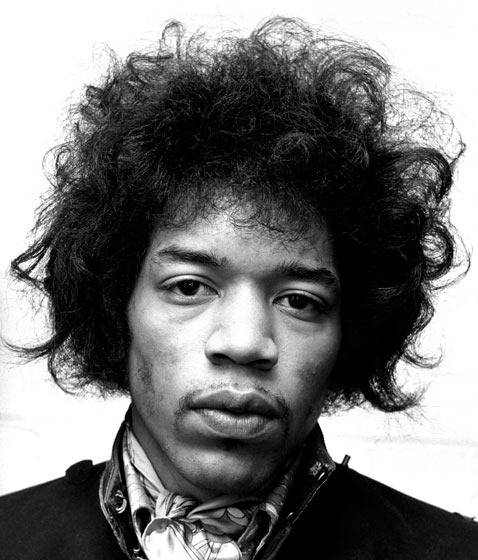
So while the girls were looking exactly where I came to shop, I contented myself to look through the new LPs.  Eventually I noticed they had disappeared, but I hadn’t finished, so I stuck with my systematic flipping of new LPs, going from Z to A.  By the time I had gotten to the I’s, two of the girls were back and jumped into the H’s right next to me, looking for Jimi Hendrix.  They pulled a couple LPs out of the bunch, and one asked the other, “Do they have ‘Purple Haze’?”  The other replied “This one does.”

ZB3276_169191_0308

They put one of Hendrix’s posthumous albums back, and took  Are You Experience with them to the other two girls, and headed to the checkout.  I really wanted to ask them how the hell did they discover Jimi Hendrix, a guy I discovered at 15, almost fifty years ago.  I thought it very strange indeed, like if I had gone in a record store in 1964 and bought a 1924 Bix Beiderbecke record.  It took me until my forties to work back in music history forty years.

I don’t normally talk to teenagers because I worry about invading their space.  When I was that age I didn’t like old people intruding, so I’m hesitant to do it  myself, now that I’m old.  I wanted to know if they read about Jimi Hendrix in a magazine, or their parents or grandparents played him at home, or they heard him on the radio.  And do teens even listen to radio now-a-days?  Jimi Hendrix is legendary, but is he well known among the young?  I imagined it’s not hard to discover him, I was just curious how.  Is he taught in school?  And why didn’t they just steal his .mp3 songs off the net like normal kids?

These little girls, who all looked alike, skinny, brown hair, dressed in dress shorts and blouses, looking like typical Bible Belt Baptists kids that I often see around Memphis, seemed so young and innocent looking.  What the hell are they listening to Jimi Hendrix for?  I remembering tripping at 16 and listening to “Purple Haze.”  Were these little clean-cut girls doing drugs?  Did their grandfathers and grandmothers tell them about the time they dropped acid and saw Hendrix?

Jimi was the ultimate bad boy of the sixties.  Girls loved him.  So I guess it’s not strange that girls might still love him.  I just can’t imagine these little girls going home, putting Hendrix on the turntable, cranking up the amp, and then lighting up a bong.  If I was a young parent today and my kid brought home a Jimi Hendrix record, I’d wonder if they were doing drugs.  Especially when the album is entitled, “Are You Experience.”

But I really doubt these girls got high.  This is a different world than 1967.  So how do 2013 children see 1967 kids?  Can they ever fathom how we grew up?  I’m living in 2013 and can’t imagine what 2013 kids are like.  When we were young we’d say, “Don’t trust anyone over 30.”  Decades later we began to say, “Don’t trust anyone under 30.”  Soon I’ll be thinking, “Don’t trust anyone under 60.”

Or is it a matter of what goes around, comes around?

are-you-experienced

I considered long and hard about buying a new LP version of Electric Ladyland, but hell, I’ve already bought it at least three times in my life (LP, CD, remastered CD).  I ended up buying 180 gram version of Ceremonials by Florence and the Machine.  An older young women, in her early twenties, the cashier, was quite pleased with my selection, and told me it was a wonderful album.  She seemed glad that gramps was trying something new, but  I wondered it she was secretly thinking, “Why doesn’t this old fart act his age and buy a Jimi Hendrix record!”

JWH – 5/27/13

Reliving The 1960s in my 60s

I might be nostalgic for the things I loved growing up, but I am no longer the person that loved those things back then.  If the current me could travel back in time to the 1960s, would I love the same things I did as a teenager the first time around, or would I be attracted to the pop culture suited for a 61-year-old guy?   Buffalo Springfield or Frank Sinatra?  Or is nostalgia really about becoming our younger selves again?

I am plagued by nostalgic urges like a teenage boy is plagued with horniness.  I assume nostalgia is universal as people get older, but I don’t know that for a fact.  As I write this my wife is watching old episodes of Gidget, Bachelor Father, The Flying Nun, and other shows from her childhood on Antenna TV.

Each year of the twenty teens is the 50th anniversary of the same year back in the 1960s.  Here, look at 1963, at Wikipedia.  Ironman debuted at Marvel,  The Beatles started releasing albums, Coca Cola produced Tab, Dr. No, the first James Bond film appeared, The Freewheelin’ Bob Dylan LP was released, Buddhist monks set themselves on fire to protest in Vietnam, Project Mercury came to an end, zip codes began, and “Be My Baby” by The Ronettes hit the airways.  And of course, John F. Kennedy was assassinated in Dallas.  Expect a lot of documentaries and books about that towards the end of the year.

I spent my formative teenage days growing up in the 1960s, so I have a lot of nostalgia for pop culture from back then.  But while I’m shopping for old bits of my past to relive, I’m also discovering pop culture I missed the first time around, or even avoided.  For example, yesterday I bought two LPs of Mantovani and his Orchestra, a type of music I would have sneered at as a teen – the kind my grandparents would have loved.  Mantovani usually covered popular songs with a light classical orchestra, and also recorded classical music that he made more accessible with his sugary arrangements.  Here’s a typical example:

Last night while Susan was at her trivia contest, I turned down the lights, kicked back in my La-Z-Boy, cover my old chilled legs with an Afghan, let the cat curl up on my lap, and played Mantovani loud.  And man I dug it.  I listened to Mantovani Magic and Mr. Music, two LPs from 1966 I had gotten at the friends of the library bookstore for 50 cents each.  I also played Boogaloo Beat by Sandy Nelson from 1967, and These Are My Songs by Pet Clarke from 1968.

I was very annoyed at Boogaloo Beat because the great kitschy music was marred by many  pops and skips.  That’s the thing about 1960s technology, an odd piece of dust, or a stray eyelash, makes a tremendous crash when the stylus hits it at 33 rpms.  But this LP looked perfectly clean and unscratched.  Of course, this reminded me of all those times I came home with a new album that had an imperfection and I had to take it back to the store.  There was a reason why most music fans embraced CDs so quickly in the 1980s.

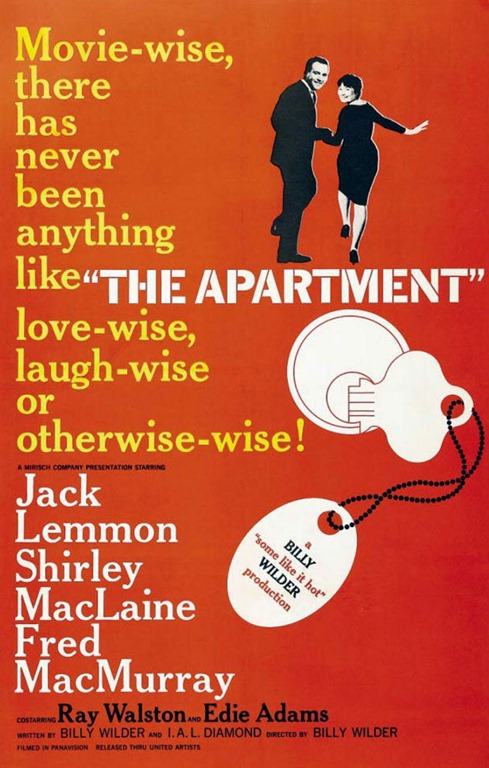
I might be nostalgic for 1960s pop culture but I’d never want to return to live through those years again.  Oh, I suppose if I had a time machine I might spend a weekend and attend The Monterey Pop Festival in June of 1967, and even that might be a huge cultural shock.  The other night Susan and I watched a Blu-ray copy of The Apartment with Jack Lemmon and Shirley MacLaine from 1960.  It only illustrated what a horrible time it was for women, and even though life was better for men, being a corporate man looked no fun.  By the way, The Apartment is wonderful, and the black and white cinematography was stunning on the Blu-ray disc.  I first saw this film back in the 1960s and loved it then, but it means something very different to me half a century later political correctness-wise.  My mom and dad and taken me and my sister to New York City in 1959, so it also represents another layer of nostalgia.  So watching The Apartment in 2013, brought back memories of that trip.

the-apartment

The sixties must have tremendous retro appeal to many people because my local PBS station drags out many 1960s related shows when they are begging for money.  A couple weeks ago they had a show with clips from Hullabaloo (mid-decade rock and soul), a show with clips of Hootenanny (folk music popular in the early 60s), a do-wop show, and another focusing on folk rock era.  Us old people with our fond memories of pop culture forget the racism of the 1960s, the sexism, the anti-gay mentality, the generation gap, the Vietnam War and all the other social turmoil’s and isms.  The polarized animosity was like the 2012 Presidential elections but all the time.  And all those social revolutions of free love, drugs and rock and roll crashed and burned.  You can always read The White Album by Joan Didion to de-nostalgia-ize the sixties.

I keep reading books from the past looking for one that would epitomize the 60s era, but I can’t find one.  In the science fiction genre, some readers would claim Stranger in a Strange Land by Robert A. Heinlein is the counter culture novel of the 1960s.  But it’s too strange and weird, but there were plenty of know-it-alls like Jubal Harshaw back then.  I might nominate The Electric Kool-Aid Acid Test by Tom Wolfe, but it’s really just shows a very tiny subculture.  The book that reminds me the most of my sixties is a book from 1959, Confessions of a Crap Artist by Philip K. Dick.  It’s about a marriage coming apart, and some very odd people.

Most of life back in the 1960s was extremely ordinary, closer to Leave it To Beaver than The Beatles.  So why do us old farts keep returning to those times in music, books, art, television shows and movies?

After I played my old LPs, I switched on Rdio, and played some contemporary music.  The sound recording, sophistication of composition, performance and production quality, all blew away those old songs I had been listening to earlier.  Our lives, both personal and social, are evolving fast.  In 1965, the most technologically sophisticated form of social networking was the rotary dial phone.  I think the people of the sixties really would suffer Future Shock if they had to live our lives now.

I don’t know if nostalgia is some harmless urge to bring back long forgotten times, or is it psychological need to preserve our identities as we get old and loose our memories.  I’m quite happy with modern pop culture.  I think modern music, TV, movies, books, photography, art, plays, etc. are all better than what we experienced fifty years ago.  I might be nostalgic for Project Gemini and Apollo, but the robots on Mars, satellites Kepler and Planck,  and the Hubble telescope are far more exciting.  And even though we consider our government totally dysfunctional right now, things are better for more people than ever before.

Sometimes I like to think of my current record collecting habit of buying music from the 1950s and 1960s not as nostalgia, but an interest in history.  That I’m buying antiques, antique pop culture.  And me liking Mantovani is really no different from me liking Airborne Toxic Event or Alabama Shakes – it’s just another style of music.  50 years ago is no more real than 500 years ago.  That old music actually exists in the present.

Reality is kind of weird in this regard.  Above my monitor is a window three feet high and twelve feet wide that looks out to my back yard.  I see lots of trees, shrubs and plants.  My neighbors are hidden by all the foliage.  I do see my wife’s Camry and some patio furniture, but it’s mostly a naturalistic view.  Things are turning green with Spring.  I don’t see any pop culture.  I don’t even see any calendar dates.  The past is an illusion in our heads.  If I put a Mantovani LP on the turntable, it’s not 1966 again.  Even 2013 is an illusion.  It’s just now.

JWH – 3/24/13