The Williamson Effect–Losing Interest in Life

By James Wallace Harris, Monday, March 28, 2016

A friend of mine, before he died, called me to talk about life. His name was Williamson, and he was depressed. This was back on the first night of the Gulf War. Williamson said something then, a quarter century ago, that has always stuck with me. He said he was down to loving only two things in life. Benny Goodman and Duane Allman. I had gone to see The Allman Brothers with Williamson when Duane Allman was till alive. That was a long time ago. Williamson and I were buddies for a while in the 1970s, and we went different ways when I got a steady job.

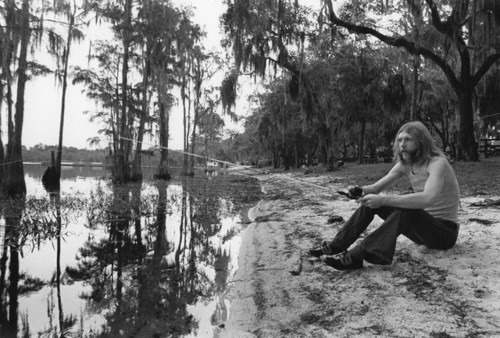
Duane Allman Fishing 

Williamson hated working, always telling friends, “A job a good way to waste a life.” He spent his life avoiding the old nine to five, choosing to pursue endless hobbies and schemes hoping they’d pay off. They never did. I was surprised to hear from Williamson in August of 1990. The decades had changed him, and he was quite bitter. He called me a few times after that, and then disappeared. I heard later he died under mysterious circumstances.

I now worry when a friend tells me they are getting tired of things they used to love. I call it The Williamson Effect. I’m known to be a naturally happy person, even though I love to write about depressing subjects. I don’t know if I’m happy because of genes, or because I’m constantly searching out new things to love. Whenever I hear a friend suffering from The Williamson Effect I encourage them to try new things, especially music. I’m always amazed how a new artist and their music can revitalize my thinking.

I tried to convince Williamson that there was more to music than Benny Goodman and Duane Allman. He only sneered and belittled my then current favorites. Benny Goodman and Duane Allman are still on my main Spotify playlist, but so are Katy Perry and Sarah Jaffe, and I’m still living.

JWH

Cross Generational Music Appreciation

By James Wallace Harris, March 14, 2016

In his new book, The Song Machine: Inside the Hit Factory, John Seabrook begins by telling how his young son took over the car radio during their morning ride to school. Seabrook loves music and wanted his son to love his music, but the kid was adamant that he wanted his own music. I remember doing this to my dad back in the late 1950s. I’m sure all of us have been on both sides of that divide of music generations. Seabrook decided to get into his son’s music, and ended up writing a fascinating book.

How much cross generation listening goes on? Don’t most people bond with the music from their teenage and college years and then essentially stop listening to new stuff when the next generation annoys them with their music? In recent years though, I’ve noticed that some kids have embraced a few bands, songs and albums from my generation, the 1960s. I belong to their grandparents’ times. Are these kids rebelling against their parents’ by listening to the music their parents rejected?

My generation (who knew the Who could be so prophetic) has become terribly nostalgic for music history, seemingly to never tire of documentaries like, The Wrecking Crew, Muscle Shoals, 20 Feet From Stardom, Standing in the Shadows of Motown, Big Star: Nothing Can Hurt Me, Searching For Sugar Man, Atlantic Records, and Respect Yourself: The Stax Years. Just last week I watched documentaries on Fats Domino and Carole King. I’d watch more if I could find them. It’s funny, but this music is the one bridge I have with my Fox News watching conservative friends. We hate each other for our politics but commune over music.

But if I tell my peers I have Katy Perry or Nicki Minaj on my playlists they laugh at me. But if I tell them I’ve been listening to Ronnie Spector or Dionne Warwick it sparks a memory fest. And if tell them I’m been playing Peggy Lee or Lena Horne, a few of them will perk up. Among my music loving buddies who do cross generations, they generally travel backwards. I guess the young people I meet with Jimi Hendrix T-shirts are traveling backwards in time too. I don’t know why older folks look down on the music of younger generations. I have a number of friends who stopped listening to new music around 1975, and no matter what I play for them, I can’t seem to get them to move forward in time.

That’s a shame because musical creativity didn’t stop in the 1970s. Seabrook writes specifically about pop music (Katy Perry, Ke$ha, Rihanna, KPOP, American Idol, Denniz Pop, Max Martin, Dr. Luke, Ester Dean) and how they make hits with computers and teams of creative personnel that collaborate with the performing artist. There are no singer-songwriters here. No bands that play all their instruments. Producers are the emperors of the studio, hiring up to a dozen people to write a song. But wouldn’t that be true back in the Motown era if everyone who added anything to a song got credit? The Song Machine was absolutely fascinating to me, even though I’m not from that generation. It annoys me that my friends won’t give new music a chance, and probably refuse to read this book.

the-song-machine-john-seabrook

All this cogitation about cross generation listening has made wonder about many things. How do kids today choose what they listen to from past generations? And why? Are they mesmerized by tunes in movies and end up chasing them down? Have they found LPs at Granny’s or Goodwill, which inspired them to dig up an old record player, curious about the tunes on those strange black discs? This morning I was wondering why young people remember The Beatles, but not The Byrds. Is there any reason for one generation to remember the pop culture from another generation? Has classic rock become the elevator music of today, and Beatles songs became ear worms boring into young brains? Do they teach The Beatles in school? Maybe kids clicked past nostalgia shows on PBS and got hooked. I don’t know what percentage of today’s generation discover old music, but is there any reason to expect them know about my music, or even like it? And why don’t I ever hear them express their love for The Byrds—my favorite band from the 1960s?

Mr Tamborine Man - The ByrdsTurn Turn Turn - The Byrds

At the moment I’m listening to a collection of 1950s songs on Spotify because I caught an episode of American Masters on PBS about Fats Domino. One thing I didn’t know, Fats was as popular as Elvis for a short while during the 1950s, but people now remember the 1950s belonging to Elvis. That makes me think there are some people like me, who remember their decade of music differently. I hardly play The Beatles anymore, but I play music from the 1960s constantly. Bob Dylan, The Byrds, Motown, San Francisco rock and pre-1965 Brill Building pop dominate my memories. If I made list of my favorite songs, I bet there would be a couple hundred songs from the 1960s at the top of my list before I even listed my first Beatles tune.

And I loved The Beatles, but I loved other artists from the 1960s more. Should I encourage young people to discover their music? Should schools teach 1960s music like they teach classical music in music appreciation courses? As I got older I sought out popular music that came out before the 1960s, going back into the 1950s, 1940s, 1930s and even the 1920s. I crossed genres into jazz, country, big band, folk, pop, world, opera and classical. I suppose some of the kids who are discovering The Beatles are doing that today.

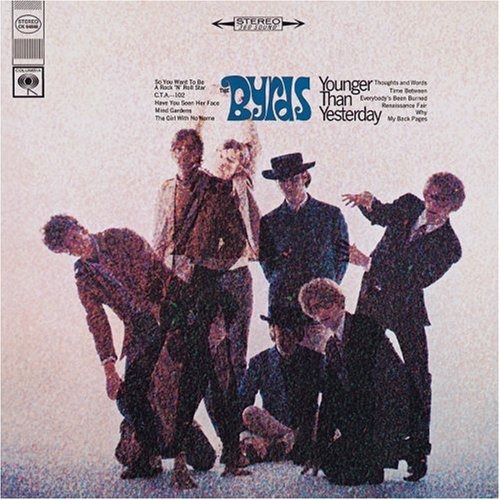
Fifth Dimension - The ByrdsYounger Than Yesterday - The Byrds

When does pop culture become history? When does memory become nostalgia? They used to play Fats Domino songs like I’m listening to as I write on the weekends in 1962, on WQAM and WFUN, and called them “Oldie Goldies” even though they were less than ten years old. Now they’re over sixty. People from my generation go to concerts today performed by acts they grew up with, even though those artists are even a generation older than us. I’m not keen on seeing dinosaur rock. I love remembering those performers when they were young, vibrant and in their times. On Facebook I have friends who post photos from parties where they act like they are still in high school. That’s cool. But should they listen to some new music too? It’s really hard to give up the pop culture that imprinted on us as teens.

I’m not sure there are reasons to require listeners to cross generational divides. When I watch “People Are Awesome” videos on YouTube I realize the current generation have plenty to keep them busy, more than I ever had. Now is always more important than the past—or the future. On the other hand, I’ve switched from Fats to “Jealous” by Ester Dean, playing it over and over. It’s definitely not from the 1950s! I’m too old to live in the times in which this song belongs, but Dean’s voice and melody touches my heart in a way that I wish I could.

Nortorious Byrd Brothers - The Byrds Sweetheart of the Rodeo - The Byrds

Do the young today long to visit my era in the same way I wish I could be young now? The Beatles were tremendously exciting, but were they more exciting than the groups now? Why are the sounds of The Byrds, Buffalo Springfield, and Jefferson Airplane still siren calls that hold me back in time? If I stopped listening to the songs that tie me to the past, could I modernize my brain by only playing new songs on Spotify?

I often think about my future when my body will be fading out of existence and my mind barely floats in reality. I’ve often thought listening to music on headphones while I die would be a great way to go. Will I be listening to seventy year old songs? More and more, the songs on my main Spotify list are newer ones. I play my tunes on random play. Will I leave reality hearing 1965, or 2037? Wouldn’t it be weird if I lived long enough to live The Sixties again?

JWH

Training Pandora–Sarah Jaffe Station

By James Wallace Harris, March 8, 2016

I started a new station on Pandora today based on Sarah Jaffe. The first song they gave me was “Pretender Pt. 1” – an early song by Jaffe that I liked, but one I didn’t want the station to play. With Pandora you get to thumbs up and thumbs down songs. It’s important to train Pandora to play the exact sound you want for the station you imagined. I wanted my Sarah Jaffe station to play only music by women singers, but with edgy music, and creative arrangements. I tend to like tempo changes in these kinds of songs too. I didn’t want the standard singer-song writer fare.

Here are five songs by Sarah Jaffee that I want Pandora to seed the radio station. I was able to add “Glorified High,” “Sucker for Your Marketing,” and “Mannequin Women via the “add variety” button.


Training Pandora is weird. Sometimes you have to thumb down songs you actually like if you want to create a very specific sounding radio station. Sometimes Pandora never gets what I’m going for, and I have to delete the station. For Sarah Jaffe Radio I had to immediately thumbs down any male singer. And I had to thumbs down any plain song, especially those that focused mainly on the lyrics. I was after unique musical arrangements for female vocalists, songs that tended to be upbeat, but not necessarily rock, pop or punk. If you listen to the five videos above, you’ll get what I mean.

Here’s the first one Pandora found that matched close to what I wanted, “Too Insistent” by The Do.


“Caribou” by April March appealed to me because of the music and it’s in French.


Another one, which was a bit soft on the music, but I counted because it seemed different, “Little Jealousy” by Sonia Montez.


So far Pandora is getting closer to what I want, but not perfect. I’m amazed at how many songs it can find that I like by people I have never heard. When I find a song I really love, I add it to my Spotify “All My Favorites” playlist. I use Spotify most of the time to just play my favorite music. Spotify does have curated discovery features I like, but Pandora is more effective.

So far my best trained Pandora station is “Quicksilver Messenger Radio.” It takes me back to the late 60s and early 70s, finding songs I missed back then, but ones I would have loved if I had unlimited money for record buying back then. My worst failure is my “Pavane pour une infante défunte” Radio seeded by Ravel’s classical orchestra composition. I just can’t convince Pandora to find my similar moody classical pieces. Maybe there’s nothing like it. I like very few classical works, so it’s hard to please me. I was hoping Pandora would find those classical performances that moved me as much as the Ravel.

Pandora has a far smaller library of music than Spotify. My Sarah Jaffe station has yet to play any more songs by Sarah, so I wonder if it has the license to play them. It just came up with a Florence & The Machine song, “Blinding” – which is exactly the kind of song I wanted. Pandora is learning. I wish it had a more quantifying rating. I’d give “Blinding” five thumbs up.

JWH

Learning To Love Classical Music

By James Wallace Harris, Sunday, September 27, 2015

I’ve been a big music love all my life, but I’ve never really liked classical music. I keep trying, thinking classical music must be an acquired taste, or I need to be educated to its ways. In recent months I’ve been trying harder, attending a few concerts. Last night I went to hear The Ceruti String Quartet perform Opus 76, No. 4 (“Sunrise”) – Franz Joseph Haydn, Opus 11 – Samuel Barber, and Opus 59, No. 3 – Ludwig van Beethoven. I was emotional moved sometimes by the Barber, mostly because some melodies seemed somewhat familiar, like I might have heard the second movement in a movie soundtrack. I liked the Haydn least, and the Beethoven kind of impressed me, but still didn’t quite work as something I’d want to regularly hear.

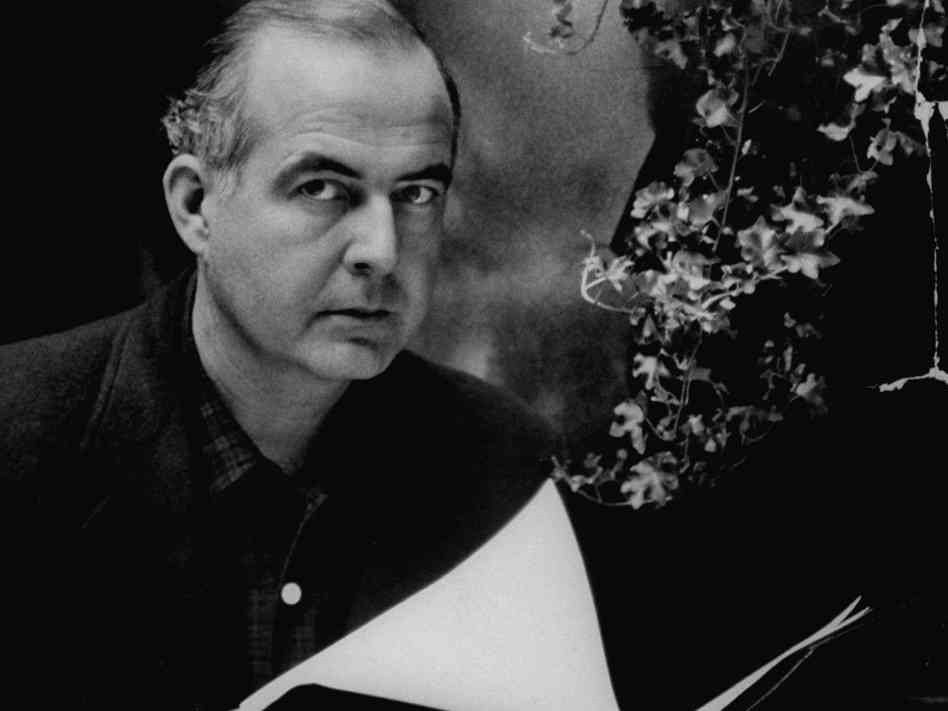
Samuel Barber
Samuel Barber

I’m fascinated by why some people find classical music so moving and powerful and others find it annoying. I’ve learned to like classical music enough, from brief measures here and there within symphonies, that I want to learn to like it more. I believe I have a conceptual barrier to understanding classical music. By understanding I mean being able to listen to it and appreciate its artistic beauty.

One hypothesis I’m working with, is I don’t have the working memory to appreciate classical music. I can’t remember the melody to any song, even popular songs I’ve heard a thousand times. I can’t hum a tune, or remember lyrics. Popular music, which I love, is based on short songs built around a relentless rhythm. Rock, folk, country and to a degree jazz songs are composed around a steady beat, usually provided by drums and bass. Other instruments weave simply melodies within the beat, but they are seldom complex, at least compared to classical music. Pop music is close to a short chant, while classical music is often much longer, far more complex, and might be compared to several long poems all read at the same time, but which still create a coherent whole. To my mind, classical music is a jumble of words and phrases I can’t comprehend, often jarring, usually without resonating with my feelings, but occasionally twinging a sense of beauty.

I came up with my working memory theory because of three recent incidents. First, my friend Janis has listened to two symphonies with me that she remembered from her high school band days. She can still hum/sing them, and remember their ever changing movements. She’d conduct with her hands as she listened, which shows she remember their overall structure.

Then I saw a video of a 3-year-old kid “conducting” the 4th movement of Beethoven’s 5th.

If you watch young Jonathan you can see that he anticipates what’s coming up. He has memorized the piece. Janis has done the same thing with the two pieces we listened to. I don’t know any classical music well enough to anticipate any part of it, even the symphonies I’ve played four or five times. I have no memory for structure. Popular music is so repetitive that you don’t have to remember. Has popular music made me lazy, or do I just have a very poor working memory?

I did play the three pieces I heard last night before the performance on Spotify–so I wasn’t absolutely new to them. I wonder how many times I would have to play them before I would learn to anticipate all the changes?

I remember taking tests where I was asked to remember a series of numbers. I’m miserable at it. Which probably explains why I can’t remember lyrics, poems and melodies. I don’t know if this is a birth defect, laziness, or lack of training. But it also relates to a third clue I discovered when I read “What Makes a Prodigy?” Scientists have discovered that most prodigies have fantastic working memories, either in the 99th percentile, or even in the 99.9th percentile. Most childhood prodigies are good at math, music and chess—all things I’m terrible at.

This probably explains why all my life I’ve wished I could play chess, music and do math—I hunger to do what I can’t. It might also explain why I can’t sing or dance. Don’t worry, I’m not feeling pity for myself, I’m good at other things. We often want what we can’t have. I’m guessing it might take a certain level of working memory ability to appreciate classical music, say 70th percentile or above, and I must be way below that.

Last night as I sat alone in the hall, (none of the three friends I asked to go with me would go). I struggled to make sense of what I was hearing. I was impressed by the performers, and by the creativity of the compositions, but except for some of the Barber, what I heard didn’t feel like what I feel when I listen to music I love. And I have a theory about that too.

If you are born into a family of Baptists it’s most likely you’ll grow up to be Baptist. If a Muslim family adopted a Baptist baby, it would grow up to be Muslim. Or maybe Hindu if it was taken to India. I was never raised with classical music, so it’s a foreign religion, a foreign culture. Because some people can move to a distant land and embrace a new culture, religion and ethics, I assume it’s possible for me to learn to like classical music. I just don’t know how hard that might be, or if my short term memory problem will be a limiting factor.

I tend to think it’s a matter of long term exposure. I used to really hate opera, but in the last year I’ve added a few arias to my Spotify playlist of favorites that I play everyday on random. This playlist are songs I can always hear and always enjoy, no matter when they come up. I’ve learned to love a few opera pieces enough to add them into the group.

Yet, I continue to struggle to conceptualize classical music. It’s funny what a newbie I am. I want to clap at the end of movements, whereas the obvious tradition is to sit quietly until the end of a piece. There’s no whistling, shouting, or stomping when a performer plays a particularly good riff. I was in a mostly empty hall with about sixty people in the audience. I think most of them were music majors, or older folk who love classical music. They all knew when each piece ended and clapped right on clue. I expected most of them were familiar enough with each of the three pieces they could have conducted. Which means they see classical music as a whole, something I can’t fathom yet.

Popular songs are played so often, and last so little time, that most people can grasp their basic structure quickly. A very long time ago I tried learning how to play the guitar and my teacher taught me the chord structure to “Like a Rolling Stone,” a song I’ve heard thousands of times since 1965. For a few weeks, decades ago, I could bang out that song, and had a feeling for its structure. I can’t even hum it now.

I listen to music in a extremely weird way, that might not be typical for most people. I don’t comprehend it’s parts. I can’t comprehend or visualize it’s structure. But holistically music pushes a button in my brain that turns on emotions. Music is a drug to me. Because pop songs are so concisely repetitious, they usually create just one emotion. Because classical music is so complexly varied, so diverse in it’s effects, that most of the time I feel nothing, but every once in a while, a measure, or even half measure of its music will find an emotion button to press. I wonder if I keep trying, I’ll learn how to like classical music so more of it’s riffs hit buttons within me that produce a response? One thing significant about classical music, and why I often compare it to movie soundtracks, is it creates a series of different emotions, sometimes even a rollercoaster ride of feelings.

Finally, I have one other hypothesis. I think I responded better to Barber than Beethoven or Haydn because he’s a 20th century composer. And that I liked Haydn least because he’s the oldest. I’m guessing the music of the 18th and 19th century was different because people’s minds were different, and I can’t tune into those periods—yet. With popular music I’ve learned to enjoy music all the way back to the 1920s, and I’ve even heard songs from the 1910s that are becoming catchy to me. For me to learn to love classical music will require learning to love music from other centuries. What’s fascinating is I started listening to chants from the Middle Ages, and I dug them. And I have a theory about why. Medieval music is more like today’s popular music, very simple. The early melodies were monophonic. Which makes me wonder if the minds of people in the 18th and 19th century were more capable of comprehending complexity than our 21st century minds?

JWH

The Beatles and Other Forgotten Bands

By James Wallace Harris, June 30, 2015

Now that Apple has entered the streaming music business it’s obvious that streaming is the future. After more than a century of wax cylinders, 78s, LPs, 45s, 8-tracks, cassettes, CDs, DATs, SACDs, MP3s, music will arrive by subscribing to bits and bytes. We’re now in a transition phase. Some people will listen to music they own, and others will listen to music they rent. As the advantages of subscription music become apparent to all, most listeners will forget about owning. If songs aren’t instantly available on their smartphones, they will be forgotten.

The_Beatles_-_Rubber_Soul

Because I listen to ninety-nine percent of my music through Spotify, The Beatles are becoming a forgotten band. I’m sure Apple hopes to make an exclusive deal to stream The Beatles like they did for selling their songs and albums by digital downloads. If The Beatles make such an agreement, I might forget them completely. I bought twelve of their thirteen re-mastered CDs when they came out a couple years ago, but I don’t play them. Some are still in the shrink wrap. Listening to music on Spotify is just too damn convenient.

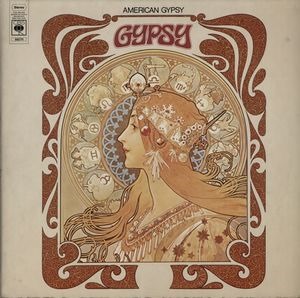
Gypsy

Most of the famous bands that held out against the subscription music tide have given in – AC/DC is the latest example. I have to admire that group for not making an exclusive deal. During the transition phase to a complete subscription music age, we will have to find ways to deal with forgotten bands. There are several reasons why music from the past isn’t offered today.

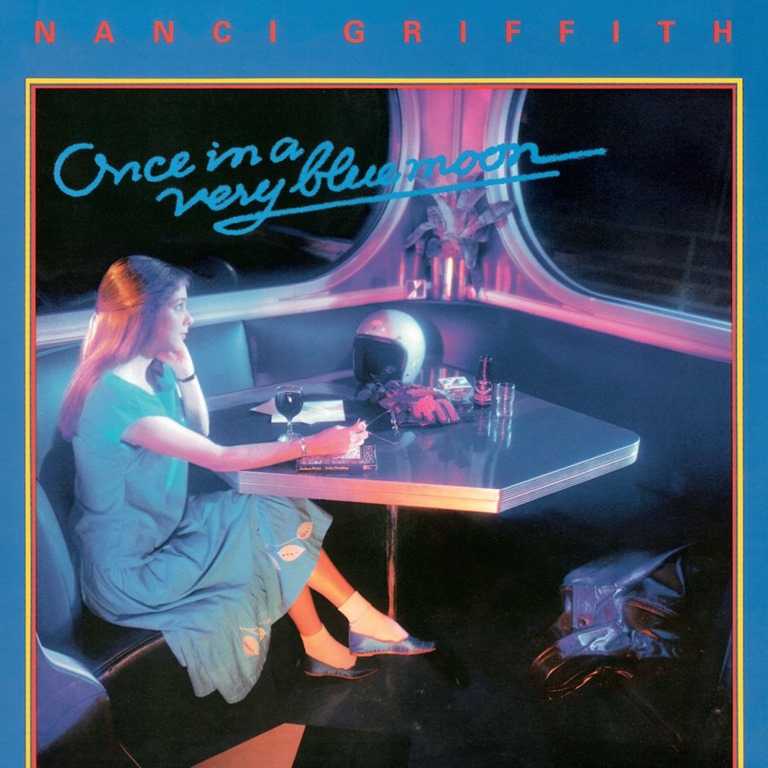
Once In a Very Blue Moon - Nanci Griffith

First, a band will refuse to allow their music to be streamed. That’s becoming less likely as people quit buying music. Second, music is often tied up in legal battles. Again, that will be resolved. There is a lot of music from the past that is forgotten because there’s no demand or its creators aren’t around to promote it. I assume this will change over time as those who still remember will complain. Finally, what we can hear will be limited by exclusive deals. There’s over a dozen subscription music services out there now with more coming on line all the time. The best way to capture subscribers is to promise the biggest catalog, especially catalogs with artists and albums that other services don’t contain. I find this mercenary practice a heinous aspect of the music business.

Willis Alan Ramsey

Right now the standard price for subscribing to a music library is $10 a month. If some services seek to dominate with exclusive deals, there will be a tendency towards monopolies and squeezing out the smaller services, or for people to subscribe to more than one music site. One solution to make subscribing to multiple libraries possible is to change the fee structure. For example, if Spotify and Apple charged $2.99 to be a subscriber, and then one penny a play, then fans could easily enjoy two sites and pay artists fairly.

quicksilver_what_about_me_lg

One reason why artists have avoided subscription services is the low royalty payments. Between the music publishers and subscription services, they seem to make the best deals for themselves. Apple almost got away with giving people three months of music to new subscribers without paying the artists. I think the artists would get a better deal if their payments were separated from subscription fees.

Rainbow Down the Road by B. W. Stevenson

One cent a play is the perfect payment. That cent should be divvied fairly between the composers, performers and record companies. The one cent fee should only be for specific playing of songs. For random background listening, artists should get a lesser fee paid out of the subscription service fee. That way, unless a fan plays specific songs all day long, most listeners will still stay close to the $10 a month bill.

Never Goin Back to Georgia by Blue Magoos

With better royalties I believe most music from the past will be unearthed and put online. Forgotten bands and their albums will show up in libraries, making subscription music nearly perfect. Right now there are many favorite songs from the past that I can’t add to my playlists. In the future, when everything I want to hear is in my subscription, I can’t imagine another system of music delivery ever replacing it.

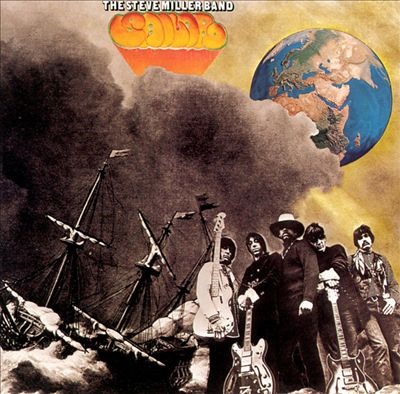
Sailer by The Steve Miller Band

Pictured are just some of the albums I can’t play on Spotify today. I hope they will all be available within a year.

JWH