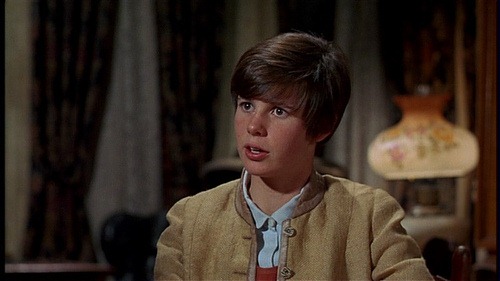
The Tree of Life (2011)–Grace versus Nature

Terrence Malick’s new film, The Tree of Life is quite polarizing for its audiences.  NPR is even reporting that a small percentage of viewers walk out on the film and some of those ask for their money back.  Now I’ve walked out on a number of films over the decades and I can understand many reasons for not wanting to finish a movie.  There is no way to know why people leave before The Tree of Life is over, but I wonder if any do for philosophical reasons.  This is a philosophical movie, but I also found it immensely entertaining, beautiful to watch, and never boring.  This is one of the most ambitious films I’ve ever seen.  It makes me think of Erich von Stroheim’s Greed.  Another film about naturalism.

The Tree of Life attempts to answer one of the most difficult spiritual questions in philosophy:  Why do bad things happen to good people.  The film begins by telling us that life is a battle between grace and nature.  Throughout the film we hear the character pray to God asking for guidance, forgiveness,  understanding and meaning, and when a son and brother dies, his parents and siblings suffer greatly, partly at the loss, but mostly for not understanding why.

The film quotes The Book of Job, and has a scene where a pastor gives a excellent sermon on Job.  Job is one of the most complex stories in the Bible.  Many of the faithful have given up belief in God trying to understand “Why do the righteous suffer?”

I do not live by faith, but I like the word grace.  Terrence Malick shows the history of the universe in this film, making a good case for evolution is part of reality.  The faithful believe we are here by the grace of God, but I believe we are here by the grace of evolution.  Our universe is immense in size and ancient in age, and our lives are a miracle of unintentional consequences.  I think the word grace applies to that too.  I also believe the most sophisticated of spiritual philosophers accept evolution and incorporate it into their philosophy.

The difference between the faithful and those who accept evolution is life after death.  The faithful want to believe that no matter how much suffering we experience in this life, it will be soothed by the life we get after this one.  And Malick shows that in The Tree of Life.  I’ve wondered if some of the people who have walked out on this picture was because they thought Malick was selling evolution.  If they did, they should have stayed.  Malick sticks with faith all the way through, although it’s subtle, leaving room for some atheists to interpret the film differently.  All great fiction is ambiguous, so it’s unfair to suggest my views as the only views of this story.

Here’s the thing, for most of the faithful, suffering can only be made sensible if there is life after death, either through rewards or punishment.  To those who side with nature, suffering is just part of life.  There is no philosophical problem for atheists, because we don’t believe God is making us suffer.  The hardest thing for the faithful to endure is to believe that God is making them suffer.  Thus the story of Job.

The evolution of liberal thought is one that fights suffering directly by trying to make living in this life better for all.  Malick doesn’t go there at all.  This is a deeply spiritual movie in the sense that it is totally metaphysical.  Striving to do better is shown to cause suffering as illustrated by the role of the father played by Brad Pitt.

This movie is not for people who want escapism.  I’m not sure this movie is even for young people.  Terrence Malick was born in 1943, he’s not a baby boomer, but like Bob Dylan, The Beatles and The Rolling Stones, he’s of the generation that speaks to the baby boomers.  I’d say anyone who grew up in the 1950s America should watch this film if they have a philosophical bent, it’s a film about and for us.

This trailer will give a hint at what The Tree of Life is like, but only the slightest of one.

This rather enigmatic web site gives more scenes from the movie, but you need a lot of patience to try out all the rather short clips.  Go see the film for the full cinematic rollercoaster ride.

JWH – 7/4/11
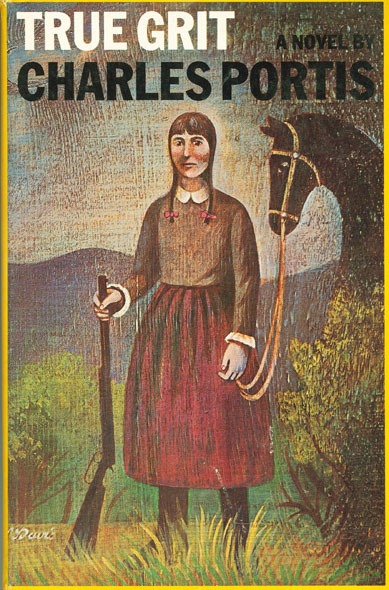
True Grit by Charles Portis–Book versus Movies

Word from the talk shows and on the web suggests that the new Coen Brothers’ film True Grit (2010) was not a remake of the classic John Wayne western True Grit (1969), but a new, more faithful interpretation of the original novel, True Grit (1968)  by Charles Portis.  As Mattie Ross might say, “That is a big story.”  This past week I read the original novel and then watched both movies.  In terms of following the book scene by scene I’d say the John Wayne film was more faithful to the book.  But the Jeff Bridges version follows the book’s ending much closer.  Both films used extensive amounts of dialog lifted directly from the novel.  But yes, the newer film was more grittier when it came to the violence and humor of the story.

true_grit_book

The motion picture stands at the pinnacle of all art forms in our culture – where millions will flock to see the latest blockbuster.  But what role does the novel play in creating this art form?  Movies are often created directly from screenplays, so it’s hard to measure their worth without the novel, but when one is made from a great novel, how do we judge its success?  As a standalone work of art, or as an interpretation of another work?  In my mind, neither the 1969 or 2010 film versions of True Grit came close to the power of the Charles Portis novel.  But as standalone works of art I think they are equally successful in their own ways.  The cinematic culture that made each film is very different, as well as the culture of their separate audiences.  They are like night and day, but then so is 1969 and 2010.

The 1969 film can be considered the clean version of the story, with all the actors wearing clean and colorful costumes, filmed in the gorgeous Colorado Rockies.  The 2010 film is far more realist and historically accurate, especially to the setting of the novel, Arkansas and the Oklahoma Indian territories – but filmed in Texas and closer to the look of the land in the book.  The 2010 film visually portrayed the wild west characters as if they had step through a time travel portal, looking dirty, hungry and uneducated.  But all modern film westerns do this, it’s the style of the time, so I don’t know if we can give credit to the Coen Brothers for being more faithful to the book.

true_grit_kim_darby

I can’t recommend reading the novel highly enough – both films fail to capture much of the story, although because it’s a short book with vivid dialog, both do follow it faithfully far better than Hollywood usually follows an original novel.  The novel is dense with fictional details that just don’t come out in the movies.  Also, the novel is all about the voice of Mattie Ross, and neither movie captures that.  Movie makers consider voice over narration the kiss of death, but I wish they could have put more of book Mattie’s thinking into movie Mattie’s performance.   And strangely Portis sense of the dramatic appears superior to each set of movie makers because when each film diverts from his plotting and scene setup they suffer.  Portis had a keen sense of plotting and drama that both films wisely copy fairly thoroughly. 

The oddest departure from the story is the casting of actors for Rooster Cogburn.  Jeff Bridges was 61 and John Wayne was around 62, whereas in the book Rooster is described as being in his forties.  Kim Darby was around 21 when cast as the 14 year old Mattie Ross, which gives Hailee Steinfield an edge since she was 13.  Too me Kim Darby in her film often looked younger than Hailee Steinfield because they were trying to make her look younger to play the part, while the Coen Brothers seemed to be trying to make Hailee look more stern and mature to be believable.  Overall the acting is superior in the newer film, but there are some good performances in the older one.  I actually prefer John Wayne’s performance because he’s more charming and likable, but Portis goes a long way to make Rooster unlikable letting us know that he abandoned his family, robbed banks, road with Quantrill’s terrorists, and even though he works for the law is seldom legal in his actions. 

And the book provides the extremely realistic coda that Rooster never tried to contact Mattie after their adventure was over ,implying that Mattie meant little to him, but to Mattie, Rooster was someone she remembered her whole life.  Rooster had few warm and fuzzy qualities, even though the movies lead us to feel he did.  And book Mattie was a cold character who ended up only loving her religion and bank and never marrying.  In the end, I think both movies lean closer to being sentimental where the book tries to warn us against that.

true_grit_movie_image_jeff_bridges_hailee_steinfeld_hi-res-600x399

Bookworms always protest how their favorite novels are made into bad films, and I’d have to say neither version of True Grit has come close to capturing the true beauty of the book.  True Grit (2010) runs 110 minutes and if they had pushed that time to even 140 minutes I think they could have come damn close.  True Grit (1969) ran 128 minutes and filmed more scenes from the book but captured less of the true grit of the story.

What’s needed is 5 minutes of Mattie opening the story from 1928, the vantage point of her narration, and another few minutes closing it.  I’m not fond of framing novels and movies with action outside of the story, but that’s how Charles Portis wrote it, and I think it’s needed to capture the voice of Mattie.  The older Mattie even intrudes within the story from time to time.  Also, the 2010 version should have followed all the scenes Portis wrote set in the Indian territories, and fixed La Beouf’s plotline.  Twice Matt Damon left their little posse for no real reason – did he have other commitments?

Ultimately both movies work hard to follow the book, but I think the people of 2010 are naturally more willing to accept the horror and grotesque of the American gothic of the story.  Are citizens of 2010 closer psychologically to their 1877 cousins?  What doesn’t come across in either film are the threads of religion that run through the book.  True Grit isn’t Christian but deeply Old Testament.  The world of True Grit missed the Enlightenment.  It is why it’s a great western.  Jane Tompkins makes a great case that the western is anti-Christian and anti-woman in her book West of Everything, and I think True Grit fits her thesis.  Mattie Ross is a Christian woman who leaves civilization and for a few days explores the heart of darkness of the old west.

JWH – 1/3/11

Movies I Love to Watch at Christmas Time

For Christmas 2010, Entertainment Weekly came up with their “20 Top Christmas Movies Ever” which included movies which I found downright bizarre to be calling Christmas films, like Gremlins, Die Hard, Trading Places and Bad Santa.   What kind of uplifting holiday spirit do folks get into from watching those flicks?  No wonder Christians are worried about the corruption of their sacred holiday.  Wikipedia does tally a very long list of what some people consider Christmas movies, but most of them miss the point of what I think of as Christmas spirit.

I am not a Christian, but I love the spirit of Christmas as defined by Charles Dickens in his 1843 book, A Christmas Carol.  Christmas is not about Santa Claus, Christmas trees or giving presents.  Christmas is about being grateful, compassionate and giving.  You don’t need to be religious to appreciate the struggle to become a better person by trying to improve the lives of people around you.  I love Christmas movies because I’m a selfish person and I need constant reminding to be more generous and selfless.

To me the classic Christmas movie to watch at Christmas time are those that inspire me to be more charitable, compassionate and considerate.  It takes a great movie to move me.  Die Hard and Home Alone are lots of fun by not uplifting.  And I really need to watch Christmas worthy movies all year round because I need steady inspiration to remind me to be less selfish.  That’s why some movies on my Christmas movie list would be bizarre to other people making their list of favorite Christmas movies.  For example, I think of Groundhog Day to be a great movie to watch at Christmas time, or any other time of the year to inspire Christmas spirit.

For me, a great Christmas film must inspire us to be more like Jesus.  Now that’s a weird statement to come from an atheist, but let me explain.  We know very little about the man Jesus.  Most everything written about him is pure speculation, especially about his birth and death.  But there is enough evidence to believe there was a man who tried to invent a philosophy about compassion.  That core philosophy about compassion is taught in many religions.  It has nothing to do with life after death, God or other metaphysical beliefs.  A Christmas Carol or It’s A Wonderful Life attempts to inspire this philosophy too.  I think it’s the spirit of Christmas.  It should work for both believers and non-believers.

With that said, I’d like to list some films I think are inspirational to watch at Christmas time.  Several of them are not about Christmas, but they are still great to watch at Christmas time.

It’s A Wonderful Life

A Christmas Carol (1938)

The Bishop’s Wife

Groundhog Day

You Can’t Take It With You

Miracle on 34th Street

Gattaca

Dances with Wolves

Battleground

On Borrowed Time

We’re No Angels

Little Women

The Shop Around the Corner

The Wizard of Oz

JWH – 12/21/10

The Social Network – aka The Facebook Movie

Above all, The Social Network (2010) is a magnificent work of storytelling.  Especially considering that it’s a story based on boring litigation over the tedious topic of computer programming.  On the other hand, it’s a rare example of cinematic creative nonfiction.  How do you dramatize the truth, especially when all the action is cerebral?  I hate to say this because it might jinx some people from going to the movie, but The Social Network is an incredibly educational movie, especially about the nature of what it means to be an asshole.

The litigation over the creation of Facebook reminds me of the fight over who invented television, but few people will know about that.  Ditto for the radio, and many other major tech inventions of the past we take for granted.  It’s very hard to give exact credit when everyone stands on the shoulders of giants.  Few characters in this film come across as nice, many are assholes, most are viciously aggressive, and we see the very worse sides of greed and sex.

At a naturalistic level The Social Network is about alpha males fighting over intellectual territory while alpha females throw themselves at the perceived winners.  At the class level the story is about old money, old social networks, descendents of WASP wealth fighting Jewish upstarts who out maneuver the class incumbents to climb even higher on the social ladder.  At the economic level The Social Network is about the marketing of an idea as an invention and who really deserves the spoils of business.

The film is bookend by two women who try to enlighten the Mark Zuckerberg character about the specific traits of his asshole personality.  These are two of the three nice people in this film, the third being Eduardo Saverin, the nice guy who is fighting out of his league.  People who get into Harvard are by nature driven by ambition, if not naked aggression, so we need to factor such drives out of the equation to make all things equal.  But a bitch fight over billions is not pretty, so it’s hard to see the positive qualities of the combatants.  I’ve got to say the movie reflects the efficiency of our modern legal system because it took decades to solve the legal battles over television and radio.  And The Social Network does an apparently fantastic job of explaining to the public the complicated legal issues dealing with the foundation of Facebook.

To me, the saddest part of this movie is how poorly young women come across in this film.  For the most part, the females in this story are the prized toys that males win in battles of aggression.  They throw their beautiful bodies at any guy who succeeds, even the social challenged Zuckerberg, they frolic around lesser males who do the sweatshop programming, taking bong hits and acting sexy to spur on their coding success, and they lay on their backs to provide flat bellies for the rich to snort cocaine from.  The strong independent women in this film are savvy lawyers, but the endless hordes of legal teams, male and female, come across as brainy vultures.

Of course, the sex-toy women also reflects badly on the males, because they don’t see women as other than prizes for success.  Zuckerberg is portrayed as driven by envy, jealousy and desire, and the film makes a good case that Facebook exists because Zuckerberg was rejected by Erica Albright, and that he wanted the success of Facebook to give him another chance with her.  It wasn’t about the money, but female approval.

More complex to understand is the exact quality of Zuckerberg’s asshole-ness.  He’s brilliant and aloof, but he’s so lacking in social graces that you have to wonder if he has an autistic background.  Mark tries so hard to be liked while looking down on all others and squashing any attempts of communication with a towering superiority.  But isn’t that how most average folks see super-geeks?

I attended The Social Network on its opening weekend, a Saturday afternoon, and I expected the theater to be packed because of the overwhelming wonderful reviews and great word of mouth, but we sat in a mostly empty room.  Moviegoers might not find the topic of this flick appealing, but director David Fincher and screenwriter Aaron Sorkin have created a powerful, riveting and engaging story of our times.  It really shouldn’t be missed.

Finally, because the movie uses real names I must ask how much are the characters in the movie like their real life counterparts?  I’d love to find interviews with all of them where they talk about their portrayals in the film. Actually, someone should make a documentary of that.  Essentially the movie is metafiction, and that’s a fascinating topic by itself.

JWH – 10/3/10

Three on a Match (1932)

three-on-a-match-bette-davis-joan-blondell-ann-dvorak

I wish I could put into words how I feel about old movies from the 1930s.  I wish I could understand why I love them.  I didn’t live through that era like my parents, not being born until 1951.  I grew up with black and white television and reruns of old films were a staple of TV stations back then, so that’s how I got hooked.  Millions of my fellow baby boomers growing up at the same time never learned to enjoy these films.

So why did I?  I think it has something to do with staying up late and watching them in the dark, with their flickering black and white light creating a strange alternate reality that imprinted on my mind.  I like to watch them best now late at night, when my mind is half dreamy, when they put me in a trance.

Last night I watched Three on a Match, a film I’ve seen before.  This DVD I got from Netflix is part of a collection called Forbidden Hollywood, Volume 2, a series that focuses on pre-code films (before hard censorship in 1934).  A good book that introduces that era is Sins in Soft Focus by Mark A. Vieira.  Many of the great pre-code films deal with feminist issues, and Three on a Match is one of them, even though it’s ending completely supports the status quo.

I think the best of modern movies are better made, better written, better acted than the old shows from the 1930s, but my soul resonates with the old black and white films.  Three on a Match is not a great movie, and most young people if they did watch it, would find it strange and clunky, if not silly and laughable.  For me, Three on a Match oozes history, both about life in America before 1932, and tinsel town.

What the moral police wanted back then, was to censor Hollywood from showing strong willed women.  The kind of women who wanted their own careers, or ones that wanted to explore their sexuality or escape the bondage of marriage, motherhood and even morality.  Three on a Match is actually a slight film, only 64 minutes, and much of that is filled with filler and back story.  Young Bette Davis and Humphrey Bogart have minor roles in this film, but story is about Vivian Kirkwood, played by Ann Dvorak, who is little remembered today.

Vivian Kirkwood does well in school, marries a rich New York lawyer, and has a child, but is bored.  In the scene pictured above she runs into two old friends from school.  The Bette Davis and Joan Blondell characters envy Vivian’s success and can’t understand why she’s not happy.  The flaw in this film is the audience is not shown why she’s unhappy.  We are given in a few short scenes where Vivian avoids her husband, especially his touch, and shows little interest in her son.  I wanted much more.  Maybe real explanations were too explicit even for pre-code Hollywood.

Mrs. Kirkwood asks her husband, a slightly older man played by Warren William, if she can go off on a vacation without him. William, another forgotten star, is wise enough to indulge his wife.  He hates to see her take his son, who he dotes on, but feels the kid belongs with his mom, and assumes the mom is less likely to go running around if she has the kid.  He was wrong.  Three hours after her husband leaves her, Vivian takes up with low life Michael Loftus, nicely played by Lyle Talbot.  Everything happens way too fast in this movie.

The movie is too short, but well illustrated by a few key scenes.  Vivian gets caught up in parties, drinking, and even cocaine if you catch a gesture that Humphrey Bogart makes.  Ultimately, Vivian comes to a tragic, but heroic end.

I wished the movie had been twice as long so we could have gotten deeper into Vivian’s head.  What made her so unhappy with riches, marriage and motherhood?  What drove her to risk everything?  We know the subject all too well, because we see it happening to young women today, with modern films telling the same story far more explicitly, depicting girls taking a walk on the wild side, but are today’s films any better at explaining why?

Personally, I think Bette Davis or even Joan Blondell could have played Vivian Kirkwood better.  Ann Dvorak does a good job, but she doesn’t look the part.  Ann Dvorak looks more suited to play the Joan Blondell part, and we know Bette Davis had the personality for the role.

Even though this film was slight, it was delicious.  I almost feel like watching it again tonight, to savor the beautiful black and white cinematography and to study all the character actors, but I’ve got to watch the end of Lost tonight.

I’ve leave you with this clip that mostly shows the back story, but it has many fascinating news reel clips – especially notice the two girls dancing, something that couldn’t be shown after the code was enforced.  There is practically nothing in this clip that deals with the heart of this film, so don’t judge Three on a Match by it.  It’s design to showcase the music, and uses extra content from the film for imagery.

JWH – 5/23/10