Should We Feel Guilty for Not Buying Books in Bookstores?

I’m a guy who hates to shop, but for my whole life I’ve loved shopping in bookstores and record stores.  I gave up on record stores years ago, but I still shop at bookstores, but not as much as I used to.  Yesterday I visited my local indie bookstore and bought a hardback The Man Who Invented the Computer  by Jane Smiley just to support them.  I could have bought it at Amazon and saved $12 in discounts and taxes, but I thought I’d help my store and state.

Well, no good deed goes unpunished as my mother-in-law used to say.  I get home and read the reviews on Amazon and they aren’t good at all, including many claims of poor research, inaccuracies and even fraud and scandal.  Of 24 customer reviews 12 gave it 1 star, 5 people gave it 3 stars.  If I had been shopping at Amazon those reviews would have stopped me from buying the book.  Now this isn’t the fault of my bookstore, but it does point out a major advantage of shopping online.

The main reason to shop at a bookstore is to see books before you buy and allow yourself the pleasure of discovering something new and exciting.  But shopping at a store literally means judging a book by its cover.

I’m in three online book clubs and a hot topic in all of them are ebooks.  Some folks are pro, and others are definitely con.  But we all lament the disappearance of bookstores, and feel guilty that we buy books online or via those new fangled contraptions like Kindles, iPads and Nooks.  But I’m wondering if we really should feel guilty?

Quite a few club members, especially those living in small towns, say going to a bookstore is expensive and time consuming.  Others are housebound and feel online shopping and ebooks are a godsend.  Me, I like to study reviews before I buy.  And despite what everyone says about personal customer service, I’ve never met a sales clerk as knowledgeable as good reviewers.

Another thing to consider, among my bookworm friends who love shopping for books locally, many of them actually treasure the used bookstores and looking for good deals.

But I hate the idea of just letting bookstores disappear like record stores.  I’ve read that Germany protects bookstores from online sales and ebooks by outlawing discounting.  This makes books more expensive, but protects bookstores, publishers and authors.  I’ve also read that other countries have various ways of mandating price controls.  This is great for saving jobs and keeping businesses afloat, but it’s not very free market.  Should we reevaluate our ideas about free markets?  I don’t know.

What if online sellers had to sell books for the same price as local bookstores and charge the same sales tax, so books were equally priced no matter where you bought them.  I’d still say Amazon was a better place to shop because it’s so much more informative.

I’d also prefer buying used books online.  I bought three used books this week, The Year of the Quiet Sun by Wilson Tucker, The Last Starship From Earth by John Boyd and I, robot – the illustrated screenplay by Harlan Ellison and Isaac Asimov.  I would have to shop for years before I would have even seen copies of any of those books in local used bookstores, but they were a few keystrokes away with ABE Books.  I also bought an ebook, Aegean Dreams by Dario Ciriello because it was only $5.99 on the Kindle, versus $14.44 for the trade paper at Amazon.

At the Classic Science Fiction Online Book Club, we’re voting on the books we’re going to read for the next six months, and one of the major considerations is availability and price.  Members are scattered all over the world, and few want to buy new copies.  Most of the books we’re nominating can be found at ABE Books for $4-5 used, including shipping, and some can be had as ebooks for $5-10, or new for $8-20.  Some of the members with ebook readers say they will buy the ebook edition if it’s priced closed to the used edition.  Others with good used bookstore nearby are finding copies for less than a dollar.  But see the trend?  New hardbacks and trade paper editions have to compete with online discounted books and used books, so it’s not just ebooks hurting new book sales.

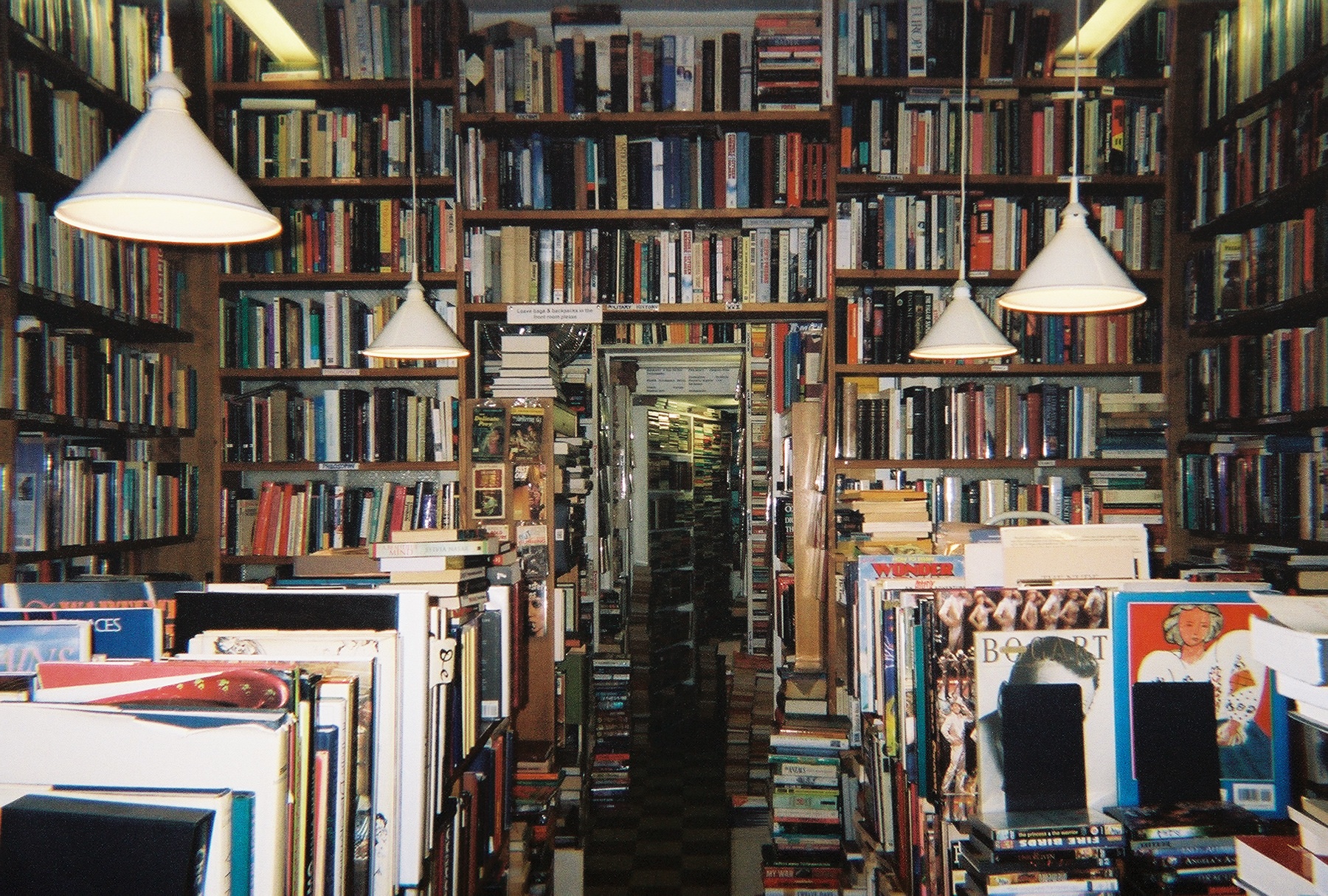
One member found this list of Science Fiction, Fantasy and Horror Bookstores that include online and local bookstores.  There’s a huge variety of options for shopping online.  Some stores on the list do have a physical buildings to visit, but they also do business online.  How does an old fashion bookstore compete?

And maybe that’s the clue.  Maybe online is just a new kind of bookstore.

The times are changing and more and more people are seeing the wind is blowing in a new direction.  There’s a new documentary, Press Pause Play about how technology is impacting artists, musicians, writers, filmmakers and other creative folk.  It’s scary to them because they don’t know how they can earn a living when the traditional methods of marketing their work are disappearing.

We are living in evolutionary times.  I’m turning 60 this year, and many of the people that I know lamenting the loss of bookstores are my age or older.  Have the young already forgotten bookstores?  Our nephew while giving directions to his apartment today said to turn past that building where you mail stuff.  Will concepts like the post office, book store, record store, phone booth, and video rental store even be known to the young in a few years?

It’s weird to be an anachronism in your own time.

JWH – 10/2/11
Classic Science Fiction Anthologies Wanted for My Kindle and iPod

Ebook publishing offers a new lease on life for reprinting old novels but what about short stories and classic anthologies?  Successful novels tend to stay in print, but not anthologies.  I suppose editors buy rights for a limited time and when the anthology goes out of print they no longer have the rights to use the stories any more. But I’d sure love to have a lot of classic science fiction anthologies on my Kindle.

I like my Kindle best for reading short stories.  I’ve been getting the annual Dozois and Hartwell/Cramer collections for my Kindle for a couple years now and it really works out well.  The Dozois book is HUGE with small print, so its much easier to plow through the volume reading on an ebook.

I wished Dozois and the Hartwell/Cramer collections were available on audio, but alas they are not.  But I do get  The Year’s Top Ten Tales of Science Fiction series, edited by Allan Kastor, now in it’s third year.

So I’m well covered on current stories, but what about classic science fiction short stories?

What if it was possible to reprint classic anthologies, which ones would I want?

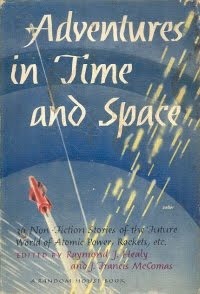
Adventures in Time and Space edited by Healy and McComas

Adventures_in_time_and_space

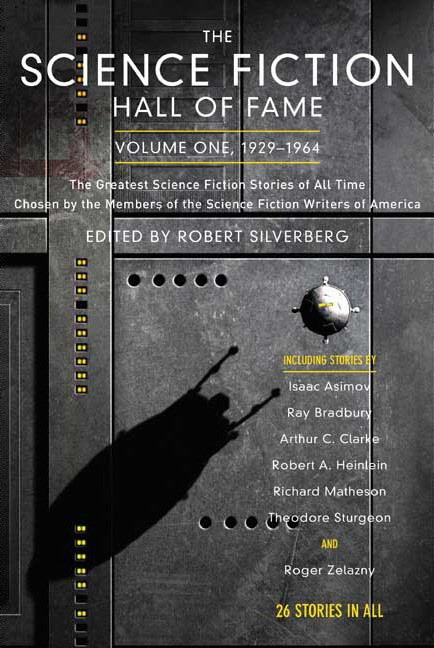
The Science Fiction Hall of Fame, Volume One, 1929-1964

sf-hall-1

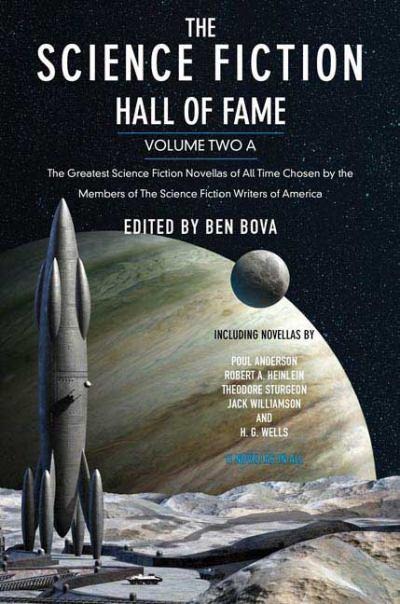
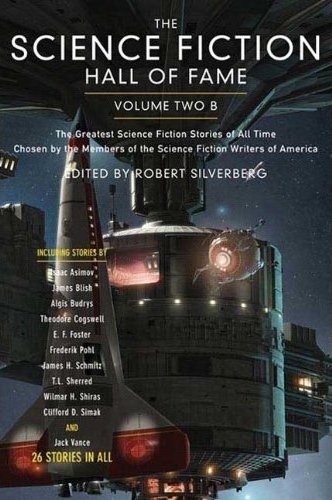
Science Fiction Hall of Fame, Volume 2

sf-hall-2a

sf-hall-2b

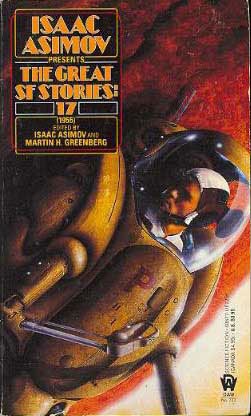
Asimov’s Great SF Stories (series 1-25, 1939-1963)

Asimov_Great_SF_stories17_Daw_1988

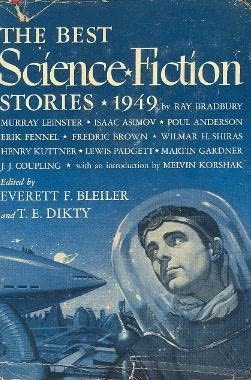
The Best Science Fiction Stories: 1949, 1950, 1951, 1952, 1953, 1954

Best_science_fiction_stories_1949

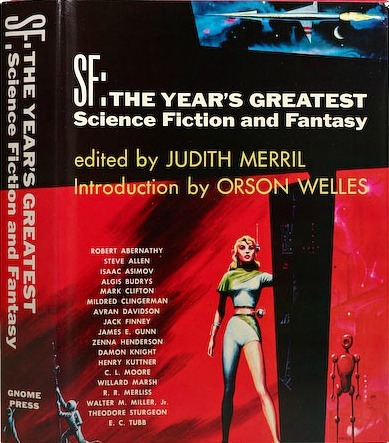
Judith Merril Year’s Greatest (1956-59) and Year’s Best S-F (1960-66)

SF-The Year's Greatest

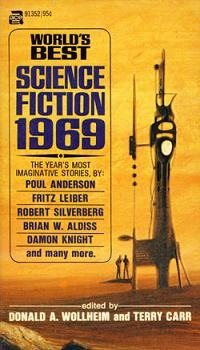
World’s Best Science Fiction (1965-1971) edited by Wollheim and Carr

Worlds_Best_Science_Fiction_1969_cover

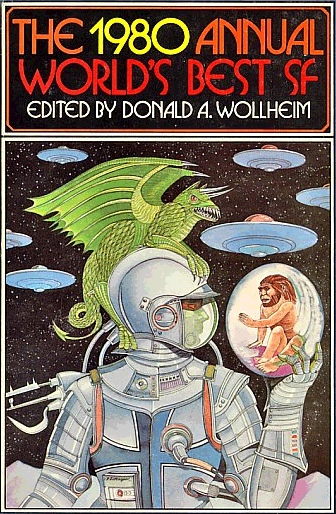
The 1972-1990 Annual World’s Best SF edited by Donald A. Wollheim

the_1980_annual_worlds_best_sf

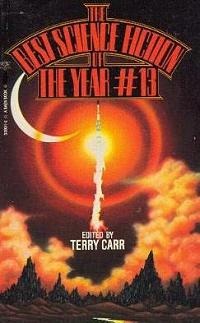
Best Science Fiction of the Year edited by Terry Carr (1-16)

Best_Science_Fiction_of_the_Year_13_cover

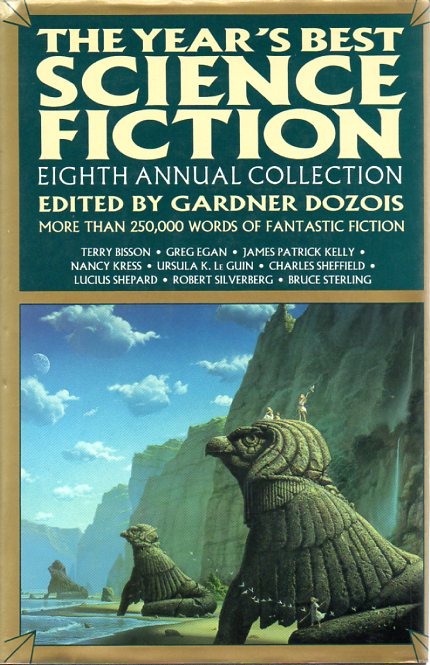
The Year’s Best Science Fiction edited by Gardner Dozois 1984-present

Year'sbestDozois


This hardly scratches the surface of great science fiction anthologies, but by using the annual bests it systematically covers all the years from 1939 to the present.  And we can capture the 1930s with these two collections.

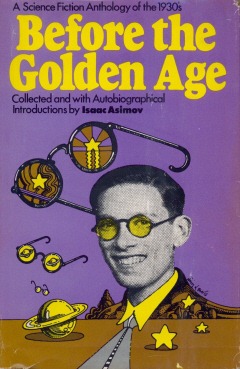
Before the Golden Age edited by Isaac Asimov

Before-the-Golden-Age

Science Fiction of the Thirties edited by Damon Knight

science-fiction-of-the-thirties

I could go back even further with the Sam Moskowitz collections like Under the Moons of Mars and Science Fiction by Gaslight.

If only all these fantastic collections could be reprinted as ebooks, or better yet, as audio books.  I suppose some enterprising publisher and editor could look at the stories in all these collections and seek to get reprint rights and create a new series of anthologies.  They could call it Classic Science Fiction for the Digital Age and publish it in a series of volumes for ebooks and audio.

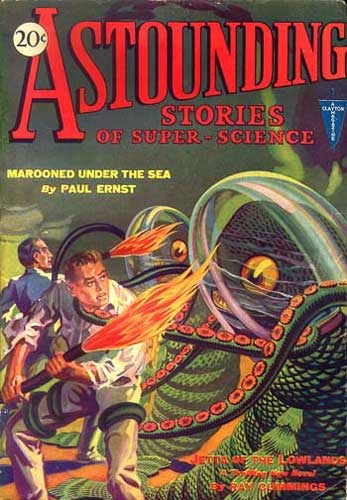
Would there be much of an audience for this old science fiction?  I don’t know.  Project Guttenberg is reprinting a lot of early science fiction in multiple ebook formats that often include the original art.  Take a look at this September 1930 issue of Astounding Magazine.  It’s beautifully laid out for html, but also offers many ebook formats here.

astound-1930-09

Copyrights will keep modern science fiction, like what’s in most of the best of the best-of anthologies above out of these public domain offerings, which is rather sad.  It means most of those stories will probably be never read again.  Of course, I don’t know if there are readers for these public domain reprints.  I do wish someone would make an easy to use app to add the Project Guttenberg issues of Astounding to my iPad.  I’ll have to experiment with this and write about it in a future blog.

JWH – 9/3/11


Is The Kindle a Swindle?

I love my Kindle.  I’ve reached the large print reading years and the Kindle is a wonderful aid to my eyes, but the prices of ebook editions have risen so much that I feel cheated by buying the Kindle edition.  The price of the Kindle edition is often very close to the hardback or trade paperback edition.  There is no reward for buying the ebook and saving the publisher the cost of printing, binding, boxing, shipping and distributing the the physical book.

For example, our book club is reading Destiny Disrupted by Tamin Ansary.  It’s $10.85 for the trade paper or $9.76 for the Kindle.  I’m looking at the new hardcover of The Genesis of Science by James Hannam – it’s $19.77 for the hardback (from Amazon of course) and $14.38.  Another book I was thinking about buying is The Clockwork Universe by Edward Dolnick.  It’s $16.08 hardcover and $14.99 Kindle.  Or On the Grid by Scott Huler – buying the ebook version saves me 88 cents ($10.87 trade, $9.99 Kindle).  Next month’s book club selection, Empire of the Summer Moon S. C. Gwynne, it’s 39 cents cheaper to buy the trade edition instead of the Kindle Edition ($9.60 trade, $9.99 Kindle).

Of course, there is an illusion here.  I’m giving the Amazon price.  If I gave the publisher’s list price, things would appear better.  For example, The Information by James Gleick is $29.95 for the hardback list, $17.21 Amazon priced, but $14.99 for the Kindle.  But I’ve gotten used to Amazon’s prices, so the real buying decision is $17.21 v. $14.99.

Here’s how I feel about books versus ebooks.  When I buy the hardback I feel like I’m adding to my library.  It’s something I can save, or lend, or sell.  When I buy an ebook, it’s something I consume, like renting a DVD.  Now if my ebooks were added to a virtual library, and they were multimedia interactive, and I could enjoy collecting them,  virtually flipping through my collection from time to time, then it might be different.  In fact, books with maps, graphics, and photos just don’t work well on the Kindle.  Now that might change if I had a 10” tablet, but for now, the normal Kindle is all about text.

The psychology of all this is I seldom buy new books from brick and mortar bookstores anymore because of Amazon.  The discounts on hardbacks are just too great.  On the other hand, I hardly ever buy new books for my Kindle because the ebook prices seem too high.  So for now, the heavily discounted hardback wins out.

If all the books I mentioned above were $7.99 each for the Kindle, I would have gobbled them up without a thought.  $9.99 is as high as I’ll go, and since I’ve bought several ebooks at that price and ended up not reading them, I’ve become very careful about buying ebooks.  Buying a hardback and leaving it on the shelf for years doesn’t bother me, but buying an ebook and not reading it right away feels like I just threw my money away.

I know ebooks are all the rage right now, but will ebook sales always be shooting upwards?  I’m swinging away from ebooks, and I’m wondering if other people are feeling that way too?  Ebook prices have been growing and I’m sorry, that just feels like a swindle to me, because I don’t feel like I’m owning anything after giving Amazon my money.  The Kindle just feels like I’m renting books.

[By the way, I don’t feel the Kindle device is an actual swindle.  And when I say Kindle I mean all ebook readers, like the Nook and Sony readers.  I just think, and I’ve heard this from many other ebook owners, that since we don’t actual get a printed book when we buy an ebook, the price should be significantly cheaper.  I thought when I first bought my Kindle I’d be buying a lot of ebooks at lower prices and that just hasn’t turned out to be so.  Now, I’m wondering if I’m not the only one feeling different about ebook readers?]

JWH – 7/14/11

What Does it Cost to Read a Book? How Ebooks will Change Book Buying Habits.

With hardback and paperback sales sliding down the charts while ebook sales rising, it appears the new paperback book is the ebook.  Unlike the past, where readers had to wait months or years for the paperback edition to come out, the ebook and hardback are now published simultaneously.  This is great news for readers until you realize what has happened is the price of a paperback has been increased.  You get to read it sooner, but it costs more – but the whole point of mass market paperbacks was to read books for less.

It used to be a book would come out in hardback, say for $25.99, and then months later, a $14.99 trade edition would come out, and finally after sales for the trade edition tanked, the $7.99 mass market edition would appear.  The cost of reading a book depended on how soon you wanted to read it after first publication.  Now we’re seeing $9.99-$12.99 or more for the ebook, but we get to buy it right away.  On one hand this seems like a very fair price, because it’s such a savings off the hardback cost, but on the other hand, you get nothing but electrons for your money. 

When you buy a hardback you have something physical that will last, that’s collectable, or nice to look at on a shelf, and makes a great gift, or is wonderful to lend to your friends, or even sell.  Even if you didn’t read the book, you had something when you bought a book.

Most people only read a book once, and if you’re buying ebooks, all you’re really getting is to read it.  An ebook will last, but if you only read a book once, it’s more like renting the book.

By the way, from now on when I mention pricing, I’m going to use Amazon’s for sale pricing and not list.

You’d think pricing would be based on what you get for your money.  The ebook would be the cheapest, then mass market paperback, then trade paperback and then hardback, because of the production costs and materials that go into creating the book.  And sometimes this happens.  For example The Mote in God’s Eye by Larry Niven and Jerry Pournelle is $6.35 ebook, and $7.99 mass market paperback.  But Isaac Newton by James Gleick is $11.99 ebook and $10.20 trade paperback – WTF?  Does that mean a mass market paperback only costs $1.64 to produce and the ebook costs $1.79 more than a trade paperback to create?  I don’t think so.

James Gleick’s newest book, The Information is $17.21 for the hardback and $12.99 for the ebook.   What Amazon is asking the reader, are you willing to pay $4.22 more to have a hardback copy, or would you just prefer to read it on your Kindle for $12.99. 

The list price of The Information is $29.95, which is probably what you’d pay at a brick and mortar store.  So the publisher probably thinks $12.99 is a great bargain for the reader, with $16.96 savings.  The author is probably thinking, at what price and royalty rate do I earn the most money.  The pricing of a book is a really hard math problem, isn’t it?

Me, I’m thinking something different.  I’m thinking:  What does it cost to read a book?   Once we enter into the world of ebooks, I’m essentially paying to read the book.  I don’t own anything.  I can’t sell my copy when I’m done with it.  I can’t lend it to a friend (even though they are working on that, but it’s not like owning a real book which I could lend over and over again).  I can’t put it on the shelf for others to admire my large library of great books.  I read the book, and more than likely, I’ll move it to archive on the Kindle, or even delete it so I have less cluttered interface to deal with.

You’d also think ebooks would be priced by the word, to take into account the cost of writing and editing the book, so that a 100,000 word book would cost twice as much as a 50,000 word book.  That doesn’t happen either.  Basically publishers are charging whatever they can get, and each has their own system for pricing.  With ebooks I think they are guessing what the demand will be, and if they think it’s high, they will raise the price accordingly – so a new ebook off the press might be priced $12.99.  But if they think they can sell more copies at the $9.99 price they sell it for that.  When demand goes way down, they will think about lowering the price.  That’s all understandable.

But ebooks is changing the habits of bookworms.  I’ve always bought lots of hardbacks, and never read many of them because I sit them on my shelf thinking one day I’ll find time to read them when I retire.  I’m just not going to do that with ebooks.  I’m going to buy just before I start reading.  I’m not even sure I could save an ebook for twenty years before I got around to reading it, but there’s just no pleasure in owning a bunch of books I can’t see.

And since I don’t feel “buying” an ebook is like “owning” a book, when I see the price at Amazon for the Kindle edition, I’m going to check the library first to see if there is a copy I can “borrow” because reading a book on the Kindle feels a whole lot like borrowing a library book – I’ll only see it as I read it.

Recently Amazon announced that they were selling more ebooks than hardback and paperback books combined.  I’m not sure the world is really ready for the implications of this.  Essentially bookstores, both news and used, are the side effect of bookworms, and not book collectors.  Real, hardcore book collectors are rare compared to the ordinary everyday bookworm that consumes books.  If we bookworms can get our reading electronically, what happens to the bookstore?  And once bookworms realize they are only paying to read a book, and get past the illusion of owning books, how they judge what a fair price is for a book will change.  I’m not sure if publishers are ready for this.

Finally, the move to ebooks is changing me in other ways.  When I shop for books now I realize I was fooling myself.  I’m not going to read all those books I bought.  I don’t really need my shelves of books because I’ve learned I’m a consumer of words, and not a collector of books.  Several times lately I went to buy a book and stopped myself, because I knew if I didn’t read the book right away there is little chance I’d read it at all.  I can’t plan for future reading because I read by what I’m hungry for at the moment.  This is also why I don’t buy ebooks when I see one I want to read.  That impulse is different from the impulse for picking a book to read right now.  With a Kindle, you can finish a book and download another and start reading immediately, and since finding books electronically is so easy, why not wait until it’s time to read the next book.

The future price of a book won’t be based on what the publisher thinks the book is worth, but on the price readers are willing to pay to read it next.

JWH – 5/24/11

12 Ways for the Kindle to Compete with iPad

The Kindle is clunky!  As a paperback book replacement, the Kindle is superior to the iPad because of size and weight.  However, as a magazine, newspaper, television and computer replacement, it fails miserable by contrasting it with the iPad.

Robert L. Mitchell, over at Computerworld writes “Why iPads will beat e-readers,” and he makes some very good points.  Basically he asks why have two devices when one will do, especially one that does so much more.  For most people this will be very true, but not all, and the not-alls can still be millions of bookworms.  Not everyone is ready to spend $500 for a reading gadget, but some people are ready to spend $139, and millions more would get into the game if the Kindle was $49.95, one tenth the price of the iPad.  The real question is:  Is the Kindle good enough in the long run?  If you could buy an iPad for $139 how many people would even think of purchasing a Kindle?

My biggest gripe with my Kindle 3 is not the e-ink display but the user interface – the Kindle is clunky at best, compared to the uber-elegant iPad.  How can Amazon fix the Kindle so its users would no longer feel iPad envy?  Can the Kindle be marketed as a single task device in such a way that it doesn’t psychologically compete with the iPad at all?

The problem is the iPad can be a universal ebook reader and that’s why people see the iPad as competition to the Kindle.  Plus the iPad can host thousands of dazzling programs on a beautiful and elegant screen.

The iPad proves that a touch screen is the perfect user interface (UI) for tablet size devices!  The Kindle 3’s buttons and UI is a major leap forward over previous models, but it’s nowhere near the quantum leap of touch screen tablets.  My biggest gripe against the iPad is it’s way too heavy to be a book.  If you’re the kind of person that reads for less than an hour a few times a week, the iPad is fine.  But if you read hours a day, seven days a week then the iPad is clunky and chunky.  This leaves room for Amazon to compete.

Amazon can go in two major directions.  First, it can continue to be just a book replacement device or second, it can go into the tablet competition arena.  And since Kindle software is already on all the major tablets, it’s doubtful that Amazon needs to market its own general purpose device unless it wants to compete with the Color Nook, which is essentially a half-ass Android tablet, and B&N’s attempt to beat E-ink technology.  But at $250, it’s too expensive for most people wanting to get into the ebook reading.

Does Amazon really need to make money in hardware sales?  Does it really matter what platform Amazon’s customers read their books on?  Now that the ebook market has exploded, and readers are accepting the idea of buying ebooks, does Amazon even need to sell Kindles?  Does it even need to sell ebooks in the Kindle format exclusively?  Amazon’s real competition is not the iPad, but Apple.  Apple now sells music, movies, audio books, ebooks, television shows – much of the same content that Amazon is pushing, and a reason to want Android tablets to succeed.  And how does Amazon compete when Apple takes in a 30% profit margin on anything Amazon sells on Apple devices.

Amazon needs to beat Apple, not the iPad, and the best way for that to happen is if Android phones and tablets outsell iPhones and iPads.  Or if Amazon has a device that its loyal customers love more than an iPad.  For the Kindle device to succeed it must be the ultimate ebook reader – and it wouldn’t hurt if it was $49.95 or less.

Here are a number of ways the Kindle could be improved.

  1. E-ink technology limits what Amazon can do with the design of the Kindle.  If Amazon could meld touch screen technology with the e-ink display it could simplify the device by jettison most of the buttons, and vastly improving the user interface.
  2. Add support for EPUB standard – that way EPUB could become the web standard for free ebooks and that would actually help the Kindle.  It would also let Kindle users get library books from Overdrive and NetLibrary, also helping sales.
  3. Make a deal with B&N to support each other’s book formats, so Kindle users could buy from B&N, and Nook users could buy from Amazon.  Hey, the competition is with Apple.
  4. Work extremely hard on the ergonomics of the device so it’s easier to hold and read than any mass market paperback, trade paper or hardback book.
  5. Make the device indestructible so people feel its safe to take their Kindle anywhere something you won’t do with an expensive iPad or Android tablet.
  6. Make the price cheap enough so people will want one for every family member, nor feel kicked in the gut if they loose one.
  7. Work out a scheme for family and friends to share books.  If I owned two Kindles so my wife and I can read the same book, we’d have to have both devices on one account name just to keep us from having to buy two copies.  Being forced to share an account means we can’t have separate libraries.  And if we’re reading the same book at the same time the auto book marking feature would get messed up.
  8. Develop a home page that’s a metaphor for a personal library system.  A Kindle can hold thousands of books theoretically, but not practically.  Amazon needs to make an app like iTunes to manage all the content on the Kindle – but it needs to be far better than iTunes.
  9. Improve the way magazines and newspapers are presented and stored on the Kindle – and aim for cheaper subscription costs than what people have to pay on the iPad.
  10. Most books, especially fiction, do not have photos and illustrations, so it’s easier for E-ink to compete with LCD displays.  It might be better to concede multimedia to the tablet competition, and make the Kindle the absolute best text to brain interface that bookworms can buy.
  11. Make it a snap to transfer text from the Internet and the computer to and from the Kindle.   Getting text to and from the iPhone/iPad/iPod touch can be annoying because of all the security and restrictions Apple uses to protect the user.  It would be fantastic to have a plugin for my browsers that would scrape a web page and put the text content into my Kindle for reading later in the comfort of my recliner.  But just getting .txt, .pdf, and .doc files to and from the Kindle is still cumbersome, and it can’t handle .epub at all.  This would be supported by #8.
  12. Find a software solution to make the Kindle a lifetime library of reading – right now I feel compelled to delete books and docs from the Kindle to keep thing clean and easy, but if the UI was better my Kindle could be a portable library of lifetime reading.  One solution is to provide a lifetime library in the cloud for your loyal users.

I use my Kindle most for reading free stuff off the Internet.  There are short stories and essays on the Internet that are too long to read sitting at the desk so I like to put on the Kindle, plus there are thousand and thousands of free novels, especially classics.  I do buy Kindle books, especially when they are cheaper than buying printed books, but the prices for ebooks have shot up which makes them less appealing.  If I see a reprint of an old science fiction book for $7.99 or $9.99 I just say no.  If it’s $4.99 I think hard about it.  If it’s $2.99 I jump.  $4.99-$7.99 competes with buying used hardbacks for collecting and sharing.  I’d rather buy a used hardback and give it to a friend than buy a Kindle book at the same price.  Sorry Amazon, but sharing books is a factor. 

If the Kindle book is cheaper than a used hardback I think, cool, I’m building an electronic library.  But even that desire is limited because the current UI makes collecting books a chore because of clutter and harder navigation.  I seldom reread books, but sometimes I’d like them for reference, so it’s a toss-up for whether or not to keep them.  I’d love to have a system for building an electronic library of everything I’ve read.  If the Kindle offered such software I’d be more likely to buy Kindle books to keep in my lifetime library.

Right now when I power up my Kindle I see a long list of books, magazines and other documents waiting to be read.  If I want I can archive stuff to an even longer list.  That’s a mess.  What’s needed is a library system for e-readers, something that’s probably only possible with a touch screen UI.

Amazon needs to get some savvy librarians to work on this task.  I can picture the opening screen having the following buttons:

  • Read [it remembers where I left off]
  • Bookmarks/Search
  • Novels
  • Nonfiction
  • Magazines
  • Short Stories
  • Poems
  • Essays
  • Newspapers
  • Documents
  • Notes

What I want is a way to organize my digital book collection and help me find stuff.  And this points to a major flaw of the iPad as an ebook reader.  If you have books in Kindle, Stanza, iBooks, Nook, and other readers on the iPad, and you subscribe to magazines and newspapers, each in their own app, and you collect documents in all kinds of apps, finding stuff will be tricky because it’s all over the place.

I wish my Kindle had a detachable handle, like a church fan handle, but with a trigger to page forward.  Even though it’s much lighter than the iPad, it gets tiring to hold.

But the biggest trouble Amazon will have when competing with tablets is whether or not people start carrying tablets around with them like cell phones.  If everyone gets that addicted to their tablet, then people won’t want a Kindle.  Thus, if Amazon wants to stay in the ebook device business they will have to come out with a tablet that competes with the iPad, or join forces with Android tablet makers.  However, I don’t think people will carry tablets everywhere.  Smartphones will be it, so having a smartphone that can connect with a lifetime library in the cloud could be another big selling point.

I think the Kindle can compete if it becomes a super-book and doesn’t try to be anything else.  A tablet is really a computer without a keyboard, it’s a general purpose device, and as long as it’s heavier and more expensive than a single purpose ebook reader, ereaders have a chance to compete.

JWH – 3/26/11 (Mine and Susan’s 33rd anniversary)