By James Wallace Harris, Friday, February 12, 2016
Science fiction has always used world-wide worries to inspire story ideas, and since we have more problems than ever, no science fiction writer should have writer’s block. Science fiction about climate change is a growing sub-genre, and our lists of future-shaking events keeps growing. Any current concern in the news can be extrapolated into the future, becoming a muse for science fiction. But how effective is fiction at solving real world problems? Can science fiction save us?
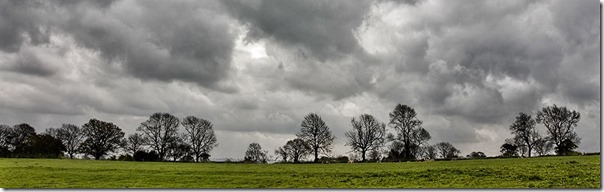
When I was growing up the future was so bright we had to wear mirror shades. Now, our tomorrows are clouded over by menacing speculative storms. Most of the 7.3 billion passengers on spaceship Earth are so preoccupied with their day-to-day survival that any thoughts about the future are reserved for escapes into imaginary wonderlands. And I can dig that too — who desires realism when its dreary? Anyone who has seen Sullivan’s Travels, a Preston Sturges film about The Great Depression misery, knows that people don’t want stories with messages, but stories that let you forget your problems. I assume Lois McMaster Bujold has more fans than Paolo Bacigalupi.
Science fiction has always taken two paths. The first, and most common, is to entertain. The second, and harder to travel, is to philosophize about the discoveries of science and imagine what they mean to the future. Science fiction has always produced wild speculations, but for most of its history, was never taken seriously. SF was often ridiculed, even though it can be considered a cognitive tool for a highly specific task. Serious science fiction can warn us about emerging dangers through extrapolation, but it also has the potential to create desired goals with creative speculation.
Yet, I’ve got to wonder if science fiction can save us. When I was growing up you’d hide your Heinlein inside a copy of Lady Chatterley’s Lover to avoid the embarrassment of being caught reading science fiction. Science fiction was childish fantasies for weirdo kids. Trufans rationalized science fiction was serious stuff, claiming it prepared readers for the future, but that was mostly laughed at. Things changed May 25, 1977 when Star Wars came out, and science fiction became the favorite form of fairy tale for the information age. Now, billions say they love Sci-Fi, but few take it seriously. Should they?
The future is shaping up to be everything we never wanted. Maybe it’s time to reconsider’s science fiction’s role. Christians believe that studying the teachings of Jesus can save people, at least after they die. I’d like to believe studying science fiction could save our species before we reach self-extinction. I’m not asking that science fiction become boring and pedantic. I’m just wondering if it’s possible for science fiction to imagine desirable futures that are sustainable. Project Hieroglyph was one attempt.
Novels like Among Others by Jo Walton and All the Birds in the Sky by Charlie Jane Anders convey how painful it used to be growing up nerdy. SF fans were outcasts. In my day they’d call us zeroes. But now that the geeks have inherited the Earth, science fiction fans seemed to have taken over the world. Is its appeal large enough to be influential? Science fiction must compete with two older literary traditions, The Bible and The Quran, for explaining reality. Science offers the only consistent explanation of reality, but evidently the majority of folks on this planet can’t comprehend it. Science fiction is only slightly more rigorous than religion, but it might be a step in the right direction since religion desperately seeks to focus on the past.
Just because pop culture has embraced comics and science fiction, doesn’t mean they have social impact. Can any novel change society? Maybe. Consider George Orwell’s Nineteen Eighty-Four. That tale of Big Brother and newspeak did more to undermine communism than all the John Birchers put together. Uncle Tom’s Cabin by Harriet Beecher Stowe shamed a nation against slavery, so we know novels can help reshape morality. How many Victorian minds were blown by H. G. Wells? And didn’t Catch-22, M*A*S*H and Slaughterhouse-Five convince many Americans to turn against the Vietnam War?
Every day the mass media brings us more stories about how the future is going to bring humanity retribution for its evil ways. Political conservatives and faithful fundamentalists from around the globe have dedicated themselves to denying science. If billions refuse to listen to scientists, why should they pay attention to science fiction? Christianity uses Hell as an effective tool to sell salvation, so why doesn’t frightening futures work for science fiction? Of course Christianity has made the purchase price of salvation so ridiculously cheap that most people figure why not buy. Saying “I believe” is a micro-payment compared to the painful expense of self-disciplining our souls.
Where the rubber hits the road to tomorrowland is the fact that we all need to change the way we live. Most people can’t lose weight even when the incentive is not to die a miserable death. As a species we’re very adaptable at surviving in diverse environments, but we can’t adapt ourselves to stabilize the environment. In 1968, I read Stand On Zanzibar by John Brunner. I was horrified by his vision of 2010. Brunner claimed two common themes would exist, worldwide terrorism, as well as daily TV news stories about crazed individuals committing mass killings. I really didn’t want to grow up to live in that future. But we all have. Could we have studied Brunner in the sixties to avoid the now in which we live? Brunner didn’t offer any prophecy. By the way, prophecy isn’t about predicting the future, but about convincing people how to live, so as to create a desired future. Can any science fiction novel be truly prophetic? Science fiction can create elaborate extrapolations leading to scary tomorrows, but can it find paths to greener pastures?
How often has the fate of the Earth been the plot driver of science fiction? 99% of the purpose of science fiction is entertainment, and even that 1% of serious speculation needs to be entertaining secondarily. Some science fiction writers have been prophets. Unfortunately, as people who read The Bible know, few people listen to prophets, which probably answers my title question.
I bring up this question now after reading All the Birds in the Sky by Charlie Jane Anders, the first SF/F book I’ve read for 2016. Anders’ book is getting great reviews and buzz around the net. It’s a wonderful YA/SF/F/Literary mashup about many things, including the forces of magic and the forces of science separately fighting climate change. Not to give anything away, but I found their desperate solutions rather horrifying, which I think was Anders intention, but other recent science fiction stories have also come up with similar solutions that are even scarier.
The most extreme example is Interstellar, which preaches sacrificing all to build spaceships to seed other worlds before Earth collapses. Their logic is we’ve used up Earth, so let’s abandon it and go find a new home. There was never any suggestion that we try to save our planet. It’s the ultimate example of disposable consumerism. Our home world is a used Kleenex, so toss it out and get a new one.
In Seveneves, the latest novel by Neal Stephenson, the Earth is destroyed by an astronomical event, but humans were given enough time to build a fleet of Noah’s arks in space. This avoids the ethical issue of self-destruction. The story is extremely optimistic about our technological potential. But one of the common reasons now given to justify the colonization of other worlds is that we need to get all our genetic eggs out of one basket. Even scientists like Stephen Hawking are promoting this idea. And it’s logical. We could claim that science fiction inspired this philosophy. If we ever spend the money to colonize the Moon or Mars, we can give science fiction the credit. However, humans haven’t left Low-Earth orbit for over forty years, even after an explosion of science fiction popularity since the last man walked on the Moon. Taking care of Earth should be our prime priority — but it seldom is in science fiction. When will everyone realize that Earth might be our only home for millions of years?
We’re starting to see more science fiction deal with climate change. One very vivid novel last year, The Water Knife by Paolo Bacigalupi, focused on water wars. Bacigalupi doesn’t offer any instructions on how to avoid that future, but does paint such a scary picture of climate change’s side-effects that he’s trying to scare us straight. The novel got some good reviews, but I’ve yet to meet anyone else who’s read it and haven’t heard any buzz about it on the net.
Is preaching fire and brimstone futures the only tool science fiction has to convince us to avoid our life of sin? And let’s fess up here, climate change, mass extinction, polluted land, sea and sky, economic inequality, sexism, racism, xenophobia, and all the rest, are our sins. Yes, the world sometimes ends in a comet collision, gamma-ray burst or super-volcano eruption, but most of the time, Earth gets trashed by us.
There’s a growing library of climate change science fiction (Cli-Fi). But will reading such stories make us consume fewer resources? How many people read science fiction? Well, not that many. But multitudes go to the movies to see science fiction. What if HBO offered a mini-series based on The Windup Girl by Paolo Bacigalupi? Would it influence politics and lifestyle? The Windup Girl illustrates the results of climate change, monoculture farming, and using up all the oil. Even though it’s a very colorful future, it’s not one that most people would visit if they had a time machine.
All the governments around the world are working on reducing C02 in the atmosphere. Ninety-eight percent of the scientists and a large percentage of the general population know about the dangers of increase C02. The problem is many people refuse to believe there is a problem, including the Republican Party. Would more science fiction illustrating what life might be like after “visiting the iniquity of the fathers on the children and the children’s children, to the third and the fourth generation” make a difference? If all of us believed the science of climate change absolutely, would we change the way we live? Or are too many Homo sapiens fatalists?
1998 brought two films, Deep Impact and Armageddon about big rocks crashing into our planet. Since then, governments around the world have been spending money to develop early warning systems. And can’t we claim all the SF stories about malevolent emerging AI made the current client of skepticism of artificial intelligence what it is today? Hasn’t the phrase “living off the grid” come from SF-awareness? Haven’t all the Preppers gotten their philosophy from science fiction? Didn’t we go to the Moon because of science fiction? Cold war politics paid for the Apollo program, but wasn’t science fiction the original inspiration?
Science fiction can give us thousands of scenarios about ecological catastrophes, mass extinction events, and AIs transforming society, but are they useful? Do we all just read the stories to be thrilled, and then continue on with our excessive lifestyles, ignoring daily species extinctions, and even wanting our computers to get smarter and take over more jobs?
I have to be cynical here. Could science fiction be like religion, in that we’re willing to talk the talk, but not walk the walk? How many of the faithful swear absolute belief, yet make no attempt to live divinely? How many eco-evangelists live green lives? For the prophets of science fiction to succeed they must first imagine livable lifestyles, and then convince readers to live them. And isn’t the record for famous Biblical prophets something like Prophets 0, People 7? I don’t think we escape our fate by self-flagellation and choosing to live like ascetics. We need visionaries that can imagine new kinds of urban lifestyles that protect the environment yet offer self-sustaining forms of abundances to seek, rather than our rampant destructive consumerism we chase now.
Science fiction has always excelled at imagining Hells, but it’s awful at inventing Heavens. In fact, dystopias are what kids love today. Why? Isn’t it kind of sick that the chosen setting for escapist literature is a dystopia? Why have utopias gone out of fashion? Sure utopias are impossible almost by definition, but getting close might be possible. Utopias were popular hundreds of years ago, but I guess most of humanity gave up on Heaven on Earth back in the 19th century.
Donald Trump campaigns with the slogan “Make America Great Again” so we know a better future is a popular want because of his success. Yet, Republicans are so adamant about no new taxes that they are causing the country to slide into ruin and disrepair. You can’t make a great nation by penny pinching. All the anti-tax revolutionaries have done is ruined K-12 and higher education, neglected the infrastructure, deflated the middle class, fired first responders, teachers and other valuable governmental employees, gutted libraries, let parks run down, defund science and research, and the list goes on and on. America was great when we had the Apollo Moon program, or when we were fighting WWII—and we all paid a lot more in taxes. We weren’t cheap, and knew building a great nation costs money and requires sacrifice.
We have the scientific knowledge and technology to solve all our problems, but we don’t. Why? Because we’re not unified. All across the globe populations are divided between conservatives and liberals. Most of the Muslim world, and half the Christian, want to return to the past, to embrace an Old Testament view of reality. We all live in the same reality, but we each perceive it differently. Until we reach some kind of consensus about the nature of reality, we’re not going to solve our problems. This is where pop culture comes into play, it’s a kind of peer pressure of ideas.
At some point we have to do what the prophets ask, or face extinction. Did all the prophets of the past fail because they imagined unappealing lifestyles? Evidently convincing people to do what’s hard never succeeds over people choosing to do what they feel like. Can science fiction ever make us disciplined?
I didn’t write the above to make a political point, but to show that we lack vision for making life better. Most conservatives are arming themselves for the Armageddon, while liberals focus on their own brand of gloom and doom. Science fiction needs to stop thinking about the end of the world and focus on the goal of surviving a million years on this planet. If we don’t think about the future, then the future becomes whatever we’re doing without thinking.
JWH



 Auxiliary Memory