Living To Do Everything–And Getting Nothing Done

We want it all.  To do more, see more, go more, feel more, taste more…

We rush to fill every hour with more activities.  We hate to miss anything our heart desires.  Yet, how much do we really get done?

Patricia Hampl said in Blue Arabesque:

Isn’t that why I’d majored in English to begin with, without knowing it?  Not to teach, not to be a librarian, not for a job.  To be left alone to read an endless novel, looking up from time to time for whole minutes out of the window, letting the story impress itself not only on my mind, but on the world out there, letting the words and world get all mixed up together.  To gaze at the world and make sentences from its passing images.  That was eternity, it was time as it should be, moving like clouds, the forms changing into story.

matisse_aquarium

By doing too much, we do too little.  Hampl blames modernity on our failure to see the sublime in life.

Is it more enriching to hear 1,000 different songs than to get to know 100 songs by playing them 10 times?  Is it a richer experience to study 10 songs by living with each a 100 times?  Or should we devote ourselves to 1 song until we can sing and play it note for note, either in perfect imitation or in wild improvising? 

The time spent is the same, but how deeply do we experience time when listening to 1,000 songs versus listening to a song 1,000 times?  How productive is contemplation?

I woke up this morning, lingering between sleep and wakefulness, entertaining myself with thoughts about what I would do today.  I’d like to pick just one goal and accomplish it each day, but no matter how hard I try, the whirlwind of life diverts me from the ambition I pick.  I can never focus because my environment pulls me in endless directions.

For example, between all forms of books, hardbacks, trade editions, paperbacks, ebooks, and audiobooks, I have about 1,000 books waiting for me to read.  What would life be like if I only had one?  Ditto for friendships, movies, television shows, photos, albums, hobbies, household responsibilities – all vying for my attention.  Not that I have a 1,000 of each – some much less, but others much more.

I can’t honestly say I have 1,000 essays and stories waiting to be written, but the number is large.  If I had no other distractions and only one idea I wanted to write about, how much more could I accomplish in one day?

I think we all want too much.  Wouldn’t we all benefit from a stay at Walden’s Pond and being Thoreau for a year?

While laying in my dreamy state of mind this morning, my subconscious told me I could get more done if I did less.

Why don’t I listen?

JWH – 8/26/12

How Good is Your Visual Memory?

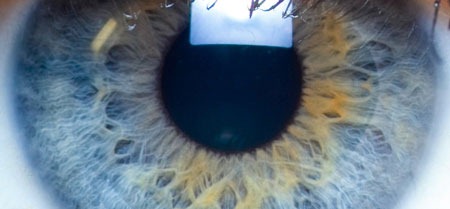
I recently read The Mind’s Eye by Oliver Sacks and I can’t stop thinking about it.  Sacks is professor of neurology and psychiatry that writes about medical oddities relating to cognition.  The Mind’s Eye is about all aspects of vision and how it impacts the brain, our behavior and our perception of reality.

I’ve always assumed I was an average person, with average abilities, so that I was smarter than some, but dumber than others.  That I was stronger than some, and weaker than others.  I’ve always assumed I fit comfortably in the middle of the bell curve of what it means to be human, and thus assumed what I see and feel is pretty much what other people see and feel.  Reading Oliver Sacks proves that assumption completely wrong.
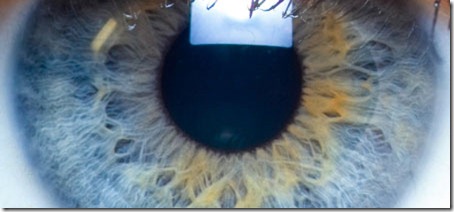
Iris

We all see the world drastically different, both at a physical level and at a conceptual level.  People aren’t a homogenous species.  If you’ve watched the recent Olympics you know what physical extremes exists.  Reading Oliver Sacks will illustrate the cognitive extremes.

Even in the snug middle of the bell curve, we’re all very different.  In the last chapter of The Mind’s Eye, Sacks writes about blindness and talked about his essay on John Hull, author of Touching the Rock: An Experience of Blindness.  Hull wrote about losing his sight, and slowly forgetting all visual memories until years later he reached what he called “deep blindness.”   Hull blew my mind, when he wrote that he felt deep blindness was a richer state of mind. 

In his essay on Hull, Sacks seem to imply this was how blindness worked in general.  Later he was surprised by all the letters he got from blind people explaining how their blindness had not worked that way.  He soon learned there was an array of human responses to going blind.

From this Sacks wrote about visual memory.  Sacks himself discovered he himself had poor visual memory when he took a lizard skeleton to his mother and she visually memorized it by turning it 360 degrees, stopping each 30 degrees to memorize that view.  She was a surgeon and had expected her son to be a surgeon too, but when she realized he didn’t have her visual memory, she told Sacks he shouldn’t go into surgery.  I suggest you find a copy of The Mind’s Eye and read the whole chapter rather than me paraphrasing it all, because it has an astounding amount of information about visual memory to contemplate.  Especially the stories about blind people who still feel they live in a visual world – an artificial reality inside their heads.

Like Sacks I have poor visual memory. Sometimes when I listen to music with my eyes closed, I’ll have flashes of visual scenes, but I have no control over them, and they last so little time I can’t study their details.  People with great visual memory can study their mind’s image and draw them.  A stunning example is Stephen Wiltshire, who draws Rome from one helicopter ride.  (See other videos here.)

If I was to go blind, I assume my experience would be pretty much like John Hull, and I’d eventually forget my visual memories and end up in deep blindness.  But thinking about this, I wondered if I couldn’t exercise my visual memory, like doing push-ups to make my arms stronger, and develop my visual memory.  After I read the last chapter in The Mind’s Eye I started paying more attention to visual details and became fixated on a church steeple I see on my drive to work, atop Audubon Baptist Church.  I drive by a 8:25 in the morning when the sun is behind me and there is no shadows, and again at 1:55 when I’m returning from lunch, and it does have shadows.

The first time I noticed this steeple after reading the book, I tried to memorize as much as I could when I was at the light near the church.  The steeple sits on a peaked A-shape roof.  The steeple has four parts, a square based with one round window per side, an eight-sided level above that with large rectangular windows, an even smaller level above that with wooden shudders, again eight sides I think, and a tall steeple that comes to a very sharp point.

When I got back to work the first time I tried to draw it from memory.  But I didn’t have any visual memory.  I remember the peaked roof, the four sided box, an eight-sided box on top of it, and another eight-sided box on it, and then the steeple, so I tried to draw those geometric shapes.  It was a terrible drawing because I tried to draw all the sides.  The next time I drove by I studied it again and realized, duh!, that I only see one side of things, and only a portion of the geometric shapes, and from a certain angle.  I had started my drawing with an 3d octagon wire shape, and that’s a conceptual view, not a visual view.  So if I’m looking from the side, I’ll see one side of the 4 sides, and 3 sides of the 8 sides, and essentially a very long triangle.

To test my memory just now I found a picture of the church on the web and it’s nothing like what I remember seeing.  For some reason I remember the church as having wood siding, and it’s brick.  I did remember the wooden slates on the third level, but I didn’t remember the tall windows of the second layer.  I’m no Stephen Wiltshire.

I remember having a much better visual memory when I was young and smoked pot.  Oliver Sacks said he experimented with large dosages of amphetamines when he was young and for a few weeks could draw quite well, especially from his visual memory.  After he stopped taking the drugs he lost all ability to draw.  The poet W. H. Auden took Benzedrine to write poetry, because it helped him to concentrate intensely on detailed verbal imagery.  I assume drugs in each case helps tune out larger reality so we can zoom in on a single tiny aspect, which helps the brain focus.  But can visual memory be enhanced without drugs?

I’m pretty sure it can because of my experiment with looking at the church steeple.  If I studied that steeple every day, and tried to draw it every day, and checked my errors every day, I’d learn about seeing and drawing, but I don’t know if I would have a better visual memory.  Many of the blind people Oliver Sacks wrote about, have extremely detailed inner worlds.  They know they aren’t accurate compared to the outer world they can’t see, but they are very functional models and maps that help them live and work in reality.  One blind man even re-shingled his own roof, freaking out his neighbors because he worked at night.  Another could design machinery with his inner sight.

I think when I have flashes of visual memory it’s more like dream memory.  I have very vivid dreams, but sometimes I’ll have microsecond flashes of dream memory when I’m awake.  When I took drugs when I was a kid, some of those memory flashes would last seconds.  I remember one of flying over the Golden Gate bridge, as if I was a bird, or riding in a helicopter.  Often my flash memories are visions from great heights – and I can’t explain that.  A person with good visual memory could retain those images in their mind.  I can’t.  My memory of them are more like wordy descriptions, which probably explains why I write rather than paint.

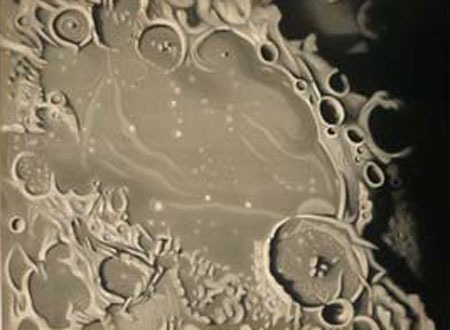
I’ve always been impressed by 19th century scientific drawings.  Drawing was an important skill to a scientist.  I don’t know if this meant they had good visual memory, or just a good eye for detail.  And that makes me wonder if I developed an eye for detail would that enhance my visual memory?

Reproduction, © Bloomsbury Auctionsmoon-drawing

I’ve always wondered if painters had to paint 100% of what they put on canvas while observing their subjects, or did they paint some of their pictures from memory.  Often when I look at photographs I think I remember in great detail, I’m shocked to find my memories are either wrong or just fuzzy smudges at best.  People with perfect visual memories are often autistic.  Temple Grandin, a famous autistic person, profiled by Oliver Sacks and featured in the wonderful HBO movie of the same name, thinks in visual imagery.  I’ve many times wondered if animals, who don’t have our language skills, think in pictures too.

To be honest, I believe I have a poor visual memory because I go through life not paying attention to visual reality.  My life is books and words.  I think in concepts.  And I wondered if John Hull felt deep blindness was more rewarding because it allowed him to focus more intensely on concepts.  Now, I have no desire to go blind, but I can imagine after reading Sacks, that blindness isn’t the sensory depravation I once thought it was.

Also, I wonder if I can improve my current abilities.  The cliché is your hearing and touch senses improve if you go blind, but do you have to go blind to improve your other senses?  Can one enhance all our senses, or is their a limitation in brain processing?  Because I’m getting older and my memory is failing, I pay attention to all that advice about improving memory.  I started playing Words with Friends.  I used to be terrible at Scrabble, but now I keep 6-8 Words with Friends games going and I can now beat people that used to always stomp me.

I’m confident if I got some drawing books and practiced, or even took some drawing classes, I could improve my drawing skills, but I also wonder if those skills would translate into better visual memory?  Is that a physical limitation – you either have it or you don’t?

How good is your visual memory?  Post a comment.

JWH – 8/11/12 

The Age of Miracles by Karen Thompson Walker–A Powerful Literary Science Fiction Novel

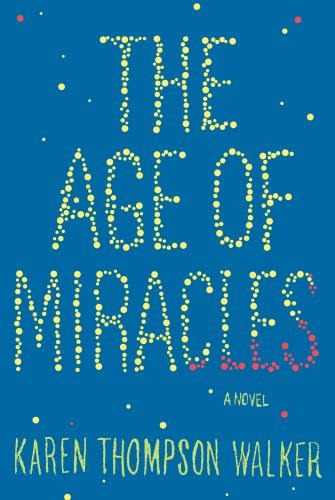
The Age of Miracles by Karen Thompson Walker came out June 26th and it’s already getting tremendous press.


I listened to the audio edition with pitch-perfect narration by Emily Janice Card.  The Age of Miracles is a science fiction novel told in first person by eleven-year-old Julia, so it feels like another science fiction YA novel, but it’s not marketed as either as SF or YA, and it’s far from another hit young adult novel for adults.  It’s a literary novel about a young girl witnessing the Earth undergoing a catastrophic change called “the slowing.”  Earth begins to slow its spin.  Before the novel is over the Earth’s day is over twice as long.

Karen_Thompson_Walker_Age_of_Miracles

As soon as I saw the announcement for this book I knew I had to read it.  If you loved The Lovely Bones or The Secret Life of Bees, there’s a good chance you’ll love The Age of Miracles.  However, if you loved Earth Abides, The Day of the Triffids, Alas, Babylon, there’s also a good chance you’ll love this novel.  If you ever wished Catcher in the Rye had been science fiction, then this book is for you.  When The Age of Miracles is pitched to movie producers I’m sure they’ll summarize it like this:  coming of age in the apocalypse.

The editorial reviews collected at Amazon.com rave about this book.  The customer reviews are a bit mixed, with most people loving it, and a few people complaining, some rather bitterly.  A few complainers weren’t expecting a YA novel.  Other complainers object to the science.  I too had trouble with some of the science, but I think Karen Thompson Walker is right in that we’d weigh more if the Earth’s spin slowed.  For those people objecting to her science, just read “If the Earth Stood Still” and you’ll realize Thompson is up on the details.

But I’m not sure the details of the science are important to this story – science fiction has often been wrong about science.  The Age of Miracles is an allegory about how nature turns against us and how we respond.

The Age of Miracles is more literary than YA – there are no teenagers fighting to the death on television.  It’s more literary than science fiction, it’s not about heroic astronauts trying to save the world.  The narrator is telling her story from years later, after the events, so we know she survives.  The Age of Miracles is a very simple tale, a coming of age story set against our world falling apart.

The defining issue with any end-of-the-world novel is how people react.  I can’t help believe that the slowing is a metaphor for global warming, but don’t let that stop you from reading The Age of Miracles if you’re on the wrong side of that political question. The Age of Miracles is science fiction at its best because it’s all about sense of wonder.  I’ve always found tremendous sense of wonder in end of the world novels.  These novels aren’t predicting gloom and doom, but exploring how people face the immensity of reality.

Julia is just an eleven-year-old kid that has a mother and father, a few friends, a music teacher, and a sheltered life where’s she shy and timid, but like most kids her age, wants to fit in.  Half of The Age of Miracles is about Julie coping with normal life.  The other half is about coping with a world going through a lot of scary changes.  The people in this story decide to fight their fears by leading ordinary lives.  This is not a post-apocalyptic novel with Mad Max type warriors.  This is the end of the world coming to suburbia, soccer moms and mini-vans.

Most of the classic end of the world SF novels came from the cold war era.  The Age of Miracles is maybe what J. G. Ballard would have written about the Internet Age facing the apocalypse if he was channeling Harper Lee.

End of the world novels usually draw the reader in by getting them to imagine what they would do in the same situation.  The Age of Miracles is different.  I’m 60, and I’m being asked to imagine how an 11 year-old would see things.  It’s a powerful motif.  I can’t help but wonder how young people feel today growing up and imagining what global warming will bring.

In the past decade there have been a number of literary novels that used science fictional plots and they have been very successful.  In fact, they have generally kicked genre butt.  Stories like The Road, The Time Traveler’s Wife, Cloud Atlas, Never Let Me Go, The Sparrow brought deep characterization and a sense of realism to very far out ideas.  I can’t help but wonder if would-be literary writers haven’t noticed that pairing literary style with the fantastic sells, especially if it also appeals to both the YA and adult readers.

I can only speculate why Karen Thompson Walker wrote The Age of Miracles, but whether intentionally or by accident, she’s hit on a perfect combination of literary and science fiction styles.  Is Ms. Walker a science fiction reader trained in a MFA program?  Or is she a literary writer influenced by all the science fiction in our society.  There’s a good chance that the science fiction genre played no part in influencing the writing of her story.  Did George Orwell need to read SF before writing Nineteen Eighty-Four?  We could assume Karen Thompson Walker is like Michael Chabon and attempts to live in both the literary and SF genre worlds.

Maybe Ms. Thompson is even more savvy than that.  Maybe she wanted to write about global warming and knew the topic would turn off many readers, so she developed the slowing as a stand-in.  If she did, it will be just as effective for making people think about our future.

I bet there will be a lot of literary and science fiction writers wishing they had written The Age of Miracles.  I’m sure it’s going to spawn a lot of imitators.

JWH – 7/5/12

Surviving the Collapse of Civilization – The Day of the Triffids by John Wyndham

This month, my book club is reading The Day of the Triffids, the 1951 novel by John Wyndham and the response is overwhelmingly enthusiastic.  We seldom agree so much.  Many people consider it one of their all-time favorite novels and relate memories of first discovering the book as a kid.  I’m not sure I read The Day of the Triffids before, but I have vague memories that I might, but nothing distinctive.  I used to read SF paperbacks like eating popcorn, and I remember reading a stupid book about plants killing off people.  The Day of the Triffids is not stupid, and the mature me loves it, but how many SF novels have been about killer plants?  Memory is so unreliable. 

The Day of the Triffids is a classic that has been filmed once, made into two television mini-series, been adapted to radio twice, and has another movie version in the planning.  The Day of the Triffids is a popular novel because the subject has wide appeal:  What if you wake up and everyone else is dead?  My favorite of this sub-category of science fiction is Earth Abides by George R. Stewart from 1949.  John Wyndham adds a couple of twists that make The Day of the Triffids more dramatic.  First, our hero Bill Masen wakes up in the hospital with his eyes bandaged recovering from surgery, but no one comes to help him that morning and he hears all kinds of weird noises that worry him.  Eventually he takes off his bandages and he can see, but he discovers most everyone else is blind.  Civilization quickly collapses, people die, diseases run rampant, and a weird walking plant starts attacking people and eating them.

day-of-the-triffids

Yeah, the last is a bit much.  That’s what I remember from reading this book as a kid, the triffids.  I thought them silly, but as an adult reader, I think Wyndham skillfully weaves them into the story in a realistic manner.  The triffids make life hell for the survivors who already have a bleak existence.  Personally, I’d have been perfectly pleased with the novel without the damn triffids, but the story is so riveting that I can accept them.

This book is about surviving the collapse of civilization.  I love that theme.  Earth Abides is one of my all time favorite novels, and I enjoyed the heck out of The Day of the Triffids, as well as other top books exploring this theme, The Road by Cormac McCarthy, The Postman by David Brin and A Canticle for Leibowitz by Walter M. Miller, Jr.   I’m also watching the 1975 BBC series Survivors and re-watching the 2008 remake – so this month I’m obsessed with being the last man on Earth (okay, among the last).

The Collapse of Civilization

To get you into the mood of these books watch Life After People, a documentary from The History Channel about how civilization would slowly decay if people suddenly disappeared.  Or the National Geographic’s Aftermath: Population Zero.  Or read The World Without Us by Alan Weisman.

These documentaries and book show us what life on Earth would be like if everyone suddenly disappeared.  The Day of the Triffids, Earth Abides, The Road, and the like, show what life on Earth would be like if only a few people survive.  It takes a lot of people to maintain civilization, and these stories show us just how dependent we are on each other.  In these novels, the survivors are the carrion eaters who dine of the body of civilization.

Every reader will fantasize what they would do in such a situation.  That’s why these books are so appealing.  There is no easy solution.  You can live off of canned food for so long.  Could you grow food, hunt, herd animals?  Can you make candles and clothes?  How?  What if someone else takes all the candle making books from the library before you do?

Then there’s the problem of other people.  You’d think for each million people being reduced to 100, everyone would care more about each other, but that’s not so.  Everybody has a different idea of how to run things – just watch the reality TV show Survivor.  It’s very hard to get along with other people when you have to work together under apocalyptic conditions.  There’s a reason why hippie communes failed.  And how do women feel when all men see them as baby factories?  Being Eve is a burden.  And if you have children, can you protect them from disease and danger, and feed and cloth them?

We have very cushy lives.  We have lots of free time.  We have lots of luxuries.  What if all of that went away?  Would you want to keep living?

These stories are usually based on the idea of a plague killing most people.  If AIDS had been an airborne virus, or if a strain of Ebola started spreading like the common cold, this kind of scenario could happen.  The Black Plague killed 30-60 percent of Europe between 1348 to 1350.  So the idea of most of the population suddenly dying off isn’t an unrealistic fantasy.  Mary Shelley probably started this genre in 1826 with The Last Man, and its been expanding ever since with post-apocalyptic fiction.  See this list of pandemic stories.  During the cold war in the 1950s two classics, Alas, Babylon by Pat Frank and On the Beach by Nevil Shute, became huge world-wide bestsellers.  Being a survivor strikes a very deep chord.

Earth Abides and The Day of the Triffids were from 1949 and 1951.  Earth Abides deals with a natural pandemic, but The Day of the Triffids ultimately suggests our own bioengineering and nuclear weapons will be the cause of our destruction.  But the core message of each of these novels is civilization can come to an end, and even the human race.  The challenge to both the characters and readers is to imagine how civilization can be rekindled and preserved.   The Day of the Triffids brings up many philosophical and practical questions:

  • If everyone is dying, should the strong help the weak?
  • What if protecting the weak threatens the survival of the strong?
  • Is it stealing when stay alive means looting?
  • Does your survival justify killing other people?
  • Should women become baby factories?
  • Who deserves to be leaders?
  • How are group decisions made?
  • Does democracy still count?
  • How do you punish wrong doers in your group?
  • How do you raise the next generation?
  • Should you make kids go to school and learn what kids have to learn today?
  • What foods can you produce that can feed people 365 days a year?
  • What are the appropriate technologies for the new times?
  • What do you preserve from before the collapse?
  • How do you find other people?
  • How do you communicate over a distance?
  • How do you get news?

The fascinating facts of Life After People and Aftermath: Population Zero is how long various products of civilization will last.  In 1951 power plants in London were probably coal fired, and as soon as the people stopped feeding the boilers, the city would have gone dark.  In modern America, automation would keep power plants going for awhile, maybe even weeks for sites like Hoover Dam.  But it’s very surprising how fast things break down and decay. 

Decaying cities is nicely reflected in The Day of the Triffids.  Wyndham did a lot of thinking about the idea.  He gives us several examples of how people would organize and disagree, and how various groups would attempt to rebuild civilization, including Christians hanging onto their old beliefs, and military men planning for the return of war.  That’s depressing because it suggests we won’t learn from the collapse.  I’d like to think that people would universally think, “Let’s not make the old mistakes again” and try something new.  But Wyndham, and Stewart, brilliantly suggest not.  They wisely see people as people, and people don’t change, but they do survive.

In all these stories, diverse characters push on through hardships for a myriad of reasons.  Some think about saving mankind, but many just think about getting what they want.  And they all go through different psychological stages, like the Five Stages of Grief by Elisabeth Kübler-Ross (denial, anger, bargaining, depression and acceptance), survivors have their own stages.

One of the first stages is denying that the collapse is universal and hoping they will be rescued, and in the case of The Day of the Triffids, the assumption is the Yanks will come to the rescue.  That’s a kind of denial.  Even when the characters realize the collapse is universal many keep asking “When things get back to normal?”  Another kind of denial.

It takes a while for each character to realize that things will never be back the same.  That their old lives are finished, and whatever their new lives will be is yet to be established.  Reaching this level of acceptance often takes them through the same stages as coming to grips with death.  Then they start working on rebirth and life after the collapse.

It is at this stage where Earth Abides outshines The Day of the Triffids.  Wyndham only goes so far with his story, but Stewart takes us into the second and third generation, and makes some brilliant observations.  I really wished that Wyndham had written a much longer book so we could see what happens for another fifty or hundred years.

I highly recommend reading The Day of the Triffids, even with the stupid plants.

JWH – 6/9/12

Forgotten Science Fiction: The Year of the Quiet Sun by Wilson Tucker

One thing I like to do is dig up long forgotten Hugo and Nebula award novel nominees that didn’t win, and read them to see if they should have.  Most Hugo and Nebula award winners in the novel category are remembered, often in print, or at least frequently reprinted.  In 1971, the winner for both awards was Ringworld by Larry Niven.  Everybody remembers that one, but what about the others?

Here are the other nominees:

I’ve linked each of these books to the ISFDB publication record so you can see how often they’ve been reprinted.  Three of the books, And Chaos Died, Fourth Mansions and The Steel Crocodile seemed to have been forgotten by the 1980s.  The Year of the Quiet Sun was last printed in America as an anthology of three time travel novels in 1997.  It was also nominated for the Locus Poll Award, coming in 2nd place, and actually won a retrospective John W. Campbell award in 1976 for a “… a truly outstanding original novel that was not adequately recognized in the year of its publication.”

I remember when The Year of the Quiet Sun came out, but I didn’t read it.  I got on the trail of it again last year when it was nominated for our science fiction book club, but it didn’t get enough votes to be read by the group.  I read some reviews and ordered a copy.  I finally got around to reading it a couple weeks ago.

the-year-of-the-quiet-sun

The Review

The Year of the Quiet Sun is one of the most realistic time travel stories I’ve ever read, and our chrononauts don’t travel in a time machine, but a TDV (time displacement vehicle).  I really liked that.  A secret American governmental agency builds a TDV back in the 1970s, but travel in it is limited to the location of the building where it’s housed and to a timeline that always includes a functioning nuclear power plant attached to the building.  Time travel takes a lot of power, but maybe not as much as the 1.21 gigawatts produced by the flux capacitor in the Back to the Future movies.

Another appealing aspect of this time travel novel is how timid the time travelers are with their itineraries.

The Year of the Quiet Sun is about Brian Chaney, an arrogant futurist and famous Biblical scholar, one of three men conscripted to be time travelers.  The other two are military men, Air Force Major William Moresby and Navy Lieutenant Commander Arthur Saltus.  The military men don’t think Chaney has the right stuff, and Chaney seems to have made a bad initial impression with them.  Eventually, they work out a truce.  All three fall for their beautiful young handler, Kathryn van Hise, competing for attention while they train.

The Year of the Quiet Sun has a simple beauty in its constrained ambitions.  Wilson, writing near future science fiction, uses the story to make social and political projections that didn’t pan out, but I’m not sure that ruins the story.  Science fiction that creeps past its projection date often is dated, so it’s the story that counts in the long run.

The Year of the Quiet Sun was one of the first books that were part of the legendary Ace Science Fiction Specials started in 1968 by editor Terry Carr.  Many of them were paperback originals.  And Chaos Died, Fourth Mansions and The Steel Crocodile were also Ace Science Fiction Specials.

The Analysis with Spoilers

Read no further if you plan to go out and read The Year of the Quiet Sun, because I’m going to tell everything that happens and ask why.

There’s two real tests for a science fiction book, the impact it makes when it comes out, and the impact it makes once it becomes an old science fiction book.  Science fiction goes stale easily and spoils.  For a futuristic literature, science fiction is usually about the present, and seldom becomes timeless.  And it’s usually very hard for a time travel novel to become timeless.  My favorite example of a timeless time travel novel is Replay by Ken Grimwood.

The Year of the Quiet Sun is far from timeless.  It’s a quick read at 252 paperback pages.   It’s too quiet for lovers of loud adventure fiction, and it’s too active for literary quiet.  Wilson Tucker works up a very nice time travel machine, and some reasonable characters that are somewhat interesting, especially Chaney, but where Wilson blows it, is when our time travelers travel to – a library down the street a couple years in the future. Logical, but not exciting.  But I liked that kind of realism.

The first assignment is for the President to see if he’ll be reelected.  Cautiously they move further into the future where they find a second civil war, this time its blacks against whites.  The Year of the Quiet Sun was written just after Martin Luther King, Jr. was assassinated, during a decade of many battles for civil rights.  Wilson Tucker essentially imagines us failing, which shows little faith in the future.  If he had been right, this would have been a prophetic novel, as it is, it’s a big dud at prophecy.  Tucker just couldn’t imagine the positive changes we’ve made.

Tucker redeems himself by his trick ending.  It turns out Brian Chaney is black, which we learn slowly.  In the future of this book, but actually our past, the U.S. collapses under a new civil war, and a black time traveler showing up in territory held by whites is not welcomed.  But Chaney doesn’t know why until the very end of the story when he meets an old Kathryn van Hise.  This is an amazing coincidence that nicely ties up the novel, and it feels good for a storybook ending, but now, over forty years later, doesn’t feel right with all our hindsight.

This is why its very dangerous for a science fiction writer to explore the near future.  But this plot also doesn’t work because there is no integration with the book’s present and the future it discovers.  Wilson Tucker holds Chaney’s ethnic background for a surprise ending, but I think he would have had a much more successful novel if the reader was told immediately Chaney was black, so the theme of the story would have been constant.  Some reviewers claim its there for us to guess if we picked up the hints, but I didn’t.  The Year of the Quiet Sun was published in 1970, but set in 1978 at the beginning, with Tucker making several predictions about the future that was just eight years away.  He predicts things will be worse socially and economically, and that we elect a weak president, and about the most modern thing he predicts is some women going topless.  No MTV, PCs or Internet.

I believe if the time displacement device had been invented to solve the current problems of America before they happened, focusing on race relations by intentionally having a black time travel agent on the team, the story would have been more meaningful.  Brian Chaney constantly pines for Kathryn but always holds back while the two military men make their play.  We understand why at the end, because he’s black.  But wouldn’t knowing that fact make the story more interesting from the beginning?  Would it allow him to deal with race issues throughout the book?

Instead of using the time machine to ward off the collapse of the United States, the time travelers get stuck in the future they cannot change.  Now this is very realistic, and I admire it, and I think it makes the story much more likable.  I don’t think every science fiction story needs to save the world, but the failure here is so damn passive that it seems pitiful.  Now I both admire this restraint and feel disappointed by it too.

The Year of the Quiet Sun is about little people doing something very big in a little way, and failing in a little way.  In a way it reminds me of Timescape by Gregory Benford, another very realistic time travel story that’s not full of action.

I admire The Year of the Quiet Sun because it’s so realistic, but I’m conditioned by science fiction to want more, even knowing most action oriented time travel stories come off contrived and silly.  I guess I don’t believe people with a time machine would be so timid.  Most time travel novels are about going into the past to make a different present.  Here we have a story about traveling into the future that should have taught our characters to change the present.  Of course, what could they do?  Come back and have a press conference that’s shown on the CBS Evening News:  “Scientists report the United States will collapse in 20 years after visit to the future.”

Has anyone written a time travel story where present travelers go into the future, find out the bad stuff, return home, fix the problems and then go back to the future to check their work, and to find out what next needs to be fixed?

I think The Year of the Quiet Sun is still a fun quick read, especially for SF fans who like to read old SF, but it fails as a timeless novel.   Read Earth Abides by George R. Stewart to see what I mean by a timeless classic.  The Year of the Quiet Sun had the potential to be that good.  And maybe that’s why it was up for all those awards – readers admired it’s potential.

JWH – 5/29/12