An Insult to Ordinary Guys and Gals

By James Wallace Harris, Saturday, July 4, 2015

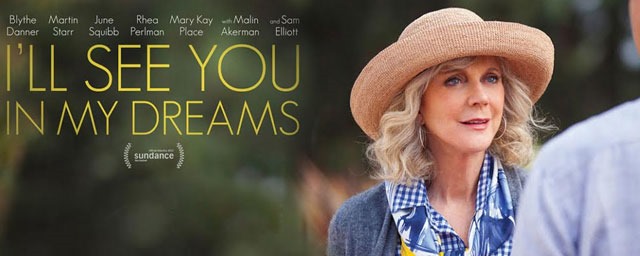
Hollywood should be given great credit for promoting liberal causes, but all too often it fails at teaching social acceptance for the ordinary. I’m proud that Hollywood has enlightened Americans to empathize with minorities and LGBT folks, but if you pay attention, the movie industry maintains the status quo for a lot of other prejudices. The new film I’ll See You In My Dreams is a great example. It’s filled with accepted stereotypes and prejudices, yet it earns a  94% at Rotten Tomatoes.  Now, I’m not just picking on Hollywood or this particular film, because the prejudices they reveal are the ones we embrace.
Ill-see-you-in-my-dreams

Hollywood is very prejudice against ordinary looking folks, and maintains a bias for exceptional beauty and sex appeal. In other words, all the stunning alpha males and females get to fall in love and have sex, and all us plain folk get to be sidekicks and the butt of jokes.

Blythe Danner and Sam Elliott are two beautiful people that fall in love because they inspire chemistry and the other characters don’t. Danner plays Carol Peterson, a widow, who has ignored men for twenty years, even though her fashion shouts, “Look at me!” It boggles the mind that Carol wouldn’t have noticed an appealing male in all that time, because she would have had thousands of guys hitting on her. Then Carol sees Bill, played by Elliott, and it’s love at first sight for both of them. How inspiring is that? This is Hollywood endorsing the stereotype that only the most beautiful are acceptable. Sure, it is realistic as Darwin, but all us omega male and females should protest.

Don’t read any further if you don’t want to read spoilers.

Carol and her friends sneer at the regular guys they meet at speed dating. Average guys are portrayed as pathetic and gross, but I identified with every one those speed dating dudes. The audience laughs at them. And the audience laughs at Rhea Perlman as Sally, for her honest horniness and aggressive humor, at Mary Kay Place as pretty Rona who envies Carol, and pudgy Georgina played by June Squibb for being uptight and timid. Everyone in this movie is white and bland as Wonder Bread. The rat and the pool boy offer the only bit of spice in the story, but the rat is even too pretty to be a roof rat and the pool boy looks like he should model for Geek Squad ads.

The point I’m trying to make is Blythe Danner meets Sam Elliott and they are the only ones who fuck. Everyone else is on the sexual sidelines. Are ordinary people only meant to be spectators of beautiful people and their antics? It would help if Carol and Bill were interesting, but they’re actually boring. The writers gave the actors nothing to work with except a big cigar and turned up collars. Carol has literally been sitting around her house for two decades, apparently not doing much more than feeding her dog, having her pool cleaned and taking clothes to the cleaners. Sam Elliott prefers to sit in his yacht alone and not smoke the cigar he constantly clamps in his mouth. Carol sings, but that’s a lame trait tacked on by writers to give her characterization, but it doesn’t work, because Bill never hears her. And did the writers have to be so lazy as have Carol go goo-goo for a rich guy?

I sorely wished this film had been more daring. What if the Bill character had been played by Wallace Shawn? Elliott and Shawn are about the same age. Could the writers have developed a Wallace Shawn Bill in such as way that he would have been fascinating to Carol Peterson? Besides her good looks, Carol doesn’t have much appeal, so why does Bill single her out as special? Just because of her looks? It’s implied, but never demonstrated, that Bill’s a savvy and sophisticated guy. He would have had hordes of dynamic women throwing themselves at him, so why did he pick a lonely lump of a woman who has been doing nothing for twenty years? I found that hard to believe. If he had just been playing her as one of many, that would have been more believable and interesting.

I hate when writers expect us to assume two lovers are interesting just because they look good. I hate when writers think two good looking people meeting are interesting enough to make a story.

The real relationship that develops in this story is between Carol and Lloyd, played by Martin Starr, who is a lonely Millennial pool boy that has no future. I’d been more impressed with this film if they had ended up hooking up. I’ll See You In My Dream is so Hollywood romantic that it’s painful. They had a real situation to explore – four lonely retired women – yet the filmmakers went for pathetic jokes about getting high on medical marijuana. They bet their whole bankroll on the two beautiful people, and ignored the possibility that ordinary folks could find friendship, connection, love and even sex.

Carol admits to Lloyd that she’s waiting around to die, and he admits he’s saving money for a future with no plans. It annoys the crap out of me that the movie suggests retired people are merely waiting around for the grim reaper to come say hello. Yes, I know I’m going to die, but I’m keeping busy until then. If this movie was truly honest, Carol and Lloyd deserve each other far more than Carol and Bill. Even the pathetic horn dog at the speed dating event deserves better than Carol. He’s trying, she’s not.

Carol Peterson is a Cinderella that passively waits for her Prince Charming. When her PC does show up, he tosses her a flirty line at the drugstore. He’s too cool to show up for speed dating. Bill on their second encounter, bluntly asks Carol out while she’s getting into her car in a parking lot while he casually sits in his car. She says yes because he’s handsome and drives an impressive Cadillac. She goes to bed with him after a ride on his yacht. She waits twenty years and falls in love after two dates? Well, that’s the way chemistry works, but I’d rather see movies about how it works for ordinary folks.

Now, here’s another area of inequality. If an ordinary guy had stopped Carol with that line in the drugstore she would have considered it sexual harassment, but because a suave hunk delivers it, she’s flattered. If Wallace Shawn had driven up in the same Cadillac and asked her out she would have made jokes about him with her friends.

The movie should have been about the four women meeting four ordinary guys at the speed dating night, and developed a story about how each found someone. Instead we have one plotline about aging beauty hooking up with aging hunk. Damn, it’s like those zillions of high school movies, always about the quarterbacks and prom queens, but at the other end of life. Why must romance always be about alphas? The film needed a heart for ordinary looking folks like Freaks and Geeks, which Martin Starr played in, or the ensemble casting of The Big Chill with its great characterization, that Mary Kay Place costarred.   

I’ll See You In My Dreams is one of those rare films at Rotten Tomato where the audience rating was much lower than the critic rating (72% to 94%). Maybe there are other filmgoers out there tired of the photogenic falling for each other. We do have to applaud Hollywood for making a film about retired people. And I’m willing to join any standing ovation for Hollywood when it makes a film not based on a comic book. But I’m always disappointed when a film doesn’t take a chance, or seeks some edginess. I also saw Inside Out this week and was amazed at its creativity. Inside Out went up to the plate and pointed to the sky and hit the ball into orbit. I’ll See You In My Dreams was content to just get on first base.

That’s the thing, I’ll See You In My Dreams is a pleasant, feel good movie. It caters to our stereotypes and prejudices. Most people will enjoy it. But they won’t question it. It doesn’t push the social awareness envelope like Dallas Buyer’s Club. It reinforces the idea that beauty is what counts, and I think for most people, they feel that’s true.

But like I said, I’ll See You In My Dreams plays to our mundane prejudices. Women friends my age who claim to be retired from sex would come out of retirement and jump into bed with Sam Elliot at the slightest come on. And most of us old guys would have picked Blythe Danner as our Sun City dream girl. That’s how we’re programmed biologically. Yet, we have evolved minds. Could you have imagined the humor if Sam Elliot had picked Rhea Perlman over Blythe Danner in a different version of this story? Brett Haley and Marc Basch should have mixed it up more instead of going for the obvious hookup of hotties.

For all those years after her husband died Carol was content with her dog as her daily companion. When she loses Bill, she replaces him with another dog. The message of the film seems to be only guys that inspire chemistry count, otherwise, all women want are dogs for housemates. Carol gets a rescue dog, but she doesn’t even consider rescuing one of those lonely men.

I know people of color get tired of always seeing us white folks up on the silver screen – well I get tired of always seeing beautiful people. Especially characters who have no redeeming characteristics other than their looks. It’s not that I want to put George Clooney out of work, but I’d like to see some leading men that look more like me. And least, it would be inspiring if ordinary guys weren’t so scorned.

JWH

Wide Sargasso Sea–Sex and Madness

Jean Rhys explored the depths of the feminine mind living in a masculine dominated society.  Rhys wrote many stories and novels before becoming famous late in life with Wide Sargasso Sea, a literary prequel to  Jane Eyre by Charlotte BrontëWide Sargasso Sea (1966) can be read without any knowledge of Jane Eyre (1847), and is a completely stand-alone novel.  Jean Rhys gives a 20th century explanation to a mystery in a 19th century novel, and I can’t help believe that is to a certain degree psychologically, and maybe sexually, autobiographical.  Both Rhys and her character started out life in the West Indies and ended up living in England, both dying there.

jean rhys

Although Jane Eyre and Wide Sargasso Sea are novels, I wonder if we can read the minds of their authors in their stories.  Both books closely follow their characters, with Brontë anticipating stream-of-conscious and Rhys using multiple first person stream-of-conscious.  Even though Rhys makes Wide Sargasso Sea completely self-contained as a story, it does cleverly use Bertha Antoinetta Mason from Jane Eyre as a starting point for her story.  Both authors use their story to express views on the role of women in society, and to show how they are oppressed on many levels.  In a way, Rhys attacks Brontë for copping out, because she uses the tragedy of Bertha Antoinetta Mason/Antoinette Cosway to undermine Brontë’s happy ending.

Wide-Sargasso-Sea

A good part of Wide Sargasso Sea is it’s setting, and the history of life in the West Indies just after slavery was abolished.  First we follow Antoinette as a child so we can see her mother, a woman who has lost her husband, and must care for two children with no income.  We see her descend into insanity.  Antoinette grows up with black servants whose charity saves these poor whites, who the ex-slaves refer to as white cockroaches.  The black people of the story vary greatly in personality, ethnicity and ethicality.   The novel explores many themes, the prominent one deals with sex and madness, but it also deals with the confrontation of the races in the 1830s West Indies, and the lush tropical life there.  Nature is oppressive in both weather and the emotional moods it inspires in the people.  All the characters suffer from a languid disposition because of the atmosphere and biosphere.  In this steamy jungle locale there is a lot of sex, repression and sexual oppression going on.

I have not read Rhys other novels and stories, but from the introduction to my edition of Wide Sargasso Sea, she had lot of affairs that ended badly, and often lived at the bottom of society depended on the generosity of men that weren’t always good to her.  That’s why I felt her novel is autobiographical to a degree.  Rhys wasn’t locked in a room for years, but she did live in isolated exile for years.

I also feel Brontë used Jane Eyre to express her gender repression and desires.  In both books, women lives are contrasted with those of slaves and servants.  And I can’t wonder if Rhys felt contempt for Brontë when she gave Jane a happy ending with Edward Rochester.  Rochester is unnamed in Wide Sargasso Sea, but he’s shown with varying levels of sympathy, but ultimately he’s seen as cruel and self-serving.  He’s a tragic hero in Jane Eyre, but a tragic villain in Wide Sargasso Sea.

Another theme in Wide Sargasso Sea is Voodoo.  Christophine is an old black woman that cares for Antoinette her whole life before she goes to England.  She sides with the whites, and the blacks fear her, because they believe she has special powers.  Christophine always tells people they are foolish to think such thoughts, but we are given one powerful scene to believe otherwise.  Sex is always at the periphery of this novel, but it comes to the forefront at a hallucinatory peak in the story, where passion, madness, and maybe Voodoo all come together.

The Rochester character often tells the island people, both white and black that they don’t know how to hide their feelings, but he’s often surprised when they apparently can read his mind or predict his future.  Even the black children boldly state the fate of the white people with sharp obviousness that the Englishman finds unnerving.  At first this man is patronizing to the black people, defending them to his wife, but slowly he realizes they know more than he does, at least about their world, where he is an invader.

I wish I knew how much Rhys remembered of her island upbringing when she wrote this book.  Her first sixteen years were lived in the West Indies before she moved to England and Europe.  How much research did she do about the island life for the novel?  And most important of all, are there any novels written by people living in the islands in the 1830s?  How can we know if this 1966 novel represents a true picture of the West Indies in the 1830s?

Wide Sargasso Sea is on many Best Books lists.


JWH – 8/29/14

Sex Hormone Pollution (Endocrine Disruptors)

I’m reading a fascinating book, Boys Adrift: The Five Factors Driving the Growing Epidemic of Unmotivated Boys and Underachieving Young Men by Dr. Leonard Sax.  Dr. Sax’s fourth factor is endocrine disruptors – chemicals in the environment that mimic female sex hormones that are affecting male animals around the world, including human males.  I had vaguely heard about this problem, but the research and theories Dr. Sax reports on is eye opening.  Like our bodies, the environment is a soup of chemicals that works in a delicate harmony, and the amount of pollution the environment is receiving is reaching levels equal to taking medicine for our bodies.

boysadrift 

Since the beginning of the industrial age we’ve been dumping billions of tons of countless man-made chemicals into the environment, and we’ve yet to learn the ultimate outcome of these actions.  If climate change deniers are freaking out over the idea of global warming, based on one natural element being increased in the environment, what will they make over sex hormone pollution? It was one thing to hear back in 1996 that synthetic sex hormone mimics were affecting amphibians and fish, but it’s a whole other thing to think they’re affecting human boys growing up today.

A good recent overview of the problem is “How Chemicals Affect Us” by Nicholas D. Kristof in the New York Times.  Also read his older piece, “It’s Time to Learn From Frogs.”  A more sensational piece is “Boys with Boobs” by Beth Greer at Huffington Post.  Greer has several recommendations on how to avoid the kind of chemicals that can affect our sex hormones.  [Man, I’m giving up drinking from plastic bottles!]

To read more of these types of articles on your own follow this link to Google.

Dr. Sax’s theory about endocrine disruptors and boys takes these protests up a quantum leap.

Dr. Sax theorizes that endocrine disruptors are making girls reach puberty earlier and boys later, partly explaining why boys are having so much trouble in school.  Girls are now doing much better in school and college than boys and his book Boys Adrift tries to explain why.  One of Dr. Sax’s theories suggests that endocrine disruptors are changing boys at a sexual hormonal level thus affecting their learning personalities.  I don’t know how much research has gone into this hypothesis but it’s a very interesting one.  Plus, I must point out that Dr. Sax has an array of theories about various problems affecting boys, endocrine disruptors are just one – but I think a significant one. 

Is sex hormone pollution enough to change the dominant gender in our society from men to women?  Sax doesn’t say that, but that’s what I’m reading into the story.  What will the climate change deniers make over that idea?  If Dr. Sax’s hypothesis is correct, and I’m not saying that it is, this will take the whole issue of man-made pollutions to a much higher level of impact than ever before.  It’s one thing to change the biosphere, it’s a whole other issue to fundamentally change humans.

You can read Boys Adrift at Google Books.

JWH – 10/31/13

The Social Network – aka The Facebook Movie

Above all, The Social Network (2010) is a magnificent work of storytelling.  Especially considering that it’s a story based on boring litigation over the tedious topic of computer programming.  On the other hand, it’s a rare example of cinematic creative nonfiction.  How do you dramatize the truth, especially when all the action is cerebral?  I hate to say this because it might jinx some people from going to the movie, but The Social Network is an incredibly educational movie, especially about the nature of what it means to be an asshole.

The litigation over the creation of Facebook reminds me of the fight over who invented television, but few people will know about that.  Ditto for the radio, and many other major tech inventions of the past we take for granted.  It’s very hard to give exact credit when everyone stands on the shoulders of giants.  Few characters in this film come across as nice, many are assholes, most are viciously aggressive, and we see the very worse sides of greed and sex.

At a naturalistic level The Social Network is about alpha males fighting over intellectual territory while alpha females throw themselves at the perceived winners.  At the class level the story is about old money, old social networks, descendents of WASP wealth fighting Jewish upstarts who out maneuver the class incumbents to climb even higher on the social ladder.  At the economic level The Social Network is about the marketing of an idea as an invention and who really deserves the spoils of business.

The film is bookend by two women who try to enlighten the Mark Zuckerberg character about the specific traits of his asshole personality.  These are two of the three nice people in this film, the third being Eduardo Saverin, the nice guy who is fighting out of his league.  People who get into Harvard are by nature driven by ambition, if not naked aggression, so we need to factor such drives out of the equation to make all things equal.  But a bitch fight over billions is not pretty, so it’s hard to see the positive qualities of the combatants.  I’ve got to say the movie reflects the efficiency of our modern legal system because it took decades to solve the legal battles over television and radio.  And The Social Network does an apparently fantastic job of explaining to the public the complicated legal issues dealing with the foundation of Facebook.

To me, the saddest part of this movie is how poorly young women come across in this film.  For the most part, the females in this story are the prized toys that males win in battles of aggression.  They throw their beautiful bodies at any guy who succeeds, even the social challenged Zuckerberg, they frolic around lesser males who do the sweatshop programming, taking bong hits and acting sexy to spur on their coding success, and they lay on their backs to provide flat bellies for the rich to snort cocaine from.  The strong independent women in this film are savvy lawyers, but the endless hordes of legal teams, male and female, come across as brainy vultures.

Of course, the sex-toy women also reflects badly on the males, because they don’t see women as other than prizes for success.  Zuckerberg is portrayed as driven by envy, jealousy and desire, and the film makes a good case that Facebook exists because Zuckerberg was rejected by Erica Albright, and that he wanted the success of Facebook to give him another chance with her.  It wasn’t about the money, but female approval.

More complex to understand is the exact quality of Zuckerberg’s asshole-ness.  He’s brilliant and aloof, but he’s so lacking in social graces that you have to wonder if he has an autistic background.  Mark tries so hard to be liked while looking down on all others and squashing any attempts of communication with a towering superiority.  But isn’t that how most average folks see super-geeks?

I attended The Social Network on its opening weekend, a Saturday afternoon, and I expected the theater to be packed because of the overwhelming wonderful reviews and great word of mouth, but we sat in a mostly empty room.  Moviegoers might not find the topic of this flick appealing, but director David Fincher and screenwriter Aaron Sorkin have created a powerful, riveting and engaging story of our times.  It really shouldn’t be missed.

Finally, because the movie uses real names I must ask how much are the characters in the movie like their real life counterparts?  I’d love to find interviews with all of them where they talk about their portrayals in the film. Actually, someone should make a documentary of that.  Essentially the movie is metafiction, and that’s a fascinating topic by itself.

JWH – 10/3/10

Mommy, I’ve Gotta Go To Number 3, Bad

Now that my friends and I are in our fifties I’m amazed that the differences between the sexes remain so baffling and mysterious, and still such a huge topic of conversation.  A lady friend reminded me of this recently when she asked, “Don’t men feel romantic like women do?”  She had gone through a bad divorce and was gearing up to reenter the battle of the sexes, and I think she was wary of being fooled again.  She leaned over and whispered embarrassedly, “You know, when a man is inside a women, when they’re having sex, don’t men feel a psychic bond with women?”

I told her I couldn’t answer for all men but I said it helps to picture men in simple terms.  “Remember when we were kids, and we needed to go to the bathroom?”

“Yes,” she replied surprised by the change of subjects.

“You’d say, ‘Mommy, I’ve got to go to number 1’ or ‘number 2.’”

“Yeah,” she said giving me an odd look.

“Well, sex for men is number 3.”

“That’s disgusting.  That’s the most horribly unromantic thing I’ve ever heard.  I don’t think it’s true.”

“Okay, think back to all your boyfriends and husbands.  How often did they want to have sex and how often did you want to have sex?”

She open her mouth to argue back immediately, and then paused, “OK, I can see what you mean.”

I’m reading a book called Why Women Have Sex by Cindy M. Meston and David M. Buss and it makes it abundantly clear that women are complicated, giving 237 reasons why women have sex.  As a male, I found it very informative, because it explained 237 reasons why I seldom got laid. 

Why Women Have Sex feels like a freshman survey textbook, and reading it suggests that both men, and women, will need graduate work, if not a doctorate before they will understand female sexuality.  There is no need to write a book about why men have sex.  Their physiology programs them to reproduce.  They feel this programming as a strong biological urge that requires release.  Thus, the reference to number 3.

My lady friend complained about science intruding into the topic.  “What about romance?”

“Some men are romantic and some are not,” I replied.  “But I don’t think it’s connected to sex, but I’m not sure.”  I went on to explain a story in the book Why Women Have Sex, which illustrates my point. 

I can’t remember the exact details, but the book described a small mammal that came in two species.  One was monogamous and one was not.  Scientists eventually found a chemical in the monogamous species that wasn’t in the other.  They injected the chemical into the life-long bachelor species, and they became monogamous. 

All I can tell my friend is maybe some men have a romantic gene and others don’t.  If women ever get an over-the-counter test for the monogamy hormone, guys we’re in trouble.  And what if science creates a monogamy pill?  Will men have to take their faithful drug every evening when their mates take their birth control pill?

I’ve talked to a number of women about this conversation and they all dislike it.  They don’t like science analyzing human nature.  One lady said she wanted men to be like my blogging friend Carl.  I was amazed at this because it was many months ago when a few women in the office read Carl’s comments to one of my blogs and they all immediately loved his romantic ways.  Evidently romantic guys are memorable.  Notice that my lady friend above never asked why men wanted sex, she just wanted to know if men were romantic like women.  If fact, she implied she didn’t want to believe that men were unromantic.

I’m reading Why Women Have Sex because women’s sexual urges are baffling, not as simple as going to number 3.  If women were like men, we’d all be mating like Bonobos.  If men were romantic like women, wouldn’t the world be very different?  That might be the answer to my friend. 

Women should be reading this book more than men because it explains why women love and hate men.  But time and again my lady friends are repelled by the details I relay to them from the book.  So I’ll suggest another topic for Meston and Buss.  They should write a book about why women hate scientific inquiries into romance.  Whenever I talk to a woman about relationships and suggest there might be a biological basis, most women get annoyed.  It’s anti-romantic. 

I know its terrible to generalize like this, but it does appear to be a common attitude among the women I know.  One lady friend gave me a clue though.  She said science might explain animal biology, but it can’t explain human behavior.  I wonder if this is a religious bias.  Are humans divine and unexplainable by research, and animals are lowly aspects of the physical world that can be explained.  It makes me wonder if romance and religion have similar biological causes, and for some people it’s territory that scientists shouldn’t explore. 

JWH – 12/22/9