Too Many Distractions While Running in a Thousand Different Directions

I’ve always envied people with overwhelming powers of focus. 

I wish I could just write on my novel and not think about anything else – but that’s not me. 

I’ve probably pursued twenty different tasks this Sunday morning.  Some are routine like showering, exercising, washing clothes, eating breakfast, and doing the dishes, but others are just distractions, like learning how to create CBR files of science fiction book covers, looking for neat hi-rez Ace Book covers from the 1960s, organizing my playlists on Rdio, listening to a lecture about iPython, reading Jason Sanford’s Medium collection on Sci-Fi Strange, reading a Stanislaw Lem short story, listening to Difficult Men on audio, creating a poll for the science fiction book club, promoting John’s Background Switcher in an email, playing with my desktop photo collection, talking on the phone with Janis and Susan, laying on the couch imagining a science fiction story, – or writing this blog post. 

And that’s only the distractions I remember at the moment for the last few hours.

Kay Francis The House on 56th Street

Here I am distracted by a photo from my desktop of Kay Frances with blonde hair – normally she’s always black headed.  Every minute my background switcher shows me dozens of photos.  Most are hidden under the many program windows I have open on my main monitor, but I like to have my second monitor free just to entice me with alluring visuals. 

screen1

And while my eyes are dazzled with images from nature, movies, book covers, fine art, record covers, etc., my ears are blasted with songs.  All of which explains why I don’t work on my novel.  Instead of thinking how to give up all my distractions, I keep thinking of ways to organize them so I can take in even more input at once.  I’m like the little robot. 

Am I crazy?  Or maybe I’m the most skilled procrastinator in the universe.  I guess that’s a distinction of sorts.

If I could only sit in a windowless white room containing a single desk and chair, with a pad of white paper and a single pen, and focus my mind for just one hour a day.  I could conquer the world.  Or at least write a short story.

JWH 2/2/14

Can 20th Century Dogs Ever Learn 21st Century Tricks?

We moldy holdovers from the 20th century must admit now that it’s 2014, that the 21st century is much different from how things used to be in our Leave it to Beaver days.  Young people born in the 1990s will have a hard time even understanding our old ways.  And why should they?  As a writer I should spend less time focusing on the past because more and more of my potential audience will have no understanding or connection to it.

On the other hand, I don’t think I can ever become a post post-modern, or whatever we should call a 21st century individual.  I just can’t move my head into the Twitterverse, and have a hard time even using Facebook, which evidently is becoming passé with the younger generations because they’ve already moved on to newer technologies that I don’t even know the names of.  Even more, I really can’t imagine myself wearing Google glasses, or modern fashions.

trans-human 

But I have changed a lot.  Is that even interesting to the 21st century citizen, that a 20th century person is adapting?  If I live to be 100, I’ll have spent roughly half a century in two different centuries.  How long will it take to become a completely 21st century person?  Is it even possible to catch up?  Will 20th century folk always be on the trailing edge of 21st century living?

In history and literature, the term modern means early 20th century, and by the time I was born I was growing up in a post-modern era.  That kind of talk is completely alien to a true 21st century mind.  What do they call their post post-modern lives?

In the world of science fiction, we talk about post-human cultures, and post-humans and trans-humans.  We expected genetics and other cyber technologies to transform humanity into something new.  However, we thought they’d be physically different, but what if that’s not true?  What if merely growing up in a high tech culture makes that generation significantly different?  Hell, us baby boomers growing up in the 1960s thought we were significantly different from our parents who grew up in the 1920s and 1930s.

Would it be possible for a 20th century person to catch up and even surpass a child of the 21st century?  I have 50 years of wisdom and knowledge they don’t – won’t that count for something?  I also have 50 years of reading science fiction and thinking about the future that should give me some kind of edge.  But is thinking about the future of equal value to growing up in the future?  I don’t know.

When I sat down to write this essay I intended to write a completely different essay.  It was originally called “How New Technology Changed My Old Lifestyle.”  But as I wrote the first few sentences I realized the more interesting question is:  Can my older mind catch up with newer thinking?  And if I’m having a hard time, how do the Gen X and Millennials feel?  If must be confusing for a Millennial (Generation Y) to think of themselves as the cutting edge generation and realized they’ve already been surpassed by the latest crop of youngsters, which some people are calling the New Silent Generation or Generation Z.  Hey, it’s a bitch getting old, get used to it.

And even though modern teens walk the tech walk, and talk the tech talk, do they even have a clue as to what the fuck is going on?  Is living in virtual worlds almost 24×7 of any real value other than hiding out from the real world?  Did rock music and dope confer anything special on us baby boomers that made us more savvy about reality?  Is being hip a real survival trait?  Can you transform the world into a better place with just smartphone smarts and social media savvy? 

I think the real trans-human mind will think with scientific clarity that requires seeing with statistics and math.  The real power minds of the 21st century won’t be Twitterers, but data miners.  Talking in 140 characters only leads to snippy gossiping skills, if you want to conquer the world you’ll need to be able to digest petabytes of data at a gulp, and convert it into  graphics that show visual insights that transcends text.  In other words, if you’re only nibbling at tech, you won’t get far.  It’s the super-geeks that will inherit the Earth.

To answer my title question, yes, it’s possible for baby boomers to excel in the 21st century but only if you ignore the glitter of tech glamour, and go deeper.  In every generation it’s the folk that can tell shit from Shinola that succeed.  Technology is transforming how we live, but I’m not sure it’s transforming us in how we think.  People still think the same stupid stuff, but just say it in 140 characters or less.

Probably the real 21st century citizens have yet to emerge.  And all the tech we’re seeing is a kind of churning of digital conversions, transforming culture more than people.  Does it really matter that you watch TV shows via broadcast TV, cable TV, or Netflix TV?  19th century people would feel superior to me because I’m not smart enough to hitch up a team of horses.  I’m thinking the difference between old humans and post humans are whether or not they can comprehend what David Deutsch writes about in The Beginning of Infinity, which is the ability to effectively evaluate knowledge.  Sadly, I’m just as far from understand that as I am at understanding the Twitterverse.

JWH – 1/8/14

Do Our Souls Evolve?–A Thought Experiment

My wife’s uncle is family famous for saying in his eighties “I feel like I’m nineteen but something is horribly wrong with my body.”   

If you are under 40 you probably won’t understand this essay.  People over 40, as they begin to feel older, often report that although their bodies are aging, their minds feel no different than when they were teenagers.  And I too, at sixty-two, feel like I’m the same person in all my memories, even the oldest.  But is that really true?  Are we mentally the same our whole life?  Do our bodies age, but not our organ of self-awareness?  Can we stay young at heart even after we start falling apart?   I’m already having memory problems I never had as a kid, but I feel like I’m that same kid, just with a flaky memory.

I am intrigued by this organ of awareness that thinks it’s always young.  Is that our brain?  Our soul?  Our identity?

We feel like we’re looking out our eyes, hearing through our ears, touching with our fingers, tasting with our tongue and smelling with our nose, but we know that if we lost our eyes, ears, fingers, tongue and nose we’d still exist inside our head as long as our body could keep our brain alive.  Oliver Sacks writing in The Mind’s Eye, tells stories about blind people who continue to see by living in a virtual reality inside of their head.

For convenience’s sake, I’d like to call that organ of awareness in our head, the soul, even though I’m an atheist.  It’s such a lovely word – the soul.  Our sense of identity resides in our soul.  We know we can shut the soul off with sleep or drugs, or distort it’s working ability with disease, drugs, stress, and injury to the brain.  But for most of our lives, if we’re lucky, our soul feels unchanging.

Is our sense of identity unchanging?  And what is identity?  We all feel like a little being riding around in the head of a body, sitting just behind the eyes, looking out, and steering our body through life.  I’m reminded of a bunch of old sayings:

  • Inside I feel just like I did when I was young
  • If I knew then what I know now
  • If I had to do it again I wouldn’t change a thing
  • If I had to do it again I’d do everything different
  • Youth is wasted on the young 

I think we do change, and I offer one bit of evidence and a thought experiment to explore this question.  Back in September 1966, The Monkees premiered on television and my sister and I absolutely loved that show.  Now in 2013, The Monkees are in reruns and when I catch an episode I’m horrified that I could have ever admired that show, much less watch it for more than ten seconds.  How can the Me I remember feeling just like the Me of today love a show then that I hate now?  The only way to explain that would be to say neither the body or the mind are part of our soul or identity.  Since I’m an atheist I don’t believe in souls that survive the death of the body, or move between bodies in reincarnation, but I’m willing to call that feature of our being that feels self-aware consciousness the soul.  But are souls unchanging?

To answer this question I’ll offer a thought experiment.  Imagine you could send your soul back in time to replace the soul of your younger self, would your older soul follow the same path as the younger soul first took?  Pick a month in your past and use the Internet and your memories to recreate everything you can about that month, all the personal encounters, all the activities, all the pop culture pleasures, and imagine whether or not you would have followed the same path or diverged.

Popular-Science-Jan-1967

September, 1966

Life and Family and Friends

I was fourteen and my sister twelve, when my mother took us to live in Charleston, Mississippi at the end of summer 1966, just before school started.  Aunt Let and Uncle Russell lived outside of Charleston, in the country.  I don’t know why my mother moved us there.  I remember my parents fighting all the time, but I don’t remember them talking divorce, but that might have been the case.  We had been moving around so much all my life that it was just another move.  By the end of March, 1967, we moved back to Miami, reuniting with my Dad.  He died in May of 1970, and those last years were miserable for all us when it came to family relations.

In September of 1966 I was a fourteen year old kid who survived by hiding out in science fiction books, AM Top 40 rock music, and watching television.  I quickly made two friends, Ben White and Mack Peters.  I had crushes on several girls I was afraid to talk to but who lived constantly in my fantasies.  I remember those eight months – August through March – very fondly, but I had a well honed coping mechanism.  If my 62 year old self had to live those same eight months he (it?) would have reacted much differently.

The 2013-me would have loved and sympathized with my parents far more than the 1966-me, but wouldn’t have put up with their bullshit.  I hid from their emotional hurricane when I was young.  If my current soul could have seen their suffering I’m positive I would have reacted completely different.  I’m pretty sure I would have been far more empathetic to their lives, but I also would have told them everything they never wanted to hear from a fourteen year old son.  It wouldn’t have been nice.  I would have told them to get their shit together, or get a divorce, and either way, I wanted the bus fare back to Miami so I could go live with my grandmother.  Over the years I realized that if I knew then what I know now I would have divorced my parents at age twelve.  Even now, I’m not sure what would have been best for Becky, my sister.

Do our souls change with experience and knowledge?  Are our souls the knowledge and experience we collect?  Then why don’t we feel like we’re aging on the inside?  Or are our souls the organ of awareness that just surveys knowledge and experience and that’s why we don’t feel it aging?

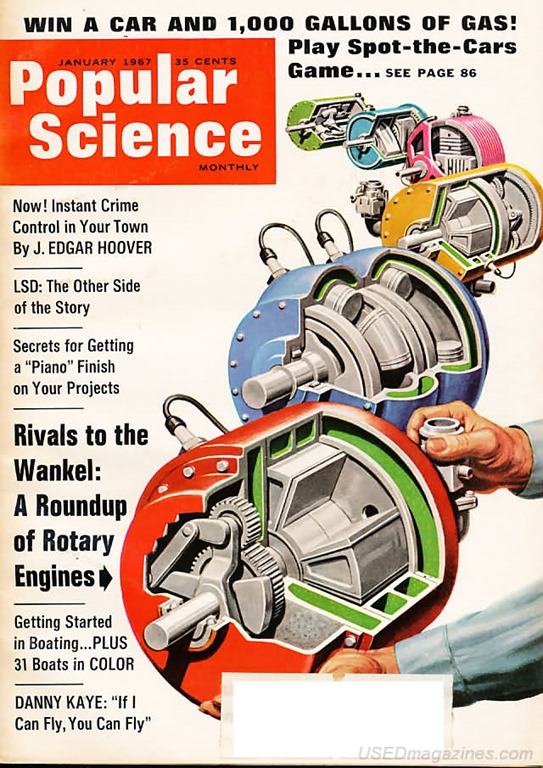
When it comes to friends, I’m pretty sure my present self could not have been friends with any of the people I remembered.  At fourteen I was already an atheist and liberal, and the racism of the small town Mississippi life revolted me, but I was too chicken back then to be confrontational.  I was already reading about LSD and was looking forward to when I could try it.  I remember a January, 1967 issue of Popular Science magazine that had an article about a guy trying LSD in a clinical situation that changed my attitude about drugs.  My time in Mississippi was just before the Summer of Love, and I was already reading everything I could in Time, Newsweek and Life about the counter-culture.  My 14 year-old self kept quiet then, but my 62 year-old self wouldn’t.

If for some Peggy Sue Got Married reason I found myself back in the past I would have done everything different.  But then, does doing things different, and thinking different, really mean my soul was different?  If our soul is only a mechanism of perception that feels the body, and listens to what the brain thinks, it still might change – and even evolve over time.  Hinduism teaches we are here lifetime after lifetime to educate our immortal soul.  Lovely concept, but I don’t believe it – but can we educate our mortal soul?  Or is it merely a viewing mechanism?

There are things that shuts the soul off.  It happens every time we fall asleep, or pass out drunk, or go unconscious because of sickness or drugs – or death.  Our souls can break down because of stress and torture, or come apart because of disease or drugs.  So why shouldn’t they change because of new learning experiences?  

Television

September 1966, the month The Monkees premiered, many other famous television shows premiered too: The Smother’s Brothers Show, The Girl From U.N.C.L.E., The Invaders, ABC Stage 67, The Dating Game, That Girl, Star Trek, The Time Tunnel, Tarzan, The Newlywed Game, and Mission: Impossible.  I also watched, sometimes with my family, Voyage to the Bottom of the Sea, Walt Disney’s Wonderful World of Color, Bonanza, The Ed Sullivan Show, Candid Camera, What’s My Line, Gilligan’s Island, I Dream of Jeannie, The Lucy Show, The Andy Griffith Show, Combat, The Fugitive, The Red Skelton Hour, Petticoat Junction, Lost in Space, The Beverly Hillbillies, Green Acres, Gomer Pyle, The Virginian, I Spy, F Troop, My Three Sons, Daniel Boone, Hogan’s Heroes, Twelve O’clock High, The Avengers, The Jackie Gleason, Flipper, Please Don’t Eat the Daisies, Get Smart, Gunsmoke and Saturday Night at the Movies

I’ve always considered the 1966/1967 television season one of the best ever, if not the best.  Many of my cherish memories of growing up come from watching those shows.  Yet, I find them all painful to watch today.  If somehow I could go back in time I wouldn’t watch 1966 TV at all.  That would have disconnected me from family and friends.  My whole timeline, life and personality would have changed.

Does this mean that my soul has changed over the years, or have I just gotten used to more sophisticated TV?  I still love TV. I love binge TV watching, so I’ve not become an intellectual snob.  In 1966 I loved those television shows.  They were highly addictive, but when I catch reruns of them today their stories seem way too slow, simple and obvious.  I sometimes feel a twinge of nostalgia, but I’m way to impatient to watch them.  And many of them, like The Monkees, F Troop, Gilligan’s Island, etc. horrify me.  I can’t believe I ever had a mind that could like them, much less love them.  Star Trek stands out as being among the most intellectually ambitious of the bunch, but it’s absolutely painful to watch today.

I really don’t think I’m the same soul.  Maybe I have an old body, an older mind, and an older soul?

We like to think of ourselves as being the same person our whole life, but this thought experiment makes me doubt that.  I once read that it takes about seven years for all the cells in our body to change out.  If everything physical is new every few years how can we be mentally or spiritual the same?  Could our soul be like a computer program that can be replicated, but also patched and rewritten?

Books

It’s much harder to pinpoint the books I read in September of 1966.  I was limited to my school library, and a tiny, two room Charleston, Mississippi town library.  I didn’t get to buy books.  I’d join the Science Fiction Book Club in early 1967, but at this time, I was limited to libraries.  I loved Robert A. Heinlein, and would read whatever I could find.  I brought a few paperbacks with me from Miami, Florida.  I can remember one author I discovered at the Charleston Library, George Adamski, and I’m terribly embarrassed to admit it.  I was reading books about flying saucers.  I also was reading about cryogenics, but remember no specific books.  I joined the science club at school and I proposed two experiments.  One was to get a weather balloon and launch it with lights and see how many people reported it as a flying saucer, and two, get some liquid nitrogen to freeze frogs and see if we could revive them.  The big lumbering husky 4H boys in their bib overalls probably thought I was one whacked out puny four-eyed city kid.

Of the writers that existed back then that I’ve come to love since, like Charles Dickens, Jane Austen, Jack Kerouac, James Joyce, Ernest Hemingway, George Elliot, F. Scott Fitzgerald – if I had tried to read any of them I would have failed to enjoy them.  But is that really true?  Two years later, in the 12th grade, I read and loved Portrait of the Artist as a Young Man by James Joyce, The Catcher in the Rye by J. D. Salinger, The Stranger by Camus and Great Expectations by Charles Dickens.  And a year after that I was reading The Autobiography of Malcolm X and On the Road by Jack Kerouac.

Could it be our minds, our souls, reflect the pop culture we consume?  To be the soul that loves 1966 television meant I couldn’t be a soul that loved classic American and English literature!

If I could have given my 12 year old self novels to prepare him for girls, I wished I had discovered Pride and Prejudice, Great Expectations, Middlemarch and The Way We Live Now.  They would have been far more useful than the science fiction I was reading to prepare me for the future.

Music

Music is the monkey wrench in my theory.  I routinely play the music I listened to in 1966 today.  It still resonates with me at a very deep level.  I have learned to love many other kinds of music since, and I do believe if I could send my 1966 soul Miles Davis or Mahler he too would have loved their music.  Music is where the past me and the current me overlap the most.  That’s hard to explain.

Movies

Living in Charleston, Mississippi in 1966, a small town with no theater, took me out of the movie world for nine months.  In fact, the television was so exciting that season that I don’t remember watching many old movies, or even newer movies on NBC Saturday Night at the Movies.  I remember my cousin Robert and his wife Charlotte let me stay with them in Memphis for my 15th birthday that November and they took me to see Fantastic Voyage at the drive-in in their 1962 Chevy Corvair.  I had seen Our Man Flint in Miami at the beginning of 1966, and it was one of my favorites for the year.  Most of the other movies for 1966 I saw years later on TV.  If my present day self was stuck in 1966 I would have wanted to see Who’s Afraid of Virginia Woolf?, The Sand Pebbles, A Man for All Seasons and Blow Up – all flicks my younger self wouldn’t have liked.

Results of the Experiment

The next time I feel the urge to tell a young person I feel the exact way I did in my head at 16 that I do now, I’m going to pause, and try to stop myself.  Yes, I do feel that way, but only if I don’t analyze the details.  I think if I could be magically thrown back into the head of my younger self it would feel like an intense drug trip.  The restless energy, emotions, hormones, fears, pleasures, would overwhelm me.  Getting an erection countless times a day at the slightest thought or sight of anything female would drive 2013-me insane.  I’m not sure about this, but I get the feeling I must have had more thoughts per minute than I do now – so switching bodies would feel like doing speed.  I think the combination of a racing mind and constant horniness would short our my present soul if it was plugged into my younger body.

I don’t like that my body is getting old and failing, but on the other hand, I quite enjoy where my soul is at.  Having my soul travel back in time would be uncomfortable, like time traveling to a time before air conditioning, the Internet, indoor plumbing and antibiotics.

No, I don’t feel like I did when I was young.  I do, but it’s an illusion.  So why do we fool ourselves?  I don’t know, but I might explore the idea in the future.

JWH – 12/27/13

Simplifying an Overloaded Life

I found a web site today that inspires me, Zen Habits by Leo Babauta.  Babauta claims to have found a key to successful living by making one small change at a time, and over time these small changes have led to major changes in his life.  Since he is succeeding at things I have longed to attain, his web site made me sit up and take notice.

zenstones

I have been trying to make dozens of changes in my life for years, and although I succeed in small ways, it’s always with one step forward and two steps back inefficiency.  Babauta’s breakthrough insight is to pick one goal, focus on it exclusively, and stick to it until it becomes a habit before attempting any other changes.  He even created The Sea Change Program that focused on 12 monthly goals, many of which matched mine.  Unfortunately, his study group seems to have been designed for 2013, so I’m 12 months late.  His goals were:  stop procrastinating, eat healthier, meditate, exercise, write daily, simplify your day, get organized, declutter, be grateful, reduce/eliminate debt, read more and let go – are almost a perfect fit to my goals, if I had the sense to organize my thoughts, which is why they resonate so strongly.

Procrastination

My life has been one long act of procrastination.  I have so many things that I try to do, that I want to do, that I feel required to do, that I do very little at all. Also my sense of decisiveness makes Hamlet look like General Douglas MacArthur.  Babauta’s idea of picking one goal and sticking to it exclusively until it’s attain scares me on many levels.  First, I have to pick the one and only goal, two I have to ignore all the others, and three I have to act.  That requires both decisiveness and commitment, two traits that aren’t in my genetic makeup.

Health

Interestingly, Babauta’s second goal is to eat healthier.  Because my arteries got clogged enough to require getting a heart stent this year, plus discovering that I’m gluten intolerant, and finally having my GP and cardiologist both freak out over my cholesterol just weeks apart causes outside forces to make a decisive decision for me – eat healthier.  So my goal for December 2013 is to studying my diet and health books and solve once and for all what my eating habits should be.  I have books by five different doctors each claiming their diet will restore my health – unfortunately they don’t completely agree.  Strangely enough, they do agree on enough to make certain eating decisions obvious – eat more vegetables and fruits, and stop eating junk food, that I can commit to the basics right away.

My goal for December will be to study all my health and diet books, decide what is good to eat, to stop eating what is bad, to develop a repertoire of meals to regularly cook, research menus at local restaurants that will support my healthy diet, study how to buy and store fresh healthy produce, learn techniques to cook all the meals I need to eat, and then stick to my diet so I can give away all my health and diet books and stop thinking about food.

Discovering that I’m gluten intolerant has been interesting.  I’ve had stomach problems for years which I’ve attributed to many causes, but now that I’ve gone several weeks without Pepcid and Tums,  and my stomach is quiet, the chest pains have faded away, the pains in my knee have disappeared, and my hip pain has been reduced so much that on some days I don’t even notice it, I’ve come to believe that what I eat does affect my health.  Now I just need to learn what to eat or not eat to reduce the clogging in my arteries.  My cardiologist doesn’t seem to believe that diet can reverse plague in arteries, but I have books by other doctors who claim it can.  I need to follow what they say to test their theory.

Meditate

Mediating has always been a mystery to me, but I keep coming across people who claim it works.  It shall be a future goal.  I wonder why Babauta ranks it third though.  Obviously he considers it very important.

Exercise

I already routinely do physical therapy exercises for my spinal stenosis related back problems.  My next goal is to commit to additional daily exercises that are more aerobic, strength and stamina building.  I don’t see why I can’t combine this with my December health goal, but I’ll follow Babauta’s advice and make it a separate goal for January.

Write Daily

I already write daily, but it’s blogging.  My ultimate goal once I get my health related goals accomplished is to write fiction daily.

Simplify

Now this goal is one I ache to achieve.  Years ago when I got my debt under control it was by focusing on paying off one debt at a time until I had only one credit card which I charged everything and paid off each month.  This mirrors Babauta’s ideas about goals.  I haven’t worried about paying bills since.  My daily life is so full of distractions that I feel like I have a thousand bill collectors after me.  The major cause of this is I want to do too many things.  I need to simplify my goals and ambitions.  I’d like to get up in the morning and only think about writing my novel.

Organize

Three of Babauta’s goals simplify, organize and declutter seem to be closely related.  Maybe as I work on them their individual distinctiveness will emerge.

Declutter

I’m constantly trying to declutter.  I’ve been doing this my whole life.  But fighting the battle of endless crap accumulation is an endless war.  I would think decluttering would come before simplify and organize.  I could write a million words about mental and physical clutter.  I don’t know how I’m ever going to accomplish this goal.  For example, I have over 1,000 books, audiobooks and ebooks that I own hoping to read.  I have a book shopping habit where I buy more books to read in one year than I could read in ten.  And I figure there’s easily 10,000 books I would love to read.  I think I already own more unread books than I have time to read for the rest of my life.  Reading is my life – so how could I possibly declutter all the books in my life?  How do I organize my reading when I want to master all the major literature of history.  When you add music, movies and television shows, you can imagine how cluttered my mind is when it comes my pop culture addiction.

Gratefulness

I’ve always been grateful my whole life.  One of my core hopes is that I have a moment before I die where I can contemplate how grateful I am for this chance to exist before I cease to exist.  This is one goal I have down.  All the time I spend with my friends and family, all books I read, the songs I hear, the shows I watch on television, all remind me how grateful I am to be here. 

Eliminate Debt

I’ve already conquered this goal too except for my mortgage.  Now that I’ve retired I’ve got to learn to spend less, and on that too.

Read More

Another goal I don’t have to worry about.  I should probably study how to read less, but I won’t.  My life is reading.  With audio books, ebooks, tablet computers, the world wide web, I’ve become more and more efficient at reading.

Letting Go

Now this one is complex.  I’m not sure what Babauta plans to say, but I went through a Buddhist phase in my early twenties and it has stuck to me my whole life.  Mentally, I’ve let go of so much over the decades that even though my mind is starting to fail, I like my headspace so much now that I never wish to be younger.  Oh sure, I’d love a younger, healthier body, but I would never trade if it meant I had to go back to a younger mental self.  I’m like a Hindu who has done a lot of work to get off the wheel of life and death, and I wouldn’t want to undo all that effort.  That’s how I define letting go.  But I’m an atheist, so I don’t believe we get multiple lifetimes to work on letting go.  We have to do it all in this lifetime.

But what are we letting go of?  Now that’s the interesting part.  If you’re Buddhist or Hindu, then it’s desire.  If you are Zen Buddhist its illusions.  But if you’re a westerner with heavy Christian heritage, it’s sin.  If you’re an atheist, it’s all three and more.  It’s a complete deprogramming of the past, and the twelve goals Babauta has selected is great start.

JWH – 12/2/13

How To Write a Sermon to Inspire Thousands

Most people are used to getting jokes, cute pictures and funny videos forwarded to them in emails, tweets or posted on Facebook by their friends.  But there’s another type of forwarded message that’s not as popular, the inspirational message.  These internet homilies usually involve a moving story and sometimes a bonus list of lessons, just like a sermon you’d hear in church.  Sometimes they mean to be religious, or at least worshipful of God, but usually they are just heartwarming anecdotes that intend to inspire goodwill and positive thinking.

Inspiration-cropped

I’ve sometimes fantasized about writing a joke and sending it to all my friends and hoping that one day years later it would come back to me in some anonymous way after being spread all over the internet.  But since I’m terrible at telling jokes I doubt I would write a popular one.  I assume internet inspirational messages are from people who would love to write a good sermon themselves, or at least enjoy inspiring others.  It’s an interesting writing challenge to think about.

I got this message overnight and I’ve decided to analyze it as a model for writing internet sermons.

BANK ACCOUNT!!!

This is AWESOME … something we should all remember.

A 92-year-old, petite, well-poised and proud man, who is fully dressed each morning by eight o’clock, with his hair fashionably combed and shaved perfectly, even though he is legally blind, moved to a nursing home today.

His wife of 70 years recently passed away, making the move necessary. After many hours of waiting patiently in the lobby of the nursing home, he smiled sweetly when told his room was ready.

As he maneuvered his walker to the elevator, I provided a visual description of his tiny room, including the eyelet sheets that had been hung on his window.

‘I love it,’ he stated with the enthusiasm of an eight-year-old having just been presented with a new puppy.

‘Mr. Jones, you haven’t seen the room; just wait..’

‘That doesn’t have anything to do with it,’ he replied.

Happiness is something you decide on ahead of time.

Whether I like my room or not doesn’t depend on how the furniture is arranged .. it’s how I arrange my mind. I already decided to love it.

‘It’s a decision I make every morning when I wake up. I have a choice;

I can spend the day in bed recounting the difficulty I have with the parts of my body that no longer work, or get out of bed and be thankful for the ones that do.

Each day is a gift, and as long as my eyes open, I’ll focus on the new day and all the happy memories I’ve stored away.. Just for this time in my life..

Old age is like a bank account. You withdraw from what you’ve put in.

So, my advice to you would be to deposit a lot of happiness in the bank account of memories!

Thank you for your part in filling my Memory Bank.

I am still depositing.

Remember the five simple rules to be happy:

  1. Free your heart from hatred.
  2. Free your mind from worries.
  3. Live simply.
  4. Give Thanks to God for your Blessings.
  5. Expect less.

Pass this message to 7 people except me. You will receive a miracle tomorrow.

Now, STOP! Did you hear what I just said. You WILL receive a miracle

Tomorrow.. So send it right now!

Have a nice day, unless you already have other plans.

I believe my friend Linda sent this message because I wrote about whether or not I should get up early or sleep late in my retirement.  This is a story about a 92 year-old legally blind man who gets up, shaves, dresses and is ready to start his day by 8 am.

Now I’m fascinated by the story process here.  How did it come about?  Is it true?  Or is it made up?  Do people sit around thinking up inspirational stories like other people sit around thinking up jokes to tell?  I’m going to guess that this story has a kernel of truth, and the rest is added by a writer or writers, maybe a blogger like me.  There’s even a chance that as it’s been passed around, the story could have been altered or added to.

Most of the inspirational stories I get by email are about old people, or people overcoming adversity.  I suppose that’s because of my age and the age of the people sending me messages.  I suppose if I was younger and had children, I’d receive a lot of children inspired stories.  Or if I was a young divorced woman I’d see a lot of stories about meeting guys who weren’t dickheads.  So the first lesson of writing an internet sermon is to target your audience carefully.  The message above is aimed at people getting older, especially those fearing nursing homes and living with less in life.

However, I’m afraid I’m going to be cynical here and deconstruct this message.  This mini-sermon makes several philosophical statements.  I think the story can be divided into three sections.  First, the green, is an incident with an old man, probably inspired by a real event.  The second, blue, is another lesson, about memories, maybe inspired by the first story, or maybe just an additional lesson.  Third, in red, additional commentary and advice.  All three could have been from one person, but it feels to me like they were from three different people.  I don’t think the old man and writers 1 and 2 are expressing the same philosophical points.

The old man who has just lost his wife of 70 years, needs a walker, and is nearly blind, is assigned to a nursing home.  The old man is very positive, well groomed, and agreeable.  The story as written has the old man imparting two pieces of wisdom, first about deciding to be positive and second, banking good memories for bad times.  Those are two totally different solutions for finding happiness in old age.  That’s why I think it’s from two different writers.

The first lesson is about mental attitude.  Decide to stay positive – be in control.  Like the British who dress for dinner in the middle of a jungle, this old man dresses up for each day of old age.

The second lesson is actually wimpier, but still a great coping mechanism.  It advices us to have a great life so we can live off those memories when we get old.  Many people do this.  It’s not a lesson I like.  I prefer number one.

The third lesson is really just an addendum of extra advice that doesn’t really relate to the first two lessons.  They break down to love, don’t hate.  Don’t worry.  Live simply, be thankful and don’t want to much.  “Expect less” is a very odd piece of advice unless you think about it carefully.  All five are very Buddhist, especially number five, which is the heart of Buddhism, desire is the cause of all unhappiness.  This is why I think three different people wrote this message, or one person used three different philosophies in their sermon.  They are:  keep a stiff upper lip, hide in good fantasies, and third, accept what you get, be thankful and don’t want too much.

It would have been a much better sermon if it had one consistent message.  The best of the messages, the green one from the old man, inspires the most, because it appears to be based on a real person.  In other words, find real life people and events for the heart of sermons. 

Whole libraries could be written about these lessons.  Thousands of books have been written about the concept of happiness.  Unfortunately, it appears happiness is a condition that most people have or don’t have.  I’ve been lucky, and have always been a happy person.  I don’t think its due to any belief I’ve learned or acquired.  Some people go through years of analysis trying to be shown how to be happy, but I’m not sure its something that can be revealed.  I think some people become happier with drugs, either legal or illegal.  And I think some people become happier through behavioral conditioning, either gained intentionally, or unintentionally.  Sometimes happiness comes with age and wisdom.

I really doubt people can find permanent happiness in a sermon, but we love to try.  Don’t we? 

Decades ago I met this guy who had a lesson about happiness that I found wise.  He said there were three goals in life that we had to accomplished before we could relax and be happy with our lives.  First, we had to finish our education.  By this he meant, we had to get to a place in our life where we no longer felt the need to go back to school.  Second, we had to find the job that we were going to keep and one we didn’t consider a shit job.  Third, we had to find our mate for life.  I thought this a wise story because much of what makes people unhappy is caused by the normal stresses of life – frustrations over incompleteness.  And these three factors are what causes most people a lot of unhappiness.

Like the old man, some people naturally learn from an early age that happiness is knowing how to make lemonade from lemons.  Not everyone can do that.  But can we teach others that lesson?  How many people getting this email today will change from unhappy to happy by doing what the old man does, just deciding to be happy?

Now for the second part of the old man’s wisdom – bank good times when you’re young and withdraw them when you’re old.  I’m not sure this philosophy would have come from that old man.  It’s a totally different philosophy to live by, a different psychological coping mechanism.  Instead of deciding ahead of time to always make the best with whatever is given to you, this advice tells us to make great memories now to live off of when we get old.  A lot of old people do this of course, spend their days dwelling on the past.  Of course there’s lots unhappy guys in their thirties living off their high school glory days.  As a coping mechanism it’s not a particularly good one.

As a whole inspirational story, the last part, the tacked on five point lesson detracts from the original real life story because it sounds too abstract.  And the first two lessons contradict each other.  One is an example by doing, and the second is a made up solution.  Like the golden rule of writing advice, show don’t tell, this story works best when it’s showing and least when it’s telling.

My guess is someone actually met this old man and wrote his story up.  Then the same person or another person, thought it wasn’t enough, and created the idea of a memory bank to fill it out, even though it’s a contradictory message.  Then another person decided the story needed some explicit lessons to take away and added their five bits of wisdom.  This happens in The Bible all the time.  Sermonizers love to add their own bits.  Read Misquoting Jesus or Forged by Bart D. Ehrman.

My conclusion for sermon writers is to only tell the parable and let the reader generate their own lessons.  Make sure nothing in the story contradicts itself.  Make sure the voice stays consistent.  Make sure the philosophy stays consistent.

JWH – 11/1/13