
Uncanny Valley by Anna Wiener

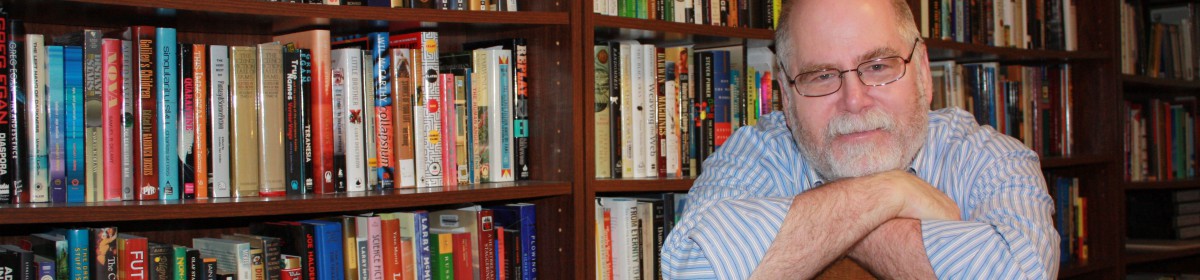
by James Wallace Harris, Friday, December 4, 2020

I have never been to San Francisco but over my lifetime I’ve read many books about social movements that city produced. They include the Beats (1950s), Rock (1960s), Gay Liberation (1970s), and Silicon Valley (1970s, 1980s). Anna Wiener’s 2020 book Uncanny Valley is about San Francisco of the 2010s, although I’d say mainly about from 2013 to 2016 when Trump is elected president with a bit of updating to 2018. Anna Wiener was on the peripheral of several interesting news events of the decade, so even though this is a personal memoir, she had a stadium seat to some significant social upheavals that affected more than just San Francisco. This is probably why The New York Times chose Uncanny Valley as one of the “Ten Best Books of 2020.” It was also on these best of the year lists from Esquire, NPR, and Parade. Bookmarks which tracks links to reviews found mostly rave reviews.

Describing what Uncanny Valley is about will be hard. Wiener, graduated from college in 2009 and went to work for publishers in New York, and then at age 25 moved to San Francisco to work at a succession of three internet startups, the most famous of which was GitHub. I’m a computer guy who loves books about the history of computers and computing. I was hoping Uncanny Valley would be another The Soul of a New Machine by Tracy Kidder. It wasn’t. Anna Wiener wasn’t a programmer or computer engineer, and her memoir is not really about computers even though it focuses on people who passionately are.

Wiener’s role in her story was much like Nick Carraway in The Great Gatsby, as a commentator on the main characters, or like Tom Wolfe in The Electric Kool-Aid Acid Test. Wiener was an observer of a social revolution, not a revolutionary herself. Wiener gets to know the revolutionaries, their causes, their ambitions, their faults, their crimes, their successes and anguishes. Wiener tries to understand the philosophical implications of this revolution but it’s too complex.

The young millenials who become millionaires and billionaires creating tech startups in San Francisco have a lot of overlap with the counterculture revolutionaries of the 1960s. They imagine reshaping society with similar utopian ideals, justifying their hubris with similar sounding pop philosophies, they indulge in drugs, alternative lifestyles, leftover New Age faiths, wild conspiracy theories, and silly science fictional schemes that have echos in previous cultural revolutions. They even contemplate engineering cities from scratch like hippies use to dream about communes. But this time around they are capitalists and they all want to get mega rich.

Silicon Valley and San Francisco are not everyday America, but they impact it in a way we can’t escape. Most of us live at least part-time on the net, joining the hivemind subculture Silicon Valley created. Anna Wiener lived in the eye of the hurricane collecting data readings she hoped would reveal meaning. I’m not sure anyone can make sense of that era. She felt bad and blamed herself for failing, but that’s silly. What she has done is taken excellent notes about her experiences and impressions.

Uncanny Valley could be a textbook supplement for a graduate course on current issues in business and business ethics. It could also be a meditation guide for young people who contemplate their own participation in society. Like the Beats in the 1950s, and the Hippies in the 1960s, and the New Agers in the 1970s, the millenials are struggling to make sense of life and find a righteous path for living in a corrupt world of commerce. Like every generation, they’re looking for meaning in a meaningless reality. In some ways, Uncanny Valley reminds me of The Making of a Counter Culture by Theodore Roszaks – but who remembers that 1969 book?

Throughout this memoir I kept feeling the people Wiener described were going through many of the same psychological struggles I did in the 1960s and 1970s. It’s a chronicle of typical youth angst. Of course, that left me wondering if we can ever solve the problems we all rail against early in life, but which we eventually forget when we co-opt ordinariness.

The only thing unique about Wiener’s generation is how some of them got so damn rich. Part of Uncanny Valley deals with the problems of chasing those billions, and soul changing of catching mountains of money, or the agony of failing to become wealthy.

Even though this is a short book, there’s a great deal to it, really too much to digest, including many ethical issues created by the business models of these new tech industries. Often Wiener would be working on software that got into the news for its evil side effects. Or that same software would empower legions of formerly powerless people to do evil. She often worried about the degree of guilt that belong to her.

Ultimately, Uncanny Valley becomes a must read book because Anna Wiener just happened to be in the right place at the right time to glimpse at generation changing events. Nearly everything she writes about has been well documented in news stories over the last decade. If you’ve been paying attention, a lot of it will be familiar. Weiner got closer than most reporters. However, she obscures the names of everything. I found this very annoying, but finally accepted it as a quirky writing affectation. In one review I read, it was suggested she Wiener had to sign so many non-disclosure agreements she’s become shy of using real names for anything. Of course, Wiener might have thought it funny to make us guess.

I don’t know how often I convince blog readers here to read what I review. Uncanny Valley could bore the crap out of most of my friends, or it could dazzle them. If you like nonfiction and memoirs, and interested in issues dealing with current events, profiles of younger generations, sexism, privilege, technological change, politics, economic equality, ecology, homelessness, gentrification, capitalism, and contemporary ethical issues, then this book might be for you. If reality overwhelms you, you should avoid it like the Covid.

Additional Reading:

JWH

Their Wonderful Lives

by James Wallace Harris

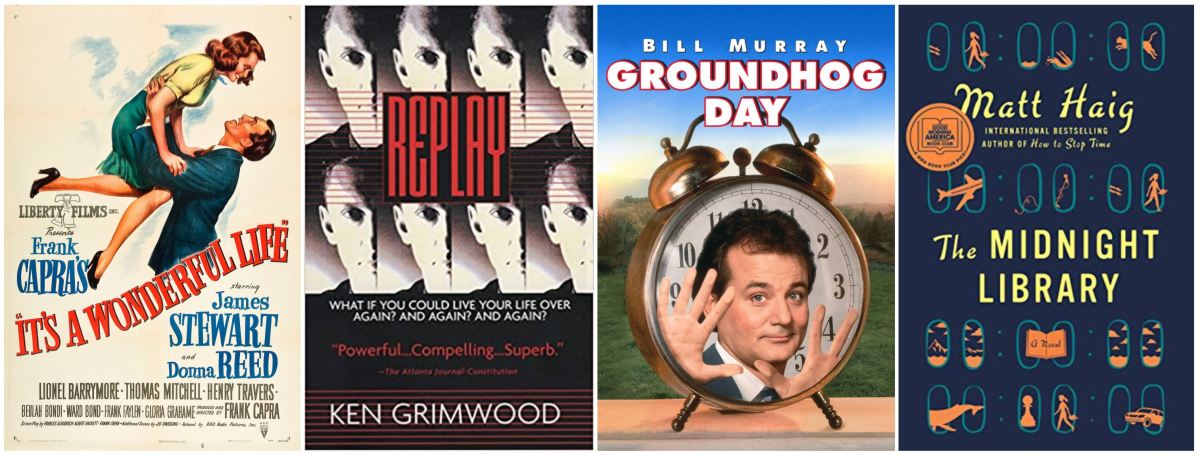
Do you look back over your life tallying a long list of regrets? Do you fantasize about taking roads not taken? Are there people you wished you had thanked, or expressed your love, or just gotten to know? Do you remember saying things you wished you hadn’t? Are there ambitions you regret not chasing? Are you the kind of person that wishes they had some do-overs? Well, I have a book for you – The Midnight Library by Matt Haig. It belongs to a group of books and movies that represent a tiny subgenre of fantasy about living life over:

The Midnight Library is a current bestseller that came out in August. It’s attracting bookworms like crazy for its feel-good inspirations. The Midnight Library offers the same kind of life lessons found in It’s A Wonderful Life, Replay, and Groundhog Day. Evidently, if we’re allowed to live our lives over, we would all learn similar insights. Could that be true? Can we learn just as much by consuming stories about characters with life do-overs?

In The Midnight Library Nora Seed is a 35-year-old woman full of regrets who commits suicide but finds herself not in heaven or hell, but a library. Nora lived in the small town of Bedford, England. Remember, George Bailey lived in the small New England town of Bedford Falls. Unlike George, Nora doesn’t get to see what Bedford would have been without her, instead, she gets to relive her life in countless ways based on taking different forks in her past. That’s somewhat like what Jeff Winston gets to do in the novel Replay who lives his whole life over and over trying different paths each time, and a little bit like Phil Connors experiences in Groundhog Day.

The creator of these stories teach us a kind of philosophy by showing us lives lived over, or even over and over. I do not want to spoil The Midnight Library for you, so I won’t go into its unique plot details or metaphysical conjectures. Let’s just say I found it a very compelling idea for a fantasy pick-me-up.

Have you ever pictured yourself dying and instead of being reborn into any of the traditional religious destinations, imagine yourself coming to in some higher dimension with the true meaning of existence coming back to you? Sort of the ultimate V-8 head slapping moment where you exclaim, “Oh, that’s what life was all about! Now I remember.” Something impossible to comprehend or predict in this life.

I have often wondered that. It’s not what Nora Seed experiences in The Midnight Library, but her story offers an interesting alternative like that. If I had to place a bet, I’d bet that death is oblivion. But it sure would be nice if after dying we found ourselves in some kind of logical reality where all of our existence on Earth made good sense.

Fantasies like The Midnight Library, Replay, Groundhog Day and It’s A Wonderful Life offer a kind of existential hope, a fairytale for adults. The Midnight Library was one of the few bright spots of 2020.

JWH

Memory Management in Humans 1.0

by James Wallace Harris, Thursday, November 26, 2020

Even though I often bitch and moan about my memory problems, I don’t feel they’re a sign of early dementia. Humans just have poor memory management compared to computers. If Homo sapiens sapiens ever have a spinoff species I wonder if it will have better memory management? Science fiction writers often imagine Homo superior with superhero superpowers but I tend to believe whatever traits that sets our descendents apart from us will be rather mundane. I hope improved memory is one, but it will probably be the adaption to hotter weather and resistance to toxic pollutants.

Today I felt the need for the specific kind of memory if I was Jim Harris 2.0. I belong to a small group of people who discuss science fiction stories by email. This week we’re discussing “Utopian” by Mack Reynolds, which came out in 1970 about the problems people would face in the year 2000. I read two or three short stories by Mack Reynolds this summer and I wanted to reference them in my comments about “Utopian.”

However, I couldn’t recall anything about those stories – at first. Slowly, as I strained my constipated mind, I shat out a few rabbit turds of recollections, that eventually allowed a few larger memories to flow out. The results looked unrecognizable to what I had consumed. It’s a shame. We have rich experiences and all we retain are little piles of memory shit.

What would it be like if everything I read stored perfectly in my mind and I could recall it whole later? Yeah, I would be a computer then, wouldn’t I? But I’m not, so what’s the best work around?

I’m currently reading a novel, The Midnight Library by Matt Haig that’s about a young woman, Nora Seed, who commits suicide at 35. On the road to oblivion she is offered the opportunity to live a different versions of her life, ones based on paths she had not taken when younger. On one path she became an Olympic swimmer, but Nora realized once she was in that successful life just how much she had to give up to become an elite athlete. It required such a single-minded focus that she had to drop everything else she loved.

If I wanted a mind capable of remembering and writing about the work of Mack Reynolds in the kind of depth that I’m fantasizing about, I’d have to have ignored a whole array of other writers and stories I’ve been enjoying. The reason why I’m not great at anything is because I’m half-ass at everything else. I’m not finished with The Midnight Library, but one of the lessons I’m wondering Nora learns is the virtue of being a dilettante at many things.

I’ve tried diaries, journals, blogs, spreadsheets, databases, text editors, note taking software, 3×5 cards, clipping files, mind mapping tools, and so on trying to organize my thoughts and memories. Nothing works. I’m always surfing on a foamy wave of chaotic fragments of memories that I wished were whole. My mind craves the autistic trait of compulsive organizing but I can’t put everything in visually appealing stacks.

Each day I get up thinking of a new project to pursue. Whatever memories I can dredge together and hold in my mind for the course of the day become my entire set of tinker toys to build that project. Once I go to sleep at night, everything gets reset. I feel like Leonard Shelby in the 2000 film Memento waking up and starting over. I can carry a project over to another day, but I must rethink everything about it the next day. Often that takes me in a completely different direction. This explains why on a number of occasions when researching on Google I found articles I had written on the very topic I was thinking about writing that day, but had forgotten I had written. That really produces an eerie feeling.

What I keep searching for is a external tool or a mental discipline that would allow me to build a larger project by not having to restart everything the next morning. I marvel at people who can create large complex creative works over weeks and months. How do they keep everything in their head day after day? I have to assume their minds have laser focus ignoring endless distractions. I’m always seduced by distractions. I love distractions. I can’t resist squirrels and shiny objects.

Even knowing that distractions are keeping from doing what I really want, I can’t ignore their siren calls. There seems to be two kinds of people in this world. Those that get things done, and those that don’t. And it doesn’t appear that memory recall is the key difference between the two types. I’m guessing it’s more about limiting the amount of items the head juggles that’s more important. That managing a smaller set of data is the key to focusing. Which makes me wonder if Walter Isaacson had to forget all about Steve Jobs to write about Leonardo di Vinci?

If I could only think about one project until it’s finished. Maybe that’s the key to managing memory. I sit here thinking about all the interests my mind would have to ignore in one day, and that makes me feel like Wile E. Coyote trying to walk on air high above the canyon below.

JWH

BASS 2020: “Something Street” by Carolyn Ferrell

by James Wallace Harris

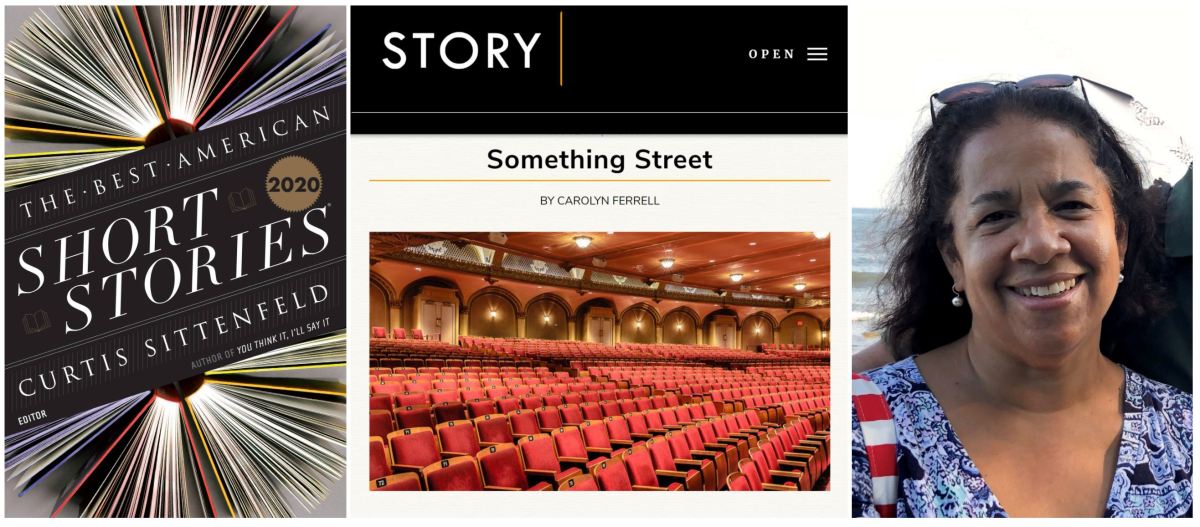
Something Street” is exactly the kind of story I was looking for when I bought The Best American Short Stories 2020 (BASS 2020). It’s a Category 3 hurricane in its emotional intensity, with anguished gusts pushing into Category 4. The only other story with any powerful emotionality I’ve reviewed so far from BASS 2020 is “Godmother Tea,” but it was only a Category 1. “Something Street” roars with pain and anger.

“Something Street” was an hour and nine minutes on audio, making it the second longest story in the BASS 2020 anthology. Technically by some yardsticks it’s a novelette. However, I do recommend that you follow the link above and read it online before reading any further here. Actually, I highly recommend getting the audiobook edition of BASS 2020 to hear the powerful narration by Robin Miles. She brings Parthenia’s story to life like a one-person show on Broadway.

Trigger warning: This story is about a fictional famous black comedian who is a rapist. It’s obviously inspired by Bill Cosby. Carolyn Ferrell has divided the story into sixty sections. Cosby was accused by sixty women. This is Parthenia’s story, the wife of the comedian nicknamed Craw Daddy. I’m not sure how much it intentionally parallels Camille Cosby’s life but it feels like it faintly does. This makes me somewhat queasy because I wonder about the ethicality of using famous people for fiction. Not just here, but at any time.

I don’t intend to describe or summarize “Something Street” because it’s long, complex, and very deep. I’m afraid any description or quote I might give could dissuade you from reading it. Besides it so rich that I could write a dissertation on it, and I just don’t have the energy and time. “Something Street” is available to read online, and I recommend that you do so. But like I said, if you want the full force gale experience, get the audiobook of BASS 2020.

I do want to talk about why I crave powerful short stories. We live in a far-out reality that we mostly ignore because of our endless pursuit of diversions and duties. Reading an intense short story canes me over the head and shoulders like a Zen master telling me to pay attention.

I don’t feel my day has been worthy unless I read one or two stories that give me an that intense existential wake-the-fuck-up rush. “Something Street” did that for me today. Another recent read that did that was “Second Person, Present Tense” by Daryl Gregory. The link provides both the story to read and audio to hear.

You need to read “Something Street” very closely to get all the implied horror, some of which I goes beyond its real life inspiration. The reason why this seventh story in BASS 2020 stands out is its dramatic voice. Parthenia is painted in hyper-realistic details. “Something Street” has a baroque structure, with a rising arc ending in a tragic epiphany. I seldom use this term, but “Something Street” is a tour de force. Carolyn Ferrell hit one out of the park.

Menu: The Best American Short Stories 2020 Project

JWH

BASS 2020: “Halloween” by Marian Crotty

by James Wallace Harris, Tuesday, November 17, 2020

Menu: The Best American Short Stories 2020 Project

Evidently teenage lesbians can go just as girl crazy as other girls go boy crazy. In “Halloween” by Marian Crotty, seventeen-year-old high school senior Julie can’t control her impulses for college girl Erika and gets strategic dating advice from her thrice-married grandmother. “Halloween” is a nice little love story that moves from beginning to end in a linear progression. It does offer a small subplot about Julie’s jealousy for her mother’s growing transfer of affection for her boyfriend as Julie gets old enough to move out, and it digresses a delicious bit about the colorful grandmother, Jan. Maybe a little too much because Jan almost upstages Julie in this story.

Although “Halloween” is told with a decent concentration of embellishing details such as working at Yotopia, everybody else’s love life, bits of academic demands, and a few faint details about Tallahassee, Florida, the story is pretty much about Julie’s obsession with Erika. Sure, love stories dominate fiction, and its mildly interesting to learn about the sex lives of the latest generation, but it’s also a kind of ho-hum mundane love story. Because part of the story was set at Yotopia I couldn’t help compare it to John Updike’s classic teens at work story, “A&P.”

“Halloween” is an engaging story but won’t be memorable. Why is “A&P” still being taught in schools over a half century after it was first published and “Halloween” won’t? Why has “A&P” stuck with me ever since it was assigned to my English class back in the 1960s? How do you describe ineffable qualities?

There are milestones in the life of short stories. Getting written is a kind of conception. Getting published is a kind of birth. Getting selected for a best-of-the-year annual is a kind of graduation. Getting reprinted in retrospective anthologies is a kind of career. Becoming a classic is a form of longevity, even immortality. With every story I read that I like I have to ask if it has what it takes to keep living. And if I don’t think it will, I have to ask what would it take to survive.

“Halloween” needs something. Either more Julie, or more Erika, or more of both. If you compare Julie with Joy in “Godmother Tea” you’ll know what I mean. I wanted a lot more details about Julie’s inner world, and a lot more details about what she sees in Erika. For “Halloween” to survive we readers would have to feel what Julie feels when she can’t stop herself from going to the Halloween party. The story as is made me intellectually understand, but for it to reach the next level I’d have to feel it.

Jake Weber’s review. He found some comic elements that I didn’t. I recently wrote an essay about science fiction stories that could be read straight or as humor depending on your current perspective or mood.

Other Reviews:

Karen Carlson framed her insights around the three generations of women with relationship problems.

Jake Weber was fascinated by the questionable dating advice Jan gives Julie.

JWH