Schismogenesis, Cultural Appropriation, Conformity, and Identity

James Wallace Harris, 3/4/22

I’m reading The Dawn of Everything: A New History of Humanity by David Graeber and David Wengrow but I can’t review it as a whole because it features hundreds of interesting ideas and I have no way to assess them all in a small essay. So, I’m going to review some of its ideas in a series of blog posts. Each one will deal with a unique concept that I think is useful.

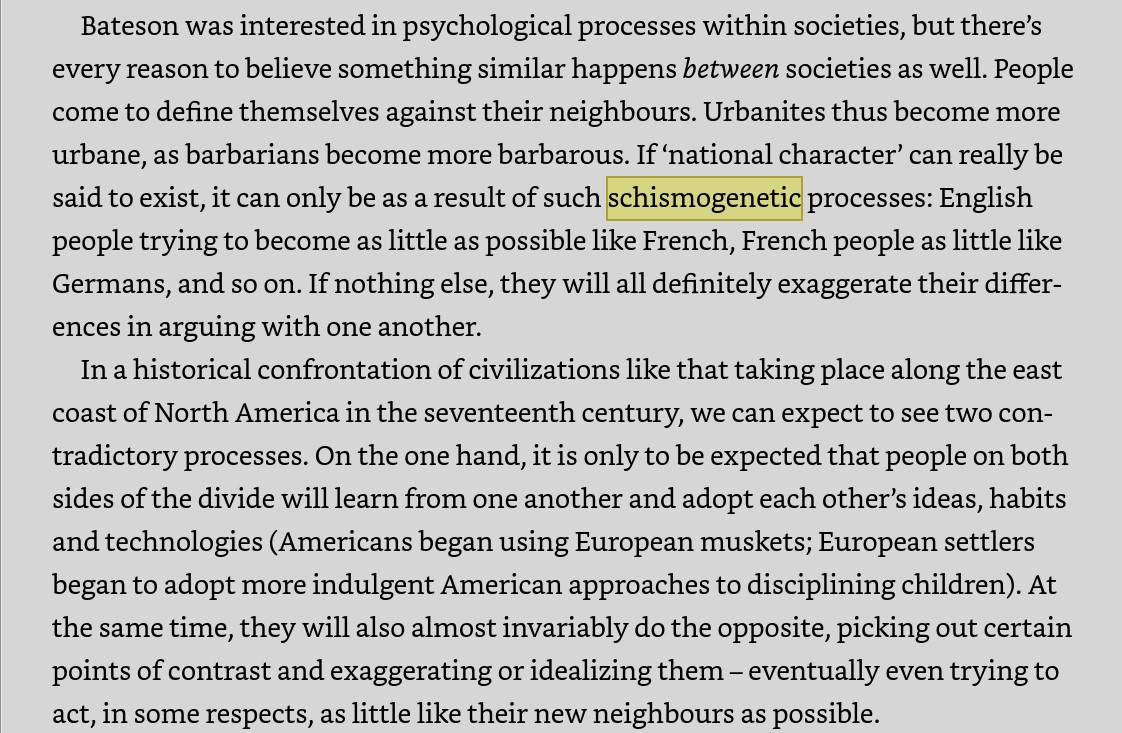
Overall, the book speculates about societies in prehistory and in three places uses the word “schismogenetic” referring to the term schismogenesis, a word coined by anthropologist Gregory Bateson. This is not a common word, but one that I had to look up, and it’s used in various ways in the social sciences that isn’t exactly how Graeber and Wengrow use it.

Graeber and Wengrow use the concept of schismogenetic to identify a human trait that is very worth recognizing — the urge to belong to a group by defining distinctive wanted traits. This explains children and adolescents who like to conform, to subcultures and hobbyists who love sharing a common interest, to ethnic, cultural, and nationalistic groups who fight cultural appropriation to preserve their unique identity, to political groups who want to maintain unity, and so on.

Schismogenesis can be seen as the cause of xenophobia, but it could also be seen as the inverse of xenophobia. Xenophobia rejects others by traits we don’t like or want, and the schismogenetic urge defines our group identity by specific traits we embrace. This is just me speculating and I’m no expert. I want to embrace this concept because I feel it’s very useful. I see examples of it everywhere. If the term became popular it might help us understand ourselves.

Take conservatives and Republicans. It seems in recent decades they are defining themselves more and more exactly. They have generated a schism by clearly defining who they want to be issue by issue. Take mask-wearing. They’re against it. They see mask wearers as a liberal trait. Ditto for vaccinations. If liberals and Democrats had been against masks and vaccinations, the people on the right would have been for them. If the left is for Critical Race Theory, then the right is against it. If the left believes in climate change, then they don’t. And the details don’t matter to most people.

I use this political example not to be political, but I think it’s obvious that the schismogenetic urge is stronger in conservatives. They really enjoy defining themselves and being part of their group, and it seems they fear being seen as not conforming. For example, being called a RINO is a terrible insult. And this has worked out well for conservatives because they are better at organizing and defining themselves than the liberals.

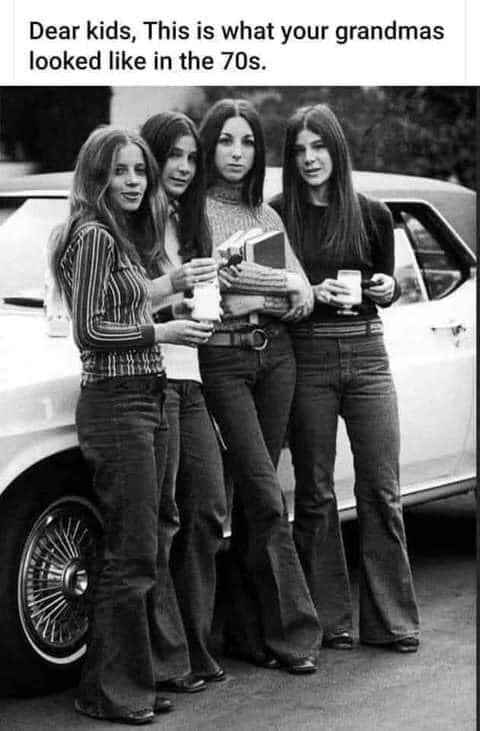
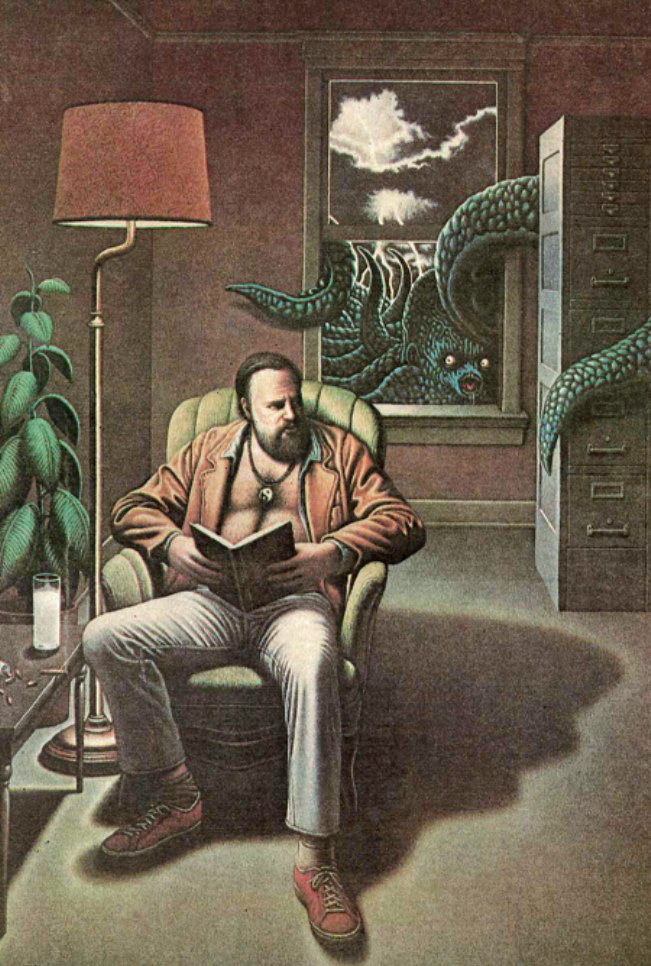
But I believe we all have schismogenetic urges. I saw this photo on Facebook and it reminded me of how back in the 1960s we all wanted to be individual free spirits, but in reality, the hippie counter-culture was very conforming.

Graeber and Wengrow used the concept of schismogenetic to explain why the hundreds of Native American tribes created very distinctive and diverse societies. I think everyone uses the trait to join the groups and subcultures they want to embrace as their identity. I believe this is why the concept of cultural appropriation has developed in recent years — subcultures want to protect their identity, their brand. And that’s cool. I’m not necessarily saying this is a bad trait, but it can lead to schisms divided by hate.

Some of the reviews that are deeply critical of The Dawn of Everything attack it because they consider Graeber and Wengrow of being historical revisionists. And I see this as a schismogenetic trait too. There are those who define themselves by the histories they embrace and they really don’t like the idea that what they’ve learned and accepted is being revised. It challenges their identity.

Science and history are constantly revising their disciplines with new data. The social sciences aren’t as exact as classical physics, so they go through more upheavals. Those upheavals cause new schisms and threaten old ones. Trying to fully grok The Dawn of Everything is difficult. Graeber and Wengrow keep bringing in politics by using studies of prehistory societies. I think this clouds what they are trying to do. At one point they say, “Since this book is mainly about freedom…” but is that true? I thought it was about prehistory. That makes me wonder if the goal of this book is to be schismogenetic.

JWH

Have You Ever Lost Files From Google Drive?

James Wallace Harris 2/28/22

I’ve been using Google drive for years and years and always felt safe doing so. Over the past two years, I’ve had two spreadsheet files get corrupted. In both cases, I was printing them when part of the data was lost. It appeared that data that wasn’t in the print area was just removed.

In both cases, I tried to use the file version utility to get back to an early stage, and in both cases, it failed. I figured, what the heck, just don’t try to print from Google sheets, but download a copy and import it into Excel to print.

I told a friend about this, and he said he’s never had trouble with files on Google Drive. I figured my two incidents were just weird printing flukes. Then today that friend texted me and said Google Drive lost two of his files – just gone. Both were notes about a programming project that he spent weeks collecting. Ouch. Now I’m worried.

Google doesn’t offer tech support, at least that I can see for free personal accounts. There is a fair amount of documentation offering help. Basically, it suggests using the version control feature for corrupted files, and the undelete feature of the Trash. Even though I worked on my last spreadsheet for a couple hours, there were only two versions – a blank 11:35am version, and a corrupted 1:31pm version. I tried all kinds of things. I downloaded a .csv version to see if the data was hidden. I tried cutting and pasting to a new worksheet. I ended up importing the .csv file into Excel and retyping the deleted data.

Now, you might ask if I have Excel, why am I using Google Sheets? I just like Sheets, and I assumed by putting something in my Google Drive it would be safe. That Google would back things up, and keep plenty of versions.

And it’s also true, I’ve had corrupted files over the decades using Microsoft Office. Nothing is perfect. I used Google Drive because sometimes I like to share files, but mostly because it’s convenient, and I assumed such a tech giant would always protect my files better than I could.

Now, I’m wondering if corrupt or lost files on Google Drive are very common. Has it happened to you?

If I can’t trust Google Drive I’ll have to stop using it for creating files. I’ll do my work offline and then upload anything I need to share. In retrospect, I should have been saving my Google Drive files to a local drive before printing or doing any major reformatting or global calculations. I should have known better since I was in tech support for decades and I now remember all the times people came to me with corrupted files or lost files that happened after printing.

JWH

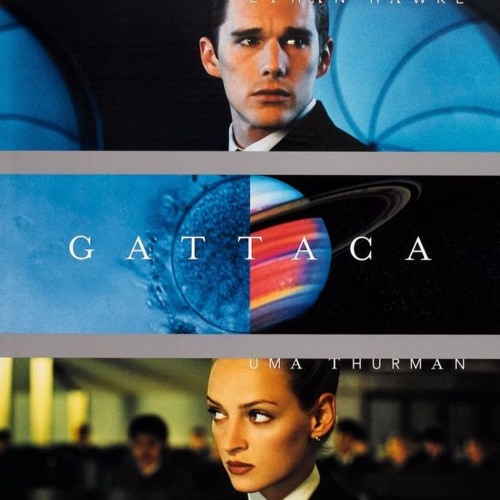
What Was the Last Album You Obsessed Over?

by James Wallace Harris, 2/27/22

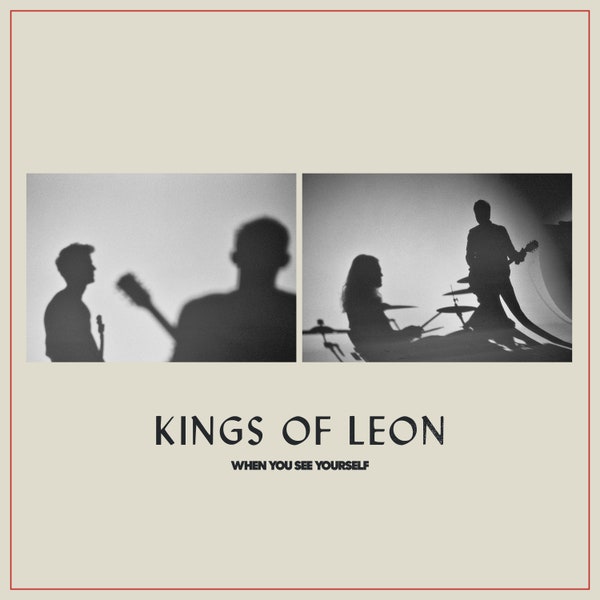
I’m not really concerned with which album you recall, but when. I’ve been playing When You See Yourself by the Kings of Leon over and over for weeks. What’s significant to me is it came out in 2021. When was the last time you bought a new album? I mean one that had been recorded recently?

I still buy the occasional new album on release day, like Adele 35, but it’s getting to be an extremely rare event. But even rarer is finding a new album I go bonkers over. I loved the new Adele album, but I haven’t played it obsessively like I have When You See Yourself.

Over my lifetime I’ve bought several thousand albums, but the ones I love the best are the ones I play constantly for weeks. Albums I repeat like those rats who continuously push the button connected to the reward center of their brain. Out of all those albums, probably less than 100, or even less than 50, and maybe even less than 25, were the kind I’d play over and over for weeks. I can’t really name the figure because my memory is so unreliable, but if it was only one a year, it would be around 50-60. But the albums that wowed me mostly came out in the 1960s and 1970s, and then they slowed to a trickle. That means it might only be 25.

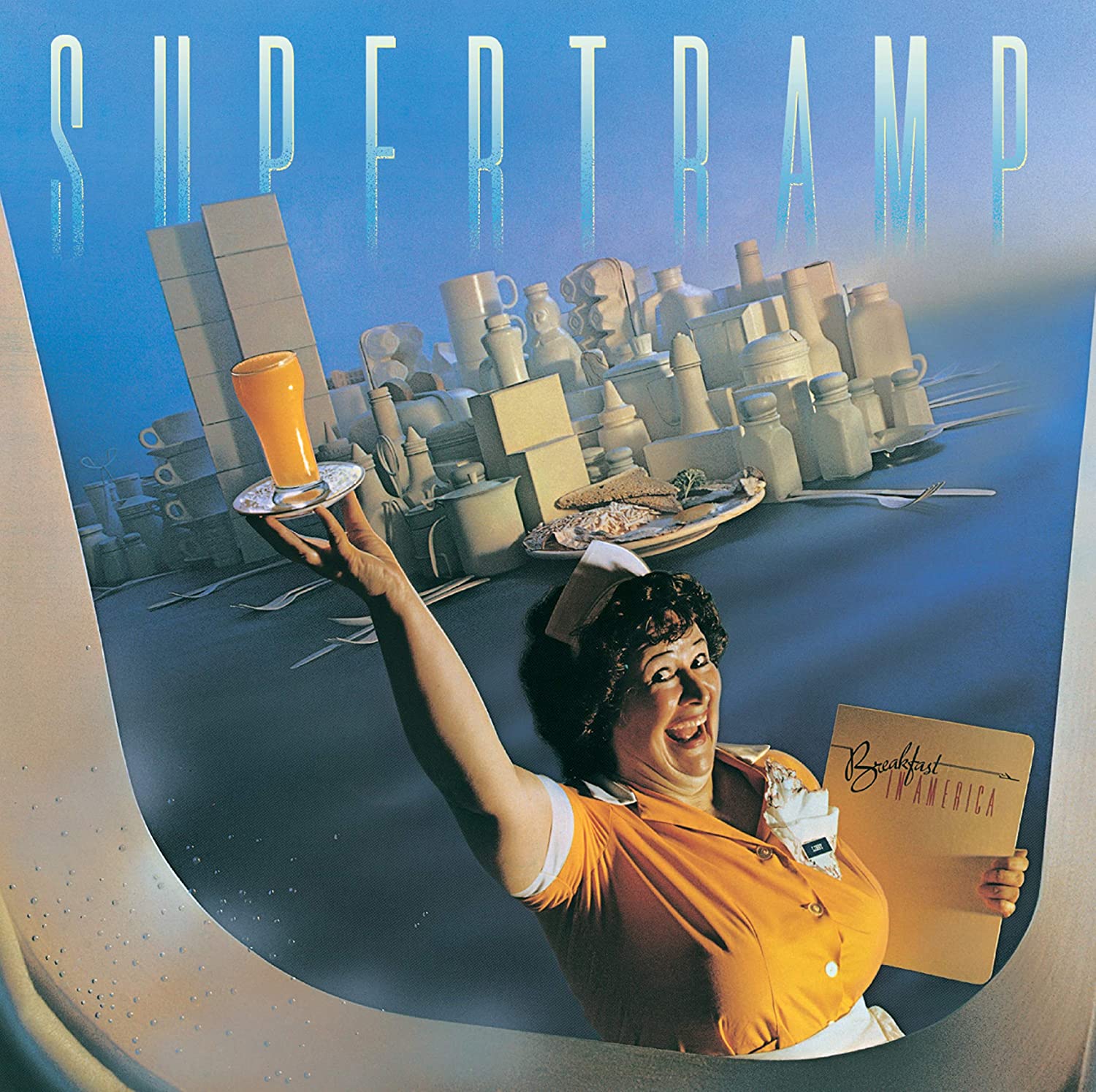
One reason I was inspired to write this blog was seeing a post on Facebook about Breakfast in America by Supertramp. That was another album I couldn’t stop playing for weeks. But that was back in 1979 and again in the 1990s when I got the CD, and again for weeks in the 2010s when I remembered it.

I think most of my friends, and I’m talking Baby Boomers here, when they think of a great album, think of albums from the 1960s and 1970s. My wife Susan, is like me, she’ll still want a new album, but much less often than me, and it usually involves The Foo Fights or Jackson Browne.

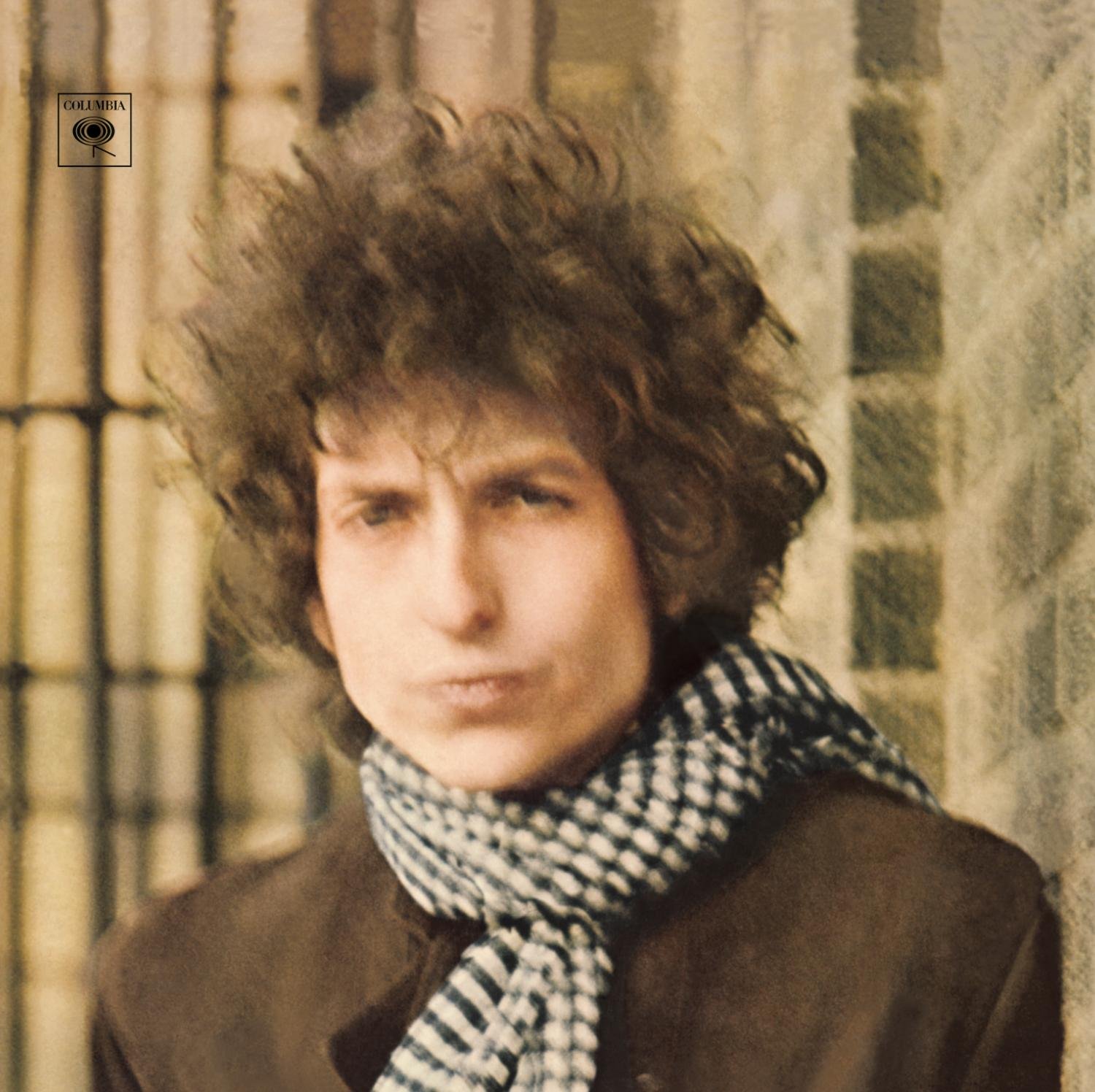
I believe the album I’ve played the most times over the course of my life is Blonde on Blonde by Bob Dylan. Every few years I come back to it and wear it out again. I’ve bought it on LP, CD, and SACD.

Why do most people stop buying new music after a certain period in their lives? Why do most people seem to only play music from when they were growing up? And is the reason I love When You See Yourself is because it sounds like something that could have been created in 1975?

My previous obsessively played album was Young in All the Wrong Ways by Sara Watkins (2016). Before that, the album I couldn’t stop playing was The Way Sounds Leaves the Room by Sarah Jaffe (2011).

It might take a long while and some digging through albums to find the one before that. I know during the 2010s I returned to playing Blonde on Blonde by Bob Dylan from 1966 over and over again.

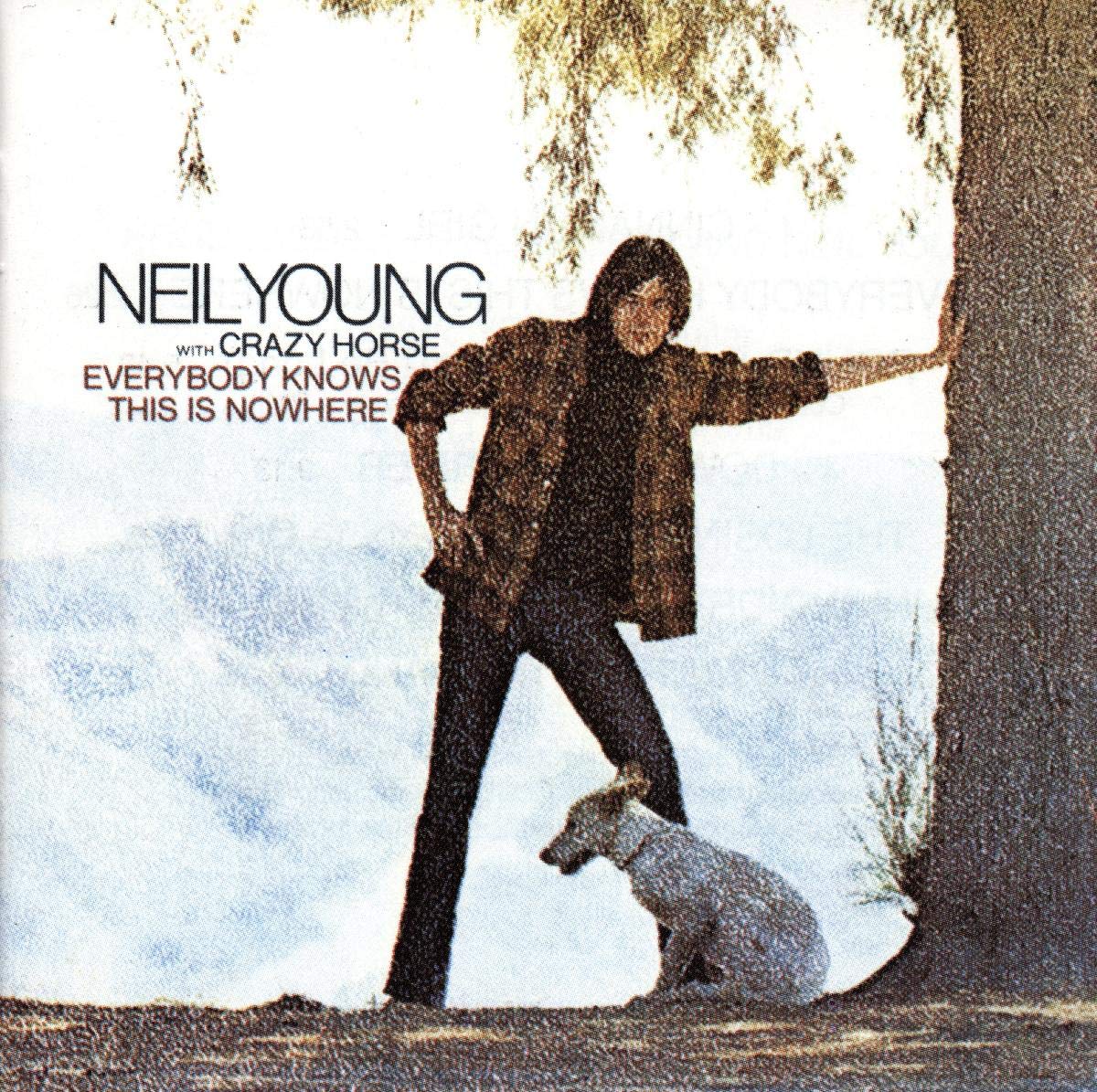
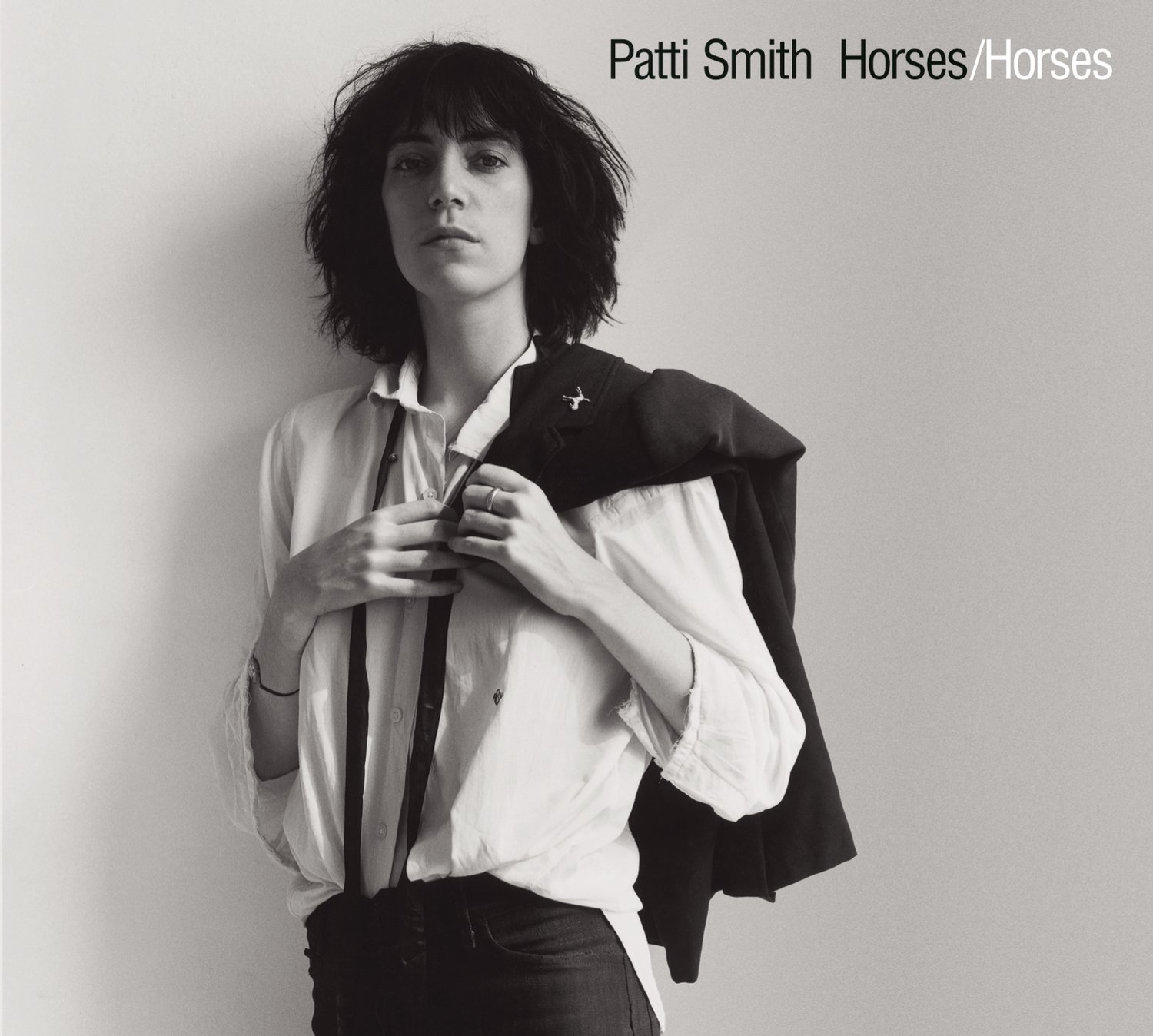
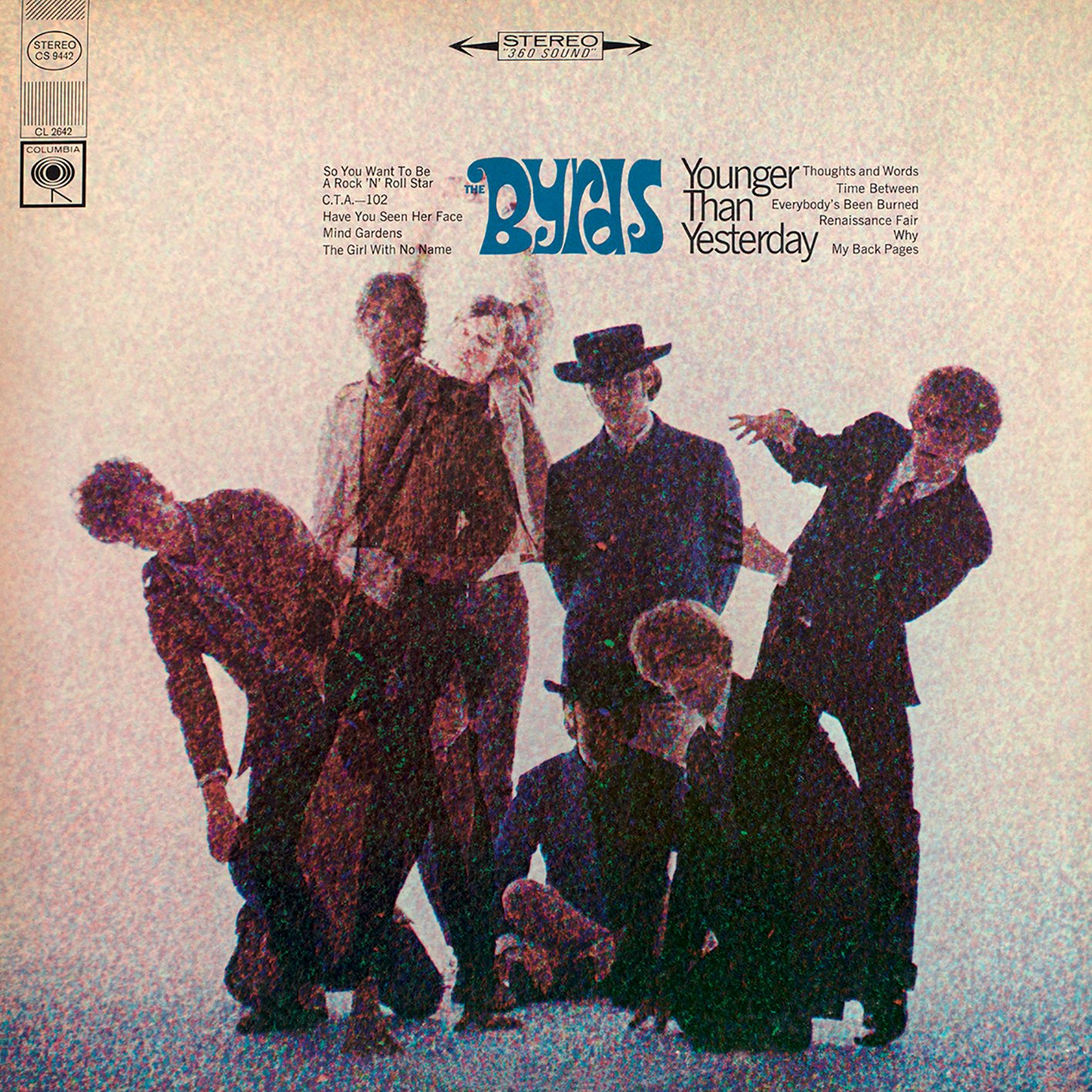
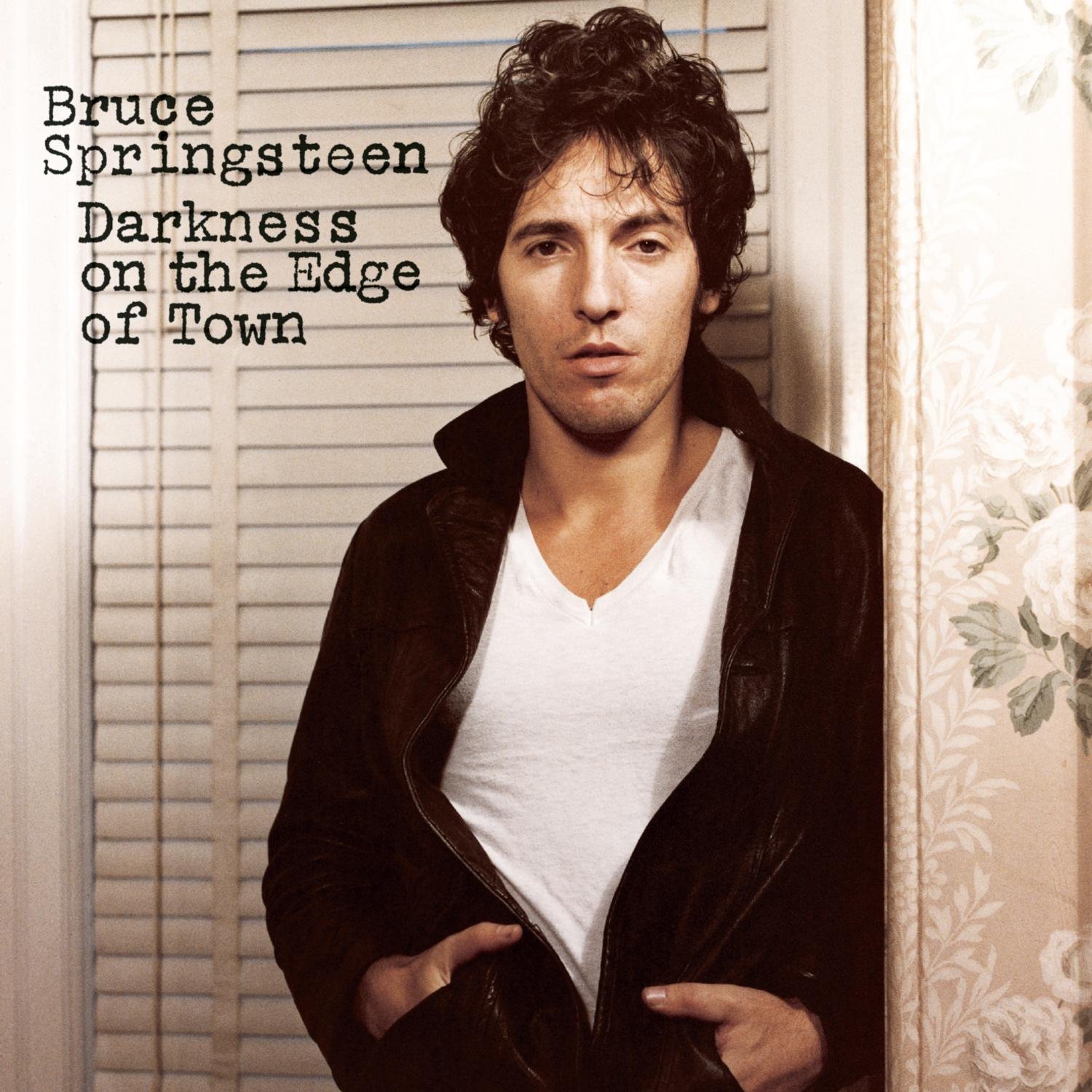
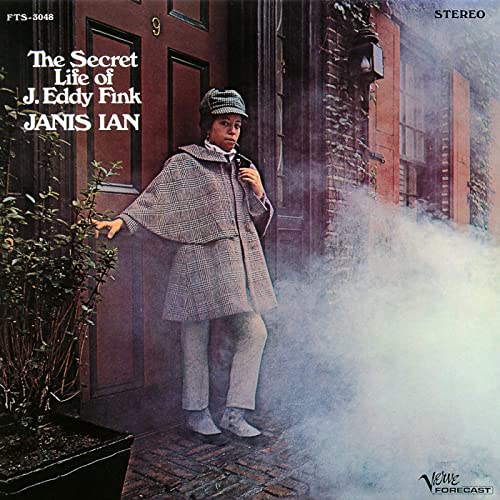
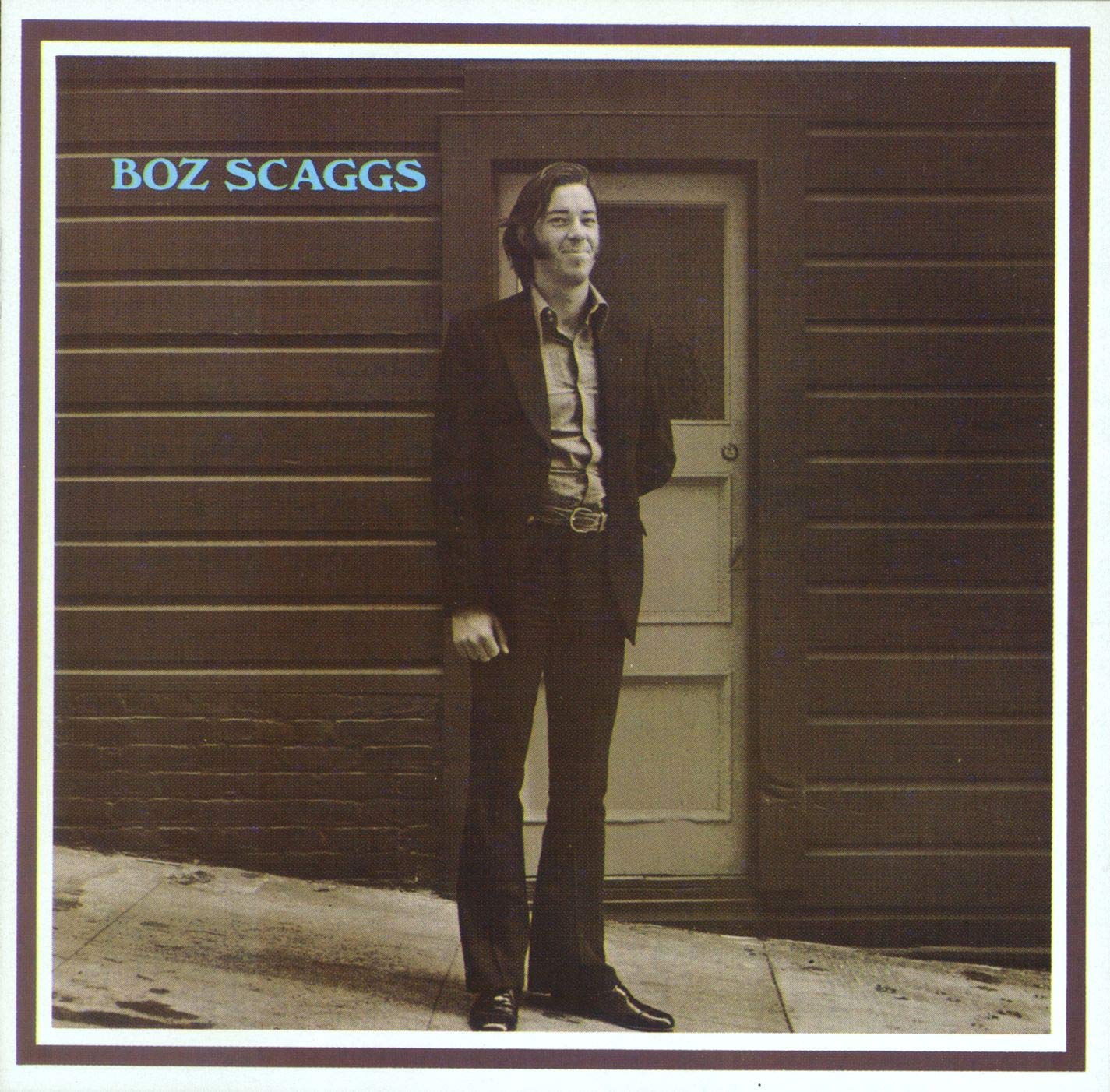
Certain albums from the past do pop up in my memory but these are hardly all of them. I thought I’d just remember a handful of them in pictures.

That’s enough. What were you favorites?

JWH

“Dr. Bloodmoney” by Philip K. Dick

by James Wallace Harris, 2/17/22

Do you ever wonder why your favorite authors are your favorite authors? Growing up, the writer I loved more than all the rest was Robert A. Heinlein. As I got older I also became obsessed with other writers, like Samuel R. Delany, Mark Twain, Jack Kerouac, Charles Dickens, Jane Austin, Louisa May Alcott, but never for long. I first discovered Philip K. Dick (PKD) in 1968 when I took Do Androids Dream of Electric Sheep? off the new 7-day bookshelf at the Coconut Grove Library in Miami, Florida. I was sixteen. Since 1968, I’ve read many of his novels and short stories. I’ve read several biographies. I’m even reading his collected letters. But I have to admit, Philip K. Dick was one strange human being. I doubt if I could have hung out with him as a person because of all his crazy ideas. Yet, I keep reading his books. Some many times.

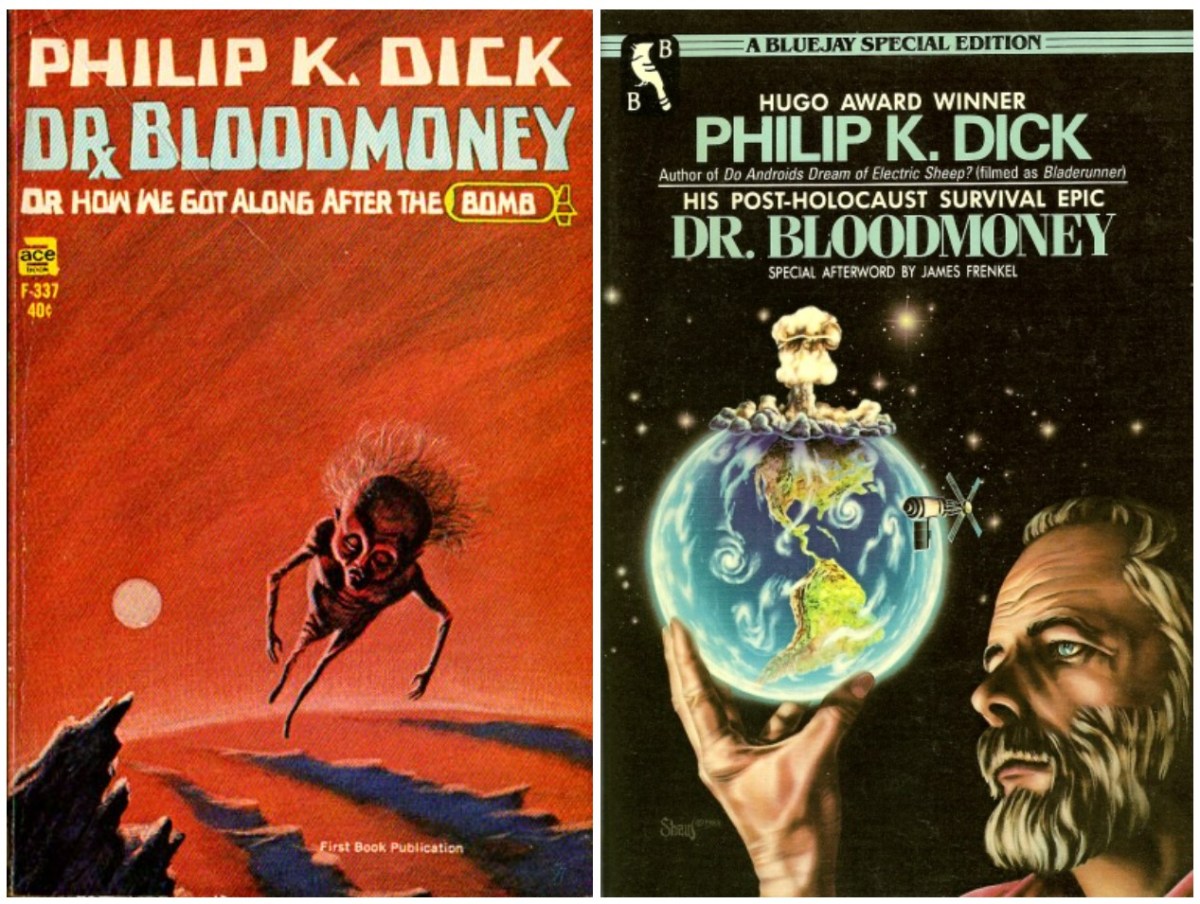
I didn’t plan that Dr. Bloodmoney would be my sixth book to read in 2022. I’m trying very hard to broaden the selection of books I read in 2022> I want to get away from reading so much science fiction. And it’s dangerous for me to start reading too much PKD because it can be like falling into a black hole. I read We Can Build You last week because I was trapped at home without power in an ice storm and I wanted to indulge myself with something purely fun. Researching that review led me down the PKD rabbit hole just a bit. That’s when I read that Dr. Bloodmoney, a novel I’ve never read, is considered one of PKD’s best. I always thought from the cover of the Ace original that it was one of his crappy paperback quickies. Boy was I wrong.

My new tips were right, Dr. Bloodmoney is great. Trigger Warning: Unless you’re a rabid fan of PKD, sometimes known as Dickheads, don’t run out and buy this novel. I know from experience from stories friends have begged me to read that the magic doesn’t always transfer. It’s that magic that I want to talk about. My buddy Mike loves PKD, but I don’t think the Philip K. Dick magic works with any of my other personal friends. I know that Richard Fahey loves PKD because of the comments he leaves on this blog. I also know that there are a fair number of Dickheads out there because the price of PKD’s used books keeps going up and up. But the truth is, I just haven’t met that many fellow fans.

Wikipedia has an excellent biography of PKD and an extensive article on Dr. Bloodmoney. I won’t reiterate what they’ve already done – it’s much better than I could do. No, what I want to describe is why the novel resonates so deeply with my soul. And feel free to leave comments on what writers ring your bell and why. Maybe would-be novelists could pick up some tips.

Dr. Bloodmoney, written in 1963-1964 and published in 1965, is set in San Francisco, Oakland, and Marin County just before the atomic bombs exploded and seven years later. 1965 is one of my favorite years. I consider 1965 the pinnacle year for popular music, and it was the year I read a pile of science fiction that influenced my reading for the rest of my life. I was 12 and 13 in 1964 and 1965. Folks, puberty, and pop culture really do a number on us.

I’ve never been to California, but Dr. Bloodmoney captures the feel I have remembering the 1950s and early 1960s. I was living in Miami at the time, but the people and settings of PKD’s novels written during those years have always reminded me of how people were when I grew up. This is a powerful attraction.

I lived at Homestead, AFB during the Cuban missile crisis, and grew up doing the duck and cover drills in grade school. 1964 was the year that Dr. Strangelove or: How I Learned to Stop Worrying and Love the Bomb and Fail Safe came out, two almost identically plotted stories about atomic bombs. Dick wanted to call his novel In Earth’s Diurnal Course or A Terran Odyssey but Donald Wollheim at Ace wanted to cash in on Dr. Strangelove and titled it, Dr. Bloodmoney, Or Have We Got Along After the Bomb. In years since it’s been shortened to just Dr. Bloodmoney. But the important thing is it captures the fear of WWIII people had back then. The atomic bomb hung over our future like climate change hangs over young people today. That made it a touchstone for me.

The fear of nuclear war inspired a huge number of post-apocalyptic novels. I’ve always loved those stories. Philip K. Dick does something very different than all of them in Dr. Bloodmoney, he imagines American civilization surviving and getting back to normal after WWIII. For all its weirdness, it’s a very positive tale. He imagines people using horses to pull cars and having wood-burning steam engines power trucks. The direction of the novel is to return to a 1950s normalcy – and isn’t that what everyone wants today? And Dick knew of the evils of those years. One of his main characters, Stuart McConchie, is a black man who was just starting to make it as a television salesman when the bombs fell, is among the characters who strived the hardest to bring back personal success. It’s the simple things we wanted out of life back then, that make this novel so appealing now. Then and now, people just want a decent life, a good job, and to be free to pursue their own happiness.

The characters in Dr. Bloodmoney are quite diverse, but their most appealing quality is how much we care about them, even the evil and the deranged. All of them have “I’m just a little person trying to survive” in a big world vibe. Because this is a PKD novel, most of the characters, if not all, suffer various forms of mental illness. Dick suffered from mental illness his whole life and saw it everywhere. Mental illness, delusional thinking, and other psychological struggles are the main themes of all of PKD’s works.

Stuart McConchie, who I’ve already mentioned, undergoes many transformations in this book but could be the sanest person in the story.

Hoppy Harrington was a Thalidomide baby, born without arms and legs. He has psychic powers that he uses at the beginning of the story to get a job as a TV repairman. He rides around in a little cart and has artificial arms. After the bomb, his skills as a handyman becomes vital to the Marin County community, making him a highly respected member of the community. Unfortunately, his need to be loved leads to tragedy. In the novel, he is called a phocomelus, which is a word I thought PKD made up, but Wikipedia says it’s a real condition of people with malformed limbs.

Walter Dangerfield was an astronaut heading to Mars when the bombs fell, leaving him stranded in orbit around Earth. Because his spacecraft had years of supplies, and a huge library of books and music, Dangerfield becomes a disk jockey in orbit, playing music and reading books. Communities around the world live without electricity but jury rig old radios with car batteries to listen to Walt when he passes over. His folky ways tie people together and give them hope. Walt is one of the saner characters too but mentally struggles with loneliness and health problems.

Bonny Keller is a pivotal character who is desired by most men and the lover of many. She is also a leader of the Marin County community, and the mother of two of Dr. Bloodmoney‘s most essential characters, seven-year-old Edie, and her twin brother Bill, who lives inside her as a telepathic homunculus. Bill is in contact with the dead. The other characters think Bill is just Edie’s imaginary friend, but he’s very real. Okay, I did tell you this is one of the strangest novels I’ve ever read? Maybe I didn’t. I have now.

Bruno Bluthgeld, hiding out as Jack Tree because the world knows him as the physicist that caused the 1972 radiation crisis resulting in many human and animal mutations. He’s also assumed to be the cause of the atomic war. Bruno is Dr. Bloodmoney – the rough translation of Bluthgeld. Bruno also has psychic powers and suffers from tremendous paranoia because he believes everyone hates him and wants to assassinate him. Of course, sometimes that is true.

Andrew Gill is a post-apocalyptic entrepreneur. He’s developed a recipe of available plants to replace tobacco and has perfected a much sought-after brandy. When the bombs fell he was riding around in a VW bus. Gill was probably a proto-hippie.

This isn’t half of the characters in Dr. Bloodmoney. They are all wonderfully strange and have their own agenda. Dick is great at presenting little people in science fiction. Science fiction often has big heroes that save the planet, galaxy, or universe. PKD loved little folks that save themselves. Dick even has empathy for his most evil characters. He doesn’t see them as being evil, but enduring forces that are evil.

Philip K. Dick’s stories might be the most filmed of any science fiction author, but quite often the movie characters are nothing like his book characters. PKD loves ordinary people leading ordinary lives encountering the strange. Dr. Bloodmoney is science fiction because of the atomic bombs and post-apocalyptic communities, but it also includes psychic powers, which were common in science fiction in the 1950s, and even the supernatural. Bill and Hoppy are aware of what happens to people after they die, and it’s not just delusions of their insanity. However, the atmosphere of the story feels like mundane characters leading mundane lives, even though they are weirdos in a weird land.

I listened to Dr. Bloodmoney, narrated by Phil Gigante, who does a fantastic job with these characters, giving them each a unique voice. I was totally mesmerized by the story, no matter how fucking strange it got. And it gets very out there indeed. Is the weirdness why we Dickheads love PKD? I don’t know. I tend to believe I love him for his ordinary folks struggling to find meaning in a crazy reality.

The audiobook is available at Audible.com and Scribd.com. If you haven’t read Philip K. Dick, I recommend starting with Dr. Bloodmoney and with listening to the audiobook version.

[I’m going to try very hard to avoid another PKD novel and finish two nonfiction books next, but I can’t promise that for sure. Sometimes another PKD novel is just too enticing.]

JWH

We Can Build You by Philip K. Dick

by James Wallace Harris, 2/9/22

My intended fifth book to read for 2022 was Humankind, a hopeful reappraisal of humanity by Rutger Bregman. However, during the ice storm, I didn’t feel like reading serious nonfiction while the power was out. For some strange reason I was in the mood for Philip K. Dick (PKD) and I randomly picked We Can Build You. I listened to it on audio, and it was wonderfully narrated by Dan Jon Miller.

PKD wrote We Can Build You in 1962 calling it The First in Our Family while it was a working manuscript. It was rejected by his publisher, G. P. Putnam’s Sons, who had just put out The Man in the High Castle, and by several other publishers until Ted White bought it for Amazing Stories in 1969. White claimed the novel needed an ending, which White wrote with Dick’s permission. It was retitled A. Lincoln, Simulacrum and ran in the November 1969 and January 1970 issues. This is when I first read this novel. After that Donald Wollheim, who had rejected it for Ace Paperbacks, reconsidered the novel and published it for his new company DAW in 1972, but without the Ted White final chapter.

Before I digress, and I will digress all over the place, just let me say that Philip K. Dick is one of a handful of writers I obsess over. I’ve written about these writers before in my essay “The Ghosts That Haunt Me.” I’ve read many biographies about PKD, and even reviewed them as a group. And I’ve recently started reading his collected letters (I have 5 of the 6 volumes). I’m not the only one obsessed with PKD. Dick is known for writing science fiction, and he’s probably one of the most filmed of all science fiction authors. However, PKD was a troubled soul, and he often used his books and stories to explore his own psychological problems. We Can Build You is one such book.

Readers will find many stories to follow within We Can Build You. One is about Louis Rosen, a partner in a firm that sells organs and spinet pianos. Louis falls in love with his partner’s daughter, Pris Frauenzimmer, who is schizophrenic, and only 18. Louis is 33. Over the course of the novel, Louis also becomes schizophrenic. In 1962, PKD was around 33. At the time PKD wrote this novel he was married to his third wife, Anne. There is evidence that We Can Build You is somewhat biographical to PKD’s life in 1962 and is a reaction to a troubled marriage with Anne and his own psychological problems. Was there another woman? Or is Pris modeled on Anne?

Anne was an atypical PDK wife (he had five in all). Anne was a year older than Phil, and she was blonde. Dick had a neurotic obsession with dark-haired young women, and Pris Frauenzimmer, the love interest in We Can Build You is eighteen and dark-haired. Makes you wonder.

I’m giving all this information as a kind of warning. We Can Build You can be read without knowing anything about Philip K. Dick’s life. For some, especially readers who enjoy outre science fiction but don’t know PKD’s work, it will be a reasonably entertaining story, although one that will strike them as quite odd even for the outre. For fans of PKD who only read his fiction, it will even be one of the better novels, but far from his best. But, if you happen to be a Dickhead, this book offers all kinds of delicious mysteries about the bizarre and tragic life of Philip K. Dick.

Some Dickheads consider We Can Build You as a trial run for Do Androids Dream of Electric Sheep? It certainly focuses on two of PKD’s favorite themes: What is human? and What is Real? It’s also about insanity, a theme that runs throughout many of his stories. But it’s mainly about Dick’s obsession with young dark-haired girls, one that’s gotten its own nonfiction book. Dick was born with a twin sister who didn’t live long, and he claimed that affected him for the rest of his life.

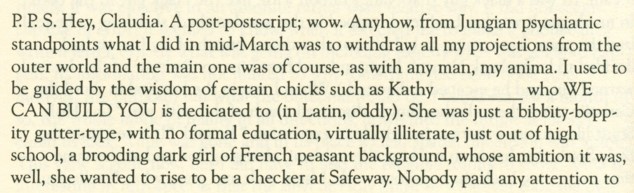
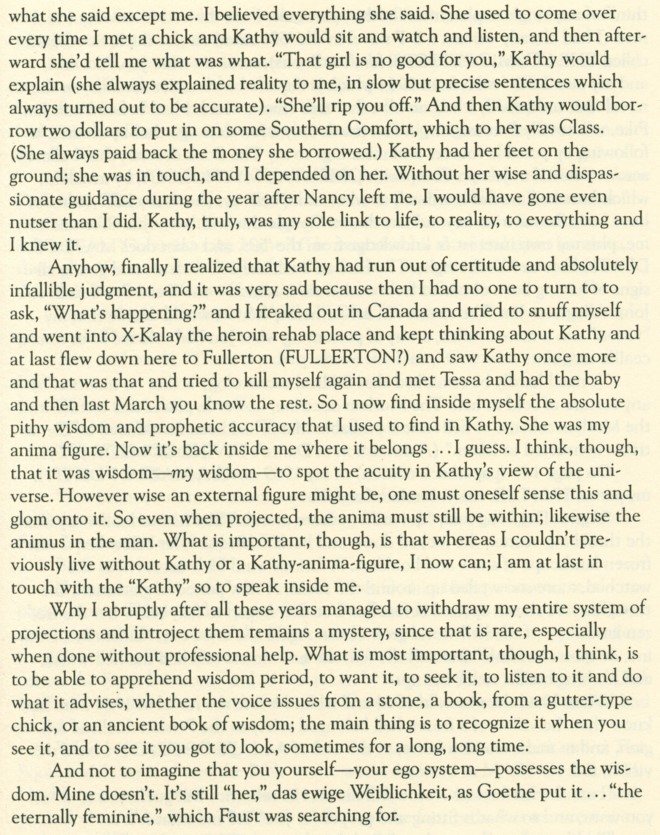
The first edition of We Can Build You in 1972 has a dedication that reads: “For Kathy Demuelle, my best friend, Mea voluptas, meae deliciae, mea vita, mea amoenitas …” Google translated that Latin for me as: “my pleasure, my darling, my life, my attractions.” This was written at the end of his marriage to his fourth wife Nancy and before he married Tessa, his fifth and final wife. These wives were barely legal for a man in his forties to marry. Dick’s published collected letters do contain letters to Kathy, and she is described in a letter to another young woman in this 1974 letter:

Kathy sounds just like Pris. But I don’t think Pris is based on Kathy. I don’t know when he met her. I need the first volume of the collected letters which I don’t have, and they are now sky high to buy used. The above letter does give us many clues as why PKD wrote We Can Build You.

However, after We Can Build You was published, Kathy evidently ghosted Phil, and he wrote Donald Wollheim asking for the dedication to be changed to Robert and Ginny Heinlein, which it is in later editions. Heinlein had out of the blue sent PKD money for medical expenses, and PKD was very moved. The early 1970s were a particularly bad time for Dick, who had suicide attempts, an escape to Canada, and had spent time in rehabs. PKD was agoraphobic but hated living alone, and often invited anyone who would, to live with him. And sometimes these were not very nice people, and sometimes they were very young dark-haired girls.

Knowing all of this should help us understand the protagonist of We Can Build You, Louis Rosen. But it’s also important to understand the major theme of mental illness and psychiatry in We Can Build You comes from a 1962 PKD, and not the 1972 PKD. Knowing the difference helps us to realize that the novel is about PKD then, but it prophesied the PKD to come.

Here’s the thing. Most readers think stories by Philip K. Dick are science fiction, but if you’re a Dickhead you realize they’re about PKD. Phil started out writing science fiction, but after he married Anne he wrote almost a dozen mainstream novels he couldn’t sell. Dick wanted to become an important writer and to support a wife that wanted that kind of success. At the beginning of the 1960s, PKD understood that wasn’t going to happen and returned his focus to writing science fiction. That’s when he published his masterpiece The Man in the High Castle in 1962. It was then PKD got the idea to blend mainstream fiction and science fiction and wrote We Can Build You.

The science-fictional elements of We Can Build You deal with building androids. The two main ones are Abraham Lincoln and his secretary of war, Edwin M. Stanton. Each android is programmed with all the biographical knowledge we have for each man. They look completely human and act like they have been reincarnated. Although they become fascinating characters integral to the story, they aren’t the important part of the story.

The novel is really a bizarre love story. Louis loves Pris, but she doesn’t love him. She is cold, cruel, and indifferent. Pris is ambitious and convives to get Sam Burrows a tech billionaire that reminded me of Elon Musk. Pris doesn’t love anyone but knows Burrows can get her what she wants. This drives Louis insane and he goes to extreme measures to take Pris from Burrows. The last third of the book is Louis undergoing therapy after having a psychotic breakdown. PKD was not the kind of man women would want, and it’s surprising he found five wives. I believe this novel conveys PKD’s frustration with his search for a woman that could make him sane and whole.

The published novel has a mainstream novel ending. Ted White wrote a science fictional ending for the magazine serialization. You can read it here, starting with the heading “nineteen.” I actually like White’s ending, but not as an ending for We Can Build You. I like it because it encapsulates how many science fiction fans think of PKD’s stories. I think they are wrong. Of course, I think I’m right in seeing PKD differently, but then I could be wrong. Reading PKD always makes you doubt everything.

Ted White’s final chapter is written knowing all of Dick’s novels from the 1960s, and White completely misses the mainstream aspects of the We Can Build You and writes a bogus PKD ending. It’s an ending that science fiction fans expect, one that falsely assumes what they think PKD is saying in the book. The ending is as different as the theatrical release of Blade Runner and Riddley’s Scott’s ending in the director’s cut. I hate Scott’s interpretation, and it’s funny that Ted White wants to use the same twist. It only goes to show you how wrong both were about Philip K. Dick.

The funny thing is I remembered White’s ending from reading it in 1970, so all the while I was listening to We Can Build You I was expecting that ending. However, I never once found any support for it.

In an April 18, 1974 letter to Claudia K. Bush, PKD tells her his favorite of his own novels are:

  • Martian Time Slip
  • We Can Build You
  • Flow My Tears
  • Doctor Bloodmoney
  • The Man in the High Castle
  • The Three Stigmata of Palmer Eldritch
  • The Simulcra
  • The Penultimate Truth

I don’t know if he intended that list to be in order, but We Can Build You came second to mind. He even mentions in the same letter that he wasn’t sure he liked Ubik. Nor does he mention any of his unpublished mainstream novels.

Additional Reading and References

Within We Can Build You Pris works on bathroom mosaic. It turns out Anne, Dick’s third wife, created such a mosaic, while he was writing the novel.

JWH