Is Ethical Capitalism Even Possible?

by James Wallace Harris, 10/20/23

This month, several of my friends have separately expressed doubt about the future. I don’t hold much hope either. Our current world civilization seems to be falling apart. Capitalism is consuming the planet, but capitalism is the only economic system that creates enough jobs to end poverty. The only alternative to free market capitalism I can imagine is if we adapt capitalism to an ethical system. So, I’ve been keeping my eye open for signs of emerging ethical capitalism.

Here’s one: “The Workers Behind AI Rarely See Its Rewards. This Indian Startup Wants to Fix That” from Time Magazine (8/14/23). The article describes how AI startups need vast amounts of sample data from other languages for their large language models. In India, many data companies are exploiting poor people for their unique language data and keeping the profit, but one company, Karya, is giving the poor people they employ a larger share of the profits. This helps lift them out of poverty.

Capitalism has two dangerous side effects. It destroys the environment and creates inequality. For capitalism to become ethical it will need to be environmentally friendly, or at least neutral, and it will need to be more equitable. If we want to have hope for the future, we need to see more signs of that happening.

Right now, profits drive capitalism. Profits are used to expand a corporation’s ability to grow profits, and to make management and investors rich. Labor and environmental controls are seen as expenses that reduce profits. For a corporation to be ethical it will have to have a neutral or positive impact on the environment, and it will need to share more of its profits with labor.

Since the pandemic hourly wages have been going up, and so has inflation. If capitalism becomes more ethical, costs for environmentalism and labor will go up, thus ethical capitalism will be inflationary. Some people have gotten extraordinarily rich by making things cheap, but it’s also shifted labor and environmental costs away from corporations onto the government and the public. The price at the store does not reflect the actual cost of making what you buy. You pay the difference in taxes.

For ethical capitalism to come about things will need to be sold for what they cost to make. That will involve getting rid of governmental and corporate corruption. It will involve political change. And it will be inflationary until the new system stabilizes.

My guess is ethical capitalism will never come about. If I were writing a science fiction novel that envisioned life in the 2060s it would be very bleak. Life in America will be like what we see in failed states today. Back in the 1960s we often heard of the domino theory regarding communism. Failed states are falling like dominoes now. Environmental catastrophes, political unrest, dwindling natural resources, and viral inequality will homogenize our current world civilization. Either we work together to make it something good, or we’ll all just tear everything apart.

Civilization is something we should all shape by conscious design and not a byproduct of capitalistic greed.

We have all the knowledge we need to fix our problems, but we lack the self-control to apply it. I have some friends who think I’m a dope for even holding out a smidgen of hope. Maybe my belief that we could theoretically solve our problems is Pollyannish.

I have two theories that support that sliver of hope. One theory says humans have always been the same psychological for two hundred thousand years. In other words, our habits and passions don’t change. The other theory says we create cultures, languages, technologies, systems that can organize us into diverse kinds of social systems that control our behavior.

We could choose better systems to manage ourselves. However, we always vote by greed and self-interest. We need to vote for preserving all.

In other words, we don’t change on the inside, but we do change how we live on the outside. My sliver of hope is we’ll make laws and invent technology that will create a society based on ethical capitalism and we’ll adapt our personalities to it.

I know that’s a long shot, but it’s the only one I have.

I’m working to develop a new habit of reading one substantial article a day and breaking my bad habit of consuming dozens of useless tidbits of data that catch my eye as clickbait. In other words, one healthy meal of wisdom versus snacking all day on junk ideas. Wisdom doesn’t come packaged like cookies or chips.

JWH

If You Love Old Movies on TCM, Try Old Movies on YouTube

by James Wallace Harris, 10/20/23

Turner Classic Movies (TCM) is the gold standard for old movie lovers. Nothing beats it if you’re addicted to watching movies from the past. However, TCM doesn’t show every old movie, and I’ve found a great secondary source for films from yesteryear. YouTube (not YouTube TV) is another giant cinematic library. It’s not as convenient to use, and the quality varies greatly, but there are plenty of old movie gems there to see.

Warning: YouTube also rents and sells movies. I’m referring to films that are part of YouTube to watch for free.

I subscribe to YouTube Premium to avoid commercials, so I don’t know if I’m getting some content that’s not available to the free version of YouTube. I’m going to present several examples, so it should be a test of that. It also helps that you sign into YouTube with your free Google account so it can remember what you like. 99.99% of YouTube content is hidden away, but YouTube will follow what you like and recommend more of the same. Once I started watching old movies it kept offering me more. It’s well seems endlessly deep.

First, you need to have the YouTube channel added to your television. You can watch on your phone or table, but these movies look great a large screen TVs. YouTube app is available for most smart TVs, or for streamers like the Roku, Fire TV, Apple TV, etc.

Next, go to YouTube on your computer and find a movie you like — I’ll be linking to several. Hit the save button and create a folder called Old Movies. If you want to save movies by categories, create them now. You can’t create these folders from your TV, but you can save movies you find on your TV to these folders.

When you see a movie you might like, start playing it. Check the settings icon to see what resolution the film is using. Films loaded years ago tend to be 240 and 360. Avoid them. Lots of films are being uploaded at 1080p or 720p which is high resolution, like what’s on a Blu-ray disc. 480p is the quality of DVDs. Occasionally, you’ll see higher resolutions, but 480p, 720p, and 1080p are fine to great.

I tend to save films that look interesting as YouTube recommends them. Then I go to my Old Movie folder when I want to watch one. I’m not sure how long these films stay on YouTube, or even if they’re legal. My guess is some copyright holders or companies licensing the copyright of old movies are putting them up on YouTube to earn ad revenue, or a share of YouTube Premium revenue. Since I’m seeing more movies all the time, I’m guessing it’s becoming a feature. (By the way, you’ll also need to use your computer to delete the movies from your folders once you watch them.)

I often read about movies to find ones I want to watch. I check the JustWatch app on my iPhone to see where they are streaming. If the movie isn’t listed, I often I find them on YouTube. Evidently, movies first go to premium streaming channels, then to the ad-support streaming channels like Roku, Tubi, Pluto, etc. After that, they are in limbo. And some of those are showing up on YouTube.

I’m finding lots of movies on YouTube from American and British studios that don’t often appear on TCM. Movies I’ve wanted to see for years. Movies I used to buy on DVD.

There is one downside to movies on YouTube. Their Closed Caption is AI generated, and horrible. If you need to see the words on the screen, you’ll probably be disappointed.

Now for some examples. Links are to Wikipedia. Here’s a real gem, This Happy Breed (1944), about England between WWI and WWII, directed by David Lean.

I thought Mister 880 (1950) about Edmund Gwenn being a counterfeiter of $1 bills to be an afternoon feel good flick.

Here’s a less famous Alfred Hitchcock flick with Gregory Peck, The Paradine Case (1947). It’s quite good.

Here’s the first Mr. Belvedere film with Clifton Webb called Sitting Pretty (1948). It’s from a YouTube channel called DK Classics III — they have tons of great old movies. Clifton Webb made three of these Mr. Belvedere movies. The first two show up on TCM all the time, but I’ve never seen the third, Mr. Belvedere Rings the Bell (1951). I found it on YouTube, but sadly only in 360p. I still watched it, and liked it so much I bought the DVD. I’ve now watched several Clifton Webb movies on YouTube.

Here’s a film noir with Lucille Ball. Clifton Webb plays an evil art dealer in The Dark Corner (1946). It’s only in 480p, but nice enough. One thing that’s important is to read about these movies on Wikipedia. It got decent reviews when it came out, but over time, it’s considered a respectable film noir and has a 100% rating on Rotten Tomatoes.

Not all old movies are great, but some I want to see for a reason. Project Moonbase (1953) was the second film Robert A. Heinlein worked on as a screenwriter. The first being Destination Moon, which TCM shows often. I’ve never seen Project Moonbase though. And here it is at 720p.

Susan and I are getting into old English movies. Here’s a fun romantic comedy with Vivian Leigh and Rex Harrison (his first film) called Storm in a Teacup (1937) about a reporter siding with a dog’s owner in a political brouhaha. It has the feel of a Frank Capra movie.

This should be enough to give you a taste of what I mean. These aren’t famous films, but they are fun to watch. If you’ve been watching TCM for decades, you might like to give YouTube a try and unearth some unseen treasures.

JWH

Looking Back at My First 10 Years of Retirement

by James Wallace Harris, 10/15/23

Friday was my 10th anniversary of retiring. I started work at Memphis State University in 1977 and retired from The University of Memphis in 2013. I hadn’t moved, they changed the name. Those 36 years represents half of my 72 years. The second largest chunk of time in my life was K-12 schooling. It’s interesting to see retirement has become the third largest segment of this pie chart.

These ten years of retirement were the same number of years as third grade through twelfth, but they certainly didn’t feel the same. For some reason, 1963-1969 were the longest seven years of my life, way longer than the last ten years of retirement. Isn’t that weird? Why have they sped by so fast?

When I look back, I can see a lot has happened. Three presidents. A pandemic. Several wars. Quite a bit of economic ups and downs. In the past ten years we’ve all seen society transformed by smartphones. The worst political polarization of my lifetime has happened in this last decade. There were lots of marriages and babies in our family, and several deaths. I entered my socialist years with social security and Medicare. I’ve had several surgeries and lots of MRIs, CT scans, a couple ER visits, and endless medical tests. Yet, I’m basically healthy.

I have lived in the same house since I retired. Those seven years I mentioned, I lived in nine different houses in three different states. Maybe that’s why those were the longest years of my life. These past ten years have been the most stable of my entire lifetime, and I’m not bored.

I thought when I retired I would do so much with all the free time I would have, but that hasn’t happened. The past ten years has been a slow decline into inactivity. I guess that’s what getting old means. And I accept that decline.

When I first retired, I didn’t watch TV until about eight o’clock at night. I tried to stay active all day. Susan worked out of town, and I spent a lot of time socializing.

Now my daily routine starts with an hour of YouTube videos after I do my physical therapy exercises. Then I putter around doing chores, eating lunch (breakfast since I’m intermittent fasting), writing blogs, listening to music. Then another hour of TV with Jeopardy and NBC Nightly News at 5:30 with Susan. After dinner I wash dishes and try to watch TV by myself while Susan watches her shows. I usually fail and switch to blogging, reading, or listening to music. I finish the evening at nine with two hours of TV watching with Susan, shows we both like.

In 2013 I probably watched 1-2 hours of TV a day, and not every day. Susan was working out of town, and I’d only watch TV when I had friends over in the evening. Now, I’m logging 4-5 hours a day. Television has become an addiction in retirement. I’ve been thinking about breaking it, but I’m not sure I can be more active anymore.

In 2013 I would go out several times a week with friends. I’d go to the movies once or twice a week, eat out several times, and I’d go to museums, parks, shopping, or just walks. Now I go out once a week to the used bookstore, and every other week to the grocery store. Susan and I take turns grocery shopping since we both hate doing it. The pandemic really changed my habits, but also my spinal stenosis limits my walking. However, staying home more does not bother me at all. In fact, I love it. My mother was that way when she got old too. A lot of people do that as they age. Like most of the old people I’ve known, I want to die at home, in this house.

What I’ve really gotten into these past ten years is reading. I read about fifty books a year, so I’d guess I’ve read about five hundred books since I’ve retired.

And several years ago, I joined with a guy from Britain and another from South Africa on Facebook to moderate a science fiction short story reading group. We discuss one story a day, and I’ve slowly developed several online friends from this activity. I’ve been focusing on reading short stories for the last five years and I’d guess I’ve read at least two thousand since then.

I also write essays for two different personal blogs. For a few years I wrote for three web sites, Book Riot, SF Signal, and Worlds Without End. I’d guess in my ten years of retirement I’ve written at least 1,500 essays.

I don’t keep records, but I’d guess I’ve watched a hundred TV series in my retirement. When Susan worked out of town, I’d watch them with my friend Janis. And since Susan retired, I watch them with her. I don’t really like watching TV by myself, so I tend to watch what other people like. My favorite series with Janis was Breaking Bad. My favorite series with Susan was Call the Midwife. Lately, my friend Annie has been coming over and we’re going through the films of Alfred Hitchcock. Ann and Tony come over to watch various shows, we’re currently finishing Ted Lasso. Our friends Mike and Betsy used to come over for TV or movies but since the pandemic that’s stopped. Watching TV series and movies with other people has been a major social activity for me during my retirement years.

Another recent activity is having people over for games and cards.

Our cats Nick and Nora died during the early years of my retirement, and now we have Ozzy and Lily. They are a big part of our retirement life since Susan and I have no children.

We bought this house; the one Susan grew up in when her parents died. That was 2007, I think. We had Susan’s brothers, wives, and their children over for Thanksgiving and Christmas for several years to continue the tradition of her parents. But by the time I retired, the nephews and nieces were grown up and had families of their own, and we stopped hosting the holidays. In terms of family life, the past ten years have been noticeably quiet. My mother, aunts, and uncles all died off before I retired. Since then, about half my first cousins have died. Our generation is fading away.

My retirement years have been mostly about maintaining friendships. I spend a lot of time on the phone keeping up with people. Some of my friends still come over to the house, but that’s slowing down too. Many of our friends no longer travel or drive at night. My sister still visits. And a few old friends that have moved away come to Memphis now and then. Getting old is weird that way.

Retirement goes hand in hand with aging. I didn’t foresee that before I retired. I thought I wouldn’t feel old for many years, and my first decade of retirement would be more active. When I first retired, I fantasized about moving to New York City for a year. Later, I thought about moving to The Villages in Florida. But NYC was impractical, and the pandemic and health problems killed off Florida. I no longer think about traveling, and the only way I imagine moving is if we need to move into a retirement community or assisted living.

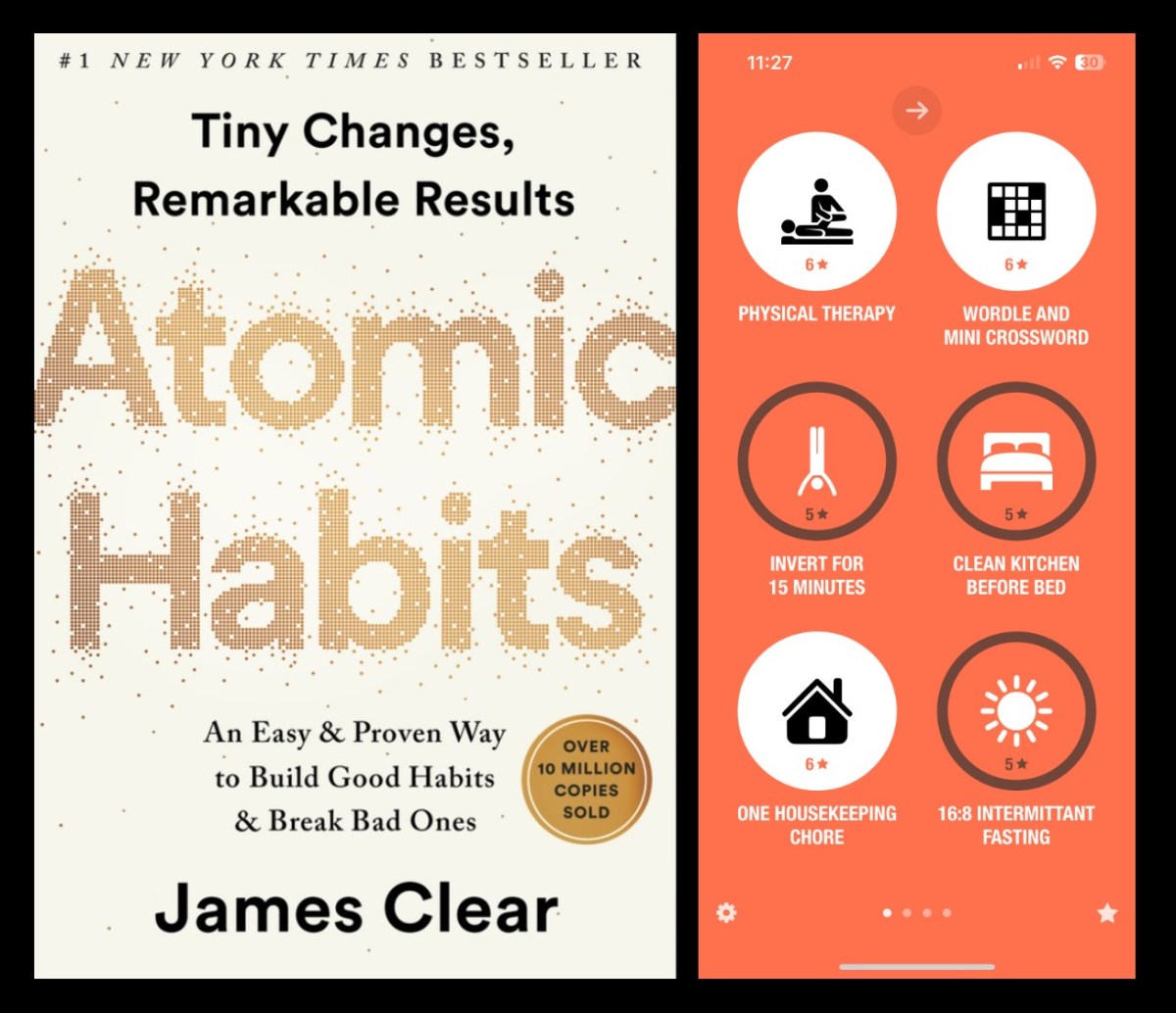
My goals have become less ambitious. I’m reading self-help books about developing good habits. I want to do more reading and writing but be more organized and focused. I’m researching ways to take notes and remember what I read because I’m starting to forget more.

I think the next ten years of retirement will be more streamlined. I want to get rid of stuff and focus on accomplishing small quiet creative projects. I know I’m physically running down. I feel wiser than ever, but I’m losing mental horsepower. I need to become more efficient in my use of mental and physical energy.

These ten years of retirement have been nothing I planned. But then, long ago, even when I was still young, I had learned the future is everything we never imagined. My friend Linda and I are studying Stoicism. I think it’s the perfect time for that philosophy, both in our lives, and in this moment of civilization.

JWH

Discovering New Music From the 1980s – Prefab Sprout

by James Wallace Harris, 10/6/23

I get very few hits when I write about music, but I’m hoping to find a few old music addicts like me who didn’t discover Prefab Sprout back in the 1980s. Over the decades, I occasionally discover a band I’ll play obsessively for weeks. Well, I discovered Prefab Sprout on John Darko’s YouTube channel a few weeks ago and I’ve been playing them ever since. I started playing them on Spotify and Apple Music, but I loved them so much I’ve been ordering the CDs. I have a feeling I won’t get tired of this band for several more weeks.

It’s hard to put a love of music into words, so just listen below. At first, only a few songs grabbed me, especially the first two on Jordan the Comeback. But as I continued to play the albums more songs became great. This is why streaming music is so great. I can keep trawling the past until I find another band that pushes all my buttons.

JWH

Remembering the Sixties in Two Bad Movies

by James Wallace Harris, 10/4/23

I’m always shocked by how much American society has changed since the 1960s when watching movies and television shows from that decade. I graduated high school in 1969.

I’m curious how people born after the 1960s picture it in their mind’s eye. I grew up in the 1960s and remember two versions of that decade. I mostly recall the pop culture 1960s that everyone learns about in history and from the media, but if I think about it, I remember another 1960s, one far more mundane, and quieter. The difference you might say between The Beach Boys in 1963, and The Beatles in 1969.

Over the last two nights, Susan and I watched two movies from the 1960s that reminded me of the less famous version of that decade: Boy, Did I Get a Wrong Number (1966) and Doctor, You’ve Got to Be Kidding (1967). Neither film was particularly good, but I found them both to be fascinating time capsules of that other 1960s.

Someone growing up in the 21st century would probably find both films stupid and even offensive. They would probably wonder where the smartphones, tablets, computers, and social media were, and why no one used certain now universal four-letter words routinely as adjectives, adverbs, and nouns. I’m sure they would think the acting stilted and why people fit into roles, especially gender roles. Those thinking a little deeper would wonder why all the famous 1960s pop culture was missing. But I think the thing that would standout the most, was the attitude both movies presented regarding sex. You’d think people living in the 1960s were Victorians.

Both Boy, Did I Get a Wrong Number and Doctor, You’ve Got to Be Kidding were about sex, but neither showed actual nudity or anyone having sex. Doctor is about Sandra Dee getting pregnant and three boyfriends wanting to marry her. None of the three had had sex with her. And the only reason we know Sandra Dee had sex with her boss, George Hamilton, was because the movie showed fireworks.

Boy is about Bob Hope, a late middle-aged real estate agent getting accidently involved with sexy movie star Elke Sommer, but not really. Elke Sommer plays a French actress famous for making movies where she takes bubble baths. She really wants to do dramatic roles and free herself from tub casting. Ironically, we see her taking several foamed covered baths in this film. 1966 is before they started having nudity in films, but it tries hard to show as much of Elke Sommer as possible. Boy, Did I Get a Wrong Number advocates good old fashion puritanical values while promoting itself with the allusion of sex.

I thought both films were accurate with the clothes, houses, furniture, and cars. The look of the other sixties does come across in these films. Even the lame jokes and goofy dialog gave off the right vibes for the times.

Both films were aimed at the silent majority but tried to appeal to the emerging youth culture. It’s strange how we see counterculture slowly take over Hollywood by watching old movies and television shows from the late 1960s and 1970s. Very few movies in the middle 1960s showed what was happening in the rock world, or counterculture. If they had rock music, it was generic instrumental shit. Hollywood lagged for several years recognizing the social impact of rock.

I remember seeing The Graduate in late 1967 and thinking how radical it was. The soundtrack used Simon and Garfunkel. That was tremendously exciting at the time because it felt like my generation was finally being recognized. However, seeing it recently was another shock. It wasn’t that radical at all, not how I remembered feeling it in December 1967. The Graduate was still much closer to that quiet version of the sixties than the infamous loud sixties. I see it now as a transitional film.

It wasn’t until 1969, with Midnight Cowboy and Easy Rider, that we began to see that notorious version of the 1960s. I remember how shocking both films were when I saw them at the theater. But by then, my personal sixties were closer to those films. But in 1966 and 1967, my life was still like the Bob Hope and Sandra Dee flicks.

Another way to look at it was Hollywood was censored for showing real life for many decades, and finally in the late 1960s changes in the laws allowed it to portray a more real America.

I’m not sure any film captures the times in which they were made. They all create a mythic view. But I need to think about that. Are there any films from the 1960s that come close to how I lived in that decade? Do you have a film, from any decade, that you feel represents something close to how you grew up? I was too young, but I do remember people like the characters in America Graffiti. Actually, I remember people like the Bob Hope and Sandra Dee characters too. Maybe it’s the characters and settings that feel more historical than plots.

JWH