Sony BDP-S570 3D Blu-ray Disc Player

I bought my wife the Sony BDP-S570 3D Blu-ray Disc Player for Christmas to keep at her apartment where she works out of town.  My wife has never been fanatical about video quality but slowly came to appreciate Blu-ray beauty from my watching 1080p shows on my LG BD390 Blu-ray player.  Last year I had bought her a Roku box so she could stream Netflix and the Sony BDP-S570 now replaces it, because not only does the Sony play BD discs, it streams Netflix, Amazon Videos on Demand, Pandora, Youtube, and many other internet video services.   Plus it supports DLNA networking to fetch photos, music and movies off our computers.

I was reading this weekend a review comparing the Roku, Apple TV and Boxee Box devices and it made me wonder if these gadgets had much a future if televisions and Blu-ray players are going to build in the same functionality?  Then today I was helping a friend who has an older MacBook find a cable that would allow her to output Netflix streaming to her television set and we discovered the cable that would handle video and audio was $99.  I told her for $79 she could get a Roku box for streaming Internet video, or spend $20-50 more and get a Blu-ray player that also streamed Internet video.

Of course, if I was helping a friend buy a new TV, I’d recommend they pick a set that had Netflix streaming built into the television.  Many sets offer various levels of Internet support.  It doesn’t take a science fiction writer to predict the future here.  If technology can eventually stream content with Blu-ray quality – why have any external boxes at all.

The El Dorado of cable subscribers is to have a la carte channels.  As the television becomes a node on the Internet it’s easy to envision this happening.  Right now you can get several paid channels this way, Netflix, Amazon on Demand, Hulu Plus, MLB, etc.  Of course TCP/IP and the Internet isn’t structured for this, but that doesn’t mean it won’t adapt.

So the question:  What to buy now?  Last year I bought my wife the Roku for $99.  A few months later the Wii started streaming Netflix.  If we had waited we could have skipped the Roku.  Then, this year, Susan wanted a Blu-ray player, which doesn’t replace the Wii.  But if the Wii played Blu-ray discs like the Playstation, we wouldn’t have needed it.  I love Blu-ray video quality, and right now Netflix HD is very nice, but not Blu-ray 1080p.

What I’d recommend is buying the cheapest device that streams Netflix at Netflix’s HD quality, and that’s the $79 Roku XD box.  However, if you really love movies and want to enjoy Blu-ray now, I’d recommend spending $20-70 more and getting a Blu-ray player that does both.  I got the BDP-S570 for $138 before Christmas on sale.  Right now it’s commonly sold for $149.  There are Ethernet wired only BD players for under a $100 that can do this.  Units with Wi-Fi built in are about $50 more. 

The BD disc players won’t have as many Internet channels as a Roku or Boxee device, but most people will be happy with Netflix.  Look for Amazon Video on Demand and Hulu Plus if you’re willing to rent movies individually, or pay for a bunch of TV shows.  The Netflix all you can eat pay model is a much better deal though.  However, when I saw True Grit at the movies recently and wanted to see the old John Wayne version, the quickest way was to pay Amazon $2.99 to stream it, which I did and it worked great.

The lesson in all of this is the television is becoming a major Internet appliance.  The trend might even kill off the cable and satellite business, and I expect eventually people will prefer to stream content rather than buy discs.  All too often I let my Netflix discs sit for days because it’s easier to stream.

The beauty of the Roku and Boxee devices is they can be upgraded to handle more Internet channels.  Blu-ray players can too, but my LG390 only added a couple of paid services.  LG did add more services to later models, which really irked me.  I hope newer Blu-ray players will be designed like the Roku and Boxee machines to be expandable.  The first time I upgraded the Sony BDP-S570 it added several channels, and it has an expanding menu, so that’s a good sign.

JWH – 1/11/11
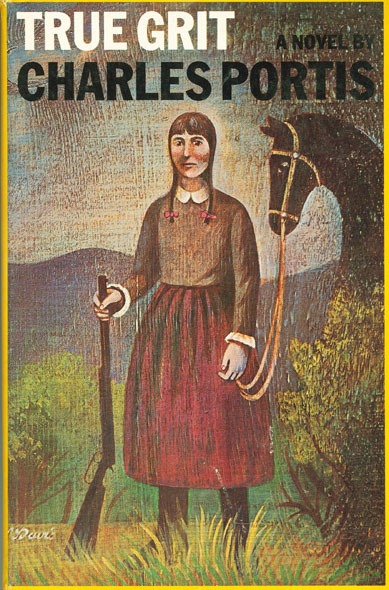
True Grit by Charles Portis–Book versus Movies

Word from the talk shows and on the web suggests that the new Coen Brothers’ film True Grit (2010) was not a remake of the classic John Wayne western True Grit (1969), but a new, more faithful interpretation of the original novel, True Grit (1968)  by Charles Portis.  As Mattie Ross might say, “That is a big story.”  This past week I read the original novel and then watched both movies.  In terms of following the book scene by scene I’d say the John Wayne film was more faithful to the book.  But the Jeff Bridges version follows the book’s ending much closer.  Both films used extensive amounts of dialog lifted directly from the novel.  But yes, the newer film was more grittier when it came to the violence and humor of the story.

true_grit_book

The motion picture stands at the pinnacle of all art forms in our culture – where millions will flock to see the latest blockbuster.  But what role does the novel play in creating this art form?  Movies are often created directly from screenplays, so it’s hard to measure their worth without the novel, but when one is made from a great novel, how do we judge its success?  As a standalone work of art, or as an interpretation of another work?  In my mind, neither the 1969 or 2010 film versions of True Grit came close to the power of the Charles Portis novel.  But as standalone works of art I think they are equally successful in their own ways.  The cinematic culture that made each film is very different, as well as the culture of their separate audiences.  They are like night and day, but then so is 1969 and 2010.

The 1969 film can be considered the clean version of the story, with all the actors wearing clean and colorful costumes, filmed in the gorgeous Colorado Rockies.  The 2010 film is far more realist and historically accurate, especially to the setting of the novel, Arkansas and the Oklahoma Indian territories – but filmed in Texas and closer to the look of the land in the book.  The 2010 film visually portrayed the wild west characters as if they had step through a time travel portal, looking dirty, hungry and uneducated.  But all modern film westerns do this, it’s the style of the time, so I don’t know if we can give credit to the Coen Brothers for being more faithful to the book.

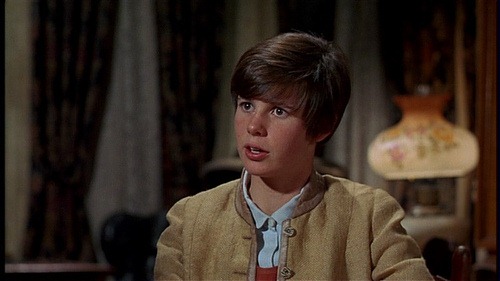
true_grit_kim_darby

I can’t recommend reading the novel highly enough – both films fail to capture much of the story, although because it’s a short book with vivid dialog, both do follow it faithfully far better than Hollywood usually follows an original novel.  The novel is dense with fictional details that just don’t come out in the movies.  Also, the novel is all about the voice of Mattie Ross, and neither movie captures that.  Movie makers consider voice over narration the kiss of death, but I wish they could have put more of book Mattie’s thinking into movie Mattie’s performance.   And strangely Portis sense of the dramatic appears superior to each set of movie makers because when each film diverts from his plotting and scene setup they suffer.  Portis had a keen sense of plotting and drama that both films wisely copy fairly thoroughly. 

The oddest departure from the story is the casting of actors for Rooster Cogburn.  Jeff Bridges was 61 and John Wayne was around 62, whereas in the book Rooster is described as being in his forties.  Kim Darby was around 21 when cast as the 14 year old Mattie Ross, which gives Hailee Steinfield an edge since she was 13.  Too me Kim Darby in her film often looked younger than Hailee Steinfield because they were trying to make her look younger to play the part, while the Coen Brothers seemed to be trying to make Hailee look more stern and mature to be believable.  Overall the acting is superior in the newer film, but there are some good performances in the older one.  I actually prefer John Wayne’s performance because he’s more charming and likable, but Portis goes a long way to make Rooster unlikable letting us know that he abandoned his family, robbed banks, road with Quantrill’s terrorists, and even though he works for the law is seldom legal in his actions. 

And the book provides the extremely realistic coda that Rooster never tried to contact Mattie after their adventure was over ,implying that Mattie meant little to him, but to Mattie, Rooster was someone she remembered her whole life.  Rooster had few warm and fuzzy qualities, even though the movies lead us to feel he did.  And book Mattie was a cold character who ended up only loving her religion and bank and never marrying.  In the end, I think both movies lean closer to being sentimental where the book tries to warn us against that.

true_grit_movie_image_jeff_bridges_hailee_steinfeld_hi-res-600x399

Bookworms always protest how their favorite novels are made into bad films, and I’d have to say neither version of True Grit has come close to capturing the true beauty of the book.  True Grit (2010) runs 110 minutes and if they had pushed that time to even 140 minutes I think they could have come damn close.  True Grit (1969) ran 128 minutes and filmed more scenes from the book but captured less of the true grit of the story.

What’s needed is 5 minutes of Mattie opening the story from 1928, the vantage point of her narration, and another few minutes closing it.  I’m not fond of framing novels and movies with action outside of the story, but that’s how Charles Portis wrote it, and I think it’s needed to capture the voice of Mattie.  The older Mattie even intrudes within the story from time to time.  Also, the 2010 version should have followed all the scenes Portis wrote set in the Indian territories, and fixed La Beouf’s plotline.  Twice Matt Damon left their little posse for no real reason – did he have other commitments?

Ultimately both movies work hard to follow the book, but I think the people of 2010 are naturally more willing to accept the horror and grotesque of the American gothic of the story.  Are citizens of 2010 closer psychologically to their 1877 cousins?  What doesn’t come across in either film are the threads of religion that run through the book.  True Grit isn’t Christian but deeply Old Testament.  The world of True Grit missed the Enlightenment.  It is why it’s a great western.  Jane Tompkins makes a great case that the western is anti-Christian and anti-woman in her book West of Everything, and I think True Grit fits her thesis.  Mattie Ross is a Christian woman who leaves civilization and for a few days explores the heart of darkness of the old west.

JWH – 1/3/11

Musical Barriers

The other night I watched a riveting documentary “Genius Within:  The Inner Life of Glenn Gould” on American Masters (PBS).  Although I love music I’ve never been able to get into classical music.  I had encountered Glenn Gould decades ago when I read gushing review of his 1955 performance of Bach’s “Goldberg Variations,” so I rushed out and bought a copy.  Boy was I disappointed.  I thought they were nasty little gnarled piano riffs that were cold and unfeeling.  After watching the biography on Monday night, I went out and bought a new CD copy of Gould’s “Goldberg Variations” on Tuesday.

Guess what?  I found them just as unpleasant as ever.  How can compositions so admired, played by a performer deemed so astounding, be so unpleasant for me to hear?   Has my mind programmed with 59 years of pop music unable to fathom the implied beauty of Bach?

To be honest, the piano is not an instrument that soothes my soul, and Gould plays it in a style that I find painful.  Watching the films of Gould playing, it’s obvious he’s lost in a deep trance and I know he finds tremendous beauty in the sound he produces.  I can admire his skill, even though I don’t have the training to even begin to understand what he is doing, but as a listener trying to find a way into the world of classical music, not enjoying it is a real barrier.

While researching the “Goldberg Variations” I came across an article in Slate, “The Goldberg Variations Made New:  Move over Glenn Gould, here’s Simone Dinnerstein,” by Evan Eisenberg.  Within the article are downloads to three Goldberg variations played by Gould and Dinnerstein.  I find them as different as rock and rap.  Please download and play #28 (labeled 29 on the files) of each performance (Dinnerstein-28 and Gould-28).  Gould plays like a wild madman, while Dinnerstein makes her piece serene, which makes the piano seem warm and friendly to me.  I’m not saying I’d put the Dinnerstein cuts in heavy rotation on my playlists, but she makes Bach more accessible to me.

This brings up a number of questions.  Is there anyway I could train my mind to break through the musical barriers that keep me from enjoying classical music?  Could I ever love the “Goldberg Variations” as much as even “Animal” by Ke$ha, the song I’m playing at the moment as I write.  Is it a cultural barrier?  Did I grow up with wrong long hairs, The Beatles instead of Bach, Beethoven and Brahms?  If I played the “Goldberg Variations” enough would my brain grow new neural pathways and sooner or later I’d break through the classical musical barrier?

And why do so few people still listen to classical music?  Does it take a fundamental knowledge of music and music history to appreciate classical music?  Does classical music push the same buttons that rock and pop music push in my head?  Or is like ducks, and I just imprinted on rock?  If my Mom and Dad had played the “Goldberg Variations” in 1955 when I was four, would my musical tastes have formed differently?

And my music tastes do change.  I’m listening to Nicki Minaj and Kanye West at the moment.  Their rap and pop styles are light years away from the music I grew up on in the 1960s.  I started off with rock, went to folk, country, jazz, big band – hell I even love Ravi Shankar’s Indian music – so what keeps me from enjoying classical music?

JWH – 12/29/10

2010 Year in Reading

It’s that time of year to look back over my reading log and analyze my bookworm habits for the year.  In my 2009 Year in Reading I declared I wanted to read twelve to fifteen books published in 2010 as they came out during the year.  Well, I failed to do that because I read only nine books, but I read ten from 2009, so that makes me feel somewhat better about keeping up with current books.  I also wanted to read less science fiction, and I failed miserably at that!

  1. The Rise and Fall of Alexandria (2006) by Justin Pollard & Howard Reid
  2. Prehistory (2007) by Colin Refrew
  3. The Bible: A Biography (2007) by Karen Armstrong
  4. Martian Time-Slip (1964) by Philip K. Dick  (3rd time)
  5. The Caves of Steel (1954) by Isaac Asimov  (2nd time)
  6. Endymion (1996) by Dan Simmons
  7. Lady Chatterley’s Lover (1928) by D. H. Lawrence
  8. We, Robots (2010) edited by Allan Kaster
  9. Darwin’s Origin of Species (2007) by Janet Browne
  10. Earth Abides (1949) by George R. Stewart (2nd time)
  11. The Edge of Physics (2010) by Anil Ananthaswamy
  12. Farewell, My Lovely (1940) by Raymond Chandler
  13. Wake (2009) by Robert J. Sawyer
  14. Needle (1950) by Hal Clement
  15. The Windup Girl (2009) by Paolo Bacigalupi
  16. The Lovers (1961) by  Philip José Farmer
  17. Watch (2010) by Robert J. Sawyer
  18. Jesus Interrupted (2009) by Bart D. Ehrman
  19. The City & The City (2009) by China Mieville
  20. The Last Picture Show (1966) by Larry McMurtry (2nd time)
  21. Julian Comstock (2009) by Robert Charles Wilson
  22. Classic Women’s Short Stories (2005)
  23. Food Rules (2009) by Michael Pollan
  24. The Dragon Masters (1963) by Jack Vance
  25. Riders of the Purple Sage (1912) by Zane Grey (2nd time)
  26. Out of the Silent Planet (1938) by C. S. Lewis (2nd time)
  27. Little Brother (2008) by Cory Doctorow
  28. Texasville (1987) by Larry McMurtry
  29. Boneshaker (2009) by Cherrie Priest
  30. A Practical Handbook for the Boyfriend (2007) by Felicity Hoffman & Patricia Wolfe
  31. Duane’s Depressed (1999) by Larry McMurtry
  32. When the Light Goes (2007) by Larry McMurtry
  33. Hunger Games (2008) by Suzanne Collins
  34. Rhino Ranch (2009) by Larry McMurtry
  35. Beatrice and Virgil (2010) by Yann Martel
  36. Bonk (2008) by Mary Roach
  37. Catching Fire (2009) by Suzanne Collins
  38. Mockingjay (2010) by Suzanne Collins
  39. Packing for Mars (2010) by Mary Roach
  40. Robert A. Heinlein v. 1 (2010) by William Patterson
  41. The Catcher in the Rye (1951) by J. D. Salinger (2nd time)
  42. The Visitors (1980) by Clifford Simak
  43. What the Dog Saw (2009) by Malcolm Gladwell
  44. Louisa May Alcott: The Woman Behind Little Women (2010) by Harriet Reisen
  45. Freedom (2010) Jonathan Franzen
  46. The Fountains of Paradise (1979) by Arthur C. Clarke
  47. Monument (1974) by Lloyd Biggle, Jr.
  48. A Great and Terrible Beauty (2003) by Libba Bray
  49. Starman Jones (1953) by Robert A. Heinlein (6th time)
  50. Rendezvous with Rama (1972) by Arthur C. Clarke (2nd time)
  51. Mindswap (1966) by Robert Sheckley (2nd time)
  52. Talent is Overrated (2008) by Geoff Colvin
  53. The Warrior’s Apprentice (1986) by Lois McMaster Bujold

Favorite Novel Read This YearDuane’s Depressed by Larry McMurtry.  This novel meant a lot to me because it was about a man my age coming to grips with getting older.  Duane’s Depressed is third of Larry McMurtry Thalia novels, with the first being the beautiful The Last Picture Show.

Favorite Non-Fiction Book Read This YearJesus Interrupted by Bart D. Ehrman.  Historical analysis of the New Testament brings up many theological questions but answers even more secular questions.  I felt it goes a long way to explaining the origins of conservatives and liberals, if you look at this book with the right slant.

Most Fun Fiction Read This YearThe Hunger Games trilogy by Suzanne Collins.  I don’t know why, but YA novels are often the most gripping page turners I read.  I was amazed by Suzanne Collins’ skill at developing characters and plotting.  She never took the expected route and always dazzled me.

Literary Read of the YearLady Chatterley’s Lover by D. H. Lawrence.  It’s famous for the sex and dirty words, but it has lasting power because of its deep insight into human nature.  The story also chronicles the divide between the pastoral past and the early days of technology in the 20th century.

Most Admired Science Fiction Novel Read This YearThe Windup Girl by Paolo Bacigalupi.  I wished they’d make a movie of this book because it’s so visually imaginative.  It would also show the world outside of written science fiction where it’s at.  Movie science fiction needs to get beyond 1930s space opera.

Science Book of the YearThe Edge of Physics by Anil Ananthaswamy.  This is the only science book from 2010 that I read this year, but it was an inspirational one.  Ananthaswamy took a tour of the world writing about the big physics experiments going on today that are exploring the edge of reality.

Inspirational Read for the YearTalent is Overrated by Geoff Colvin.  Like last year’s The Outliers by Malcolm Gladwell, this book is about how brilliant people become brilliant, not through innate talent, but hard work.  Last night I watched a documentary about Glen Gould, the pianist, and he fit Colvin’s pattern perfectly.  It really helps to have the right parents, not for their genes, but for their dedication to raising a successful child.   There are probably no genes for specific talents like music, chess playing, mathematics, physics, finance, etc.  But I wonder if brilliant people have genes for the ability to concentrate on one topic so intently.  Or, is even that. just a conditioning of hard work learned at an early age.  I recommend this book to anyone who is a parent and to anyone who wants to be a success at any task.

Goals for 2011

Again I want to push myself to read more contemporary books.  This year I returned to contemporary music and I feel very excited about music again.  I’m fighting a tendency of getting old of looking backwards and living in the past.  It’s quite delicious to cherish old favorite works of art but it’s also a kind of death trap.  Part of the vitality of youth is surfing the cutting edge of pop culture.  I don’t expect to rejuvenate by keeping current, but at least I hope to fight off brain rust.

JWH – 12/28/10

Movies I Love to Watch at Christmas Time

For Christmas 2010, Entertainment Weekly came up with their “20 Top Christmas Movies Ever” which included movies which I found downright bizarre to be calling Christmas films, like Gremlins, Die Hard, Trading Places and Bad Santa.   What kind of uplifting holiday spirit do folks get into from watching those flicks?  No wonder Christians are worried about the corruption of their sacred holiday.  Wikipedia does tally a very long list of what some people consider Christmas movies, but most of them miss the point of what I think of as Christmas spirit.

I am not a Christian, but I love the spirit of Christmas as defined by Charles Dickens in his 1843 book, A Christmas Carol.  Christmas is not about Santa Claus, Christmas trees or giving presents.  Christmas is about being grateful, compassionate and giving.  You don’t need to be religious to appreciate the struggle to become a better person by trying to improve the lives of people around you.  I love Christmas movies because I’m a selfish person and I need constant reminding to be more generous and selfless.

To me the classic Christmas movie to watch at Christmas time are those that inspire me to be more charitable, compassionate and considerate.  It takes a great movie to move me.  Die Hard and Home Alone are lots of fun by not uplifting.  And I really need to watch Christmas worthy movies all year round because I need steady inspiration to remind me to be less selfish.  That’s why some movies on my Christmas movie list would be bizarre to other people making their list of favorite Christmas movies.  For example, I think of Groundhog Day to be a great movie to watch at Christmas time, or any other time of the year to inspire Christmas spirit.

For me, a great Christmas film must inspire us to be more like Jesus.  Now that’s a weird statement to come from an atheist, but let me explain.  We know very little about the man Jesus.  Most everything written about him is pure speculation, especially about his birth and death.  But there is enough evidence to believe there was a man who tried to invent a philosophy about compassion.  That core philosophy about compassion is taught in many religions.  It has nothing to do with life after death, God or other metaphysical beliefs.  A Christmas Carol or It’s A Wonderful Life attempts to inspire this philosophy too.  I think it’s the spirit of Christmas.  It should work for both believers and non-believers.

With that said, I’d like to list some films I think are inspirational to watch at Christmas time.  Several of them are not about Christmas, but they are still great to watch at Christmas time.

It’s A Wonderful Life

A Christmas Carol (1938)

The Bishop’s Wife

Groundhog Day

You Can’t Take It With You

Miracle on 34th Street

Gattaca

Dances with Wolves

Battleground

On Borrowed Time

We’re No Angels

Little Women

The Shop Around the Corner

The Wizard of Oz

JWH – 12/21/10