Best Revenue Model for Musicians: Sell or Stream?

I’ve bought thousands of LPs and CDs in my life, and a surprising number of them I only played once.  Now I rent music from Rhapsody and Rdio – total cost $15 a month.  In my heyday of buying CDs, I’d usually spend 10x that or more per month.  I never got into stealing music.  I want the artists and record producers to make their money like they deserve.  However, it’s doubtful I’ll ever go back to buying CDs, and since I’ve acquired the streaming music habit, I have no desire to go back to buying music at all.

The question I’d like to know is:  Can the artists and producers make as much money by streaming as they do by selling?  Finding out about revenue from various music distribution sources is difficult, but there are some clues.

Problem #1 – Artists Used To Make a Lot of Money Off of Crappy Songs?

If I buy a CD for $15 and whether I play it once or a million times, the musicians and producers earn the same amount of money.  If I go to iTunes and sample an album and buy one song I like for $1.29, again it doesn’t matter how many times I play the song, they’ve gotten their money.

Now if I go to Rhapsody and play an album or song, the artist and their record company will get a tiny payment, I assume.  Now if I find one song that I love so much I play it 20 times a day for the entire month, that song should theoretically pay the creators of that song more money for my extra love.  But does it pay the music people enough?  Evidently not, according to The Black Keys, who have pulled their new album from streaming services.

I’m pretty sure selling CDs was the best way of making the most money.  Music lovers had to buy everything pretty much on faith.  The money was up front.  Money from streaming comes after fans play the songs.

Problem #2 – Can Streaming Succeed if Too Many Groups Pull Their Catalogs?

Artists and record producers want to sell albums.  But let’s be honest, how many albums in your collection are ones you like to play straight through and love all the songs?  Or even half the songs?  Or even one song?  Music lovers want to find songs push their music loving brain cells into ecstasy.  But we don’t know which songs do that until we play the album.  In the old days you bought a CD and rushed home hoping to find at least one, and hopefully several great songs on an album.   I’m through with that.  Those days are over.  I’ve been burned too many times.  Streaming music lets me try out all the albums I want, and the songs I love get added to playlists.  Life is easy, but will it last?

If music producers start pulling out of deals with the streaming music services it won’t.  Now we could see a tiered delivery service like we see for movies and DVDs.  Netflix is a cheap all you can eat service, but content comes there last.  This might work for streaming music, where albums go on sale for a period of time before they go to streaming.  I can dig that, but then I’m old and patient.

To get some idea what streaming music does offer, read “Spotify vs. Rdio: Who Has The Exclusives?” over at Wired.  I wished Rhapsody had an API to let it be compared too because I feel from just daily use Rhapsody has the best catalog.  What Wired did was look up 5,000 albums at both services to see which had the most.  Rdio was the winner to me, but Spotify had some much loved exclusives.

It also revealed the holdout groups for streaming music:  The Beatles, King Crimson, AC/DC, The Eagles, Led Zeppelin and Frank Zappa – but hell, I’ve already bought those, some more than once, some even three times.  Streaming music still has millions of albums, so for $4.99-$9.99 it’s a great deal.  But, how many groups have to pull their catalogs before people give up on streaming music?

Problem #3 – Can Artists Make Money Only On How Often a Song is Played?

To make money on streaming music services artists must create songs people want to play and play and play.   If you create an album with 10 songs and people only play one of them, then 9 songs won’t be earning revenue.  Streaming is a dog eat dog world of music competition.  Hit songs will make money.  But will they make the same kind of money as selling hit songs?  I don’t know, and I can’t find out.

Problem #4 – Can the Music Industry Convince People to Buy Music Again

Because of stealing sharing songs free on the Internet, a whole generation feel music should be free.  The convenience of streaming makes getting music for $5-10 a month far easier than stealing, so it might be a viable revenue stream, but can it compete with convincing people to buy music again?  And now that I’ve spent years using streaming music, I don’t know if I’d want to go back to buying music.  But then I’ve got 18,000+ songs I’ve already bought and I’m 60 years old, so I could coast awhile without buying.  If I did go back to buying music I’d buy single songs at Amazon and hope Amazon stays in business for the rest of my life.

Problem #5 – What Happens if Most Fans Go With Streaming?

Even though I own the Beatles, Frank Zappa, Eagles and others on CDs, I no longer play their music.  I went out and bought all the remastered Beatles CDs when they came out and then didn’t even play them.  Streaming music is too convenient and great.  I just don’t mess with my collection anymore.  I recently uploaded it to Google Music, but I don’t play it.  Spotify will call up my library when it can’t find it in theirs, and that’s cool, but I wished Rhapsody and Rdio did that.  I want all my music in one place – in one search engine, and I want it in the cloud, so my playlists work from any computer or mobile device.

Sorry Black Keys, but I’m not going to buy your new album.  Leaving Rhapsody and Rdio doesn’t make me want to go buy your album.  My world of music is now streaming.  If the song ain’t there it ain’t anywhere, at least in my musical reality.

Sources of Streaming Music News and Reviews

JWH – 12/14/11

The eBook Price War!

When the Kindle first came out a lot of people bought one thinking the price of books would go down.  Amazon advertised that most ebooks would be $9.99 or less.  When the average price of a hardback was inching closer to the $25-30 range, and mass market paperbacks disappearing in favor of $12.95-14.95 trade paperbacks this seemed like a wonderful gadget for bookworms.

Then Apple entered the ebook business with the iPad and iBooks, and the prices of ebooks shot up.  Now at Amazon I can sometimes get physical books cheaper than the ethereal ebook, and often get physical books within a couple dollars of the ebook price.  Following that, publishers started making plans to reprint their backlist titles, books you used to buy as cheap paperbacks, for $9.99.  It started looking like the book industry was going to put the squeeze on all us folks buying ebook readers figuring it was a fad that was going to lead to a new gold rush in publishing.

Now all of this is cool – I want the book publishing business to thrive.  But for hardcore bookworms, who consume books, rising prices have always been a problem.  We tend to get books from the library or used bookstores to help us keep the cost of our word habit within reason.

But another trend developed concurrently with ebooks – new authors are seeing ebooks as a way to break into publishing by side-stepping the traditional route of finding an agent and selling their book to traditional publishers.  To grab the attention of readers they started selling their ebooks cheaper and cheaper, with prices like $2.99, $1,99, 99 cents and even free.  Then established writers started jumping ship from their regular publishers to go the ebook route thinking that getting 70% of a smaller list price with more sales was better than getting 12% of $25.95 and smaller sales.  Even big name authors started using free ebooks as promotions.  All of this is pushing the average price of an ebook down again.

To further complicate the issue of calculating the average price of an ebook is the fact that there are thousands, if not millions of free ebooks.  It used to be just old classics, but look at this 1966 Doubleday edition of John W. Campbell’s Collected Editorials from Analog.  It’s elegantly reproduced for reading on the web, or available for download in a variety of formats.  Not only does the Internet offer more and more free books, becoming the Library of the World, but old fashion local libraries are offering free ebooks through OverDrive and NetLibrary, and Amazon, being the pesky disruptive influence that it is, is offering to lend ebooks to its Amazon Prime members.

Bookworms are taking notice.  Look at this discussion thread over at Amazon called “What are you willing to pay for an eBook?”  The consensus seems to be people are willing to pay a fair amount $9.99-$14.99 for a new ebook if they are really anxious to read it, but for the average backlist title they want it to be as cheap as possible, and $2.99-4.99 seems to be a commonly mentioned price range. 

Many people leaving comments state they can’t afford to buy many books so they go after the cheap ebooks, or free ones, but a common response is 99 cents is too expensive for a crappy book.  So they want good books priced low.  They expect old books like Agatha Christie and Rex Stout reprints to be cheap – but understands why the latest John Grisham is $12.99.

I discovered this thread while reading Amazon’s 100 Kindle Books for $3.99 or Less ad.  Nothing struck me as something I had to buy, but the prices were very tempting.  But my Kindle is already jammed with more unread books than I can read in years – some I paid top prices for and others I got for low prices or free.  Writer’s Digest gave away 7 books about writing novels during NaNoWriMo – a very kindly gesture I thought.  Over at SFSignal I often find free SF/F novels to add to my collection because authors are using them as promotions.  Getting the new Greg Egan was impressive.  I’ve bought several of his books in hardback.  What I’d like is some of his out-of-print titles reprinted as reasonably priced ebooks.  I assume his publisher is trying to get more SF fans to become Greg Egan fans, and I hope they succeed.

If you look at Amazon’s Best Sellers in the Kindle Store you’ll see a dual column of the two top 100 book lists, on the left, the most popular Kindle ebooks people buy versus on the free ones on right.  You can see 99 cent bestsellers competing with the full price books, such as Stephen King’s new 11/22/63 for $14.99.

Over at Ebook Friendly I found “Kindle Ebooks by Price: More than 100,000 Cost $0.99” which shows a pie chart that says 30.9% of Kindle ebooks sell for $0-0.99.

On my daily reading of Zite on my iPad I constantly read essays and blogs that mention free ebooks.  There are even blogs now that track ebook deals.  If you have a book-a-day reading habit, it’s gotten a whole lot cheaper to be a book addict.

This does not mean I’ve stopped buying paper editions of books.  Eva over at A Striped Armchair reviewed The Long Ships by Frans Bengtsson so positively that I had go out and buy it.  My choice was $9.87 for the Kindle edition or $12.20 for the trade paper, so I picked the paper edition.  I figured the deluxe New York Review Books Classics trade edition was worth $2.43 more.  If the Kindle edition had been $4.99 – $5.99, I would have picked it.

What this means, and I have no idea if I’m typical, is when I spend more than $9.99 I’m more likely to buy the hardback or trade edition.  And to be honest, I’d rather buy a $4-8 used hardback than pay $7.99-8.99 for an ebook.  Some people on the forum also mentioned that.  Like I said, I don’t know if I’m typical, but that means I’m most likely to buy an ebook is it’s $0.00 – $4.99.  So in the war for ebook pricing, I tend to think the average price will be coming down.

The question is, how many people aren’t like me?  How many bookworms would rather buy a slightly cheaper ebook than the hardback?  If there are lots of those people, it will push the average price of an ebook up.  And how many people will pay $9.99 for a reprint of an old book as an ebook edition, books that people used to get as a mass market paperback?

I don’t think ebooks will kill off the book, at least not the hardback, and probably not the trade paper, but I bet it kills off the mass market paperback, which is averaging about $7.99 now.  I don’t like saving paperbacks, and the convenience of an ebook outweighs the value of a mass market paperback.

So in the ebook price war, I would guess ebooks are the new mass market paperback and have to be cheap.  For a certain percentage of readers they will pay $9.99-$14.99 for an ebook edition if it’s a hot new bestseller.  I predict lots of free ebooks, especially older out of copyright books naturally, but also new books being given away for promotional reasons, and older midlist books that help promote authors newer books, like those found at the Baen free library, or books that have little chance of making sales, but would be valuable to rare readers, like the John W. Campbell book I mention above.

There’s no reason why any book should be out of print anymore.  As books lose their popularity they can be priced lower and lower, even priced free.  What will be really fascinating is forgotten classics that start regaining popularity and maybe even reigniting sales.

Guides to Free Kindle Books

JWH – 12/11/12

What Do We Want From Science Fiction?

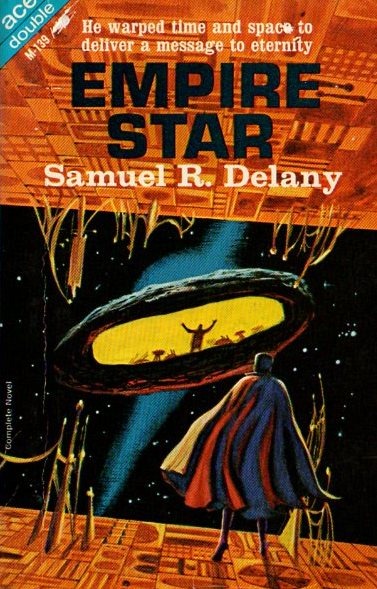
This month over at the Classic Science Fiction book club we’re reading and discussing Empire Star by Samuel R. Delany, and some of us are enjoying the story and others are finding it lacking.  We all take it for granted that people have different tastes, but do you ever wonder why?  One of the themes of Empire Star is about asking questions, and one of our members, Andreas, found this article by Theodore Sturgeon called “Ask the Next Question.”  Some of us even wondered if Delany had gotten the idea dealing with questions from reading Theodore Sturgeon.  In fact, we found many elements of Empire Star that had been used in other science fiction books – but more on that later.

Delany_Empire-Star

Discussing Empire Star got me thinking:  What do we want from science fiction?  Did some of the book club members enjoy Empire Star because it contains certain elements they seek out in science fiction?  And the reason other people disliked the story is because it lacks those elements they normally seek?  Jo Walton really loves Empire Star or so she says in her review at Tor.com.

I didn’t just like the book a lot, the way a sane grown-up might like a book, I fell head over heels obsessively in love with it. I made myself a t-shirt of it. I read it several hundred times. I was a one-Jo Empire Star fangirl. I had a sign on my bedroom door saying “Entry for J-O Type Persons Only” which is a quote from it.

Evidently Empire Star rubbed Jo Walton in just the right way if she’s read it hundreds of times.  Really?  I haven’t read it that many times, but I have read it four times since 1968.  I keep coming back to Empire Star.  Why?

I think most of us generally think we read books because we want to be caught up in a good story and characters – and beyond that we assume all books are different.  But what if there are specific fictional flavors we crave like our favorite ice creams?

My all-time favorite books are the twelve YA novels Robert A. Heinlein wrote for Charles Scribner’s Sons in the 1940s and 1950s, and while I was reading Empire Star for the fourth time I noticed many elements in the story that reminded me of Heinlein.  Did Delany include them in the his novel because they were elements he liked and thought they belonged in any novel he wrote too?  Empire Star came out in 1966, so he wrote it when he was 23-24, and still quite young.  Delany and Heinlein don’t seem like they have much in common as people or writers, but there are some common elements in their stories that attract me, and that maybe they do share some things common.

Circular Plots

Heinlein wrote two classic SF stories with circular plots, “—All You Zombies—“ and   “By His Bootstraps.”  In each story one character turns out to be several in the stories.  In Empire Star three characters turn out to be many.  In fact all three stories might be considered Mobius strips.  I love circular plot stories, and repeating loop stories, like Replay and Groundhog Day.  This is definitely a science fiction element that will always hook me.

Alien Pets

Heinlein’s young adult novels sometimes had alien creatures that appeared to be pets but were really something else, like Willis in Red Planet, Lummox in The Star Beast, and Chipsie the spider-puppy in Starman JonesEmpire Star gives us a devil-kitten D’ik, which eventually grows very large like Lummox.  Remember “The Trouble with Tribbles” from Star Trek?  Almost an exact copy of flat cats in Heinlein’s The Rolling Stones.  If puppies and kittens are cute, so are alien animal babies.  I guess I’m sucker for alien pets.  And that makes me think about how much fictional mileage J. K. Rowling gets our of her magical pets.

Running Away to the Stars

Now there’s one huge theme that appeals to a lot of science fiction readers, and that’s about a kid who gets to run away to the stars.  Isn’t that the core of science fiction?  My all-time favorite novel is Have Space Suit-Will TravelEmpire Star follows the classic template as Starman Jones about a farm boy who heads out to explore the galaxy.  What that’s you say, didn’t George Lucas invent that motif for Star Wars?  Sorry, but it’s been around a long long time in a galaxy far away – but it’s probably why Star Wars is so successful and so much better than the other five films.  (I hate referring to it as A New Hope.)

Galactic Empires

I’ve written about this before but galactic empires are probably the most loved of all science fiction elements.  Read, “Are Galactic Empires the New Middle Earth” I wrote last June.  I don’t think I’ve really scratched the surface of that theme yet – there’s something deep there, that really needs to be explored.  Empire Star is about a galactic empire that uses slaves, and Comet Jo is going to free them, but after a long epic struggle that will take years.  However, Empire Star is a slight wisp of a novel, really a short novella, and if Delany wrote it today it would be 800 pages, and probably the first in a long George R. R. Martin like series.

Intelligent Machines

Stories about intelligent computers like Heinlein’s The Moon is a Harsh Mistress, Gerrold’s When HARLIE Was One, Galatea 2.2 by Richard Powers and the current Wake, Watch and Wonder trilogy by Robert J. Sawyer really push my science fiction pleasure button.  So is it any wondered I loved Empire Star with Lump, a computer Comet Jo meets living on the Moon?  And I can’t help but believe Delany was inspired by Mike, a computer living on the Moon in The Moon is a Harsh Mistress.

Other Elements

Delany doesn’t stop with just these five classic science fiction elements.  The whole book seems inspired by the weird humor of Robert Sheckley.  But I also hear from other readers that they see elements in Empire Star that remind them of Theodore Sturgeon – such as the theme about asking questions.

I wrote in “My Kind of Story” that I knew there were certain kinds of stories that appealed to me, but when I wrote that I thought I was dealing with narrative style and writing techniques.  But now I’m thinking that like some people with very specific sexual desires, I might actually crave very specific kinds of science fiction stories, or more precisely, stories with specific elements.  Which makes me wonder why I don’t seek to write stories with those elements?  Did Heinlein and Delany uses the elements discussed above because they believed they would sell more books?  Or because the were pleasuring themselves?

I need to contemplate if I have a limited number of fictional buttons I liked pushed, or are there endless possibilities. I’m really enjoying Once Upon a Time, the new TV series on ABC, and one of the things that excited me most about the story is that it’s told out of sequence, that the narrative double backs over itself, somewhat like a circular plot.  And like PKD, it’s about a town that doesn’t know the real reality of things.  If I kept looking I’d probably find several other story elementals that are my kind of groovy.

Now back to Sturgeon’s idea about asking questions. I’ve only gone one layer deep by asking what do we want from science fiction. If the answer is we love stories with certain themes or ideas then I should go to the next question: Why do I like those ideas? The answers would be too long to put into a blog post, but if you think about it, the question is important. For example, why is running away to go into space so appealing? During my adolescence that was a huge button to push with me. I had alcoholic parents that dragged me and my sister all over the country, so the real answer there is I wanted to escape from my own life. And as I got older and learned what it meant to be a real astronaut and what the right stuff was, I realized I would hate living in space – at least under present conditions.

The point is to keep asking question. Go deeper. Because if I did, I’d learn a whole lot about myself, and maybe stuff I didn’t even want to know. Why do I love the idea of intelligent machines? Is it because I don’t like emotions? Where’s that going? See what I mean?

Well, this blog is over – I’ll have to write more about this in the future.

JWH – 12/8/11

Presidential Aptitude Test (PAT)

This morning the idea came to me that we should have a SAT type test for candidates running for political office, and especially for Presidential candidates.  I checked Google and this idea has come up many times before in magazines, newspapers and by other bloggers.  One of the earliest examples of this concept was a letter to the New York Times in 1992.  It’s a good idea – especially after watching the Republicans go through debate after debate this year.

Think about the severe certification process we have for accountants, lawyers, doctors and teachers?  Why shouldn’t we have minimum standards for politicians?  Now most people will say the grueling gauntlet folks have to go through in the press is the aptitude test for politicians, but that only seems to weed out people that can’t handle campaigning pressure or flush out sexual bad behavior.  It’s more of a beauty or popularity contest – like picking the King and Queen for homecoming.

Most people who have the nerve to throw their hat into the ring to become president usually have experience in Congress, were state governors, or were successful businessmen, and on a rare occasions were generals.  Now running a state is probably the closest job to the job skills required to run the country.  Personally, I don’t think the skills acquired in the Senate or House is really equal to those it take to run the country.  And although the President is the Commander in Chief, I don’t think running the Army provides the same skills either.  And I can see why some people might think a successful CEO should be good for the job of President, but that only works if you think of the country as a business, which it’s not.

I want our President to be very smart, but there’s a lot of political analysis that suggests that Americans don’t like intellectual presidents.  However, since our country seems to be going down the tubes, I think we need to think hard about the job qualifications and quit thinking of picking a president by who we want to drink beer with.

What’s really needed is a renaissance man or woman.  Someone with a MBA and CPA, and J.D.  But we’d also want someone with a Ph.D. in American History and another in World Affairs.  It would also help if this person had a medical degree and was a scientist.  Once you start thinking about all the areas the president needs to know about, it’s no wonder the job doesn’t belong to a committee of experts.  And I think most voters feel the President do get their smarts from their advisers – but wouldn’t you also think the President needs to be smart enough to know what their advisers are talking about?

If the Education Testing Service (ETS) offered a PAT test for Presidential candidates I would expect anyone I was willing to vote for to have gotten high scores in most of the vital areas.  He or she wouldn’t have to be a genius, but I want people that scores in the top 10 percent of all areas.  Is it demanding too much to think that the man or woman that leads us has to be a straight A student?

So what areas of knowledge should a potential President be tested on?  These are subjects not related to his/her personal qualities like vision, leadership, charisma, perseverance, ability to communicate, focus, ability to listen to people, etc.

  • Law
  • Economics
  • History
  • Government
  • Science
  • Business
  • City, State, Federal and World Trade
  • Foreign Affairs
  • Philosophy, Rhetoric, Logic, Ethics and Religions

Most Republicans have a myopic view of economics – cut taxes.  They also seem anti-science and anti-education.  And after the grilling reporters have been giving them for months I would think they all would do poorly on the PAT test.  However, even though Obama is considered well educated, would he excel in all these areas?  My gut hunch would be he would have the highest PAT scores except for Gingrich, who is bookish for a Republican, but he might not get all As.  I think Obama is far more scholarly than Gingrich, but I just don’t know to what depth.  Wouldn’t you love to see their test scores to know for sure?

I’ve often wondered if the true job requirements and public scrutiny keeps 99.999% of all qualified applicants away from applying for the job of U. S. President.  I also wonder how much real power the job of U. S. President can have at improving our lives and the country.  Is there a man or woman in our country that could have done a better job than Obama?  Would we be seeing strong economic growth and low unemployment if John McCain had won the election in 2008?

President Bush and now President Obama have pushed for a system to quantify the performance of teachers – people who must meet state certification laws.  Shouldn’t we expect that same kind of quantitative measures and certification for politicians?

If we tested our politicians and then compared their scores to performance over time we’d know if test scores mattered.

At the very minimum, and a just for fun kind of thing, I wished all the candidates running for President would take some standardized tests on American history and government.  I’d really like to know how they all do.

JWH – 12/3/11

The Perils of Positive Thinking

In our society we like to believe that a positive attitude will make us a success, that positive thinking will cure our ills, and make us rich.  On last week’s CBS Sunday Morning featured “Just How Powerful Is Positive Thinking” that said belief in positive thought is wrong.  Of, they admitted that people with positive attitudes might get through chemo easier than depressed people, but thinking positive won’t cure cancer.  Then I found “When Positive Thinking Doesn’t Work” at Secret Entourage that says positive thinking only works when you have the skills and experience to back it up.  Then over at Huffington Post I found “Why Positive Thinking Just Doesn’t Work.”  If all go-getters have a positive attitude and most fail, the ones that do succeed can believe their positive attitude is what made them a success, but is it true?

We all die, so no matter how positive you are, or how holy, good thoughts and prayers eventually fail – and probably never helped at all.

Now I don’t want this essay to bring you down.   What I want us to do is think about thinking.

When people believe that thinking positive or prayer can cure disease what they are believing is thought can change reality.  When they pray for someone else they believe their thought goes to God and God reaches out and heals the other person.  We know, even without scientific studies that nearly all prayers fail – if prayers succeeded even one percent of the time we’d be living in heaven.  And scientific studies do show that prayers have absolutely no success.

What people believe when they believe in positive thinking is that they have some kind of power to influence reality with their thoughts.  That positive thinking generates healing vibes or creates an aura of success.  If you think about this it’s pretty obvious that if it worked everyone would be rich, successful, happy and healthy.

Obviously altering reality takes more than thinking and wishing.  If willpower could conquer disease Steve Jobs would still be with us.

After Steve Jobs died I watched a bunch of documentaries about him and on the surface you would think he’d be the poster child for positive thinking because of his amazing string of business successes.  And Jobs does give us the answer.  He said if you can see what’s possible you can work to make it happen.

Thinking will let you see what’s possible, but it’s work that makes it happen.

If you have a disease work the hardest you can to get the best medical treatment possible.  If you want to get rich, work harder than anyone else.  If you want to be an artistic success practice for 10,000 hours.  If you want to make great scientific discoveries, work at it like a fiend with relentless concentration.

I’ve dreamed of writing a novel for over forty years.  Finishing NaNoWriMo last month illustrated perfectly the limits of positive thinking.  Working 2-4 hours a day got me finished.  And I only finished a first draft.  If I want to produce a novel that’s worth reading by book buyers than I need to put in 25 times as much work, or more.

Thomas Edition said “Genius is one percent inspiration, ninety-nine percent perspiration” – which I’ve heard my whole life.  I just wished I had learned it’s meaning back when I was seven.  I’d love to think I’ll finish my novel, but I know with perfect certainty that positive thought does me no good.

I’d like to think I can think my way out of my spinal stenosis – but I can’t.  What helps it is physical therapy – even more than drugs.  There are no magic pills either.  I’d like to think I can loose weight, but I’ve been thinking about that for decades and it hasn’t work.  Sometimes nothing works.

It’s not a question of positive thinking but how far can I push myself.  The fascinating question is:  Can I push myself further than I can imagine?

Like Clint Eastwood said as Dirty Harry, “A man’s got to know his limitations.” 

All of this is why I love “The Star Pit” by Samuel R. Delany.  It’s a science fiction story about wanting to go further.  It’s hard in life when we see people go further than our own limitations.  The reason why the belief in positive thinking is so universal is we all can see success, riches and abundant health in other people, so thinking it’s possible for ourselves is seductively easy.  To seductive.

And finally, reality is relentlessly harsh.  Some people work their asses off and never succeed.  There’s limit to work too.  There’s limits to everything in this life.  We just have to keep pushing those limits.

JWH – 12/1/11