Audiophiles are music lovers who claim ordinary music fans are missing a range of high fidelity sound when playing music on ordinary equipment. Audiophiles talk as if the difference between ordinary sound and high fidelity is like the difference between watching a TV show on an old black and white TV or on a new HD TV. Are they on drugs? Are we deaf to sounds only they can hear? Are they just being snobs, sneering at us plebs for drinking $10 bottles of wine while they savior their $100 bottles? Some people think audiophiles and their promotion of high-end audio equipment no more than modern day snake oil peddlers, and even if you had a degree in electrical engineering, you wouldn’t actual hear the difference between a $400 turntable and a $4,000 one.
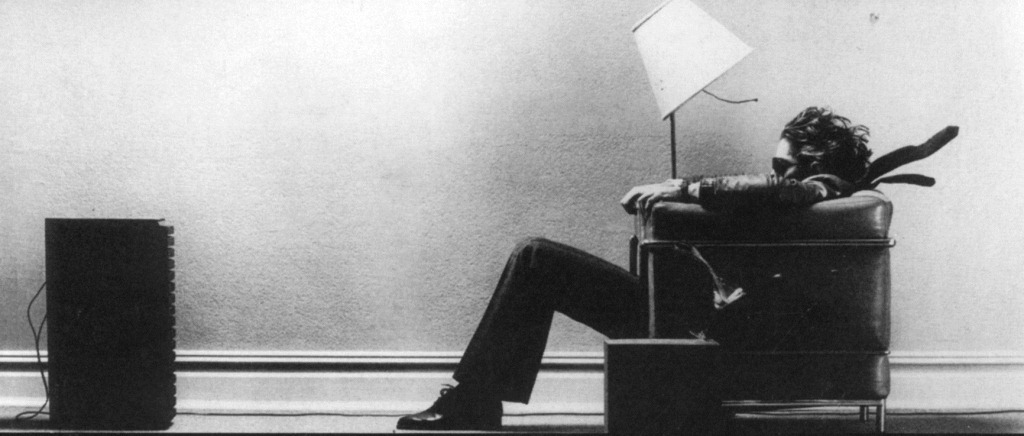
I have gone to a high end music shop and sat in a sonically ideal listening room and heard music from a $25,000 stereo and the sound quality was many magnitudes better than my $2,000 setup. Few people want to be audiophiles if it costs a fortune, but what if you could significantly improve your existing sound system for a $100-$1000? Maybe we’d all like to be junior audiophiles.
Most people just listen to their favorite tunes and never think about sound quality. Few people even know that audiophiles exist. Compare the two this way. Most people are happy to get a meal at McDonalds, it’s filling, quick and reasonably tasty. Those are your average music fans. Audiophiles are gourmets that only dine at 5-star restaurants who then talk and write endlessly about what they just ate.
There are damn few audiophiles in this world, and I’m not one of them, although if I wasn’t so cheap, I’d like to be. However, I’m intrigued by the idea of high fidelity and how music is recorded. I would think anyone would be fascinated by how audio engineers record music in a studio and convert that sound into a very long streams of 1s and 0s, and then we convert those 00100111101100101001s back to music that goes into our ears.
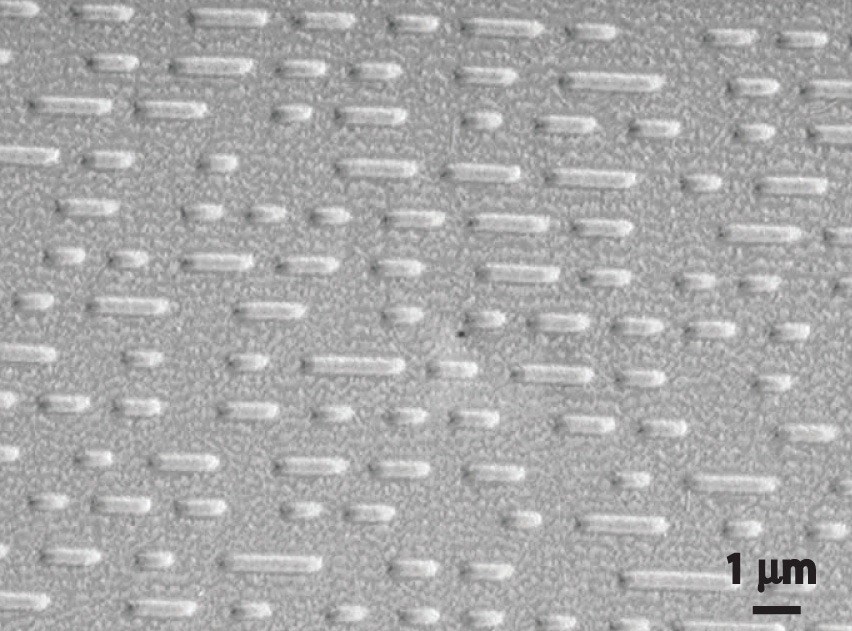
It’s very hard to imagine how we hear Bob Dylan’s “Like a Rolling Stone” when we look at the microscopic pits on a CD:
Of course, this compares to the old days of cutting tiny but visible grooves into vinyl platters where a very small needle would ride along the groove and recreate the vibrations of the recording. Neither recording technique sounds plausible to me, but then like Arthur C. Clarke said, “Any significantly advanced technology will seem indistinguishable from magic.”
And it’s no easier to understand how we’d hear Beethoven coming out of these squiggles. It is magic!
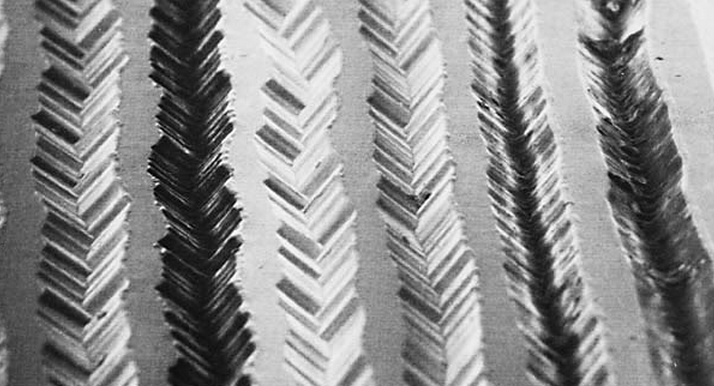
As a kid I wondered why stereo records didn’t require two grooves and needles, one for each speaker. And I would try to imagine how they got so many instruments and vocals squeezed down to one physical squiggle that the needle would interpret. Making all those sounds into ones and zeroes is just mind boggling! How many people actually know how to re-invent CD recording?
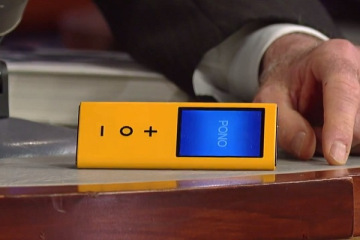
Neil Young will be promoting in 2013 a new device called Pono that will deliver master tape quality to the masses, with the promise that record companies have already converted 8,000 albums to 192 kHz 24 bit files for his new system. When you look at Young’s Pono player, you really wonder about the magic of audiophile technology in such a small device.
When I think about sound recording I imagine a band on a stage with two microphones recording the performance, then taking that recording and decoding it so it’s reproduced by the two speakers in my den. What I would like to hear is the same sound I would have heard if I had been in the audience at that concert. We don’t actual hear the same sound, we hear an approximation. The question of music quality comes from how close we can get to hearing what was performed.
We can all tell the difference between a sharply focused photograph and a fuzzy out-of-focus picture. What audiophiles are suggesting is most people can’t hear the different between a good and bad recording.
Over the years audiophiles have argued millions of words over the superior sound quality of vinyl records versus CDs or vice versa. Unless you want to read a tremendous amount of technical jargon its very hard to understand this discussion scientifically. What I’ve decided to do is just use my own ears and make a subjective decision.
I love music enough to make the effort to improve my listening equipment. I’m thinking I can be a cheapskate half-ass audiophile pretender and get more sound quality to enjoy for not much effort and money. I’m willing to study a certain amount about improving high fidelity, and I’m willing to spend a little money. Recently I got back into vinyl and I’ve taking a chance by spending $200 on a new turntable hoping it will get me better sound. It’s like spending a few bucks on headphones to improve the sound over stock ear buds that comes with Apple and Android devices.
A quantum leap in sound quality can be achieved by going from an iPhone with stock ear buds to a modest CD, receiver and speaker setup. Adding a turntable adds a whole new dimension of sound from vinyl. But is vinyl worth the effort? Many young people are jumping from digital music to old turntable stereos they’ve scrounged from their parent’s attics or found at flea markets or garage sales. Would they be better off skipping the trendy record player and just getting a CD player? If they’ve already set up a surround sound system for their TVs or video games, they might be interested to know that those DVD and Blu-ray players also play music CDs. Or adding the right powered speakers to a laptop, desktop or mobile device can add significant sound quality to playing music from iTunes.
Since I’ve been getting back into playing vinyl records I’ve also been thinking about their sound quality as compared to CDs and .mp3 files. Some vinyl enthusiasts claim vinyl sounds better, but I believe this is only subjective. I’ve read a lot on this topic and I’ll have to call it a theoretical draw.
I decided to do my own very limited listening test. I only have 16 albums at the moment, with only a few overlaps with CDs and songs available on Rdio. For my test song I used “Dreamsville” from the Peter Gunn soundtrack by Henry Mancini. You can hear the song here from Youtube. Play it very loud if you can.
It’s a nice cut to use because it has soft and loud parts, and solos from several instruments, and a lot of different sound textures to compare.
Listening is a very subjective experience. Everyone has different ears, hearing ability and musical training. I played “Dreamsville” on my stereo system through floor standing Infinity speakers cranked up loud. I had a CD input, an Aux input for the turntable and TV input for the Roku where I listened to Rdio for the streaming .mp3 version. Admittedly I have an older turntable, with a cheap pre-amp, but I believe I’m getting a pretty good sound from my records.
Playing “Dreamsville” over and over, and switching between the inputs, it was pretty obvious that the record lacked the highs and lows that the CD had. Even the .mp3 file was in the middle of the two formats. The streaming music was much closer to the CD in sound quality. One disadvantage of the LP is it plays softer than the CD and .mp3 file, so I would have to pump up the volume when playing the record.
No matter how loud I played the record I couldn’t get the complex sounds I heard on the CD. I made my comparisons by concentrating on the brassy sound of the horns, the high tinkling notes of the piano keys, the range of textures of the brushes on the drums, the deeper vibrations of the trombones, the fuller twangs of the electric guitar and so on. Records do sound warm compared to CDs, but that’s because CD have a lot more treble and more bass range than vinyl. And I suppose that extra texture can sound harsh to some people.
Then the UPS guy delivered my new turntable, an Audio-Technica AT-LP120-USB and it proved the audiophiles are right – spending more money gets you a lot more sound quality. Repeating the tests, the LP now sounded much more dynamic, with tons more bass, and a lot more textured sound than the older turntable. This goes to show that a newer, superior cartridge with new stylus could make a lot of difference, and another factor was the turntable had it’s own pre-amp that might have been much better than the cheap one I had. It makes me wonder what I’d hear if I bought a $400 turntable or a $900 one.
Look at this table I’ve copied by screenshot from Enjoy the Music web site, and the article “Fidelity Potential Index: iPod, MP3, CD, LP, SACD – What Sounds Better and Why” by John Meyer. Clicking on the image will enlarge it.
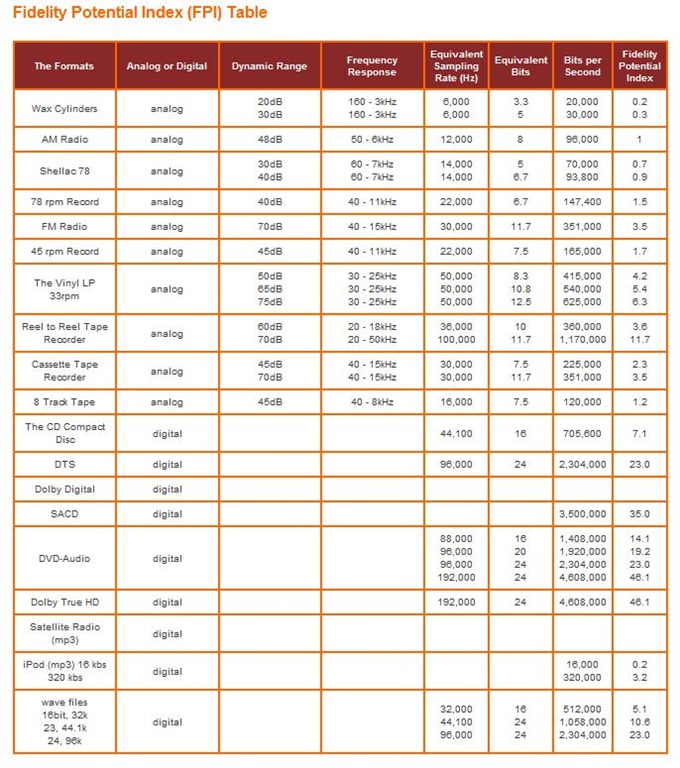
By the numbers the quality should be .mp3 then LP then CD, but I didn’t perceive things that way. Their Fidelity Potential Indexes are MP3=3.2, LP=4.2-6.3, and CD=7.1. In comparison, a SACD is 35.0 FPI and a 24bit master is 46.1. This leads me to believe that my old record and old turntable might be far from optimal quality, and the new one closer to what a record can actual do. I guess that’s why vinyl fans spend lots of money on turntables and pre-amps.
My guess is .mp3 files and CDs played loud on a good stereo (not audiophile, merely good) will sound better than the average old turntable on the same system. So for casual music listening CDs or .mp3 files are plenty good enough, so pick whatever is convenient, although I do think CDs sound better and are worth the trouble to listen to when you want to do some serious listening.
For the average music fan formats don’t matter. If you want better fidelity you’ll need to spend some money, but how much is relative.
I’m really enjoying getting back into records and my new turntable makes me enjoy them all the more. I still think the CD sounds best, but I actual enjoy buying and listening to records. I guess it’s part nostalgia and part ritual.
So Why Buy Vinyl?
The reason why I got back into vinyl is because I want to hear records that I can’t get on CD or from Rdio/Rhapsody. And it’s fun to play records sometimes, to enjoy the old way of listening to things.
One thing I learned from this test is not to buy records if I have them on CD or from streaming music. This means the fun of playing vinyl is shopping for out-of-print records. But records are good enough sounding that if I found albums under $5 that I don’t have on CD they are worth buying. Spending $5 for an album I have on Rdio is just wasteful. It’s a hard decision if the choice is between a $5 used album and a CD a on sale for less than $10.
I’ll play CDs, SACDs, LPs, and MP3s. If absolutely everything was available on streaming music services like Rdio and Rhapsody I’d probably abandon all physical media. I tend to believe 10 or 20 years from now everything will be streaming and physical records will only be played by folks sentimental for quaint technology.
What If Ripping Music Never Had Happened?
If music was still just a physical medium how would things be different now? My guess is SACDs would rule. If MP3 had never existed and people still bought CDs, I think vinyl would have disappeared just like 78s. We’d still have LP collectors like we do with 78 collectors, but CDs would dominate, and maybe the newer Super Audio CDs (SACD) would have caught on. When music became free because stealing songs became so easy and widely accepted by the young, it ruined more than just the music business. I think it ruined the high fidelity concept. Even now when more people are paying for digital files, their convenience has kept Hi-Fi sound quality from being an issue.
iTunes and the other digital music services have also ruined the concept of the album. If we had never gone down the downloadable road, I think we’d have SACDs or better formats, with artists creating super-sized concept albums. And without physical media I’m not sure if we’d have audiophiles. It is possible that iTunes, Google and Amazon could sell 24-bit FLAC files , and Rdio, Spotify, Rhapsody and other subscription services could stream them, but there’s little demand. People have gotten used to lo-fi convenience of .mp3 files.
Most people do not know about audiophiles and high end audio equipment. It doesn’t matter to them. An iTunes song played on an iPhone with stock ear buds is good enough. If the hip young are rediscovering records and how much better they sound, maybe those same kids will become audiophiles and rediscover CDs, SACDs and 24-bit FLAC files. Pirated music led a generation of music lovers down a dark tunnel of lo-fi music, and I hope the resurgence of vinyl is an indication that hi-fidelity is the light at the end of that tunnel.
How to Hear High Fidelity Without Buying the Equipment
One way to hear music at its best is at a movie theater. Most good theaters have excellent multi-channel stereo systems. Have you ever wondered why songs sounded fantastic at the show, but ho-hum at home? What you hear at the theater is the high fidelity that studio engineers work so hard to record. What you hear is closer to the 100% of the recording that Neil Young talks about when he complains that fans only hear 5% of the potential music when they are listening to a .mp3 file, or 15% when they listen to a CD.
JWH – 11/20/12