Identifying the Greatest Books of All Time

Books, whether novels or nonfiction, are inherently subjective in their appeal, so is it even possible to claim to know the greatest books ever written?  I don’t think any one person can objectively claim any list of books are the best ever written.  However, I think it is possible, by using statistics, and the wisdom of crowds, to identify the books that have had the greatest impact on the most people.
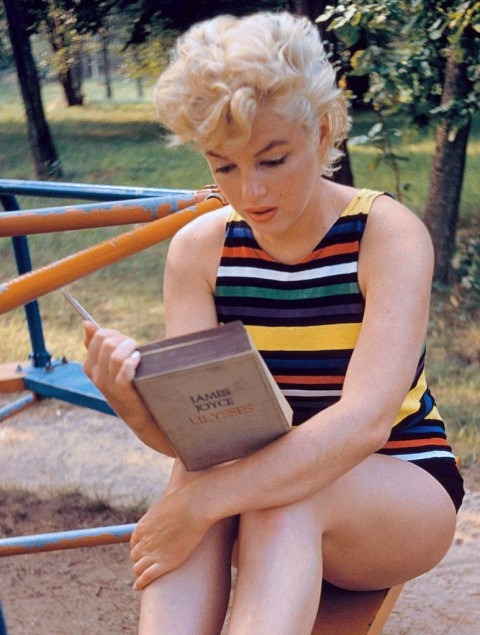
marilyn-reads-joyce

There is a long tradition for critics and scholars to list books they proclaim are great.  This is subjective no matter how well educated the selectors are in literature.  Now, if we take a hundred literary authorities and ask them to list their top 100 books of all time, put those books into a database and then create a list that shows which books were on the most lists, I think we can consider this more objective.  But even still, there is no Platonic ideal form of a great book that exists in reality.  How great is War and Peace if you can’t stand to read it?

That doesn’t stop people like me, life long bookworms addicted to books, to always search for our next fix, hoping for the most intense literary high yet.

Aggregating best of book lists is different from fan polls, although if we poll enough readers, standout titles will emerge.  Critics and scholars have read widely and studied literature, so their opinions count for more, but their opinions aren’t perfect.  Scholars know the older books better, whereas fans know the newer books.

Back in the 1980s I created a meta-list of science fiction books for a fanzine called Lan’s Lantern.  It was simple, I used eight best of lists, to produce a final list that contained books that had been on at least three of the eight lists.  I called the list The Classics of Science Fiction.  In the 1990s I updated the system with more lists, and put it online.  In the early 2000s I got some outside help and expanded the citation lists to 28 best of lists and set the cutoff to seven lists.  You can see the ranked results here.  The top three books had been on 25 of the 28 lists.  I thought that represented a kind of validity.

Ever since then I’ve wanted to build a database for all books, not just science fiction.  Several years back I got a domain name and hosting service and set up the beginnings of such a system, but the database got hacked and I gave up.  Recently I discovered that Shane Sherman has developed a database system at The Greatest Books of All Time that is similar to my dream book site.  He covers fiction and nonfiction and works with 43 best of lists.  However, Shane uses a different method for creating his final rankings by selective weighing of lists.  Yet another approach to identifying the great books.

Shane’s site is quite wonderful.  It’s simple and elegant.  Create an account or sign in with Twitter, and then start scanning the lists.  You can check the books you’ve read and the ones you want to read and the site will remember.  If you’re a book lover, you’ll enjoy going through the various lists, both the 43 best of lists and Shane’s two generated lists:  Fiction and Nonfiction.  I love best of lists.  I collect books recommending the best books of all time.  Over the years I’ve been teaching myself about the history of books.  When I make new friends I love talking to them about their favorite books.  I find the fame of books fascinating.

Best of book lists can be created from fan polls, critic lists, scholars lists, awards lists, library lists, and other criteria, such as whether a novel has been made into a movie, or was an all time best seller.  Popularity is important, but it’s not the only factor.  Critics and scholars are far more knowledgeable about the history of books than normal fans, but if the fan polls are large enough, they can be effective.  Various book awards, Pulitzer, Booker, Newberry, etc., have their own systems for selecting books, that try to go beyond the subjective, but the award judges have limitations too.  No one person can know about even a tiny fraction of published books.

If one list can’t be perfect, what about aggregating many?  Combining lists can generate interesting results.  For example, I’ll use four lists.

Shane Sherman’s top dozen books are:

  1. Don Quixote by Miguel de Cervantes
  2. Ulysses by James Joyce
  3. Lolita by Vladimir Nabokov
  4. The Adventures of Huckleberry Finn by Mark Twain
  5. The Great Gatsby by F. Scott Fitzgerald
  6. 1984 by George Orwell
  7. War and Peace by Leo Tolstoy
  8. In Search of Lost Time by Marcel Proust
  9. Anna Karenina by Leo Tolstoy
  10. Madame Bovary by Gustave Flaubert
  11. The Brothers Karamazov by Fyodor Dostoyevsky
  12. Middlemarch by George Eliot

If you look at the 43 lists at Shane’s site you will be hard press to find another one that has the same top 12 novels.  One that does come close is The Novel 100: A Ranking of Greatest Novels of All Time by David Burt.  From what I can tell, Burt doesn’t use a system but just claims to be an expert.  His top 12 are:

  1. Don Quixote by Miguel de Cervantes
  2. War and Peace by Leo Tolstoy
  3. Ulysses by James Joyce
  4. In Search of Lost Time by Marcel Proust
  5. The Brothers Karamazov by Fyodor Dostoyevsky
  6. Moby Dick by Herman Melville
  7. Madame Bovary by Gustave Flaubert
  8. Middlemarch by George Eliot
  9. The Magic Mountain by Thomas Mann
  10. The Tale of Genji by Murasaki Shikibu
  11. Emma by Jane Austen
  12. Bleak House by Charles Dickens

The overlap suggests that Burt is a very savvy literary scholar because he comes very close to the results generated by Shane’s system.

J. Peder Zane found another way to use the wisdom of crowds by asking 125 writers to submit their favorite 10 books and then built a database to see which books were recommended the most.   The list was called The Top Ten.  Using a point system, these 12 books came in at the top:

  1. Anna Karenina by Leo Tolstoy
  2. Madame Bovary by Gustave Flaubert
  3. War and Peace by Leo Tolstoy
  4. The Great Gatsby by F. Scott Fitzgerald
  5. Lolita by Vladimir Nabokov
  6. The Adventures of Huckleberry Finn by Mark Twain
  7. Middlemarch by George Eliot
  8. The Stories of Anton Chekhov
  9. Hamlet by William Shakespeare
  10. In Search of Lost Time by Marcel Proust
  11. Moby Dick by Herman Melville
  12. Ulysses by James Joyce

As you can see, many of the same titles are showing up over and over again.  Ulysses, War and Peace, In Search of Lost Time and Madame Bovary were on all three of these lists.

Now compare this to a large fan poll.  The BBC got over 750,000 readers to vote on their favorites, these were their top 12:

  1. The Lord of the Rings by J. R. R. Tolkien
  2. Pride and Prejudice by Jane Austen
  3. His Dark Materials by Philip Pullman
  4. The Hitchhiker’s Guide to the Galaxy by Douglas Adams
  5. Harry Potter and the Goblet of Fire by J. K. Rowling
  6. To Kill a Mockingbird by Harper Lee
  7. Winnie the Pooh by A. A. Milne
  8. 1984 by George Orwell
  9. The Lion, The Witch and the Wardrobe by C. S. Lewis
  10. Jane Eyre by Charlotte Bronte
  11. Catch-22 by Joseph Heller
  12. Wuthering Heights by Emile Bronte

The British are partial to British authors, with only two Americans making it to the top dozen, and no non-English writers in this portion of the list.  War and Peace did make it to the #20 spot, and Ulysses came in at #78.  Many of the others titles from the other three list did show up within the BBC Big Read top 100, so even average bookworms can love stogy literary classics, just not as much as fun books like Harry Potter.

If we could get one million bookworms from all over the world, what would that list look like?  What if there was a web site that allowed every bookworm in the world to submit their top ten favorite books, what might the overlap list look like?  If a hundred million Chinese readers participated, what Chinese books would we see?  It’s interesting that in the first three lists above, created by English speakers that so many non-English books made the list, but the western world does dominate.

The Top 100 Works in World Literature attempts to correct the western centric view.  You’ll have to visit the site to see the list, because it’s alphabetical, so there’s no top 12 to show and compare.  However, many of the books from the top three list above are on this top 100 list too.

There are a good many best books lists out there.  Shane has gathered 43.  I wonder what using 100, or 500 such lists would show?  If we could survey all the schools, colleges and universities around the world for what books are taught each year, what would that list look like?  What if we could see the long term sales figures for books, to see which books sell the most year after year?  And what books have inspired the most movies, plays and television productions?  Which books have been written about the most?  Which books have been quoted the most?

If somehow we could put all this information in one giant database, and develop a point system that weighs their different values, I think we’d come up with a very valid list of top books.  Of course, such a list would then cause a recursive effect.  If all readers felt certain books were not to be missed, wouldn’t that further reinforce their success?  Isn’t such an effect already happening with English majors?

If a novel came out in 2013 that was more powerful than anything written by Tolstoy or Joyce, how long would it take to be recognized by this statistical system?  Meta list statistical systems favors older books with momentum.  Only well trained scholars and critics could spot a new contender quickly.

Other Aggregate Lists

Fan Polls

Scholar/Critic/Editor/Reviewer Lists

JWH – 2/12/13

Quartet (2012)–A New Geriatric Genre?

Is it me, or are there more movies showing up on the big screen catering to the social security set?  I’m sure there’s plenty of septuagenarian actors anxious for work, but I’m also hoping Hollywood is finally targeting us folks living in the 55+ demographic landscape.  That would be wonderful, since I’m awful tired of watching flicks for kids, especially when adolescence ends at 45 nowadays  I qualify for social security at the end of year, and only expect to get older, so I’m hoping there will be a boom in this geriatric genre.

The other night, four of us, three 61 year-olds, and a 55 year-old youngster in tow, went to see Quartet about life in a retirement home for musicians and singers put out to pasture. It stars Maggie Smith (78), Tom Courtenay (75), Billy Connolly (70) and Pauline Collins (72), four former opera singers separated in youth but thrown together in old age.  Quartet is advertised as a heartwarming and uplifting film about old age.  That’s exactly what I got out of it too, until I started talking to my friends who saw it with me.  Then it made me think about films for and about the old.

Quartet

When my friend Annie expressed disappointment I was surprised.  I had been so completely entertained.  Annie thought it was morbid and felt some of the characterization was undignified.  Anne and Janis did like the film, and both had laughed heartily throughout the show.  That night I laid awake thinking about Annie’s comments.  Was it the movie she didn’t like, or being reminded of getting old?

Quartet also featured many characters played by real retired musicians and singers, and during the credits, we were shown photos of these people as they look now and when they were young.  That was both lovely, and shocking.  We all get old, and we must accept and embrace the reality of being old, but time melts youthful faces into distortions, even grotesque masks of our former features.  And I can see how Annie would think this would be morbid.  My friends and I saw Quartet on a Tuesday night, and there exactly 10 people in the audience, none younger than 55.  I doubt even on a busy night if Quartet attracts many young people.  It’s hard to promote our sunset years as thrilling movie fare.

Mary Pols at Time Magazine was less than enthusiastic about Quartet, calling the film “terribly cloying and cutesy.”  Now, I can buy that, but isn’t that true of most uplifting movies of our time.  We don’t like realistic movies.  We cover everything with a patina of cutesy.  Even when we’re critical, it’s usually only with the sharpness of satire that’s merely funny.  Quartet portrays little realism about getting old.  The Best Exotic Marigold Hotel was a bit more informative.  I wait to see if Amour goes deeper into the subject.  I was entertained by Quartet, but disappointed it wasn’t insightful.  I watch these geriatric genre films hoping to learn how to deal with getting old.  But that can’t be a real criticism because films are seldom inspirational. 

The retired citizens of Quarter live in Beecham House, a humongous manor house, beautifully restored, set against a magnificent English countryside.  Nobody suffers neglect, bedsores or even loneliness.  This is geezer nirvana.  The aged here spend their days creating music and having a rather good ole time.  Quartet is like a Mickey Rooney and Judy Garland musical, with the old folks putting on a show to make dough to keep the joint going.  Unless everyone at the grand performance paid $50,000 for their tickets I can’t imagine how anyone would think this as a realistic view of retirement living.  But then, are movies targeted at the youthful end of the demographic chart selling a realistic view of life either?  No, but we all grow up hoping life will be like the movies, so is it all that strange to have Hollywood sell us fantasies about life after 60?  The trouble is, I now feel cheated by fantasies I had in the first third of life about the second third of life.  So Hollywood, or wherever they make British movies, I can’t speak for the other old dudes , but I don’t want fantasies about my final third.

This brings up the question:  If we’re old and getting older, do we want films that fool us about our future or grittily tell it like it is?  Anyone who has had to care for parents with dementia or breaking bodies has seen a realist view of their future.  Do we really want to pay $10 to see a two hour recreation of dismal living?  On the other hand, do we want to buy some Santa Claus version of what our “Golden Years” should be?

Clint Eastwood has the right feel in Grand Torino (2008) and Trouble with the Curve (2012).  Too often Hollywood wants us to think of the elderly as cute codgers, like in Cocoon (1985) and Going in Style (1979) where old people are shown as loveably, but goofy and eccentric, not average people inhabiting decaying bodies and minds.

Part of the problem is how the young see the old.  Young people don’t like the old acting young.  I have to admit I have that prejudice too.  Getting old doesn’t really change our sense of self all that much.  How often have you heard granny or granddad say they felt like 19 on the inside?  We want old people to act old, to be dignified, to dress conservative, to be neither seen or heard, to sit in their retirement rooms and wait quietly to die.  A good example of this is again from the Time review by Mary Pols where she describes character she really dislikes:

I’ve saved the character I like the least for last. Wilf (Billy Connolly) is the resident dirty old man of Beecham House, a title no one would dare challenge him for, unless they had an actual court record. Wilf hits on everyone, including Cissy, whose “tits” he remarks on while eating his toast, and most persistently on the very tolerant director of Beecham House, Dr. Lucy Cogan (Sheridan Smith). The character is included without commentary and his grossness is treated entirely as comic. Being a pervert is his only contribution to the story. He makes Norman, the resident horn dog of the The Best Exotic Marigold Hotel seem a model of restraint in comparison. Dr. Cogan would have done the world a favor if she kneed him in the groin. But not at Beecham House, where everyone gamely gums their bread and jam and gets a good chuckle out of old Wilf. Obviously Hoffman and writer Ronald Harwood have never been groped by anyone old enough to be their grandfather.

Wilf does flirt constantly with all the women in this film, young and old, but I don’t remember a single scene of him groping anyone.  He does try to snake his arm around the doctor once, which seemed rather chase.  I liked the Wilf character because he did maintain his old self.  Sure he was a flirt, and even a dirty old man, but it was his way of keeping a stiff upper lip while going down with the ship.  We see Wilf experience one scene of physical weakness, an attack of dizziness.  Sure he propositions all the women, but they don’t take him serious, and I doubt he expects them too either.  And does any character or member of the audience believe he can live up to his boasts given the chance?  No, Wilf is trying to act like nothing has happened, that he isn’t different.  He’s pretending he can still get it up.  I don’t even think he’s delusional.  It’s his way of not being a downer.  He doesn’t want people’s pity.  It’s an act that keeps him from withdrawing from the world.

I know that’s not realistic, but don’t we all put a positive spin on our lives from birth?  Don’t we all live with endless hopes and desires?  If we’re going to be hung, don’t want we want to walk up the gallows stairs with some dignity?  Why bitch and moan about getting wrinkled, why whine about droopy dicks and tits, why cry over failing bodies, or become depressed over forgetting a lifetime of facts.  Sure it sucks to live in pain from a body becoming undone by decay but must we wallow in pity and tears?   Why are we only beautiful when we’re young?  Why is life only worthwhile when our bodies are ascending?  Isn’t life just as existential on their decline?

That’s what I want from these films about getting old.  I want them to be charm schools on how we should act when we get wrinkled, frail, forgetful and forgotten. 

JWH – 2/9/13

Amazon Music v. Apple Music

Apple’s iTunes is the proverbial 800-pound gorilla in the music world, but I’m starting to wonder if Amazon isn’t going to dethrone Apple as the #1 music provider someday.

Apple, Amazon and Google all came out with cloud music sites last year and I put my 20,000 songs on each site.  I’ve ended up using the Amazon Cloud Player the most.  Google and Amazon have web based players.  Apple requires an iTunes  install.  That meant I couldn’t play tunes from my Apple Music Match library on my Linux machines.

amazon_cloud_player

iTunes always played my music best on my iPod touch and iPad, that was until the Amazon Cloud Player app came out.

Now Amazon has done something even more marvelous, it created an Amazon Cloud Player station for my Roku TV box.  Since my TV is hooked up to my stereo receiver and big speakers, playing music through my Roku really showcases those MP3 files.  My music sounds great!  And Amazon has started matching music like Apple.  Plus Amazon does a far better job than iTunes at finding cover art.

Even more enticing to keep my business, I got an email from Amazon a couple weeks ago telling me that 56 CDs I had bought since the 1998 qualified for their new free ripping service called AutoRip and those songs were added to my permanent library at Amazon.  If I stop paying the yearly fee for my cloud drive at Amazon, my uploaded/matched songs will disappear, but not those 56 CDs and the MP3s I’ve bought from Amazon.  I’ve bought many more CDs than 56, so I’m wondering if more CDs will qualify in the future for AutoRip.  I have a friend who got 200+ AutoRip CDs from Amazon the same day.

Buying a CD now from Amazon might get customers the MP3 album if it qualifies for AutoRip.  Wouldn’t it be great if customers got both formats whenever they purchased an album?  Maybe that will happen with DVDs too.  It would be so far out if Amazon sent me an email telling me that the TV shows and movies I’ve bought on Blu-ray and DVD qualified for AutoRip too?

Now that’s competing!  It’s awful nice having the company you buy media from also be your media librarian.  Amazon now manages my music, ebooks and audiobooks.  Why not movies and television shows in the future.  I already have a small library of digital TV shows that I bought as Amazon Instant Videos.

I can’t help but wonder what Apple will do now.  I let my Apple Music Match library renewal lapse this week, and I’ve stopped maintaining my Google Music library.  Amazon is now my music vender and librarian.

On my Roku, iPod touch and iPad I have millions of albums I’m renting from Rdio, and over a thousand albums I own playable through the Amazon Cloud Player.  The next logical step would be for Amazon to buy Rdio, or similar music streaming service and fix things so I only have only one library of music, with one set of playlists.  Wouldn’t that be amazing!  That’s the Holy Grail of digital music for me – all my available music, either owned or rented in one system, playable on all my computers and devices.

Now if Amazon would only make the Amazon Cloud Player more sophisticated.  But I expect they will.  I expect this trend in music to keep evolving.  The battle is between what Amazon and Apple can do for us.  Is anyone else really competing?

JWH – 2/4/13

Dropbox and BoxCryptor: The Dangers of Encrypting Your Digital Life

In my never ending quest to get organized, I’ve been forced to explore the world of encryption.  I set up Dropbox to use as my primary drive for all my digital document filing.  Because my Dropbox files are replicated to all my machines at home and work this has caused a security problem at work.  We’re not allowed to store sensitive data on our local drives, and my own files will set off their security scanner.  So I’m being forced to encrypt my own documents.  Normally Dropbox encrypts your files for transfer over the net and at their storage site, and I’ve considered that good enough security.  However, I started thinking what would happen if someone came into my office when I just had stepped out.  Before Windows times out and locks my machine, people could see my home files in Dropbox, so I felt it was the time to study encryption programs.

We’re being forced to use TrueCrypt and BitLocker at work, so I was having to learn about this topic anyway.  It’s a scary subject because if you’re not careful you’ll lock all your critical files into an encrypted volume and you won’t be able to open it again.

At first I thought I just set up a TrueCrypt volume inside of Dropbox, but I read there were some issues with that.  Dropbox sees TrueCrypt as a single file, so if you have a gigabyte of data locked down, that’s a lot for Dropbox to handle over the internet.  Doing some Google research I discovered BoxCryptor.  BoxCryptor encrypts file by file, so the overhead for Dropbox is much lighter.

BoxCryptor

BoxCryptor is free for personal use as long as you only create one virtual drive.  BoxCryptor creates virtual drives.  Save something to its drives and it’s automatically encrypted.  It works with Dropbox, SkyDrive and other cloud drive services, as well as regular drives.   After you install BoxCryptor you mount the drive and use this access point to see the files unencrypted. If you don’t mount the drive and browse to the BoxCryptor folder within Dropbox you’ll see your files, but they won’t open.  And evidently, with the free version, you’ll see the filenames unencrypted, they just won’t open.  It appears if you buy the full version ($44.99), it will encrypt the filenames too, if you want.

Encrypting your files can be dangerous.  If you forget your password, kiss those precious documents goodbye.  Unless you’re a master NSA hacker, you’ll have no chance of ever opening them again.  Also, there’s a file listing in your BoxCryptor folder called .encfs6.xml.  Delete it and access to your files are long gone too.  Wow-wee – just thinking about all this makes me nervous.

Using encryption is not for the unfocused mind or scatterbrain user.

Here’s the thing.  We’re moving into an age where all our personal information is digital.  It’s our responsibility to back up our digital life.  Dropbox is a good way to do that, but Dropbox stores your files in the Cloud.  If you’re paranoid about who can see your files you’ll need to think about encryption.

Encryption takes extra work, extra precautions and can be a very risky endeavor if you’re careless.

Some people encrypt files because they worry that Cloud storage sites might peek at the good bits in their private files.  Other people encrypt their documents because they’re afraid their computers will be stolen and bad guys will steal their identity.  Still other people encrypt files because they don’t want people at home or at the office to mess with their stuff.  Criminals encrypt files because they don’t want the police or FBI use them as evidence.  There are many reasons to encrypt files.  You have to decide if its worth the effort.

When you encrypted a folder with BoxCryptor or TrueCrypt you’ll have to create a strong password that you must not forget, and you’ll be required to save a configuration key file that you should backup carefully.   If something happens to your machine and you want to recover your files from a backup to a new machine, you’ll need that configuration key file.

If you encrypt your life its very important how you handle the password and configuration key.  If your documents are very important you might want to put your passwords and keys into your will.  If a husband encrypts all his financial records and then dies, his wife won’t be able to see them.  If you’re an author and you last manuscript is encrypted, it won’t get published unless you’ve made provisions for your heirs to unlock it.

And it’s important how you configure BoxCryptor.  If you want to just hide your files from Dropbox, just use the defaults.  If you want to hide files from people that can access to your computers (either at home, work or at the thieves hideout), then don’t configure the mount drive to automatically remember the passwords.

JWH

Am I Losing My Memory?

This morning I got the idea of writing an essay about how there are generations of popular writers in all genres.  I had been looking at lists of bestselling science fiction books on the web and I was surprised by how most of the authors were unknown to me.  Obviously a newer generation has supplanted all the popular writers I once knew.

I figured at any given time there are a cadre of top writers whose names come to mind when people think of science fiction writers.  Because I’m 61, I’m tied to the past, and think of SF writers long dead, and maybe forgotten, or never known to new readers.

memories

Think of it this way, the stars of Hollywood in the 1930s would be much different from the stars of the 1950s or the 1990s.  That people would think of the rock stars or baseball stars of the 1960s as a different generation or group than those of the 1980s.

I grew up reading science fiction in the 1960s, and Robert Heinlein, Isaac Asimov and Arthur C. Clarke were the SF stars of that era.  Who are the science fiction writing stars of the 2010s?

Now here’s where I lose my memory.  I thought of writing an essay about how Heinlein rose to fame and then show how his fame diminished over time.  I got some ideas about how to start the essay and decided to check on some facts I knew I had written about before.  Then I found:  “The Fall of Robert A. Heinlein and The Fading of the Final Frontier” by James Wallace Harris.  That’s me.

I had completely forgotten I had written that essay.  Not only that, but when I reread the essay it covered ideas I wanted to write in the essay I was imagining.  What’s even scarier is I think the earlier essay had some better ideas that really impressed me.  They didn’t even seem like my ideas.  I had forgotten this essay so well that I could admire the writing like it was written by someone else.  That feels weird.

Now is this common for writers to forget what they’ve written?  Or am I suffering a side-effect of getting old?

I had already written the title for the new essay, “The Rise and Fall of Robert A. Heinlein and His Vision of Science Fiction.”  Very similar to the earlier title.  Now, it was going to be a different slant.  I wanted to capture the flavor of science fiction that Heinlein and others created and show how that’s changed.  1950s and 1960s SF feels very different from 2000s and 2010s science fiction.  That was going to be a lot of work, and I wasn’t sure how I could do it.

If I had unlimited time, I would describe how Heinlein saw space travel in the 1950s, and compare it to how science fiction writers in the 2010s see space travel.  I may have had that idea before.  I don’t remember.  I think of ideas to write about all day long, and forget them just as fast.  But that was true in my teens so I don’t think it’s an age issue.

Memory is such a weird thing.  Back in the 1960s I swear my best friend Connell bought a book Birds of Britain by John D. Green, now a collector’s item.  It was a photo book of British girls during the Mod era.  Today Connell swears he doesn’t remember ever seeing such a book.  Just now I watched an episode of The Twilight Zone about three astronauts coming back from space and how each of them slowly disappears from people’s memories.  Reading my own essay that I had forgotten felt like being in The Twilight Zone.

For all I know I could have written this essay before.

The public is forgetting my favorite writers.  I forget my own writing.  Memories are fleeting.  They’ve always have been.

JWH – 1/29/13