2013 Year in Reading

The older I get, the more I feel my reading life is fading away.  I was born to read.  Reading has shaped and defined my existence.  So it’s scary to think that I’m running out of reading time.  Even if I live another 20 years, that’s only 1,040 books at this year’s pace.  That seems like a lot, but it’s a finite number.  Picture an hour-glass, but instead of grains of sand, imagine tiny little books falling through the narrow waist of the time.
confessions-of-a-crap-artist-5

I retired this year on October 22nd, and assumed I’d start reading books like crazy.  When I worked, I read about one book a week.  I hoped after retiring, to read two books a week – instead it’s one book every two weeks.  Damn.  That’s not what I planned at all!  I’ve only been able to catch up to my yearly average by quickly finishing off several half-read books.

As 2013 closes out, I contemplate the power of less, both having less time, but also wanting and owning less, so I can focus clearly on my goals, and I realize I need to change my attitude toward reading.  More than ever, I want to make every book count.  This might sound contradictory, but I’m thinking I need to read less too.  Instead of consuming books in great numbers, I should savor and study them.  But what if that means I have 300 books left?

In 2012 I read 49 books and I wrote in my 2012 Year in Reading that I wanted to read 12 novels, 12 science books, 12 history/other non-fiction books in 2013, and hopefully 12 of those would be published during 2013.  Well, I didn’t do so good, especially with science books – I didn’t read any science books at all!   I did read one math book.  Plus, I only read just seven 2013 books (I did read eleven 2012 books, so I’m close).  I read 24 fiction books, twice what I wanted.

When I look at the list below I realize that some books were definitely worth my reading time, but others, even ones I really enjoyed, weren’t.  I’ll rate the books I felt added much to my life with up to 5 pluses (+), but any book I didn’t rate means I could have skipped without impact.  Some of these were lots of fun, but I need more than just fun.

Books Read in 2013

Favorite Fiction

  1. Nineteen Eighty-Four by George Orwell
  2. The Short Stories Volume 1 by Ernest Hemingway
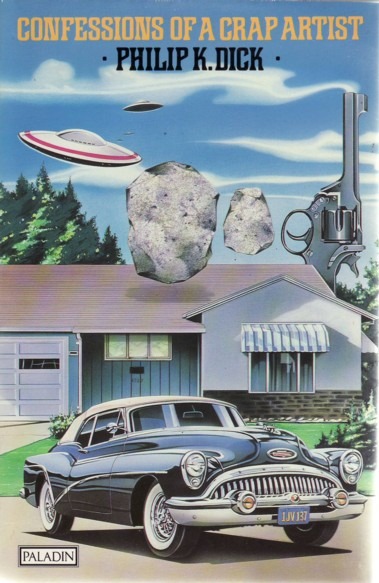
  3. Confessions of a Crap Artist by Philip K. Dick
  4. The Fault in Our Stars by John Green
  5. The Long Tomorrow  by Leigh Brackett

Favorite Nonfiction

  1. Half-the-Sky: Turning Oppression into Opportunity for Women Worldwide by Nicholas Kristof and Sheryl WuDunn
  2. The World Until Yesterday by Jared Diamond
  3. The Unwinding by George Packer
  4. The Voice is All by Joyce Johnson
  5. Other Powers: The Age of Suffrage, Spiritualism, and the Scandalous Victoria Woodhull by Barbara Goldsmith

Order of Reading

  1. Confessions of a Crap Artist (1959) – Philip K. Dick (+++++)
  2. Half-the-Sky: Turning Oppression into Opportunity for Women Worldwide (2009) – Nicholas Kristof and Sheryl WuDunn (+++++)
  3. Beautiful Ruins (2012) – Jess Walters (+++)
  4. The World Until Yesterday (2012) – Jared Diamond (+++++)
  5. At Home (2010) – Bill Bryson (+++)
  6. Redshirts (2012) – John Scalzi 
  7. The Wrecking Crew (2012) – Kent Hartman (+++)
  8. The Sheltering Sky  (1949) – Paul Bowles (+++)
  9. Hull Zero Three (2010) – Greg Bear
  10. Wishin’ and Hopin’(2009) – Wally Lamb
  11. Quiet: The Power of Introverts in a World That Can’t Stop Talking (2012) – Susan Cain (++++)
  12. Other Powers: The Age of Suffrage, Spiritualism, and the Scandalous Victoria Woodhull (1999) – Barbara Goldsmith (++++)
  13. The Searchers (2013) – Glenn Frankel (+++)
  14. Heaven is for Real (2010) – Todd Burpo
  15. Darwinia (1999) – Robert Charles Wilson
  16. Society’s Child (2008) – Janis Ian
  17. We Can Build You (1972) – Philip K. Dick
  18. Oz Reimagined (2013) – edited by John Joseph Adams
  19. Drive: The Surprising Truth About What Motivates Us (2009) – Daniel Pink (+)
  20. Word Freak: Heartbreak, Triump, Genius and Obsession in the World of Competitive SCRABBLE Players (2001) – Stefan Fatsis (++)
  21. The End of the Affair (1951) – Graham Greene (++)
  22. Mrs. Dalloway (1925) – Virginia Woolf (+)
  23. The Fault in Our Stars (2012) – John Green (++++)
  24. The Sense of an Ending (2011) – Julian Barnes (++)
  25. Why Are You Atheists So Angry: 99 Things That Piss Off the Godless (2012) – Greta Christina
  26. The Next 100 Years:  A Forecast for the 21st Century (2009) – George Friedman
  27. The Heart of Darkness (1899) – Joseph Conrad (+)
  28. Life As We Knew It (2006) – Susan Beth Pfeffer (+)
  29. The Ballad of Bob Dylan (2011) – Daniel Mark Epstein (+++)
  30. 2312 (2012) – Kim Stanley Robinson
  31. The Cuckoo’s Calling (2013) – Robert Galbraith (J. K. Rowling)
  32. Let’s Explore Diabetes with Owls (2013) – David Sedaris
  33. Door Wide Open (2001) – Joyce Johnson
  34. The Unwinding – (2013) George Packer (+++++)
  35. The Year’s Top-Ten Tales of Science Fiction 5 (2013) – edited by Allan Kaster
  36. Euclid’s Window (2001) – Leonard Mlodinow (++)
  37. The World Jones Made (1956) – Philip K.  Dick
  38. The Long Tomorrow (1955) – Leigh Brackett (++)
  39. Lightspeed Year One (2011) – edited by John Joseph Adams
  40. One and Only (2011) – Gerald Nicosia and Anne Marie Santos
  41. Po-boy Contraband (2012) – Patrice Melnick
  42. The Voice is All: The Lonely Victory of Jack Kerouac (2012) – by Joyce Johnson (++++)
  43. The Year of Magical Thinking (2005) – Joan Didion (++++)
  44. Boys Adrift (2005) – Dr. Leonard Sax (++++)
  45. One Summer: America 1927 (2013) – Bill Bryson (++++)
  46. The Power of Less (2008) – Leo Babauta (+)
  47. Wheat Belly (2011) – William Davis MD (+++)
  48. The Short Stories Volume 1 (2002) – Ernest Hemingway (+++++)
  49. Distrust That Particular Flavor (2012) – William Gibson (++)
  50. Pulphead (2011) – John Jeremiah Sullivan (+++)
  51. Leviathan Wakes (2011) – James S. A. Corey
  52. Nineteen Eighty-Four (1949) – George Orwell (+++++)

Reading Plans for 2014

Once again I want to read less science fiction and more science, fewer fiction titles and more nonfiction.  Of course I’d like to read all +++++ books, even if I only read half as many books total.  I find it tragic that I forget what I read so quickly.  What a crying shame it is to take in so many fascinating facts that flee my mind in just minutes and hours.  Shouldn’t I be doing more rereading than reading, studying, rather than rushing by all those scenic words?

Going through my bulging bookcases, here’s what I’m pulling down to pile beside my reading chair, hoping to read in 2014.

  • On Looking: Eleven Walks with Expert Eyes (2013) – Alexandra Horowitz
  • Grain Brain (2013) – David Perlmutter, MD
  • Time Reborn (2013) – Lee Smolin
  • The Goldfinch (2013) – Donna Tartt
  • Thinking, Fast and Slow (2011) – Daniel Kahneman
  • The Beginning of Infinity (2011) – David Deutsch
  • Darwin’s Armada (2009) – Iain McCalman
  • The Best Writing on Mathematics (2013) – Mircea Pitici, Editor
  • The Fallacy of Fine-Tuning: Why the Universe is Not Designed for Us (2011) – Victor J. Stenger
  • Waging Heavy Peace (2012) – Neil Young
  • Your Inner Fish by Neil Shubin
  • Mathematics: The Loss of Certainty by Morris Kline
  • Touching the Rock: An Experience of Blindness by John M. Hull
  • The Social Conquest of Earth by Edward O. Wilson
  • Darwin’s Dangerous Idea: Evolution and the Meaning of Life by Daniel C. Dennett
  • Euclid in the Rainforest: Discovering Universal Truth in Logic and Mathematics by Joseph Mazur

JWH – 12/27/13
Learning to Write Science Fiction By Studying Temporal POV

My goal is to write a science fiction novel, but I don’t have the skill or discipline to finish one now.  I write scenes and chapters, and then rewrite them.  I spend much of my time thinking about fiction and how it’s created.  I also spend a lot of time thinking and reading about the past and how we learn about it in fiction and nonfiction, films and documentaries, television shows, and even poems and songs.

When we read science fiction we read it imagining the scenes are happening in the future.

All art is communication from the past.  Even when artists are creating their artwork in the present, they are inspired by the past in creating their communiqué to the future.  Yet, when we experience art, we experience it in the present.  Writing science fiction is hard because I’m writing a message to the future, about the future, but it’s really about their past, and my past, but perceived in some future present.

Once you start thinking about artistic temporal POV it gets as twisted as a time travel paradox.

Most readers will be thinking I’m overthinking this and say, “Quit procrastinating and go write a story about spaceships and robots.”  I can crank out bad fiction all day long.  Fiction is like a stage magic – full of illusions and sleight of hand.  It’s easy enough to fool readers with crude make believe, but it’s damn hard to create a slick piece of storytelling magic.

My retired life is divided into three modes.  The first, I spend living in the present, cooking, cleaning, having friends over for dinner, getting the hot water heater replaced, shopping for books, paying bills, etc.  The second, and what I spend most of my time doing, is decoding messages from the past.  The second mode happens in the present, so reading a book – the act of sitting in a chair and looking at pages – I’m still living in the first mode.  In my head though, I’m decoding messages from the past.  Most people never think about this, and reading a book or watching a movie is the present.  It’s only when you examine how art is created that you start decoding the message from the past.  My third mode of existence, which I’m working to expand, is spent coding messages to the future.

This morning I woke up at 4:09 am. I sat in the dark (I sleep in a chair) thinking about all this.

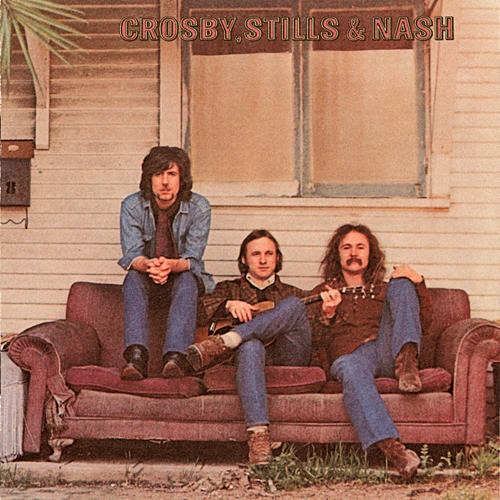
Crosby, Stills & Nash 

I put on Crosby, Stills & Nash, CSN’s first album.  Listening to an album on headphones in the dark before dawn is a great time to focus on music and stimulate thinking.  I remember buying this album the week it was released in 1969 and how excited I was to discover it.  The Byrds were my favorite group in the 1960s, and Buffalo Springfield was another favorite band, so the names David Crosby and Stephen Stills jumped out.  The album blew me away back then.  And as I listened to it now, I admire it greatly for its artistic construction, and find it beautiful to hear.  However, the songs are fascinating.  They are histories themselves, many about famous girlfriends.  Or the songs have a history themselves, like “Wooden Ships” which months later appeared on the Jefferson Airplane’s Volunteers album.

Why am I talking about music when I promised to talk about science fiction?  I’m working on a story that I want to be about legendary people.  When you read it, these people will be from the future, but the narrative will make you feel they are from the past, but the scene will be set in their present.  What details from fifty years ago about ordinary people living their present survive to make legends?

Like I said, all artwork is a communication from the past.  But even my urge to hear this album this morning comes from an earlier communication.

legends_of_the_canyon

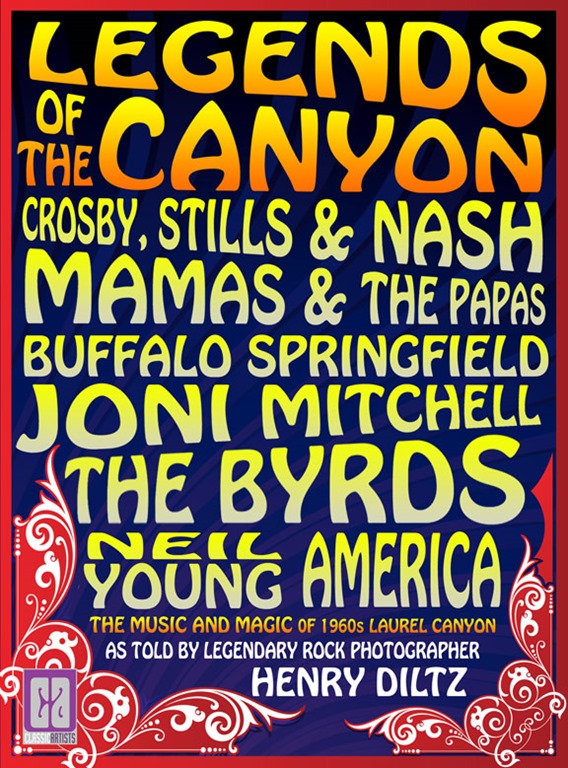
The other night I watched Legends of the Canyon about many famous musicians, songwriters and groups that lived in Laurel Canyon in the 1960s, including The Mamas and the Papas, The Byrds, Buffalo Springfield, Joni Mitchell, and Crosby, Stills & Nash.  Because David Crosby, Stephen Stills, Graham Nash and Dallas Taylor were prominently interviewed, the film almost seemed to be about the birth of CSN.  Now I want to find time to listen to Joni Mitchell and The Mamas and Papas albums.  I don’t think I’m an old guy that dwells on the past, at least not my personal past, but much of my retired time is spent listening to music, reading books, watching television and going to the movies.  These people who lived in Laurel Canyon lived lives that are still being written about again and again.  Imagine writing about such people who live in the future.  How do you capture their essence in the fewest words?

One thing that struck me was the memories of Crosby, Stills and Nash had of the first time they played together.  Crosby and Nash insist it was at Joni Mitchell’s house, Stills adamantly insists it wasn’t.  Reading science fiction often feels like science fiction writers are predicting the future, but they are not.  They never try to predict the future.  We remember the past imperfectly, but we constantly mine it for value.  Don’t we also mine speculation about the future for value even though we know those stories are completely untrue?  Doesn’t fiction create truth out of lies?  

I’m consuming the past.  Part of that is being in the present moment just enjoying the art, but more and more, I’m thinking about where and how the art was produced.  I have read many books and articles about these bands, albums and songs.  As interpreters of art we do not have to know the history connected to them.  You can listen to “Suite: Judy Blue Eyes” without ever knowing that Stephen Stills was writing about Judy Collins.  However, if you do study it’s history, the nature of how you appreciate the song changes.  The more you know how the song was recorded, and how the band was formed to record it, the more you realize the song is history, part of the past, and not part of the present.  Won’t the same be true about science fiction?  The more you know about science and the present will enhance the art of painting imaginary futures?

hemingway 

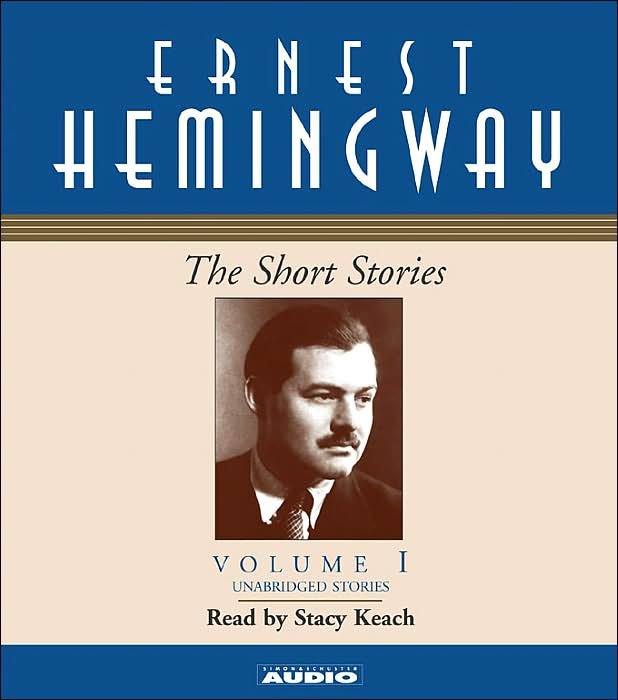
Am I studying art, or studying history?  Yesterday I cooked lentil soup while listening to The Short Stories of Ernest Hemingway Volume One.  The stories are exquisite.  They are wonderful read by Stacy Keach (who Judy Collins left Stephen Stills for) on the Audible edition, making them dramatic, and the intent of Hemingway’s writing clear and obvious.

For my retirement years my goal is to write a novel, and I’m working on it sporadically.  I’m not a very good writer, so I’m spending part of my days studying fiction and writing styles.  When I listen to Hemingway I realize two very important things.  One, Hemingway wrote as if he witness these events first hand.  Some of his stories, like the Nick Adams tales, are autobiographical, but others like “The Short Happy Life of Francis Macomber” are obviously fiction, but the details are so vivid, that I believe many of them are autobiographical too.  Second, Hemingway wrote in a style that describes much with few words.  His scenes are vivid and dramatic, with dialog so pitch perfect that they feel ultra realistic, like everything he writes is a documentary film.  It has tremendous impact.

For example, just a few lines of dialog paints a vivid picture of the mother in “Soldier’s Home.”  How did Hemingway create her?  Was she like his mother, or did one of his friends tell him a story about their mother, or did Hemingway make it up whole?  Like a poet, Hemingway uses very few words to capture this woman.  The scene reminded me of conflicts with my mother when I was young.  No matter where Hemingway got his idea, it feels like it had actually happened.

Most fiction is made up in the head of the writer.  It’s not based or inspired by anything that really happened.  Great fiction either captures real events, or fakes them so well they feel real.  Good writing is about pulling off this trick.

I spend my days experimenting with writing science fiction, but I want to use the Hemingway style.  How do I write about a future that will never exist as if I’m chronicling something I experienced for real?  It’s only possible if I can visualize it completely, as if each scene really happened.  I’m working on a scene where a man and women meet for the first time – how can I convey it to readers who can’t see what I’m seeing in my mind, and for me to make them feel they are experiencing something that really happened?

Philomena

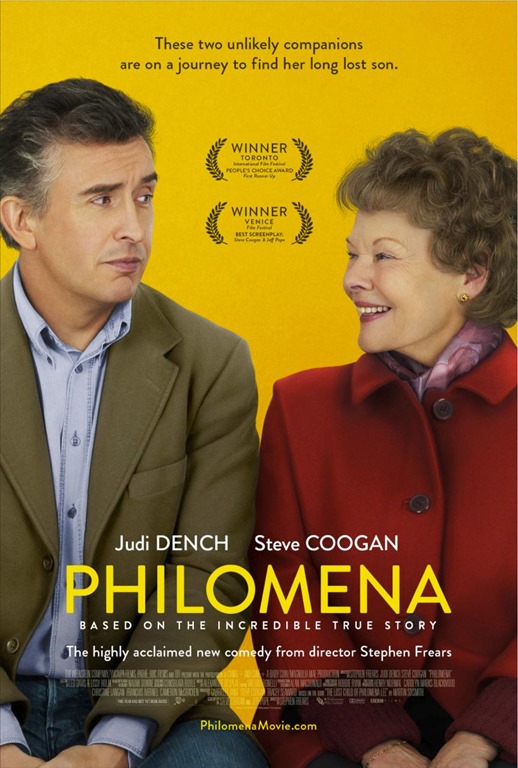
After I cooked the soup, I went to see Philomena with my friends Janis and Anne.  It’s a movie based on real life events, which was also published as a book, The Lost Child of Philomena Lee by Martin Sixsmith.  We all loved this quiet little movie because it was so real.  I spend a lot of time thinking about how real life is turned into fiction, or how completely fictional characters are made to seem real.  It often seems to me that the fiction with the most impact is either based on real events, or at least written by people who have been to the times and places where the stories took place. 

That means science fiction and fantasy have a very real handicap.  If everything comes out of the author’s mind then the story is limited by the author’s imagination.  That’s why the Harry Potter books are so impressive.  J. K. Rowling spent years imagining her characters and scenes.  She even drew detailed pictures of them.  And that might be why movie science fiction and fantasy is so much more popular than book SF&F.  Movies have to create all the visuals and that makes the stories more real.

Science fiction and fantasy stories must spend a lot of time painting the scenery and explaining the cultural background, but don’t you think the Harry Potter books feel like the events actually happened?  Isn’t that why they succeeded and other books about schools for wizards don’t?

from-lark-rise-to-candleford

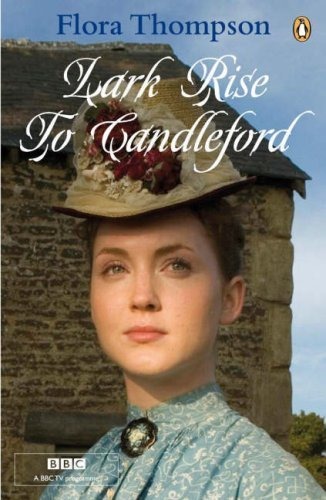
Sometimes history is so distant that we must recreate it from imagined details.  After the movie last night, Janis and I watched Alpha House, and then I watched an episode of Lark Rise To Candleford.  Flora Thompson wrote a trilogy of books that were autobiographical sketches of growing up in rural England in the late Victorian times.  As much as I love the TV series, it’s full of anachronistic thinking.  I’ve read a little bit of the original book and it’s absolutely wonderful in providing period details.

Writing science fiction is like producing a television show over a century after the events – only a strange stylized view comes through.  I wished I had the skill to write about the future with the details of Flora Thompson’s written observations.  Since that’s impossible, I’d have to make up the details with that level of realism.  I don’t know if that’s possible.

distrust

I’m currently listening to Distrust That Particular Flavor, a nonfiction book by William Gibson, where he talks about learning to write science fiction, but also deals with understanding the past, present and future.  Gibson also admits to not knowing how to write when he started writing but taught himself.  Listening to his essays I get the feeling he’s also obsessed with time and science fiction too, but maybe in a different way.  He talks about writing about the net before the net caught on, and writing about future technology that we have no words to describe, especially verbs that explain its impact.

1984_pulp3

I’ve also reading Nineteen Eighty-Four by George Orwell.  It is a book written in the late 1940s about 1984 but about a future that has never happened but is all too real, that is now part of our past.  Nineteen Eighty-Four is a brilliant piece of science fiction, absolutely stunning, among the best examples of the literary technique ever produced.

So, what makes Orwell’s great novel great?  To me it’s the temporal POV.  It reads like the events have already taken place, like the details given were facts of memory, like the characters actually lived through these events.  It feels like Orwell lived through this time like Hemingway lived through the events in his stories.  That’s a neat trick for a science fiction book.  It’s a trick of literature.  It’s a writing trick that distinguishes literature from genre.  And it’s one very hard act to pull off.

In struggling to write my scenes, which I do over and over again, at best I can produce pulp fiction.  I’m not being critical.  There’s nothing wrong with pulp fiction.  Hell, my writing isn’t even good pulp fiction.

But what all of this exploration of time and science fiction has taught me is I want to write as if I’ve already experienced what I’m writing.  In other words, I want to write about the future as if I’ve already lived it, instead of imagining a future I might could live in.

JWH – 12/18/13

Christmas for Atheists

I’m not one of those Grinch atheists that want to remove Christmas celebrations from governmental locations.  I’m sure my faithful friends would be horrified, but I no longer believe Christmas is just about Christ, and seeing baby Jesus in a manager is no different than seeing Santa in a sleigh.  Christmas supplanted a pagan holiday, so is it all that strange that a secular Christmas has supplanted a religious Christmas?  Our society is about diversity and inclusion, so why not let the religious Christmas coexist with a secular Christmas?  I don’t believe in angels, but I like them, and I especially like movies with angels.  I value the concept of the separation of Church and State, but is a nativity scene really a religious endorsement in our modern commercial Christmas times?  Isn’t it closer to a holiday brand?

christmas-carol-1938-ghost-of-christmas-past

I love that we have a holiday based on giving and sharing, that promotes goodwill to all mankind.  That’s very positive and not particularly endorsing any religion when you think about it.  It is sad that Christmas has become a commercial holiday, but the underlying concept is still about giving, and that’s good.  Plus, helping businesses stay afloat and keep people employed is a positive concept too.  We’re a capitalistic society, so a commercial Christmas is the perfect holiday for our economic philosophy.  And isn’t giving a nice way to expand the GDP?

Wasn’t Christmas redesigned by Charles Dickens in the 19th century anyway?  Isn’t A Christmas Carol the real model for modern Christmas philosophy?  It’s sad to say, I think even the wonderful sentiment of Dickens is now being supplanted by Comedy Christmas – which makes me wonder what the holiday will be like in one hundred years.  I guess it’s sort of funny, but serious Christians want to restore the ancient traditions about the celebration of Jesus, and I want to maintain a mid-20th century traditional view of Christmas.  My concept of Christmas comes from these movies:

  • A Christmas Carol (1938) – with Reginald Owen
  • The Shop Around the Corner (1940)
  • The Man Who Came to Dinner (1942)
  • Holiday Inn (1942)
  • Christmas in Connecticut (1945)
  • It’s a Wonderful Life (1946)
  • It Happened on Fifth Avenue (1947)
  • Miracle on 34th Street (1947)
  • The Bishop’s Wife (1947)
  • Scrooge (1951) – A Christmas Carol with Alastair Sim
  • White Christmas (1954)
  • A Christmas Story (1983) – a modern movie about a mid-20th century Christmas

Younger people today when they list their favorite Christmas movies pick films that are about the Christmas holiday such as Home Alone and National Lampoon’s Christmas Vacation, but they seem to lack the sentiment of what I think Christmas is about.  Even the Christian Science Monitor lists Die Hard as one of their top Christmas films.  Really?!!! 

Thus, we have to accept that Christmas is constantly changing, mutating, and must I say it, evolving.  I think it’s interesting that many low-tech animated Christmas television shows from the 1960s have a retro popularity now.  I guess Christmas itself is always about looking backwards, and promoting a sentimental view of the past.  Sometimes a modern movie conveys this almost as well as my old favorites, such as the films Love Actually, and The Family Stone.  Even the comedy Christmas movies add moments of touching generosity between their crude gags.

Christmas is about reminding people they shouldn’t be Ebenezer Scrooge.  Does it matter how the message is delivered?  I can accept that some people like it with metaphysical trappings.  That’s cool.

JWH – 12/16/13

A Bacterium, Ant, Cockroach, Mouse, Cat, Extraterrestrial and Robot Walked into My Kitchen

Infinity is a very large number.  Larger than you can ever imagine.  But let’s try.

Until recently we lived in a universe – billions of galaxies, with billions of stars each.  Big numbers, but nothing compared to infinity.  Then scientists began to speculate about a multiverse – an infinity of universes.  How many is that?  Enough that your life could be randomly recreated over and over again, for an infinity of times somewhere out there in an infinity of universes.  Some of your lives, an infinity, will only be roughly like yours, but some of them, another infinity, will be exactly like your life now, and another infinity of them will be only slightly different, by just one little thing.  And so on.  For infinity.

The number of monkeys and the amount of time it takes to randomly recreate all the works of Shakespeare by banging on old typewriters are very small numbers compared to infinity, but still much larger than what we can imagine.

Get the idea how big infinity is?  No, I don’t think so, not yet, it’s still bigger than you can imagine.

This morning after my routine breakfast of scrambled eggs and potatoes, I was sitting on the porcelain throne in the smallest room of my house, reading a copy of Civilization by Niall Ferguson, when an alien from Gliese 687 broke into my house and examined my kitchen without me noticing.  So how could I know this?  Well, this morning I was reading The Hidden Reality by Brian Green while sitting on the porcelain throne in the smallest room of my house, just after my breakfast of eggs and potatoes and I had this thought:  What if while I was taking my morning dump, an alien from Gliese lands in my backyard, jimmies open my back door with with a dazzling alien lock pick, lets itself in, along with a yellow cat hanging out by the back door, to poke around my kitchen, for a bit, only to leave before I finish my reading to return to the kitchen to do the dishes?

If we live in a reality of infinity that has happened.  Maybe it happened to me today.  Let’s make infinity even bigger.  Let’s imagine that alien is also being followed around by a robot from another universe that is billions of years old, and it is collecting information on the life forms of this universe.  Hey, it could happen, we have infinity to work with.

My kitchen is a rather small place, at least compared to all of reality.  To me it appears to be empty of life except when I fixing myself something to eat.  My wife works out of town Monday through Friday, so I live mostly alone.  On the weekends my kitchen is very busy with Susan and my coming and goings, but for the most part, from my frame of reference, my kitchen only exists when I’m in it.

My awareness of reality is equal to my ability to comprehend the physical reality outside of my body.  I have five senses that collects data that my brain processes into a view of reality.  It’s not a direct view.  I also am able to analyze this data and theorize about aspects of reality I can’t perceive directly – like time, space and infinity.  We might only have five senses but we have many more cognitive tools to perceive reality, like mathematics, logic, imagination, science, etc.

This is a tale of perspective.  A lesson in how we explore reality.  How big is reality.  How much can we perceive?

Like the famous fable about the blind men examining an elephant and all reporting something different, this story is about different creatures exploring my kitchen and reporting what they saw.

kitchen

I use the world reality instead of universe because scientists are now hypothesizing that our universe is one of but many, probably an infinity of them.  So I use the word reality to point to the whole shebang of everything.  My kitchen is but one infinitely small aspect of one infinitely large reality.  Any creature standing in my kitchen will feel they are in the century of reality.  If we expand outward from my kitchen by powers of ten, we’ll eventually surpass the size of the known universe at ten to the 26.  More than likely, reality extends upwards well beyond that, probably for infinity.  If we explore downward by decreasing powers of ten, at 10 to the minus 18 we’d reach the smallest particles we know about today, but again, there’s probably plenty more small to explore, maybe an infinite amount.

My kitchen is so small compared to the rest of reality as to be non-existent.  But then, compare to the smallest of things, my kitchen is as large as the universe is to us today.

The Tale of the Bacterium

bacteria

Okay, the bacterium didn’t walk in, it floated in with a few billion friends.  They wafted in unnoted by all.  Bacteria don’t have sense organs, so their concept of my kitchen was rather limited.  Maybe as much as you or I would know about the Moon if a bit of moonlight flickered on us through a window one night when we weren’t paying attention. 

Bacteria are tiny, but common, and essential to life on Earth, and for most places in our universe, the common form of life.  Some scientists have even pessimistically suggested that our kind of self-aware life might be so uncommon that we might be the only example in this universe.  Others theorize our kind of intelligent life might be common enough to have many concurrent examples per galaxy.  A bacteria might have as much as a terabyte of information stored chemically in it’s structure.  How many universes have to evolve before we have one universe where bacteria were randomly produced out of simpler non-living elements?  If it takes that many to make the smallest of life forms, how many universes have to form to create the scenario I’m giving here?

Bacteria have chemical receptors.  There was a wet spot on the extraterrestrial’s respirator exit value and they landed on it.  They died when she/he returned to their ship in my back yard moments after leaving my kitchen.  They never knew anything about my kitchen or the ET, but then bacteria have never known much about anything, let alone conceived that we all live in the same reality.

The Ant’s Story

Ant

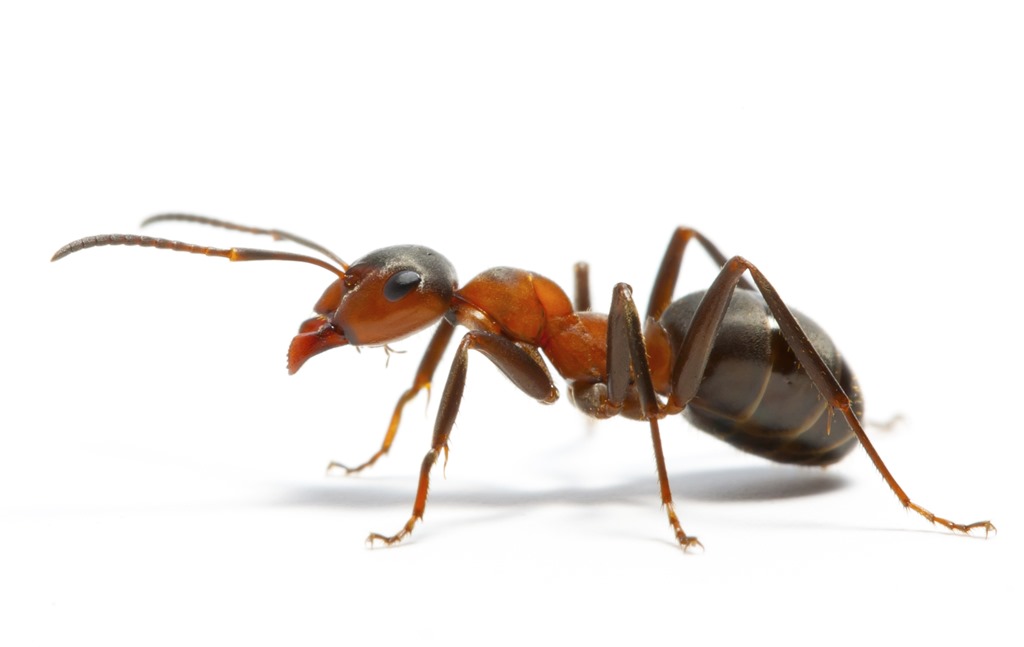
The ant came into the kitchen from under the house, via a loose space between the flooring and the water pipes.  The ant is a giant compared to the bacterium, a magnificent creature, with useful sense organs and a little teeny tiny brain.  To the ant, a creature who perceives the world mostly in two dimensions, my kitchen is a vast affair, but not impossibly large, probably no bigger than you and I walking through a large neighborhood.  The ant was prowling through the cabinet under my sink while the alien was examining the island counter of my kitchen, while I was in the bathroom sitting on the pot reading Civilization by Niall Ferguson, and the robot was discreetly observing the alien.

The alien never noticed the ant.  The robot recorded the ants activities with it’s powerful sensors.  The ant felt the vibrations of the alien moving around the room, but never sensed the robot.  The ant never even met the dying cockroach.

Imagine if life on Earth had never evolved past the ant.  What if the perception of this Earth, our Earth, had never been perceived by nothing greater than an ant’s brain?  We humans think reality is all about us, but it’s not.  We humans come and go, even in all of infinity.  And compared to everything else in infinity, in all of reality, humans would make up such a small percentage of each universe, that our total impact would be near zero.  Compared to all of reality, we are as close to be nothing as nothing.  Isn’t it hilarious that we each think we’re everything?

I often wonder what the world will be like when mankind becomes extinct and the most advanced being on the planet will be the dolphin or chimpanzee.  Will they remember us?

What the Roach Saw

dying-roach

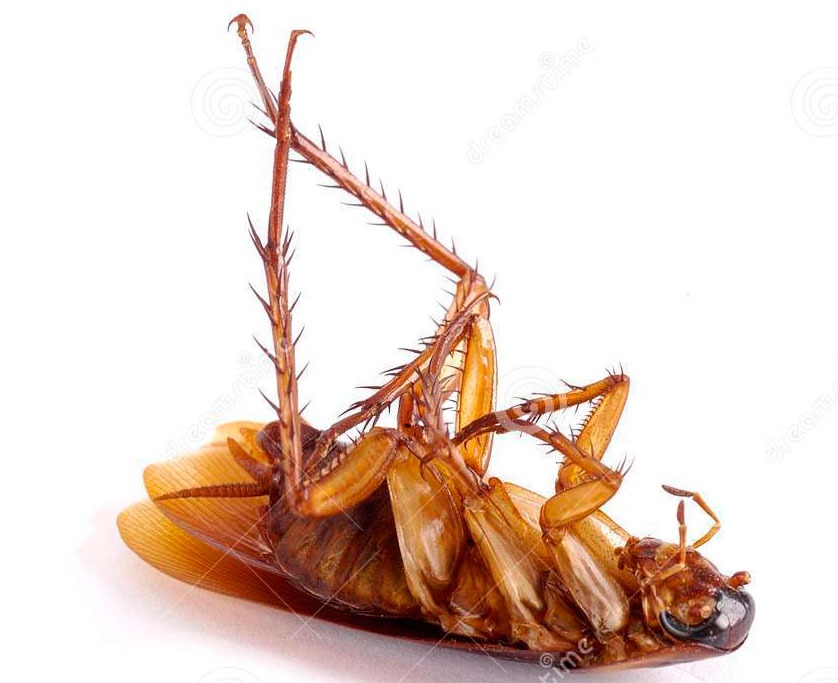
Unfortunately, the roach had entered my kitchen yesterday and had already partaken of the poison I had set out for roachkind.  It wasn’t quite dead.  It’s hairy legs occasionally stretched and retracted.  The roach didn’t know it was dying.  Nor did it notice when the alien reached down and carefully picked it up and put it in a small specimen container.  The roach would finally die in orbit around the Earth.  The roach had liked my kitchen in it’s own little way.  It was warm and not perfectly clean.  It had possibilities for a future colony.  Lucky for me, but sad for the roach, it never got to lay its eggs.  Those eggs were an interesting surprise to the ET from Gleise 687.  To the roach, my kitchen was a much smaller place than what the ant found, but to a roach, reality isn’t very big at all.  There is no infinite numbers in a roach’s brain.

The roach had perceived my presence several times during its short visit.  It had no understanding that I was a fellow creature living in a large reality, it only sensed me by vibration and changes in light patterns on its primitive receptors.  Evolution had programmed it to always run.  However, the roach had no program to warn it of the chemical appeal of the bait I had left for it.  Sorry little guy.

Mouse in the House

mouse

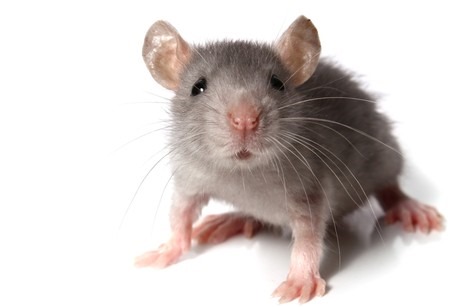
Last night, unnoticed by me, a little mouse crawled into the pantry from a passageway of tunnels in the wall.  My kitchen was a far richer place to little Mickey than what the ant and cockroach found.  My kitchen had wonderful possibilities, a very rich environment it.   It was aware of my every movement in the house and knew when to hide and when to scamper.  The kitchen was a three dimension maze of sights and smells, and when I left for the bathroom, the cute little mouse had come out of hiding and ran across the kitchen floor hoping to find something good to eat.  It froze when the alien picked the lock of my back door, momentary letting in a  chill breeze.  The mouse sensed the cat immediately and was below the house before the cat reached the kitchen.

The little mouse could not count.  It never knew that billions upon billions of bacteria lived inside it’s little body.  It was no Carl Sagan of mice.

The Kitty Kat

OrangeTabby

The scruffy old cat was looking for a warm spot when it ran into the house.  The being that let it in did not scare it like the human that lived there.  The cat was leery of all humans and lived out of doors on its own.  It was always drawn to the warmth that leaked out of houses, but never liked people, and especially hated dogs.  It always kept other animals at a distance, except the ones it wanted to eat.  As soon as the yellow cat walked into the kitchen it could smell the mouse.

In terms of certain kinds of numbers, cats and humans are very close.  We know of each other’s existence.  The difference is we can conceptually know much further than our senses can show us, whereas a cat is a creature that lives very well within it’s perceptual reach.  This makes some humans sad, and others happy.

Alien from Gliese 687 (cloaked)

kitchen 

The alien was hundreds of years old because of enhancements to her/his biology.  Aliens from Gliese 687 traveled between stars at one third of the speed of life.  They have been observing Earth for millions of years.  That’s the thing about intelligence, about the only thing to do in this universe is to observe how it works.  Observers seldom let themselves be observed because of ethical reasons.  It’s not much fun for a species to discover it’s not the crown of creation.  If humans suddenly realized it was the mouse or cockroach of this reality, or even the bacterium, it would be hard on our collective ego.

She/he had let in a yellow cat that was hanging around the back door.  The alien was completely silent, but then she/he was unaware of being followed by a robot from another universe.

The Robot from Another Universe (cloaked)

kitchen

The carefully cloaked robot had been following the alien for over two hundred of our years.   The robot found the alien the most interesting creature it has discovered in the last 787,623 years.  When you can live for billions of years across multiple universes finding something interesting to do with your time is a challenge.

The robot was like a machine, but calling it a machine would be insulting.  Eons ago it had been created by intelligent machines closer in shape to what we call machines.  There are limits to intelligence, consciousness, awareness and lifespan, and this robot was at the outer limit, at least for all the universes it was aware of, but then there was much it wasn’t aware of.  There’s always more.  Infinity is like that.

Me, James Wallace Harris

me

This version of me is a lot like most of the others like me.  I mostly know about this house, and what exists around it for a few miles.  Conceptually I know about a lot more, but most of my awareness is focused on a tiny piece of reality, in a tiny fragment of time.  Reality has existed for an infinite time before me, and will exist for an infinite time after me.  Reality is infinitely bigger than I can imagine.  I miss a lot, like the visit from the bacterium, ant, cockroach, mouse, cat, alien and robot.  That’s how it always is, we miss a lot.  We miss most of everything.  We miss an infinity of everything.  But that’s okay, because we have a finite mind that enjoys a finite time and place.  Small numbers do have their charm.

None of my visitors stayed long, and by the time I finished my after breakfast read and returned to clean up the kitchen they had gone.  I went off to my computer room to write this until lunch time.  Which is now.

JWH 12/11/13

Science Fiction: Nostalgic Past v. Dystopian Future

I am sixty-two years old and I want to write and publish my first science fiction story.  I started reading science fiction in 1962.  What science fiction was to me then, and what science fiction means to me today, are vastly different literary forms.  On Tuesday, SF Signal ran “How to Escape the Legacy of Science Fiction’s Pulp Roots” by Gareth L. Powell, which triggered a lively discussion in the comments section.  Many readers took it as an attack on classic science fiction, but I don’t think that was the point, but the real point is rather complicated because of various viewpoint perspectives.

  • For many people science fiction equals the Heinlein/Clarke/Asimov era
  • Some of these people are older fans that grew up with those stories and have tremendous nostalgia for them
  • Some of these people are younger fans that have discovered this classic era and love it
  • Some of these people are non-SF readers who rejected SF because of this era’s lack of literary quality
  • Some of these people are current SF fans who have no interest in past SF and feel it’s irreverent to contemporary SF
  • Then there are general readers that have read a few of the classic SF stories and now they narrowly define SF by these old classics
  • Then there are many readers, young and old, that are completely ignorant of SF, classic or modern, and the phrase science fiction equals movies and television shows, and book SF and its history are invisible to them

saturn

Powell, a science fiction writer, was talking to a book club that obviously wasn’t a SF book club and said of them:

I noticed this recently, when I spent an enjoyable evening being quizzed by members of a local book group about one of my novels, which they had been reading. They were a nice group of people but, when they spoke of the science fiction books they had tried previously, not one of them mentioned anything less than fifty years old! In their youths, they’d tried reading Asimov, Clarke and Heinlein, but had been put off by, as they saw it, a concentration on ideas at the expense of characterization or literary merit.

I’ve known lots of people like this in my lifetime.  Over there years in the general literary press, writers like John Updike and others, have expressed this view about science fiction.  Basically they say it’s poorly written kid’s stuff, and they are referring to the classic Heinlein/Clarke/Asimov era of SF.  SF fans have always reacted badly to this – especially the old fans who grew up reading and loving classic SF, and the younger fans who have rediscovered it.

Gareth L. Powell is a writer of new science fiction and feels, “As science fiction writers and fans, we are rightly proud of our genre’s origins and heritage. Yet sometimes, those same origins can be a millstone around our necks, dragging us down.” 

Powell goes on to admit an influence and admiration for classic science fiction but suggests that the literary past can be a burden to contemporary writers. 

That is my conflict too, but for other reasons that don’t pertain to literary style.  Powell, as a writer is trying to discover new territory to write his science fiction and says,

But, can we really blame them? Those early classics (and the million derivative works they inspired) helped establish and reinforce the popular perception of science fiction as a pulpy and poorly written backwater of literature. For modern non-SF audiences, they have little appeal. Readers are more sophisticated now. The only way we’ll escape the legacy of our pulp roots is to promote the innovation, literary merit, and relevance of the best modern genre writing.

Some fans will always cling to the ‘golden age’ works of the 1950s, 1960s and 1970s, and I can understand why. They provide a magic door back to the simple pleasures of a simpler world – a world before global warming, oil shortages, terrorism, and economic uncertainty; relics of a world where the future was easily understood, and (largely) American, middle class and white in outlook, origin and ethnicity.

My reading world of 1962 is so much different than my reading world at age 62.  I still read and love 1950s and 1960s science fiction, but I’m willing to admit that it was poorly written, but that’s not an essential complaint, at least by me, no, my problem with classic science fiction is it’s dated.  It’s wrong.  It’s about futures that will never be.  Classic science fiction futures have become my nostalgic past.  I read old SF to relish how I felt when I was young and the future was full of fantastic possibilities.

When science fiction writers like Robert Silverberg  admit that interstellar travel is probably impossible, and I’m starting to doubt that even interplanetary travel and colonization will happen, then it’s time we need to completely reevaluate science fiction.  But isn’t that what new SF writers do?  If I have any criticism of Gareth Powell, it’s not over his criticisms of classic science fiction, but rather, over how he’s reimagining science fiction.

If science fiction fans want the respect of the literary world at large they need to take their genre more seriously.  Doctor Who and Star Trek reboots are just recycling a nostalgic past.  So is the new space opera.  Science fiction has become horribly incestuous.

I’m 62 and want to write science fiction.  I’m inspired by the science fiction I discovered in 1962 – but I don’t want to live and write in a nostalgic past.  I don’t think Powell went far enough in suggesting that classic science fiction is a millstone around the neck of new science fiction writers.  Most science fiction, and I’m talking 98-99%, is recursive science fiction fantasies. 

Real science fiction is about writing about possible futures.  You can’t do that by writing about impossible pasts.  You can’t be the next H. G. Wells, Robert A. Heinlein, Arthur C. Clarke or Isaac Asimov by recycling their ideas about the future.  The thing about science fiction is it always gets the future wrong, but it’s fabulously right when it’s inventing new possible futures.

Right now dystopian science fiction is very popular, very exciting to young people.  Their instincts tell them the futures of science fiction pasts are nostalgic pap.  Sure, there’s a large segment of the young and the old that want to cling to the futures of classic science fiction, but they need to either accept their fantasies are fantasy and not true science fiction, or go read some science books.  On the other hand, we need new writers that can imagine some possible non-dystopian futures.  And do you know the definition of non-dystopian?  It’s utopian. 

That’s why so many readers love classic science fiction.  For all the scary aspects of alien invasions, collapsing civilizations, nuclear wars, there was a sense of utopian dreams in that fiction, of interplanetary and interstellar travel, life extension, new civilizations, immortality, intelligent machines, brain uploading, etc.  The reason why teens love dystopian fiction is not because they want to dwell on the horrible, but because the characters are free to fight for a new way of living, invent new societies, to rebel against authority, to live without parents and rules. 

Readers are attracted to the positive, even if the setting is a nightmare.

Classic science fiction is both inherently positive and now nostalgic.  But the futures it predicted aren’t going to happen.  Powell is right, the challenge of new science fiction writers is not to be burden by past science fiction.  Not just because it has the reputation for being poorly written, but because its now dated and wrong.  I know why so many people love classic science fiction and defend it so passionately.  I’m sure Powell knows too.  But lovers of classic science fiction shouldn’t be offended when we criticize classic science fiction.  The goal of this criticism is to write better science fiction.  It’s called evolution.

JWH 12/7/13