Very Late Bloomers–Finding New Successes After Sixty

This essay is written for my friend Linda, who told me last night a previous essay of mine depressed her for a whole week, and to my friend Janis, who recently told me my I had a morbid streak.  It’s true, I find inspiration where many find depression.  I dwell on subjects, sometimes in tedious detail, that others would rather not think about at all.  For instance, aging is a fascinating topic for me, but I’m discovering it’s a downer with many of my friends, especially my lady friends.  Now I feel challenged to write something uplifting about the last third of life.

pugs-00266

Part of the problem I face making our years before dying appealing is our generation has always protested growing up.  As children we dragged our feet about becoming teens because we loved the wild abandon of childhood and resisted discipline and work.  We were passionate teens who rebelled against those on the other side of the generation gap, claiming never trust anyone over thirty.  Hitting thirty was particularly hard for us.  Psychologically we felt we had lost our youth.  We tried so hard to pretend otherwise.  When our forties came we refashioned thirty into something good, and pretended that forty was the new thirty.  Then in our fifties we lied to ourselves again, desperately clinging to the belief we were just as good as we were in our forties.  Then boomer marketers tried to sell our sixties as the new forties.  It’s not.

Okay, I don’t think this is working.  I’m pretty sure I’m going to be depressing Linda and Janis again.  Where’s the positive spin?  The trouble is I don’t want to be peddling snake oil words about getting old.  To be true to myself I have to be realistic.  My point in the previous paragraph is to show that we’ve always gone kicking and screening into any new phase of life.  The other day a woman of forty asked me if she could pass for twenty-eight.  I immediately said, “No way.”  I don’t think she loves my honesty either. 

See my point, how can I sell the virtue of living in our sixties when no one wants to be that old?  Even though I’m being Pollyanna here and trying to make the new sixties as exciting as the old sixties, it’s a damn hard sell.  It’s like I’m living in the Twilight Zone, and everyone is telling me this isn’t planet Earth when I know for sure it is.

Yes, I’m willing to admit that being old is bumming out many of my close friend boomers, but I’m asking what choice do we have?  Linda said to the others last night that I was being existential.  That’s true, I am.  I’m also saying, suck it up and face the challenge.  But that doesn’t sell either.  How can I make a salable feature out of wrinkles, sagging folds and titanium hips?

The trouble is we judge ourselves by our bodies, and not by our souls.  We worry about how others see us – not by how we see ourselves.

It’s not about what are bodies are like when we get old, it’s about what we do with them.  It’s about pushing our limitations and finding success.  But what is success?  We can cheat and define success as being young, but that’s like wishing for extra wishes when a genie gives you only three.  Everyone has to define their own success.  We’re all completely different.  I am reminded of Gail Sheehy’s Sex and the Seasoned Women, a book about post-menopausal life.  She interviewed countless women who said that the first half of life was about their husband and children, but they wanted the second half of life to be about themselves.  Often this meant radically reinventing themselves, and many started careers and businesses late in life and succeeded.

Getting old is a time to start over and reinvent ourselves.  In past eras people mainly died before they got old.  Now we live an extra thirty years, years that in history, were never defined with a set purpose.  We are among the first generations to give the last third of life a purpose.  Sure we all wish we were young again, but unless a rejuvenation technique is invented like in a science fiction novel, we have to remain old.  Even if you get a facelift and look younger, your not.

My positive spin that I’m trying to sell is we can find all kinds of successes if we try, even successes never imagined before.  We’ll have some very late bloomers, and maybe even some black swan new flowers.

Many successful people continue their successful lives well past sixty and on into old age.  That’s not news.  What I want to know is how many people who start on a new path after sixty find success?  Studying the 2010 census tables shows 50 million people who are older than 62, and over 82 million older than 45.  The last third of life is a new frontier, with two thirds of all people who have ever lived past sixty-five alive today.  And many of those people wanting to do more with their golden years than just sit and wait to die.  They want to reinvent themselves.  They want to do all the things they couldn’t do when they didn’t have the time. 

For most people who love their jobs, staying at work as long as they can is probably the best option.  Fulfilling work is the basis for well being.  But if you have decided to retire, or been forced to retire, then the final third of life offers the tremendous potential of time.  What can we make with all this time?  Most retirees, after a long hard working life, look forward to leisure time, hoping to have a quiet relaxing life with family and friends, pursuing their hobbies and traveling. 

But what if you wanted to be more ambitious?  What if you wanted to start a business, get a PhD, invent something new, program an app or write a novel?  What are the odds for your success?  Well, I got on Google to find out, and here’s what I learned.

Travel

Travel seems to be the dream ambition of most retired people.  I must assume most people secretly wish they had the time to roam the Earth.  Luckily, becoming a successful world traveler isn’t age dependent.  If your dream is to become a NFL quarterback after 60 the odds are zero in your favor.  That’s just how the cookie crumbles for some dreams – they are age related.  However, if you’re dream is to fly, sail, drive or even walk around the world, it’s still possible after you retire.  Recently the New York Times ran “Increasingly, Retirees Dump Their Possessions and Hit the Road,” about seniors who have given up the comforts of a home to become international gypsies.  They report that between 1993 and 2012 the percentage of traveling retirees went from 9.7 to 13 percent, many of which finance their travels on a social security budget, with 360,000 Americans receiving their SS checks at overseas addresses.

These wandering oldsters use everything from CouchSurfing.org, VRBOAirBnB,  to HomeAway.com to find places to live.  Many Americans choose to live abroad and find support on the net like GringoTree.com for living in Ecuador.

This is a huge topic, and common one on the internet, like these at Forbes, Wall Street Journal, RetirementCafe, Huffington Post, Home Free Adventures, New York Times, and many more.  Just start looking.

Travel is an ambition common associated with older folk, so what’s a little more ambitious?

Starting a New Business

Most new businesses fail.  And it helps to start a new business that’s based on years of personal experience.  So it’s hard to judge if late blooming entrepreneurship is age related.  Starting a new business after sixty that’s totally unrelated to your life’s experience is going to be hard, but not impossible.  Most people think of retirement as leaving work, but many people want to leave a job and work for themselves as a creative endeavor.  Sometimes this endeavor is based on work experience, but other times it’s doing something completely new.

I worked with computers, but I’ve often daydreamed of having a bookstore.  I love shopping for books, and now that selling books on the internet is a big business, I realize I could make extra money by hunting down rarer books and selling them online.  ABE Books and Amazon allows anyone to start a virtual bookstore.  I think many people have similar dreams.  Other people are far more ambitious.  Maybe they’ve always loved cooking and want to open a restaurants, or they loved animals and thought running a doggy daycare would be great.  The Guardian wrote about people like this with “How to change your life at 60.”

Searching Google for late bloomer entrepreneurs often comes up with the same old suspects, like Colonel Sanders, who started Kentucky Fried Chicken at 65, although he had previous business experience along those lines.  Most famous businessmen started early, but if you search hard you can find stories of smaller big successes, like Antia Crook who invented the Pouchee, and turned it into a multimillion dollar enterprise.

Yahoo’s Small Business Advisor profiled several “Older Entrepreneurs.”  Colonel Sanders again shows up.  Obviously, he’s the poster child of late blooming business starters.  I found many journalists and bloggers who have written about the idea I’m working on here, and often come up with the same people.  So I went looking for demographics.  I found “Demographic Characteristics of Business Owners.”  It doesn’t report and people starting a business after 60, but it does say that 50.9% of all small business are owned by people 50-88, with a 4.9% growth since 2007.  In other words, over half of small business owners are old, and get older.  It also implies that running a business isn’t impacted by aging.

According to Forbes, 65% of new jobs have been created by small businesses since 1995.  543,000 new businesses get started each year, and 52% of them are home based, which seems to imply that working for oneself is a popular goal.  Intuit offers “Intuit Future of Small Business Report” that does suggest that Baby Boomers will be a major factor in new small business creation in the coming decades.

Famous tech started wizards might be young Turks, but they’re not the norm.

I’m satisfied that we’re never too old to start a business.  But what about something more creative.

Writing

My dreams has always been to write a science fiction novel.  While I worked I rationalized I didn’t have the time.  That was bullshit.  Now that I have all my time free, I’ll have to face the fact this was just a pipedream, or go to work.

There are some careers that if you don’t start early, you don’t start at all.  Of course, child prodigy is the obvious one.  But being a chess champion, musical virtuoso, or math genius requires making your mark when young.  Other creative endeavors like writing and painting are often taken up by people late in life.  For example, Frank McCourt, who wrote Angela’s Ashes, didn’t start writing until 65, yet won a Pulitzer Prize.  Little House on the Prairie author Laura Ingalls Wilder didn’t publish her first book until 65.

Yet, to be honest, coming up with hordes of examples is hard.  Most people who are successful at writing start out as natural born storytellers, yet there are enough examples that suggest that it’s never too late to start writing.

Summing Up

For this essay I’m satisfied I’ve come up with enough examples to be inspirational.  However, if you prowl the web there’s a whole world out there devoted to exciting 55 Plus living.  Millions have been doing it for decades.  The idea of retiring is just new to me and my friends, especially the ones who haven’t retired.  And it’s especially scary for those people who haven’t financially planned for retirement, or spent much time thinking about it.  On the net when I make friends with older people, most tell me they are having the time of their lives.  Maybe they are lying to me so I won’t be scared to go where they have gone, or just maybe, they are telling me the truth.

JWH – 9/7/14 – Happy Birthday Charisse 

Tips for Managing Email

Back in May I wrote “Does An Organized Desk Mean An Organized Mind?”  It summarizes the advice Jordana Jaffer gives about organized people that can be quickly summed up as:

  1. Plan the day the night before
  2. Maintain a to-do list
  3. Master email
  4. Keep desks clean
  5. Have a morning and evening routine
  6. Spend 10 minutes cleaning up at end of day
  7. Keep clean and dirty clothes organized
  8. Never leave the dishes
  9. Always eat lunch
  10. Process your mail daily

At the time I had #9 down pat.  Since then I’ve mastered #7 and #8, and mostly mastered #10.  My current goal is to become completely disciplined at #3 now that I’ve got all four of my email accounts cleaned out.  I already feel the tide is turning.  Email, and two messy desks are my Waterloo.  Because I’m a blogger and a member of three online book clubs, I process a lot of email each day.  Learning to wrestle email to the ground and pin it, has taken some time.  I feel a real sense of accomplishment to get all my accounts cleaned out, filed into folders, with an empty Inbox in each account.

email

Many people keep thinking email is going away, to be replaced by new  social media systems.  I think they’re wrong.  Email is just too basic, too obvious, too useful to ever be abandoned.  On the other hand, email can be a pain-in-the-ass-burden to manage.  Every time I help a friend I often see thousands of emails in their inbox.  Most people just won’t take the time to tame their Inbox.  This essay offers some tips I’ve learned while taming mine.

There’s two workflows with controlling email.  First, the amount of time you spend reading and writing emailing.  Second, the number of emails you process and store.  Email is about efficient communication.  Email has replaced letter writing, but most folks get more impersonal or work email than personal correspondence.  However, a lot of email is now internet friends, people we’ve never met.  Email connects us in ways we never imagined. 

Most people have work and home email accounts, so they have a lot of email to manage.  Some people even have multiple personal email accounts.  I’m retired and have four email accounts.  However, two are minimal because I want to use Google and Yahoo services and get their email accounts by default.  I use an Outlook 365 account for my main email, and an Outlook.com only for my book club activities.

Goals

  • Get less email
  • Process fewer emails
  • Send less time writing and replying to emails
  • Have an empty Inbox at the end of the day

How Often To Check Your Email?

Time management gurus recommend only checking your email once or twice a day, and then develop techniques to quickly process it.  Some jobs require constant attention to email because of workflow.  Other people socialize by email, so they check it frequently.  If you think you’re spending too much time working on email, then you need to work on streamlining your email work habits.  The key is to be your own efficiency expert and observe your habits for ways to save time.

I check my email the first thing in the morning, and the last thing at night.  Sometimes when I wake up in the middle of the night, I check it on the tablet beside my bed.  I’m in and out of my email all day long because I work at the computer.  I’m pretty compulsive.  I’m also a net citizen that likes to live in the hive.  If you’re the kind of person that’s ambitious and wants to get things accomplished, learn to have minimal contact with your email.  I dream of writing a novel – and my goal of becoming organized is to make routine time for writing.

Most people have no plan, they just look at their new messages, respond to the absolute essential and hope to get back to the rest.  They let their inbox grow and grow.  At minimum, to manage email effectively, you should keep your inbox cleaned out daily, and learn how to file email you want to save or process later in folders.  You can still horde email, and delay processing and responding, but things will be tidy.

Delete As Soon As You Can

Delete the obvious as fast as possible by reading the least possible in the preview.  Delete everything you think you’ll read later but really won’t.  That’s tricky, but you’ll learn.  Before I retired I had three folders (Do Soon, Do Work, Do Home) that I’d quickly shift emails into from the Inbox.  Now I only need Do Soon.  The goal is always keep the Inbox empty.  If you’re a manager defer emails to others.

Use a preview pane so you can see a portion of the email while looking at the Inbox listing.  This  allows you to work faster.

When deleting make sure the email doesn’t come from a list, and unsubscribe instead of always deleting.  Everything you can unsubscribe to is an endless number of deletions you don’t have to do in the future.

Make decisions now if you can, instead of putting things off later.  Reply quickly and succinctly, and then delete the message.  Or if saving is required, drag the message to an appropriate folder.  Manage your email life in subject folders.

If you have a full inbox, sort by sender.  That shows the obvious emails to delete first, and reveals the mailing lists.

Learn to use Rules so messages are automatically moved into folders and don’t burden your Inbox.  This is especially good for newsletters and mailing lists you actually love to get.  I have a folder for News and Sales.  I can ignore both if needed.

Junk Mail and Ads

All too often your email box is where solicitors now try to grab your attention.  Door-to-door sales, phone solicitation and other salesmanship avenues have dried up.  So our email boxes are the goal for junk marketing.  Even our email providers squeeze in as many ads as possible on the web page where we have our online email.  Yahoo is worse about this, Outlook.com in the middle, Gmail the most subtle, and Office365 the cleanest.

Use an email client if possible.  There used to be dozens of email clients.  With web clients getting better and better, people prefer their simplicity of web based clients, but local clients like Outlook and Thunderbird offer more features than a web client, and they don’t have ads.

Master you junk mail filter.

Newsletters and Lists

Avoid like the plague signing up for newsletters and lists.  Quite often companies and organizations automatically sign you up.  Unsubscribe if you don’t want their content.  If you join any group, or create any new business account, make sure they don’t send their newsletters by unchecking the appropriate check boxes.  Well, unless you really, really, really want them.  Because they are going to infest your inbox like crazy.

Learn to use the unsubscribe feature found on most mass emails.  Legit places always provide a way to opt-out.  You do have to worry about scams, but it’s a human decision you’ll have to make.  If you don’t trust the email, add that one to your junk mail filter.

Everyone has legitimate lists they want to belong to, but make absolutely sure they are worth the time they cause you.  My two favorite lists are The Kindle Daily Deal and The Audible Daily Deal.  I hate missing out on a bargain priced book that I really want.  I could unsubscribe and just visit the two websites daily, but that actually takes more time than getting the emails.

Generate Less Email

If you send less email you’ll get less email.  Don’t initiate emails unless you need a reply.  Don’t reply just to say thanks.  Use other forms of communicate like Twitter, Facebook, IM, texting, phone and F2F.

If you need answers consider sending questions as bullets so it’s obvious you are asking several things so people will address each point.

If you receive an email that other people are waiting for acknowledgement and answers, send the reply as soon as possible, and if you can’t reply soon, be polite and send a note saying you got the email and will reply at a set time.  File message in the To Do Soon folder, or track it with flag or status system.

Use Email Client with Calendar and Task/To-Do List

If a message is calendar related, convert the email to a calendar entry, and even add it to your Task/To-Do list.  Develop a synergy between email, calendar, tasks and contacts.

If you already live by your calendar and/or To-Do list, get the important content moved to those systems fast.  That’s why Outlook is so great.  Since Outlook works with PC/Mac/Web/iOS/Android it’s all in one location for those who have access to an Exchange server.  And Office365 or Outlook.com is very well integrated too.  Google has similar features for Gmail.

Cancel Social Media Notifications

For some reason social media sites, which are alternatives to emails, want to constantly notify you that you’ve got messages in their systems, and to come see them.  This is actually why email won’t be replaced.  It’s extremely easy to miss messages and notifications in social media sites.  And that’s why social media sites send you emails, because emails are a more dependable form of notification.

But if you’re pretty faithful about using your social media sites, or you don’t give a damn, just turn off the notifications that are sent as reminders to your email system.

Use A Second Email Service For Junk Email

Get a second email service and when you’re asked for an email address that you know means getting advertising, give out that address.  Or for anything you want to subscribe to but don’t feel you have to read.  Then when that inbox fills up, do a select all and delete without having to examine each email separately.  

Sometimes Use Your Junk Mail Filter on Friends and Family

Have a friend or relative that constantly sends you forwarded messages representing their political view or “hilarious” jokes and videos.  Tag them with the junk filter.  Of course, you have to assume they will never write you a nice email asking you out to dinner.

Encourage Friends to Use Other Methods of Communication

If you don’t like reading, especially verbose emails, encourage your friends to tweet instead so what they say stays brief, or to befriend you on Facebook.  Or tell them texting is best.  Whatever you actually prefer.

Use Your Smartphone For Clearing Emails

For many kinds of emails, using your smartphone can be a faster way to preview and delete messages.  Or if you stuck somewhere and have some minutes to kill, like being in a line or waiting room, delete messages.

JWH – 9/4/14

Wide Sargasso Sea–Sex and Madness

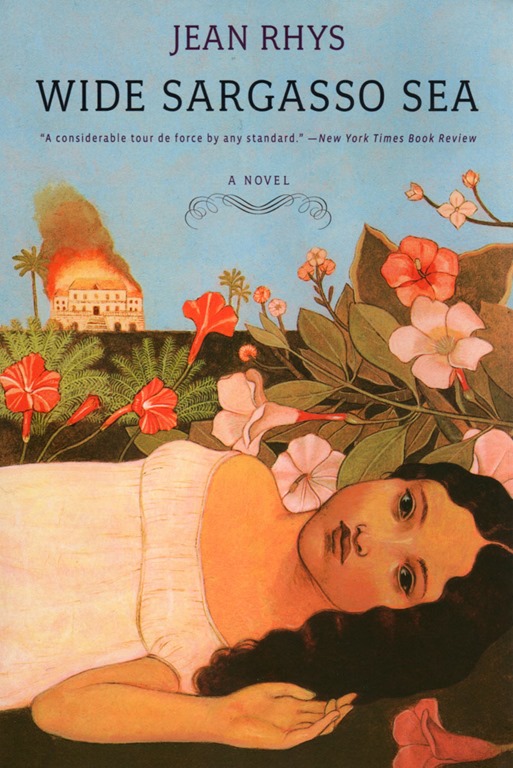
Jean Rhys explored the depths of the feminine mind living in a masculine dominated society.  Rhys wrote many stories and novels before becoming famous late in life with Wide Sargasso Sea, a literary prequel to  Jane Eyre by Charlotte BrontëWide Sargasso Sea (1966) can be read without any knowledge of Jane Eyre (1847), and is a completely stand-alone novel.  Jean Rhys gives a 20th century explanation to a mystery in a 19th century novel, and I can’t help believe that is to a certain degree psychologically, and maybe sexually, autobiographical.  Both Rhys and her character started out life in the West Indies and ended up living in England, both dying there.

jean rhys

Although Jane Eyre and Wide Sargasso Sea are novels, I wonder if we can read the minds of their authors in their stories.  Both books closely follow their characters, with Brontë anticipating stream-of-conscious and Rhys using multiple first person stream-of-conscious.  Even though Rhys makes Wide Sargasso Sea completely self-contained as a story, it does cleverly use Bertha Antoinetta Mason from Jane Eyre as a starting point for her story.  Both authors use their story to express views on the role of women in society, and to show how they are oppressed on many levels.  In a way, Rhys attacks Brontë for copping out, because she uses the tragedy of Bertha Antoinetta Mason/Antoinette Cosway to undermine Brontë’s happy ending.

Wide-Sargasso-Sea

A good part of Wide Sargasso Sea is it’s setting, and the history of life in the West Indies just after slavery was abolished.  First we follow Antoinette as a child so we can see her mother, a woman who has lost her husband, and must care for two children with no income.  We see her descend into insanity.  Antoinette grows up with black servants whose charity saves these poor whites, who the ex-slaves refer to as white cockroaches.  The black people of the story vary greatly in personality, ethnicity and ethicality.   The novel explores many themes, the prominent one deals with sex and madness, but it also deals with the confrontation of the races in the 1830s West Indies, and the lush tropical life there.  Nature is oppressive in both weather and the emotional moods it inspires in the people.  All the characters suffer from a languid disposition because of the atmosphere and biosphere.  In this steamy jungle locale there is a lot of sex, repression and sexual oppression going on.

I have not read Rhys other novels and stories, but from the introduction to my edition of Wide Sargasso Sea, she had lot of affairs that ended badly, and often lived at the bottom of society depended on the generosity of men that weren’t always good to her.  That’s why I felt her novel is autobiographical to a degree.  Rhys wasn’t locked in a room for years, but she did live in isolated exile for years.

I also feel Brontë used Jane Eyre to express her gender repression and desires.  In both books, women lives are contrasted with those of slaves and servants.  And I can’t wonder if Rhys felt contempt for Brontë when she gave Jane a happy ending with Edward Rochester.  Rochester is unnamed in Wide Sargasso Sea, but he’s shown with varying levels of sympathy, but ultimately he’s seen as cruel and self-serving.  He’s a tragic hero in Jane Eyre, but a tragic villain in Wide Sargasso Sea.

Another theme in Wide Sargasso Sea is Voodoo.  Christophine is an old black woman that cares for Antoinette her whole life before she goes to England.  She sides with the whites, and the blacks fear her, because they believe she has special powers.  Christophine always tells people they are foolish to think such thoughts, but we are given one powerful scene to believe otherwise.  Sex is always at the periphery of this novel, but it comes to the forefront at a hallucinatory peak in the story, where passion, madness, and maybe Voodoo all come together.

The Rochester character often tells the island people, both white and black that they don’t know how to hide their feelings, but he’s often surprised when they apparently can read his mind or predict his future.  Even the black children boldly state the fate of the white people with sharp obviousness that the Englishman finds unnerving.  At first this man is patronizing to the black people, defending them to his wife, but slowly he realizes they know more than he does, at least about their world, where he is an invader.

I wish I knew how much Rhys remembered of her island upbringing when she wrote this book.  Her first sixteen years were lived in the West Indies before she moved to England and Europe.  How much research did she do about the island life for the novel?  And most important of all, are there any novels written by people living in the islands in the 1830s?  How can we know if this 1966 novel represents a true picture of the West Indies in the 1830s?

Wide Sargasso Sea is on many Best Books lists.


JWH – 8/29/14

If You Are Old, What Would You Tell The Young?

“The best way to predict the future is to invent it.” – Alan Kay

“It’s easier to invent the future than to predict it.” – rephrased by Jeff Bezos

“Study new inventions to anticipate the future.” – me

Teens aren’t open to advice from people other than their peers, but if I could influence them of anything, it would be to read nonfiction books about emerging trends that aren’t required reading in school, and think up their own advice.  We burden the young by making them catch-up on all the knowledge of the past, but I think their education needs to be more present and future oriented.  These are books young people could read that might give them an edge.  For example, I wished I had read and understood The Outliers by Malcolm Gladwell when I was in elementary school – although that wish would require a time machine, but if I had only known about early discipline, practice and mentors I would have had more success in life.

the outliers   

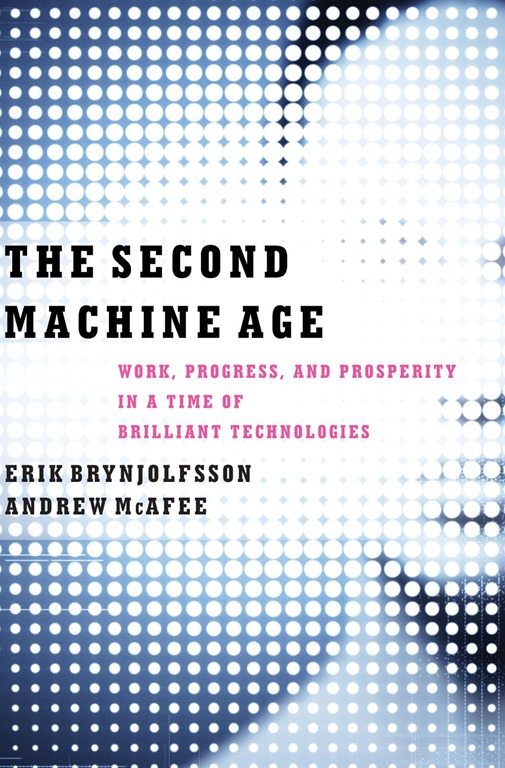
No one can predict the future, but many try.  According to Erik Brynjolfsson and Andrew McAfee in their book The Second Machine Age we are on the cusp of new age of economic activity, but they are warning that society is going to radically change.  Like I said, people can’t predict the future, but we can study trends, both past and present, and generate something akin to a weather forecast.   What Brynjolfsson and McAfee are saying is the industrial revolution kick-started the biggest change in human history by machines giving us vastly multiplied muscle power.  They feel a second machine age is emerging because humans now have vastly multiplied brain power.

the second machine age

Unfortunately this will put a lot of humans out of work.  The industrial age transformed human society, and the second machine age will transform the world again, with even greater impact than the first machine age.  What Brynjolfsson and McAfee write about is how to prepare for that change.  This is going to be painful.  Like global warming and wealth inequality, most of what economists and futurists are saying about the future is bleak.  I heard the same bleak forecasts over fifty years ago when I was growing up when I read The Population Bomb, The Limits of Growth and Future Shock.  We can look back on those books and see the future became far brighter than what those writers imagined – yet they weren’t wrong either.

People don’t usually like getting advice, especially teenagers, but if you’re going to spend the first third of your life on education, and tens of thousands of dollars on college, it might be wise to consider some future trends.  More than ever “what will I be when I grow up” could be taking a very long trip down a dead-end path.  Evidently, there is no job that can’t be automated.

Humans can’t compete with machines, but they can coexist with them.  We could choose not to deploy machines, but that seldom happens.  If there’s money to be made, we never interfere with progress.  We will need to rethink capitalism and democracy.  People might nitpick Capital in the Twenty-First Century, but overall, Piketty’s data shows obvious trends.  The implications of this book go way beyond brilliance.  We can no longer support an economic and political system that rewards few winners and expects billions of losers to take care of themselves.

Capital_in_the_Twenty-First_Century_(front_cover)

“Plastics” -  The Graduate (1967)

At one point in the film The Graduate, an old man advises the young college graduate, Dustin Hoffman, about the future with one word:  “Plastics.”  If I was to whisper one word to young people today it would be “Statistics.”  I was only so-so at math, and that held me back from my ambitions, and the branch of mathematics that I think is the most useful today for understanding the world, science, technology and change is statistics.  Science really is a statistical analysis of reality.  Understanding the rapidly unfolding events here on Earth requires a second language to comprehend, and that is statistics.

the black swan

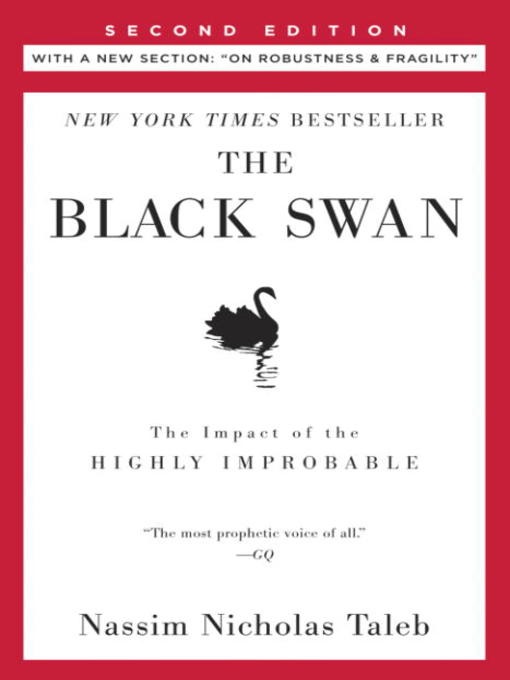
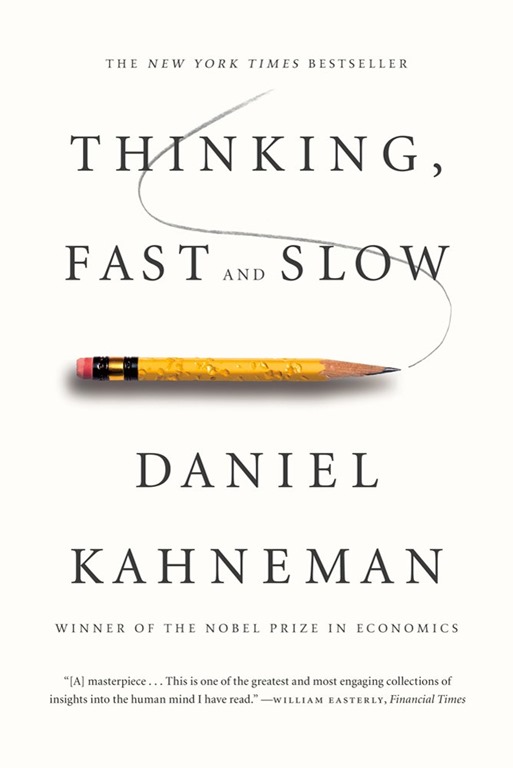
In The Black Swan:  The Impact of the Highly Improbable the 2007 book by Nassim Nicholas Taleb explains partially why I whisper “statistics.”  Taleb explains how we constantly fool ourselves about reality by being hard-wired to create “the narrative fallacy” which is the system that we bullshit ourselves into believing all kinds of crap about reality, and constantly deceive ourselves about the future.  What current science is teaching us is we’re not who we think we are.  That our conscious awareness is only a small part of the whole of our mind, which leads me to the next book to read, Thinking Fast and Slow by Daniel Kahneman.  Kahneman is a professor of psychology who won a Nobel Prize in Economics for this work.  That little fact should tell you a lot right there.

Thinking fast and slow

These books, The Outliers, The Second Machine Age, Capital in the Twenty-First Century, The Black Swan and Thinking Fast and Slow are just some of the books I’d recommend that savvy young people to read if they really wanted to prepare themselves for the future.  I’ve listed them here in the order of how hard they are to read and understand.

JWH – 8/29/14

What To Read Before I Die

Most folks think growing up is the time to learn, and that the rest of life is for coasting on that education.  But as you age, you realize that every phase of life has its required coursework.  At sixty-two I’ve already forgotten most of what I learned in my K-12 years, and now that I’m retired, I’m quickly forgetting all the things I learned during my work years.  The knowledge I acquired in the first third of life prepared me for the second third, and what I learned in the second third, got me ready for the final third, but now that I’m living in the final third of life, I feel like I need to study hard for a next phase.  If I was a religious man, that would be a spiritual quest, but I’m not.  I’m studying for nonexistence, and that is changing my reading habits.

book tombstone

Most people talk about having a bucket list of activities they want to accomplish before leaving this planet, but I don’t think along those lines.  As a lifelong bookworm, all I want to do is read more books before I die.  I find reading in the final third of life has affected what books I want to read.  Strangely, I want read more nonfiction, as if facts are more comforting to dying, like fantasy was more inspiring to growing.  It appears that leaving reality makes you want to take more notice of what you’re leaving.  Most of us grow up hoping our childhood ambitions will come true as adults, but then settle for something more realistic.  Instead of becoming an astronaut I became a database programmer, and even then I continued to read science fiction all during my adult life.  Now that it’s pretty obvious that I’m never going to travel in space, Earth has become far more fascinating.

Even when I read novels now, I admire the details I can connect to reality.  This morning I started listening to Breakfast at Tiffany’s by Truman Capote, and his prose dazzles me with details, fictional facts that feel so authenticate, I’m sure Truman was acting as a recorder of reality.  Before that, I read Wide Sargasso Sea by Jean Rhys, a literary fantasy based on 19th century life in the Caribbean, long before Rhys was born, yet it felt real.  Rhys was born on Dominica, in 1890, and lived there for her first 16 years.  My hope is knowledge Rhys gained growing up in the West Indies distilled into her 1966 novel.  Before that was Factory Man by Beth Macy, a nonfiction book that was jam-packed with juicy realistic details, but told in a narrative form that was as exciting as any novel.

I crave details about reality, but I can’t just read Wikipedia all day long, even though that is very tempting.  And in the coming years, as I get closer to winking out of reality, it might come to that.   I still crave fiction, but it has to have a tight connection to reality.  Last night I watched The Crusades, an old Cecil B. DeMille epic, that made me hunger to read a nonfiction book on the subject the whole time I was watching.  At one time, all that mattered for a novel or movie to enchant me, was a great story and characters.  Now,  my critical and entertainment reaction needs to know how close the story, setting and characters models reality.  This age related transformation is changing my love of science fiction, making me crave more realistic science fiction, and that has philosophical implications too.  Driving into this world the future seemed full of fantastic possibilities, and now that I’m on the road leading out of town, the future seems far more restricted than the sense of wonder probabilities of youth.

And that’s another thing about how age is changing my reading habits.  In the 20th century I read mostly about the 21st century and beyond, but now that I’m living in the 21st century I mostly read about the 19th century and earlier.   I wonder if that’s true of other aging bookworms who grew up reading science fiction?

JWH – 8/27/14