
by James Wallace Harris, Tuesday, December 19, 2017
Christmas came early this year for me. I’ve been wishing since 2002 for an audiobook edition of The Science Fiction Hall of Fame Volume One and my wish was finally granted sometime after midnight this morning. (For non-Audible.com members there’s a CD version but it’s $45.)
 The Science Fiction Hall of Fame Volume One is probably the most loved science fiction anthology of all time and comes in #1 at Goodreads list of Best Science Fiction Anthologies. The Science Fiction Writers of America (SFWA) voted for its contents when they formed in 1965 to recognize the best science fiction stories published before the Nebula Awards were created. The anthology was edited by Robert Silverberg and first published in 1970.
Just after five in the morning, I began the download. Sitting in the dark with my headphones I sampled the stories. There are 26, narrated by an array of professional readers that bring these tales vividly alive to my ears. I’ve long recognized that my reading skills are poor compared to the hired guns of the audiobook world. Since I joined Audible.com in 2002 I’ve been searching out all the science fiction I loved in my youth to reread by listening. When I hear these old favorite stories it’s like when Dorothy opened that door in The Wizard of Oz and the black and white movie switched to Technicolor. I get so much more from hearing than when I read with my eyes.
The pulp fiction punch came through right from the first with “The Martian Odyssey” by Stanley G. Weinbaum. Science fiction is often attacked as poorly written, yet while I jumped from story to story sampling how each sounded, I felt the writing was lovely and vivid. Each story began with distinctive details that envisioned a uniquely imagined concept. Sure, this is pulp fiction, but it’s pulp fiction at its classic best. These old stories showcase how science fiction writers back then felt compelled to invent a novel idea to fictionalize. I often read stories today that improvise off these original themes.
These stories all get their own entries in Wikipedia, which attests to their longevity. I’m borrowing this table from Wikipedia in case you want to read about them and their authors.
I consider”A Rose for Ecclesiastes” by Roger Zelazny the epitome of pulp science fiction style, and the story I was most anxious to hear. It came out in 1963 just before the Mariner IV mission to Mars forever ruined the planet for pulp fiction adventure. After NASA science fiction had to grow up and accept a new reality. Mars and Venus could no longer be home to ancient races, and “A Rose for Ecclesiastes” is a wistful elegy of an era.
It’s quite elegant that The Science Fiction Hall of Fame Volume One begins with “A Martian Odyssey” and ends with “A Rose for Ecclesiastes” using the two best short stories about Mars as bookends for the anthology. These stories are the sense of wonder of my childhood. I can’t recommend this anthology highly enough. It captures the essence of the science fiction that baby boomer SF fans discovered in the 1960s and defined the genre for us.
I thought I’d close out this essay with cover images that first featured these stories. What’s funny is many of them didn’t make the cover art — which is a pity. Makes me wonder if the editors didn’t recognize their greatness at that time, or if they thought other stories were superior. I’m also going to include the link to the story’s Internet Science Fiction Database (ISFDb) entry so you can see how often it’s been anthologized over the years.
My many thanks to the gods of the audiobook world. You have given me many hours of happiness.
A Martian Odyssey – by Stanley G. Weinbaum

Twilight – by John W. Campbell
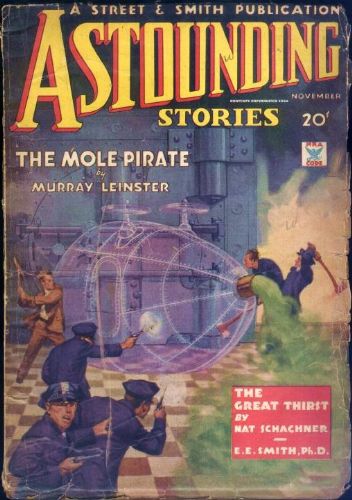
Helen O’Loy by Lester del Rey

The Roads Must Roll by Robert A. Heinlein

Microcosmic God by Theodore Sturgeon

Nightfall by Isaac Asimov

The Weapon Shop by A. E. van Vogt

Mimsy Were the Borogoves by Lewis Padgett (Henry Kuttner and C. L. Moore)

Huddling Place by Clifford D. Simak

Arena by Fredric Brown

First Contact by Murray Leinster

That Only a Mother by Judith Merril
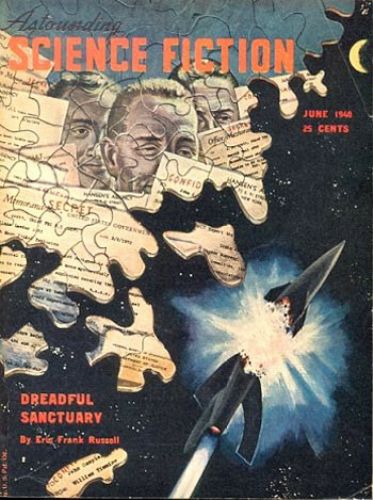
Scanners Live in Vain by Cordwainer Smith

Mars Is Heaven! by Ray Bradbury

The Little Black Bag by C. M. Kornbluth
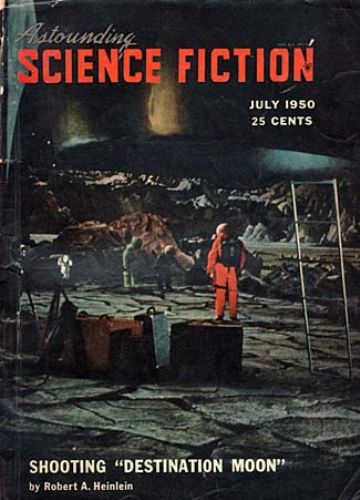
Born of Man and Woman by Richard Matheson
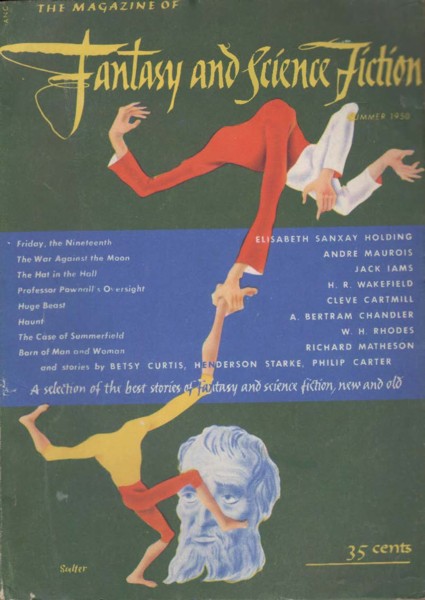
Coming Attraction by Fritz Leiber

The Quest for Saint Aquin by Anthony Boucher

Surface Tension by James Blish

The Nine Billion Names of God by Arthur C. Clarke

It’s a Good Life by Jerome Bixby
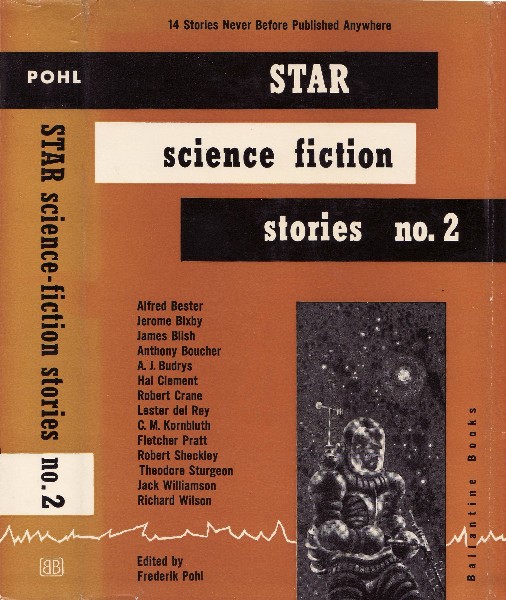
The Cold Equations by Tom Godwin

Fondly Fahrenheit by Alfred Bester

The Country of the Kind by Damon Knight

Flowers for Algernon by Daniel Keyes

A Rose for Ecclesiastes by Roger Zelazny

JWH
 Fiction has been around for thousands of years and most plots are retreads. Quite often scholars of fiction try to consolidate plots into a
  Yet, I wonder, even worry, that science fiction has run out of good ideas. I don’t mean good ideas for plots, which are endless, but good ideas like space travel, time travel, dimensional travel, intelligent life besides us, creating intelligent life, creating artificial life, digital realities, etc. I’m currently reading




 Auxiliary Memory