2017 Year in Reading

by James Wallace Harris, Saturday, December 30, 2017

This is my year of reading less. I only read 36 books in 2017, down from 55 last year. Two factors came into play causing me to read less. One is related to aging, and that was totally unexpected. I just can’t read for hours and hours like I used to when I was young. Partly, I have other things I want to do more, and partly because of a diminished ability to concentrate. I also read less because I chose to read less in 2017. I made the conscious decision to stop reading any book where I lost interest. I use to power through so I could add the title to my books read list. (See “Year in Reading” for my past summaries.)

I decided it’s silly to judge my reading by quantity. For decades I’ve loved increasing my yearly books read count like some folks love to brag about how many miles per gallon their car gets. At one point this year I got within 15 pages of finishing a 300-page book when I decided to quit reading. I realized I was pushing myself through the book just so I could add it to the year’s books read count. I returned it to the library.

Book of the Year 2017

Fantasyland by Kurt Andersen

I read some impressive books this year, both fiction and nonfiction, but Fantasyland: How America Went Haywire: A 500-Year History by Kurt Andersen stood out. Of course, 2017 was the year of Donald Trump and Fantasyland did more than anything I read to explain that insanity. Just that fact pushed Andersen’s book to the top of my list. White Trash: The 400-Year Untold History of Class in America by Nancy Isenberg also worked well to explain the nastiness of 2017.

Two other nonfiction books stood out as powerful reads, An American Sickness: How Healthcare Became Big Business and How You Can Take It Back by Elisabeth Rosenthal and In the Darkroom by Susan Faludi. I couldn’t get any of my friends interested in a book about healthcare costs, but it was fascinating. The Faludi book was a memoir about her learning her estranged father had become a woman and had moved to Budapest. On the surface, the book appears to be about transgenderism, but I found it fascinating because it was about identity in general. It also compared right-wing politics in Hungary to alt-right America, and that was very revealing for 2017.

Best Novel Read This Year

Love-in-the-Time-of-Cholera

I read Love in the Time of Cholera for a book club. I’ve owned it for years. It was one of those books I’ve always thought I should read. I’m still not sure what to make of it. It’s large and complex and I will probably need to read it a couple more times before I start to understand Gabriel García Márquez intent for his story.

My 19th-century novel this year was Looking Backward by Edward Bellamy. Even though this story was mostly philosophizing about how to turn the United States into a utopia it was a compelling read. I can understand why it was the #3 bestseller in America for the 1800s. It’s a shame that science fiction and society has given up on utopias, favoring dystopias instead. Pessimism prevails.

I only read 15 novels this year (and a few short story collections). I’m slowly switching to reading more nonfiction. My goal in recent years for fiction is to go for quality over quantity. I can’t say that most of the novels I read this year were great literary works, but they meant something to me. Anne of Green Gables was a pleasant surprise. I read it because I enjoyed Anne With An E so much on Netflix. I reread Downward to the Earth by Robert Silverberg and I’m still very impressed. I believe it’s a forgotten classic of science fiction. I read two novels by John Wyndham this year, both were entertaining. They made me realize I like cozy science fiction.

The two most well known 2017 science fiction novels I read, New York 2140 by Kim Stanley Robinson and Artemis by Andy Weir, were sharp contrasts in speculation. Both were page-turners, but I admired Robinson for his extrapolation and I was horrified by what Weir imagined for a lunar colony. I hated that Weir’s protagonist was a smuggler and saboteur. Jazz deserved to be thrown out the airlock without a spacesuit for her deeds. Basically, my reaction to Artemis was the revulsion of Republican cut-throat capitalism would be replicated on the Moon. Weir might be realistic, but I hope we can design better societies the Moon and Mars than we what have on Earth. If we’re just going to spread our cancerous ways to other planets I’d rather let robots have the final frontier.

I started the Bobiverse trilogy with great enthusiasm, but once again I learned that I just don’t like trilogies. We Are Legion (We Are Bob) by Dennis E. Taylor is a really fun science fiction story, full of recursive science fiction referencing. And even though the second and third books in the series continued to be fun, the novelty of the story wore off. I know trilogies are loved by SF fans, but I love science fiction for its ideas. Trilogies and series generally take the same idea and work it to death. (Personally, I think trilogies and series are the Big Macs and Fries of publishing.)

Best Science Fiction Read This Year
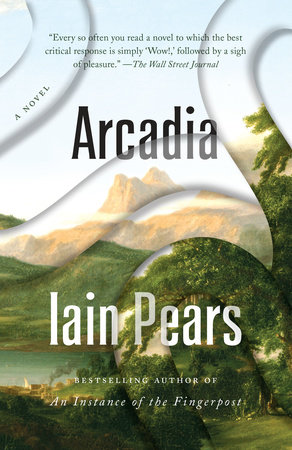
Arcadia by Iain Pears

Arcadia by Iain Pears is a 2015 novel that hasn’t gotten the attention it deserves. I don’t want to say too much about the story because I don’t want to spoil any of its cleverness. Let’s just say Pears combined fantasy, science fiction, meta-fiction, philosophy, religion, myths, and literary allusions into one complex plot. There’s even an app version which allows readers to choose their path through the plot. Arcadia would make a terrific movie. Arcadia is a very British novel about novel writing. If you loved The Golden Compass or Cloud Atlas I’d think you’ll love Arcadia. However, Arcadia is weak when it comes to psychological substance. It’s fun but not deep.

Books Read 2017

Leslie M. M. Blume Everybody Behaved Badly 2017-01-07 Audible 2016
Margot Lee Shetterly Hidden Figures 2017-01-27 Kindle ebook 2016
Nancy Isenberg White Trash 2017-01-27 Audible 2016
Mary Karr The Art of Memoir 2017-02-02 Audible 2015
Angela Duckworth Grit 2017-02-08 Library hardback 2016
Joshua Becker The More of Less 2017-02-11 Audible 2016
Bernd Heinrich One Wild Bird at a Time 2017-02-18 Audible 2016
H. Beam Piper Little Fuzzy 2017-02-19 Kindle ebook 1962
Fredrik Backman A Man Called Ove 2017-02-28 Audible 2013
Charles Wohlforth, Amanda Hendrix Beyond Earth 2017-03-07 Audible 2016
Kim Stanley Robinson New York 2140 2017-03-30 Audible 2017
Robert A. Heinlein Have Space Suit – Will Travel 2017-04-30 Audible 1958
John Wyndham The Chrysalids 2017-05-12 Audible 1955
Kathleen Tessaro The Perfume Collector 2017-05-18 Trade paper 2013
Olaf Stapledon Star Maker 2017-06-22 Audible 1937
Yuval Noah Harari Homo Deus 2017-06-30 Audible 2017
Philip K. Dick The Collected Stories of Philip K. Dick Volume 2 2017-07-17 Audible 1983
Dennis E. Taylor We Are Legion (We Are Bob) 2017-07-21 Audible 2016
Dennis E. Taylor For We Are Many 2017-07-27 Audible 2017
L. M. Montgomery Anne of Green Gables 2017-08-10 Audible 1908
Gabriel García Márquez Love in the Time of Cholera 2017-08-17 Audible 1985
Robert Silverberg Downward to the Earth 2017-08-26 Downpour 1970
Susan Faludi In the Darkroom 2017-08-30 Kindle ebook 2016
Robert Sheckley Untouched by Human Hands 2017-09-15 Downpour 1954
Mark O’Connell To Be A Machine 2017-09-22 Hardback 2017
Elisabeth Rosenthal An American Sickness 2017-10-04 Kindle ebook 2017
Allan Kaster The Year’s Top Ten Tales of Science Fiction 2017-10-04 Audible 2017
Al Franken Giant of the Senate 2017-10-11 Audible 2017
Michael Sims editor Frankenstein Dreams 2017-10-23 Audible 2017
John Wyndham Chocky 2017-10-25 Audible 1968
Robert A. Heinlein Expanded Universe 2017-10-26 Downpour 1980
Kurt Andersen Fantasyland 2017-11-08 Audible 2017
Edward Bellamy Looking Backward 2017-11-15 Audible 1888
Andy Weir Artemis 2017-11-24 Audible 2017
Dennis E. Taylor All These Worlds 2017-11-30 Audible 2017
Iain Pears Arcadia 2017-12-31 Audible 2015

Reading Goals for 2018

I really enjoy discovering relevant nonfiction books like Fantasyland or An American Sickness that explain contemporary issues, so I want to keep reading more new books as they come out during the year. I read eleven 2017 books in 2017. I think I’ll aim for one new book a month.

I also want to read more quality literary novels. I’m not sure how many I can handle though, so let’s aim for three to six next year.

Even though I feel like I read too much science fiction I still enjoy it. I like discovering both new and old SF novels. But I hope to keep my obsession in check and read only six to twelve of them in 2018. One science fiction book a month at most is enough I think.

This is what I wrote for my goal last year: “My goal for 2017 is to try and read more nonfiction, especially new books. I’m not going to worry about how many works of fiction I read, but I do want to work harder at finding the best fiction possible. I also want to stop reading mediocre books.” I think I’ve done fairly well. I probably should have quit the Taylor trilogy after the first book, and stopped reading Artemis after I realized I disliked it. I kept reading hoping Weir would redeem Jazz in some way, but he just kept making her a worse person.

My reading goals for 2018 is to read with more conscious intent and to get more out of what I read. I also hope to buy far fewer books. I have a nasty book-buying habit. I tend to buy 10-15 for every one I read. I want to stop that.

JWH


Christmas 2017 – Still Stuck in the 1960s

by James Wallace Harris, Monday, December 25, 2017

Much can be revealed about myself from examining my Christmas presents this year.

  • The Man Who Shot Liberty Valance (1962) – Blu-ray
  • Sgt. Pepper’s Lonely Hearts Club Band (1967) – 2-CD 50th Anniversary edition
  • The Complete Monterey Pop (1967) – 3-disc Blu-ray edition
  • Trouble No More by Bob Dylan – live recordings 1979-1981

I already own various versions of these works. This is the fourth time I’ve acquired Sgt. Peppers (LP, CD, remastered CD, and now remastered again 2-CD).

beatles-sgt-pepper-50th-anniversary-2xcd_01

I wish I could say my wife knew me well enough to have picked these out, but they were all put on my Xmas-2017 wishlist at Amazon by me. Susan actually knows what I like, she just can’t keep up with what I buy. All the other items on my wishlist, except the Arduino starter kit, were pop culture items from the 1950s, 1960s, and 1970s.

Is being stuck in the past a sad state of psychology, or just normal for a 66-year-old guy? One reason why I keep rebuying the past is to get higher resolution recreations of art  I resonated with from my teen years. I generally never got to experience the Sixties directly except for a few exceptions. For example, I got to see Cream live on their Farewell Tour in 1968 in Miami. I never got to see The Beatles, The Byrds, or The Beach Boys in the 1960s. I didn’t attend Monterey Pop or Woodstock. I got to see a lot of legendary bands in the 1970s and later, even ones who got their start in the 1960s, but that’s not the same.

Until I started getting Rolling Stone Magazine in 1968, most of my news of rock and roll pop culture was highly delayed. It was mostly gossip told by DJs or news items in Life, Time, or on television. The Beatles were always in the news. Most of my favorite bands didn’t make it to television except for cheesy fake performances on The Ed Sullivan Show (1948-1971), American Bandstand (1952-1989), Shindig! (1964-1966), Hullabaloo (1965-66), The Smothers Brothers Comedy Hour (1967-1969). I remember one time catching a great segment on Jefferson Airplane on the Today Show, where they demonstrated the liquid light show. Made me want to run away to San Francisco.

In a way, buying these old recordings is like trying to return to the past. I know that’s impossible. Maybe a better way of looking at it is to say I admire artwork from a particular era. That too is revealing. I feel closest to all forms of pop culture from the 1950s, 1960s, and 1970s. I also love work from the 1920s, 1930s, 1940s, and stuff from the 1980s through today, but there’s a powerful affinity for art created for us Baby Boomers. I’m in-sync with modern television and movies but completely out-of-sync with the contemporary music scene. (Maybe I’ll catch up one day before I die.)

It’s interesting that one of my Christmas gifts is from the 1979-1981 era when Bob Dylan was going through his Christian phase. Back then I bought Slow Train Coming (1979), Saved (1980) and Shot of Love (1981) as they came out. I even saw Dylan live during this time period. But I didn’t feel for this era Dylan like I did for 1964-66 Dylan or 1961-1963 Dylan. Listening to this new bootleg series of 1979-1981 performances I realized I had missed out on something great. Dylan had left me behind, and now I’m catching up.

Am I really hearing the 1960s again? This time when I played the new version of Sgt. Peppers it was both the same and subtly different. In 1967 when I first heard the album, I played the LP on my little console stereo. That technology defined the sound for back then. Today I played it on a Denon AV receiver through four floor standing Infinity speakers. The sound filled the room and Susan and I felt like we were in the middle of the soundstage.

I’ve always admired Sgt. Peppers as a concept album, and loved many of its songs, but I’ve never played them heavily in repeat fashion like I do all my favorite tunes. Sgt. Peppers feels like a music hall performance that needs to be listened to from start to finish. It never sounded better than it did today. This remastered edition felt airier than the last remastered edition, and I thought in a few places I heard things that weren’t there before. Of course, that’s probably tricks of memory. I rediscovered once again what a wonderful work of art this album represents for The Beatles and the 1960s. Just buying Sgt. Peppers again and taking the time to listen to it intently with no interruptions makes it worth the dollars.

Merry Christmas! What did Santa bring Y’all?

JWH

Blogging in the Classroom

by James Wallace Harris, Saturday, December 23, 2017

My friend Laurie who is a professor of reading at a college of education told me she is going to teach a course using blogging as a teaching tool. I found that fascinating. I’ve done a little research on Google and see that there are special blogging platforms for teaching, so the idea is catching on. This backs up a pet theory I’ve had for years. As a kid, I wasn’t much of a student. One of my worse habits was doing exams and papers as fast as I could and then turning them in without double checking my work. If I had only taken the time to reread what I wrote I could have probably changed my mostly C+ grades to B+. For a long time, I’ve thought if they made kids begin blogging in elementary school it would improve their writing and test-taking skills for their rest of their lives.

blogging in the classroom

Knowing that only teachers would see my work meant I didn’t have to try hard because I didn’t care about what teachers thought. Back then, if I knew other kids might see what I wrote I would have tried harder because peer pressure did matter. This is why I think blogging could be a great teaching tool. If kids knew their friends would read their essays I think they’d try a lot harder.

Now we have a system that protects young egos. Children are vicious with each other. So we make schoolwork private between student and teacher. I can understand that, but I wonder if we’re making a mistake. If we want students to learn to write clearly maybe some of their work should be public. Blogging might be a way to start.

Blogging can be private. Teaching portals can set up blogs to be private between student teacher, public to just the classroom, or public to the world. There are endless reasons to blog, in or out of the classroom. One very important reason is to preserve a personal history. If everyone started blogging when they learned to read or write they’d have a history of their life from around age seven. My father died when I was eighteen and I never really knew him. I’ve often wished that blogging had existed back in the 1920s and I could have inherited his blog. I also wish I had a history of my own early life. But I also think blogging would have made me more self-reflective and concerned about my education if I had started at an early age.

Blogging in the classroom could cause all kinds of important changes in society. We don’t emphasize writing in our culture nearly as much as reading, and that’s unfortunate. Education is focused on learning and not communication. We force kids to sit for years so we can fill them up with knowledge, but we give them little chance of expressing themselves. The rise of the internet is showing how billions of people think, and it’s not pretty. Self-expression on the internet often reveals crude skills of exclaiming emotions (usually rage), but not logical thinking or the ability to cooperatively communicate.

This is why I wonder if forcing kids to interact with their peers via blogging from an early age wouldn’t initiate positive changes. Sure, it might open Pandora’s Box, which is what we’re seeing on the internet today with all the hateful tweets and comments, but if we started sooner and trained children to study their thoughts, organize their observations, write clearly, decode how others think, and to compassionately communicate, it could be different.

I took up blogging in my late fifties. It’s given me a great retirement hobby, plus I’m learning to write and think better at a time when my mind would normally be in decline. I believe I would have been a superior K-12 student, and thus a superior college student if I had started blogging right after I learned to write. I believe I would have tried harder knowing my friends could read what I wrote. I also believe that writing more would have helped me learn more. If I had been taught to explain how things worked through writing I would have learned more from my lessons. Blogging could be a way to teach kids to teach and that’s a great way to learn.

For this to work, we’d have to overcome a lot of obstacles. Most children and adults are embarrassed to let others see their intellectual abilities. It’s like undressing our minds. We’d need to teach kids how to protect their privacy and create their public persona. Most people don’t seem to realize their inner thoughts are already expressed in what they say and do. Children often worry more about what they wear and own than what they say or how they behave. If blogging was required in schools, and part of their schoolwork was public, it might make students more reflective about their thinking and how it impacts others. For example, if school bullies read posts by their victims and how bystanders see their bullying would they change their behavior? I don’t know.

I am constantly reminded of a novel, Everything I Never Told You by Celeste Ng. It’s a story of family tragedies, tragedies that could have been avoided if each member of the family would have expressed their thoughts.

I can imagine endless ways in which blogging could be applied to teaching. Currently, we have teachers teachings and students taking tests to prove they’ve paid attention. What if we required students to spend more time teaching? Because blogs can contain multimedia, we could ask students to teach topics on their blogs using whatever media they wanted. I often have to research and study a topic when I write about it on my blog. That makes me realize that I’m my most important reader because I discover how little I know and how much I learn from working on the post.

I also learn how bad I write by using tools like Grammarly and Readable.io. Writing on a blog is like playing a video game, I’m always trying to better my own scores. And I like when I get good comments, not praise, but insights, because learning how other people think teaches me how narrowly I see things. Even when I get hateful rants it teaches me my views are far from universal. I think students could benefit knowing more about how their classmates think and feel, even when it stings.

I wish I had started blogging when I learned to write so I would have a record of all my school years. I wish I had taken a photograph of every classmate and teacher. I wish I had taken a photograph of every classroom and school. I wish I had taken a photograph of every playground and walk to school. I wish I had written about everything that excited me and scared me. I hate that I can’t remember or visualize all those people and places.

Because of this wish, I would recommend teachers have students sign up with an international blogging site that would stay in business the rest of their lives. They need to promote lifelong blogging to preserve memories. It won’t hurt to have a permanent personal blog and classroom blog for a year if that’s needed.

We might be protecting kids too much by letting them hide from criticism. I think teachers need to think hard about whether to let student blogs be public because some children will suffer emotional damage. But on the other hand, it might help them in the long run. It’s like parents who homeschool their kids for years to protect them. In the end, their kids have to interact with society and it’s usually much harder.

JWH


Will Fiction Work on Robots?

by James Wallace Harris, Wednesday, December 20, 2017

Have you ever thought about the nature of fiction? With books, we put ourselves into a trance and transfer our consciousness into a story. That’s pretty weird when you think about it. We’re just looking at black marks on a white background and yet we create all kinds of colorful imaginary worlds in our minds. With television and film, we have the sound and visuals to fool our minds with less work. (It’s no wonder fewer people choose books as their gateway to make-believe.) Audiobooks are somewhere in between.

Humans evidently have a mechanism in their brain for pretending that can tune out reality. It might be related to our mechanism for dreaming. But if you think about it, we embrace a lot of fiction. Religion is totally make-believe yet the faithful feel it is real. Same thing for romance, where we give the objects of our desires traits that don’t exist.

Robotreading

This morning I was so engrossed in a story that I felt like I was escaping reality. That made me wonder about how my brain works to do that. Then I wondered if robots in the future, the kind that will have artificial intelligence, will be able to read a book and find an escape from reality too.

I assume if evolution through random selection can create a biological being that is self-aware then eventually our applied efforts will produce robots that have self-awareness too. Because they won’t be biological driven by chemical and hormonal processes, they might not need sleep. One current theory about why we sleep is because we need to clean out chemical wastes in the brain so it functions properly when we’re conscious. Another theory suggests dreaming is a way to process, organize, and store memories. Robots won’t need sleep, and memory processing won’t be chemical. So they might not have that mechanism for make-believe.

Our brains have to attach meaning to everything we experience, and we usually do that with a story. However, our stories are seldom true. Our mental mechanism for storytelling is sometimes called a narrative fallacy because humans aren’t too anal about accuracy. (Example, the stories conservatives choose to believe about their new tax law.)

I believe we constantly fool ourselves because of the biology of survival. Romance and religion serve a purpose even when they are intellectually untrue. We lie to ourselves and others for a variety of survival functions, and I can’t help believe all those processes go into allowing fiction to work on us.

Robots won’t need any of that. I wonder if fiction and lying will fail on them. I can imagine an AI mind seeing us as rather delusional creatures. They certainly won’t trust us. Even our languages are full of confusing allusions when analyzed for realism. For example, if a robot hears a human saying, “I’ll be going to heaven soon” they’ll probably be smart enough to know it means “I’m going to die” but will they ever understand the will for eternal life seeded by ancient memes? In Battlestar Galactica, they had a race of robots that were monotheistic. I thought that a fun idea, but now I’m wondering if its a fiction only humans could enjoy.

I believe robots will understand our languages. It won’t take much to give them a universal language translator feature. But I’m not sure they will need language to converse with their fellow robots. AI minds will be able to record inputs from all their senses so when they need to communicate with another robot all they have to do is transmit that input. The other robot will have a perfect duplicate of the experience being conveyed.

So, in the future, will robots sit around and read books? If they read the Foundation series by Isaac Asimov will they enjoy spending hours imagining a galactic empire? I doubt it. A long string of words will probably feel like sensory deprivation to them. Even elaborate movies might feel crude compared to their hyper-view of reality.

We have 4k television cameras on our phones. What if robots had 4m or 4g eyes? We see a tiny slice of the electromagnetic spectrum. They could create to see and hear whole swaths of the spectrum. I suppose they could create equally detailed virtual worlds but would it be fiction? When we read a short story we trick our minds with a small number of suggested clues to create a fictional world in our minds. Most books today are heavy on dialog. Movies are far richer, but the actual story details in filmed fiction are still rather primitive. To robots, War and Peace would be a simple-minded Clif Notes – book or miniseries. (They could hold a whole library of Russian history in their AI mind.)

I tend to think we crave make-believe because of our limitations. We love romance or adventure stories because our lives lack romance and adventure. But I’m not sure robots will crave that. However, they might. They might even envy us. Robots will probably be 100% literal about reality. And even though the universe is extremely far out, robots will comprehend it in totality rather quickly. I don’t think they will be bored, but I don’t think they will see a lot to be done either. We can switch off reality and play in fiction. Robots might seek a similar creative outlet. Maybe it will be a super form of AI fiction we can’t even comprehend.

[Note to self: write a science fiction story about science fiction stories robots would write and read.]

JWH


Science Fiction Hall of Fame Volume One

by James Wallace Harris, Tuesday, December 19, 2017

Christmas came early this year for me. I’ve been wishing since 2002 for an audiobook edition of The Science Fiction Hall of Fame Volume One and my wish was finally granted sometime after midnight this morning. (For non-Audible.com members there’s a CD version but it’s $45.)

Science Fiction Hall of Fame v. 1The Science Fiction Hall of Fame Volume One is probably the most loved science fiction anthology of all time and comes in #1 at Goodreads list of Best Science Fiction Anthologies. The Science Fiction Writers of America (SFWA) voted for its contents when they formed in 1965 to recognize the best science fiction stories published before the Nebula Awards were created. The anthology was edited by Robert Silverberg and first published in 1970.

Just after five in the morning, I began the download. Sitting in the dark with my headphones I sampled the stories. There are 26, narrated by an array of professional readers that bring these tales vividly alive to my ears. I’ve long recognized that my reading skills are poor compared to the hired guns of the audiobook world. Since I joined Audible.com in 2002 I’ve been searching out all the science fiction I loved in my youth to reread by listening. When I hear these old favorite stories it’s like when Dorothy opened that door in The Wizard of Oz and the black and white movie switched to Technicolor. I get so much more from hearing than when I read with my eyes.

The pulp fiction punch came through right from the first with “The Martian Odyssey” by Stanley G. Weinbaum. Science fiction is often attacked as poorly written, yet while I jumped from story to story sampling how each sounded, I felt the writing was lovely and vivid. Each story began with distinctive details that envisioned a uniquely imagined concept. Sure, this is pulp fiction, but it’s pulp fiction at its classic best. These old stories showcase how science fiction writers back then felt compelled to invent a novel idea to fictionalize. I often read stories today that improvise off these original themes.

These stories all get their own entries in Wikipedia, which attests to their longevity. I’m borrowing this table from Wikipedia in case you want to read about them and their authors.

Author Story Title Year of first publication
Stanley G. Weinbaum A Martian Odyssey 1934
John W. Campbell Twilight 1934
Lester del Rey Helen O’Loy 1938
Robert A. Heinlein The Roads Must Roll 1940
Theodore Sturgeon Microcosmic God 1941
Isaac Asimov Nightfall 1941
A. E. van Vogt The Weapon Shop 1942
Lewis Padgett Mimsy Were the Borogoves 1943
Clifford D. Simak Huddling Place 1944
Fredric Brown Arena 1944
Murray Leinster First Contact 1945
Judith Merril That Only a Mother 1948
Cordwainer Smith Scanners Live in Vain 1948
Ray Bradbury Mars is Heaven! 1948
Cyril M. Kornbluth The Little Black Bag 1950
Richard Matheson Born of Man and Woman 1950
Fritz Leiber Coming Attraction 1950
Anthony Boucher The Quest for Saint Aquin 1951
James Blish Surface Tension 1952
Arthur C. Clarke The Nine Billion Names of God 1953
Jerome Bixby It’s a Good Life 1953
Tom Godwin The Cold Equations 1954
Alfred Bester Fondly Fahrenheit 1954
Damon Knight The Country of the Kind 1955
Daniel Keyes Flowers for Algernon 1959
Roger Zelazny A Rose for Ecclesiastes 1963

I consider”A Rose for Ecclesiastes” by Roger Zelazny the epitome of pulp science fiction style, and the story I was most anxious to hear. It came out in 1963 just before the Mariner IV mission to Mars forever ruined the planet for pulp fiction adventure. After NASA science fiction had to grow up and accept a new reality. Mars and Venus could no longer be home to ancient races, and “A Rose for Ecclesiastes” is a wistful elegy of an era.

It’s quite elegant that The Science Fiction Hall of Fame Volume One begins with “A Martian Odyssey” and ends with “A Rose for Ecclesiastes” using the two best short stories about Mars as bookends for the anthology. These stories are the sense of wonder of my childhood. I can’t recommend this anthology highly enough. It captures the essence of the science fiction that baby boomer SF fans discovered in the 1960s and defined the genre for us.

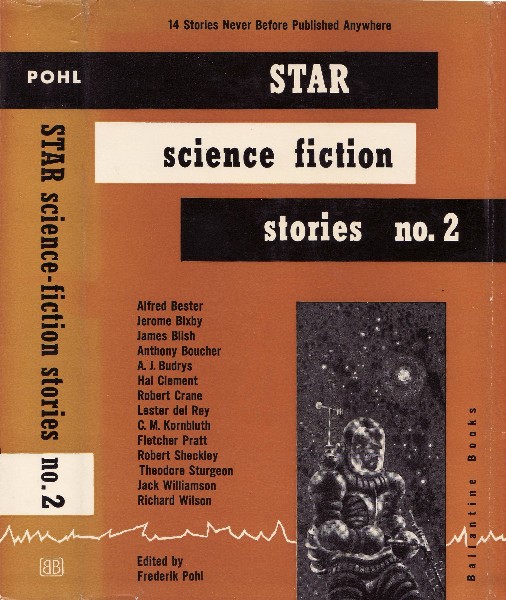
I thought I’d close out this essay with cover images that first featured these stories. What’s funny is many of them didn’t make the cover art — which is a pity. Makes me wonder if the editors didn’t recognize their greatness at that time, or if they thought other stories were superior. I’m also going to include the link to the story’s Internet Science Fiction Database (ISFDb) entry so you can see how often it’s been anthologized over the years.

My many thanks to the gods of the audiobook world. You have given me many hours of happiness.

A Martian Odyssey – by Stanley G. Weinbaum

1 - A Martian Odyssey

Twilight – by John W. Campbell

2 - Twilight

Helen O’Loy by Lester del Rey

3 - Helen O'Loy

The Roads Must Roll by Robert A. Heinlein

4 - The Roads Must Roll

Microcosmic God by Theodore Sturgeon

5 - Microscopic God

Nightfall by Isaac Asimov

6 - Nightfall

The Weapon Shop by A. E. van Vogt

7 - The Weapons Shop

Mimsy Were the Borogoves by Lewis Padgett (Henry Kuttner and C. L. Moore)

8 - Mimsy Were the Borogoves

Huddling Place by Clifford D. Simak

9 - Huddling Place

Arena by Fredric Brown

10 - Arena

First Contact by Murray Leinster

11 - First Contact

That Only a Mother by Judith Merril

12 - That Only a Mother

Scanners Live in Vain by Cordwainer Smith

13 - Scanners Live in Vain

Mars Is Heaven! by Ray Bradbury

14 - Mars is Heaven

The Little Black Bag by C. M. Kornbluth

15 - Little Black Bag

Born of Man and Woman by Richard Matheson

16 - Born of Man and Woman

Coming Attraction by Fritz Leiber

17 - Coming Attraction

The Quest for Saint Aquin by Anthony Boucher

18 - The Quest for Saint Aquin

Surface Tension by James Blish

19 - Surface Tension

The Nine Billion Names of God by Arthur C. Clarke

20 - The Nine Billion Names of God

It’s a Good Life by Jerome Bixby

21 - It's a Good Life

The Cold Equations by Tom Godwin

22 - The Cold Equations

Fondly Fahrenheit  by Alfred Bester

23 - Fondly Fahrenheit

The Country of the Kind by Damon Knight

24 - The Country of the Kind

Flowers for Algernon by Daniel Keyes

25 - Flowers for Algernon

A Rose for Ecclesiastes by Roger Zelazny

26 - A Rose for Ecclesiastes

JWH