2015 Year in Reading

By James Wallace Harris, December 31, 2015

Novel of the Year
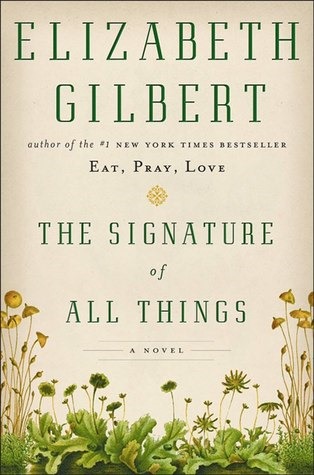
The Signature of All Things - Elizabeth Gilbert

For most of my life, my all-time favorite novel has been Have Space Suit-Will Travel by Robert A. Heinlein. It’s now The Signature of All Things by Elizabeth Gilbert. I guess I’m finally moving past my childhood. The Heinlein novel, which I first read in 1964, gave me a future to think about, but for the past several years, I’ve been looking backwards, especially into the 19th century, and The Signature of All Things captures, at least for the moment, where I’m at philosophically.

Runners Up (no order):

  • Station Eleven by Emily St. John Mandel
  • The Evolution of Bruno Littlemore by Benjamin Hale
  • To Kill A Mockingbird by Harper Lee
  • Go Set A Watchman by Harper Lee
  • Bleak House by Charles Dickens
  • The Broken Bubble by Philip K. Dick
  • The Man in the High Castle by Philip K. Dick

This was a very good year for fiction. I read many more great novels, but these are the ones that shook me up. If you look at the full list of books below that I read in 2015, you’ll see some astounding novels I’m leaving off. This was an excellent year for new science fiction (Aurora, Seveneves, The Water Knife), but I can’t bring myself to consider them in the runner up category.

Nonfiction Book of the Year
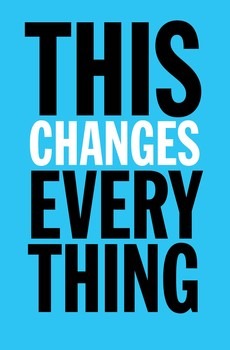
This Changes Everything - Naomi Klein

This Changes Everything by Naomi Klein is powerful statement about our future. Klein makes a great case that capitalism is at fault for our environmental problems. This is one of those books that everyone should read but won’t.

Runners Up (no order):

  • The Meaning of Human Existence by Edward O. Wilson
  • The Sixth Extinction by Elizabeth Kolbert
  • Sapiens by Yuval Noah Harari
  • Being Mortal by Atul Gawande
  • Spinster by Kate Bolick

It was also a great year for nonfiction. One of my reading goals last year was to read more nonfiction. I didn’t work as planned, but I do think I’m reading a bit more nonfiction.

Reading Log for 2015

Author Title Finished Format Year
Timothy A. Pychyl Solving the Procrastination Puzzle 2015-01-03 Audio 2013
Roger Zelazny This Immortal 2015-01-06 Hardback 1966
Albert Camus The Stranger 2015-01-06 Audio 1942
Ray Bradbury The Martian Chronicles 2015-01-09 Audio 1950
Kevin Birmingham The Most Dangerous Book 2015-01-17 Audio 2014
Edmond Hamilton City at World’s End 2015-01-19 Audio – Yahoo 1951
Edward O. Wilson The Meaning of Human Existence 2015-01-23 Library hardback 2014
Robert A. Heinlein The Man Who Sold The Moon 2015-01-26 Audio 1951
Elizabeth Gilbert The Signature of All Things 2015-02-03 Audio 2013
Evan Osnos The Age of Ambition 2015-02-10 Audio 2014
Hector Tobar Deep Down Dark 2015-02-13 Audio 2014
Elizabeth Kolbert The Sixth Extinction 2015-02-18 Audio 2014
Brian Aldiss Non-Stop 2015-02-21 Hardback 1958
Nick Bostrom Superintelligence 2015-02-28 Audio 2014
Naomi Klein This Changes Everything 2015-02-28 Kindle ebook 2014
Yuval Noah Harari Sapiens 2015-03-12 Audio 2015
Jack McDevitt Moonfall 2015-03-13 Library hardback 1998
Roxane Gay Bad Feminist 2015-03-15 Audio 2014
Olaf Stapledon Last and First Men 2015-03-22 Audio 1930

Lynn Kear and John Rossman Kay Francis: A Passionate Life and Career 2015-03-26 Kindle ebook 2006
Mary Doria Russell Epitaph 2015-03-29 Audio 2015
Nancy Kress Yesterday’s Kin 2015-03-30 Kindle ebook 2014
Eric H. Cline 1177 BC: The Year Civilization Collapsed 2015-04-04 Audio 2014
Emily St. John Mandel Station Eleven 2015-04-05 Kindle ebook 2014
Atul Gawande Being Mortal 2015-04-09 Audio 2014
Paula McLain The Paris Wife 2015-04-14 Hardback 2011
Benjamin Hale The Evolution of Bruno Littlemore 2015-04-18 Audio 2011
Liu Cixin The Three-Body Problem 2015-04-27 Audio 2014
Walter Tevis The Queen’s Gambit 2015-04-28 Kindle ebook 1983
Alan Paul One Way Out 2015-05-02 Audio 2014
Mary Shelley The Last Man 2015-05-18 Audio 1826
Madeline Ashby vN 2015-05-22 Audio 2012
Ross MacDonald The Moving Target 2015-06-01 Library hardback 1949
Paolo Bacigalupi The Water Knife 2015-06-06 Audio 2015
Frank Herbert Hellstrom’s Hive 2015-06-12 Library hardback 1972
Pat Barker Toby’s Room 2015-06-17 Library ebook 2012
Jules Verne The Mysterious Island 2015-06-21 Audio 1874
Daniel DeFoe Robinson Crusoe 2015-07-04 Audio 1719
Marie Kondo The Life-Changing Magic of Tidying Up 2015-07-10 Kindle ebook 2014
Robert M. Edsel The Monuments Men 2015-07-15 Library hardback 2009
Jack Williamson The Humanoids 2015-07-15 Audio 1947
Harper Lee Go Set A Watchman 2015-07-19 Audio 2015
Harper Lee To Kill A Mockingbird 2015-07-21 Audio 1960
Kate Bolick Spinster: Making A Life of One’s Own 2015-07-30 Library hardback 2015
Larry Niven and Jerry Pournelle Lucifer’s Hammer 2015-08-10 Audio 1977
J. A. Johnstone Phoenix Rising 2015-08-11 Scribd ebook 2011
Kate Bolick Spinster: Making A Life of One’s Own 2015-08-12 Scribd audiobook 2015
Robert Silverberg Downward to the Earth 2015-08-15 Scribd audiobook 1970
Andy Miller My Year of Reading Dangerously 2015-08-19 Audible 2012
Nevil Shute A Town Like Alice 2015-08-23 Audible 1950
Aziz Ansari Modern Romance 2015-08-27 Audible 2015
Kim Stanley Robinson Aurora 2015-09-02 Audible 2015
Daniel Coyle The Little Book of Talent 2015-09-04 Audible 2012
Barbara Oakley A Mind For Numbers 2015-09-04 Audible 2014
M. R. Carey The Girl With All the Gifts 2015-09-16 Audible 2014
Neal Stephenson The Seveneves 2015-10-13 Audible 2015
Isaac Asimov Foundation 2015-10-23 Scribd audiobook 1951
Kate Wilhelm Where Late The Sweet Birds Sang 2015-10-27 Scribd audiobook 1976
Dan Harris 10% Happier 2015-10-28 Kindle ebook 2014
Robert Silverberg Thorns 2015-11-04 Scribd audiobook 1967
Samuel R. Delany Babel-17 2015-11-10 Audible 1966
Charles Dickens Bleak House 2015-11-21 Audible 1853
Clifford Simak The Heritage of Stars 2015-12-01 Audible 1977
Alan Weisman Countdown 2015-12-08 Audible 2013
Martin Ford The Rise of the Robots 2015-12-16 Audible 2015
Philip K. Dick The Broken Bubble 2015-12-20 Audible 1956
Hal Clement Mission of Gravity 2015-12-24 Kindle ebook 1953
Philip K. Dick The Man In The High Castle 2015-12-27 Audible 1962

I read 68 books this year, the most since I’ve been doing these yearly reviews.

Reading Goals for 2016

Every year I make big plans for what I want to read in the coming year, and every year I fail to follow through. So this year I’m not going to make any promises. I want to read more nonfiction, but there seems to be some kind of psychological barrier to how much information about reality I can take in on any given week. I sometimes think I need to read fiction to balance the psychic load.

Past Year Reports

Essay #992 – Table of Contents

The Most Addictive TV Shows of 2015

By James Wallace Harris, Monday, December 28, 2015

How is it possible that we’ll watch four one-hour episodes of the same TV show in one evening? Has streaming technology changed us? Has television become insidiously addictive? Or, do we just feel a deep desire to escape ordinary life? If we’d had Netflix back in the 1950s, would we have binge-watched Gunsmoke? I actually feel that television is constantly getting better, that the art of telling a story on the small screen is evolving. One reason shows are binge-watched is because they tell one story, like a novel, over a season. So I wouldn’t have binge-watched TV in the past, because those shows were complete in one episode. When the stories are compelling and extended, we want to keep watching, even well past our bedtime.

The Boob Tube has always been addictive, but it used to be just habit forming like marijuana, but now it’s painful-withdrawal addictive like heroin. In 2015 there were 409 scripted television shows. The competition to create binge-worthy shows is fierce. A study could be made as to what story elements are required to make a compelling fiction. I just finished season 2 of Fargo, where I completed it’s ten episodes in four days by watching 2-3 episodes an evening. It’s gruesome body count seemed inappropriate compared to the wholesome Christmas movies my wife wanted to watch. But, Susan is much more of a TV binge watcher than I am. She can watch 10-12 episodes of a favorite show in a weekend. Of course, people binge-read too, like my brother-in-law Cayce who is reading the 14-volume Wheel of Time by Robert Jordan, where each book is a giant volume by itself. Why have we gotten so addicted to make-believe?

Humans

I prefer to watch television with friends, which often means watching two episodes a week on a Friday night. Janis, Mike, Betsy and I just finished The Man in the High Castle. It was so great we had to finish up the last two episodes early, on a Sunday night. There are downsides to watching binge-worth TV with friends: the urge is to cheat. Watching on our own is convenient, but ruins the social fun. But when this happens, and I do it, I end up watching some episodes twice. Or I’ll watch shows twice because I want to see them with different people. I watched Humans and Mr. Robot with two sets of friends, and I enjoyed those shows so much that seeing each episode twice was not boring in the least. Television shows have evolved so much that they are complex enough to rewatch and still discover new insights.

Mr Robot

I now worry about being too addicted to binge-worthy TV. Broadcast TV is still catching up to premium TV. I often have to buy my shows because I don’t have cable. The best of the best TV is so good, that I’m becoming a junky craving ever more powerful TV highs. I can’t imagine how good television can get, but shows in the 2020s might become paralyzing. My TV buddy Janis and I are always edgy when we don’t have a binge-worth TV show to watch. Last night we tried several shows hoping to find one that would hook us. I watched Fargo without her, and she’s a little miffed. But she does the same thing to me—finding shows to view alone without me. It takes discipline to wait and watch shows with friends because it’s always problematic to schedule TV viewing with a friend, and especially difficult coordinating three or more people.

For me, the best experience is to share a great TV show. If you have no one to get excited over a show, somehow the show doesn’t seem as great. And discovering what kinds of shows your friends love is so revealing. It’s bonding. It’s resonating. All my friends binge-watch now. My main bond with some people are through discussing TV.

Here are the shows that came out during the year that I loved the most in 2015.

I watched many more shows during the year that came out before 2015, like Mozart in the Jungle season 1, The Knick season 1, The 100 season 2 and Fargo season 1. There were other shows I loved the first or second season, but they petered out this year like Orange is the New Black, Vikings and House of Cards. Novelty is everything with binge-watching.

the man in  the high castle

Since I could never watch everything that came out in 2015, you should read these lists below. You’ll notice that several shows, many of of which I watched, were listed over and over again.

Essay #991 – Table of Contents

Postscript – written later that night:

This essay really didn’t do what I wanted. There is a certain quality to fiction that I crave, that I find in books, movies and television shows. I was just washing some dishes and for a fleeting moment I wondered if fiction isn’t the way we seek to live differently. But it’s more than just wanting to exchange our boring lives for exciting ones. Fiction has a pacing and logic that improves on normal life.

When I was watching the new Star Wars film today I felt its creators were trying to find their way home, which in this case was the first Star Wars movie. Could it be that Star Wars creates a high that its fans seek to live? I wish life felt like my favorite songs, which explains soundtracks, because most people would feel life is better with a backing score. When I was a kid, one reason I liked smoking grass was it gave life a tinge of drama. Fiction vibes are much different from real life vibes.

After watching The Man in the High Castle miniseries I reread the book for the third time by listening to it. The ending of the book is much different from the movie. Juliana Crane has an insight to the book within the book, The Grasshopper Lies Heavy. She feels its fictional revelations, inspired by the mystical ancient text, I Ching, understands life. Philip K. Dick, a notorious paranoid, playing around with alternate history and the many world hypothesis, suggests that life is like a book. Poor PKD so desperately wanted “The Answer.” As the omniscient narrator he could give his creations the logic we seek.

I’m thinking different kinds of books give different kinds of highs, and what we crave from fiction is life with the kind of high we get from our favorite books.

Of course that opens up a whole can of Freudian worms when I wonder about me loving shows like Fargo and Breaking Bad. I imagine the high folks get from Star Wars is like those they get from comic books and video games, which is very youthful. The highs I like from fiction come from getting old.

JWH

Smoking Dried Badger Balls

By James Wallace Harris, December 20, 2015

If you were told smoking dried badger balls would restore your lost youth, vitality and stamina, would you? In some countries traditional medicine claims potions made from endangered animals will let you feel young again. We scoff at such ancient folk wisdom. Yet, in our modern culture we embrace mega-vitamins and esoteric supplements to turn back the years, even though scientific research warns us we’re just pissing those expensive chemicals away. If you’re young and reading this you won’t know what I’m writing about. But if you’re old, you do know. You know that feeling of dwindling vitality. You also know that feeling you’d grasp any straw you could, even smoking powered badger balls, to get back that energy you had.

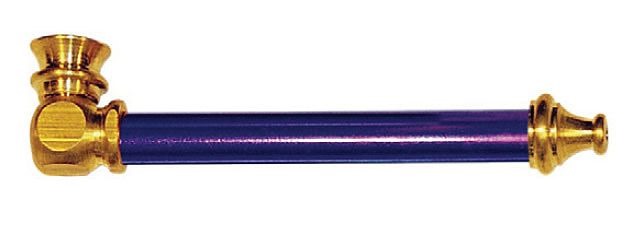
crack pipe

Feeling old? Feeling old and tired? Feeling old, tired, depleted much quicker than you used to? Join the club. Are you retired and sensing that life is on one long slow decline? I just searched Google on how to gain energy and stamina after 60. Most of the answers I got were about exercise. A few were about weird diets, strange herbal remedies or special vitamins. I’m hardly alone in this quest. I already exercise three times a day, take supplements my doctor recommends, and I eat a natural plant-based died. I feel ten years young than I did before I retired, but I still feel like I’m on the downward slope side of the graph. I’m doing just about everything that’s recommended. Other than looking for the Fountain of Youth, consuming endangered animal parts, or seeking out a witchdoctor, I’m not sure what to do. Now I understand why people hope for magic. Why they pray. Why they take drugs.

I’ve been wondering about artificial stimulants for old folks, but I’m not sure I could handle cocaine or crystal meth. Hell, I don’t even tolerate caffeine and sugar anymore. Currently my best antidote for fatigue is a nap. Then I started thinking about things I do during the day that do give me a physical and mental boost. Could there be mental stimulants that don’t degrade the body? Last night I played my favorite Van Morrison tunes for a half-hour,  very loud, that really pumped me up. My normal volume setting is 74 on my Denon receiver. Usually my company complains at 66. Last night I dialed it up to 80. It felt great! Watching an innovative TV series can bring back thrills. Reading an outstanding novel makes my neurons boogie. Playing with a new tech toy brings back a bit of that excitement I felt as a kid at Christmas.

I get up at 6am, and 18 hours later head to dreamland, but I do need three naps during the day to recharge my battery. I no longer have the energy to be physically active for a whole day. I can write for 2-3 hours, an activity that eventually fogs my mind. I need food and a nap to recover, but I don’t recover enough to go back to writing, or anything else constructive during the day. I’m left to socializing, reading, watching television or listening to music. I’d like to have the stamina to write longer, or get in two writing sessions. My old workday was four hours, lunch and then three and a half hours of more work. I can’t tell if retirement or age has ruined my stamina.

If I believed it was anything but age I could find a way back to when I felt younger. If I believe it’s age, do I just fatalistically accept more and more napping? All those vampire stories make sense to me now. Bite someone on the neck and suck out their vitality. It’s like Willie Sutton’s logic, “I rob banks because that’s where the money is.” It also explains why some of my peers aren’t acting their age. They believe if you act young, you’ll feel young. Or why people get plastic surgery, if you look young, you’ll feel young.

Friends tout that 60 is the new 40, but I don’t believe that bullshit. Looking around me, I see my fellow baby-boomers doing everything they can to stay active. Many have returned to the pleasures and pursuits they loved in their teens. I often see people in their 70s acting young. But why don’t I see people in their 80s doing the same? There’s a few outliers, but not many. What magic does it take to keep hanging on? At some point I know I’m going to be doing far more napping than doing. And after that it’s the big dirt nap.

I’ve already given up all my favorite fun foods to feel better. And I do. I exercise to feel better, and that works too. But I can feel those remedies have their limitations. What’s next? Mega-vitamins and smoking badger balls? I wonder at what straws I will grasp.

Essay #990 – Table of Contents

How Old Do You Need To Be To Avoid Climate Change Disasters?

By James Wallace Harris, Friday, December 18, 2015

Using the Life Expectancy Calculator at the Social Security Administration website, here’s what they predict for me:

My life expectancy

If I live another twenty years it will be 2035. Many predictions about the future use the years 2020, 2025, 2030, 2050 and 2100 as landmarks. I doubt I’ll make it to 2050, when I’d turn 99. Most of the current political discussion about climate change suggest making fixes by 2030 or 2050, but scientists are saying that’s too late. More than likely, the rest of the 21st century will be filled with climate change disasters.

My friend Connell and I were wondering this morning if we will die before the shit hits the fan.

Do most climate change deniers feel they will just avoid the issue by dying sooner than the eco-apocalypse? Won’t most older people checkout before things get bad? But when will things get bad? If it’s in the 2020s, then you need to be well into your 70s to feel statistically safe. If it’s the 2030s, then you need to be like me, in your 60s. If it’s not until the 2050s, you can be in your 40s. If it’s not until 2100, then you have to start sticking your head in the sand at age 15.

Yesterday I read, “The Siege of Miami” by Elizabeth Kolbert, author of the influential book, The Sixth Extinction. Is Miami the next New Orleans? What would happen if Miami is the next eco-catastrophe and it happens before 2030? What if rising oceans destroys South Florida’s fresh water and millions of people have to move north? Of course, the wetter it gets in Miami, the wetter it will be in other coastal cities, like New York City.

At some point even the disciples of Donald Trump will have to admit that those pesky scientists were right about climate change. The choice then will be to do something heroic or immigrate. Will folks living on higher ground want to ban immigrants from coastal regions? If you think Syrians and Mexicans pose a problem, wait until climate change refuges start moving in.

If people secretly think climate change disasters won’t hit until the 22nd century, 21st century folk are willing to wait and do nothing. What I’m asking is: What if you’re too young to avoid the suffering? What if the ball drops where you live well before 2100, or even 2030.

Connell and I think we might avoid the start of terrible events by only living another twenty years. But what if you’re in your thirties and have two little kids? You aren’t old enough, and that’s not saying anything about your children.

Should old Republicans be allowed to make decisions about climate change? Their philosophy is, “I’ve got mine and I’m going to keep it.” If Republican leaders are allowed to ignore climate change, can they be held responsible if they are wrong? If you read the article about Miami, Florida politicians are going well beyond denying climate change, they want to legalize denial. And it’s obvious why. If they admit Florida has a problem, property values will sink long before Florida will. Who’d want to retire in a flooding state?

That’s why I believe if you’re a certain age, I’m wonder if your inaction is due to thinking you won’t live long enough to suffer. How ethical is it to make a mess and then die to avoid cleaning it up?

Essay #989 – Table of Contents

Should We Give Our Jobs to Robots?

By James Wallace Harris, Wednesday, December 9, 2015

If you use the self-service checkout machines at grocery stores, you have effectively voted to give jobs to robots rather than people. We’ve been slowly passing our livelihoods to machines for decades. Guys used to pump our gas. Computers used to be women working at desks doing calculations. We poke ATM machines rather than chat with bank tellers. Taxes were prepared by accountants and bookkeepers, not programs. We bought music and books from clerks in stores. We used to have repairmen heal our gadgets, now we toss them as soon as they break, and just buy cheaper replacements. We purchase the mass produced rather than the hand-crafted. Our factories used to employ millions, but capital moves manufacturing anywhere in the world where labor is cheapest. Their next step is to automate those factories and get rid of the cheapest workers. Even the fast food worker, the starter job for kids and the fallback for the unemployed, are about to be taken over by robots. Robots have begun to do the work of professionals, like lawyers and doctors, and they are getting smarter every day.

Most of us ignore all these trends because we focus on our personal lives. It would be wise if you are planning your career, or living off retirement savings, to read Rise of the Robots: Technology and the Threat of a Jobless Future by Martin Ford. Automation is a disruptive technology that will impact jobs and savings. The book careful details what’s been happening in the past, and warns of what will happen in the near future.

The Rise of the Robots - Martin Ford

Every day we decide to hire robots through our purchases. Every day we choose robots over people when we buy the cheapest products. Every day we side with capital over workers when we attack unions. Real wages have been dropping since the 1970s. Average household income has only keep par with falling middle-class earnings by having two incomes. Many individuals work two jobs to keep up. The biggest employment sector is the service economy, which generally pays close to the minimum wage. There are two movements to watch. One, to raise the minimum wage to $15 an hour, which benefits labor. The other, is to create robots to do those jobs, that benefits capital. Who will get those jobs in the future: humans or robots? If capital gets its way, it will be machines because you want the cheapest hamburger and fries you can get.

Even though most people in the U.S. are labor, the vast majority sides with capital. For centuries there’s been two forces at play where humans make their living: labor and capital. To understand this read Capital in the Twenty-First Century by Thomas Piketty, a very readable history. Anyone who wants to understand money and savings should read this book. There’s always been a balance between workers and investors. Investors can’t create industries without labor, so labor had a leverage in getting a fair share of the wealth. That leverage has weakened since automation. Capital is about to eliminate most labor costs by buying robots. And we’re letting them. Almost all wealth comes from consumers, and that’s a kind of voting block.

We accept automation and robots buy buying goods and services made by machines. We do this because we want everything on the cheap. To understand where our natural drive for cheapness is leading us, read Cheap: The High Cost of Discount Culture by Ellen Ruppel Shell. We’ve been voting to eliminate people from their jobs since the development of the self-service grocery store.

Like climate change, overpopulation, mass extinction, wealth inequality and all the other major problems we face, we are the cause, and have chosen our path even though we refuse to look where we’re going. We are giving our jobs to C-3PO. It’s a decision we’re making, although most people don’t know it.

To better understand what I’m saying, read these three books. All are easy to read, and entertaining in their presentation of history and facts. We need to stop wasting so much time in escapist entertainment and look around to what’s coming. I’m a lifelong science fiction, and was a computer programmer. I love robots and artificial intelligence. I want us to invent far-out robots that do things humans can’t do, but I don’t want robots taking jobs that humans can do, and need to do.

Civilization is breaking down in countries around the world where young people have no jobs and few prospects. It’s the cause of terrorism. A stable society needs to have most people working, even at jobs a machine could do.

Essay #988 –  Table of Contents