I, Sisyphus, Blogger

Sisyphus was a Greek dude the gods condemn to roll a rock endlessly up a hill.  Albert Camus came along in the 20th century and gave The Myth of Sisyphus an existential twist.  Camus said living is like endlessly rolling a rock up a hill, but if we can find personal purpose while we’re doing something so meaningless we can overcome the meaninglessness of reality.  I think of blogging as chronicling my life of endlessly rolling  a rock up my hill.  I beat the gods by understanding the nature of reality, even if I have no higher metaphysical purpose.  Camus saw the lack of meaning in reality as a form of absurdity, but I don’t.  The randomness of reality might feel like we’re rolling a rock up the same hill over and over again, but we’re not.  Humans have always lied to themselves that we serve God’s purpose to console ourselves with imaginary meaning, but isn’t finding our own purpose in an indifferent multiverse actually more empowering?  Sisyphus was condemned to his task by the gods for having hubris.  A godless reality has condemned us to a short existence of self-awareness in an awe inspiringly huge existence.  Although we are born into the limits of our natural design, it appears we have a mind that will allow us to out think those limits.

Sisyphus-wide

Blogging is not a chore for me, but it does require I make an effort.  In fact, I want to make the best possible effort.  If I don’t, I’m just rolling a rock up a hill.

Blogging has to be more than puking words out through my keyboard.  Blogging is anti-entropic.  This universe is entropic, so overall things are coming apart, but as it does, there are swirling eddies of highly organized anti-entropic events.  Life is one of those events.  Even though I shall return to dust someday, and the atomic elements in my body will dissipate and join less organized states, I exist momentarily in a highly organized, self-aware, anti-entropic state.  I have a window on reality.

We are all windows on reality, observing existence.  I can see why pantheists like to think that everything is God—but that’s an illusion too.  Reality is unaware of itself, only we rare eddies of complexities, swirling in the dust of existence, notice that something is here.  We’re quite insignificant in the scheme of things.  We roll our rocks and then we die.  Our window on reality closes.

Blogging is my way organizing words in highly anti-entropic arrangements about what I see from my window.  We all struggle in our own way against the heat death of the universe.  We each see different views while looking through different windows, but we’re all looking on the same reality.

Each essay I write for this blog is an effort to create order against the tide to disorder.  My body has long past the point of its most organized state, but I believe even though my mind is beginning to come apart, I’m making the most organized observations of my life.  Sometimes the most complex eddies of organization come when larger organized structures are breaking apart.  Creation always comes from destruction. 

There are dynamics to blogging that I’m still learning, and will always be learning.  The medium is sometimes more complex than the messages.  My job is to write.  If I write something interesting, something that’s anti-entropic and interesting from your window of observation, you’ll enjoy what I’ve written.  The more I’m read, the more I’m challenged to write even more interestingly. 

How long can I do this?  Sometime between now and when I die, I’ll run out of mental momentum and my writing will fall apart into disorder.  But until it does, I’ll struggle to write more and more precise observations.  If dementia doesn’t overcome me, I should get better at writing, which is creating ever more ordered anti-entropic essays and observations.

Some days when I sit down to write my mind is not very orderly, and I produce crappy essays.  Other days, something comes together, and the words come out in patterns I didn’t anticipate and I catch a wave to ride, and writing feels like I’m surfing something big and moving.  I know what I do is a product of my conscious and unconscious minds in relationship with the random events of my life.  Life really is like a routine of rolling a rock up a hill over and over again.  It’s seeing the patterns and making the observations that give our meaningless existence an existential fulfillment.

JWH – 7/31/14

Finding Sense of Wonder Science Fiction in My Social Security Years

Back in 1964, when I was twelve, the future was so bright we really had to wear shades to read science fiction.

Fifty years ago,  when I was twelve, I discovered sense of wonder in science fiction books from the 1950s.  Those books were more exciting than getting high—and I knew, because, by a few years later I was smoking dope to jet assist my science fiction take-offs.  My teen years in the 1960s was a combination of rock and roll, counter-culture and science fiction.  My mind flew interplanetary high with great expectations for the future.  In the 1970s I jettisoned the drugs, and coasted though the decades, living off the hope of 1950s futures.  Music and science fiction stoked the fires of the future, and kept the old dreams simmering.  Music stimulated my emotions and books energized my mind, but after fifty years we never reached the futures I once saw so clearly.

Between 1964 and 1969, I read book after book, that wowed my evolving mind with far out ideas.  Now my brain isn’t so young anymore, and I need some science fictional Viagra.  My future vision has been darkened by cataracts cause by living through years of reality.  Is it just me, or do kids growing up today see  different futures?  They look all cyborg cool in their Google Glass specs, but they don’t seem to see as far as we used to.  I’m not sure what they see, or what drugs they are on, but I’m not sure I like their dreams of the future.  Where’s the dazzle?  Where’s the vision?  Where’s the great expectations?  Or was science fiction no better than psychedelics at getting us Baby Boomers off Earth?

wake-us-cover

I still depend on music every day to boost my emotional self, but I’ve developed a tolerance to science fiction.  It just doesn’t give me that old sense of wonder high that thrilled by twelve-year old self.  Maybe the future I see from my retirement years doesn’t work with modern science fiction.  Maybe I need to be young to love today’s science fiction.  But I can’t help but believe there’s new science fiction out there for us old Baby Boomers that will help us keep the old 1950s dreams alive, but where is it?

Oh, I can find plenty of books to escape into, books that make me want to turn the page to find out what will happen, but I rarely read a science fiction story that gets me sensawonder high anymore.  No offense or criticism to modern science fiction writers, but they seem more into story than ideas, especially ones that can turn into a series of books.  Many of my SF reading friends love finding a character to stick with book after book, but that doesn’t appeal to me.

Back in 2009 I wrote “My Science Fiction Thrill is Gone.”  In the almost half decade since then I’ve found a handful of really good science fiction novels that I liked:

  • Wake/Watch/Wonder trilogy by Robert J. Sawyer
  • The Windup Girl by Paolo Bacigalupi
  • Little Brother by Cory Doctorow
  • The Age of Miracles by Karen Thompson Walker
  • Ready Player One by Ernest Cline
  • The Martian by Andy Weir

Actually, averaging one great science fiction book a year isn’t bad.  Looking back over the history of science fiction, most years only produced one or two books I really loved.  But in the past I had a lot more near misses to keep me going through the slow times.

I’ve read many fun books I’m not listing, but they aren’t the kind of SF I’m talking about.   Nor am I talking about non-SF books that impressed me with other kinds of sense of wonders.  I sometimes stumble on older science fiction books I missed from earlier times, like Dawn by Octavia Butler and The Day of the Triffids by John Wyndham, as well as rereading many of the classics of SF I’ve encountered over my last half-century.

Yet, what I really crave is great new mind-blowing sense of wonder science fiction.  The kind I have to wear shades to read.

I can go for long stretches without any science fiction sense of wonder boosts in my life.  I miss that.  Such withdrawals are depressing.  Are all the great far out ideas used up?  I know many of my favorites concepts from my Golden Age of Science Fiction years have been done time and again.  Just how many aliens invading Earth or time travel stories can one consume in a lifetime without becoming bored with them?  How many stories about astronauts stranded on Mars before the thrill of being on Mars becomes dull?  Is there a new way to present societies developing colonies on the Moon and Mars?  And don’t get me going on how jaded I am about military SF and galactic empires.

When I look at the science fiction selection at Audible books sorted by relevance, giving the most popular and highly rated books, giant fantasy epics fill the top of the list.  A few science fiction books show up, like Ender’s Game and Ready Player One, both of which I’ve read.  However, fantasy dominates the list, for page after page.  The few new science fiction books that I haven’t read are books that I consider retreads of old ideas.  Sure, they might be great stories, but I just don’t want get involved with trilogies and longer multipart series just because of action and heroic characters.  I guess military SF give many science fiction fans something to read that feels like the old days, but I’m just too worn out on action to care anymore.  I don’t even like action SF at the movies anymore.  I was thrilled by Her.  Action packed, military based SF, including those set into galactic empires, feel like fantasy worlds to me, like reading Tolkien.

I hate to be an old fart bitching about how today’s science fiction ain’t as good as the stuff I read growing up, but well, shit I am.  I sped through The Martian by Andy Weir and it felt like I was twelve again, reading science fiction back in the 1960s, but we should be reading realistic literary fiction about life on Mars by now.  What the fuck went wrong?  Are the futures of 1950s all played out?  How can being a grunt in an interstellar fleet be such a popular future today?  And why did kids switch from space explorers to endless wars with the undead?  Really, is that what you want to grow up and do?  Is the only kind of alien you can imagine is the one you want to kill on your PS4 gun sight?  It’s no wonder that military SF is so popular, kids today grow up game-trigger happy, and they can only imagine futures where cardboard enemies pop up endlessly.

I want science fiction where I explore.  I want futures where fantastically far out ideas are possible.  In a way the failure of science fiction vision can be seen in the history of the various Star Trek series.  Over time stories became routine, usually about conflict with standard enemies.  Science fiction was better when it was like The Twilight Zone or The Outer Limits, where they had to invent a new concept every week.

Did all the concepts get imagined?  Have they all been used up?  Have the bright futures become boring?  Or am I just a foolish old fart?  When I was young, I remember old farts claiming their youth was better than ours, so I’m assuming I’m going through the same stupid phase they were, but still, why does things in the past now look so bright I have to wear shades?

JWH – 7/29/14

Roku 3–”Loading, Please Wait” Message is Driving Me Crazy-But Is It Roku’s Fault?

I have a Roku 3 and have been using Rokus for three generations now.  However, in the last year I’ve been getting more and more “Loading, Please Wait” messages.  I’m even using Ethernet instead of Wi-Fi, to have the best connection.  At first I thought it was my internet provider, or network traffic, or even an example of net neutrality breaking down.   I stream Netfix, HBOGo, Warner Archive, Amazon and HuluPlus.  I was mostly getting the loading message from HBOGo and Warner Archive, but then it started with Amazon too.  Amazon even automatically refunded my rental fee when a western I was watching timed out too often.

Then I made an interesting discovery!

roku

I got the idea of streaming from my computer that’s also attached to my TV—I use it as a DVR for over-the-air TV.  Bingo.  Everything streamed perfectly, at the highest resolution, plus the picture looked richer in colors.  Evidently, a computer with a Athlon X2 processor and 4 GB of memory, with a PCIe video card does a better job decoding streaming television than the Roku.  So maybe it’s not the internet or my provider?  Speedtest.net does tell me I get 19.43 Mbps download and 1.92 Mbps upload on my U-Verse connection, which is pretty good.  But that’s to a test site and not to a streaming server.

On the other hand, my Roku 3 seems to have no trouble streaming with Netflix.  Is it the hardware or the servers the Roku is streaming from?

The Roku does have a dual processor, but only 512 MB of memory.  This might explain why the Amazon Fire TV has 2 GB of memory and a quad processor.  I would buy the Amazon Fire TV to give it a try but it doesn’t support several Roku channels I depend on.  Using the computer is great for viewing films and shows without the dreaded “Loading, Please Wait” message, but instead of channels I have to go to individual web pages, each with their own different kinds of controls.  I have to use a wireless keyboard that doesn’t work as conveniently as the Roku remote, and that’s a pain-in-the-ass.

The Roku is an excellent system for viewing internet TV—I’d hate to see it crap out.  My biggest headache using the Roku is watching Warner Instant and HBOGo.  And some people do have trouble with streaming Netflix, even with fiber optic connections, like this story.  The solution this user found was to use a private VPN that circumvented congested internet routing.  This makes me wonder if my Roku 3 is somehow using different routes than Chrome on the PC, or if internet providers can detect Roku traffic and treat it different.

Like I said, I’ve been a faithful Roku user for years, and love it.  Maybe there’s something wrong with my Roku 3, but checking Google I see other people have this problem too.  And it does seem to be somewhat internet traffic related.  I usually don’t see the “Loading, Please Wait” during the day time, mostly during primetime, especially on Friday, Saturday and Sunday nights.  So it appears the Roku 3 works well if things are just right.  My guess, as more and more people use these streaming services because of the popularity of Roku, Apple TV and Amazon Fire, traffic and server demand will get tight.  Adding a bit more horsepower, memory, and maybe a better video GPU, might process the bulging traffic in a more efficient manner.  I expect the Roku 4 will have specs similar to the Amazon Fire TV, or top them, to fix this problem.  That is, unless internet providers aren’t throttling traffic from devices like the Roku.

This is a technical mystery beyond my ability to decipher.  I recommend people having “Loading, Please Wait” issues with their Roku, or other small streaming device, try plugging their laptops with HDMI connectors to their television and see if they get better streaming via a computer.

My guess is demand for internet services is always growing and we’re always going to see breakdowns at the weakest link in our technological chain.  Right now, for me, it’s my Roku when it’s connecting to the most used servers on the internet.  We might be pushing the limits of what a $99 device can do.  I wonder if the Amazon Fire TV costs more to make than what it sells for?  Or is the solution for Warner Instant and HBO to add more server capacity and pay for better peering?

JWH – 7/22/14 – Table of Contents

Update 6/1/15. HBOGo and Warner Instant both stream far better than a year ago. I think they must have improved their servers. I was able to watch the latest episode of Game of Thrones Sunday night, which is the first night it appears. My conclusion is the Roku is fine, but hiccups in reception are probably due to servers.

Intergenerational Book Sharing

I got the idea for this essay after reading John Scalzi’s blog post “An Anecdotal Observation, Relating to Robert Heinlein and the Youth of Today.”  Scalzi is a successful young science fiction writer who gave his daughter a Heinlein novel to read that was a favorite from when he was her age.  The novel was Starman Jones, and it was a favorite of mine too.  His daughter didn’t care for the Heinlein book.  My wife and I don’t have kids, but over the decades I’ve known an lot of parents who have tried to get their kids to read books they enjoyed as a kid.  Sometimes it works, and sometimes it doesn’t.  What’s great about this article is the hundreds of responses Scalzi got that provides a wealth of examples.

There’s a lot going on here.  For example, many people claim books become dated.  Well, that’s true if the child has grown up enough to know the book is dated.  Many readers said they read their favorite books to their kids when they were quite little and their kids loved the stories.  If you are seven years-old, do you know the difference between Treasure Island and Starman Jones?  Do pirates and space explorers have any context to date?

Many other people pointed out that young readers have much better books to read today.  If I could time travel back to 1964 and give my younger self a set of Harry Potter books, which would I prefer:  Heinlein or Rowling?  I’m thinking the 1958 Have Space Suit-Will Travel was the perfect book for me to love at age 12 in 1964, but it probably won’t mean much to many 12 year-olds today.  Even the Harry Potter loving kids might have a hard time getting their kids to read the Rowling classics.

If you’re thirteen years-old and discover The Beatles, does it matter if it’s 1964 or 2014?  Teen love doesn’t seem much different today than it did then, and today’s pop music isn’t that much more sophisticated except for the four-letter words and explicit sexual references.  Sure a teen in 2014 can tell there’s a major pop-culture difference between The Dick Van Dyke Show and Breaking Bad.  So some books might be timeless like a Beatle song.

kiss me deadly

When I was twelve, my dad read westerns and Mickey Spillane type thrillers, and my mother loved mysteries.  They didn’t try to get me to read what they liked.  And of the books they read as a kid, they were pretty silent.  My dad once mentioned The Hobbit, which came out around the time he graduated high school, and my mother always talked about Little Women, but I’m not sure at what age either of them read these books, but I’d guess in the 1930s.  Neither meant much to me in the early late 1950s and early 1960s when I started reading, and when I read them both when I was older, they were good, but not defining.

Now my parents hated rock music, and tried to get me to like their favorites like Perry Como and Dean Martin, but I declined.  And my sister and I were always at war with my parents over what to watch on TV.  I’m afraid we were selfish little shits.  My dad loved Bonanza, but we’d throw teenage tantrums if we couldn’t watch The Smothers Brothers Comedy Hour.  We were probably too self-centered to take reading recommendations.

What’s weird is now that I’m 62 I’d be cool with listening to Frank Sinatra and reading Kiss Me, Deadly.  My dad died when he was 49 and I was 18, and like I said, we never had kids.  So I’m an island in the intergenerational pop-culture sea.  I’ve always loved the Heinlein juveniles, and wished they had become classics that all kids love—but that’s a silly sentimental desire on my part.  I’m not sure if they deserved to be read by all kids.  Of course, I’m not sure if all kids need to read the College Board Recommended Novels either.

Why do we want our kids to read the books we loved?  To make them like us?  To share what we liked?  To give them a leg up on finding the good stuff?  Most of the people who posted replies to the Scalzi blog listed books they discovered and loved as kids.  Are our literary first loves so important?  If you look at the College Board list of recommended novels below these are evidently what society thinks kids should read and know.  I’m skeptical.  I can’t believe these are the absolute best 100 novels everyone should experience as cultural literacy.  Maybe these are the ones easy to teach.  I’d do a lot of arguing over these titles.  I’m an atheist, but even I would expect The Bible to be on the list.

I’m not sure the College Board list is any more valid than Scalzi and I wanting kids to read Heinlein.  I’m fond of Heinlein for sappy nostalgic reasons.  What would be the real reason to make a kid read a book?  I’m a life long bookworm in my social security years and have only read 42 of the College Board books.  Let’s get real.  How many classic books should a kid read before he gets out of high school?  This is only a recommended list anyway, so few people actually expect kids to read them all.  But how many books should a well educated kid read that represents a well rounded cultural education?

I’d cut the list down to 24, and make sure those 24 are books everyone should know as adults and would speak from one generation to the next.  But that’s me playing king of the book world.  There’s only one book from the list below that I’d claim should definitely be on the list of 24 – Pride and Prejudice by Jane Austen. 

When I think about it, there’s damn few books I think we should make kids read, and what they would be would be hard to decide.  My second book for the list would be Great Expectations by Charles Dickens, and it’s not even on the College Board list.  My two would be it for 19th century English novels.  Picking two 19th century American novels would be very hard and inspire me to write a very verbose essay.

Is there a minimum number of books everyone should read?  That’s getting too much into common core thinking.  Are there books so good we should try to get everyone to read them?  Are there books we loved that define our childhood that we should expect our kids to read? 

I do find that I feel closer to people who have read and loved the books I loved.  My friend Charisse has read most of the books on the College Board list, so we have lots to talk about.   I feel Charisse and I have a stronger connection than I do with people I know that we share no books in common.

Maybe society is putting too much hope in specific books, and what’s important is we all read a lot of books and then try to find out the books we’ve each read that connect us.     

Beowulf
Achebe, Chinua Things Fall Apart
Agee, James A Death in the Family
Austen, Jane Pride and Prejudice
Baldwin, James Go Tell It on the Mountain
Beckett, Samuel Waiting for Godot
Bellow, Saul The Adventures of Augie March
Brontë, Charlotte Jane Eyre
Brontë, Emily Wuthering Heights
Camus, Albert The Stranger
Cather, Willa Death Comes for the Archbishop
Chaucer, Geoffrey The Canterbury Tales
Chekhov, Anton The Cherry Orchard
Chopin, Kate The Awakening
Conrad, Joseph Heart of Darkness
Cooper, James Fenimore The Last of the Mohicans
Crane, Stephen The Red Badge of Courage
Dante Inferno
de Cervantes, Miguel Don Quixote
Defoe, Daniel Robinson Crusoe
Dickens, Charles A Tale of Two Cities
Dostoyevsky, Fyodor Crime and Punishment
Douglass, Frederick Narrative of the Life of Frederick Douglass
Dreiser, Theodore An American Tragedy
Dumas, Alexandre The Three Musketeers
Eliot, George The Mill on the Floss
Ellison, Ralph Invisible Man
Emerson, Ralph Waldo Selected Essays
Faulkner, William As I Lay Dying
Faulkner, William The Sound and the Fury
Fielding, Henry Tom Jones
Fitzgerald, F. Scott The Great Gatsby
Flaubert, Gustave Madame Bovary
Ford, Ford Madox The Good Soldier
Goethe, Johann Wolfgang von Faust
Golding, William Lord of the Flies
Hardy, Thomas Tess of the d’Urbervilles
Hawthorne, Nathaniel The Scarlet Letter
Heller, Joseph Catch-22
Hemingway, Ernest A Farewell to Arms
Homer The Iliad
Homer The Odyssey
Hugo, Victor The Hunchback of Notre Dame
Hurston, Zora Neale Their Eyes Were Watching God
Huxley, Aldous Brave New World
Ibsen, Henrik A Doll’s House
James, Henry The Portrait of a Lady
James, Henry The Turn of the Screw
Joyce, James A Portrait of the Artist as a Young Man
Kafka, Franz The Metamorphosis
Kingston, Maxine Hong The Woman Warrior
Lee, Harper To Kill a Mockingbird
Lewis, Sinclair Babbitt
London, Jack The Call of the Wild
Mann, Thomas The Magic Mountain
Marquez, Gabriel García One Hundred Years of Solitude
Melville, Herman Bartleby the Scrivener
Melville, Herman Moby Dick
Miller, Arthur The Crucible
Morrison, Toni Beloved
O’Connor, Flannery A Good Man Is Hard to Find
O’Neill, Eugene Long Day’s Journey into Night
Orwell, George Animal Farm
Pasternak, Boris Doctor Zhivago
Plath, Sylvia The Bell Jar
Poe, Edgar Allan Selected Tales
Proust, Marcel Swann’s Way
Pynchon, Thomas The Crying of Lot 49
Remarque, Erich Maria All Quiet on the Western Front
Rostand, Edmond Cyrano de Bergerac
Roth, Henry Call It Sleep
Salinger, J.D. The Catcher in the Rye
Shakespeare, William Hamlet
Shakespeare, William Macbeth
Shakespeare, William A Midsummer Night’s Dream
Shakespeare, William Romeo and Juliet
Shaw, George Bernard Pygmalion
Shelley, Mary Frankenstein
Silko, Leslie Marmon Ceremony
Solzhenitsyn, Alexander One Day in the Life of Ivan Denisovich
Sophocles Antigone
Sophocles Oedipus Rex
Steinbeck, John The Grapes of Wrath
Stevenson, Robert Louis Treasure Island
Stowe, Harriet Beecher Uncle Tom’s Cabin
Swift, Jonathan Gulliver’s Travels
Thackeray, William Vanity Fair
Thoreau, Henry David Walden
Tolstoy, Leo War and Peace
Turgenev, Ivan Fathers and Sons
Twain, Mark The Adventures of Huckleberry Finn
Voltaire Candide
Vonnegut, Kurt Jr. Slaughterhouse-Five
Walker, Alice The Color Purple
Wharton, Edith The House of Mirth
Welty, Eudora Collected Stories
Whitman, Walt Leaves of Grass
Wilde, Oscar The Picture of Dorian Gray
Williams, Tennessee The Glass Menagerie
Woolf, Virginia To the Lighthouse
Wright, Richard Native Son

JWH – 7/21/14

Jesus, The New Testament and Bart D. Ehrman

I have now read five books by Bart D. Ehrman about Jesus and The New Testament.  This is rather strange considering I’m an atheist.  The books were

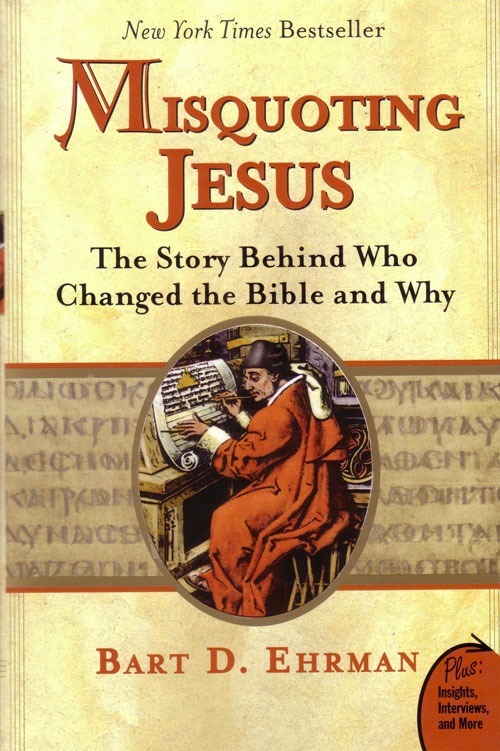
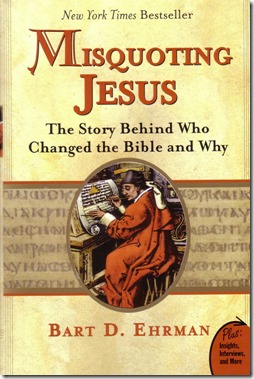
  • Misquoting Jesus: The Story Behind Who Changed the Bible and Why (2005)
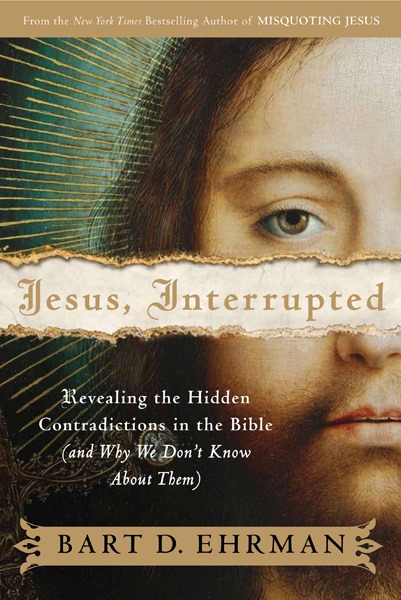
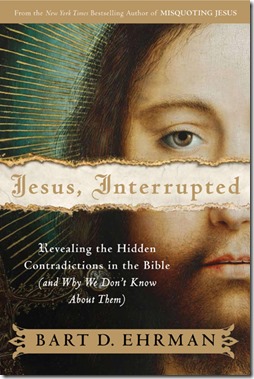
  • Jesus, Interrupted: Revealing the Hidden Contradictions in the Bible (And Why We Don’t Know About Them) (2009)
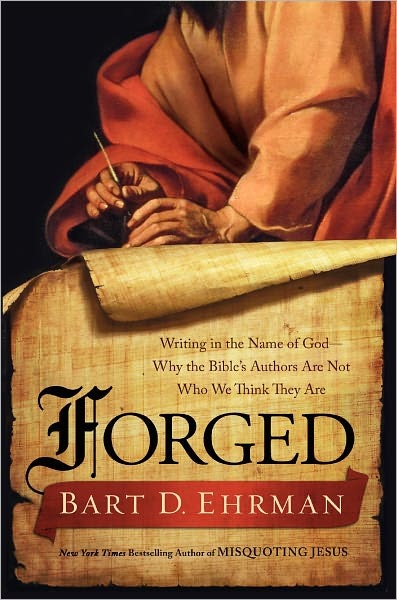
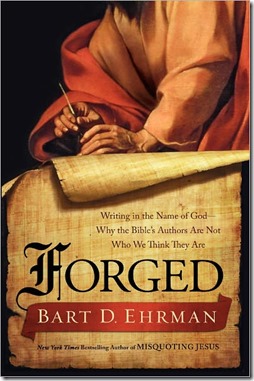
  • Forged: Writing in the Name of God—Why the Bible’s Authors Are Not Who We Think They Are (2011)
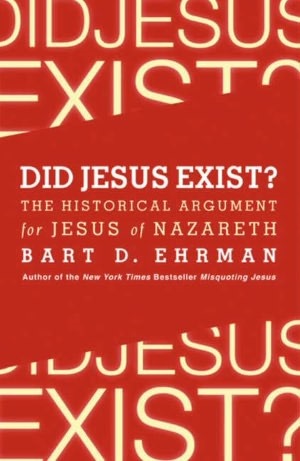
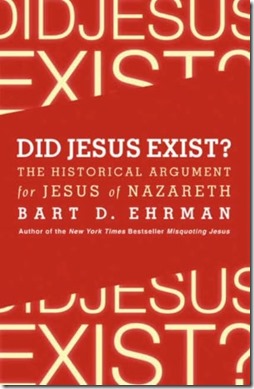
  • Did Jesus Exist?: The Historical Argument for Jesus of Nazareth (2012)
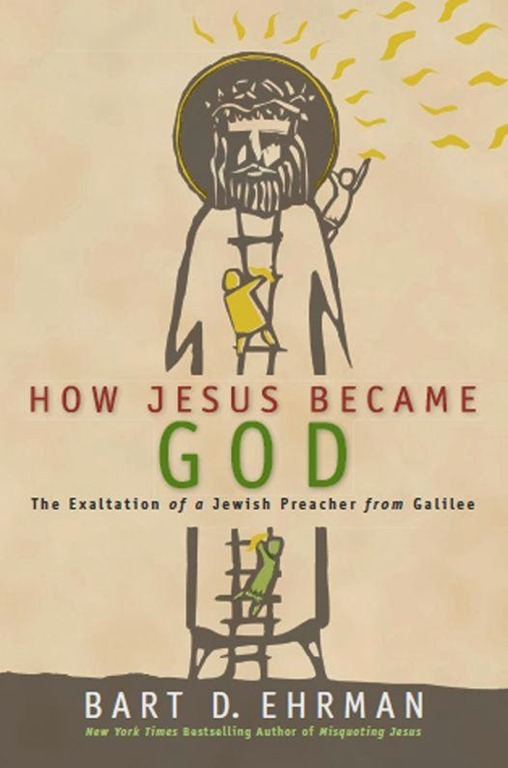
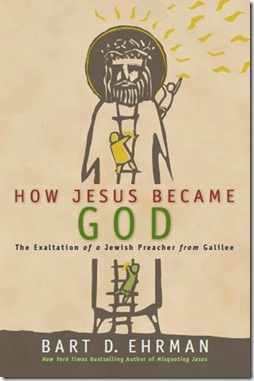
  • How Jesus Became God: The Exaltation of a Jewish Preacher from Galilee (2014)

The reason why I’m so fond of Ehrman’s books is he’s a historian writing about how Christianity came about and does not digress into theology.  I study the origins of Christianity in the same way my friend Mike studies ancient Greek literature and philosophy.  Ehrman works very hard to walk the razor’s edge seeking the academic truth of things, but in doing so, often offends the faithful. 

Most people in America who consider themselves Christians aren’t interested in the historical details of their faith—they believe because that is what they were taught growing up and never took the time to study The New Testament.  If they did, they’d find it to be a black hole of endless scholarship.   Ehrman is the James A. Gray Distinguished Professor of Religious Studies at the University of North Carolina and he says his classes are very popular with all kinds of people, and points out that his conclusions of historical scholarship are middle of the road, and most of what he teaches has been common knowledge for a long time in seminary schools.  Readers are often shocked by what they read in Ehrman’s books but that’s because the ideas are new to the readers, and not to historians of Biblical scholarship.

If what you know about Christianity and The New Testament is was what you learned in Sunday School you might find Ehrman’s books both fascinating and a challenge to your beliefs.  Ehrman started out as a Evangelical himself, but after years of Bible study has become an agnostic.  His books do not attack beliefs or believers.  Ehrman is the kind of truth seeker that learned the ancient languages of The Bible so he could do his own translating, and got a doctorate from Princeton Theological Seminary.  Ehrman moved from believing in The Bible to becoming obsessed with how The New Testament came about.  He has written over twenty-five books on the subject, some for the general reader and others for academic scholars.

We know very little about the actual man Jesus, but through the detective work of textual analysis, anthropology and historical studies of the times in which Jesus lived, Ehrman pieces out one view of Jesus that he claims is a pretty common view among Bible historians.  This is best seen in Did Jesus Exist?  Then Ehrman explains how the followers of Jesus made him into the God we know today in the book How Jesus Became God.  Then his books Misquoting Jesus, Jesus, Interrupted and Forged explores how The New Testament and Christianity evolved in the first four hundred years after Jesus’ death.  If you read these five books you’ll have a pretty good overview of the current historical studies on Jesus and The New Testament.  Ehrman also has a number of entertaining courses at The Great Courses site.

I read these five books in the order they were written and published, but I’d recommend reading them in a different order if you are new to Ehrman.  They all cover the same big territory, but they each focus on threads of finer detail.

Did Jesus Exist?

I’d start with Did Jesus Exist? because Jesus is how everything got started in the first place.  Ehrman finds the most objection to his books by fundamentalists who believe in the literal truth of The Bible, and strangely for this book, by atheists and agnostics who wish to disprove the existence of Jesus.  There is a growing population of humanists who wish to turn Jesus into a myth, and Ehrman’s historical work undermines their beliefs too.   Basically, Ehrman walks a middle ground between the fervor of belief and disbelief.
Did Jesus Exist 

I wish the conclusion to this book was available online so I could link to it.  Ehrman explains how he attended a meeting of the American Humanists Association to receive their Religious Liberty Award and was surprised to find the non-believers spending so much time talking about religion.  He was also shocked that many of these scientific minded people have thoroughly embraced books by writers who claim Jesus is a myth.  It disturbs Ehrman because he knows the pseudo-scholarship approach to proving Jesus is a myth has as much academic validity as Creationism and Intelligent Design and these proclaimed embracers of science don’t seem to know that.

Ehrman in his book Did Jesus Exist? has to attack ideas many of his most popular fans cherish.  Ehrman’s books clearly disproves the fundamentalist view of the literal interpretation of The Bible, which agnostics and atheists love, but his scholarship also finds consistent evidence that a man named Jesus did exist.  So, in one book Ehrman undermines the faithful and the unbelievers.  Ehrman shows the same kind of airy philosophy that goes into convincing people that Jesus was a God is the very same kind of philosophical slight-of-hand that goes into making Jesus a myth.

Whether you’re a believer or disbeliever, don’t you want to know the truth?  I’m not saying the Ehrman  knows the absolute truth, but I am saying his middle of the road, conservative academic approach is more scientific and reliable than just taking other people’s word for things.  What we all need to do is learn to demand the evidence for anything claiming to be true.  And we need to learn the difference between bullshit evidence and research consensus evidence.

Ehrman embraces the study of history as if it was a science, demanding evidence.  The mythicists, as Ehrman calls the Jesus as myth people, promote their beliefs without real academic vigor.  Some only offer wild speculation, but others, some even with PhDs, do attempt to make their points with evidence, but Ehrman makes a good case their evidence is poor, and their logic weak.  It’s a fascinating book that sets the stage for his next book.

How Jesus Became God

Ehrman works to prove that Jesus did not see himself as God, or even divine, but that his followers after his death did deify him.  Ehrman carefully and academically explains the historical existence of Jesus and how Christians transformed a flesh and blood man into divine being to serve their purposes.  This is a great book for The New Testament Bible study because Ehrman spends most of his time exploring the writings of Paul, the four Gospels, Acts and other references in The New Testament to show how Jesus changed over time.  The textual analysis Ehrman makes should be obvious to anyone who just reads The Bible.  So, why haven’t most Christians noticed what Ehrman points out?
How Jesus Became God

Most people who read The Bible, read it in pieces, jumping around as it’s presented in a Sunday School lesson or sermon each Sunday.  Ehrman suggests reading it by comparing all the stories from different books about the same event.  This any reader can do.  What Ehrman brings to the table that most average Bible readers don’t have is the scholarship that explains when various parts of The Bible was written and by who.  When you plot what was said when, you’ll begin to notice that The New Testament is full of contradictions but they make sense if you look at them on a timeline.  It’s quite obvious that theology developed over time, and the theology was constantly changing.  Even within The New Testament its possible to see that Jesus went from a man to a God.  However, to fully understand this transformation requires further study of Christian theologians and their writing for the next three hundred years.  How Jesus went from human being to The Trinity took three hundred years to hammer out, and there were a lot of strange side trips along the way, especially by Christians now called heretics and Gnostics today.

How Jesus Became God sets things up nicely for the first Ehrman book I read.

Misquoting Jesus

Have you ever wondered how The New Testament was written, edited and published?  Especially since it was put together over a thousand years before the printing press.  Have you ever wondered who wrote The New Testament?  Many people think it’s the absolute word of God, as if God dictated The Bible to someone.  Have you never noticed that Bible stories have many different points of view, writing styles and often contradict each other?  Have you never wondered how something that was written almost two thousand years ago could be published consistently without errors and changes?  Have you ever tried to copy a passage in a book by handwriting?  How well did you do?
Misquoting_Jesus

Once you learn that who Jesus was is determined by who was writing about him, then it’s easy to understand how The New Testament was put together and why.  Actually, The New Testament is very poorly edited because its far from consistent.  It leaves in evidence of earlier thinking that was supplanted by later theology.  And it becomes all too obvious that your favorite Jesus quote depends on when that portion of The New Testament was written, and what his orthodox followers believed at that time.

And as manuscripts were passed around the Roman world, copied by scribes in different locals, with different beliefs, often they were altered to reflect a particular view of Jesus.  We don’t have the original drafts of The New Testament books, but we do have hundreds and hundreds of copies that showed up hundreds of years later.  We can trace changes that were made as they circulated from community to community.  And scholars have also detected forgeries.

Forged

Have you ever heard that some of the books in The New Testament were forgeries?  For example, for over a hundred years now, some scholars believe some of the books claimed to be written by Paul were obviously not.  How did they learn that?  Plagiarism and forgery did not exist like it does today, so Bart D. Ehrman has to explain how the various books were written and how their authorship got attributed.  Back in the early days of Christianity, in the first four hundred years after Jesus died, being a famous author was not like it is today.  If you wrote something you wanted people to believe, you often said it was written by someone else, someone people would believe.
forged

Using contextual study, and even computers to analyze style and content, it’s possible to determine if the same person wrote or did not write two different essays.  But even without the skills of a historian or a computer, it’s pretty easy to see that certain lessons from different books in The New Testament teach radically opposing ideas.  Reading Forged will show the common Bible study student how to read scripture far more closely.  This leads us to the last book I’m recommending to read.

Jesus, Interrupted

Knowing what Jesus really said is very difficult.  Most religious people assume everything printed in red in The New Testament is something Jesus actual said.  Well, historians like Ehrman would beg to disagree.  What’s so fascinating about this book is Ehrman gets to write a bestselling book pointing out contradictions in The New Testament that any careful reader should have already noticed for themselves.  I have a feeling that most believers attending church were like me as a kid.  I listened to the preacher quote a passage of The Bible and then tie in some personal experiences from his own life or people in the church, and then turn scripture and contemporary life problems into a sermon.  As a kid I never read The Bible from start to finish.  If we did, we might remember while reading The Gospel of John things said that might contradiction what we head already read in The Gospel of Mark.  Most readers don’t cross-compare, but just work to decipher scriptures one line at a time.
jesus_interrupted

Ehrman teaches readers the trick of parallel reading.  Pick specific incidents in the life of Jesus, and then read about the same incident in different places throughout The New Testament.  It becomes all to obvious that the various writers had different stories to tell, and different theology to preach.  The contrast between the stories in Mark and John are startling.  Why haven’t the average Bible reader notice that?  I’m sure many have, but I think most haven’t.

If you go searching for reviews of these books at Google you can find lots of reviewers who attack what Ehrman has to say.  Now there are different kinds of attacks.  Sometimes, other scholars call Ehrman out on his scholarship.  It seems to me that in Ehrman’s newer books he spends far more writing time explaining how he made his conclusions in comparison to other scholars, in a preemptive attack on this kind of criticism.  This makes for good writing and better reading.  The other common kind of attack on Ehrman’s work is by Christian apologists who seek to defend their specific theological view.  The quality and validity of these kinds of criticism vary greatly.

Ehrman constantly reminds his reader that he is a historian and that metaphysics lies outside the scope of historical studies.  The trouble is the true believer, especially the fundamentalist, believe that their theology is the true view of history.  They assume the metaphysical is part of history.  This is what makes Ehrman’s books controversial with certain readers.

I am an atheist.  I don’t believe the metaphysical exists.  To me, Ehrman’s books are excellent explanations on how Christianity got started in a historical context.  His books also explain to me at least, when and how some Christians acquired their theological and metaphysical ideas.  True believers don’t seem to understand that all concepts, all memes, have a history.  Someone thought them up.  Where we differ is I see them as ideas and they see them as God’s word.

These five books by Bart D. Ehrman go a long way to explaining the history of certain ideas that are programmed deeply into Western culture.  No historian, philosopher or scientist will ever be able to prove or disprove the cherished metaphysical desires of believers.  However, most believers embrace their beliefs without much analysis.  Reading these five books could dissolve such beliefs because they raise logical questions that are corrosive to simple thinking.  However, there are many believers who develop very complex thought systems to maintain their beliefs.  These people will have to read Ehrman and come up with rationalizations that counter his assertions.

JWH – 7/21/14