I’ve been a member of Audible.com since 2002, and over that time I’ve watched as Audible’s library of classic science fiction has grown. It’s been very impressive, and yet, there are many great science fiction books and authors that haven’t made it into their catalog. I’m inspired to write this because of reading “Great Unsung Science Fiction Authors That Everyone Should Read” by Charlie Jane Anders at io9.com. Our Classics of Science Fiction Book Club has been discussing this article, thinking up our own list of SF authors who have gone missing in action, or who we think young people should track down and try.
I thought I’d look up on Audible to see if these authors are remembered, and list the number of audio books available. You can click on the link to read about the author and their books at Wikipedia. I only counted whole books in print at Audible, not single short stories.
These are authors we think deserve more attention. Charlie Jane Anders was pretty good at picking writers that are mostly not in print at Audible.com. That wasn’t her intention, but that’s how I used her list. The book club picked a number of authors that Audible has done a bang-up job of remembering, like Edmond Hamilton.
First, Charlie Jane Anders lists these authors as deserving more attention:
- John Brunner (1)
- Doris Piserchia (0)
- Adam-Troy Castro (3)
- Kathleen Ann Goonan (0)
- Robert Sheckley (5)
- C. L. Moore (0)
- William Barton (0)
- Kage Baker (3)
- Paul Di Filippo (0)
- Carol Emshwiller (1)
- Clifford D. Simak (2)
- Amy Thomson (2)
Some of the authors we discussed at our book club. I haven’t listed them all, because some were very obscure.
- Gordon R. Dickson (9)
- Jack L. Chalker (38)
- John Brunner (1)
- James Schmitz (0)
- Geary Gravel (0)
- Edmond Hamilton (19)
- A. Merritt (1)
- C. M. Kornbluth (1) – but major, his complete short story collection – 43 hours and 10 minutes
- Hal Clement (13)
- Cordwainer Smith (0)
- H. Beam Piper (6)
- Ann Maxwell (0)
- Theodore Sturgeon (5)
- Eric Frank Russell (0)
- Poul Anderson (6)
- Kenneth Bulmer (0)
- Murray Leinster (8)
- Clifford Simak (2)
- Fred Hoyle (1)
- Fredric Brown (4)
- John W. Campbell (3)
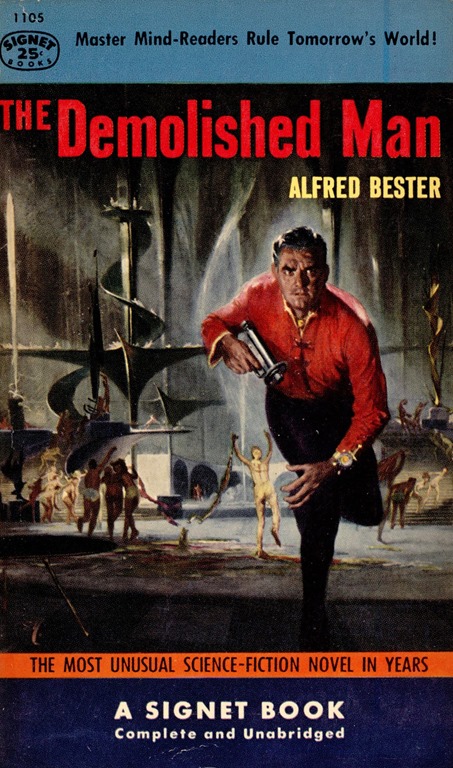
- Alfred Bester (0)
- William Tenn (0)
- Michael Bishop (0)
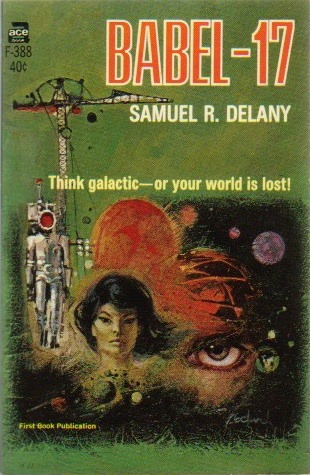
- Samuel R. Delany (0)
- Lloyd Biggle, Jr. (0)
- R. A. Lafferty (0)
- D. G. Compton (0)
- John Boyd (0)
We had a few overlaps with Anders, but for the most part, our fond memories were for other writers. Overall, Audible has lots of major science fiction novels it could still publish. Especially, Alfred Bester or Samuel R. Delany, or even Michael Bishop? However, I still give Audible.com an A+ for preserving classic science fiction. Hell, they’ve published eight E. C. Tubb novels, and thirty A. Bertram Chandler books. Some of these books haven’t seen the light of day since their original ACE Double publication.
The book club consists mainly of older science fiction fans from around the world that have a nostalgia for the science fiction they grew up reading. We’re worried that some of our favorite books and writers might be forgotten when we’re no longer here to remember. These aren’t necessarily our favorite writers, but the ones our faulty memories retrieved when we tried to remembered books we had mostly forgotten, but still remembered fondly.
I have to say that Audible.com is a great resource for old science fiction fans.
JWH – 4/2/14


 Auxiliary Memory