Transcendence–Why Is This Film Only Getting 19% at Rotten Tomatoes?

I went to Transcendence thinking I’d hate this film because of all the bad reviews it’s getting, but to my surprised I ended up enjoying it way more than I imagined.  I went with two friends – Laurie walked out, and Ann said she liked it so much she wanted to see it again.  I thought Transcendence had some big problems, but overall it was a nice exploration of the idea of brain uploading.  Coincidentally, I’m listening to Accelerando by Charles Stross this week, and the science fictional ideas in the book overlapped nicely with those of the film.  Maybe I enjoyed the film merely because it was more fuel for the ideas I’m entertaining at the moment.

If you read the reviews I do concur that the film is lackluster in action, that most of the acting was subdued, and the plotting is clunky, but it just didn’t seem that bad, not a 19% rating at Rotten Tomatoes.  If you compare Transcendence to the dazzling Her, another movie about evolving computer intelligence, yes, this film is slight, but is it that bad?   I’ve seen films I thought were much worse get much higher scores at RT.

I have a hypothesis to test.  Does the acceptance or rejection of science fictional ideas in movies prejudice critics and fans opinions of a science fiction movie?  So if a movie explores an idea you hate, you reject the whole movie?

I wondered, if Transcendence presents ideas that people don’t like?  To talk about those ideas, I’m probably going to reveal some plot points, but many of these are in the previews.  The movie is about three AI scientists, one of which, the husband of the couple played by Johnny Depp, is shot by anti-AI terrorists and his wife saves him by uploading his mind into a computer.  Uploading also happens in Accelerando, and like that book, they also cover super technology brought about by post-human minds.  The book covers vast stretches of time, but in the film, all the advance technology comes out in two years.  This scares the regular folk in the flick, who feel they must destroy the Frankenstein AI.

Are movie goers tired of films about sentient computers?  Do they find post-human life offensive?  Are the networked humans too much like zombies to them?  Is nanotechnology just too scary to think about?  Or, was the ideas in the story fine, and they just didn’t like the writing, presentation, acting or settings?

TRANSCENDENCE

Science fiction books and movies have a long heritage of tales about intelligent computers.  Sometimes they are evil (Colossus), and sometimes they are fun (Short Circuit).  In Transcendence, it’s ambiguous.  Is that the problem?  Uploading minds is not as common, but there’s plenty of precedent (The Matrix).

I’m a little tired of science fiction being about saving the world.  Why does science fiction always have to involve a big threat to all of humanity?  There was no need to involve guns or violence in this story.  Gattaca was the perfect science fiction movie to me.  It was a personal story.  Ditto for Her and Robot and Frank.  Can’t we have a story about a super intelligent being without involve armies and terrorists?  Or maybe critics and audiences didn’t like this movie because there wasn’t enough action and explosions.

Or was the film disliked because it suggests that ordinary people will be obsolete?  What’s weird is movie goers love mutants in superhero comic book stories, but they don’t seem to like post-humans.  A human that can fly is fine, but one that makes us look past our due date is not?

Audiences are more forgiving than the critics at Rotten Tomatoes, and the audience response at RT was 47% for Transcendence.   That’s pretty low for audiences.  Maybe I should just accept that this film was a dog, and maybe I liked it because it was about some of my pet topics.  That does fit in with my hypothesis – I liked it for its ideas, and others hated it for the same ideas.   I really hated Marvel’s The Avengers, which got a 92% critics/91% audience rating at RT, and I disliked the movie intensely because of its ideas.

I wonder if movie makers could save a lot of money on special effects if they merely created science fiction movies with extremely popular science fictional ideas?

JWH – 4/22/14
Do They Love Old Vinyl or Do They Love the Old Music?

Check out Audiophile Records – What Are They? over at RareRecords.net for the latest on audiophile vinyl.

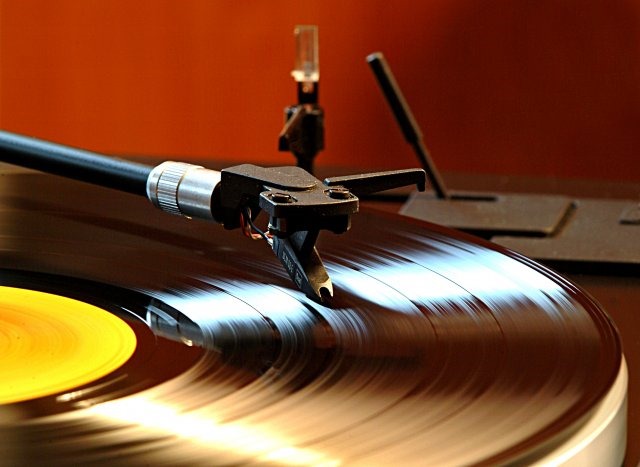
This morning at The Huffington Post, Peter Dreier describes how his daughter Amelia has discovered his old vinyl record collection.  Last night at the movie Transcendence, the future tech scientists played their music on ancient tech vinyl – it made the couple seem hip in their uber-geekness.  All over the world, young people are rediscovering record players and LPs.  I have to wonder though, are they embracing the quaint technology, or the old music?

record_player

When I was young and discovered 1930s big band music in the 1970s, it wasn’t by playing old 78s.  All the old music Peter Dreier’s daughter discovered is available on Rdio, Pandora or iTunes.  Why did it take finding dad’s old LPs to get his twins interested?

Year before last, I got back into vinyl LPs again because of nostalgia, but I’m giving them up again.  I love holding records and their covers, but I hate playing them.  Yes, their sound is retro-warm, but it’s like going back to VHS video.  I just got sick of the skips, pops and skates.  Even though I still call our refrigerator the ice box, I wouldn’t want one that actually required blocks of ice.  I’m an old fart, but I love convenient technology.

Can’t young people discover old songs without rediscovering old LP albums?  Or have they discovered they love holding music after growing up with invisible files?  They should rediscover CDs.  They sound better, are easier to play, and you can hold them too.  Will young people go and buy all those old albums at $25 a pop as FLAC files for the Pono when it comes out?  They are used to free music on the internet, and free LPs from their parent’s attics.

I’m actually ditching my LPs again so I can discover new music.  The time I spent shopping for records and monkeying with getting them to play is better spent on actually listening to music.  Rdio and Spotify give me access to millions of albums – I just need to find clues for what to try.  I do this through reading.

Whenever I read a story or article and someone mentions loving a particular song or album, I go play it.  Rdio makes it that easy!  I just read The Mayor of MacDougal Street by Dave Van Ronk which inspired me play many forgotten late 1950s early 1960s Greenwich Village folk artists, and make a new playlist.   I watched 20 Feet From Stardom and played the solo albums by these great backup singers.  I read The Wrecking Crew by Kent Hartman about 1960s studio musicians and played many Phil Spector Wall of Sound hits.  And I’m trying all the 1940s and 1950s jazz greats because of reading Jack Kerouac.  If I had waited to find all these artists in old record bins I might not never have discover them.

Discovering great music takes study.

I think it’s great that kids are discovering records and record players.  I think it’s great that they are discovering our generation’s music.   Vinyl collecting makes a nice hobby.  But don’t let be your only path to old music.   Would Peter Dreier’s girls have tried old music if their dad hadn’t spent so much time talking about the concerts he went to as a kid?

Talk to your parents and grandparents.  Go through their music.  If you discover you love the Beatles, read books about the Beatles and the songs and bands they grew up loving.  Ditto for any other artist you find you love.  It’s been long enough for these bands to have become history.

I’m exploring classical music on Rdio through listening to “How to Listen to Great Music” by Professor Robert Greenberg for 1 credit at Audible.com.  I also bought a paperback book he wrote on the same subject from Amazon.  (If you want the video from The Great Courses, wait until it’s on sale.)  I also bought 1001 Classical Recordings You Music Hear Before You Die on a remaindered shelf.  Keep an eye at Barnes & Noble’s remaindered books, music history books are very common.

When you play old albums, look at the inner sleeves.  They often have ads for other albums on them.  Call them up on Rdio or Spotify.  Go to audiophile sites like HDtracks or audiophile USA to see what’s being reprinted and look them up on streaming services, or even try to find the original albums used.  If you really get into vinyl, the real fun starts when you hear about a rare album that you’ve just got to hear, and tracking it down becomes a quest.

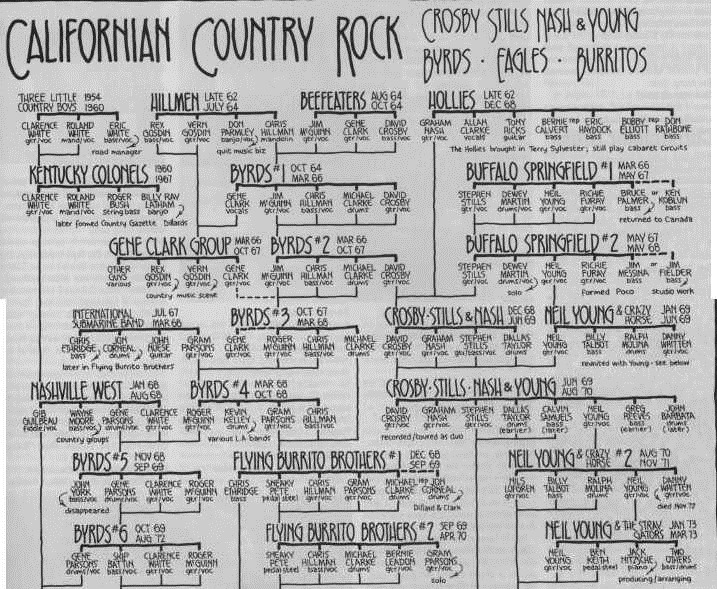
A lot of kids are discovering The Beatles, but I’ve yet to hear any of them talk about The Byrds, or Buffalo Springfield.  Just study this chart and try to track down all the albums on the Californian Country Rock chart that shows a musicians family tree showing the children groups formed from the breakup of the bands The Bryds and Buffalo Springfield.  Most of these albums are available on Rdio and Spotify.  Click for larger image.

byrdstree

If you end up loving 1960s and 1970s rock music you discovered through your parent’s old albums, a cool way to time travel to the past is subscribe to The Rolling Stone, and then sign up to use their free archives to reread old issues and their album reviews.

There are many record collecting and music review magazines in print and on the net.  Once you get out of the trap of only listening to current hits, and start time traveling through the past, discovering new old music becomes an addiction.

Just for fun, here’s an old favorite of mine that you might not have found in grandpop’s old records.

http://rd.io/x/QJhDPkcodw/

JWH – 4/21/14

How Many Topics Do You Love To Talk About?

When you’re at a party and you hear other people talking, what topics draw you into their conversations?  If you use Flipboard, Zite or News360, what subjects do you follow?  If you use Google Alerts, what news do you want to keep up with?  If you want to be a know-it-all, what areas of knowledge do you want to master?  If you were a contestant on Jeopardy! what categories would you hope would show up?  If you want to get a Ph.D. what would you want to write your thesis on?

zen1

I think we all have pet topics we like to think, talk and even write about, but how many can we realistically keep up with?  Yesterday I was reading this fantastic article about  clean coal at Wired and realized that its topic is one that will impact all of us for the rest of our lives.  Carbon sequestration, or carbon capture and storage (CCS) is not the sexy topic that will impress your friends or cause people to gather around you at a party.  [Idea:  Should we all take on a few important topics to collective worry about?]

That makes me think not only do we have a number of topics that always attract our attention, but we have different kinds.  Some are fun, some are serious, some are just obsessive.  We’ve all have friends we avoid certain subjects because once they start talking they won’t shut up.  Just mention Obama to a Fox News junky to know what I mean.  Yet, isn’t that fanatical focusing the thing that defines us?  Isn’t one way we define ourselves, or our friends, is by the topics they love?  If we use the label jock, geek, hipster, Republican, liberal, artist, don’t we paint a topical picture of how those folks think?

Are the aspects of reality we dwell on the genes of our personality?

When we promote ourselves on dating sites, don’t we paint ourselves by our interests?

This got me to thinking about my own interests.  How many do I have?  How much time do I spend keeping up with each subject?  How much do I enjoy it when I meet other people interested in the same subject?  Is the closeness of friendship related to how many topics we share in common?  How many of my favorite topics are serious subjects, and how many are just for fun?  How consumed am I by each?  Could I rate them 1 – 10 on how important they are to me?  If I had a Billboard Top 100 of Jim Harris topics, could I rank them, plus code them with symbols that showed a growing interest, or waning?

Right now, I couldn’t be that specific with a list of my interests, but it might be rewarding to try make such a list.  Programming an app that track interests, their intensity and their waxing and waning might be a fun project.  I wonder if other people find this idea interesting?  I might start with a spreadsheet and see what happens.  The new “in” topic I often see on the web is decluttering.  People want to get organized, simplify their lives and their possessions.  I wonder if they’d like to organize their interests?

Recently I decided to get rid of LPs again.  For a while I was caught up in the vinyl retro movement, but I discovered there’s a reason why I gave up vinyl when CDs came out.  Now that I’m retired and have all the time in the world to do all the things I dreamed of doing I realized that a whole bunch of things just ain’t going to happen.  In other words I think I have a whole list of topics I’ve lost interest in.  And there’s some new topics that are popping up that I need to pursue.  For instance, I need to sod my yard, but I thought, what would be the best carbon footprint yard to help fight global warming?   So if I had an app that tracked my interests, I’d delete LPs/vinyl and add environmental friendly landscaping.  I wonder how many friends I have that might want to talk to me about carbon friend weeds?

It would have been interesting to have this interest tracking app starting when I was a little kid, if it had some kind of historical record of my interests over my lifetime.  I believe some topics would be life long, and others fleeting, and others would come and go.  Books, music, television and movies would stay constant, but vary in their details.  Science and history topics would wax and wane.  I got interested in computers in the 1960s, and started tech school in 1971, and became obsessed in 1978 when I decided to buy my own microcomputer.  My last three computers I built myself.  Of course, it seems our whole society has a passion for technology now.

I have a growing interest in the 19th century, especially for literature, science and history, but also music, math and philosophy.  I wonder how many of my friends think about the Victorian era?  If I was at a party and heard people talk about Anthony Trollope or Charles Babbage I’d be overjoyed and overcome my shyness to talk to them.  The last party I attended I found a friend for the night by striking up on conversation on popular science books about physics.  And I’d really like to meet some people who are interested in 24 bit FLAC music files.

“One of Us Must Know (Sooner or Later)” just came on the Rdio playlist.  One entry to add:

  • Bob Dylan (1965 – present)

http://rd.io/x/QJhDK3aErw/

JWH – 4/20/14

Living Life As It Happens Versus Making Dreams Comes True

Do you measure happiness by the number of dreams you’ve made come true, or by accepting life as it comes to you?  It’s very hard to control reality.  If your whim is to go to the movies, that’s not to hard to make real.  But if your whim is to travel to Europe, that requires a lot of effort to make into a reality.  If your dream is to become a Nobel Prize winning scientist, then you’re moving into the world of chance, no matter how hard you work.

life2

Recently, my wife and I were talking about our regrets, and things we wished we had done when we were young.  We are both lazy, and neither one of us have strong motivational drives.  I said it’s a shame we didn’t do more when we were young, but maybe we did the things we really wanted to do, like watch TV, go to the movies, play with our cats, hang out with friends and family, read books, and so on – just ordinary everyday things.

Our friend Olivia has been on hundreds of vacations, while Susan and I have probably been on less than 50 each in our whole life.  If you measure success in life by where you’ve been, then we have little.  We know many people with beautifully decorated homes that we envy, but our house has the couch potato décor of two TV watching experts.  We’ve met rich and successful people, and by those yardsticks we come up short too.  But have they read the thousands of books I have?  I’m a bookworm, so I live to read.

If success in life is measured by making fantasies come true, we haven’t done very well.  The trouble is I have at least a dozen good fantasies a day – that’s about a quarter million daydreams in my lifetime.  Which ones should I have made come true?  You see, I think our society is too bamboozled by desires.

Because of television we see how millions of other people live and we think we should have their lives too.  If we see someone go to Colorado for a ski trip we feel bad if we can’t too.  If we know someone with a Porsche we feel bad we don’t have an high performance sports car too.  Susan’s brother and wife are going on their second trip to Europe, and Susan probably feels bad we’ve never had our first. 

Me, I feel I go to Europe all the time.  The two books I’m currently listening to are from Russia and England.  The last movie I watched from Netflix was French.  I regularly read The Guardian.  I watch a lot of TV from England, read a lot of books by European authors, and regularly read histories about Europe.  I love European painters, and have seen many of their great work here in traveling exhibits.  I’m studying classical music, most of which has European origins.  In high school I studied German, and in college Spanish.  And I can’t count how many documentaries I’ve seen on European history, art and science.  I once started an internet business with a guy from Paris.  It’s not like I don’t know about the place, I’ve just never been there.  I’m fascinated by Western civilization, but have little desire to see the relics, and if I did, the main reason would be to see the paintings.  Most of what I actually like about Europe is in books and music, which transcends space and time.

One of the things I realized from my discussion with Susan was that I live in my head, and I think most people don’t.  To Susan and most of my friends, the real world is where they can see, hear, touch, smell and taste external to their bodies.  Success is measured by experience or accumulation. 

I live in a different world.  I think life is philosophical, and you live it as it happens.  Success is measured by how well you digest it.  It’s not what you see, but how you see  it.  It’s not what you earn, but how you earn it.  It’s not who you know, but how you know each other.

What’s funny, is by my method of measuring, or theirs, no matter how much external or internal success you find, it’s never enough.  If you don’t die with regrets, then you never looked very far.

JWH – 4/19/14 

Learning Geography for Jeopardy!

You know what makes me feel dumb?  Watching Jeopardy!  Jeopardy!, the classic TV game show is now in its 30th season, and since I retired I’ve been watching it daily.  I used to watch it as a kid starting back in 1964, the year it first came on, when I got to skip school, or in the summer time.  I’m not sure why it’s only in its 30th season when it’s 50 years old – I guess they only count the Alex Trebek years, and forgot old Art Fleming.  Watching Jeopardy! makes me feel dumb because often it has contestants who look and act completely mundane, yet who just bubble over as fountains of knowledge.  Even when I know what to ask, I often can’t pronounce the names and words right.  I’d crash and burn at the game.  Still one can dream.

central_america_map

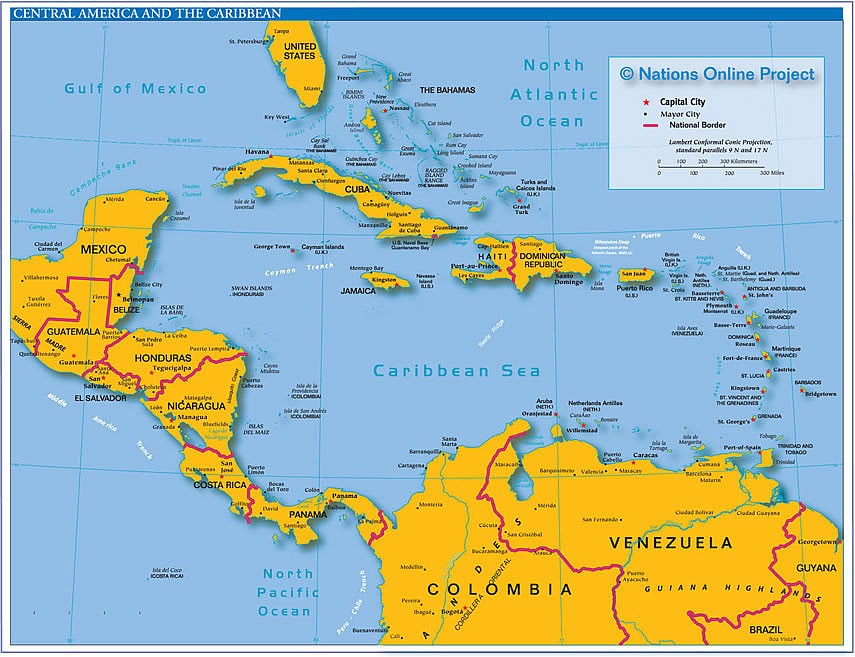
The other day my friend Mike was telling me about his research in geography teaching programs for the iPad and I wondered if I studied them if I’d be better at playing along with Jeopardy!  Geography comes up pretty often and usually I don’t know what to ask.  By the way, the contestants on Jeopardy! must formulate the proper question to the answer provided.  It’s one of the reasons why it was so hard for IBM to program Watson to play the game.  To get some idea of how to play, take this practice test.

Mike likes Maps of our World, an app for iOS by Trilliarden.  There’s a free version, which you can buy additional maps, or buy the complete collection for $8.99.   MooW tests users on finding countries and capitals, and has training sessions to help you learn first.

Marianne Wartoft has written a program called Seterra that can be downloaded or played online.  Check out the online version, it gives a good idea what the Maps of our World app is like.  For me, it quickly shows how little I know.  I’m not bad, but I’m far from Jeopardy! material.

Mike and I wondered which platform produced the best programs:  desktop, mobile or online?  I’d bet a multi-gigabyte game, sold on a DVD, designed for large high-resolution monitors, would be the stunning platform for this kind of program.  But except for the cheesy old educational games, I don’t see anything offered.  Most of the software gold rushes these days are in the mobile app territories.  That’s a shame.  Mobile apps make me think of how MP3 music is low-fi compared to FLAC files.   Who wants to study geography on tiny screens?

Sheppard Software has a nice online page of Geography Games, that include voice pronunciation of names.  For $36 a year you can get an ad free version, and if I played it a lot I would opt for that because most online applications are butt-ugly with all the ads.  In fact, with this site, some of the colorful looking controls are really ads.  Thankful, once in the game, the ads are left out.  The program could spread out to fit my 1080p screen, but it doesn’t.   Although this Sheppard Software site is homely, it does offer more features than the the two programs above, requiring a lot more learning – just look at all the content it covers just for Mexico.  And I really like it pronounces the names for me.

When Mike brought up the idea of geography learning software I pictured a program with beautiful maps and a gee-whiz dazzling interface, and none of these programs have that.  Plus, Jeopardy! often requires knowledge of rivers, seas, oceans, mountain ranges, deserts, and other natural geographical features not related to man-made features.

Ultimately, it comes down to how many facts do I want to learn.  There’s 196 countries in the world at the moment.  I wouldn’t mind knowing how to spot them on an unlabeled map.  But do I want to take the time to learn 196 capitals?  There are 457 cities around the world with over a million people.  We’re approaching a 1,000 pieces of information to learn. That’s more than I want to stuff in my head, although it seems surprisingly ignorant not to know where a million people live.

I wonder if software is even the best way to learn about geography.  Would studying an atlas or almanac be a better way to learn?  And like a sixth grader, I’m asking myself, “Why do I need to learn this?  Will I use it when I grow up?”  Evidently, except at 3:30pm M-F, when Jeopardy! is on, I might not need it at all.  Like algebra and chemistry, avoiding geography in life is pretty easy, except being geographically challenged makes you look more like a dumbass to average person, than not knowing algebra and chemistry, which most people don’t know anyway.

I think the ideal way to learn geography is by reading books set in other countries.  Eva over at A Striped Armchair has a list of the books she’s read by country.  Since Jeopardy! covers a lot of book and authors, that might kill several birds at once.  But how long would it take to read just one book for each country?

Still, I grave an interactive program that would be teach me about the world, and constantly quiz me.  There’s a reason why educational software never caught on – it’s damn hard to program slick interfaces that can compete with video games for artistry. 

When it comes to a slick geography program, Google Earth is the one to beat.  It would be neat if it had an educational component with testing.  It would be cool to click on any country and see information about that country, like what movies and novels are set there, what kind of music and art come from its cities and citizens, what are links to the web that feature the best news about the country, what are some great blogs from its citizens, and so on.

If you think about it, the potential of software and learning really hasn’t been tapped yet.  Hell, we’ve probably haven’t even reached the Model-T stage of development yet.

JWH – 4/17/14