A Bacterium, Ant, Cockroach, Mouse, Cat, Extraterrestrial and Robot Walked into My Kitchen

Infinity is a very large number.  Larger than you can ever imagine.  But let’s try.

Until recently we lived in a universe – billions of galaxies, with billions of stars each.  Big numbers, but nothing compared to infinity.  Then scientists began to speculate about a multiverse – an infinity of universes.  How many is that?  Enough that your life could be randomly recreated over and over again, for an infinity of times somewhere out there in an infinity of universes.  Some of your lives, an infinity, will only be roughly like yours, but some of them, another infinity, will be exactly like your life now, and another infinity of them will be only slightly different, by just one little thing.  And so on.  For infinity.

The number of monkeys and the amount of time it takes to randomly recreate all the works of Shakespeare by banging on old typewriters are very small numbers compared to infinity, but still much larger than what we can imagine.

Get the idea how big infinity is?  No, I don’t think so, not yet, it’s still bigger than you can imagine.

This morning after my routine breakfast of scrambled eggs and potatoes, I was sitting on the porcelain throne in the smallest room of my house, reading a copy of Civilization by Niall Ferguson, when an alien from Gliese 687 broke into my house and examined my kitchen without me noticing.  So how could I know this?  Well, this morning I was reading The Hidden Reality by Brian Green while sitting on the porcelain throne in the smallest room of my house, just after my breakfast of eggs and potatoes and I had this thought:  What if while I was taking my morning dump, an alien from Gliese lands in my backyard, jimmies open my back door with with a dazzling alien lock pick, lets itself in, along with a yellow cat hanging out by the back door, to poke around my kitchen, for a bit, only to leave before I finish my reading to return to the kitchen to do the dishes?

If we live in a reality of infinity that has happened.  Maybe it happened to me today.  Let’s make infinity even bigger.  Let’s imagine that alien is also being followed around by a robot from another universe that is billions of years old, and it is collecting information on the life forms of this universe.  Hey, it could happen, we have infinity to work with.

My kitchen is a rather small place, at least compared to all of reality.  To me it appears to be empty of life except when I fixing myself something to eat.  My wife works out of town Monday through Friday, so I live mostly alone.  On the weekends my kitchen is very busy with Susan and my coming and goings, but for the most part, from my frame of reference, my kitchen only exists when I’m in it.

My awareness of reality is equal to my ability to comprehend the physical reality outside of my body.  I have five senses that collects data that my brain processes into a view of reality.  It’s not a direct view.  I also am able to analyze this data and theorize about aspects of reality I can’t perceive directly – like time, space and infinity.  We might only have five senses but we have many more cognitive tools to perceive reality, like mathematics, logic, imagination, science, etc.

This is a tale of perspective.  A lesson in how we explore reality.  How big is reality.  How much can we perceive?

Like the famous fable about the blind men examining an elephant and all reporting something different, this story is about different creatures exploring my kitchen and reporting what they saw.

kitchen

I use the world reality instead of universe because scientists are now hypothesizing that our universe is one of but many, probably an infinity of them.  So I use the word reality to point to the whole shebang of everything.  My kitchen is but one infinitely small aspect of one infinitely large reality.  Any creature standing in my kitchen will feel they are in the century of reality.  If we expand outward from my kitchen by powers of ten, we’ll eventually surpass the size of the known universe at ten to the 26.  More than likely, reality extends upwards well beyond that, probably for infinity.  If we explore downward by decreasing powers of ten, at 10 to the minus 18 we’d reach the smallest particles we know about today, but again, there’s probably plenty more small to explore, maybe an infinite amount.

My kitchen is so small compared to the rest of reality as to be non-existent.  But then, compare to the smallest of things, my kitchen is as large as the universe is to us today.

The Tale of the Bacterium

bacteria

Okay, the bacterium didn’t walk in, it floated in with a few billion friends.  They wafted in unnoted by all.  Bacteria don’t have sense organs, so their concept of my kitchen was rather limited.  Maybe as much as you or I would know about the Moon if a bit of moonlight flickered on us through a window one night when we weren’t paying attention. 

Bacteria are tiny, but common, and essential to life on Earth, and for most places in our universe, the common form of life.  Some scientists have even pessimistically suggested that our kind of self-aware life might be so uncommon that we might be the only example in this universe.  Others theorize our kind of intelligent life might be common enough to have many concurrent examples per galaxy.  A bacteria might have as much as a terabyte of information stored chemically in it’s structure.  How many universes have to evolve before we have one universe where bacteria were randomly produced out of simpler non-living elements?  If it takes that many to make the smallest of life forms, how many universes have to form to create the scenario I’m giving here?

Bacteria have chemical receptors.  There was a wet spot on the extraterrestrial’s respirator exit value and they landed on it.  They died when she/he returned to their ship in my back yard moments after leaving my kitchen.  They never knew anything about my kitchen or the ET, but then bacteria have never known much about anything, let alone conceived that we all live in the same reality.

The Ant’s Story

Ant

The ant came into the kitchen from under the house, via a loose space between the flooring and the water pipes.  The ant is a giant compared to the bacterium, a magnificent creature, with useful sense organs and a little teeny tiny brain.  To the ant, a creature who perceives the world mostly in two dimensions, my kitchen is a vast affair, but not impossibly large, probably no bigger than you and I walking through a large neighborhood.  The ant was prowling through the cabinet under my sink while the alien was examining the island counter of my kitchen, while I was in the bathroom sitting on the pot reading Civilization by Niall Ferguson, and the robot was discreetly observing the alien.

The alien never noticed the ant.  The robot recorded the ants activities with it’s powerful sensors.  The ant felt the vibrations of the alien moving around the room, but never sensed the robot.  The ant never even met the dying cockroach.

Imagine if life on Earth had never evolved past the ant.  What if the perception of this Earth, our Earth, had never been perceived by nothing greater than an ant’s brain?  We humans think reality is all about us, but it’s not.  We humans come and go, even in all of infinity.  And compared to everything else in infinity, in all of reality, humans would make up such a small percentage of each universe, that our total impact would be near zero.  Compared to all of reality, we are as close to be nothing as nothing.  Isn’t it hilarious that we each think we’re everything?

I often wonder what the world will be like when mankind becomes extinct and the most advanced being on the planet will be the dolphin or chimpanzee.  Will they remember us?

What the Roach Saw
dying-roach

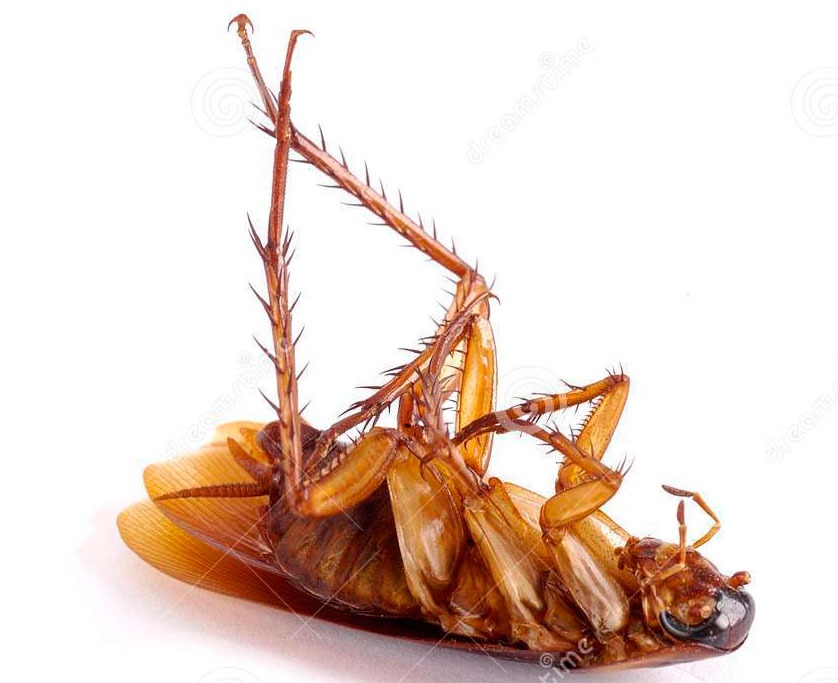
Unfortunately, the roach had entered my kitchen yesterday and had already partaken of the poison I had set out for roachkind.  It wasn’t quite dead.  It’s hairy legs occasionally stretched and retracted.  The roach didn’t know it was dying.  Nor did it notice when the alien reached down and carefully picked it up and put it in a small specimen container.  The roach would finally die in orbit around the Earth.  The roach had liked my kitchen in it’s own little way.  It was warm and not perfectly clean.  It had possibilities for a future colony.  Lucky for me, but sad for the roach, it never got to lay its eggs.  Those eggs were an interesting surprise to the ET from Gleise 687.  To the roach, my kitchen was a much smaller place than what the ant found, but to a roach, reality isn’t very big at all.  There is no infinite numbers in a roach’s brain.

The roach had perceived my presence several times during its short visit.  It had no understanding that I was a fellow creature living in a large reality, it only sensed me by vibration and changes in light patterns on its primitive receptors.  Evolution had programmed it to always run.  However, the roach had no program to warn it of the chemical appeal of the bait I had left for it.  Sorry little guy.

Mouse in the House
mouse

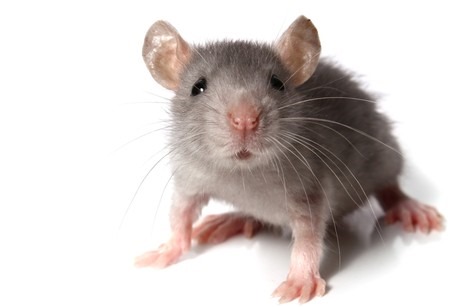
Last night, unnoticed by me, a little mouse crawled into the pantry from a passageway of tunnels in the wall.  My kitchen was a far richer place to little Mickey than what the ant and cockroach found.  My kitchen had wonderful possibilities, a very rich environment it.   It was aware of my every movement in the house and knew when to hide and when to scamper.  The kitchen was a three dimension maze of sights and smells, and when I left for the bathroom, the cute little mouse had come out of hiding and ran across the kitchen floor hoping to find something good to eat.  It froze when the alien picked the lock of my back door, momentary letting in a  chill breeze.  The mouse sensed the cat immediately and was below the house before the cat reached the kitchen.

The little mouse could not count.  It never knew that billions upon billions of bacteria lived inside it’s little body.  It was no Carl Sagan of mice.

The Kitty Kat
OrangeTabby

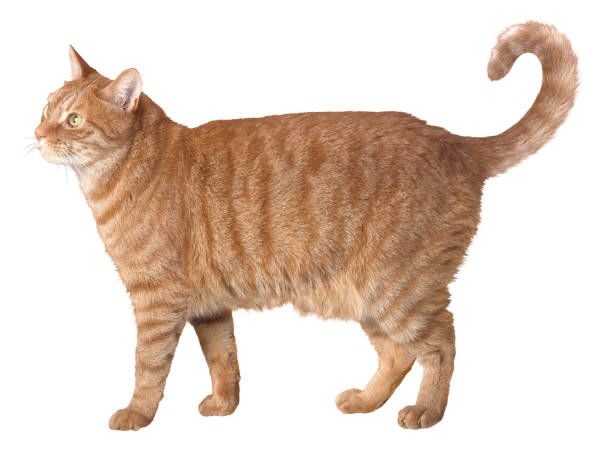
The scruffy old cat was looking for a warm spot when it ran into the house.  The being that let it in did not scare it like the human that lived there.  The cat was leery of all humans and lived out of doors on its own.  It was always drawn to the warmth that leaked out of houses, but never liked people, and especially hated dogs.  It always kept other animals at a distance, except the ones it wanted to eat.  As soon as the yellow cat walked into the kitchen it could smell the mouse.

In terms of certain kinds of numbers, cats and humans are very close.  We know of each other’s existence.  The difference is we can conceptually know much further than our senses can show us, whereas a cat is a creature that lives very well within it’s perceptual reach.  This makes some humans sad, and others happy.

Alien from Gliese 687 (cloaked)

kitchen 

The alien was hundreds of years old because of enhancements to her/his biology.  Aliens from Gliese 687 traveled between stars at one third of the speed of life.  They have been observing Earth for millions of years.  That’s the thing about intelligence, about the only thing to do in this universe is to observe how it works.  Observers seldom let themselves be observed because of ethical reasons.  It’s not much fun for a species to discover it’s not the crown of creation.  If humans suddenly realized it was the mouse or cockroach of this reality, or even the bacterium, it would be hard on our collective ego.

She/he had let in a yellow cat that was hanging around the back door.  The alien was completely silent, but then she/he was unaware of being followed by a robot from another universe.

The Robot from Another Universe (cloaked)

kitchen

The carefully cloaked robot had been following the alien for over two hundred of our years.   The robot found the alien the most interesting creature it has discovered in the last 787,623 years.  When you can live for billions of years across multiple universes finding something interesting to do with your time is a challenge.

The robot was like a machine, but calling it a machine would be insulting.  Eons ago it had been created by intelligent machines closer in shape to what we call machines.  There are limits to intelligence, consciousness, awareness and lifespan, and this robot was at the outer limit, at least for all the universes it was aware of, but then there was much it wasn’t aware of.  There’s always more.  Infinity is like that.

Me, James Wallace Harris

me

This version of me is a lot like most of the others like me.  I mostly know about this house, and what exists around it for a few miles.  Conceptually I know about a lot more, but most of my awareness is focused on a tiny piece of reality, in a tiny fragment of time.  Reality has existed for an infinite time before me, and will exist for an infinite time after me.  Reality is infinitely bigger than I can imagine.  I miss a lot, like the visit from the bacterium, ant, cockroach, mouse, cat, alien and robot.  That’s how it always is, we miss a lot.  We miss most of everything.  We miss an infinity of everything.  But that’s okay, because we have a finite mind that enjoys a finite time and place.  Small numbers do have their charm.

None of my visitors stayed long, and by the time I finished my after breakfast read and returned to clean up the kitchen they had gone.  I went off to my computer room to write this until lunch time.  Which is now.

JWH 12/11/13

Science Fiction: Nostalgic Past v. Dystopian Future

I am sixty-two years old and I want to write and publish my first science fiction story.  I started reading science fiction in 1962.  What science fiction was to me then, and what science fiction means to me today, are vastly different literary forms.  On Tuesday, SF Signal ran “How to Escape the Legacy of Science Fiction’s Pulp Roots” by Gareth L. Powell, which triggered a lively discussion in the comments section.  Many readers took it as an attack on classic science fiction, but I don’t think that was the point, but the real point is rather complicated because of various viewpoint perspectives.

  • For many people science fiction equals the Heinlein/Clarke/Asimov era
  • Some of these people are older fans that grew up with those stories and have tremendous nostalgia for them
  • Some of these people are younger fans that have discovered this classic era and love it
  • Some of these people are non-SF readers who rejected SF because of this era’s lack of literary quality
  • Some of these people are current SF fans who have no interest in past SF and feel it’s irreverent to contemporary SF
  • Then there are general readers that have read a few of the classic SF stories and now they narrowly define SF by these old classics
  • Then there are many readers, young and old, that are completely ignorant of SF, classic or modern, and the phrase science fiction equals movies and television shows, and book SF and its history are invisible to them

saturn

Powell, a science fiction writer, was talking to a book club that obviously wasn’t a SF book club and said of them:

I noticed this recently, when I spent an enjoyable evening being quizzed by members of a local book group about one of my novels, which they had been reading. They were a nice group of people but, when they spoke of the science fiction books they had tried previously, not one of them mentioned anything less than fifty years old! In their youths, they’d tried reading Asimov, Clarke and Heinlein, but had been put off by, as they saw it, a concentration on ideas at the expense of characterization or literary merit.

I’ve known lots of people like this in my lifetime.  Over there years in the general literary press, writers like John Updike and others, have expressed this view about science fiction.  Basically they say it’s poorly written kid’s stuff, and they are referring to the classic Heinlein/Clarke/Asimov era of SF.  SF fans have always reacted badly to this – especially the old fans who grew up reading and loving classic SF, and the younger fans who have rediscovered it.

Gareth L. Powell is a writer of new science fiction and feels, “As science fiction writers and fans, we are rightly proud of our genre’s origins and heritage. Yet sometimes, those same origins can be a millstone around our necks, dragging us down.” 

Powell goes on to admit an influence and admiration for classic science fiction but suggests that the literary past can be a burden to contemporary writers. 

That is my conflict too, but for other reasons that don’t pertain to literary style.  Powell, as a writer is trying to discover new territory to write his science fiction and says,

But, can we really blame them? Those early classics (and the million derivative works they inspired) helped establish and reinforce the popular perception of science fiction as a pulpy and poorly written backwater of literature. For modern non-SF audiences, they have little appeal. Readers are more sophisticated now. The only way we’ll escape the legacy of our pulp roots is to promote the innovation, literary merit, and relevance of the best modern genre writing.

Some fans will always cling to the ‘golden age’ works of the 1950s, 1960s and 1970s, and I can understand why. They provide a magic door back to the simple pleasures of a simpler world – a world before global warming, oil shortages, terrorism, and economic uncertainty; relics of a world where the future was easily understood, and (largely) American, middle class and white in outlook, origin and ethnicity.

My reading world of 1962 is so much different than my reading world at age 62.  I still read and love 1950s and 1960s science fiction, but I’m willing to admit that it was poorly written, but that’s not an essential complaint, at least by me, no, my problem with classic science fiction is it’s dated.  It’s wrong.  It’s about futures that will never be.  Classic science fiction futures have become my nostalgic past.  I read old SF to relish how I felt when I was young and the future was full of fantastic possibilities.

When science fiction writers like Robert Silverberg  admit that interstellar travel is probably impossible, and I’m starting to doubt that even interplanetary travel and colonization will happen, then it’s time we need to completely reevaluate science fiction.  But isn’t that what new SF writers do?  If I have any criticism of Gareth Powell, it’s not over his criticisms of classic science fiction, but rather, over how he’s reimagining science fiction.

If science fiction fans want the respect of the literary world at large they need to take their genre more seriously.  Doctor Who and Star Trek reboots are just recycling a nostalgic past.  So is the new space opera.  Science fiction has become horribly incestuous.

I’m 62 and want to write science fiction.  I’m inspired by the science fiction I discovered in 1962 – but I don’t want to live and write in a nostalgic past.  I don’t think Powell went far enough in suggesting that classic science fiction is a millstone around the neck of new science fiction writers.  Most science fiction, and I’m talking 98-99%, is recursive science fiction fantasies. 

Real science fiction is about writing about possible futures.  You can’t do that by writing about impossible pasts.  You can’t be the next H. G. Wells, Robert A. Heinlein, Arthur C. Clarke or Isaac Asimov by recycling their ideas about the future.  The thing about science fiction is it always gets the future wrong, but it’s fabulously right when it’s inventing new possible futures.

Right now dystopian science fiction is very popular, very exciting to young people.  Their instincts tell them the futures of science fiction pasts are nostalgic pap.  Sure, there’s a large segment of the young and the old that want to cling to the futures of classic science fiction, but they need to either accept their fantasies are fantasy and not true science fiction, or go read some science books.  On the other hand, we need new writers that can imagine some possible non-dystopian futures.  And do you know the definition of non-dystopian?  It’s utopian. 

That’s why so many readers love classic science fiction.  For all the scary aspects of alien invasions, collapsing civilizations, nuclear wars, there was a sense of utopian dreams in that fiction, of interplanetary and interstellar travel, life extension, new civilizations, immortality, intelligent machines, brain uploading, etc.  The reason why teens love dystopian fiction is not because they want to dwell on the horrible, but because the characters are free to fight for a new way of living, invent new societies, to rebel against authority, to live without parents and rules. 

Readers are attracted to the positive, even if the setting is a nightmare.

Classic science fiction is both inherently positive and now nostalgic.  But the futures it predicted aren’t going to happen.  Powell is right, the challenge of new science fiction writers is not to be burden by past science fiction.  Not just because it has the reputation for being poorly written, but because its now dated and wrong.  I know why so many people love classic science fiction and defend it so passionately.  I’m sure Powell knows too.  But lovers of classic science fiction shouldn’t be offended when we criticize classic science fiction.  The goal of this criticism is to write better science fiction.  It’s called evolution.

JWH 12/7/13

Models of Making Money by Making Music

Songwriters and performers dream of writing a hit song that will be heard by millions and make them rich enough to quit their day jobs.  As a life-long music lover I want my song making heroes to make as much money as possible, so it disturbs me when I read stories like “Get Ready for the Streaming-Music Die Off” that report artists are making so little from my favorite method of buying music that it might die off.  I’m upset that the artists aren’t getting paid properly, and I’m upset that I’m losing my favorite all-time method of buying music.

Music is very important to me, it’s brought my life much joy, solace, inspiration, happiness, stimulation, and pleasure.  It’s well worth the money I pay for it, and it’s angers me that so many people don’t.  Anyone who doesn’t pay for their music has no respect for music, or its creators.  Nor do they have any respect for capitalism and our economic well being.  With the music business we want to do two things:  reward the creators of music, and reward the business of promoting, publishing and distributing of music.  Sadly, it appears that the publishers of music have always been greedy and routinely ripped off their artists.  With the new digital technologies of music distributions it appears artists are getting an even shorter end of the stick than ever before.

Most people think little about music, and even less about how it’s bought and sold.  But if you love music, and you know who you are, it’s very important to know how your favorite artists are paid – their songs are the soundtrack of your life.  But we want more than that.  We want to promote economic strength in our country, and we want a vital music industry.  Americans are making less and less to sell to the world, so unless you want everyone working at a fast food counter, it’s important to promote industry too.

What Business Models Benefit the Artists?

There are two basic ways to sell music:

  • Artists sell digital and physical records directly to their fans
  • Artists sign with a publisher that sell their work in a variety of ways

In a perfect world fans and artists would cut out the middle man, but there’s a problem.  Getting a million people to listen to your song is hard.  Getting ten million people to hear it is far more than ten times harder.  If you want to get rich selling music you have to work with a publisher, and that involves working with loads of other people that take a cut out of the preverbal pie.

Every Tuesday new albums come out.  On Rdio I page through so many I can’t count them.  There are millions of would-be recording stars out there, all wanting millions of other people to listen and buy their music.  Most, if not practically all of them, will never make any money, not the kind of money that would let them live off their creative efforts.  In all the articles I read about the artists complaining of unfair treatment by the music publishers, I don’t see any figures on how many fans does an artist have to find to make a living.  That would be very interesting to know.  If a song writer wants to make a million dollars on his song, how many people have to buy the song directly, or listen on the radio, or hear it from one of the ever growing ways of hearing new tunes.

We know if an artist sells a song on their web site for a $1, it will take 1 million fans buying the song.  But how many would it take if the song was sold on iTunes or Amazon?  How many plays would it take to make a million dollars from fans listening on Spotify or Rdio?  Or Pandora or iTunes Radio?  Or just a plain old radio?  Each method of distribution has it’s costs, and investors that want their share of the action.

Artists are complaining bitterly about streaming music services not paying enough, but as the article linked above shows, it’s the music publishers who make the deals with the streaming services, and it might not be the streaming services to blame for low royalties.

I now get my music almost exclusively through Rdio, which I play $9.99 a month.  I’m contributing $120 a year to the music industry and their artists.  It troubles me when I hear that artists get little from this business model.  Would I benefit artists and the industry more by buying $120 worth of CDs?  Or $120 worth of MP3s from Amazon or iTunes?

To complicate the mathematical understanding of this problem, many of the songs I play on Rdio are ones I already own on CD.  I use Rdio as a convenience.  My favorite playlist is just over 200 songs.  I play it 90% of the time, and listen to new albums 10% of the time to find new songs to add to my playlists.  Probably 100 of those 200 songs I own already, so for about $120 I could buy the others, and go the MP3 buying model of business.  If I did that, I’d probably spend about $50 a year on new songs.

It’s doubtful I’d ever go back to buying physical CDs.  That means paying $120 a year to Rdio puts me at my maximum spending, and the artists on my playlist are getting paid a tiny fraction of a cent every time I play one of their songs.  Thus the solution by my standards would be to pay the artists at a higher rate, and the publishers less.

What Business Models Benefit the Fans?

For most music fans, the casual back ground music listeners, radio, whether AM, FM or various internet service, getting music for free is all they want.  They pay for their music by listening to ads.

Let’s ignore the barbarians that steal music.

Next up are fans who love songs enough to buy them.  They might buy a handful of songs a year, just the ones that are catchy enough to keep.  They will spend a $1.29 here and there.  Over their lifetime they will collect and own a playlist of their favorites.

Then we have fans willing to buy whole albums from their favorite artists, either digital or physical.  They are willing to commit $10-15, or more.  These kinds of music lovers often buy one or more albums a month.  However, this model of business is disappearing.  Fewer and fewer fans collect albums.

For the hard core music fan that loves the widest variety of music, nothing beats streaming music at $10 a month.  (Or $5/month if you only listen from your computer.)

How to Grow the Industry?

Streaming music is based on the idea that fans will pay a monthly fee to hear whatever they want whenever they want.  $10 a month gets convenience.  This is the model I prefer.  I was hoping this model would be the one to succeed.  I show off Rdio every chance I get, but I have convinced damn few people to buy it.  The streaming music model is like owning a giant record store for $10 a month.  It’s an unbelievable deal, but it’s not popular.  Spotify is hoping to get 40 million subscribers, but only has six million now.  It would take a 100  million subscribers to make subscription music a 12 billion dollar a year industry, and that’s not likely, but it would make music into a cable TV like industry.

If digital music had never existed, and the only way to own music was via physical media, the music industry would be huge, but I doubt we’ll return to that business model.

Let me tell you a story.  My friend Leigh Ann brought over a stack of old LPs she had.  She thinks she got them from an estate sale.  They were old Broadway show soundtracks from the 1950s and 1960s.  They looked rare, valuable and in good condition.  Most of them were on Rdio.  My $10 a month gets me whole areas of music I’ve never even tried.  Mostly I use my $10 a month service to play the same 200 songs over and over again.  I haven’t even begun to explore 1/10th of 1/10th of the music on Rdio.  $10 a month for unlimited streaming music is the best money I’ve spent in my life.

Leigh Ann and I started playing her albums but it became obvious that it was much easier just to call them up on Rdio.  I could buy her albums, but the artists that created them wouldn’t get paid.  Someone, probably not the original artists, do get paid, even if it’s a tiny amount, if I play them on Rdio.

Artists should get better rates from subscription music, but subscription music should be the model to market music.  It has one fair concept – artists are paid every time a song is played.  That’s better than what they get from stolen MP3s or people buying used LPs and CDs.  And streaming music keeps millions of albums in print that would be forgotten.

JWH – 12/6/13

Nutritional Rating Systems

I’ve always eaten what I liked, usually junk food, but for decades I’ve longed to eat healthier and lose weight.  Now I have to eat healthy because of my heart.   Eating healthy has always been a vague concept:  avoid junk food, eat natural foods.  What exactly are healthy foods? What are junk foods?  Is there a scientific, quantitative way of judging foods?

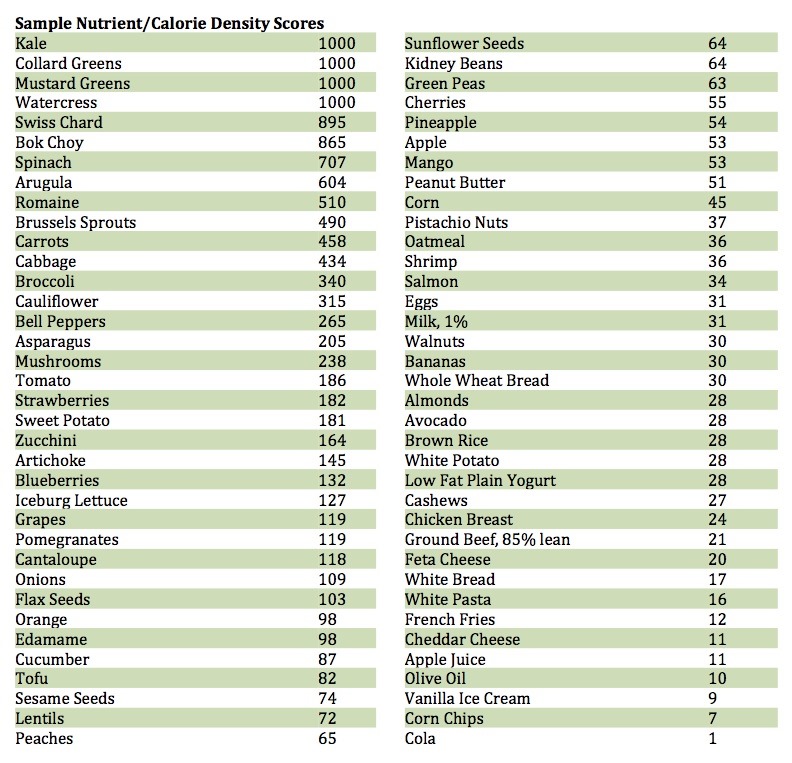
I started studying Dr. Joel Fuhrman, a health guru I discovered on a PBS fund drive.  I made the pledge and got a bunch of books and videos by Fuhrman.  From Fuhrman’s book Eat to Live I read about his nutrition index which I’ve since discovered evolved into the Aggregate Nutrient Density Index (ANDI).  Just look at this chart to get an idea how it works.  It’s rather revealing in a simple obvious way.

ANDI-scores

[Click for larger image]

Is kale really a 1,000 times better than a glass of Coke?  That’s not hard to believe, I would have thought it infinitely greater.  But what about something healthier sounding?  Is kale 50 times better than feta cheese?  Or 20 times more nutritious than peanut butter?  Only if you’re just counting micronutrients.  But Dr. Fuhrman believes phytochemicals are the real key to health.  His books and lectures are quite persuasive in convincing me that eating very nutritional foods can actual reverse my clogged arteries and reduce my cholesterol.

The trouble is, when I tried his starter diet it made me feel awful, and I hated eating the prescribed food.  Fuhrman claims there’s a barrier to get through, and once on the other side I’d feel great.  I’m going to try again, but this time I’m going to work my way into slowly.  Fuhrman doesn’t want his converts to be pussies, but to bite the bullet and jump into eating healthy cold turkey.  I’m having a problem with that.  So I’m going to improve my diet by improving my numbers.

My point however, in writing this essay is to explore nutritional rating systems.  The idea of food coming with a score is appealing, especially when the rating is based on quality rather than quantity, which is essentially what calories count.  When I look at the above list and see that carrots are almost ten times more valuable than an apple it makes me wonder why an apple a day keeps the doctor away.  The ANDI system is far from perfect though, which measures micronutrient density per calorie.  Almonds get a rating of 28, yet I’m seeing all kinds of reports about how almonds are good for you.  And why is a white potato equal to brown rice?  See, they both have equal levels of micronutrients, but the ANDI system makes no claim about macronutrients, or energy producing values of carbohydrates, proteins and fats.  Low value ANDI foods can and do include valuable chemicals that our body needs but is not reflected in their numeric scale.

There’s another rating system that is more complex, that also rates processed foods, called the NuVal, that scores foods from 1-100.  In this system broccoli scores a 100, avocadoes get an 89, but Pepperidge Farm Goldfish are 20.  Iceberg lettuce gets a 82 and pineapple gets a 99.  That doesn’t seem to jive with the ANDI system, but that’s because it’s counting other qualities including fiber.  NuVal is used in over 1700 supermarkets to help shoppers compare all kinds of foods.

Fuhrman’s ANDI system is designed to recognize the healthful benefits of phytochemicals in whole foods.  It’s more of a specialized system.  NuVal is a comparison system to be used by all food manufactures for marketing purposes.   Both have their value.  For my purpose, I value the ANDI system more.  I want to create my own menu of healthy foods to cook, and want to get away from eating prepackaged processed foods.

I can also look at the bigger picture of any food by looking at sites like NutritionData – see this page for kale, which give extensive data, including the amino acids in the protein breakdown.

kale

I doubt I’ll ever need this level of detail information.  Dr. Fuhrman claims if you eat a variety of high value fruits and vegetables from the ANDI system you’ll get everything you need.  But I’m a vegetarian and need to worry about protein.  I do think the ANDI system is a great scale to eat by, but not the only one.

JWH – 12/5/13

Designing My Own Restaurant Style Menu for Healthy Eating

The other day I wrote, “Simplifying an Overloaded Life” which has inspired me to work on a single goal developing a healthy diet.  This morning, in the predawn darkness of being neither awake or asleep, a good idea came to me.  I imagined creating a menu, like the kind we use in restaurants, that would have all the healthy foods and dishes I could eat for breakfast, lunch, dinner and snacks, listed in an attractive way, that will remind me of what I might want to eat, or should eat.  If it’s not on the menu, then I don’t eat it.

health-cook-books

[click on photo for larger image]

I even imagined using Microsoft Publisher to lay out this menu with attractive lettering and appetizing photos, printing it on card stock, and even having it laminated.  I pictured myself pulling out this menu whenever I got hungry so it would remind me just what I could eat, knowing that if I ordered from this Healthy Living Home Menu, I’d be eating just what I need to feel better and lose weight.

Of course, in the light of day, this appears to be quite an ambitious project.  What if my menu offers twelve different dishes for breakfast, lunch and supper?  That’s learning how to cook 36 meals.  Damn, that sounds like a lot.  28 has always been my favorite number, so let’s go with eight items for breakfast, and ten for lunch and supper.  Even that sounds too ambitious. 

Of course I know myself.  I cook one thing and eat on it three days, and freeze any leftovers.  I tend to eat the same breakfast every day.  Right now I live off of about six different meals I know how to prepare, but what I need to do is eat more variety of vegetables and fruits, so I need to expand that repertoire of items on my menu.

I’ve decided that December is the month I’ll totally focus on learning to eat healthy as my one and only goal.  Here’s what I plan to do:

  1. Gather all my diet/health/cook books into one place for study (see photo).
  2. Read and compare these books for their best recommendations.
  3. Write down the best advice and tips I read in Evernote.
  4. Learn how to shop for the best foods I should eat – how to tell when fruits and vegetables are in season, at their best to buy, etc.
  5. Learn how to store food for optimal quality – fruits, veggies, spices, condiments,  dairy, eggs, nuts, etc.
  6. Learn how to chop and cook food properly.
  7. Select 20-30 recipes to master and start learning to cook them – save them in Evernote.
  8. Create and print my menu of approved foods.
  9. When at home, only eat from that menu. 
  10. Research menus at local restaurants for their most healthy meals and make a list of approved away from home menu items.
  11. Make a list of all foods and ingredients I want eat and know about, and why they are good for me, and if they have any curative powers.

One problem I’ve always had when I’m at the store, especially a healthy one like Whole Foods or Fresh Market, is seeing all the fruits and vegetables and not knowing how to select and prepare most of them.  Recently I’ve been adventurous and started buying avocados after some training with my friend Janis.  I’m still never sure how to pick out a good one, but I’ve learn how to cut them open, even though I make a mess, but all I do is put a few slices on my salad and then I have half an avocado that I don’t know what do with.  I really need to get to know fruits and vegetables.

I also need to learn how to use spices.  I can cook by a recipe, but crudely.  What I like to do is think of a selection of tasty veggies and make a stir fry or soup, but I’m never sure how to season my concoctions.  So in studying my cookbook, I need to select a range of recipes that will educate myself about spices.

I assume my menu will be a good place to save all the recipes I want to master, so it might end up like a small book.

My ultimate goal is to simplify my life.  I want to get past thinking about what I should eat.  I want to get past thinking about how to live healthy.  I want to learn what’s in my diet/health/cook books and then give them away.  I want to stop worrying about what I should eat.  I want to stop worrying about eating an unhealthy diet.

I want to start the new year without having to make any resolutions about dieting.

JWH – 12/4/13