Adorate Deum at 4 a.m.

I’ve discovered the perfect time to listen to mystic chants of the middle ages – at 4 a.m. with headphones – on those mornings when insomnia strikes.  Having a choir of men or women sing in monophonic Latin while it’s pitch dark and my consciousness drifts between dreamland and here is a serene musical experience.  I can understand why monks like to get up early to chant.

I’ve been on a classical music kick lately, ever since I bought sixty classical records from the Friends of the Library bookstore.  What got me to jump back in time over a thousand years though, is buying How to Listen to and Understand Great Music, 3rd Edition from The Great Courses, taught by Professor Robert Greenberg.  Now I didn’t pay the $349.95 at The Great Courses site, but $9.56 to Audible.com.  Many of The Great Courses are now available at Audible.com for just one credit each.  Credits run $9.56-$15.95 depending on how many you buy at once, but at those prices it’s worth joining Audible.com just to buy these audio lectures.  This one from Dr. Greenberg runs 48 lectures, and he has many more focusing on specific eras of classical music and composers.

I’ve never really liked classical music, except for a few rare pieces, but always assume I could get into classical music through study.  We’ll see.  My general impression was the older the music, the less likely I would like it, but strangely enough I’m really digging the music of the Middle Ages.  Who knew.  Dr. Greenberg starts with what little we know about music from classical Greece and works forward in time, explaining how music evolved.  I’m finding his lectures totally fascinating.

Because I subscribe to Rdio ($4.99/mo. for computer streaming, $9.99/mo. mobile devices) I have access to an almost unlimited supply of classical music.  And I’ve discovered that Rdio has Naxos recordings which has a huge section devoted to Medieval music.  Naxos also has a nice Introduction and History of classical music, including a service that lets subscribers stream music from over 5,000 CDs for $19.95 a year.  A free subscription lets you play 25% song samples.  I prefer Rdio because I can build playlists.

Exploring music covered by Dr. Greenberg with Rdio, is very exciting and stimulating.  It’s very hard to put into words how this music makes me feel, but I shall write an essay about that soon.

I’m quite surprised by the music of the middle ages, especially with learning about the various developments in polyphony.  The plainchants I present here are monophonic, where the singers sing just one note a time.  As Dr. Greenberg illustrates, every century produced radical changes in music.  It rapidly gets complicated and sophisticated.  Right now I’m digging the simple stuff like you hear here.  It going to take me a long time to work my way through the next thousand years.

JWH – 9/12/13

An Alternative to Obamacare

In physics scientists seek to solve the mysteries of reality through mathematics, but if a solution involves a complicated convoluted mathematical equation, it’s generally assumed to be wrong.  Often the right solution involves a simple elegant equation.

Healthcare in America is complicated, bureaucratic and expensive.  I’m wondering if there’s a simpler solution to Obamacare.  To be upfront, I’m a liberal and believe all people have a right to quality healthcare.

To simplify the problem to its most elegant equation I’ve wondered if we shouldn’t take a totally different approach to subsidized healthcare.  I think the federal government should just build and run free hospitals and clinics.  Instead of creating a complex reimbursement system, they should just hire doctors and nurses and provide absolutely free healthcare to those who don’t have insurance.

Today, most hospitals ask if you have insurance, and if you don’t, they send you away.  These free hospitals would ask, and if you do, they’ll send you away.

The federal government should build a free HMO type system that works to bring down the cost of healthcare.  It should use every trick in the book to save on costs, while maximizing preventive heath measures.  Employ no remedies that aren’t effective.  Tell all patients that their information will be used for statistical and scientific studies.  This system size should give it clout to get cheaper drugs and equipment.

Much of the cost of healthcare is the bureaucracy to maintain it.  If the government learned to build efficient hospitals and clinics, that hired medical professionals at salaries scaled to reward cost effective productivity, this system could compete with the commercial healthcare systems and help bring down the overall costs of healthcare.

We could keep all existing healthcare systems and just phase in this idea as an experiment.  The new system should not contract with private contractors to do the job.  The new system should aim to be minimalistic as an experiment in efficiency.  The idea could be started by finding locations in the country with extremely high uninsured population and opening a hospital to test its impact.  Be scientific.  Don’t build the second hospital until the lessons are learned from the first.

Innovate with technology.  Instead of having people wait in waiting rooms, use texting or phone messages.  Develop online prescreening questioning.  Push the concept of home medical monitoring.  Create convenience shops for collecting blood, doing x-rays and other simply diagnostic procedures.  Use computers like IBM’s Watson to analyze medical charts and test results, or even prescreen patients.  Develop a universal healthcare record system that allows patients to record health diaries and drug use, along with any daily home monitoring, and their diet and exercise habits.  Test the theory that diet can improve many medical conditions.

This concept should be an experiment in lowering healthcare costs.  Do everything possible so that all money spent goes directly to actual healthcare and as little as possible to administrative costs.  Start small and build on success.

JWH – 9/8/13

Nick (1994-2013)

Nick-1

Today, September 3, 2013, I had to have Nick put to sleep.  He was almost 19.  His sister, Nora, died just two years ago, also in September.  Nick was a survivor.  When he was young Nick had cancer twice, having to have operations on his back both times.  For each operation they had to shave his back and turned him into ugly cat for months.  For years now Nick had mega-colon, an enlarge heart, a heart murmur, and arthritis in his hind legs.  Today they told me he also had severe anemia and needed a blood transfusion, plus his heart had a new fast arrhythmia, and his kidney function was worse than it was just a few months ago. 

Susan and I had a hard time letting him go, but we decided it was finally time.

I hate putting animals to sleep because they can’t make this decision for themselves.  I’d like to think Nick would have thought it the right time too – for all I know, he might have been ready to go months ago, but felt obligated to stay around to be our cat because he thought it was best for Susan and I.  The doctors and staff at the Greene Animal Hospital were wonderful as usual.  Nick died very peacefully, and I only wish when my time comes I could go like that.

NN041303 

Nick was my all time favorite pet – although I loved all my dogs and cats.  He will be my last pet.  I couldn’t watch another grow old and die, and I’m not sure I could outlive another pet myself, and I wouldn’t want leave an animal that was attached to me that way.  Back in 2002 I went to Seattle for six weeks and I felt really bad leaving Nick – he always favored me in picking laps.  I worried about how he felt not finding me for so long.  And when I returned I could never tell if he recognized me or just found another person to like.

We got Nick and Nora back in 1994.  Yes, they were named after the famous movie detective and his wife, Nick and Nora Charles.  Nick and Nora were our second set of cats, with Yin and Yang the first.  Susan and I have been married long enough to outlive two generations of cats.  Nick was so small when we first got him, I could hold him the palm of my hand.  That was so long ago, and just yesterday.

When they were kittens, Nick and Nora loved each other, and like Yin and Yang, would play fetch with paper balls.  Susan and I would sit in our chairs and the cats would get on our footstools and wait for us the throw paper balls over their heads.  They’d leap high up into the air, snatch the balls in their paws, and sometimes even do flips before landing on their feet.  Half the time they’d even bring the paper balls back for us to throw again.  We’d always know when they wanted to play this game because you’d look on the floor beside your chair and find a pile of paper balls and a cat staring up at you.  They’d also play soccer, batting the balls around while chasing after them, scattering them all over the house.  But the cats would bring them to back us when they wanted to play fetch.

Sadly, both sets of cats got tired of these games as they got older.  And it was also sad, as they got older they became less friendly with each other.  For many years Nick would sit in my lap and Nora would sit in Susan’s.  If there were only one of us in the den watching TV they’d both pile up in a single lap that we called a double-cat.  If Nora got to a lap first she’d get pissy if Nick tried snuggle a space next to her.  At one time Nick got up to 20 pounds and Nora peaked at 16, so we’d have 36 pounds of cat on our laps.  However, as you can see, I’m no lightweight either.

Cats 010 

Even though Nick and Nora stopped playing together, they stayed together most of the day.  It was hard to tell them apart at times.  After Nora died, Nick got the pick of our laps.  He loved sleeping on us – until we bought him a heating pad for his old age.  He loved that heating pad so much, but would always still spend a portion of the day sleeping on one of us.

Cats

Many of my friends have worried that I will be lonely without Nick.  Since Susan works out of town, I’m by myself all week.  Nick has kept me company for five years now, but I’m not sure if I will be lonely.  Loving an animal seems much different from loving a person.  Loneliness for me is not having someone to talk to, and I can call Susan on the phone.  And even though I often talked to Nick, he never replied back or started a conversation.  What I love about animals, and what I will miss, is their nonhuman qualities.  We mainly communicate with animals by touch, sight, body language – and smells.  I’m not going to miss the smells, but I will miss having a creature that chooses to curl up on me.

In his old age, Nick got very set in his ways.  But then so am I.  For the last two years we lived like old bachelors, following a clockwork routine.  My life will take a new daily course without Nick.  It will take me a while to get used to it.  It took me a long time before I stopped seeing Nora after she died.  Twice this evening already I’ve thought I saw Nick.  It’s funny how we get used people and animals being in our lives, and how hard it is to not see them when they are gone.

But for now on, I will have to make furry friends with those creatures owned by my friends.  I was very attached to Nick and Nora, and I just can’t go through that again.  This might sound hard hearted, but from now on I only want to attach myself to beings that will die after me.

JWH – 9/3/13

Retiring

Back in November of 1977, I took a job with Memphis State University, as The University of Memphis was then called, and have worked there ever since.  If everything goes as planned, I shall retire next month, October of 2013.  The long middle portion of my life, my work years, will be over, and I’ll start on what I call the final third of life.  The first third is all about growing up and getting an education, the middle third about work, but I hope my retirement years will be more than just waiting to die.  I have big plans.  In fact, I’ve thought more about retirement than I ever did as a kid to pondering that childhood Koan, “What are you going to be when you grow up?”  For ten years now, I’ve asked myself, “What are you going to be when you retire?”

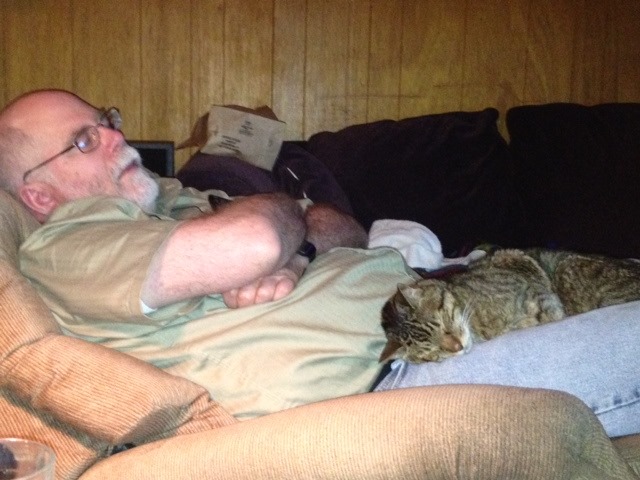
I hope it will be more than taking naps with my cat.

jim-and-nick

Strangely, reaction among my friends have been mixed to what I consider great news.  Many have pleaded I should keep working until age sixty-six.

Most of my work friends want me to stay.  I will miss them too, and hope to keep in contact.  I get the feeling they think once I’m gone, I’ll disappear.  I hope that’s not true.  A huge part of my social life has been work.  Some of these people seem to suggest that retiring is stepping down from life.  They are the ones that plan to work until their seventies or eighties.  Many have exclaimed, “Won’t you be bored to death?”

People at work who depend on me for help ask, “Who’s going to program my reports now?”  Luckily, I’m retiring just when IT decided to expand their sphere to all the computer related workers in the departments and colleges.  They have already assigned a programmer to come work with me for the next several weeks. 

My retired friends are the happiest to hear that I’m retiring.  They’ve already started their new life and are very happy.

I have great ambitions for retirement, but even if I never achieve any of them, I’m quite sure I’ll be happy just having more time to read, watch movies, television shows and documentaries and listen to a lot of music.  I read around fifty books a year, now, so I hope to expend it to 100.  I have a lifetime of book collecting on my shelves that are mostly unread.  I’ve collected enough unread volumes to last decades. 

I subscribe to a music service with over 20 million songs, and plan to roam up and down the history of music, studying classical, jazz, folk, world, etc.

I have countless art books, art DVDs, video art history courses that I want to study.

Now with free online courses given around the world, I want to study everything I never had time for but dream about. 

I’ve seen thousands of movies and documentaries, and I’ve still got thousand more I want to see.

Finally I have time – time, time, time!

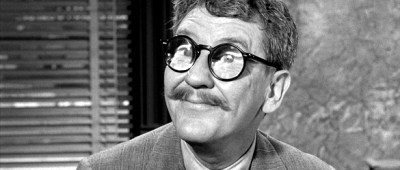
I hope I don’t break my glasses like Henry Beamis.

However, I want my retirement years to be more than just pursuing passive entertainment.  I’ve always wanted to write a novel, but whined I never had time.  Now it’s time to put up or shut up.  I have drafts of several novels I’ve written over the years that I’m anxious to finish.  I don’t plan to sleep in after I retire.  In fact, I plan to get up even earlier than I did for work, and devote my mornings to writing like it was a job.  After lunch it will be hobby time.

Because I was a programmer all my life, I’ve always dreamed of writing fun programs.  Apps for tablets and smartphones offers wonderful possibilities.  My friend Mike, also a programmer that will retire soon, and I, plan to work on some projects together, or at least concurrently. 

One of my major regrets of my first third years was not being disciplined enough to learn advanced mathematics.  I’m going to test the assertion, “You can’t teach an old dog new tricks” by studying math.  I plan to combine the desire to learn the Python programming language with study of math by programming all my homework problems into a graphical math system I develop myself.  I’d love to buy a 4k monitor and program a coordinate system to display beautiful geometric designs.  I’m currently reading Euclid’s Window, a book about the history of geometry and it’s impact on the sciences, and I’d like to understand this book at a deeper level than just racing over the narrative.

Scientific American used to run a column called “The Amateur Scientist” which described do-it-yourself experiments that could be done in a home workshop.  A few years back I bought a CD of the complete series, thinking they might be a wonderful retirement hobby activity.

There’s a guitar sitting in my room, that I’ve been meaning to learn to play for years.  I also wanted to learn to play chess and bridge.  Man, I’ve forgotten more things I want to do than I’ve written about here.

How can anyone ask if I will be bored?

To be honest with myself, I’m racing to do these things while I can, because my brain is winding down, my heart is wimpy, and physical wellbeing is declining.

JWH – 9/2/13