Faith in Science Fiction

When we read science fiction do we only expect great stories, or do we read science fiction for great expectations?

For many, I think science fiction is just another genre to escape into, but for some, especially us older fans, science fiction inspired us about the future.  Science fiction was a belief system, and science fiction sold us a philosophy about the future.

Reading Rich Horton’s introduction to his latest The Year’s Best Science Fiction & Fantasy 2013 Edition led me to read Paul Kincaid’s review of last years best of the year anthologies in the  Los Angeles Review of Books.  Kincaid’s key paragraph:

The problem may be, I think, that science fiction has lost confidence in the future. Or perhaps it would be more accurate to say that it has lost confidence that the future can be comprehended. At its historical best, science fiction presented alien worlds and distant futures that, however weird they might seem, were always fundamentally understandable. The basic plot structure often involved the achievement of understanding. But somewhere amidst the ruins of cyberpunk in the 1980s, we began to feel that the present was changing too rapidly for us to keep up with. And if we didn’t understand the present, what hope did we have for the future? The accelerating rate of change has inevitably affected the futures that appear in our fictions. Things happen as if by magic (one thinks, for example, of Matter by Iain M. Banks, in which a character has casually assumed the appearance of a bush), or else things are so different that there is no connection with the experiences and perceptions of our present.

Kincaid says a number of things about the state of our genre by reviewing the three best of the year anthologies:

  • “…the genres of the fantastic themselves have reached a state of exhaustion”
  • “In the main, there is no sense that the writers have any real conviction about what they are doing. Rather, the genre has become a set of tropes to be repeated and repeated until all meaning has been drained from them.”
  • “but it is almost anti-SF in its affect: the future has run its course and come to an end; what was one of the most exciting aspirations of science fiction—the promise of life on another world—is here made available only to those looking backward to a former time. It is a story that makes manifest the exhaustion that is immanent throughout these three collections.”
  • “And yet the stories would all have a feel of the past about them, the sense of a genre treading water, picking up shiny relics from its own long history as though they were bright new ideas.”
  • “This one story illuminates the exhaustion that seems to have overtaken SF and fantasy, the sense that the future is something to be approached wearily because we have already imagined it and rubbed away anything that was bright and new. Judging by these three books, the genre is now afraid to engage with what once made it novel, instead turning back to what was there before. We might tinker with the details, but it seems that no-one has much interest in making it (a)new.”

I find Kincaid’s criticisms fascinating, and I often agree with him, but I’m not sure if it’s not just science fiction writers that are exhausted and have lost faith in the future.  Readers too, don’t see the same future as they did in the 1950s and 1960s.  Part of this is due to manned space flight going nowhere for forty years after such a promising start.  We’re also getting older and realizing the futures we expected as teens won’t be coming true.  And let’s face it, after reading science fiction for fifty years we’ve also wised up about its bullshit.  Then there’s the problem of readers becoming jaded – the more stories you read, the more good ones you find, and the average becomes mediocre, and eventually even the exceptional becomes tarnished by reading real masterpieces of literature.

I’ve yet to become an atheist to my science fictional beliefs, but I have become more skeptical and agnostic.

But some of this criticism for science fiction story writing should really be applied to our personal beliefs in science fictional concepts.  When we were young it was easy to be gosh-wowed into a sense of wonder.  But if we look back on those concepts we loved back then, we might find our past futures weren’t all they were cracked up to be.  Adolescent dreamtime isn’t very discerning.

Kincaid criticizes contemporary science fiction writers for not being as original as those writers back in the 1950s and 1960s because modern writers no longer seem to comprehend the future, but I think the shift in story construction is not because we can no long comprehend the future, but because we’re lost faith in futures we grew up hoping to find.

Strangely enough, I just read, “Close Encounters” by Andy Duncan in The Year’s Top Ten Tales of Science Fiction 5 edited by Allan Kaster that emotionally resonates with what I’m saying, and maybe with what Kincaid is saying too.  Sorry, “Close Encounters” is not available online to link to, but if you click on “Click to LOOK INSIDE!” at the Amazon site I linked to above, you can read most of the story there.  It’s very well written, with a wonderful voice, and yes, it looks backwards, nostalgic for the good ole days of science fiction.

The story is about a Mr. Buck Nelson, of Mountain View, Missouri, who in 1956 during the peak of the flying saucer craze had a close encounter with a visiting alien and his dog.  The story takes place in the late 1970s, when a young lady reporter tracks down Mr. Nelson to follow up on all the close encounter folk from the 1950s.  Andy Duncan gives us a sentimental account of science fictional faith struggling to survive with skeptical science.  I loved this story even though I think flying saucer people are a bunch of nuts.  Yet, as a kid back in the 1950s, I remember flying saucers being pretty damn far out.  By the later 1960s and early 1970s we pretty much knew those close encounter people were crazy even though Steven Spielberg gave their kind new lease on life with his famous movie.

Paul Kincaid suggests that older science fiction was more creative because the writers back then believed in powerful shiny futures of hope.  That newer writers often don’t see shiny futures and have retreated to past visions of the future to find their hope by writing retro-SF.

This makes me ask:  Was the science fiction back then really that great at understanding the future?  Kincaid clarified himself by saying about modern science fiction, “… perhaps it would be more accurate to say that it has lost confidence that the future can be comprehended.”

Anyone who has read the books of Nassim Nicholas Taleb, especially the brilliant The Black Swan, knows the future can not be predicted.  Nor would any sane science fiction writer claim they are predicting the future in their stories.  Quite often science fiction writers present futures we want to avoid, but for the general run of science fiction fans, we like stories that we can vicariously imagine living in via exciting adventures.  We don’t expect cushy, or even nice futures to inhabit, but we do prefer them thrilling.  Few science fiction books then or now try to comprehend our actual future.

Although it is impossible to predict the future, that doesn’t mean science fiction writers don’t want to promote the future.  Most of us want interplanetary and interstellar travel, and many of would like a future that includes intelligent robots, life extension, human clones and contact with aliens that hotrod around the galaxy.

Like me, I imagine many kindred spirits who want to write the next great American science fiction novel.  What kind of future do you want to imagine?  Are you going to play futurist, and extrapolate on current trends, or will you riff off from some classic science fictional future that already exists?  Or can you imagine a wholly unreal future, like The Hunger Games or Ready Player One, and pile up that bestseller money in the bank.

I just read The Next 100 Years by George Friedman, and it makes me wonder about what the future means to science fiction writers.   Friedman’s book came out in 2009, and it’s already suffering the fate of all predictors of the future – the future is everything we never imagined.  Friedman expects more of the same based on the past, and it’s all rather boringly mundane.  If you read Kincaid’s essay, and I recommend that you do, I think he’s suggesting that reality of the last several decades has confused current SF writers about the possibility of getting the futures we wanted.  He suggests that science fiction has become recursive, with new stories being born out of past visions of the future, rather than being inspired by wholly new visions of the future.

EB7

Like I’ve said many times, only a nut would claim they can predict the future.  But the meat and potato of science fiction writer is the future.  I grew up in the 1960s with a serious science fiction habit that addicted me to the future, ones that have never come true.  There are real futures, and then there are fictional futures, and they have seldom overlapped.

But what great past SF novels clarified any future?  The Foundation TrilogyChildhood’s EndDuneMore than Human?  The only science fiction stories that I wanted to become my future were the Heinlein juveniles.  But didn’t Heinlein give up on those futures with Strangers in a Strange Land, and all the other weird-ass books he wrote after that?

Kincaid claims we’ve given up on science fiction futures, and science fiction writers have turned to fantasy.  I think this is well illustrated if you ask:  when and where is The Game of Thrones set?  Kincaid thinks that SF/F writers have given up on real futures, and gone for straight fantasy, or quasi-science fictional fantasies.

Robert A. Heinlein’s most famous novel, Stranger in a Strange Land is set in a future that’s already past, and one I don’t remember living through.  Heinlein is also famous for writing his Future History series of stories, where he set many of his 1940s tales in a common imagined future that has already become our past.  How did this old science fiction help us comprehend our futures?  Did it ever mention anything you see on the Nightly News?

Because Heinlein was a major success as a science fiction writer, I don’t think writing failed extrapolations of near futures was a bad career move.  However, George R. R. Martin’s success at creating a totally fantasy non-future suggests that it’s a much better career move.  However, like Kincaid, I feel that giving up on science fiction for fantasy, or even writing science fictional fantasies is giving up on the future.  Has our faith in the future died?  Or has our faith in science fiction died?

Some SF books like The Windup Girl by Paolo Bacigalupi, are still diamond sharp visions an extrapolated futures.  Few SF writers are ambitious enough to paint a detailed picture of a near future like Bacigalupi’s.   The only comparison that comes to mind is 1968’s Stand on Zanzibar by John Brunner, about an imagined 2010, which I would propose as science fiction’s best novel of extrapolation.  Brunner got most of his crystal balling wrong, but of all the science fiction novels I grew up reading in the 1960s, it’s the only one I felt like I lived through.  The Windup Girl reminds me of the gritty post-colonial novels the British wrote in mid-20th century to understand their fading empire.

But that’s not what Kincaid was talking about when he claims we’re losing our faith in the future.

Some futures are more appealing to science fiction writers than others.  Take Military SF.  Most military SF stories are set in a future that reminds me of Heinlein’s Starship Troopers.  This is actually a fantasy future, but it’s so real feeling that science fiction writers turn to it again and again.  Some fans just can’t get enough grunts in space.  Other fans can’t get enough post-human super-science space operas.  Then there are legions of fans for romantic aristocracies set in galactic empires.

Star Wars reminds me of Asimov’s galactic empire, as do the stories of Lois McMaster Bujold, but were any of them about realistically possible futures?
francisco-alonso-medina

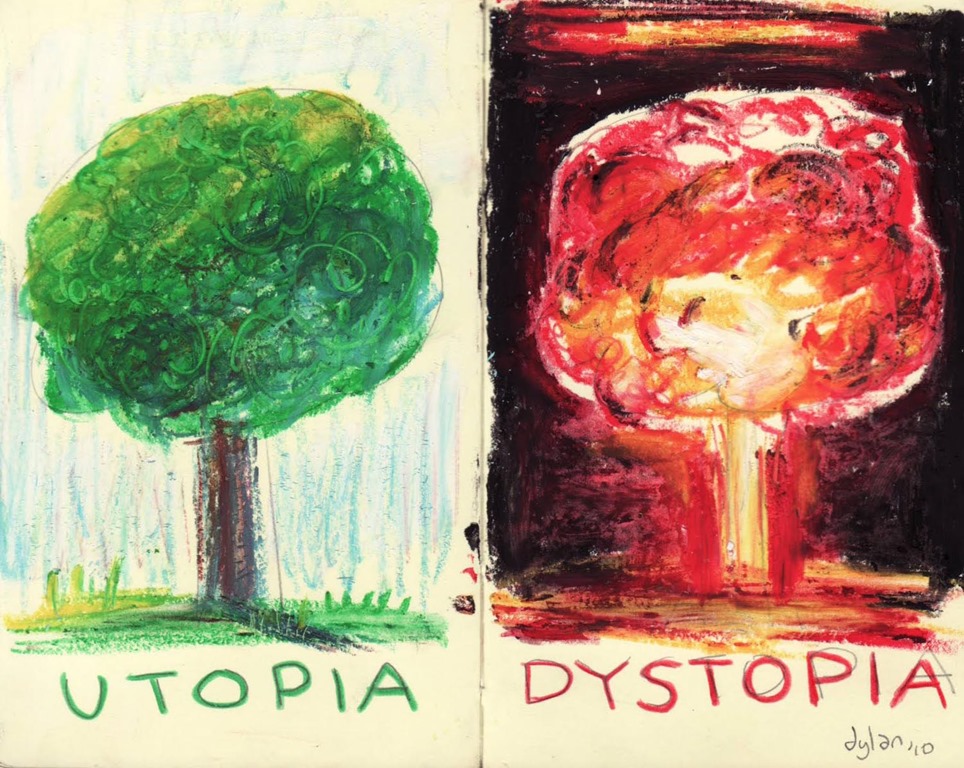
Dystopian futures are quite popular for young adult science fiction novels right now, but what if you wanted a different kind of future for the setting of your novel?  Although I do think the word dystopian is overused, and maybe even misused.  Common definitions for dystopia included “An imaginary place or state in which the condition of life is extremely bad, as from deprivation, oppression, or terror” – American Heritage, and “an imaginary place where everything is as bad as it can be” – Collins, to “an imaginary place where people lead dehumanized and often fearful lives” – Merriam-Webster.  Wouldn’t those definitions describe Westeros, the world of A Song of Ice and Fire?  Or most horror novels, and probably war novels, as well as Who’s Afraid of Virginia Woolf? and most Shakespearean tragedies?
utopiadystopia

Then we have PKDickian futures.  PKD often imagined the little man trapped in an insane world.  Jack Bohlen, the repairman in The Martian Time-Slip is not your typical action hero.  How many SF readers expect to read about unions on Mars?   And Rick Deckard is not the Harrison Ford in Do Androids Dream of Electric Sheep?, the book Blade Runner is based on.  I think Dick imagined a fucked-up 1959 future where animals were gone and we had robots that could pass for humans and animals.  Other than that his future seemed a lot like 1959, as did most of Dick’s 1960s novels.  It was the movie makers that colored Dick’s future so fantastically that I believe many readers now use those visuals to color in his novels.

blade-runner-1982-36-g

But how do you see the future?  When you write your science fiction novel, will it be inspired by the real life world you live in, or from a favorite fiction world you read about, or one you loved in the movies?   I think late 1950s Marin County California inspired many of the fictional worlds that Philip K. Dick created.  I think 1920s and 1930s America shaped Heinlein’s sense of the future.  Like it’s commonly expressed, science fiction is often about the present.  But more than that, it’s about the person who writes it.  My view of a lunar colony will be shaped by my personality and life, and will be different from Heinlein’s.  And even if I try to extrapolate hard science like crazy, will anything I write really help readers comprehend their future?  I don’t think so.

Probably living on Earth with our big screen TVs, computers and smartphones is more exciting than the reality of living on Mars.  But where does this leave science fiction?  Is turning to fantasy stories the right path after all?  What we all have is a fiction habit.  Science fiction used to be the fictional drug of choice, but it doesn’t give us the high we used to get.  Watching Breaking Bad, blows away every science fiction novel I ever read.  The reason why George R. R. Martin has legions of fans is because storytelling itself has gotten better.  It’s not comprehending the future that will rekindle excitement in science fiction, but convincing writers with storytelling abilities like J. K. Rowling and George R. R. Martin to write science fiction.

When Kincaid criticizes the SF/F best of anthologies it shouldn’t be because of the state of the genre or the writers’ ability to comprehend the future, but just lack of story telling skills.  When I gorge myself on short stories from the best of anthologies, I’m always exhausted by long info dumps, techno babble yakking, and characters that feel like they are puppets on a string trying to mime out some ridiculous idea the author has.  Too many SF stories try much too hard to rationalize razzle-dazzling concepts, and don’t spend enough time on standard storytelling techniques or realistic emotional character building.

That’s why I loved “Close Encounters” by Andy Duncan so much.  It was just a well told story.  It has real emotions.  But is that what we really want, nice nostalgia about our old dreams?  But then science has taught us that old science fiction only offered us Santa Claus futures.  I think Kincaid was onto something, but I haven’t worked out the exact nature of the problem.  I had faith in science fiction back when, and I have nostalgia for those memories now, but I’m not sure what science fiction should become next.

JWH – 8/22/13

The Unwinding by George Packer

yin-yang

George Packer has written a book about America coming unwound.  He theorizes that America has come undone many times before, and we rewind ourselves in cycles over our long history.  I’m not sure if America isn’t always unwinding and rewinding at the same time – like the famous yin-yang symbol.  That if you’re young, the chaos that is America becomes new possibilities bursting forth, while if you’re old, the same chaos becomes cherished traditions breaking apart.

the-unwinding

Packer tells his story not by philosophizing or political rhetoric, but by reporting on the lives of a diverse group of people surviving The Great Recession.  This has far greater emotional impact than abstract commentary on demographics.  We see Youngstown, Ohio through the eyes of Tammy Thomas, and Tampa, Florida through a family of four who becomes homeless.  We see Washington politics through Jeff Connaughton, as he spends decades campaigning for Joe Biden.  We see Silicon Valley via billionaire Peter Thiel, and North Carolina through Dean Price, and up and down businessman.  Packer also profiles some famous people too, like Oprah Winfrey, Colin Powell, Robert Rubin, Jay-Z, Newt Gingrich, Sam Walton, Raymond Carver, Elizabeth Warren and Alice Waters.

But it’s the less famous people that tell his story best, like the immigrant woman who owns a motel but hates to hire Americans because they are such poor workers.  Packer talks about the fall of unions and good wages, and even how the mob held some towns together, because after they left all the towns had were street gangs fighting.  Our lives depend on complex social  and economic organizations, and when they unwind, it’s changes what we think of normal living, even if it’s corrupt to begin with.

Parker showing the rust belt neighborhoods eroding through Tammy Thomas lifetime is heart breaking.  Ditto for the Hartzell family showing Tampa coming apart at the seams because of the housing crisis.

These stories are riveting.  The sum of their impact is very emotional, and I’m afraid depressing.  I read this book with my friend Linda, and we constantly emailed back and forth about how we felt The Unwinding made us yearn for solutions to start the rewinding of America.  Through the biographical sketches Packer shows America breaking down in many key areas of life – work, democracy, health, food, energy, housing, schools, etc.  – all the stuff you see on the news every night, but told through moving personal stories.

I have lived through the Great Recession without seeing all of this directly.  My wife and I kept our jobs and house.  Most people are like us.  But for ten to twenty percent of the country, times were very bad.  It’s like news reports of a tornado.  Seen focused in on the damage, a whole city can appear destroyed, but if you back away some, you’ll see the devastation is limited.  If your house is in the devastation your world is destroyed.  If you live far enough away from where the twister hit, you might not even think anything is wrong.  The Unwinding lets us experience a tiny bit of the misery of being at ground zero of The Great Recession.

The trouble is The Great Recession wasn’t an act of nature, but a man-made tragedy.  And it didn’t have one cause but many.  We all brought about the unwinding.  Whether Packer’s book is an early report of the collapse of the American Empire, or just a narrative about catching an economic cold, is yet to be seen.  I do believe things have permanently changed, a lot of things.  The American middle class used to be the large bell in the bell curve of American economics.  That bulk of that bell is collapsing.  It’s not the 99% versus the 1%, but bulk of the bell has shifted backwards toward the lower class.  Average incomes are declining.  But then average wages around the world are rising.  We’re all homogenizing around a much lower standard of living worldwide.  This is just change, but does it have to be negative?  Do we have to suffer man-made economic storms?  Do we have to accept lower wages as everything becomes cheaper?

What’s unfair is a lot of people got very wealthy without creating very much, and in some cases by destroying a lot of what used to exist.  That’s a very vague way of stating the problem.  Read The Unwinding for a detailed view.

JWH – 8/13/13

Survival of the Fittest Evolution of Web Sites

How many millions of web sites are there on the Internet?  How many do you visit regularly?  How many websites do we need for each specific function?

When local newspapers were the only source of news they mattered a great deal to their communities. Television news and the Internet are competing them out of existence.  But how many newspapers can survive in the world wide market of the web?

I love a mobile app called Zite.  It’s like Pandora, but instead of rating music, it rates and shows me articles to read.  Over time I’ve noticed that the number of different web sites it presents me is declining because I favor some sites over others.  Even with seven billion viewers there should be a limit to the number of web sites that the Internet can support.  Eventually we should see a shakeout.

Yesterday Jeff Bezos bought The Washington Post.  I use to read The Washington Post online, but I seldom do anymore.  I’d rather read The New York Times, The LA Times or The Guardian.  Did Bezos buy a white elephant?  I used to watch CNN, and after I gave up cable I read its website, but I don’t anymore.

If I could remember them, I could list dozens, if not hundreds of websites that I once loved, but I’ve stopped reading.  The world only needs so many famous restaurants franchises before there is too much choice.  Famous news sources should shake out too.  Who wants to check any encyclopedia except Wikipedia now?  Or shop for books other than at Amazon?

If Americans were allowed to buy cable TV channels a la cart, how many channels would survive?  If every newspaper and magazine goes behind a paywall, how many will survive?  Why doesn’t IMDB and Rotten Tomatoes merge and then buy Flixster?  Look what Amazon did by buying Audible.com and ABEBooks?  Isn’t it logical that they bought Goodreads?

If you think about websites like one cell organisms living in an organic soup, we should be seeing them combined with each other to form new multicellular organisms, and eventually evolve into some very complex animals.

Competition is good, but it tends to be violent and kill off the weak.  I’m not sure if the Internet will always be a boom town.

JWH – 8/6/13


The Ghosts That Haunt Me

Most people are haunted by dead relatives – parents, aunts, uncles, grandparents, siblings – but the ghosts that haunt me the most, are people I never knew.  Since I’m an atheist I don’t believe in real visitors from the other side. I don’t expect my Jacob Marley to come calling on Christmas Eve.  On the other hand, there are a number of dead people that won’t leave me alone.

Mark-Twain-by-Alvin-Langdon-Coburn

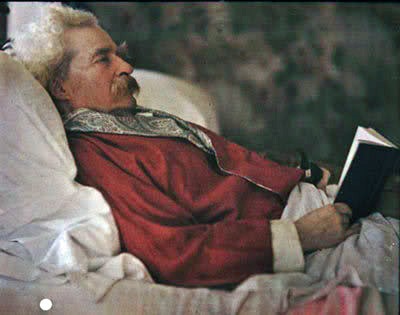
I am mostly haunted by literary figures.  The first one to do this, starting when I was a kid was Samuel Clemens.  For some reason, reading about Mark Twain was always more powerful than reading his fiction.  It started with his autobiography.  I was a kid with my life in front of me, reading about a very successful man writing about his life behind him.  Samuel Clemens led both a charmed and tragic life.  His wife and two of his three daughters died before he did, and Clemens took this very hard.  Clemens always had a sharp tongue for the human residents of Earth, but towards the end, his writing turned bitter to the point of viciousness.  I was born naïve and became a skeptic by twelve, and Clemens writings fueled my conversion to disbeliever.  I have never experienced the tragedies Clemens experienced, so I’ve yet to become bitter, a burden I hope to avoid.

Twain didn’t finish an actual autobiography, but two versions of an autobiography appeared after he died that were heavily edited collections from his voluminous autobiographical writings.   Over the decades the University of California Press released various collections of Twain’s writings, with more and more material that hadn’t been published in his lifetime.  I first got a taste of Twain’s unpublished writing as a teen with Letters from the Earth, coming out in 1962 that I didn’t read until 1968 or 1969.  Over the decades many biographies about Twain have appeared and he would haunt me again and again.

kerouac

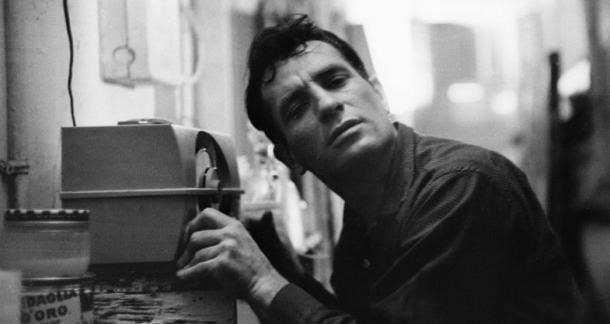
Jack Kerouac was the next literary specter to haunt me, beginning in my twenties.  Jack died in October 1969, the fall I started college, the same year as the first Moon landing and Woodstock.  That was around the time I read The Electric Kool-Aid Acid Test by Tom Wolfe.  I can’t remember if I read that first, which led to reading On the Road, of if reading On the Road led to reading The Electric Kool-Aid Acid Test. Kerouac was a character in Wolfe’s book.

Kerouac was a writer like Proust and Thomas Wolfe (not Tom), who wrote books that were thinly disguised accounts of their own life.  I didn’t know this until I read the Ann Charters Kerouac: A Biography in the early 1970s.  That’s when Kerouac really began haunting me.  I’d read his books, then another new biography, and then reread the novels, and then another biography.  Kerouac became a 10,000 piece puzzle that I’ve never finished.

Even before Philip K. Dick died in 1982 he was a legendary character.  I remember reading about his paranoid theories in The Rolling Stone magazine, and stories about him in science fiction fanzines.  My college roommate even had dinner with Dick and his wife at a convention in the 1970s.  As soon as the biographies came out, I started reading them.  Like Kerouac, no matter how many puzzle pieces I found, the image I had of PKD was always shifting.  Like Twain and Kerouac, Dick was another troubled soul.  Why am I so haunted by people so torn up by their lives?

There is a book of conversations with PKD called What If Our World Is Their Heaven?  That title captures PKD’s kind of spookiness.

Louisa-May-Alcott

I read a biography of Louisa May Alcott before I read her famous book Little Women.  I started off reading about the American Transcendentalists, and found Louisa.  I read two Louisa May Alcott biographies before finally getting to Little WomenLittle Women was my mother’s favorite childhood book.  She tried to get my sister and I to read it when we were kids but I didn’t want to read a girl’s book.  But I was willing to watch Katherine Hepburn and June Allyson play Jo in the movie versions.  Over time Louisa May Alcott started haunting me too.  Another troubled soul.

Other writers haunt me too, Heinlein, Hemingway, Fitzgerald, Wells, Lawrence, Huxley, but so far I’ve only read one biography each for them.  Writers don’t appear truly ghostly until I’ve read several biographies and start reading their letters.  I have read many books on Wyatt Earp, but his appeal is different.  He doesn’t haunt me – maybe because he wasn’t a writer.  Or maybe he wasn’t a troubled soul like Twain, Kerouac, Dick and Alcott.  I’ve always loved biographies, they were among the first type of books I learned to read.  But most subjects of the biographies I read never lingered in my psyche like these four.

Interestingly, the lives of Clemens and Alcott overlapped, as did Kerouac and Dick.  Clemens and Alcott both became successes after the Civil War, becoming famous for writing about their childhoods.  Kerouac and Dick both wrote a lot of books in the 1950s that affected readers in the 1960s counter culture.  All four of them have had their share of film success – with their fictional work, and as characters themselves.  I am not the only person they haunt, not by a long shot.

There is a 1968 Burt Lancaster movie called The Swimmer based on a 1964 short story by John Cheever.  The story begins when a man at a pool party tells his friends that he thinks he can swim all the way home because there’s a pool in every yard across the suburbs to his house.  I think a wonderful account of American history could be written by just writing a series of biographies of all the American writers that span the centuries back to colonial times.  We’re used to history being about politics and war, conquest and invention, economics and industry, but I think there are many ways to look at the evolution of our culture, and the lives of these writers give a much different, and for me, a more real insight into the living through history.

I believe these writers haunt me more than the memories of my ancestors is because my relatives never wrote down their thoughts.  If my dad had written about his life, I think it would be a whole lot like Jack Kerouac’s.  They were both restless men and died miserable drunks.  I’m sure my mother and her mother loved Louisa May Alcott because their lives seemed much like hers.

For some people, the promise of prosperity never lives up to their unfolding lives, and that’s very hard to take.  Ambitious idealists usually have a long way to fall.  I’m currently reading The Unwinding by George Packer.  For all its shiny glory, the American Dream is hard to achieve.  Packer chronicles many Americans who have succeeded or failed, or both, in the last four decades.  What’s amazing about this book is the diversity of the people it presents.  Every American has a different American Dream.  I think we’re all haunted by past Americans.  I think we’re all inspired by our personal ghosts.

JWH – 9/4/13 – Happy Birthday Janis

Pre-Code Hollywood – Wikipedia v. Journalists v. Bloggers v. Friends

If you hear a new phrase, where do you go to learn its definition?  I think most people absorb concepts in context from conversations with friends, or maybe from watching television.  A few might look it up in a book.  But after that most people head to Google.  For billions of people, when they want to know something today, they Google their question.  How good is the knowledge we get from Google?  Does it have true educational value?  Does it enlighten?  How authoritative is it?

When you go to Google and search on a topic the results often brings back a Wikipedia article, articles from newspapers and magazines, maybe some book reviews, and finally articles from bloggers.  Which ones are you most likely to read first?  Wikipedia is the hive mind option, journalists are the paid professional option and bloggers are the work for free option.

I’m going to use “Pre-Code Hollywood” as my test case because several times in the past month I’ve used that phrase and then had to explain it.  Pre-Code Hollywood is a category of old movies that takes some explaining to define.  Most movie goers don’t have a clue as to what I’m talking about.  Pre-Code Hollywood refers to a time period in the early thirties, when some movies pushed the boundaries of social norms and were usually censored by one or more state censors, before national censorship took hold in the second half of 1934.  This censorship held until the 1960s.  That shaped how movies were made for a very long time.  Young people growing up in our anything goes era have no idea how movies, books, comics and television shows were sanitized for mass consumption.  Pre-Code Hollywood films are from a brief period in the early 1930s that told stories about characters breaking out of accepted norms that shocked conventional society.  Pre-Code Hollywood generally refers to the years, but to the film buffs, it’s only certain movies that push the envelope.

Dorothy-Mackaill-in-Safe-In-Hell-1931

Whether Hollywood told these stories to sell tickets, or because storytellers wanted to free the minds of their audience is debatable.  The reality was many Americans were already breaking free of 19th century morality and Hollywood was just reporting new trends.  Conservatives wanted to keep the genie in the bottle, while liberals wanted to let it all hang out.

Short of reading a book devoted to the subject, and there are such books, this essay at Wikipedia is an excellent introduction to Pre-Code Hollywood films.  If you search Google, Wikipedia is the #1 return.  #2 is images from Google, and for many people, Pre-Code Hollywood images are the story.  The returns give two books from Amazon, one of which is Pre-Code Hollywood: Sex, Immorality, and Insurrection in American Cinema, 1930-1934 by Thomas Doherty.  The New York Times presents the first chapter.  Doherty opens with a description of the censorship period.

On or about July 1934 American cinema changed. During that month, the Production Code Administration, popularly known as the Hays Office, began to regulate, systematically and scrupulously, the content of Hollywood motion pictures. For the next thirty years, cinematic space was a patrolled landscape with secure perimeters and well-defined borders. Adopted under duress at the urging of priests and politicians, Hollywood’s in-house policy of self-censorship set the boundaries for what could be seen, heard, even implied on screen. Not until the mid-1950s did cracks appear in the structure and not until 1968, when the motion picture industry adopted its alphabet ratings system, did the Code edifice finally come crumbling down.

Later on Doherty give a quick overview of the kinds of films made before the censorship period:

    In a sense pre-Code Hollywood is from another universe. It lays bare what Hollywood under the Code did its best to cover up and push off screen. Sexual liaisons unsanctified by the laws of God or man in Unashamed (1932), Blonde Venus (1932), and She Done Him Wrong (1933); marriage ridiculed and redefined in Madame Satan(1930), The Common Law (1931), and Old Morals for New (1932); ethnic lines crossed and racial barriers ignored in The Bitter Tea of General Yen (1933), The Emperor Jones (1933), and Massacre(1934); economic injustice exposed and political corruption assumed in Wild Boys of the Road (1933), This Day and Age (1933), andGabriel Over the White House (1933); vice unpunished and virtue unrewarded in Red Headed Woman (1932), Call Her Savage (1932), and Baby Face (1933)—in sum, pretty much the raw stuff of American culture, unvarnished and unveiled.

Robert Gottlieb reviews both books at The New York Times.  The other book is Sin in Soft Focus: Pre-Code Hollywood by Mark A. Vieira, a book I own and recommend.  Gottlieb says about it,

Mark A. Vieira’s ”Sin in Soft Focus” naturally covers much of the same ground, but the two books complement rather than detract from each other. ”Sin in Soft Focus” is less analytical; it lingers more lovingly on the pre-code films themselves. Its chief advantage lies in its illustration — this is an oversize book with hundreds of beautifully chosen images laid out for maximum impact; one can forgive the fact that often they’re chosen for their own sake, not to illustrate a point. But this is far from being just another pretty collection of stills. We get many detailed stories that convey exactly what was going on — for one, the battle over Garbo’s first sound film, ”Anna Christie.” Could she be allowed to inveigh against ”all men, God damn them”? (She couldn’t; the offending words were spliced out in favor of ”I hate them! I hate them!”) We also hear of von Stroheim’s elegant solution for getting one of his actors to laugh: put a string down his pants and tie it to his privates, then pull — ”and that made the guy laugh.” Now, that’s directing!

Wikipedia, The New York Times and the books give readers a comprehensive history of the era, but except for Vieira book, I’m not sure if these writers convey the love of the films.  Unless you’re a hard core Turner Classic Movie (TCM) fan, or willing to buy DVDs like the Forbidden Hollywood series, it’s not likely you’ll ever see these films.  And I have to admit, when I show these films to my friends, damn few of them enjoy them.  These films are old and quaint to eyes used to R rated Hollywood flicks.  Contemporary PG rated films show more graphic sex, violence and deviation from social norms than Pre-Code Hollywood even dreamed of filming – so were these 1930s films the Inconvenient Truth of their times that forecast things to come, or were they only a keyhole peak at what was already going on?

Loving old black and white movies from the 1930s is an acquired taste. I picked up the habit back in the 1950s watching all night movies on television.  Most of my friends, even friends my age, are put off by the acting style of the times, but I find what they call bad acting, stylish and beautiful.  It’s the difference between Benny Goodman and Lady Gaga.

There is no typical Pre-Code Hollywood film, and other than watching several of these films, it’s doubtful reading about them will convey their real essence.  There are some bloggers that go to great lengths to document and analyze these films.  Just read this extensive analysis of Ladies of Leisure (1930) by Danny at Pre-Cod.com.

Here are two clips from Jewel Robbery (1932), one of my favorites not because of the risqué dialog, but because of its 1930s Hollywood glamor style.


William Powell plays an suave holdup man who ends up running off with Kay Francis who is married to an older rich man.  After censorship these two characters couldn’t end up with their 1932 happy ending because censors believed criminals and adulterers couldn’t get away with their crimes after July 1, 1934.  Jewel Robbery can be found on Forbidden Hollywood Volume 4 and regularly shows up on TCM.  I love this film because I think Kay Francis is beautiful in a way modern starlets are not.  Pre-Code fans love their era partly for the daring stories, but mostly for the style of a bygone time.

kay-frances

Reading reviews by bloggers is where you find the enthusiasm of fans.  Some take a lot of time with their projects and publish photos and film clips, like here at Pre-Code.com.  Others are like at Laurasmiscmussing, who states her personal reactions to watching Jewell Robbery.  Laura didn’t like the marijuana scene.  Like me, Laura is a fan of Kay Francis.  Over at Cinema Enthusiast we get more commentary on the film with some very good stills.  Catherine has a nice comment:

Another reason the film could only have been made in 1932 is the studio system. The studio system dealt heavily in fantasy, but in a different kind of fantasy than today’s films. Today, fantasy takes the form of mystic worlds, ordinary people being pulled into unrealities beyond their wildest dreams. The studio system dealt in fantasy that fit seamlessly into a real-life setting. Fantasy rooted in glamour.

Jewel Robbery is an example of this. We are shown a world where our protagonist doesn’t have to lift a finger for herself, where jewels shine extra bright, where people appear extra soft, and where frivolity is the goal of the day. Today, we would ask ourselves, ‘why should we care about someone like Teri’. In the studio system, these characters were par for the course and we still accept them into our hearts without blinking twice. William Powell commits the most non-threatening robbery ever seen in film. Sure, he has a gun and many crooks beside him, but the atmosphere is airy as can be. His priority and pride comes from making a robbery as comfortable for the victims as possible. Robber as society guru. This kind of light comedic tone would be extremely difficult to execute in modern-day film and furthermore, it’s just not the sort of film being made today in America.

Reading blog reviews like this connects me with people like myself who do love the old movies.  Art lives by its fans, as long as the fans love a work of art, it will live on.  When an artwork loses all its fans, it dies.  Bloggers keep obscure works of art alive.  Just creating the designation of “Pre-Code Hollywood” has brought a dying era back to life.  William Powell and Myrna Loy films are quite famous, but how many people remember the seven William Powell and Kay Francis films?

Some bloggers like Cliff Aliperti love old movies far more than I do, and have the patience to write scene by scene reviews.  If I had more time, I ‘d love to blog about old movies like Cliff does.

Jewel Robbery was not a great movie, nor is it typical of Pre-Code films.  It’s on the silly side, but it was stylish for the time.  Eighty plus years later, how much of that style remains?  How many people can still resonate with its charm?  Being a fan of a forgotten art form both defines me and separates me from the herd.  I doubt when I watch Pre-Code Hollywood films that I’m attaining some kind of oneness with the people of the 1930s.  Neither is it nostalgia, since nostalgic is based on wanting to go home, and I never lived in those times.  Maybe everyone has an era in the past they are fascinated with and the early 1930s is mine.  My wife loves watching television shows from the 1960s on Sundays.  I also love 1950s westerns, 1960s comedies and 2010s television shows.  It’s hard to jive my love of 1930s movies with my love of Breaking Bad.

With modern technology of cable TV, DVDs, internet streaming services, we can all pick art and eras to love and specialize on.  I have a new friend that specializes in Ava Gardner and Frank Sinatra movies.  The web allows me to find other Pre-Code Hollywood film fans like Emma, Julie, Louie, FlickChick, Classic Movie Blog Association, Fritzi, Monty, and many more.

I don’t know when the designation “Pre-Code Hollywood” was coined, but I don’t think it’s all that old.  I believe the creation of that label has defibrillate an art form whose heart had stopped.  Reading about Pre-Code Hollywood here, or at Wikipedia or even at The New York Times won’t even give you the experience of what we’re talking about.  For that you’ll need to see some of the films.  Watch TCM or Netflix and look for:

JWH – 7/3/13