Are Smartphones Nanocomputers?

Young people will probably not know this, but back in the 1970s personal computers were called microcomputers.  The dinosaur of computers, mainframes, were huge, some as big as houses, and cost millions.  Then in the 1960s newer, smaller computers started coming out that were dubbed minicomputers.  These were still too expensive to be personal, but they were cheap enough that they spread like gossip.  So when even smaller computers came out in the 1970s they were dubbed microcomputers.  These eventually became cheap enough for almost everyone to own one.

Now most people think of their smartphone as a phone, but it’s really a computer, just a very small one, so why not consider the smartphone the next paradigm of computing and call them nanocomputers?  I doubt if smartphones have any actual nanotechnology in them, but they might, but nano is obviously the next label in the series, so why not call them that?  Of course, what will picocomputers be like?  Nanocomputers are a planned concept, and smartphones might eventually use real nanotechnology, so it might be a self-fulfilling prophecy.

In the current vernacular, a “PC” is a Windows based computer.  PC used to stand for personal computer, and in the old days all microcomputers were PCs, even ones from Apple.  Somewhere along the way it became the PC versus Mac.  The smartphone is even more personal than the original PC because people actually carry them on their person.  We could call the smartphone a pocket computer, but that would be another PC acronym.

We could also call the smartphone the hand computer, following the labels of desktop and laptop computers.  The term handheld was in use for awhile, but it doesn’t quite work.

So why do I object to the phrase “smartphone” when it’s already so popular?  Because it’s rather limiting to think of the device as a phone.  Steve Jobs and Apple have done a wonderful job with the iPhone by creating a new category of pocket computer with hundreds of thousands of applications.  The phone part is just one of those applications, so why should it get top billing?

Already iOS phones and tablets have garnered over 1% of net user market share, competing with both Windows and Mac operating systems.

iPhones and Androids are quickly evolving into what I dreamed of having, an auxiliary brain.  Cellphones are about as close as we’ll ever get to telepathy.  Their GPS features give us homing pigeon like directional sense.  Adding the still and video camera broaden their versatility to create new concrete forms of memory.  The device is obviously more than a phone.

In the 1980s it was all the rage for schools to offer computer literacy courses to help the public understand the impact of the microcomputer on society.   Nanocomputers are bought and used without any training and no one talks about computer literacy anymore.  But do we understand the true impact of the nanocomputer?

Take this one example.  Public opinion pollsters are worried that telephone polls are now skewed because only certain types of people still have a landline phone, which is the only kind they can poll.  Now I don’t ever want pollsters to be able to call cell phone numbers, but what if nanocomputer users could elect to have a polling app, so whenever they felt like it, they could respond to variously kinds of polls.

What if nanocomputers became uniquely customized to its owner that they could be used to verify the identity of the user?  Nanocomputers could then be used as voting booths, and that would lead to their use for referendums.   By this thinking we should see these devices as extensions of our body.  We can already network the ear with a Bluetooth headset.  What if we connected nanocomputers to sensors inside our body?  As we integrate nanocomputers to our body, when do they become part of us?

And more importantly, how do we become part of them?  I now spend more time in front of a computer than I do sleeping.  Computers dominate my life, and so too for most people.  When do we start thinking of them as a prosthesis?  Aren’t they becoming enhancements for our brains, aren’t they becoming prosthetic minds?  We should think of nanocomputers as body enhancements that are leading us towards group minds.

The idea of wearable computers has been around for decades.   Most people thought such a concept was dorky, but now most people carry around one or more computers with them all the time.  Even a normal dumb cell phone is a computer, and so are MP3 players, game units, tablets, calculators, GPSes, digital cameras, ebooks, etc.  How long before it becomes obvious that the most convenient way to carry a nanocomputer is by wearing it?  Many people wear their Bluetooth headsets all the time now.  When will glasses and hearing aids be networked with the nanocomputer?

We need to get away from thinking of nanocomputers as phones but cybernetic enhancements to our bodies and minds.  So when did the Borg assimilate us?  When you think about it, Bluetooth headsets look like the first sprouting of Borgware.
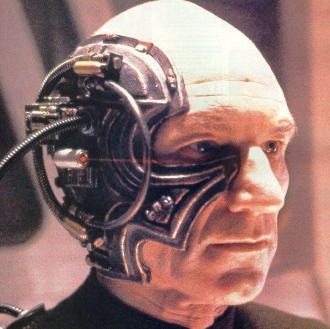
the-borg

JWH – 10/28/10

Waiting for “Superman” – The Indictment of the AFT and NEA

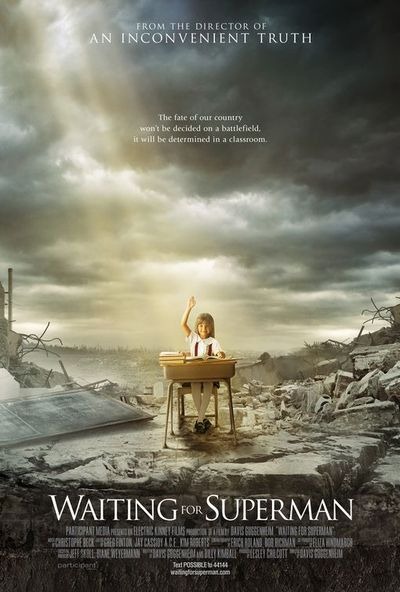
Waiting for “Superman” is an inspiring, if clunky, documentary about the problems of education in America.  The director, Davis Guggenheim, made two other popular documentaries, An Inconvenient Truth and It Might Get Loud.  I doubt Waiting for “Superman” will ignite the political firestorm that An Inconvenient Truth did, it doesn’t feature Al Gore, but it essentially convicts the AFT and NEA teacher unions for causing the failure of the American education system.  To be perfectly fair, all viewers of this film should read the AFT and NEA responses to this documentary.

waiting-for-superman

I called Waiting for “Superman” clunky because it starts off slow.  My movie buddy left after five minutes to go find something else to watch at the theater, but I think she regrets it after I told her how much better the film got and the fact that she picked a dud of a Woody Allen film to sneak into.  The show is also clunky with old clips from the 1950s Superman television show, amateur undercover video, dull press conferences and most unfortunately, uneven interviews with five students and their parents that was the core of the narrative.  The featured real people were not always persuasive and some of the kids seemed bored by being subjects of a documentary.

To me, Waiting for “Superman” gets an A+ when it was presenting animated graphs.  The actual facts and figures about the failure of American schools are the real stars of this show – but I don’t know if they are accurate.  If you go see this documentary, don’t get sidetracked by the specific student stories Guggenheim tries to tell.  The five students and their families did generate a certain level of emotion with me, but sadly, they didn’t seem like particularly good sample cases.  Too much of the movie focuses on these kids trying to win school lotteries, time that could have been spent on sexier facts.

Now, don’t get me wrong, I believe everyone in America should see this film.  I work at a College of Education, but not as an academic, so I’ve spent over twenty years hanging around with educational professionals and heard a lot.  And the ones I’ve talked to consider Waiting for “Superman” misleading if not fraudulent.    I’ve read many books, articles and seen quite a few other documentaries on the same topic.  It’s a complex issue that no 102 minute documentary can cover fairly.   The important thing is to get involved with the problem.  Education in America is like Global Warming, a giant iceberg in our Titanic’s path – if we don’t change course we’re going to crash and sink.  I’m sorry, that’s really a bad metaphor.  In both cases we’ve already crashed into the iceberg, the real issue is how many people are going to make it to the lifeboats.

Hundreds of high schools in America have over fifty-percent failure rates, which Guggenheim and others call failure factories.  This is the heart of the story, and Waiting for “Superman” does a B+ job of explaining.  This topic deserves it’s own weekly PBS show, like NOVA.  We spend so much of our TV time on partisan political histrionics while ignoring the real issues.  The Democrats, Republicans and Tea Party candidates have zero content value when it comes to dealing with the real problems in America.  Waiting for “Superman” at least focuses on something real and meaty.  The subject deserves at least 52 hours – one hour a week of required watching for everyone in this country.  We waste countless hours each week on political bickering that leads nowhere.  Waiting for “Superman” gets an A+ for defining an important issue.

Not to spoil the movie, but Waiting for “Superman” makes the following hypothesis that needs to be tested:  If we change the system it is possible to teach kids from the worse economic environments to beat the average test scores now from the best economic environments.  This is the core of this film.  It says America is cruelly and inhumanly condemning millions of its citizens to educational starvation and stunted intellectual growth.  Waiting for “Superman” tries to express this graphically and emotional as a film, but I feel it only succeeds with a C- effort.

This is a heated subject, and Americans want to blame the students for not studying, the parents for not parenting, teachers for not teaching, and principals and superintendents for not leading.  They feel that taxes are being wasted on education in America, and many want to even abolish the U. S. Department of Education.  I give Waiting for “Superman” a B+ on explaining how such thinking is leading to national Hari-kari.

Waiting for “Superman” does have a prescription for educational success.  It suggests by showing the strengths of experimental schools that a longer school day, including Saturday classes, with a full-time school year, combined with  good school teachers that  we could have dramatic change.  To get good school teachers the film implies we need to do away with teacher tenure and allow school systems to fire poorly performing teachers.  Thus the burden of changes  comes from attacking the teacher unions, requiring them to give up job security and require working longer hours, and to work all year round.  That’s a lot to ask.

The film left out asking students and parents to do more.  I guess the filmmakers assume parents and students already want more for themselves and are willing to work harder, but I don’t think that’s true.  That’s where Waiting for “Superman” gets a big fat F.  It doesn’t show how kids and parents are failing the system.  Sadly, too many Americans are just plain ignorant when it comes to understanding the value of an education.  But we can only be a great nation if the average intelligence of our citizens is greater than the average intelligence of all the other national citizens we compete with on the world stage.

That’s why education is an issue that’s equal to global warming.  We could survive the worst scenarios of each, but who really wants to live in a Mad Max future.

JWH – 10/24/10

My Favorite Science Fiction Fantasies

I’ve always been a big time daydreamer.   By the way, do most of you spend a good portion of your day daydreaming?  I hope I won’t be embarrassing myself by revealing my how much inner fiction I generate.  Well, I won’t go into the sexual fantasies, I’m sure everyone has tons of boring mind movies about getting naked with other people.  No, what I wonder about is your revealing science fiction fantasies.  I tell you mine, if you tell me yours.

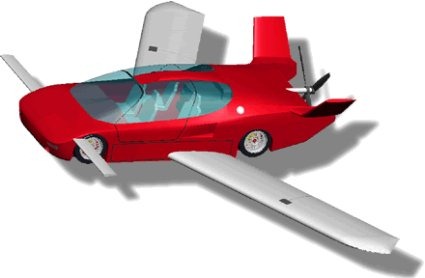
For instance, how many of you have ever dreamed of owning a flying car?  I can remember back to when I was four years old, and riding in the back seat of our family car with my sister, and imagining the car flipping out switch-blade like wings.  I’d always envisioned the car getting up speed and then soaring up into the sky at a seventy-five degree angle.  At first, my father was the pilot, but soon I cast myself into the driver’s seat, and eventually morphed the family car into something sportier that changed into a jet fighter.

labiche-flying-sports-car

The flying car was a good solid feature attraction of my early daydreaming.  They started in the 1950s, but as soon as Alan Shepard took his Mercury ride on a Redstone rocket into sub-orbital space I started expanding the features of my dream flying car so it could drive all the way into orbit, and then the Moon and Mars.  I can’t remember now, but my flying car was featured as a flying submarine in some those daydreams, but I don’t remember if underwater action happened before or after outer space action.

Even as a grown up, sometimes when I’m driving across country on a long trip I like to imagine that my truck could fly.

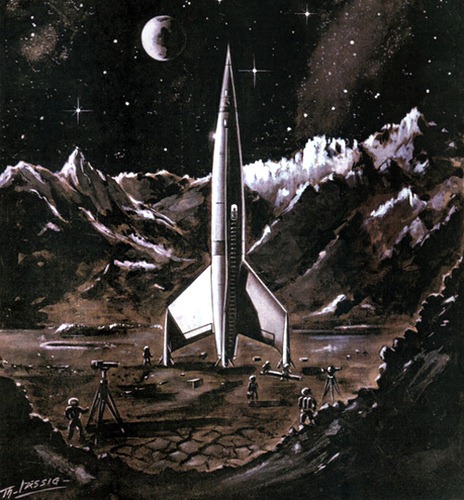
Starting with elementary school my main science fiction fantasy was flying to Mars in a giant rocket ship, the kind that stood on four fins when it landed.   Mars was always my favorite interplanetary destination, and before Mariner 4 flew by Mars in the summer of 1965 I pictured the Red planet full of exotic alien life.  Because my parents were alcoholics, that often fought, I pictured Mars as a getaway from my family life.  Mars had unlimited potential.  It could be anything.  After Mariner 4, when that spacecraft photos crushed my Mars dreams by revealing that world to be as dead as the Moon, full of craters and not much else, I started daydreaming interstellar fantasies.

Spaceretro16

Of course by my teen years 99.9 percent of my mental movie making dealt with sex, and so science fiction fantasies got shoved aside for many years.  Growing up and trying to adultify had been very painful for me.  Getting an after school job when I turned 16, where I worked 3:30 to 9:30 M-F, and all days Saturdays at a grocery store, killed off my reading, television and fantasy time.  Oh, I’d have lots of mini fantasies about having sex with girls and ladies shopping the store, but reality killed off most of my sci-fi fantasies.

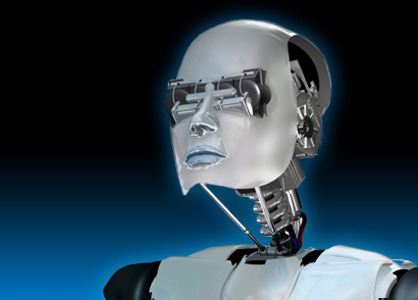
It was during that time that I had one of my most creative science fiction daydreams.  I’d imagined having a robot that would stand in for us at school and work so we could do other things, like imagining having sex with cute neighborhood girls or learning to play the guitar so I could become another Bob Dylan.  I always thought my idea of everyone owning a robot to earn their nine-to-five money was among my most brilliant inventions.  Plus I figured our robots would be our best friends for life.

robots_z

You’d have thought I would have combined my sex fantasies with my robot fantasies but I didn’t.  I guess my puritanical programming kept me from thinking about robot love.  I don’t know if it was a limitation of my imagination, but I always pictured robots having machine like bodies, rather than androids that could pass for humans.  Well hell, when you can imagine any girl you want for your sex fantasies, why picture one built out of metal and electrical parts.  But even before The Six Million Dollar Man, I did imagined having cybernetic enhancements for my own weakling bod, but they were more like the suits Heinlein imagined in Starship Troopers.

For some reason I was never the kind of guy who imagined clones of myself.  I still don’t.  I wonder what Freud would say about that.  I did love to imagine building my own robot where I programmed all the books of Mark Twain so I could have a Samuel Clemens bot for a buddy.  That was a favorite fantasy of mine for a long time, I guess while I was going to school studying computer programming.

It was very entertaining to think about programming a personality into a robot.  Of course, I did have the narcissistic fantasy of developing a robot with my personality.  I never pictured those robots looking like me, which is revealing, maybe I don’t like my body that much, but I loved the idea, the challenge of programming a robot that would love the same books, music, movies and television shows I liked.  I don’t know why, but it was a fun way to while away some hours.

I don’t know why I never liked clones.  I guess it’s just boring to think of a copy of me.  I think I once wondered if I had a female clone of me would I want to fuck myself, but that never caught on as a fantasy.  Who knows, maybe the strong anti-incest instinct we have keeps us from liking clones of ourselves.  Or I could go deeper, maybe it was become of my own un-attraction to my physical self (which would also explain why I’ve met so few women where I was the star of their daydreaming).

As an adult, I don’t have as many science fiction fantasies as I did as a kid, but I do have some, even now.  I really like the idea of having a robot companion, although I worry about the ethicality of having a robotic slave.  I think I should fix my own food, wash my own dishes, clean the house myself, and do all the chores I can as long as I can, but as I get old it would be great to have a robotic caretaker.  So instead of having to go into a nursing home, I could remain independent longer with a robot Jeeves.  If I ever got Alzheimer’s and forgot to check myself out, I’d want a robotic caretaker.   I’ve often imagined what it would be like to be an intelligent robot with such a job, and I’m even working on a science fiction story about it.

Another science fiction theme that’s been a big setting for my daydreaming has been after the collapse stories.   Why are last man on Earth fantasies so much fun?  Now really, what would Freud have made of that?   And Mad Max like survivalist stories with lots of wild west gun fighting makes for terrific heroic fantasies.   But also, Jeremiah Johnson living in the mountains alone, with few people left on Earth, also make satisfying daydreaming too.  Those are a little weird though, when I think about it.  I’ve been a vegetarian since I was 16, but in those circumstances I’m more than willing to kill and eat animals.  Hey, they are only fantasy animals.

post-apocalytpic-future

For some reason I’ve had many fantasies about a life without other people, so Robinson Crusoe dreams have been common, even Robinson Crusoe on Mars, like the old movie.  Being the sole human on an alien planet is a cool fantasy.   Don’t worry, I’m not always that way.  Another wonderfully challenging fantasy is building colonies on new worlds.  The fun here is picking the kind of people you want to bring with you versus the kind of people you want to leave behind.  My Mars colonies were free of religion and superstition, and everyone was liberal and scientific.   I wonder if conservatives dream of Republican colonies on Mars?  Or do Muslims ever think about a world without Christians and Jews?   Those Left Behind books tells us what evangelicals daydream about.

MaylockStansbury-MarsColony1-650

Of course, one of the best science fictional themes to use for personal fantasies is time travel.  I’ve had thousands of time travel daydreams.  When I as little I wanted to go see the dinosaurs, or visit famous events in history like the crucifixion of Christ, the gunfight at the OK corral,  or be at Kitty Hawk with the Wright Brothers.  Now that I’m older, and daydream of time travel, I imagine hanging out with Jack Kerouac, visiting the Bloomsbury group, or attending the Monterey Pop Festival.

Bloomsburymembers

monterey-pop

Reading science fiction is only brain loading pre-fabricated fantasies.  And maybe science fiction books are just favorite fantasies writers have to share with others.  When you think about it, the “What if?” mechanism in our minds are powerful generators of fantasies.  I’ve often wondered if our fantasies create real worlds in  other dimensions.  One of my favorite book titles is from a collection of interviews with Philip K. Dick that’s called, What If Our World is Their Heaven?  Let’s turn that around – what if our lives are the daydreams of other beings?

p.s.

This is embarrassing, but it seems not everyone spends a lot of time making up stories in their head.  I’ve been talking to my friends and wife, and so far none of them have the Walter Mitty gene.  This is a surprise to me.  I guess I’m admitting to doing something very weird in this blog post.  But I’ve got to ask, if y’all aren’t spending all your time making up vivid fantasies, then what’s happening in your heads?

JWH – 10/23/10

Science Fiction Short Stories

Over at SF Signal they held a Mind Meld asking sixteen of their favorite SF fans and writers to assemble their own anthologies of personally favorite science fiction short stories.  This produced several hundred short stories with annotations and commentaries to think about reading.  Strangely, there is damn little overlap.  Just from eyeballing the list without using any kind of tallies, “A Rose for Ecclesiastes” by Roger Zelazny got the most recommendations, with three.  I think the participants consciously tried to avoid the obvious classics.

Science fiction is at its purist in the shorter lengths of fiction where ideas dominate. Reading any good science fiction anthology should showcase the true potential of science fiction, and any recent anthology of the best SF will show the furthest edge of the speculative universe.

Robert Sabella did pick my all-time favorite SF novella, “The Star Pit” by Samuel R. Delany, and he picked several other of my favorite stories so I need to check out his unfamiliar selections.  Tinkoo Valia, whose web site Variety SF is devoted to short SF produced a rather novel list that shows he reads far and wide.  Jason Sanford made a nice selection of Then and Now stories, and since I remember fondly many of his Then stories, I figure I better go after his Now stories.  Before seeing his list this morning, I read his number 19 choice last night, “Eros, Philia, Agape” by Rachel Swirsky, a rather tender story about a woman and child in love with a robot.

Since Nancy Jane Moore picked “Empire Star” another all-time favorite that I reread regularly, I’ll need to track down the stories on her list too.  And I’d definitely have to check out Rick Klaw’s quirky anthology of ape stories – his list comes with a nice enticing historical introduction.

The trouble will be finding all of these great stories.  Lucky for us many are reprinted on the Internet just waiting for readers, like “The Man Who Lost the Sea” by Theodore Sturgeon.  Other stories like “Time Considered as a Helix of Semi-Precious Stones” by Samuel R. Delany require a visit to ISFDB to find which books have reprinted the story over the years.  Of course you can jump over to Free Speculative Fiction Online and check there.  Quite often its possible to put the title and author in Google and if you’re lucky, the actual story will be in the top search returns.

But what I really wish for is a totally different way to find these stories.  What if science fiction writers could load their stories into a database at Amazon.com, and Amazon allow their customers to build their own Kindle anthologies at bargain rates – maybe 24 stories for $9.99 (the latest Dozois The Years’s Best Science Fiction has 32 stories for that price).

Readers could build their own anthologies to order, or the contributors of the Mind Meld could have assembled their lists with links to Amazon with their collections pre-assembled for purchase.  Amazon could also keep tabs on the most popular stories to help Kindle users easily build new collections, and maybe even offer a voting system.  And it would be fantastic if Amazon offered Kindle editions of all the classic past SF anthologies, like Adventures of Time and Space, or Before the Golden Age, or reprint all the Judith Merrill, Donald Wollheim, Terry Carr past annual best of anthologies.

AdventuresTS

This would be a good time to also recommend to Amazon that they redesign the Kindle with folders, so I could have a Science Fiction Short Story folder, and within it have something like playlists, or virtual folders so I could organize my short story collection by publication year, author and theme.

JWH – 10/19/10

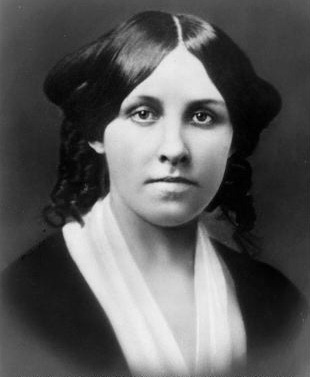
Louisa May Alcott: The Woman Behind Little Women by Harriet Reisen

Louisa May Alcott (1832-1888) is remembered for one book, Little Women (1868) which most people know from at least a dozen film versions, and many women know from reading, and a few of those know from a life-long passion for the entire Jo March chronicles.  In her day, Louisa May Alcott’s famous books for girls competed in the bookstores with Mark Twain’s famous books for boys.  Alcott has always been a figure standing in the shadows of her much loved autobiographical character, Jo March, and overwhelmed by the success of Little Women.  However, Louisa May was not Jo March, and few women in 19th century American had a life as interesting as hers.

Louisa-May-Alcott

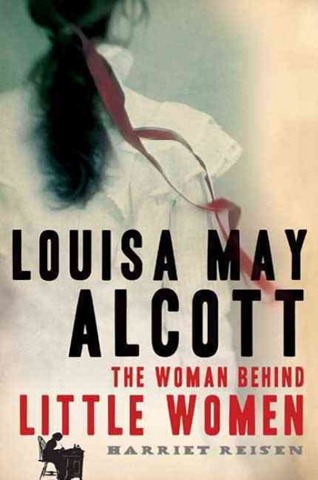
I have actually never read any of Louisa May Alcott’s novels, so it’s rather odd that I should choose to read a biography about her, but I kept crossing her tracks in books about other writers in 19th century America so that a few weeks ago when I saw she was featured on the PBS show American Masters I decided to give it a look.  The documentary film directed by Nancy Porter is based on the book with the same name, Louisa May Alcott – The Woman Behind Little Women by Harriet Reisen.  The show was so fascinating that I got the audiobook, and after I finished listened to it, bought the hardback edition for reference.

LMA-woman-behind-little-women

I first encountered Louisa May Alcott biographically several years ago when I wrote a novelette for a historical fiction class, and had my character meet LMA in 1867 Boston.  The story was about a young woman who wanted to go see Charles Dickens speak at the Tremont Temple.  Researching Boston and Charles Dickens mania was fascinating.  Louisa May had seen Dickens in England, so I used facts about her to build details for my character, who was much younger, and eventually gave LMA a walk-on part in the story as thanks.  At the time I found LMA so fascinating that I bought a full biography of her, the 1977 Louisa May: A Modern Biography of Louisa May Alcott by Martha Saxton, but never got around to reading it.  Reading the Reisen biography is great incentive to find time for it one day.

I like that I’m slowly discovering who Louisa May was, it mirrors the academic world that has slowly rediscovered her and her many forgotten works of fiction, one of which, A Long Fatal Love Chase finally found book publication over a hundred years after it was written and made the New York Times bestseller list.

Louisa May has endeared herself well enough with me, even without reading her fiction, that she’s joined a small group of authors that I return to again and again to study their biographies.  They are in order of biographical discovery:  Robert A. Heinlein, Mark Twain, Jack Kerouac, Philip K. Dick, F. Scott Fitzgerald and now LMA.  I don’t know why, but these American writers fascinate me.

Louisa May grew up with those 19th century hippies, the Transcendentalists, and she even lived on an early commune, had a crush on Henry David Thoreau, wrote lurid pulp fiction to pay the bills for her family, worked as a nurse during the civil war, took opium for her many pains, maybe experimented with hash and other drugs, was an abolitionist, early feminist, grew up a vegetarian, loved to run for exercise, and knew a lot of famous people of her day.  She was tall and sharp tongued, and never wanted to lose her freedom to marriage, and she loved to compete against boys and men.

Harriet Reisen makes an interesting case for Alcott’s fame in her day being equal to the mania for Harry Potter books today.  I’m sure that’s a stretch, but Reisen also talks about how she’s met many women that read Little Women because their mothers read it to them, and their mothers got it from their mothers, and in some cases, she could trace these family readings back to LMA’s day.  Certainly Harry Potter has yet to inspire a dozen film versions spanning almost a century of cinema history.  And that’s not counting the various anime versions, plays or operatic version.

Even though I’ve yet to read Little Women, I have seen three film versions, and after reading the Reisen bio can easily see how Alcott adapted her reality to fiction.  I do plan to read Little Women someday, but I think I want to read around it first.  I have a copy of A Long Fatal Love Chase, and Audible.com has A Modern Mephistopheles.  Audible.com also has ten unabridged versions of Little Women, which I think beats out their number of different versions of Pride and Prejudice.  Amazon offers Behind A Mask, a collection of her pulp fiction stories.  I think I’d like to get to know LMA more before reading her famous novel so I can really see how and why she created Jo March.

Finally, I also admired Louisa May Alcott: The Woman Behind Little Women for its day to day view of American life in the 19th century.  I like to glean small details, like one women telling another where to find the lady’s WC, or the difference between crossing the Atlantic on a sailing ship and a steamship, or tidbits about the popular magazines of the day and what they paid for stories.  Like I’ve explained, this book is fun to read even without being a fan of Louisa May Alcott.

JWH – 10/11/10