I’ve always been a big time daydreamer. By the way, do most of you spend a good portion of your day daydreaming? I hope I won’t be embarrassing myself by revealing my how much inner fiction I generate. Well, I won’t go into the sexual fantasies, I’m sure everyone has tons of boring mind movies about getting naked with other people. No, what I wonder about is your revealing science fiction fantasies. I tell you mine, if you tell me yours.
For instance, how many of you have ever dreamed of owning a flying car? I can remember back to when I was four years old, and riding in the back seat of our family car with my sister, and imagining the car flipping out switch-blade like wings. I’d always envisioned the car getting up speed and then soaring up into the sky at a seventy-five degree angle. At first, my father was the pilot, but soon I cast myself into the driver’s seat, and eventually morphed the family car into something sportier that changed into a jet fighter.
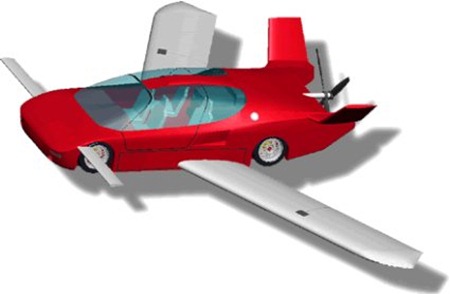
The flying car was a good solid feature attraction of my early daydreaming. They started in the 1950s, but as soon as Alan Shepard took his Mercury ride on a Redstone rocket into sub-orbital space I started expanding the features of my dream flying car so it could drive all the way into orbit, and then the Moon and Mars. I can’t remember now, but my flying car was featured as a flying submarine in some those daydreams, but I don’t remember if underwater action happened before or after outer space action.
Even as a grown up, sometimes when I’m driving across country on a long trip I like to imagine that my truck could fly.
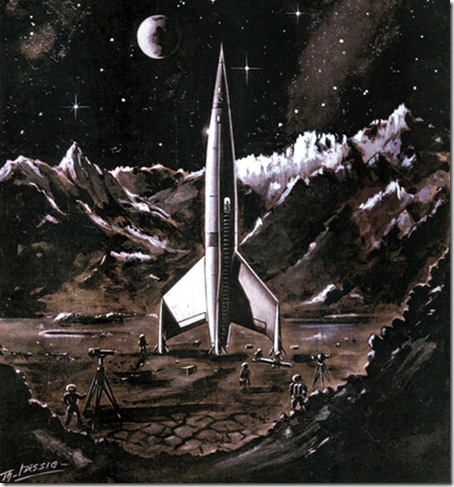
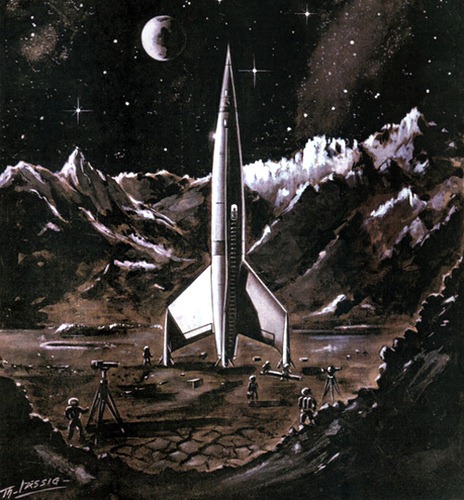
Starting with elementary school my main science fiction fantasy was flying to Mars in a giant rocket ship, the kind that stood on four fins when it landed. Mars was always my favorite interplanetary destination, and before Mariner 4 flew by Mars in the summer of 1965 I pictured the Red planet full of exotic alien life. Because my parents were alcoholics, that often fought, I pictured Mars as a getaway from my family life. Mars had unlimited potential. It could be anything. After Mariner 4, when that spacecraft photos crushed my Mars dreams by revealing that world to be as dead as the Moon, full of craters and not much else, I started daydreaming interstellar fantasies.
Of course by my teen years 99.9 percent of my mental movie making dealt with sex, and so science fiction fantasies got shoved aside for many years. Growing up and trying to adultify had been very painful for me. Getting an after school job when I turned 16, where I worked 3:30 to 9:30 M-F, and all days Saturdays at a grocery store, killed off my reading, television and fantasy time. Oh, I’d have lots of mini fantasies about having sex with girls and ladies shopping the store, but reality killed off most of my sci-fi fantasies.
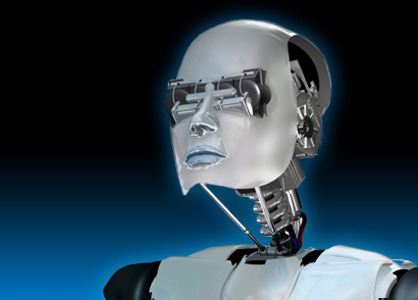
It was during that time that I had one of my most creative science fiction daydreams. I’d imagined having a robot that would stand in for us at school and work so we could do other things, like imagining having sex with cute neighborhood girls or learning to play the guitar so I could become another Bob Dylan. I always thought my idea of everyone owning a robot to earn their nine-to-five money was among my most brilliant inventions. Plus I figured our robots would be our best friends for life.
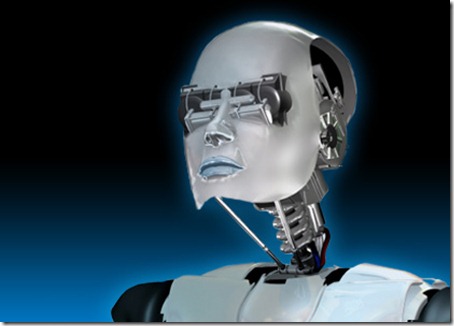
You’d have thought I would have combined my sex fantasies with my robot fantasies but I didn’t. I guess my puritanical programming kept me from thinking about robot love. I don’t know if it was a limitation of my imagination, but I always pictured robots having machine like bodies, rather than androids that could pass for humans. Well hell, when you can imagine any girl you want for your sex fantasies, why picture one built out of metal and electrical parts. But even before The Six Million Dollar Man, I did imagined having cybernetic enhancements for my own weakling bod, but they were more like the suits Heinlein imagined in Starship Troopers.
For some reason I was never the kind of guy who imagined clones of myself. I still don’t. I wonder what Freud would say about that. I did love to imagine building my own robot where I programmed all the books of Mark Twain so I could have a Samuel Clemens bot for a buddy. That was a favorite fantasy of mine for a long time, I guess while I was going to school studying computer programming.
It was very entertaining to think about programming a personality into a robot. Of course, I did have the narcissistic fantasy of developing a robot with my personality. I never pictured those robots looking like me, which is revealing, maybe I don’t like my body that much, but I loved the idea, the challenge of programming a robot that would love the same books, music, movies and television shows I liked. I don’t know why, but it was a fun way to while away some hours.
I don’t know why I never liked clones. I guess it’s just boring to think of a copy of me. I think I once wondered if I had a female clone of me would I want to fuck myself, but that never caught on as a fantasy. Who knows, maybe the strong anti-incest instinct we have keeps us from liking clones of ourselves. Or I could go deeper, maybe it was become of my own un-attraction to my physical self (which would also explain why I’ve met so few women where I was the star of their daydreaming).
As an adult, I don’t have as many science fiction fantasies as I did as a kid, but I do have some, even now. I really like the idea of having a robot companion, although I worry about the ethicality of having a robotic slave. I think I should fix my own food, wash my own dishes, clean the house myself, and do all the chores I can as long as I can, but as I get old it would be great to have a robotic caretaker. So instead of having to go into a nursing home, I could remain independent longer with a robot Jeeves. If I ever got Alzheimer’s and forgot to check myself out, I’d want a robotic caretaker. I’ve often imagined what it would be like to be an intelligent robot with such a job, and I’m even working on a science fiction story about it.
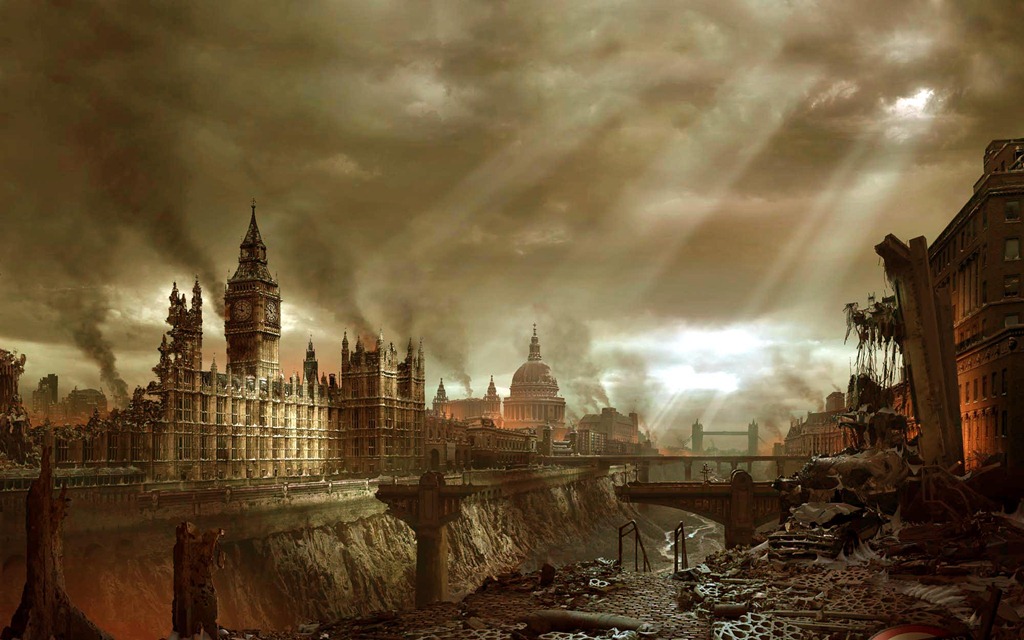
Another science fiction theme that’s been a big setting for my daydreaming has been after the collapse stories. Why are last man on Earth fantasies so much fun? Now really, what would Freud have made of that? And Mad Max like survivalist stories with lots of wild west gun fighting makes for terrific heroic fantasies. But also, Jeremiah Johnson living in the mountains alone, with few people left on Earth, also make satisfying daydreaming too. Those are a little weird though, when I think about it. I’ve been a vegetarian since I was 16, but in those circumstances I’m more than willing to kill and eat animals. Hey, they are only fantasy animals.

For some reason I’ve had many fantasies about a life without other people, so Robinson Crusoe dreams have been common, even Robinson Crusoe on Mars, like the old movie. Being the sole human on an alien planet is a cool fantasy. Don’t worry, I’m not always that way. Another wonderfully challenging fantasy is building colonies on new worlds. The fun here is picking the kind of people you want to bring with you versus the kind of people you want to leave behind. My Mars colonies were free of religion and superstition, and everyone was liberal and scientific. I wonder if conservatives dream of Republican colonies on Mars? Or do Muslims ever think about a world without Christians and Jews? Those Left Behind books tells us what evangelicals daydream about.

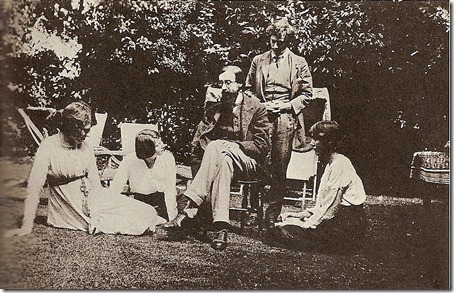
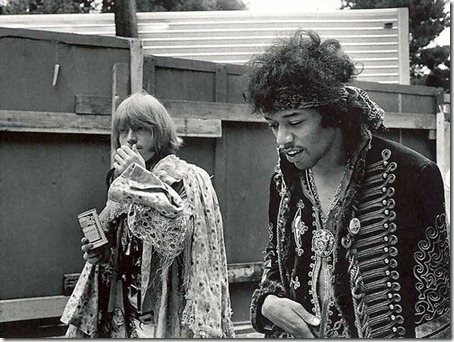
Of course, one of the best science fictional themes to use for personal fantasies is time travel. I’ve had thousands of time travel daydreams. When I as little I wanted to go see the dinosaurs, or visit famous events in history like the crucifixion of Christ, the gunfight at the OK corral, or be at Kitty Hawk with the Wright Brothers. Now that I’m older, and daydream of time travel, I imagine hanging out with Jack Kerouac, visiting the Bloomsbury group, or attending the Monterey Pop Festival.
Reading science fiction is only brain loading pre-fabricated fantasies. And maybe science fiction books are just favorite fantasies writers have to share with others. When you think about it, the “What if?” mechanism in our minds are powerful generators of fantasies. I’ve often wondered if our fantasies create real worlds in other dimensions. One of my favorite book titles is from a collection of interviews with Philip K. Dick that’s called, What If Our World is Their Heaven? Let’s turn that around – what if our lives are the daydreams of other beings?
p.s.
This is embarrassing, but it seems not everyone spends a lot of time making up stories in their head. I’ve been talking to my friends and wife, and so far none of them have the Walter Mitty gene. This is a surprise to me. I guess I’m admitting to doing something very weird in this blog post. But I’ve got to ask, if y’all aren’t spending all your time making up vivid fantasies, then what’s happening in your heads?
JWH – 10/23/10

 I am listening to A Great and Terrible Beauty by Libba Bray, and beautifully read by Josephine Bailey. It is the first book of a trilogy about four girls in Victorian England that get seduced by the power of magic. One metaphor for magic used in this book is addiction. The girls have hangovers after using magic. They are drawn to magic because of their unhappy lives and magic makes them feel good. They are warned about the dangers of magic, but they become addicted, knowing that magic killed the two girls that are their spiritual guides. In A Great and Terrible Beauty magic is seen as a kind of high, or escape of from the real world.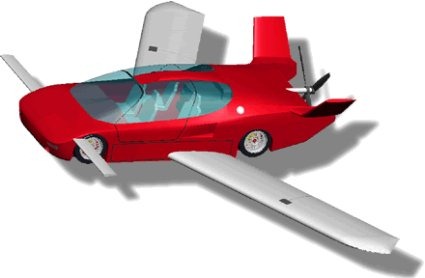


 Auxiliary Memory