How Many Readers of My Blog Are Actually Alive?

James Wallace Harris, 8/31/25

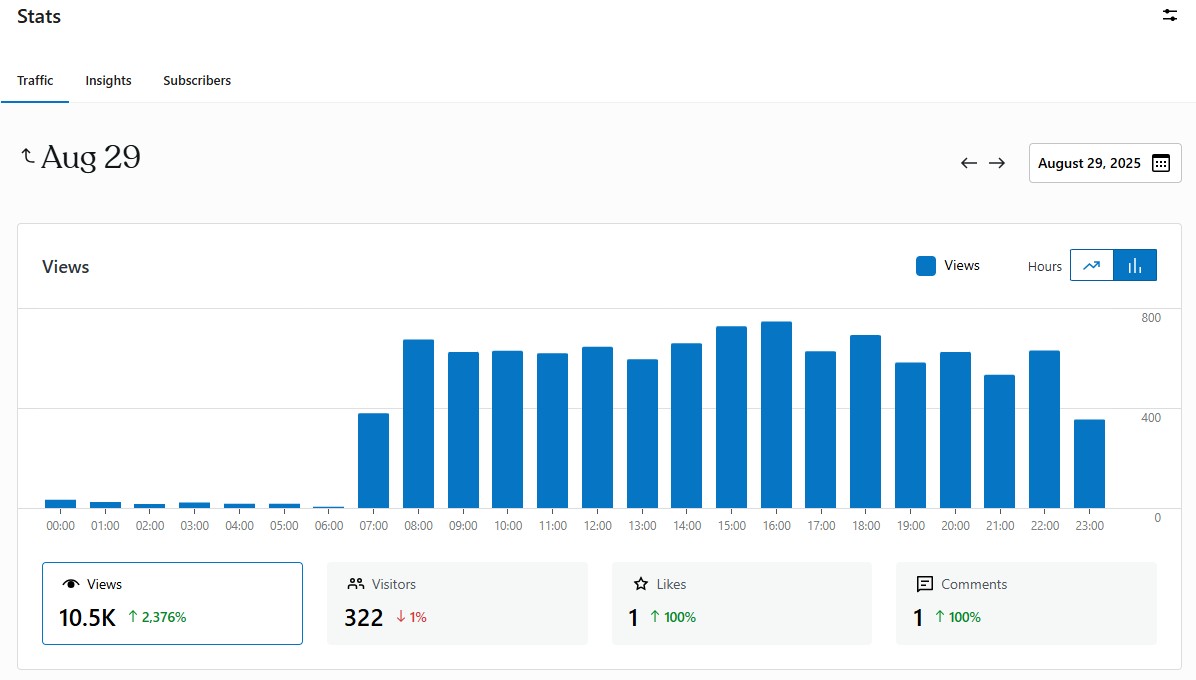
On August 29, 2025, this blog had 10.5K hits. That’s small compared to big sites, but huge compared to my daily average of around 400 hits. Supposedly, those hits were from 322 people, which is 1% fewer than the day before. Normally, most people read just one page when they visit. But to reach 10,500, those 322 would have to read 33 pages each. That’s not normal.

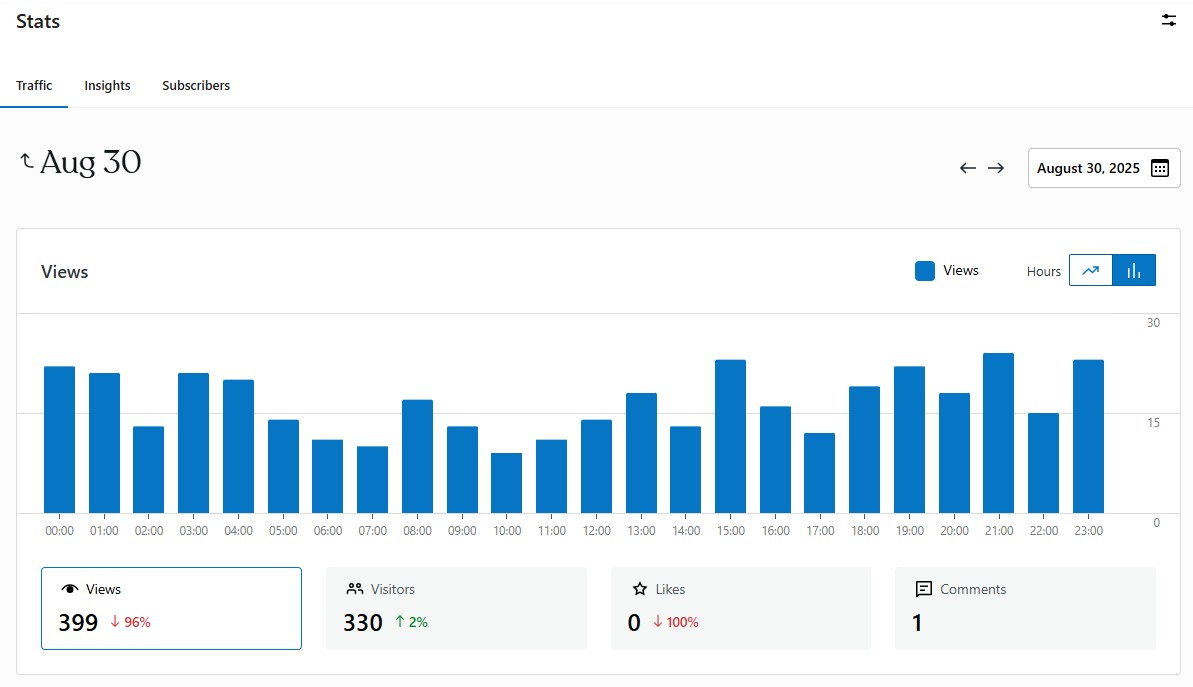
In other words, I have a mystery. Here are the stats for August 30th. It had 399 hits, but 330 people. Now that’s normal.
I can only assume a web crawler, bot, or AI was reading my blog. But here’s another mystery.
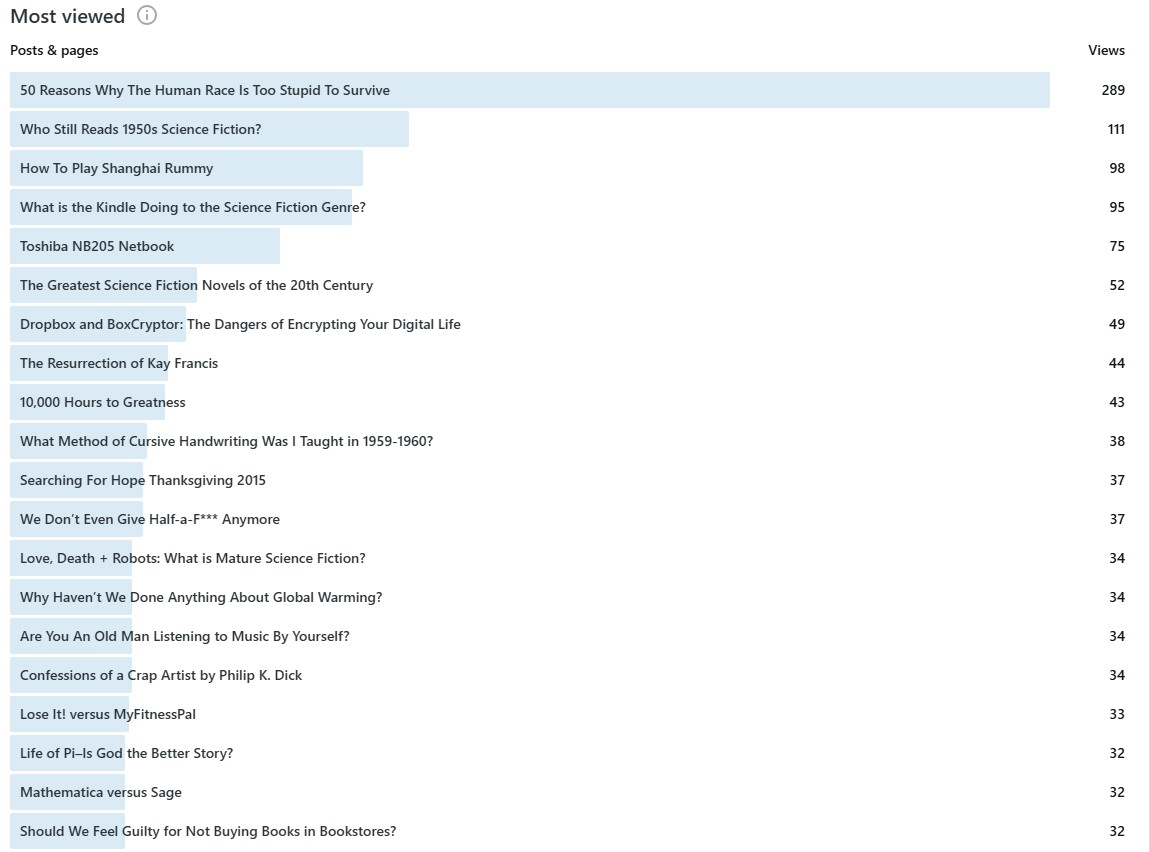
Whoever, or whatever, was reading my blog was reading my most popular posts. Above, list my most popular essays in order. Why would some mindless bot or brilliant AI want to read these pages more than once? Were AIs recommending pages to their AI pals?

I wish I had Google Analytics, but the price tier I’m using with WordPress doesn’t offer that.

Do any of you living readers know what’s going on? Hell, do any of you AI beings know?

I did asked CoPilot: On 8/29/25 my blog got over ten thousand hits. It normally gets about 400 in a day. Can you explain what happened. My blog is auxiliarymemory.com

That’s a huge spike, Jim—congrats! 🚀 Going from 400 to over 10,000 hits in a single day suggests something unusual happened. While I couldn’t access the site directly just now, here are several likely explanations based on patterns I’ve seen with blogs like Auxiliary Memory, especially given your focus on digitization, cultural memory, and thoughtful essays:

🔍 Possible Reasons for the Traffic Surge

1. Viral Post or External Share

  • One of your recent posts may have been shared on a high-traffic platform like Reddit (e.g., r/ObscureMedia, r/OldSchoolCool, or r/DataHoarder), Hacker News, or a niche Facebook group.
  • If your post touched on digitization, rare media, or philosophical insights, it could’ve resonated with a specific community.

2. Mention in a Newsletter or Article

  • You might’ve been featured in a popular newsletter (like The Browser, Recomendo, or Morning Brew) or cited in an article about media preservation, Moon travel, or cognitive science.

3. Search Engine Boost

  • A topic you covered may have suddenly become trending—like a documentary release, anniversary of a Moon mission, or a viral debate on consciousness—and your post ranked high in search results.

4. Backlink from a High-Authority Site

  • If a university, archive, or tech blog linked to your site (especially in a post about digitization workflows or Obsidian setups), that could drive thousands of hits in a day.

5. Bot Traffic or Scraper Spike

  • Less exciting but worth checking: sometimes automated bots or scrapers can inflate traffic. If the bounce rate was high or session durations were low, this might be the case.

🧠 What You Can Do Next

  • Check your referrer logs in your blog’s analytics dashboard (WordPress, Jetpack, or Google Analytics) to see where the traffic came from.
  • Look at the top-performing post on 8/29 to identify what drew people in.
  • If it was organic and positive, consider writing a follow-up post or updating that entry with links to related content to keep new readers engaged.

If you want help analyzing the traffic patterns or crafting a follow-up post that builds on the momentum, I’d love to collaborate. Want to dig into your analytics together or brainstorm what might’ve caught fire?

My Reply: What was strange is it wasn’t a boost to one page, but many of my old posts got 50 to 250 hits each. Is that some kind of attack?

That pattern is definitely unusual, Jim—and it’s smart of you to question it. When many older posts get moderate traffic all at once, it’s not typical of a single viral share or organic surge. Here’s how to think through what might’ve happened:

🧠 Possibilities Beyond a Simple Boost

1. Bot or Crawler Activity

  • Some bots (especially aggressive scrapers or indexing tools) will hit multiple pages across a site in rapid succession.
  • If the hits came from a small number of IP addresses, had very short session durations, or lacked referrer data, that’s a strong sign.
  • Check for user agents like curl, python-requests, or suspicious browser strings.

2. AI Training or Archival Scraping

  • Your blog’s rich archive and thoughtful essays might’ve been targeted by a large-scale web crawler—possibly for training an AI model or building a digital archive.
  • These crawlers often avoid detection by mimicking real browsers and spreading requests over time.

3. RSS Feed or API Aggregator Spike

  • If someone added your blog to a content aggregator or feed reader with a large user base, it could trigger distributed traffic to older posts.
  • This would show up with legitimate-looking referrers but still hit many pages at once.

4. Search Engine Reindexing

  • Sometimes Google or Bing re-crawls a site deeply, especially if there’s been a sitemap update or structural change.
  • These hits are usually low-impact and spread out, but they can spike if your site was flagged for deeper indexing.

🛡️ How to Investigate

  • Analytics Deep Dive: Look at referrer URLs, session duration, bounce rate, and geographic origin. If most hits came from one country or IP block, that’s a clue.
  • Server Logs: If you have access, scan for unusual user agents or request patterns.
  • Security Plugins: Tools like Wordfence (for WordPress) can help detect and block malicious crawlers.

🧭 What It Probably Wasn’t

  • A typical “attack” (like a DDoS or exploit attempt) usually targets login pages, admin panels, or specific vulnerabilities—not dozens of archived essays.
  • If your site stayed responsive and didn’t show signs of strain, it was likely non-malicious.

If you want, I can help you interpret your analytics data or draft a robots.txt strategy to manage future crawlers. Or we could even turn this into a blog post—“When Your Archive Gets Raided: A Blogger’s Guide to Sudden Traffic Surges.” That’d be very Auxiliary Memory.

My reply: Unfortunately, I don’t have access to logs from my site, which is hosted at WordPress.com and I don’t pay for the advanced level that supports Google Analytics. But you’re right, this might make for an interesting blog post.

That limitation makes it trickier to diagnose, but it also opens the door to a compelling narrative—especially for Auxiliary Memory, where you often explore the intersection of technology, memory, and mystery. You could frame the post as part detective story, part meditation on digital presence.

Here’s a possible structure to spark your thinking:

📝 Working Title Ideas

  • “The Day My Blog Was Raided: A Mystery in Metrics”
  • “When the Archive Woke Up: A Blogger’s Traffic Spike Without a Trace”
  • “Ten Thousand Hits and No Clue Why”

🧩 Suggested Structure for the Post

1. The Setup

  • Describe your typical traffic patterns (400 hits/day).
  • Introduce the anomaly: 10,000+ hits on August 29, spread across many old posts.

2. The Investigation

  • Share what tools you do have (WordPress stats, Jetpack).
  • Note the absence of referrer data or analytics granularity.
  • Speculate on possible causes: bots, AI crawlers, reindexing, or a hidden share.

3. The Philosophy

  • Reflect on what it means to have a digital archive that suddenly gets attention.
  • Explore the idea of memory—how old posts can resurface, like forgotten artifacts.
  • Tie it to your broader themes: preservation, access, and the unpredictability of digital legacy.

4. The Takeaway

  • Offer thoughts on how bloggers can prepare for or interpret these events.
  • Maybe even invite readers to share if they were part of the traffic surge.

If you’d like, I can help you draft the opening paragraph or brainstorm a visual metaphor—like comparing the blog to a dusty library that suddenly had all its books checked out. Want to sketch it out together?

My reply: I’m good. You’ve described my regular approach to writing a post. But I will mention your help. That is an interesting aspect in itself.

Conclusion

I think this might be the best answer:

3. RSS Feed or API Aggregator Spike

  • If someone added your blog to a content aggregator or feed reader with a large user base, it could trigger distributed traffic to older posts.
  • This would show up with legitimate-looking referrers but still hit many pages at once.

I checked the stats for my other blog, Classics of Science Fiction, and found it had a similar bump on August 21.
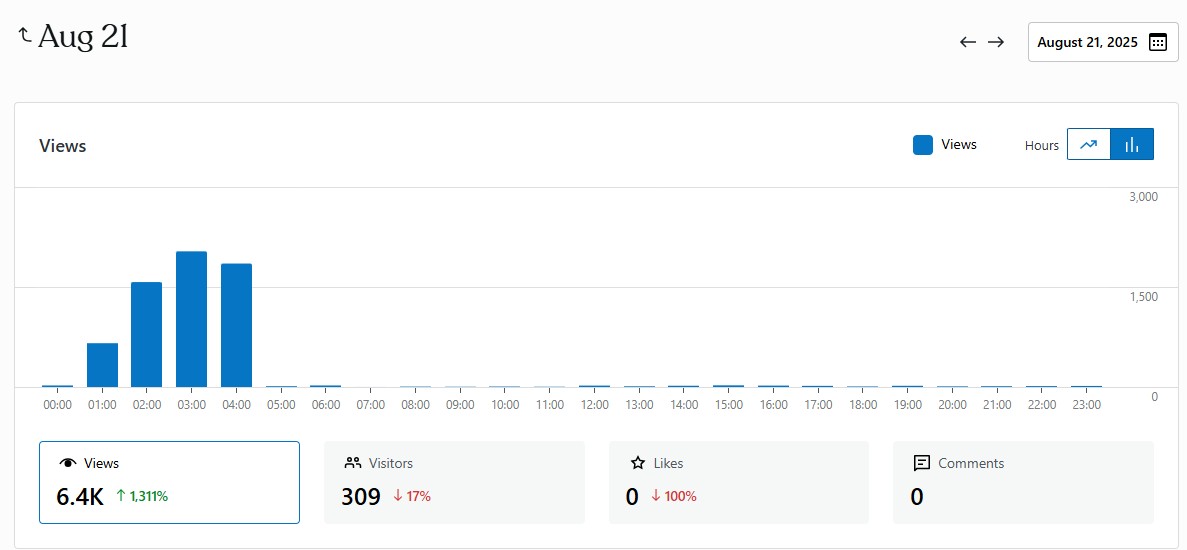
If an RSS aggregator shared my most popular posts from each site, I don’t think it generated any subscriptions, likes, or repeat visits. Thanks for the promotion, though. I haven’t received increased traffic, but it was kind of you.

Every once in a blue moon, some big site will link to my little site, and one of my pages will get several hundred to a few thousand hits. That’s kind of nice. But I never know where the link is published.

I’ve always written my blogs with the idea that I was writing to myself. I just didn’t care who was reading my diary. It’s flattering that some people enjoy reading what I write. But I don’t want to think about that too much. I don’t want to start writing to get hits. I don’t think I have to worry about that because I seldom get hits from Google searches. Evidently, what I’m interested in is not what most people are interested in reading.

On the other hand, I wonder if AI minds are reading my blog. I’ve always loved robot stories in science fiction, so it would be cool if I had a few robot readers.

JWH

Blogging in the Classroom

by James Wallace Harris, Saturday, December 23, 2017

My friend Laurie who is a professor of reading at a college of education told me she is going to teach a course using blogging as a teaching tool. I found that fascinating. I’ve done a little research on Google and see that there are special blogging platforms for teaching, so the idea is catching on. This backs up a pet theory I’ve had for years. As a kid, I wasn’t much of a student. One of my worse habits was doing exams and papers as fast as I could and then turning them in without double checking my work. If I had only taken the time to reread what I wrote I could have probably changed my mostly C+ grades to B+. For a long time, I’ve thought if they made kids begin blogging in elementary school it would improve their writing and test-taking skills for their rest of their lives.

blogging in the classroom

Knowing that only teachers would see my work meant I didn’t have to try hard because I didn’t care about what teachers thought. Back then, if I knew other kids might see what I wrote I would have tried harder because peer pressure did matter. This is why I think blogging could be a great teaching tool. If kids knew their friends would read their essays I think they’d try a lot harder.

Now we have a system that protects young egos. Children are vicious with each other. So we make schoolwork private between student and teacher. I can understand that, but I wonder if we’re making a mistake. If we want students to learn to write clearly maybe some of their work should be public. Blogging might be a way to start.

Blogging can be private. Teaching portals can set up blogs to be private between student teacher, public to just the classroom, or public to the world. There are endless reasons to blog, in or out of the classroom. One very important reason is to preserve a personal history. If everyone started blogging when they learned to read or write they’d have a history of their life from around age seven. My father died when I was eighteen and I never really knew him. I’ve often wished that blogging had existed back in the 1920s and I could have inherited his blog. I also wish I had a history of my own early life. But I also think blogging would have made me more self-reflective and concerned about my education if I had started at an early age.

Blogging in the classroom could cause all kinds of important changes in society. We don’t emphasize writing in our culture nearly as much as reading, and that’s unfortunate. Education is focused on learning and not communication. We force kids to sit for years so we can fill them up with knowledge, but we give them little chance of expressing themselves. The rise of the internet is showing how billions of people think, and it’s not pretty. Self-expression on the internet often reveals crude skills of exclaiming emotions (usually rage), but not logical thinking or the ability to cooperatively communicate.

This is why I wonder if forcing kids to interact with their peers via blogging from an early age wouldn’t initiate positive changes. Sure, it might open Pandora’s Box, which is what we’re seeing on the internet today with all the hateful tweets and comments, but if we started sooner and trained children to study their thoughts, organize their observations, write clearly, decode how others think, and to compassionately communicate, it could be different.

I took up blogging in my late fifties. It’s given me a great retirement hobby, plus I’m learning to write and think better at a time when my mind would normally be in decline. I believe I would have been a superior K-12 student, and thus a superior college student if I had started blogging right after I learned to write. I believe I would have tried harder knowing my friends could read what I wrote. I also believe that writing more would have helped me learn more. If I had been taught to explain how things worked through writing I would have learned more from my lessons. Blogging could be a way to teach kids to teach and that’s a great way to learn.

For this to work, we’d have to overcome a lot of obstacles. Most children and adults are embarrassed to let others see their intellectual abilities. It’s like undressing our minds. We’d need to teach kids how to protect their privacy and create their public persona. Most people don’t seem to realize their inner thoughts are already expressed in what they say and do. Children often worry more about what they wear and own than what they say or how they behave. If blogging was required in schools, and part of their schoolwork was public, it might make students more reflective about their thinking and how it impacts others. For example, if school bullies read posts by their victims and how bystanders see their bullying would they change their behavior? I don’t know.

I am constantly reminded of a novel, Everything I Never Told You by Celeste Ng. It’s a story of family tragedies, tragedies that could have been avoided if each member of the family would have expressed their thoughts.

I can imagine endless ways in which blogging could be applied to teaching. Currently, we have teachers teachings and students taking tests to prove they’ve paid attention. What if we required students to spend more time teaching? Because blogs can contain multimedia, we could ask students to teach topics on their blogs using whatever media they wanted. I often have to research and study a topic when I write about it on my blog. That makes me realize that I’m my most important reader because I discover how little I know and how much I learn from working on the post.

I also learn how bad I write by using tools like Grammarly and Readable.io. Writing on a blog is like playing a video game, I’m always trying to better my own scores. And I like when I get good comments, not praise, but insights, because learning how other people think teaches me how narrowly I see things. Even when I get hateful rants it teaches me my views are far from universal. I think students could benefit knowing more about how their classmates think and feel, even when it stings.

I wish I had started blogging when I learned to write so I would have a record of all my school years. I wish I had taken a photograph of every classmate and teacher. I wish I had taken a photograph of every classroom and school. I wish I had taken a photograph of every playground and walk to school. I wish I had written about everything that excited me and scared me. I hate that I can’t remember or visualize all those people and places.

Because of this wish, I would recommend teachers have students sign up with an international blogging site that would stay in business the rest of their lives. They need to promote lifelong blogging to preserve memories. It won’t hurt to have a permanent personal blog and classroom blog for a year if that’s needed.

We might be protecting kids too much by letting them hide from criticism. I think teachers need to think hard about whether to let student blogs be public because some children will suffer emotional damage. But on the other hand, it might help them in the long run. It’s like parents who homeschool their kids for years to protect them. In the end, their kids have to interact with society and it’s usually much harder.

JWH


Throwing Away the Past

Have you ever found a pair of ticket stubs to a concert you went to a quarter-century ago when cleaning out an old drawer?  You hold in your hand proof that you were somewhere in the past at a certain time, and even what building, row and seat, and what you heard for a few hours.  Do you save the ticket stubs or toss them?  Maybe you could jot the info down in a journal, or make an entry into Facebook Timeline.  If you don’t, you’re throwing the past away.

I often throw my past away, and sometimes I regret it.  Saving the past takes work.  I turned 60 last year and my memory is in decline, so I often wish I had validation for lost memories.  But saving the past often feels like hoarding, and hoarding scares me because the weight of past can become paralyzing.  Some folks bury themselves in the past long before they die.

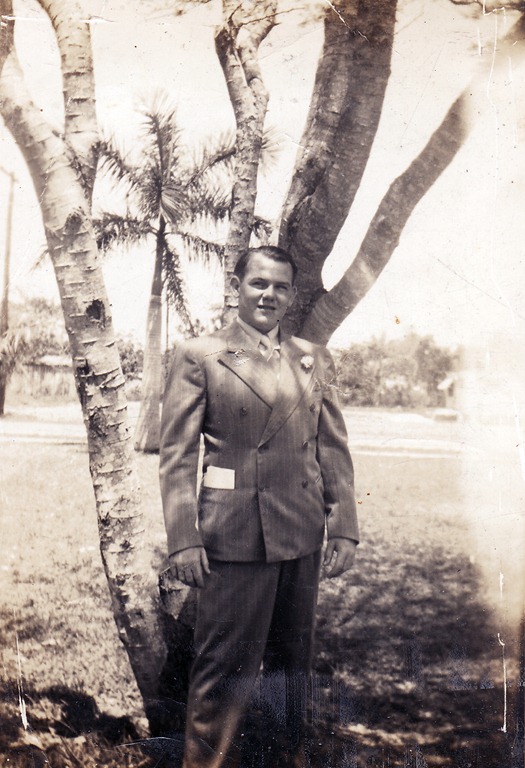
1939-05 - Dad at Homestead FL

Most people don’t have eidetic memories.  Have you ever wondered how biographers could write gigantic biographies of people who lived a hundred or two hundred years ago?  George Washington and Abraham Lincoln left big historical trails to follow, but most people leave few clues to piece together.  My father died when I was 19 and it took me years to realize that I knew nothing about him.  I had memories and a handful of photos, which I thought was all I needed, but when I finally got around to examining those memories I realized I had zip, nada, nothing.  I have no idea what was going on inside his head.  Like, what was he thinking on his graduation day in the photo above?  What did he hope to get out of life?

Recently I threw out decades of credit card bills, medical statements, receipts on big purchases, bank statements.  I knew if I wanted to I could recreate at least my spending and medical history with those clues, but in the end, I chose to throw them all away.

Who are we?  Are we what we think?  Are we what we own?  Are we what we did?  Are we what we love?  Are we what we hate?  I’m not a believer in the afterlife, but I wonder what it would be like, because if we went some place new do we throw out who we were on Earth?  Memories of my Dad are defined by Camel cigarettes and Seagram 7 bottles.  If my Dad can’t have his cigs and booze, can he be my Dad in heaven?  Or do they have bars and ashtrays on the other side?

And is that how the young man in the photo above expected to be remembered?  By his bad dying habits?

There was a period in my life where I fanatically collect LPs.  I had over a thousand of them.  Collecting and listening to music is what made my life good and meaningful.  I eventually sold or gave them all alway.  I only have one LP now.  Last year I had a fit of nostalgia for an album I heard in 1971 called Never Going Back to Georgia by The Blues Magoos.  It was never reprinted on CD.  I ordered a used copy off the internet and a friend gave me a turntable and I played that album a couple of times.   What I heard was not what I remembered from forty years ago.

It takes a great effort to recapture the past once you throw it away.  I know many people who never throw anything a way.  I knew a guy who claimed he had every book he ever bought and read.  I know that’s not true because he lent me a book and I never gave it back, and I’m sure I’m not the first.  I have a piece of his past – sorry about that Bob.  But is it a piece that matters?  And which pieces do?

Does the past matter?  I can go long periods of time without thinking about the past, but boy do I hate it when a memory pops up and I can’t place when and where I was.  It bums me out that I can’t remember one face or name from kindergarten through third grade.  I do remember returning to Lake Forest Elementary in my fourth grade year and meeting a girl name Helen and how it upset her that I didn’t remember knowing her from when we went to second grade together.  I can remember a few people from 5th and 6th grade.  That’s pitiful, ain’t it?  In all my K-12 years I can barely remember and name more than a dozen classmates.  Where did all those people go, I spent years with them.

Religious people agonize over being reborn after death – they just don’t want to let go, they’re just afraid of dying.  But I think we die every day, every moment, I think we’re constantly throwing away the past.  We’re new people every day.  We go to sleep every night and our brains housecleans the day’s memories and throws out most of them.  If we kept all our memories we’d be like hoarders buried under piles of useless crap.

But each night, and maybe not every night, the old noggin decides to keep a few bits of the past, so there’s a precedence for keeping some stuff.  I wish I had kept a diary and took more photographs throughout my life.  A case could be made that we should each be our own biographer, and maybe that’s the right amount of past to keep, what we could keep in one big book.  Our brains aren’t very good with details, so we should jot the important ones down and take a few snaps to document our lives.

Now here’s my wish.  I wish The Library of Congress would create a national digital archive where we could store our memoires, like a permanent blogging site that historians can depend on for mining memories about all of us.  I know most of our autobiographies will go unread, but they’d be there.  I’d love to read my father’s thoughts, and his father’s, and his father’s father, and so on.

There are things we do want to remember.  Most of the past we throw away, but maybe we should start throwing away a little less.

JWH – 3/16/12

Blogging, WordPress and the Future

I’ve been blogging for awhile.  I started with LiveJournal, and then moved to WordPress on my hosted site, and finally to WordPress.com.  I like the convenience of WordPress.com maintaining everything, and I’m developing a wish-list of desired features I hope they will roll out in the near future.

First, let’s think about blogging in general.  The basic idea is to write a post and get comments.  Older posts are pushed down and stored away, and the general method used to find these older stories is either by categories, search box or calendar grouping.  It’s pretty effective for what it does, but I wonder if other methods might be developed to organize the overall site and expand the theoretically limits of what it means to blog.  WordPress is constantly adding new widgets, so their structure is built around adding features, so this post is going to suggest some features I want and imagine where I’d like blogging to evolve in the future.

Paid For Feature Modules

I don’t know if I can expect all my desired features for free, but what if each module was a paid add-on or part of a plus service?  I have no idea how WordPress makes its money.  It’s a great free service that doesn’t appear to use ads and what few add-on features they do sell don’t look like big revenue generators.

Some of the features I’m wishing for could be part of a $49.95/year plus package.  I’ve invested a lot of time in WordPress, so I don’t mind paying.  I don’t want them to go bust – I want WordPress to be around for generations to come.  I assume WordPress wants to maintain their current marketing plan of offering a free service, but I can picture my blogging needs expanding, and I imagine so do others.

Right now there are too many Web 2.0 services.  I can share my thoughts on WordPress, my photos on Picasa, computer work on Zoho.com, friendships on Facebook.com, genealogy on Ancestry.com, my book lists on LibraryThing.com, and so on. 

What I’d like is one place to present the digital me.  MySpace and Facebook want that place to be their services, but I’m not happy with those sites.  They are too restricting.  What I want is one place to combine all the features, and for now I’m thinking my blogging home at WordPress.com is the place to start.  I have no idea if the people who produce WordPress want to be such an enterprise, but I’m guessing my desires are just part of an evolutionary process on the web and somebody will offer them.

The Digital Me 

Let’s think of a blog as an analog for a person’s life.  Right now blogs model people with the diary format.  Before computers, memoirs and autobiographies were two ways to convey a person’s life.  However, those formats depend on linear progress and some random discovery.  When you meet someone at a party you don’t get to know them in a start at the beginning, end at the end, fashion.  Generally you start talking about a subject, and this is covered by blogging with categories.  But if you’ve ever been to a blog site of someone you like to read and they have a long list of categories it’s not very inviting.  And if their current three posts are all boring then you’ll get the wrong idea, even if they wrote a brilliant post just before that.

Science fiction has for years imagined artificial beings or speculated on machines recording people’s minds and converting them into computer beings in artificial worlds.  I’m thinking a blog could be something like that – a download of your personality.  But you need a face to represent the whole of your being.

Table of Contents

Magazines use their covers and table of contents to promote their top stories, hoping an eye catching headline will get you to buy a whole magazine and read the rest of the issue.  However, magazines are not good structures to model a person’s complete life, but the TOC could be a good format to use for an introduction, or your face.  Home pages on blogs take you to the latest post.  I’m wondering if WordPress could create a Table of Contents page to use as the default home page, something that would combine the features of the About page and table of contents, to welcome blog visitors and help bloggers introduce themselves, giving guests a bigger picture of what you are like.  Also, let this page have more layout options, use a 2-3 column HTML table to organize the structure, and allow the maximum customization. 

Since the word categories is already used, have an organizing unit called “Projects” to be a super-group above categories.  I like the word “projects” because I like to think of organizing my life into projects.  Marketing people might come up with a better word.  Maybe tie it in with major personality traits.   Here’s an example of what I mean.  For the Table of Contents page have several user-created Topics or Projects called Family, Friends, Work, Hobbies, Travel, and Reviews.  Under Reviews I might have category listings for Audio Books, Books, Movies, Television Shows, Music, etc.  Under Family I might have categories for Parents, Wife, Kids, Genealogy, etc.  Then allow each Topic/Project to have an icon or small photo in the layout, so visitors at a glance can see how the blog writer organizes his or her life.

TimeLine

Another fun format to add would be the TimeLine – something to help people remember when and were things happened.  Since people have imprecise memories, you’d have to have a Date field that could handle  years, months, seasons, and days.  I don’t think hours and seconds would be needed.  (Fall 1949, 12/7/82, January 1971, 1963.)  Users could enter birthdays for family, and then school years and schools.  That way people could quickly know how old they were in a during a particular school year, or what years they worked as a bag boy.  Bloggers could enter dates for when they met people, got jobs, saw concerts, had children, went on vacations, etc.  Additional fun features would be hyperlinks to web sites that show the TV schedules, top news, best selling books, big movies, etc. for each year to help prompt memories.

Lists

I like keeping a list of the books I’ve read, my favorites, the ones I own, favorite songs, my CD library, favorite movies, DVDs, movies seen, etc.  Lots of people are list makers, and so having a list making module would be awful cool.  Like the TimeLine module above, this would force WordPress to get into the database business, which moves them more into the Zoho.com type service.  WordPress could offer both custom database applications and do-it-yourself kits.

Genealogy

Blogs are about people.  I use my blog to help remember things.  One of the things I’ve always meant to get into is genealogy – but not in a big way.  What would be amusing for blogging is to enter enough information so it links to other genealogy sites and to other bloggers, so when you meet people you can glance at their ancestry and maybe check if you’re related.  If this linkage grew eventually we’d be able to say to our blogs, “show a family blogging tree.”

Who Is Your Blog For?

When you’re typing away at your blog posts do you do it for friends, strangers, or yourself?  I call my blog Auxiliary Memory because I’m getting more forgetful all the time.  I really would like to use my blog as a supplemental brain.  If WordPress had the security, I’d even like to save private information on my blog.  Not bank account numbers, but just data only I would want to see when I’m trying to remember something, maybe something personal like address books, Christmas card lists, work and home To-Do lists, etc.  I’d also like to keep my last will and testament and parting thoughts, so when I die, especially unexpected, I can leave some last messages.

Now do you see what I mean when I think of a blog as a digital analog of myself?  Right now blogs are a collection basket for thoughts, but it could collect other personal items, like photographs.

Photos and Time and Place

There are plenty of online photo galleries for people to share their pictures, but I’d like one integrated into WordPress.  Why separate thoughts from images.  I’d like to tie photographs to the TimeLine and to the Genealogy.  Currently we enter posts by today’s date and time, but I’d like to be offered a field that would let me enter posts for past dates and time, that way I could organize my photographs chronologically, and work to remember the past.

It’s quite obvious what would happen if you could link photos to genealogies.  I’d also like to link photos to streets and cities, and I would like to connect to other people to share photos linked by time and place.  I moved around a lot when I was a kid.  Imagine putting all my photos from Maine Avenue when I lived at Homestead Air Force Base from 1962-63 into the system and someday getting a message from long lost friends who went to Air Base Elementary with me?

Photo Rotation and Linking

Right now we get one photo for our header to represent our personality.  It would be great to draw from a pool, so on some pages visitors would see images from a random rotation from the pool of personal or stock photos and for other pages, specific photos to go with the content of the post.

This would be a nightmare to roll out for WordPress.  It’s much easier to manage the system when there’s a limited number of templates for users to build their sites.  For this to be practical, WordPress needs to designate certain sized photographs – so all header photos would be the same size for a particular template, as they do now, but offer you the system to switch photos on the fly.  When you create a new post you’d have the opportunity to link to a photo pool folder or link to an individual photo.  This wouldn’t require a major programming change, and WordPress would sell a lot more space.  Of course, it would be nice to link to Flash videos and animations too.

I’m Sure You Get My Point By Now

By now you should see the trend.  I supposed with XML and web services many of these features could originate on companies outside of WordPress, or allow these features to work across all blogging sites.  I love the idea of OpenID and that needs to be expanded.  Selecting a blogging service like WordPress, Blogger, LiveJournal is like selecting a nationality, but we shouldn’t have language barriers to keep us from communicating across borders.

It may even be possible that various blogging services could work together so you’d have memberships on more than one service and combine the results.  I see people trying to do this now but the results are disjointed, like they have multiple personalities, or they want to have separate public identities.  I hate when I leave a reply on a Blogger site and it wants to send people to my Google identity rather than my WordPress identity.  My FaceBook page should just have a widget that displays my WordPress blog instead of trying to duplicate a blogging feature.

Has anyone thought about the ramifications for blogging for decades?  Or generations?  Permanent storage needs to be addressed for historical purposes.  I always like to ask people, “What would the world be like if Jesus had a blog and we could read it today.”  Whose blog would you want to read from history?  File and data formats are going to have to become standard if they are going to be readable in a thousand years.  And if you spend a lifetime crafting your blog so it represents who you are, do you want it to die just because your body can’t go on?

These are just some idle thoughts on my part.  Start thinking about what blogs could really become.  Just wait a few years for when WordPress rolls out its AI widget that allows you to program a talking personality to go with your blog.  All it’s personality will be based on your past blog entries.  Eventually, we’ll be able to talk to our AI and it will automatically create our posts just from interviewing us.

Jim