Inventions Wanted 006 – The Data Bank

I’ve worked with computers for decades and backing up has always been a hassle – both at work and at home.  I used to have a tape system for home but it became impractical years ago when hard drive space far outpaced the expense of tape drive technology.  In recent times I’ve been using external USB drives, but they’re not backup paradise either.

Unless your backups are frequently taken off site there is always the problem of your house burning down, blown away by tornados, submerged in a flood, or invaded by thieves.  In the early days of personal computers valuable home data was limited to word processing files, spreadsheets and financial records.  Most of that stuff could be saved to floppies.  Now I need 63 gigabytes of space to preserve my digital valuables.

Since our parents died, my wife and I have became the librarians of family photos.  We have boxes and boxes of photos that we’re scanning to digital files.  I’ve also converted dozens of old cassette and CD audio books to MP3 files.  And I converted LPs and CDs to MP3s.  Now I have an every growing expanse of valuable binary data.

The weight of all these digital files is becoming a burden.  Last year I bought Second Copy and two USB 250gb drives.  I made a copy of my files to one drive and took it to work.  I then connected the other drive and let Second Copy replicate my hard drive activity to it in real time.  My plan was to switch drives every week so I’d always have a fresh backup off site.  I never developed the discipline to follow this plan more than a few switch outs.

So this week I subscribed to Mozy.com, an online backup service for $55 a year.  My plan was to create a Mozy backup and then restore it to a drive at work to test it out.  When I purchased Mozy I knew it was going to be slow but I had no idea how slow.  The first backup I set up with 63gb of data was predicted to take 5 weeks.  I have the third fastest DSL from AT&T.  High speed internet access is built around downloading speeds not uploading speeds which are a fraction of downloading speeds.

I called AT&T and asked about getting their fastest DSL service but they told me it wasn’t available in my neighborhood.  I even considered switching to Comcast high speed cable internet but I’m living with slow uploads for the time being.

The next thing I did was stop the current backup and cut it down to 7 gigabytes of essentials.  I was able to upload this data set in a couple of days.  At work today I ran the restore to test things out.  Mozy.com offers different ways to restore your data.  The fast way for large backups is to have them burn DVDs and express mail them to you, but this costs extra.  I used the free web restore method.  You log into Mozy, request a restore and wait for them to email you when the files are ready for downloading.  It took about an hour to be notified.

Mozy makes one or more compressed .exe files for you to download.  I assume they divide your backup into the same DVD size chunks as they do for when they actually burn DVDs.  I got two 3gb files that I downloaded in less than an hour.  Download speeds were 1.1 – 2.2 megabits per second at work. 

I discovered that my backup had no .mp3 files in it.  I then read Mozy’s manual and discovered you can configure your backups with all kinds of filters.  The basic data set of My Documents files were set up to filter out .mp3 files because I had unchecked the Music backup set.  But I was expecting to get my audio books, which are also in .mp3 format.

In other words you will have to play around with the settings to get exactly what you want.  If you don’t have much to backup I’d just backup everything at once.  Mozy is light on documentation so I’m guessing at some of their methods.  I emailed Mozy several times and got answers, but for other things I just speculated about how to do things.  It’s easy to use, but you have to second guess them at times.

One problem with online backups is how and when to copy files.  My Second Copy program patiently waits and every ten minutes copies any newly created files to the USB drive.  That’s great as long as I don’t mind an ever growing backup because it never deletes files on the backup drive.  That’s great if you want to fetch a file you’ve accidentally deleted last week, but bad because your backup contains all those files you thought were deleted.   

Mozy works by creating backup sets.  Each set is a snapshot of the moment.  If you make a backup with Mozy one week, clean up your hard drive and reorganize your files and make another backup the next week and that backup will reflect your new system.  That doesn’t work with my USB system.  Working with the Second Copy method I’d have to wipe the folder on my USB drive and start Second Copy running fresh.

What I would like is an online backup that copies files as I make them but waits one week after I’ve deleted a file on my hard drive and then delete it off the online backup.  In other words I want backing up to be totally automatic and without backup sets.  Mozy doesn’t work that way, but the way it works is best for the technology we now have.

All this begs me to put on my wishing cap and imagine a perfect service.  What I would like is a Data Bank that protects my digital wealth the same way a normal Bank protects my money.  I want to feel totally confident that my data is always protected, maybe even with government regulations.  I’ve read horror stories about online backup companies going out of business.  Online backups is a fantastic concept.  It would be nice to know that Mozy or companies like it replicate their stores to multiple cities and I’m 99.999999999 percent sure I’ll be able to restore my files in case of a catastrophe. 

I’d also like my Data Bank to work with a standardize filing structure so I can easily find my files.  Mozy copies Windows My Documents’ structure and appears to use Vista’s new structure with my Vista machine.  Mozy is starting to support Macs and I hope they follow on with Linux.  It’s a shame that all the OSes don’t use a similar filing structure so people could learn data organizing principles.  I think it’s great that Microsoft started segregating music and photo files.  I wish the OS could tell the difference between music and audio books.

Because we can’t trust online backup companies yet, its important that you restore you files to a computer not in your house.  I did mine at work, but if that’s not possible you might want to find some backup buddies to trust.  It would be wonderful, that in the future, Data Banks do become a reality and they are guaranteed 100% trustworthy.

What I also want from the dream invention is perfect access from any computer I’m working on.  Just as I can log into my money bank from my work machine I want to be able to log into my Data Bank and have easy access to my home files.  For instance, as I rip my CD collection I’d like to copy it to my work computer to play songs there.  Or if I start a project at home on the weekend I’d like to get it out of the Data Bank on Monday.  Mozy isn’t set up like that.

I’d love to log into my Data Bank and see two folders at the root level:

/data

/library

Data would be where I go for any files I created and Library would be media files like music, photos, audio books, video, ebooks, Acrobat files, etc.  It would be very cool if the Data Bank worked like a network drive and I could just play my media files from that location.  However, I don’t know if that’s practical.  If a Data Bank had six hundred thousand customers could they handle such a load?  Maybe in the far future where everyone has fiber optics and gigabit bandwidth.  But for the near future I think causal access for backing up and retrieving should be practical now. 

Even that is beyond Mozy at the moment.  Mozy is designed to backup your files and then in an emergency restore them.  I think I’m pushing their system when I plan to backup my home system and then restore it on my work computer a couple times a year.  Since Mozy could go out of business I don’t trust them yet to hold my files without having them on a second computer.  I’m mainly using Mozy to eliminate messing with the USB drives.  That’s another source of saving electricity for those wanting greener computing, but I’m also getting tired of hearing my USB drive grind away.  Mozy should make my life simpler, and that’s good.  It will take a year or so of living with Mozy to really decide how they do.

Jim

Has Google Become King of the Spammers?

Every time I use Google, especially when I’m trying to find a product review, I’m overwhelmed with sites that are trying to sell me something.  Any word in my search term can set off a signal to bombard me with results from vendors.  I don’t mind the Adsense listings in the right column, but the paid rankings is getting out of hand.

Google seems to be invading my life even more with sales pitches when I visit blogs and web sites.  Everyone is seeing a gold rush with Adsense.  But I’ve got to wonder just how many bloggers make money using it?  It makes their pages look ugly and uninviting.  It’s one thing if you’re making a living off your site, but it’s another thing just to junk up your layout because you have get rich quick fantasies.

Spam is the word for unwanted email, but I’m now wanting to broaden its definition to include all ads.  Some web sites are looking like the hoods of race cars.  Magazines are so filled with ads that publishers practically give subscriptions away as sales catalogs.  I go to the movies and have to sit through an ever growing review of ads before the previews as well as having to overlook numerous ad placements being forced into the show.  Trucks and buses are becoming roving billboards.  I quit listening to radio years ago because of the obnoxious ads.  If I didn’t have a DVR I wouldn’t be able to watch many of my favorite shows.  Computers now come with crapware which is only a new form of advertising. 

Spam is overwhelming our lives.

Microsoft seems to be going nuts trying to find a way to compete with Google.  When is the ad boom going bust?  What we need is the HBO of search engines – but would people pay for better search results?  I’d pay $19.95 a year for a great search engine that found me what I wanted to know instead of sales pitches.

The trouble is a great non-ad search engine will be defeated if it only takes me to web pages full of ads.  How often do you end up at web pages or blogs that are honey pots that tricked you into seeing a page full of ads?

If the free Internet is going to be ad-powered I’m not sure we don’t need a new Internet.  I find most of my answers now at Wikipedia, which still uses the PBS model of financing.  Strangely enough I’ve paid for the online Encyclopedia Britannica which uses the HBO model but I prefer the results from Wikipedia.  Open source enterprises combined with subscriptions and donations could the way to go.

What I want when I go to the search engine is usually something specific.  Not only is the information I want specific, but I also have a exact idea in mind for how I want my answer formatted.  I want to buy a new HVAC, so I turned to the Internet for help.  I want How-Tos, Tutorials, Product Reviews, Consumer Reports type articles, etc.  What I would like in my dream search engine is a box for my query and a checkbox list of formats for how I want to receive the information.  For example:

  • Bibliography
  • Essay
  • Blog
  • Newspaper story
  • Encyclopedia entry
  • Definition
  • Photograph
  • Video
  • Audio
  • Travelogue
  • Lesson
  • Tutorial
  • Book
  • Journal
  • Magazine article
  • Peer-reviewed academic journal
  • Product Review
  • Comparison shopping grid
  • Sale offers

And so on.  Sure, sometimes I do want to find a place to shop.  Most of the time I don’t.  Using Google now is like visiting a poor country and stepping off the plane to be mobbed by hundreds of hucksters and beggars.  And as long as Google is free this is how it’s going to be.  They have to make money to pay their overhead.  Can’t blame them on that.  But, I’m sick of ad-generated enterprises.

I’m not expecting a free lunch, but that’s what people have come to expect from the Internet.  I think the businesses and advertising firms of the world need to think of ways to market their wares other than buckshot spamming.  I know the current system is working for them and I tend to think most people accept things the way they are, so change is unlikely.  I believe we have a whole generation of people used to being walking billboards with their clothing, and they have lived and breathed advertising their whole life and can’t think of anything different.

I’m not against shopping.  I’m not against technology helping me find things to buy.  I am tired of spamming, and I believe the world of advertising has become spammers.  Google has succeeded magnificently in this method, so everyone is following them.

Recently I started researching social networking and found tons of sites about how to increase ranking or visitors.  Everyone wants to manipulate Digg.com to increase their traffic and thus their ad revenues.  In fact, some of the sites with the largest traffic are those that teach people how to generate large traffic – in other words, the Internet is becoming a giant pyramid scheme.  Hordes flock to the Internet to make their fortunes only to learn that to make money requires getting other people to flock to their sites.

Google has unwittingly become the tool of this madness.  Digg.com offers one method to overcome Google’s Achilles heel but only if you’re looking for what’s popular on the net at the moment.  Ad driven sites are now trying to find ways to manipulate Digg.com.

During the early years of the World Wide Web it was promoted as a super Library.  Mixed in with all those billions of current pages are ones that offer genuine information, the kind of data you go to a library to find.  Wikipedia has become the shining light that draws people seeking knowledge.  What we need is other information enterprises that are like Wikipedia and Digg.com that circumvent the ad generated gold rush.

One idea would be to create a Digg.com for long term ratings of web pages.  Google does that by measuring how many links point to particular pages, but I assume this feature is overridden by paid rankings.  Google could offer a non-ad version for a fee if they wanted and even combine Digg.com voting.  The early form of Yahoo was based around a subject tree index of human reviewed web sites.  That worked when the Internet was smaller.  It might work again to make the Internet seem smaller and manageable by filtering out the noise.

I tend to think all gold rushes, like this ad generated one, eventually go bust.  Pages will start disappearing when ad revenues don’t grow.  Super sites will consolidate services.  I think blogs will evolve and like personal web pages before the blogging era, will lose their appeal to most people.  Blogging will succeed as a form of personal communication but I don’t think many people will ever make money at it. 

Jim


Going Paperless

When my Time magazine renewal came in recently I decided not to renew.  I had been paying about $29 a year and now it was $49, and I thought that too much.  Then on Saturday I saw the new issue at my favorite bookstore and wanted to read it, but I passed on it thinking I’d need to learn to do without.  Later that evening I had a V-8 moment where I imagined hitting my head.  Hell, I have a Kindle and I can get Time from the Kindle store, I thought.  It turns out subscribing to the Kindle version of Time is only $1.49 a month or about $18 a year.

Flipping on my Kindle I zoomed over to their store and subscribed and instantly saw a download completed message.  A couple clicks later I was reading the article I saw at the bookstore about George Clooney being the last Hollywood star. 

Then it occurred to me that I should check Time’s web site, and I’ll be damn if the whole article wasn’t there for free.  Not only was the read for free it also included a video segment of George Clooney going into the writer’s crawl space looking for source of an alarm that had gone off unexpectedly.  Seeing the video of a fancy movie star at the writer’s modest house for dinner doing ordinary things really did accent the piece.  I could have had all of this for free.

The trouble is reading Time online isn’t exactly pleasurable, and reading the Kindle is, so I’m happy to pay for my Kindle copy.  However, this experience reminded me of an article in the latest issue of Wired (hard copy $12 a year) called “Free! Why $0.00 is the Future of Business” – which I now link so you can read for free.  Once again I wished I had this article on my Kindle.  The Kindle is actually as near perfect for my eyes as I can imagine anything formatted for reading.  Among all the little buttons at the bottom of online reading material I now wish there was a “Send to Kindle” button.  It would be worth the dime Amazon charges for receiving such stuff.

We are really very close to having a paperless society that pundits have talked about every since I can remember.  People always exclaim they hate reading off the computer screen even though they spend hours a day doing so.  Now the Kindle offers a better way to read, even better than paper, and that starts to suggest going paperless is possible.

By the way, I kid you not when I say I prefer to read the Kindle over paper.  If my paper material was formatted like the Kindle, paper would be fine, but modern layout artists format magazines for people with 20-15 vision.  The typeface on the Kindle is sharp, large and the scan line is just a few inches across – very easy on the eyes.

I subscribe to a lot of magazines, most of which I only read a tiny fraction of each issue.  All those trees cut down and processed with tons of water, power and dangerous chemicals so I can just flip through and read a few tidbits here and there.  Now that’s wasteful.  I’ve been feeling guilty for years, but with global warming I really feel terrible about such waste.  I’ve decided it’s time to go paperless.  Besides that I’m tired of carrying so much paper out to the curb for recycling.

I canceled the paper over the protest of my wife – we finally compromised and get just the Sunday edition, but I’m aiming to eliminate that too eventually.  I hate to see newspapers lose business and carriers lose jobs, but we recycle pounds of newspaper after only reading ounces of pages.  That’s just too wasteful.  Now I’m on to finding new ways to read my magazines.

Most magazines do not have Kindle editions, but they usually have a web edition.  However, many of those do not have full text online.  I got the latest Scientific American today and checking online I find two articles available as full-text, including the cover story “The End of Cosmology,” the one I wanted to read the most.  The others articles are available for money online and SciAm also offers a digital subscription for $39.95 a year that includes 12 new issues and access to 180 old issues.  That seems steep because my paper copies cost just $24.95, and that includes shipping and the slaughter of the pulp trees.  Seems like bits of electrons would cost less.

What I’d really like is a service like Netflix that for a single fee provided me with full access to a range of magazines and their back issues.  I still don’t believe Wired hippie pie in the sky about everything being free.  And if everything free is going to be plastered with ads like a race car then I don’t want free.

Going paperless will be tough.  I don’t think the online Popular Photography will be as nice to read online as flipping through the paper version.  They do a pretty good job and sometimes the photos look better online.  And it’s much easier to maintain back issue information online.  It would be great if they truly showcased every photo with a 1920 x 1200 pixel version.  Now that would be worth subscribing too.  This would be especially great if I could add them to my Desktop Art Gallery.

I currently subscribe to two paper editions of science fiction magazines, Fantasy & Science Fiction and Asimov’s Science Fiction.  Recently I bought an issue of Analog which had the #2 part of a serial so I zipped over the Fictionwise and bought the past issue and as it turned out the third issue was already on sale too.  Fictionwise then sends me my magazines to my Kindle for reading.  So I read a Kindle issue, then read a paper issue and then finished up with a Kindle issue.  That really convinced me I preferred reading SF by Kindle.

The SF mags are slowly losing subscribers so I’m wondering if e-book subscribers are helping or hurting their business.  It costs the same to sub with either edition and once again I feel like I’m getting more for my money with paper but I actually read more stories when I get the Kindle edition.

It will take a year or two for all my paper subscriptions to lapse.  During the time maybe more magazines will come out on Kindle, or I’ll just start reading them online.  I hope the Kindle does become a success and the “Send to Kindle” button starts appearing on web pages.

Going paperless is a lot like going CD-less.  I assume DVDs will be next.  Can magazines and newspapers survive and thrive off of online and e-book editions?  That’s the real question.  If Wired is right then they can, but I don’t know.  So far the tide is against online subscriptions – people expect everything on the web for free and I don’t know if that’s possible in a paperless world.  Right now publishers make the bulk of their income off of paper editions.  Can they even survive in a paperless world without charging?  I don’t know.  I do know I gave up reading my local paper years ago when I discovered I could read the NY Times for free online.

Maybe they could combine free web versions but have a fee based button for sending to the Kindle.  I’d gladly pay 10-25 cents an article for such a fee.

With global warming, oil and water shortages, paper is an expensive luxury if you have a digital world.

Going Paperless 2

Jim

Fantasy Inventions 001

Philip Pullman created a wonderful fantasy invention in The Golden Compass when he imagined humans having a dæmon as an external soul to share their lives.  His Dark Materials I believe is the largest selling recent fantasy series after the Harry Potter books, so the idea must really appeal to many people.  It’s a crying shame that the recent film version of The Golden Compass didn’t do well at the box office and I wonder if it’s failure was due to the fact that the dæmon invention was too complex for the mass audience.

This morning when I woke up at 4:30 am and was deliciously drifting in and out of sleep I came up with a fantasy invention that tickles my fancy.  I wonder if it’s too complex to make a good story.  What if on our birthdays instead of celebrating them with friends we spend them with time traveling versions of ourselves from each year of our life?  Imagine a party of ninety where every person is the same person but from a different birthday along their timeline.

Think of the possibilities and ramifications of such a fantasy world.  First off we’d have to have a POV (point of view) character.  Remember we’re inventing a fictional fantasy world and not one that actually works – so things need to be logical within the narrative.  Giving the story to one POV character as he grows older, and maybe even telling the story in first person will simplify conceptualizing the fantasy invention and plotting.

We can start the story when our character is about to turn five and he goes to sleep only to find himself waking up at a new kind of birthday party were all the guests are older versions of himself.  They try not to scare him but they encourage him to do well at things that five-year-olds struggle with and they promise they will all be back for another party when he turns six.

Most people hate taking advice, but would you take advice from yourselves if you knew they knew the future?  To complicate our story I’ll have this natural tendency continue and our character will be reluctant to change.  We’ll have the kid learn over the next several birthdays that the characters who come to visit change in personality and in number.  Because on some birthdays there might be ninety people visiting but on one birthday only twenty-two show up warning him that he could die young.  Our character will learn that the group advice is good and following it has impact, but it can be conflicting coming from different aged selves.

Of course this breakthrough knowledge will come on his thirteenth birthday when our character gets surly and refuses to do any school work.  He will be shocked by his future selves and their limited number.  From then on he will try to act on his insider information.

Now that you have the idea how this fantasy invention works we can explore the philosophical and literary implications.  How often on some talk show or documentary have you seen some old guy being ask if he would change anything about his life and then hear, “I wouldn’t change a goddamn thing!”  I always find that mind-blowing.  Even if I had been immensely successful, if I got a chance to live my life over I would do it all different just because life offers us infinitely more options than we can ever experience.

On the other hand most of us aren’t wildly successful and the chance to do things over would give us the opportunity to improve our lives.  This fantasy invention would be a metaphor for that.  This idea is a variation of one of my all time favorite books and fantasy inventions:  Replay by Ken Grimwood from 1987.  Jeff Winston dies at 43 and wakes up back in his old dorm room in 1963.  He slowly realizes he gets to live his life over with the knowledge of his previous life.  You can imagine the obvious plot line here.  I mean, what would you do if you were in his place.

Jeff lives his life over, dies again and then wakes back up as his earlier self, but slightly later than before.  Again he has to relive his life, but this time he wants to do something different.  Now you see the meaning of the title.  Most people won’t be familiar with this novel but will know about the 1993 film, Groundhog Day that essentially uses the same fantasy idea with a different gimmick.

My fantasy invention is a variation of these ideas but the character only gets to live one life.  It’s philosophically about taking advice rather than learning the lessons of life through many repetitive hard knocks.  To make the story more dramatic we can have the party also grow smaller each year because no character that is younger than the POV attends.  Thus the story becomes a literary tontine.

There is a variation of this idea, but without the advice aspect, that was a biography of Ernest Hemingway.  In this fictional documentary I saw decades ago the setting was a bar filled with men of varying ages, but the viewer quickly learns that all of them are Ernest Hemingway.  The theme of this story is about how the same man disagrees with himself at varying ages.

Fantasy inventions are the wonderful aspect of fantasy writing.  The possibilities are endless.  I’m always shocked when I read a fantasy book that essentially uses a retread of an old fantasy invention.  Just how many sexy fantasy witches like Samantha Stephens does the world need, but they’re still very popular in the fantasy magazines.  I guess Heinlein should be very flattered because look how many books and video games today seem to be based on his invention of Starship Troopers.  And should I even mention Tolkien?

It’s really hard to invent a totally new fantasy invention like time travel in H. G. Wells The Time Machine.  As brilliant as it was Mark Twain had already written A Connecticut Yankee in King Arthur’s Court.  If you follow the time travel link to Wikipedia you’ll see there were many previous works.  I think there are essentially two ways to work with a fantasy invention.  The first is to create a unique variation that is used for a philosophical statement.  The second is to create a unique variation or retread to create a fun story.  Even though Groundhog Day is a silly comedy, I think it makes a number of philosophical statements.

Now that I have my fantasy invention worked out will I write a book?  I wish, but it’s very doubtful.  I come up with these inventions all the time, thus the 001 I tagged this entry with, figuring I might write about the next 998 ideas that pop into my head.  I wish I could write a book.  I just don’t have the discipline.  I’m using this blog to practice.  You are actually listening to my piano lessons for writing, I would say.  Hope all the banging and sour notes don’t hurt you too much.  My blogs are usually around a thousand words.  To scale up to a novel I’ll need the skills to compose something 100 times that large.  For a few years I worked on short stories, but I have trouble organizing 5000-10,000 word pieces into valid fictional and essayist structures.

There is a skill involved with structuring of large wordy works.  I can barely make these blog posts coherent.  Most blogs are non-fiction.  I wonder if I should practice fiction in these posts.  That would be weird.  However, it’s one thing to take a thousand words and lay out a fantasy invention, it’s a whole other thing to scale it up to 5,000 to 15,000 thousands words of a short story or short novelette.  I wish I could.  That gives me an idea for my fantasy invention character – have him become a writer, with the older versions giving him advice on writing.  That would be a nice twist.  I could even make the story into meta-fiction and have all the future selves represent experiments in characterization.

Not bad, not bad.  Anyone like the idea?

Jim

What is the Shape of the Universe?

The other night while waiting to visit Slumberland, I lay in my bed thinking about Einstein. Long ago before people knew the Earth was round, people imagined our world to be a vast plane. Some people imagined the plane to be infinite in all directions and others speculated finding the edge and falling off. Then along came some smart Greek dudes, no, not Geeks, but Greeks, but maybe Geek Greeks, who suggested that maybe Earth was round. If this was true they theorized one test of their theory’s validity would be to start walking in one direction and eventually you’ll end up back where you started. Imagine how mind-blowing that bizarre concept was to fathom back then. We know it’s true, but then we know the ending of the story.

Now I’m reading Einstein and I’m trying to imagine the shape of the universe. Like our ancestors who felt that Earth was one vast plane, we feel the universe is one infinite three-dimensional space and Einstein, like the smart Greeks of long ago, is suggesting something different. And guess what, the same test would apply. You head out in one direction and eventually you’ll get back to where you started. Boy is that hard to imagine.

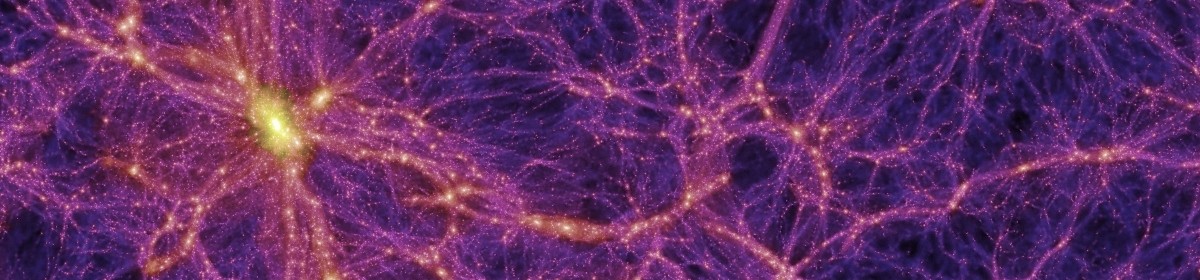
I’ve always loved astronomy and all my life astronomers have talked about how big or how old the universe is and they argue whether it’s 12 billion light years or 14 billion light years. And it’s never 7 billion in that direction, and 14 billion in that direction and 2 billion in that direction. No, they always talk about the size of the universe as if we’re smack in the middle of it. My mental picture of the universe is a giant cube of black Lucite embedded with grains of galaxies that occasionally make swirls of clusters. But that begs to ask what’s outside of the universe.

According to Einstein and others there is nothing outside of the universe. No space-time, no empty space, not even non-existence – the only thing that exists is our universe. How can that be? It hurts to think of such a universe. To grasp that we have to ask: what is the shape of the universe? This has gotten me to read The Poincare Conjecture by Donal O’Shea which is the history of developing a geometry that answers that question. I’m slowly working my way through the book and O’Shea is carefully building the background that I hope will give me a slight cognitive glimpse. It is beyond any fantasy I might have to think I’ll actually understand it.

While thinking and reading about all of this I got the idea if the universe is finite in one direction, what about the other direction, the world of small. This reminded me of that classic film The Powers of Ten and wondered how many magnitudes of distance up is compared to down. It turns out its roughly 1026 expanding out and 10-18 shrinking down until we reach the current barrier of perception. So in this case we’re not in the middle of things unless we haven’t gone all the way down as small as possible. Wouldn’t it be weird if we were always in the middle of everything? If on the cosmological scale the universe can’t be infinite, then it would also seem on the microscopic scale we’d reach a finite end to the world of tiny.

This doesn’t make mental sense does it? It’s like the Greek who argued that the universe was infinite because no matter where the edge was if he stood there and stuck his arm out wouldn’t there be more of something? Or if we found the smallest particle our minds just beg to break it in two. It’s like the old story of kids asking about what made God, and then asking who made whatever made God. It’s damn strange, but we just can’t comprehend a finite world.

Doesn’t the universe feel smaller already when you think its size is just twenty-five magnitudes greater than our own little space in the world? There have been a number of people who have made Powers of Ten films, books and websites. There’s an excellent IMAX film you can rent from Netflix called Cosmic Voyage that gives a fancier version of Powers of Ten with a lot of fantastic computer animation. The link takes you to a web version, but it’s worthwhile to get the DVD – it’s quite beautiful.

Also visit Quarks to Quasars for another conceptual approach to this subject and be sure and look at the index page, which is a quick one page summation. This Powers of Ten has a great little ruler menu. Click on 108 and 10-8 shows the Earth from space and DNA. I wonder if that means we’re the size of DNA if seen from a high orbit.

The fun thing about playing with the powers of ten is to try and conceptualize our place in the universe. Essentially these films, web sites and books try to create a very simplified map of reality. It’s wonderful to meditate on each power of the scale. A big chunk of the scale from 10-12 to 1012 is from the realm of the atom to the Sun, both objects we have intimate relationships with, so we should try to comprehend them. While we send rockets up to explore the higher positive powers ten we work with nanotechnology to capitalize on the negative powers of ten.

At 100 we’re at the one meter vantage. That’s roughly the world of personal contact with other people. I like to think the starting point is the point of consciousness that reside behind my eyes. Within that one meter world is the distance to my monitor. People and pets we love the most are the beings we let into this range of magnitude.

At 101 we’ve expanded our world out to ten meters, or roughly the size of a large room. This takes our conscious minds into the sphere of homes and offices and cars interiors. This is the magnitude of our social world. At 102 or 100 meters we reach the limits of very large social events like football stadiums, shopping malls, downtown areas, and where we lose our ability to distinguish other individuals.

It’s hard for our minds to grasp the area of 103, or 1000 meters, which is 5/8th of a mile. This is a whole neighborhood, a large farm, an area of woods, even a small town. It’s difficult to know all the people in an area this size but most people can maintain a fairly intimate social relation within this magnitude. It’s like living in a small town. For people who can’t comprehend maps or geography this is probably the limit of their conscious world.

Expanding out to 104 brings us 10,000 meters or six miles, about the size of a large downtown city. There have been whole populations that never ventured out of a world this size. I’d guess in some populated cities they could squeeze in a million people at this scale. And the next jump to 105 brings us to 100,000 meters or about sixty miles. This is a large city and its surrounding towns, but it isn’t so big that many people can’t commute to work such distances. At 106 or a million meters we’re getting into the size of states and small countries.

The next two jumps 107 and 108 take us to 10 million and 100 million meters and we’re seeing a large segment of the Earth like an astronaut to zooming out to see the Earth as a marble in the sky as if seen by travelers heading to the moon. At 109 we could see the orbit of the moon because we’re looking across 1 million kilometers of space. We’ve now reach the limits of manned exploration and we’re into the magnitudes of space age awareness.

All of world politics happen on the scale between 7 and 8 magnitudes and few people try to keep up with events at that level. Most people’s conscious world of events remains below magnitude 5. It is between magnitude 7 and 8 that we see that our world is a sphere and the end of human territory. Few people in the course of a day think about things outside of magnitude 7.

People at the Jet Propulsion Laboratory (JPL) think and work in magnitudes 1010 through 1013, which take us out to the edge of the solar system. Anyone willing to study astronomy can grasp a basic idea of this territory. It’s the territory of popular science, and even though objects within this scope are immense, like the Sun or Jupiter, they are within our ability to imagine.

At step 1016 we reach one light year and expanding out to 1017 we pass by our nearest neighbor star before we hit the 10 light year sphere. Astronomers and science fiction writers explore this territory often, but most of humanity never thinks this big. We have to expand out four magnitudes to 1021 to see our home galaxy. Very few science fiction stories have ever been written about traveling beyond our galaxy. We can still imagine that space is a huge three dimension void speckled with a bit of matter.

Few people can make mental maps of expanding out further than our galaxy. Imagine the three dimensional positions of galaxy clusters at 1025 or a billion light years of volume is mind numbing even to think about. Making that last jump or two in magnitudes to see the whole universe as it really is, is a feat of imagination beyond all but a few humans. The idea that someone can imagine it, even mathematically, is beyond my abilities. How many magnitudes of mental power must Einstein have needed over us normal people to see what he saw?

It’s out in this territory where we’ll find the shape of the universe, where it continues to expand. It’s so hard not to think of the universe as an explosion of matter shooting out in all directions in infinite empty space. If I knew what I know now as a little kid starting school I sure would have studied harder, especially math.

Maybe they should start kids out by teaching them all the far out puzzling facts about the universe and then tell them if they want to understand the answers they better study math. They never really gave me an incentive to study math – hell I didn’t buy into that whole grade thing back then. What motivation is having the letter A marked in a box over the value of having the letter C? Damnation, why didn’t they warn me that one day I’d want to read The Poincare Conjecture and understanding mathematics was the key.

Jim