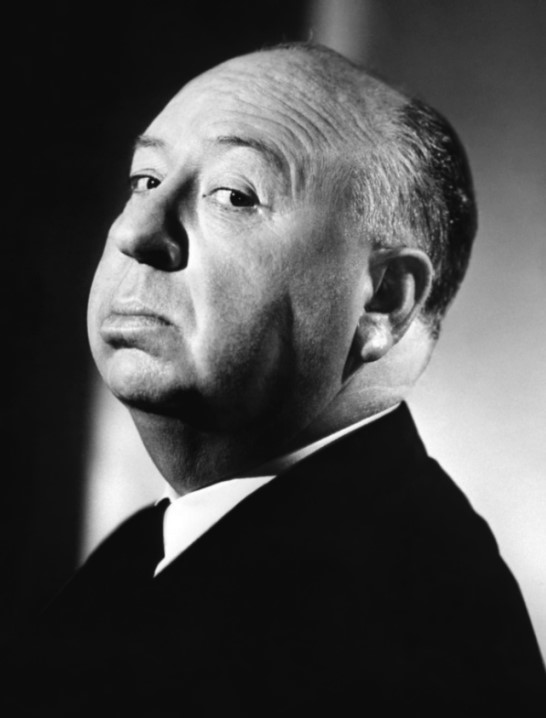
Rebecca (1940)

by James Wallace Harris, 9/11/23

This is not a review, but my reactions to watching Rebecca, the 1940 Alfred Hitchcock movie with my friend Olivia. I’ve decided I don’t want to review books and movies because that would involve withholding spoilers. I want to talk about how I react to fiction — how fiction works on me.

I don’t think I’ve seen Rebecca before. I’ve started it a few times recently, but in recent years I have had trouble watching movies by myself, so I didn’t watch it all the way through until Olivia wanted to see it too. I’m thankful she came over to join me. Over the past year I’ve encountered several women friends who have told me they’ve read the 1938 novel Rebecca by Daphne du Maurier. They all loved the book, and I bought a copy. I started the book a couple of times but didn’t stick with it. I loved the writing. I adore the open paragraphs. du Maurier description of nature taking over the old estate is exactly how I picture nature taking back cities when civilization falls.

Last night I dreamed I went to Manderley again. It seemed to me I stood by the iron gate leading to the drive, and for a while I could not enter, for the way was barred to me. There was a padlock and a chain upon the gate. I called in my dream to the lodge keeper, and had no answer, and peering closer through the rusted spokes of the gate I saw that the lodge was uninhabited. 

No smoke came from the chimney, and the little lattice windows gaped forlorn. Then, like all dreamers, I was possessed of a sudden with supernatural powers and passed like a spirit through the barrier before me. The drive wound away in front of me, twisting and turning as it had always done, but as I advanced I was aware that a change had come upon it; it was narrow and unkept, not the drive that we had known. At first I was puzzled and did not understand, and it was only when I bent my head to avoid the low swinging branch of a tree that I realized what had happened. Nature had come into her own again and, little by little, in her stealthy, insidious way had encroached upon the drive with long, tenacious fingers. The woods, always a menace even in the past, had triumphed in the end. They crowded, dark and uncontrolled, to the borders of the drive. The beeches with white, naked limbs leaned close to one another, their branches intermingled in a strange embrace, making a vault above my head like the archway of a church. And there were other trees as well, trees that I did not recognize, squat oaks and tortured elms that straggled cheek by jowl with the beeches, and had thrust themselves out of the quiet earth, along with monster shrubs and plants, none of which I remembered. 

The drive was a ribbon now, a thread of its former self, with gravel surface gone, and choked with grass and moss. The trees had thrown out low branches, making an impediment to progress; the gnarled roots looked like skeleton claws. Scattered here and again among this jungle growth I would recognize shrubs that had been landmarks in our time, things of culture and grace, hydrangeas whose blue heads had been famous. No hand had checked their progress, and they had gone native now, rearing to monster height without a bloom, black and ugly as the nameless parasites that grew beside them. 

On and on, now east now west, wound the poor thread that once had been our drive. Sometimes I thought it lost, but it appeared again, beneath a fallen tree perhaps, or struggling on the other side of a muddied ditch created by the winter rains. I had not thought the way so long. Surely the miles had multiplied, even as the trees had done, and this path led but to a labyrinth, some choked wilderness, and not to the house at all. I came upon it suddenly; the approach masked by the unnatural growth of a vast shrub that spread in all directions, and I stood, my heart thumping in my breast, the strange prick of tears behind my eyes. 

There was Manderley, our Manderley, secretive and silent as it had always been, the gray stone shining in the moonlight of my dream, the mullioned windows reflecting the green lawns and the terrace. Time could not wreck the perfect symmetry of those walls, nor the site itself, a jewel in the hollow of a hand. 

The terrace sloped to the lawns, and the lawns stretched to the sea, and turning I could see the sheet of silver placid under the moon, like a lake undisturbed by wind or storm. No waves would come to ruffle this dream water, and no bulk of cloud, wind-driven from the west, obscure the clarity of this pale sky. I turned again to the house, and though it stood inviolate, untouched, as though we ourselves had left but yesterday, I saw that the garden had obeyed the jungle law, even as the woods had done. The rhododendrons stood fifty feet high, twisted and entwined with bracken, and they had entered into alien marriage with a host of nameless shrubs, poor, bastard things that clung about their roots as though conscious of their spurious origin. A lilac had mated with a copper beech, and to bind them yet more closely to one another the malevolent ivy, always an enemy to grace, had thrown her tendrils about the pair and made them prisoners. Ivy held prior place in this lost garden, the long strands crept across the lawns, and soon would encroach upon the house itself. There was another plant too, some half-breed from the woods, whose seed had been scattered long ago beneath the trees and then forgotten, and now, marching in unison with the ivy, thrust its ugly form like a giant rhubarb towards the soft grass where the daffodils had blown. 

Nettles were everywhere, the vanguard of the army. They choked the terrace, they sprawled about the paths, they leaned, vulgar and lanky, against the very windows of the house. They made indifferent sentinels, for in many places their ranks had been broken by the rhubarb plant, and they lay with crumpled heads and listless stems, making a pathway for the rabbits. I left the drive and went onto the terrace, for the nettles were no barrier to me, a dreamer. I walked enchanted, and nothing held me back.

du Maurier, Daphne. Rebecca (pp. 1-3). Little, Brown and Company. Kindle Edition. 

This is why I wanted to see the movie and finish the book. I wanted to see it even more when I discovered there was a 2020 remake with Lily James, and a 1997 Masterpiece Theater version. What makes this story so compelling that it gets filmed many times? It’s immensely popular, and Hitchcock’s film won an Oscar for best picture. I find such enduring tales intriguing to study. Watching Rebecca with Olivia was just my beginning of studying du Maurier’s novel.

I didn’t know that when I watched Rebecca last Thursday, but reading about the film reveals that Rebecca was the movie David O. Selznick produced right after Gone with the Wind. Two movies about strong-will women. Gone with the Wind could have been titled Scarlett. Rebecca is never shown in Rebecca, but I now picture her as Vivian Leigh.

I was somewhat disappointed with Rebecca. It’s slow to get into. My wife Susan bailed on it after the first hour and left Olivia and I to finish it on our own. But more importantly, it’s the kind of story that withholds information to create suspense, and I dislike that plot trick. Overall, I did enjoy the film.

Don’t read any further if you haven’t seen the film or read the book, because I’m going to give away big spoilers.

The film begins by recreating the dream sequence I’ve quoted above from the book, but it’s shortened and somewhat changed. There are clues to what happens in this dream sequence, but the real mystery is why the dreamer can’t return to Manderley.

The story then cuts to Monte Carlo where a young naive woman (Joan Fontaine), a paid companion to a Mrs. Van Hopper, meets the mysterious Maxim de Winter (Laurence Olivier), aged forty-two. At this point in the movie, the scenes are light and somewhat humorous. Joan Fontaine plays the unnamed young woman as drab, skittish, fearful, clumsy, and innocent. We don’t know why the older, rich, sophisticated man takes an interest in her, but he does, and they quickly marry. This opening is a kind of Cinderella story, and I assume why women like the picture so much.

I didn’t buy it. Maxim came across as a tortured soul, both wise and educated, but mentally imbalanced. If age of consent was based on a relative scale of maturity, then the young girl should have been out-of-bounds. But a discerning Sherlock Holmes might have guessed something here. If Maxim was honest with Mrs. de Winter 2 the whole rest of the picture which turns into a gothic torture tale could have been avoided and we could have continued with a light romantic comedy.

Now we arrive at Manderley and slowly learn about Mrs. de Winter 1, who was named Rebecca. This whole middle 80% of the film is about misdirection. Both the audience and Mrs. de Winter 2 slowly learns about Rebecca and gets an entirely false picture of her. This is exactly the kind of plotting that Alfred Hitchcock loves. He tells this part of the story with many tense sequences, building us up, and then backing off a bit. Hitchcock has hooked an enormous fish and reals us in slowly.

A good part of this action involves Mrs. Danvers (Judith Anderson), who is the creepy housekeeper of Manderley. She loved Rebecca. Obviously, du Maurier was a huge fan of Charlotte and Emily Brontë. It’s worth reading the Wikipedia entry on Rebecca, especially the sections on “Derivation and inspiration” and “Plagiarism allegations.” Du Maurier was jealous of her husband’s former lover and claimed it gave her the idea for the novel. Other people thought differently.

Finally, the movie takes a weird twist. We were told Rebecca had drowned and her body recovered. Eventually, her sunken boat is found by divers, and her body is found inside with clues to suggest she was murdered. Jack Favell (George Sanders) shows up and we learned that Rebecca had been fooling around with him. Favell starts accusing Maxim of murdering Rebecca and the plot really thickens. Poor Mrs. de Winter 2 starts going crazy trying to figure out what was going on. It’s then that Maxim confesses what happened.

Up till then Mrs. de Winter 2 thought Rebecca was an angel and perfect wife she could never measure up to. Maxim tells her that Rebecca was a cheating sack of shit who began destroying his life just days into their honeymoon. Mrs. de Winter 2 is immensely relieved because she finally realized Maxim loves her for herself. Of course, there’s the matter of Maxim might be a murderer. But she still loves him. In fact, these revelations empower her to fight for her man.

The film goes through a few more twists and turns to wrap things up with a happy conclusion after the crazy housekeeper burns down Manderley with herself inside. That’s why people can’t go back.

If du Maurier and Hitchcock had not withheld information at the beginning of the story, we wouldn’t have had such a tortured-tension plot. If Maxim, back in Monte Carlo, had told the innocent lady’s companion that he liked her because his dead wife was everything he hated, we would have needed a different plot. That would have been the natural thing to do for most men.

And it’s illogical that Maxim kept Mrs. Danvers on, who worshipped Rebecca and kept half of Manderley as a shrine to her. Most guys would have fired her and gotten rid of everything that reminded them of Rebecca. In fact, the premise that Rebecca could do what she wanted because Maxim wouldn’t want her indiscretions to ruin his reputation is also ridiculous. Maybe it’s better explained in the book, but I find that to be an extremely weak point of the story. Divorce was common enough in England in the 1930s.

Why didn’t Maxim pull Rhett Butler and tell Rebecca he didn’t give a damn about her threats? Both Maxim and his new bride are weak and retreating. Is there another story here? What if Rebecca wasn’t bad? What if Rebecca had to live with a mentally ill husband, the reverse of Mr. Rochester in Jane Eyre?

Rebecca is essentially a thriller with a major plot twist. That’s the trouble with thrillers and mysteries, they often depend on unbelievable plot points. They contrive and contort their stories. I understand why Hitchcock does this because he loves to manipulate his audience. But I’ve got to ask: Why does the audience accept being manipulated? In one interview I saw with Hitchcock he compared what he did to scary amusement rides at carnivals. Riders know they are safe but love to pretend to be scared. This suggests that most moviegoers loved to be manipulated. I’ve gotten tired of it.

I’m anxious to read the book to see if du Maurier makes the same kind of contrivances in her story. Did Hitchcock bend it to his needs, or did du Maurier have better explanations? Her opening describing how plants take over is very realistic. I’m hoping to find more of that realism in her novel.

Plus, I’ve thought of some things after watching the movie. Why does the crazy housekeeper trick Mrs. de Winter 2 into dressing up as Rebecca for the costume party? She probably knew that Maxim hated Rebecca. On my first viewing of the film, I assumed that Maxim loved Rebecca and blew up at Mrs. de Winter 2 for recreating a painful good memory. But as we know now, it’s a painful bad memory. We knew Mrs. Danvers wanted to kill Rebecca’s replacement, so I should have guessed a different motive for her getting Mrs. de Winter 2 to dress as Rebecca.

This is why rereading books and rewatching movies are important. Since I know the information that du Maurier and Hitchcock withheld, will the story still work? Or will it fall apart? Or will it even work better as I see deeper into a multidimension structure?

JWH

My 2023 Interpretation of Hitchcock’s 1946 Film Notorious

by James Wallace Harris, 9/7/23

Alfred Hitchcock often talked about using the concept of the MacGuffin in his films. The MacGuffin distracts the audience into thinking the movie is about one thing when it’s really about something else. In Notorious (1946) we think the movie is about Nazis in South America acquiring uranium just after WWII. Instead, it’s about fucking. I hate to use the F-word here, but it’s the most exact terminology to make my point.

Back in 1946 movies couldn’t deal directly with sex, especially intercourse. Movies had to follow certain censorship guidelines, and so did books. It wasn’t until 1959 when the laws began to change, allowing art to become more explicit. What that meant was Hitchcock couldn’t directly focus on his theme. The MacGuffin suggested that Notorious was about war criminals and Nazis and that help Hitchcock hide his intended topic from censors.

People under seventy have only vague ideas about what people from the 1940s were like. We get our ideas about life in the 1940s from movies; in the same way we get ideas about American society of the 1950s from old television shows. However, Americans weren’t like the people we saw in movies, or read about in books. 1940s Americans were quite different from 2020s Americans. When we watch old movies from the 1940s, we must remember the censors wanted us to think one thing, the filmmakers another, and the actual reality of American lives were quite different still. There was far more sex going on, of all kinds, and persuasions.

Alfred Hitchcock uses Notorious to observe a very particular thing about Americans in 1946. Alicia Huberman (Ingrid Bergman) is the daughter of a Nazi war criminal who has just been sentence to twenty years in jail. A government agent, T. R. Devlin (Cary Grant) wants to use Alicia to infiltrate a Nazi plot in Rio de Janeiro. The government knows two things about Alicia. Because they bugged her conversations with her father, they know she’s pro-American and against the Nazis. Because they also know she regularly sleeps around and is alcoholic that she might be willing to do anything they ask. This is where the film title comes from, her notorious reputation.

Devlin contacts Alicia and Alicia falls in love with him because he appears to accept her as she is. She cuts back on her drinking and stops her cynical jaded sniping. Then Devlin tells her why they met and introduces her to his boss. This is when Alicia finds out that the American government wants her to seduce Alex Sebastin (Claude Rains) and get inside the Nazi organization.

This 1946 movie can’t have the feds saying, “we need you to fuck Alex Sebastin,” but the audience can read between the lines. Alicia is hurt. She can’t believe Devlin is asking this of her — doesn’t he love her? Alicia waits for him to tell her not to take the job. But Devlin wants her to say no on her own – – to prove she’s not a loose woman. Because Alicia is hurt that Devlin doesn’t stop her, she agrees to become a spy.

Throughout the rest of the movie, until near the very end, there is tension between Devlin and Alicia over her screwing Sebastian. The more Devlin becomes surlier and snarkier in his jealousy, the more Alicia applies herself to becoming the perfect Mata Hari. It’s never stated, but Hitchcock shows us the double-standard of the time. Not only are women not supposed to be sexually active outside of marriage, but they are also judged differently from men regarding what they choose to do. Audiences then, and now, would consider it nothing if a male secret agent seduced a woman spy for his country, but not for a female spy to make the same patriotic sacrifice.

Alicia rather quickly seduces Sebastian and lets Devlin know. He puts her down by suggesting a woman of her type would get the job done quickly. Eventually, Alicia marries Sebastian and goes on a honeymoon. She becomes part of his life.

I thought this part was interesting. Sebastian, the bad guy, is overjoyed to catch a woman like Alecia. He assumes she’s upright and moral. She’s younger, and quite beautiful. He is rich, suave, and sophisticated, but also shorter and much older. Sebastian and his mother totally accept Allecia into the family. On the surface, this is the path that 1940s (and 2020s) moral Americans wanted from women. The evil Nazi is proper family man, while the spies Alicia and Devlin are amoral and dishonest. What exactly is Hitchcock saying here?

At one point Sebastian sees Devlin and Alicia kissing and he’s tremendously hurt. But he doesn’t turn against her until he discovers she’s a spy. That mistake means he and his mother will be eliminated by his Nazi associates.

All through the Notorious, I wondered how Hitchcock was going to resolve his story. Not the spy story, that never mattered. It was the MacGuffin, and I knew it right from the start. If Devlin resented Alicia for fucking Sebastian and Alicia resented Devlin for arranging it, how would they ever come together?

I really didn’t want a happy conclusion to Notorious, but I knew one was coming. I wanted a 2020s realistic ending where Alicia wouldn’t forgive Devlin and tell him to fuck off in the end. However, I knew Hitchcock wouldn’t defy 1940s romantic convention in this film. He had to get Alicia and Devlin together.

In the end, Devlin admits he was wrong, and Alicia immediately forgives him. It wasn’t said directly, but I interpreted the scene to mean that Devlin apologizing for assuming Alicia would sleep with anyone because she had an active sex life. Of course, that ignores that Alicia did sleep with Sebastian, a man she previously rejected, because the American government asked. But is that the real story?

Like I said, sleeping with spies is something James Bond does all the time. I wondered if Hitchcock was also saying we should accept it when Jane Bond does it too? I doubt Hitchcock was concerned with this issue, but it’s there to consider. It’s possible that Devlin’s judging Alicia by a double standard was another MacGuffin, and Hitchcock’s real theme was about judging spies and their gender roles.

I do have another theory. Hitchcock might not care about anything we could put into words about in his films, but merely loves to create scenes with various kinds of emotional tensions to see how his audiences react to them emotionally. His films are often episodic, and he constantly plays with our reactions. Maybe the plots and themes are MacGuffins too?

JWH

What Alfred Hitchcock Films Should We Watch?

by James Wallace Harris, 9/6/23

The other day my friend Annie said she liked Alfred Hitchcock films. I told her I’ve caught a few over the past year and have been meaning to systematically watch the best of them. We decided to do that together. We quickly agreed to watch Notorious tomorrow at 2pm because neither one of us had seen it, and it’s well considered.

I wondered about starting with his first movie and going through to his last, but Annie thought that was too much trouble. One reason I started watching Hitchcock films is I saw this video on YouTube about Hitchcock that described his storytelling techniques.

What are Hitchcock’s best films and is there an order we should consider? What are your favorites?

I did find these rankings of Hitchcock’s films:

This should give Annie and I plenty to argue over about what to watch next week. I’m reading Rebecca by Daphne du Maurier and wanted to watch the 1940 Hitchcock version first, but Annie has seen it recently. So, I’ll watch it by myself this week after I finish the book.

Jim Harris

Bomber by Len Deighton

by James Wallace Harris, 9/5/23

I thought Bomber, a 1970 novel by Len Deighton to be an exceptional work about WWII. But saying so will not convince you to read it. How can I describe it best to help you decide? First, if you love books and movies about bomber missions during WWII then you don’t need to read this essay but just go buy the book (if you haven’t already read it). If you love Catch-22 by Joseph Heller and Slaughterhouse Five by Kurt Vonnegut, then you’ll probably want to read Bomber. If you love well-researched historical novels particularly about WWII, or well-written novels in general, then you should keep reading this essay.

Grove Press released a new edition of Bomber on 8/22/23 with an introduction by Malcolm Gladwell. Bomber has been reprinted many times over the last 53 years which says a lot about a book. I listened to the 21 hours and 25 minutes audiobook edition narrated pitch-perfectly by Richard Burnip which includes an afterward narrated by Len Deighton. I loved how Burnip did accents for different characters.

Bomber is about one fictional day, June 31, 1943, that that is so realistic that you keep thinking it’s based on true events. It’s not, but it’s so well-researched and detailed that it could compete with history. Deighton creates over a hundred characters including several Avro Lancaster bomber crews, their German interceptors and controllers, the ground crews and command in England, and the citizens of an imaginary German town that gets bombed to hell by a flying armada of over seven-hundred planes.

Two of my favorite movies growing up were Twelve O’Clock High (1949) and The War Lover (1962), along with the Quinn Martin TV show 12 O’Clock High (1964-1967). And I’ve read nonfiction books and novels about the Blitz and B-17 campaigns over Germany. Bomber gave me a much better sense of what it was like to be in a bombing raid, both in the air and on the ground. Of course, no fiction or nonfiction book could convey the actual experience and horror but this one gave me far more details to consider. It was multiplex and multidimensional.

But Bomber reminds me most of all of Catch-22 (1961) and Slaughterhouse Five (1969), two classic anti-war novels from the 1960s. Those two novels had comic aspects, and Bomber does not. However, all three novels depict the horror of war on innocent individuals. Wars are born out of the egomania of a few, who inflame the passions of true believers who then force millions of helpless bystanders into their deadly squabbles. These books are about ordinary people who want to live ordinary lives but are forced to play parts in the conflicts created by these evil egos.

In the afterward of the new edition Len Deighton talks about how he produced the idea for Bomber. He was studying WWII and thought one way of looking at the war was to visualize it as our machines against their machines. He said he liked machines, but to tell the story he had to talk about the people behind the machines. He didn’t want it to be science fiction. (By the way, he talked about using an IBM MT word processing machine, one of the earliest dedicated word processors, and said he thought Bomber might be the first novel to be written with word processing. I worked three years on an IBM MT/ST machine.)

In Malcolm Gladwell’s introduction to the book, he suggests that Bomber is about the evil and guilt the British felt specifically targeting German citizens during their nighttime bombing raids. Here’s what Gladwell said in a version of the intro at The Washington Post:

“We British are not an imaginative people,” the activist Vera Brittain wrote, in the opening sentence of her 1944 book “Seed of Chaos.” “Throughout our history wrongs have been committed, or evils gone too long unremedied, simply because we did not perceive the real meaning of the suffering which we had caused or failed to mitigate.”

Brittain was referring to the decision during the Second World War by Arthur Harris, head of the Royal Air Force’s Bomber Command, to send hundreds of planes, night after night, to bomb the residential neighborhoods of German cities. Harris was resolutely unsentimental about his decision. He once wrote that it “should be unambiguously stated” that the RAF’s goal was “the destruction of German cities, the killing of German workers, and the disruption of civilized life throughout Germany … the destruction of houses, public utilities, transport and lives, the creation of a refugee problem on an unprecedented scale.” His nickname was “Butcher” Harris, a sobriquet employed with a certain grudging respect, on the understanding that butchers can be useful in times of war. Harris was a psychopath. Twenty-five thousand people in Cologne once burned to death, in one night, on his orders. And Vera Brittain’s point was that the people of England acquiesced to his decision because they did not have the imagination to appreciate what those deadly bombing campaigns meant to those on the ground.

I didn’t get that reading Bomber. It’s there if you read between the lines, but Deighton doesn’t preach or philosophize in the novel. Bomber is a perfect example of show don’t tell writing. Nor does Deighton make his characters into heroes or anti-heroes.

Even though Bomber is told through a couple dozen main characters, with several dozen walk-on parts, the story focuses on Sam Lambert who is a Flight Sargeant and Captain of the Creaking Door, an Avro Lancaster, a 4-engine British bomber. Lambert is the Yossarian or Billy Pilgrim of this story. Lambert isn’t always on center stage though because Deighton considered it especially important to tell the story of the people he bombs, the people who try to kill him, as well as the other airmen who fly with Lambert, both in the Creaking Door and other planes.

I was particularly taken by this Solzhenitsyn quote “to do evil a human being must first of all believe that what he’s doing is good” taken from this review (which I recommend reading). Deighton doesn’t preach or sermonize in Bomber, but there is much to meditate on in his story. In recent years I’ve been reading more history books, and history is really one long succession of wars. My take is evil is caused by a few individuals who need to feed their monstrous egos, as well as the people who worship and follow those psychopathic egos.

There is one scene in Bomber that was very minor but very telling where a commanding officer tried to coerce Ruth into getting her husband, Sam Lambert, to play on the company’s cricket team. It showed how that officer’s ego manipulated reality for doing what he thought was good. If you read Bomber, notice how often that happens.

JWH

Newer Movies for Older Viewers

by James Wallace Harris, 8/30/23

It seems the older we get, the pickier we get.

This weekend our friend Janis came to stay with Susan and me. We always watch movies together but picking them has always been problematic. Getting three people to agree on anything takes a bit of time. To make matters worse, Susan hates picking out movies for group watching. It’s one of her pet peeves to have to sit and watch movie previews and then discuss which ones to see. The older we all get, the more set in our ways we’ve become.

It usually falls to me to go through all the streaming services and find a selection for the three of us to choose from. I enjoy the challenge. I think I’m getting good at knowing what Susan and Janis will like.

Susan likes feel-good movies and comedies. Janis likes thrillers and trendy films reviewed on NPR. I like old movies which Susan sometimes will watch, but Janis’s dislikes. I’ve gotten sick of thrillers which Janis loves. Susan loves romantic comedies which I sometimes enjoy but Janis seldom picks. I love westerns but they both dislike that genre. Susan and I dislike mysteries, but Janis seems partial to them. We all hate franchise films, especially ones from Marvel and DC. We all like Pixar films. Susan likes Disney animation, and I do sometimes, but not Janis. I love good accurate historical dramas which appeal to Susan and Janis rarely. We all three like little feel-good films from England and Australia. We emphatically don’t want to watch horny teenager flicks. Janis likes sophisticated horror films if they’re well-reviewed. Janis has a new guideline she uses for herself that helps me. She wants films to have an IMDB rating of > 7.00. That has worked out well for all of us.

Even with all these conflicting tastes we did find two pictures that we all enjoyed enough to consider both movie nights a success. They were: Are You There God? It’s Me Margaret and Where the Crawdads Sing. Both movies were coming of age stories about young girls. Both were based on successful books. I think I’ll remember for the future to look for films based on well-regarded novels. Both books were set around the same time, 1969 and 1970, which the three of us remember well.

I think both films appealed to the three of us because of characterization rather than plot, although I admired the plot of Where the Crawdads Sing. That might be another clue for picking movies next time. Where the Crawdads Sing is a murder mystery that involves violence and rape, subjects that normally would have kept us from watching. Kya is a girl that must raise herself from an incredibly early age. That was a more compelling story than the murder mystery aspect. Margaret’s story is sweet and universal.

Are You There God? It’s Me Margaret is also about religion, and I found that particularly intriguing. Margaret’s father is Jewish and her mother a former Christian, and they decide to Margaret decide about religion when she grows up. But after the family moves to a new home causing Margaret to face several stressful changes in her life starting the sixth grade, she begins talking to God. The movie brings up a lot of philosophical questions about religion but doesn’t answer them. That didn’t dissatisfy me, but I wanted to talk about that with Susan and Janis. But they didn’t want to, and I assume most movie viewers don’t want to go there either. But didn’t Margaret become happier once she gave up on God? Was that the message?

Kya in Where the Crawdads Sing is a retelling of the Tarzan myth. What happens is hard to believe, but I accepted the various rationales the story gave. It’s an incredibly positive story. However, I thought it interesting that this was another story where a white male of a certain stereotype was used for the villain. Now this stereotype is based on plenty of real-world statistics, and I found him believable. Too believable. However, it makes me wonder about things I read in the news about problems that boys and young men are having. And if I were a young girl watching these kinds of films, I’d grow up terrified of boys and men.

Where the Crawdads Sing (Rotten Tomatoes: 35% Critics, 96% Audience, IMDB: 7.2)

Are You There God? It’s Me Margaret (Rotten Tomatoes: 99% Critics, 95% Audience, IMDB: 7.4)

Susan and Janis have no problem finding movies on their own, but it’s getting exceedingly difficult for me to find movies I’ll sit and watch by myself. I really enjoy watching television and movies with other people, and that’s partly because if I’m watching with someone else, I don’t get restless and turn off the TV. But I think Susan and Janis, both find it easier to watch what they want by themselves. Is that a gender thing?

I know the older I get the more intolerant I feel towards movies and TV shows. When I was young, I’d watch shows that my parents would tell me were stupid. That hurt my feelings, but I know what they meant now.

I did find one movie on my own that captivated me — Dial 1119, a low-budget black-and-white film from 1950. It dealt with a crazed killer that seems too familiar to what we see on the news today. The host Eddie Muller of TCM’s Noir Alley said in the intro that America was just starting to take notice of men going on rampage shootings when this film was made.

So that was three good movies for me this weekend.

JWH