Why We Can’t Know Jesus

It’s almost a certainty that anything you think you know about Jesus is wrong because what you know has gone through two thousand years of constant reinterpretation with additional imagined added facts through suppositions and speculation.  And if by chance you held just one right fact, it would be impossible to know which one it was because there are almost an infinity of possible imagined facts about Jesus to confuse you.

I’ve read a lot of books about Jesus over the years, and I’ve come to the conclusion that it’s impossible for us to know the truth about what Jesus was like.  Absolutely impossible.  Every book I’ve read gave the author’s imagined interpretation of what Jesus was like based on all the books they had read, each of which was also an interpretation.  Since Jesus left no writings on his own, and all the gospels were written long after the fact, by people who got their information from hand-me-down sources, we have no foundation of verifiable knowledge to work with.  In fact, each of the four gospels are different, written at different times, with new interpretations and added material.

All this is obvious, and I should have concluded it decades ago, but the nature of Bible study makes it fun to try to figure out the truth.  Everyone wants to solve the puzzle and is only too eager to add their interpretation with new speculated possibilities.  Just look at how many early Christian sects there were, and how much the Catholic Church has changed over time, and how many differ protestant denominations there are, with their own splinter groups.  Every church has a different view of Jesus, and so does every human being.  There are billions of different  Jesuses – will the real one please stand up.  It reminds me of that old short story by Arthur C. Clarke, “The Nine Billion Names of God.”

rabbi-jesus

All this became more obvious to me when I was reading Rabbi Jesus: An Intimate Biography by Bruce Chilton.  Now, I’m an atheist, so you might be wondering why I’m reading a book about Jesus.  The origins of Christianity is a minor interest of mine, as a study of history, like how some people study classical Greece for a hobby.  I was intrigued by Rabbi Jesus because the book claimed to have a deep understanding of Judaism of the times, and to use current anthropological knowledge about the time period Jesus lived, to create a biography that jived with the Gospels.  Here’s a quote from Craig L. Blomberg in his review of the book:

There are strengths to Chilton’s work to be sure. Prompted by his editors he has eschewed formal, detailed footnoting for brief references to key literature for each chapter and has written in highly readable, even gripping prose. His descriptions of the customs and geography of Israel bring the stories of Jesus alive as few other writers have done. His portrayal of the probable thoughts, motives and behavior of such characters as Caiaphas and Pilate is more vivid and compelling than any I have read. Over and over again, one senses that one is seeing the Jewish milieu of Jesus more clearly and accurately than in countless other “lives” that have been produced over the centuries. But when one asks what Chilton actually claims Jesus to have said and done, in what sequence, for what reasons and by what power, most of the answers are at best speculative, without the kind of defense and documentation to make one convinced of them. At worst, they simply seem baseless. In a classic understatement, Chilton recognizes in his foreword that he “will doubtless make both Jews and Christians apprehensive” with his portrait of Christ (p. xxi).

Chilton is able to paint a very vivid picture of Jesus with lots of links to related established knowledge, yet in the end it’s all speculation even though the book is very convincing.  If you haven’t read very widely with similar books, this book would be very persuasive in making you think you knew Jesus better.
zealot

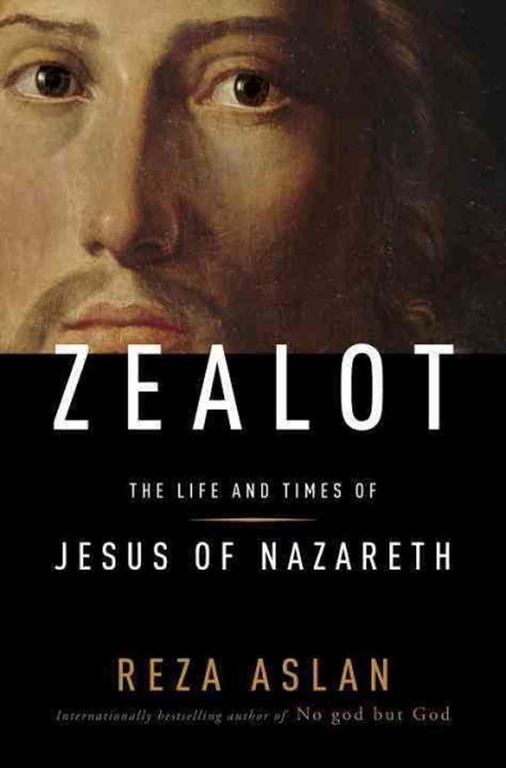
Another recent controversial biography is Zealot:  The Life and Times of Jesus of Nazareth by Reza Aslan.  Aslan is a scholar who takes another approach to finding the truth about Jesus.  That’s the game here.  Use all the available knowledge you can to paint a supposedly accurate portrait of Jesus.  But just read what Wikipedia said about the book:

Dale Martin writes in The New York Times that although Aslan is not a scholar of ancient Christianity and does not present “innovative or original scholarship”, the book is entertaining and “a serious presentation of one plausible portrait of the life of Jesus of Nazareth”. He faults Aslan for presenting early Christianity as being simply divided into a Hellenistic, Pauline form on the one hand, and a Jewish, Jamesian form on the other. Martin says that this repeats 19th-century German scholarship which now is mostly rejected. He also says that recent scholarship has dismissed Aslan’s view that it would be implausible that any man like Jesus in his time and place would be unmarried, or could be presented as a “divine messiah”. Despite these faults, Martin praises Zealot for maintaining good pacing, simple explanations for complicated issues, and notes for checking sources.[6]

Elizabeth Castelli, writing in The Nation, finds that Aslan largely ignores the findings in textual studies of the New Testament, and relies too heavily on a selection of texts, like Josephus, taking them more or less at face value (which no scholar of the period would do). Near her dismissive conclusion, she writes: “Zealot is a cultural production of its particular historical moment—a remix of existing scholarship, sampled and reframed to make a culturally relevant intervention in the early twenty-first-century world where religion, violence and politics overlap in complex ways. In this sense, the book is simply one more example in a long line of efforts by theologians, historians and other interested cultural workers.”[7]

The summary of these two reviewers shows that speculation about Jesus is a kind of academic game to scholars, but to religious people, knowing who Jesus was is very serious.  These two books give us two different Jesuses.  Both are from scholars claiming to work with the latest knowledge about the past.  Both books seem to present reasonable results.  If you read a hundred scholarly books about Jesus and they all invent a different Jesus, who is right?  Do you just average the 100 and assume Jesus was something like all of them?  Or assume he was like none of them?  If it was possible to extrapolate what Jesus was like from current knowledge don’t you think most of those 100 books would produce a standard Jesus?

Most of the faithful ignore modern books and just study The New Testament.  But if you study New Testament scholars like Bart D. Ehrman and his latest books you’ll only feel doubtful about what is actually supposed to be the word of God.
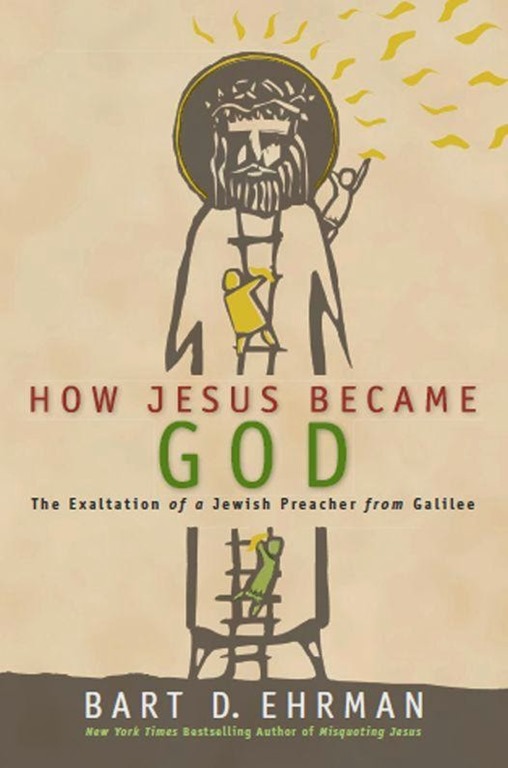
How Jesus Became God

I’m quite a fan of Ehrman having read Jesus, Interrupted, Misquoting Jesus, and Forged, and was about to buy and read How Jesus Became God, when I stopped to think about what I’m writing here in this essay.  Why read another book about Jesus?  Well, this one promises to be a history of the history of Jesus, so it’s not quite the same, but I’m now asking myself should I give up even studying the history of this whole era.  To me studying the early centuries of Christianity is like studying how half the world went insane believing a massive fantasy about a guy they can’t even know, but think they know through the lies they believe are the truth.  It’s like driving past the largest car wreck ever and trying not to look.

One reason I keep reading books about Bible history is I’m trying to completely exorcise Christianity from my brain.  Forced early exposure to Christianity caused mind-washing at the lowest levels of my brain and I’m trying to deprogram myself.  Every time I read another Ehrman book I delete a few more lines of old code running in my head.

I keep wondering when is humanity going to be free of the evils of religious fantasies?  Then I hear about the Sunni-Shiite conflict in Iraq and realize probably never.  Many atheists hope by studying religion they can explain it’s illogical nature to its believers.  But would any amount of facts convert Iraqis away from their war?  Would any number of lectures convert evangelicals to science?

I’m starting to feel that completely ignoring religion is my best course.  I’ve sufficiently deprogrammed myself that I’m now free of such thinking.  And I don’t feel obligated to deprogram others—I think that’s something you must do for yourself.  Wouldn’t I be better off mentally, and more productive if I studied other areas of history?  I think society has a sense of guilt about knowing all history, or a sense of obligation.  But how much history do we really need?  Wouldn’t I be better off studying the history of science and mathematics?

I think I’m over trying to figure out who Jesus was for whatever reason.  It’s all speculation.  Jesus is impossible to know.  If only they could invent a time machine to go back and filmed his life, then we’d have the answer, but that ain’t going to happen.

JWH – 6/25/14
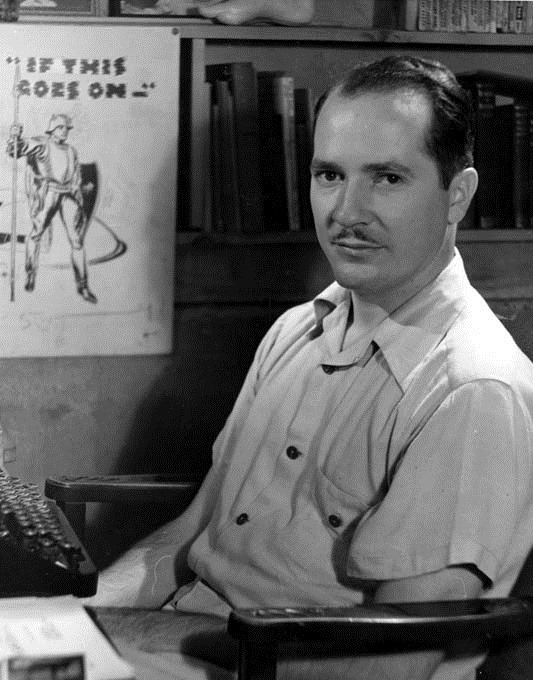
The Many Robert Heinleins We Remember

When I was twelve and other kids were getting religion, I got science fiction.  Robert A. Heinlein was the prophet of my faith—the Jesus that explained reality.  I was a geeky kid who moved around a lot because my father was in the Air Force.  Because my dad always worked extra jobs and I didn’t see him much, Heinlein and science fiction became the father figure guiding my adolescence.  Now that I’m older I can say using fiction as my Bible is no more practical than using holy books.  Substituting  outer space for heaven, and aliens for superior beings is just as crazy as seeking life after death.

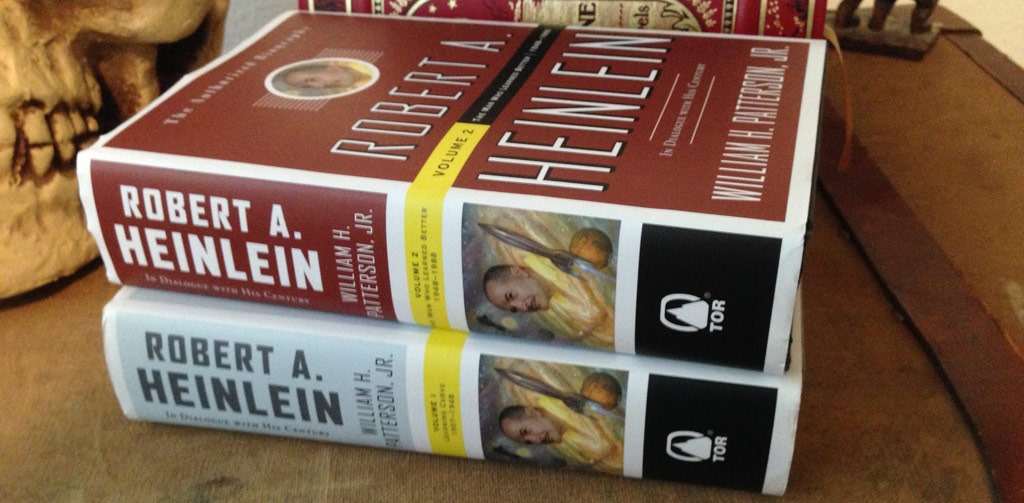
I just finished reading the second volume of Heinlein’s authorized biography, Robert A. Heinlein: In Dialogue with His Century: Volume 2 The Man Who Learned Better | 1948-1988 by William H. Patterson, Jr.   Imagine, if you will, getting to read an authorized biography of Jesus based on his diaries—you’re going to want to read it, but it might reveal that your prophet lived a much more mundane life than revealed in his parables and gospels.

Heinlein

William H. Patterson gets to chronicle Robert A. Heinlein’s life by the details Heinlein left behind in file cabinets.  Sadly, Mr. Patterson died April 22nd this year, just before the publication of the second, and last volume of his biography on Heinlein.  Patterson was born a month before I arrived on Earth in November of 1951, and in a way that explains a lot, because I identified with his passion to know Heinlein.  For science fiction fans of a certain generation, Heinlein was a very influential writer.  Growing up I always hungered to know more about Heinlein, and wished that I had met him.  After reading this large, two-part biography, I realize it was probably well that I never got to meet my prophet face to face, or even correspond with him.  Heinlein was overwhelmed by his followers, and he really didn’t need another sappy fan bugging him, plus I probably would have pissed him off with my politics and beliefs.

Heinlein never wanted his fans to pry into his life, and this authorize biography reflects his wishes, and that of Heinlein’s widow Virginia Heinlein.  Patterson was given complete access to Heinlein’s papers and got to know Ginny Heinlein who died in 2003, and who was Heinlein’s pit bull protector in life and death.  Robert A. Heinlein: In Dialogue with His Century is an excellent defense of Heinlein and a summary of his life through his papers, but not the kind of intimate biography that fans crave, especially if you were a true believer.

heinleinbios

I believe William H. Patterson was completely sympathetic to Heinlein’s wishes for the most part, until the very end in Appendix 2, volume 2, “The Good Stuff” where he quotes letters from a woman that had known Heinlein during his breakup with his second wife.  I’m positive that Heinlein and Ginny would have hated this addendum, but it’s about as close as readers are going to get to an uncensored view of Heinlein in this biography.  And even then, the letters only have a few lines that hint that Heinlein had faults.

I liked Patterson, and his work, and I understand the constraints he worked under.  His biography of Heinlein provided a huge amount of details about Heinlein for me.  I subscribed to the Heinlein Journal when Patterson was publishing it, and I always envied him his access to Heinlein history.  I’d have loved to have gone through Heinlein’s papers, but luckily Patterson did all the work for me and put them into a very readable summary.  I’m very sorry that Patterson didn’t interview more people who knew Heinlein.  There’s a few, but not many.  I got the feeling that Virginia Heinlein told Patterson much of the glue that holds the facts together.  I would have loved to have heard other people’s opinions, but I assume that wasn’t allowed.  We’ll have to wait for Heinlein’s next biographer for that.

Heinlein and his books have always inflamed people’s opinions, and Patterson deals with many of the famous brawls in his book.  He carefully presents Heinlein as the rational man, while not giving other people their chance to have their say.  Patterson tries to resolve much of the criticism Heinlein has received over the decades, but there’s one problem.  If Heinlein was right, and rational, why did he get into so many personal battle of words?  The two volumes of biography end up being a long lists of incidents where Heinlein butted heads with other people.  As a blogger I know it’s very easy to get into arguments over nothing, but Heinlein seemed to take everything very personal.  Evidently he was an emotional man, because the book often mentions his anger, and that he often cried over romantic and heroic incidents.

I thoroughly enjoyed reading these two books, but I was also disappointed.  I wanted more information about Heinlein writing his books.  Patterson provides a lot of publishing information, but little about the content.  Usually when he did, it was about how Heinlein got the idea for each book.  Evidently Heinlein didn’t leave much in his papers about thinking his way through plots and character development, or what they meant to him later.

I wished the Patterson had included an Appendix 3, one where he interviewed Alexei Panshin.  Panshin was the fan I wanted to be.  He wrote the first book on Heinlein, Heinlein in Dimension, which Heinlein hated—not because he read it and disliked it, but because he hated Panshin and didn’t want Panshin to write about his life or work.  Heinlein and his close followers have always closed ranks in their hatred of Panshin.  I always thought Heinlein in Dimension was a love letter to Heinlein.  When USENET News came out, the alt.fan.heinlein carried on the grudge match decades later.  Panshin is mentioned several times in volume 2, angering Heinlein several times over a period of years, and it was obvious that Bob and Ginny hated to even hear the name Panshin mentioned.  Which is sad, because Rite of Passage, Panshin’s Nebula Award winning novel is as close to reading another Heinlein juvenile as I’ve ever read.  I thought Panshin deserved to be heard from in this biography, but I guess Patterson felt that Heinlein did everything to keep Panshin out of his life while he was alive, he wouldn’t want him intruding into his authorized biography after he died.

But this brouhaha explains a whole lot.  Heinlein was loved by millions, but Heinlein didn’t always love his fans.  Nor did he think the science fiction community understood his books.  The biography suggest that Heinlein tried to separate himself from the genre during the last decades of his life, and resented always being known as a science fiction writer.  Heinlein wanted to be remembered like Mark Twain, just an American writer.  I doubt that will ever happen.  Patterson works hard to promote Heinlein as a significant figure in the 20th century, but he wasn’t.

Heinlein’s books are still shelved in the science fiction section, and Philip K. Dick’s books were the first to be collected into volumes of The Library of America.  When Heinlein finally made it into the LOA, it was with one of his lessor known titles, Double Star, as one of nine science fiction books that the Library of America collected into two volumes to remember 1950s science fiction.  I’m not sure Heinlein is going to be remembered outside his hardcore science fiction fans like me.  Volume 2 came out June 3rd, nineteen days ago and it’s only #7,313 on Amazon’s Best Sellers Rank.

I often write about Heinlein at Auxiliary Memory but those posts get very few hits.  I guess the way I will remember Heinlein is not by trying to get to know the man, but by rereading the Heinlein books I love.  What’s interesting is the number of Heinlein books I keep rereading has dwindled over the last fifty years.  I find it fascinating when encountering other Heinlein fans that we all have such different favorites.  There are Heinlein books I hate that others love.  Whoever Heinlein was, and what his books meant, it’s very hard to figure out.

And do you want to know what’s hilariously ironic?  Heinlein in Dimension by Alexei Panshin, published in 1966, still gives me the best biography of Heinlein I’ve ever read.  The Heinlein I loved was reflected in the stories, and not the one who walked the Earth.  Heinlein hated Panshin with a passion, yet Panshin’s summary of his work up until The Moon is a Harsh Mistress is exactly how I knew Heinlein in my youth.  Patterson’s biography chronicled the writer, the man who married three times, often got sick, worried over bills, fought with his editors and publishers, had feuds with his fans, gave money to needy writers, built houses of his own design, but completely missed the magic of the books.  Heinlein in Dimension summarizes the stories and novels in a way that rekindles memories of the sense-of-wonder Heinlein I discovered at age twelve.

Heinlein and his true fans hated that Panshin pointed out there were clunky places in Heinlein’s stories.  The trouble is, if you’re a prophet and you and your followers think you can do no wrong, then I can’t trust you.  Heinlein would have been a much better human if he had just endured Panshin as an over zealot young fan, read his book and said “Thanks kid, good job.  You found all the holes in my stories, now go write you own books that don’t make those mistakes” and then just forgot about Panshin.  Panshin was Heinlein’s St. Paul, and all Panshin got for his love was a kick in the balls by his master.  Man, that must have hurt.

If you go to Google and search for reviews of Patterson’s biography of Heinlein, you’re going to read a lot of varied responses.  Heinlein was an elephant to all us blind folk feeling him up.  None of us ever see that he’s an elephant, but we all chronicle, sometimes in great detail, what we did discover from our fondling a small section of his hard hide.  Unfortunately, there are many Heinlein haters who only got to finger his asshole.  There was much about Heinlein I didn’t like, especially in the later books, but I saw no reason to vilify the man.  Like most of us, Heinlein did the best he could, and his best was often far better than most, but occasionally he made some fuck-ups, like we all do.  Too many in our society judge people only by their mistakes.

The complexity of Heinlein in my memories is vast.  We all need to deprogram ourselves of the religions that infected us in our youth, and Patterson’s biography helped me clean out years of clutter in my head.  Ultimately, we Heinlein fans each will remember a few books we loved, and eventually, the literary world at large will decide if any of his books are worth remembering at all.  I don’t think Heinlein, Patterson, I, or any of his other fans, knew, or know which Heinlein books will become classics in one hundred or two hundred years.  But I find it fascinating to imagine humans hundreds of years from now seeing the 20th century through Heinlein’s eyes.

have-space-suit---will-travel

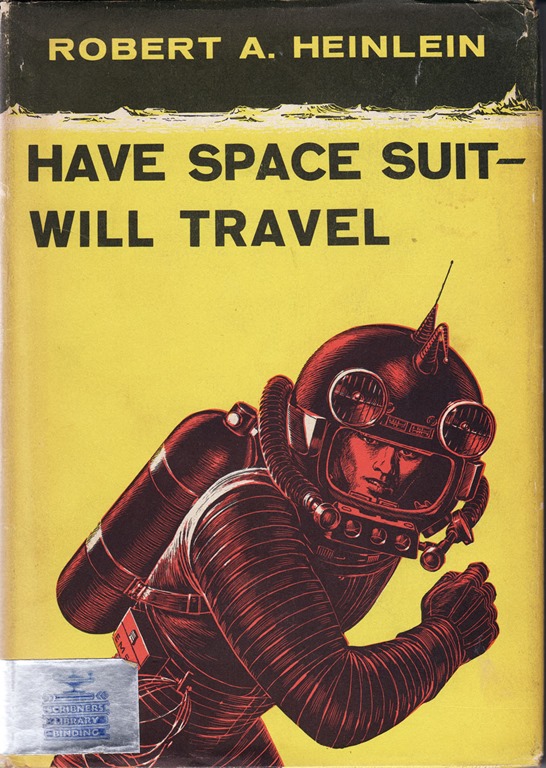
Ultimately, I have to say that Heinlein convinced me that heaven is colonies on the Moon and Mars.  That’s the promised redemption of his religion.  The emergence of private space programs is the real legacy of Heinlein’s prophecy.  I don’t know if anything else matters.

Other Takes On Valume Two

JWH – 6/23/14

Consuming Inspiration 2

The internet is about sharing, and I find much on the internet that is inspirational.  We’re seven billion souls sharing the planet and the internet lets easily communicate what inspires us in a kind of mass journalism—making us all reporters.  We don’t create the content, but pass it on.  I guess that makes us all a kind of a wire service.  I’m retired, and I spend a lot of time alone, and most days are routine, one is like the next, but what makes my day distinctive, are these inspirational news stories, the documentaries I watch, and the books I read.  A documentary a day keeps the psychiatrist away.

I need air, water and food to stay alive, but I think it’s inspirational stories that really make me feel alive.  Now, one man’s inspirational story can be another person’s depressing tale.  I find inspiration in people overcoming adversity, or someone inventing something very clever, or even an economist coming up with a fascinating statistical chart.  Here are some more examples.

Tattoos That Go Beyond Art

I’ve never really liked tattoos, especially on women.  I guess that’s showing my age.  But I came across this story at The New York Times about a tattoo artist Vinnie Myers who has given up his artistic work to create 3D nipple tattoos on women who’ve undergone mastectomies and breast reconstruction.   Caitlin Kiernan wrote and filmed her transformation in  “A Tattoo That Completes a New Breast.”

At one point in the film Myers said he wanted to give up doing nipples all the time so he could return to inking art again, but then his sister got breast cancer, and he stopped worrying about going back to art to become a healer full-time.  Now his daughter wants to learn this new trade that is part artist and part healthcare provider.  Be sure and read the comments, they are very inspiring too.

Inequality in America

Most people when they talk about inequality in America think about helping poor people, but strangely it’s really about helping the middle class, and even expand the economy to make more rich people.  A thriving middle class is what drives our economy.  That helps both poor and rich alike.  But for decades the American middle class has shrunk as all the wealth has moved to a very few people.  We all share one giant pie, however that pie can grow, but it only grows if the middle class thrives.  Look at this video:

Robert Reich, Clinton’s former Secretary of Labor came out with a film last year about this problem, Inequality for All.  It’s available from many sources, including Netflix streaming.  Here’s the trailer.

The film describes the problem, but does not really go into the details of solving it.  Reich appears with Bill Moyers and they discus some solutions.  Watch this video below if you have the time, but definitely rent or buy the documentary Inequality for All because not only is it educational, informative, inspirational, it’s also very entertaining.  Robert Reich is a very charming guy.

Most people are turned off by economics, but that’s a shame.  The numbers are so mind blowing.  For instance, during the economic recover of 2009-2012 the top 1% of the wealthiest Americans took home 95% of the economic gains made during those years.  What that means is most Americans got poorer, while a damn few got much richer.  Do you ever wonder why the rich are against taxes, social security, Medicare, Obamacare, K-12 education, etc.?  Those are big pools of money that they haven’t gotten yet.

You might not be concerned about inequality of wealth in America because you believe it’s about poor people.  Well, except for the very rich, everyone is much poorer than they used to be, and getting poorer, including you.  It’s like the frog in the pot of boiling water.  We just don’t know how warm it is.  Reich points out we’ve hidden from this problem by two family incomes, working longer hours and having more jobs, and by going into debt.  For many people, options to adjust to declining income have run out.  If you play that Wealth Inequality in American animation above you’ll understand why.

Black and White, And Dead All Over

The newspaper was the answer to the old riddle, “What’s black and white and red all over?”  Well, newspapers are no longer read all over.  I didn’t worry too much about this change in society until I watched Black & White and Dead All Over.  What these writers reminded me of that I didn’t know, was corruption in society has always been checked by investigative newspaper reporting.  The trouble is investigative reporting is very expensive, and as newspaper began to loose money publishers often cut those reporters first.  Every town needs a paper that watches over local politics and business, but that’s disappearing.  Hundreds of papers have gone under in the last decade.  One of the big differences between the United States and the rest of the world is we have much less corruption.  I’d hate to see that change.  We still have lots of investigative reporting at the national level and a handful of big cities from the few remaining big papers, and from television news programs, and even documentary makers, but ever shrinking coverage everywhere else.

I caught this on PBS but it appears you’ll have to buy a copy for now to see it.  It is free with Amazon Prime, and just $3.99 on YouTube.

This film made me feel bad for not subscribing to my local paper, but I feel it’s a waste of natural resources to print newspapers, especially when I read so little of each one.  The film did profile ProPublica – an non-profit service that claims it is “Journalism in the Public Interest.”  They syndicate their stories to papers to defray the cost of investigative reporting.  What we all need to do is find out who does the investigative reporting where we live and support them.

If you subscribe to Netflix streaming, keep an eye on their documentaries.  They have zillions.  After Breaking Bad finished I’ve hungered for another intense TV show to watch every night, but I haven’t found one.  However, documentaries are filling the void, and some of them are as intensely good as watching the adventures of Walter White.

JWH – 6/19/14

The Future 101: Science Fiction

I’ve been thinking about the future, but in a different way.  Can we understand the future in any meaningful way?  Now, I don’t mean the actual future that will unfold, but the concept of the future as a feature of reality.  Asking “What is the future?” is more like a Zen kōan than a scientific inquiry.  We think of time as the 4th dimension, as one long continuous stretching of three dimensional space.  And because of science fiction we picture traveling  to other points in time as if they were another spatial coordinate.  I think this is a false concept that corrupts our sense of the past and future.

Another problem we face, is we think of time personally.  Consciousness experiences the now, so it feels like the past is our life before now, and the future is what happens next.  But if the Earth is sterilized by a gamma ray burst in the next minute, reality would continue without us, and so would the future.  Although we experience time as self-aware beings, time exists outside ourselves.  We might exist in the future, and we might not.

Time exists without our consciousness being aware of it.  A tree has very limited awareness of its moment in existence, but its there in the now, and it has a past and future.  Our conscious mind observes the now, remembers the past, and anticipates the future.  Science fiction is the literature about anticipating the future.  We like to think that science fiction both prepares us for possible futures, and helps us build specific futures.  For example, science fiction warns us against the singularity, yet inspires us to build intelligent robots.

The trouble is we don’t take the future seriously.  If we did we would eat healthy and not alter the carbon dioxide ratio in the atmosphere.  We regularly interact with the future, like a squirrel burying nuts, or humans going to the grocery store to buy a week’s groceries, but reaching into the future has a limited range.  Instead of using science fiction to prepare us for the future, we’ve often turned it into Coca-Cola and cotton candy, empty calories to enjoy in the present moment of now.  Our immediate desires always overwhelm any knowledge we might have about the future.  Dealing with the future requires tremendous discipline that most of us lack, including myself.

One analogy that has occurred to me is to think of our brain as a CPU which is the now.  The past is everything written on the hard disk, and the future is the output we’re going to write to the hard disk.  Over time that contents of the hard disk changes.  The now is the main loop of our programming, just idling through the processing cycles.  If we want to interact with the future, we have to write something out to the hard drive, or delete an old file.

Most of us have great expectations about the future.  Some of us worry about the future.  Between dreamers and doomsayers, we find all hopes and fears.  Tomorrow is often pretty much like today, but ten years from now will be more surprising than how memories of ten years ago feels now.  Everything we want is in the future because everything we have is now.  When we throw the dice we want to win big and not come up snake eyes.  We’re all futurologists in that we hope to plan our future accomplishments and predict the obstacles.

SF-logo

We want to know the future even though we know we can’t.  We predict the future even though we know we’ll be wrong.  We just can’t help ourselves.  Some people believe in crystal balls, others in statistics, but some turn to science fiction.  Science fiction plays on the same dichotomy as most people feel about the future—some SF writers write about what they hope will happen, and others write about what they fear will happen.

For over a century before space travel writers wrote about humans traveling to the Moon, planets and to other star systems.  Did science fiction writers predict that humans would travel in space, or did they inspires people to build rockets and space capsules?  Would space travel ever been invented if we hadn’t dreamed about it first?  Some people believe the future already exists and its just a matter of waiting for it to play out.  Others believe the future does not exist, only the now exists, so whatever the future will be won’t be determined until we reach that now to be.

From my personal experience, and reading piles of science books, I don’t think the future exists yet.  Nor do I believe time travel is possible.  I’m a now person.  However, I do think we can interact with the future in limited ways.  On the other hand, I’m not sure our many fantasies about the future do anything at all.

Ever since I was a kid I’ve always said, “The future is everything I never imagined” even though I spent all my time trying to imagine the future.  Now that I’m living in the future, or a future now, it feels like any fantasy I had wiped out its possibility of coming true.  Sort of a weird corruption of the Uncertainty Principle.  I pictured myself going to Mars, so I never went to Mars.  I pictured humans going to Mars, so no one made it to Mars.  Sorry guys, to jinx things.   My mother had a variation on this theme.  She believed worrying about something bad will happen would keep it from happening.

Most of us will wake up tomorrow and find the future, and we’ll do that on average 30,000 times.  Each time a little surprise—until the day we don’t.  Now will cease to exist.  What divides us from the rest of the animals on this planet is we have hopes for the future.  We all want something from the future.  If we’re a child, we want Santa to bring us something exciting, if we’re a teen we want to fall in love and lose our virginity, if we’re in our twenties we want to graduate college and find a great job, and so on, until our only hope is to have a tomorrow, any tomorrow.  Some people want to be rock stars in the future, and others just want more to eat, and some just hope to keep existing.  To me happiness is having something to look forward to, even though it might not happen.

Science fiction books are fantasies about the future, some about things we want to happen, and some about things we hope won’t happen.

The common assumption is science fiction does not predict the future, but speculates on possible futures.  The truth is science fiction is a bunch of wild ideas that we find entertaining and has no relationship to the actual future even when it’s seriously speculative, extrapolating on current events, and is of little use for preparing us for the future.  Science fiction is fun escapism from the present for the most part, and occasionally insightful observations about the here and now.  Nineteen Eighty-Four by George Orwell is a brilliant use of science fiction, but does it help us with the future, or help us with how we live now?

Robert A. Heinlein took himself quite seriously as a writer of speculative fiction.  He thought three books expressed his ideas best:  Starship Troopers, Stranger in a Strange Land and The Moon is a Harsh Mistress.  I doubt he meant to be remembered for starting military SF, creating a hippie Bible, and not starting a popular catch phrase about free lunches.  I’ve read these books many times and I don’t think they say anything about the future at all, but a whole lot about Robert A. Heinlein.  He wanted them to be about freedom and responsibility, but I’m not sure even that comes through.   Stranger in a Strange Land was Heinlein’s idea of 1990 from 1960.  Many people think it’s about the 1960s.  After living through both times I don’t feel its about either, but it seems to say a whole lot about Heinlein’s pet ideas and peeves.

I’m starting to wonder if science fiction is about no time at all, like The Song of Ice and Fire series by George R. R. Martin.

I’m reading Capital in the 21st Century by Thomas Piketty.   I don’t think we can predict the future, but I also think the only way to talk about the future is through statistics based on knowing a whole lot data about the past.  I’ll write The Future 101:  Statistics in the future. (Is that a prediction or plan?)  But for now, I shall ask, “How many science fiction novels study the past to extrapolate the future” like Piketty?  I think the common quick answer will be:  Many.  However, I think that’s wrong.  If a science fiction writer writes a well thought out book about people living in the year 2114 and how global warming has changed the world, is that really doing the same thing that Piketty is doing with all his graphs and data sets?  It’s obvious that it’s what climate scientists are doing, but is it the same thing for novel writers?

I don’t think so.  Is there any past science fiction novel about our times that sounds anything close to what’s happening now?  Climate scientists have been graphing changes in average world temperature and CO2 concentrations for decades, and our current temperatures and concentrations fall nicely on their graphs.  Is this predicting the future?  Maybe that’s as close as we can come to predicting the future.  The thing about graphs is they do change, and sometimes surprisingly so, but there’s always a reason why the numbers do something different that changes the direction of the curve.  Being able to say what those things will be ahead of time is really predicting the future.  And we can’t do that.

We can predict rising CO2 concentrations, but we can’t predict what we will do about them

Scientists had hoped twenty years ago that humanity would have heard their warnings and changed their habits so their curves would have reversed direction.  They were hoping to change the future.  Science fiction writers writing about the future of humans colonizing the solar system and the galaxy were hoping they were influencing such a future to happen.  Has that happened?

Science fiction never wanted to predict the future, it never has.  Science fiction has always been about shaping the future.  And strangely, isn’t that what we do all the time.  When Apple rolled out the iPhone didn’t they shape the future?  Without Amazing Stories and Astounding, would we have the space programs we do have today?  Did “The Man Who Sold The Moon” shape the future to produce SpaceX?  I don’t know.  That’s why I writing this essay.

The future is relentless, it’s always coming.  Everything in the now makes the future.  A tree making a seed effects the future.  When we buy groceries how much is just putting food in a shopping cart and how much is reaching into the future to make Thursday’s night dinner?  If we knew that, we’d know how much science fiction influences the future.

JWH – 6/19/14

Falling in Love with the 19th Century

Most of us live in the present, although some of us think the grass will be greener in the future, but for a few, the past has an allure that draws us back to quainter times.  Or maybe the past is seductive because it represents an archeology of the mind, explaining how we came to be.  I grew up in the 1950s and 1960s always daydreaming about science fictional futures of the 21st century, but now that I live in the 21st century, I spend a surprising amount of time mentally retracing the steps in the 19th century of how I came to be in the 20th century.

The older I get, the more I tire of CGI science fiction fantasies and crave elegant Masterpiece Theater costume dramas about Victorian life.  I occasionally like mixing science fiction with history via steampunk stories, but for the most part I love reading actual history books about 19th century science, or reading fictional observations of the time via 19th century residents like Charles Dickens, George Elliot, Anthony Trollope, or Louisa May Alcott, or I like modern fiction that uses the 19th as a setting to understand modern times through contrast and comparison with the present.

Possession-A-S-Byatt

The allure of the 19th century is hard to explain, but lets start with Possession a 1990 novel by A. S. Byatt.  Byatt, like John Fowles before her, uses the trick of twin stories, with a couple in the present trying to decipher a couple in the past.  Byatt starts with two modern characters, Roland Michell and Dr. Maud Bailey coming together because Michell is researching poet Randolph Henry Ash, and Bailey is studying poet Christabel LaMotte, and they get on the academic trail that the two had an illicit affair previously unknown by all other scholars.  Ash and LaMotte are totally fictionalized, but Byatt creates them in such a way, quoting long poems, journals, diaries, letters that readers feel they are based on actual historical characters.  There’s even a label for such stories, historiographic metafiction.

Byatt is playing with us readers.  Because her story is entirely fiction she has 100% control over what we know and what her characters know.  At times, the readers knows more than Michell and Bailey because Byatt is the omnipotent narrator of her reality and writes third person narrative that lets us know what actually happen, while the poor academics all rush around to know the truth must piece it together with rare tidbits of surviving facts.  At other times, we follow behind the eyes of Michell, Bailey and Cropper, learning about Ash and LaMotte from the clues they unearth that generate endless speculation about the past.

There was a pitiful film adaptation of Possession in 2002 starring  Gwyneth Paltrow as Maud Bailey, Aaron Eckhart as Roland Michell, Jeremy Northam as Randolph Henry Ash, and Jennifer Ehle as Christabel LaMotte.  The movie is good for seeing the visual contrast between the 19th and 20th centuries, but not for much else.  All the power of the story is in Byatt’s writing, and the movie comes across as a slim summary of the story.  The trouble is, Byatt only barely hints at the richness of the 19th century in her 555 page novel.  How much you admire Possession really depends on how much you’ve read of and about the the 1850s and 1860s.  Byatt gives us a very rich taste, making her novel worthy of the Booker Prize it won, but it’s only a start if you’re going to fall down the rabbit hole of the 21st century speculation about the 19th century.

Other-Powers-Barbara-Goldsmith

A subplot of Possession is LaMotte’s interest in spiritualism.  Most 21st century folk will not understand what spiritualism is, at least not in 19th century terms.  Beginning with the Fox sisters in 1848 a wave of fascination swept the U.S. and Europe over the idea that living people could communicate with the dead.  Strangely still, 19th century Spiritualism is intertwined with 19th century feminism.  Byatt hints at this, but for a more detailed painting I recommend Other Powers by Barbara Goldsmith, subtitled “The Age of Suffrage, Spiritualism, and The Scandalous Victoria Woodhull.”  Byatt understood that the 19th century was an awakening for women and reflected this in Cristobel LaMotte.   LaMotte was a poet in her own right, independent, living with a woman lover, when she meets Randolph Henry Ash.  LaMotte risks everything to communicate with someone she considers her equal.  Ash and LaMotte’s poetry become their language of love.

Possession is about the many kinds of possession we fall into.  Ash and LaMotte are possessed by their love, but also by their art.  Michell and Baily are possessed by the need to know Ash and LaMotte.  We, the reader are possessed by the need to understand why we love fiction, and why the 19th century entices us.  One clue for the last thing is the recent science series Cosmos.  Many of the episodes were about 19th century science and scientists.  The 1800s was a tremendous age of discovery, especially by gentlemen scientists.  Charles Darwin exploded on the Victorians like an H-Bomb.  On The Origin of Species by Charles Darwin came out in 1859, the mysterious year of Possession.

Darwin made the Victorians doubt God. LaMotte was a believer, but Ash was not, or at least a serious doubter.  LaMotte was daring far more than Ash.  Byatt makes Ash more interesting because he’s an amateur scientist.  I think it’s the amateur scientist that is one of the great appeals of the 19th century to modern people.  It was an era where individuals could still figure out the mysteries of reality on their own.

The Invisible Woman by Claire Tomalin

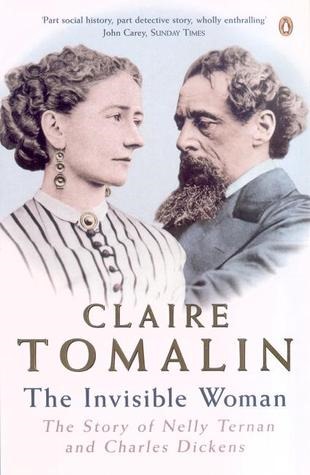
Right around this time too, Charles Dickens began his affair with Ellen Ternan, which was also during the time he wrote Great Expectations (1861).  This affair was chronicled by Claire Tomalin in her book The Invisible Woman (1990) and made into a movie last year.  It seems there’s a certain amount of demand for stories about Victorians having affairs.  The Victorian times are when women awoke to see themselves as equals to men, both in mind and body, but it was also a time when people in general began to question the religious view of reality.

edens-outcasts-bigLives_of_Margaret_Fuller

Which ties in two other books, both by John Matteson, Eden’s Outcasts and The Lives of Margaret Fuller, which are about Americans during this same time period, and two very important women, Louisa May Alcott and Margaret Fuller.  Once you start on the quest, it’s endless.  I could link book after book that I’ve read about the 19th century because they all amazingly fit together like puzzle pieces.  That’s the difference between reading science fiction about the future, and reading about the past.  Science fiction provides an infinity of possible futures that don’t fit together, whereas the appeal of reading history is every new book adds more pieces to the puzzle of what was, making my mental picture of the time more detailed and precise.

We can never know the future, but then, we can only know the past in fragmented clues—a hazy view.  We think we know the present, but do we?   But which is more enlightening?  Studying the past tells us how we got to the present.    Studying the present overwhelms us with details.  Studying the future only helps us know what we fear about the present and maybe hope to find in the future.  In terms of acquiring satisfying details that make us feel like we’re learning something real, studying the past seems to offer us the most philosophic bang for the buck.  Studying the past makes us feel wise.  Whether that wisdom is real or not, is hard to judge.

Reading Possession inspires me to read the English Romantic and Victorian poets, to study the Pre-Raphaelite painters and writers, to look at illustrations of Victorian decorative arts, read about the scientists, painters, architects, and study their drawings.  One of the cool thing about people from those times is they kept wonderful diaries and illustrated them with their own drawings.

Like I said, this is a rabbit hole.

JWH – 6/16/14 (Happy Birthday Susan)