Self-Psychoanalysis By Studying My Reading Habits

By James Wallace Harris, Tuesday, January 20, 2015

People in the 19th century had the bumps on their heads examined to reveal their personalities. I find examining the books on my bookshelves to be more enlightening.  Going through my library, culling books I won’t read, and reorganizing the rest, is revealing  my preoccupations with various subjects I’ve had for a lifetime. I’m surprised by the diversity of topics, and their stark limitations. Look at your books to see how your personality is revealed, or when you visit a friend, glance across their volumes.
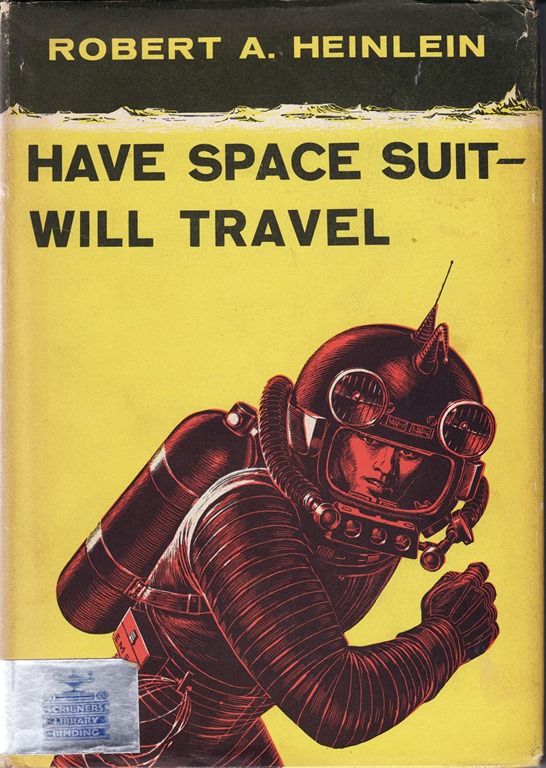
have-space-suit---will-travel 

The majority of my books are science or science fiction. But with each, I can see if I have definite sub-interests. I have many books on physics and astronomy, and very few on biology and geology, and none on chemistry. I have quite a number of books on science history. I have maybe two dozen books just on brain research, and just as many on evolution. I used to have shelves of books on observational astronomy, but I’ve gotten rid of them because I gave away my telescope. I never could see well with my scope, and it was always very inconvenient to drive out to the club’s observation site. So my astronomy interests shifted to books on cosmology and space science. I love books on discovering and researching the cosmic background radiation. I have a few books on early man and anthropology and wished I knew more.

My science fiction reveals a partiality to Robert Heinlein, Samuel R. Delany and Philip K. Dick for nostalgic reasons, a smattering of SF novels from the last 25 years, and quite a number of anthologies and yearly best of collections of short stories ranging from the 1940s to the present. I have about two dozen books on the history of science fiction. I have many volumes on science fiction art. I should admit, that my interest in Heinlein, Delany and Dick is dwindling because my interest in newer writers is growing.

I feel bad about abandoning old friends, but sometimes you just have to move on. And that’s an important revelation too. I can only pursue a very limited number of subjects and authors.

I have fair amount of contemporary literature, as well as classic American and English novels. I have damn few novels written by people other than British and American writers. That’s rather narrow minded, but I do have lots of books by women, and a fair number by African-American authors. Because I know only English, the few French and Russian novels are translations.  No Spanish, Italian and German books at the moment, but I have read some in the past. I have also read a few books by people from Africa, but mostly South Africa. And I’ve read a few books from Asia. My literary awareness of South America and Central America is very close to zero.

I have a couple shelves of biographies. I’ve seem to specialized on Charles Darwin, Mark Twain, Jack Kerouac, Bob Dylan and The Beatles, but I have at least on volume on H. G. Wells, Jules Verne, Rudyard Kipling, Anthony Trollope, Charles Dickens, Margaret Fuller, Louisa May Alcott, L. Frank Baum, D. H. Lawrence, Edith Wharton, Wyatt Earp, Alan Turing, Neil Young, Steve Jobs, and books about the music groups Buffalo Springfield and The Byrds. Plus many bios and histories of people I can’t recall at the moment.

I’m also into certain historical subjects. I have lots of books on the 19th century for some reason, especially literary and scientific history, but many books on Boston, the Transcendentalists, and the wild west. I have several books on computer history, including one just on the ENIAC machine.

I probably have two or three dozen books on books. Book history, the histories of magazines, the history of the printing press, collecting books, classic books, western canon books, and many books on the best books to read in a lifetime.

I do have a number of books on feminism, a few on black history, and a number of ecology. Since the 1960s I’ve followed these subjects in a peripheral way. I also have some books on world cultural and economic problems. And a number of anthropology and sociology type books. All of these reflect a general interest in social issues and a desire to learn about my fellow humans on lifeboat Earth.

Even though I’m an atheist, I have many books on Christian history and The Bible – but I’m giving them away. I have several of the history of religion, and I’d like to know more about how religion developed in Neolithic times. I’d like to know more in general about how early man got from living in the forest to living in cities, and what they may have thought or believed. And I have many books on philosophy. However, my interest in Christian history is fading at the moment. In comes and goes over the years. But I think I’ve read enough to understand how Jesus was made into a deity to satisfy me for now. I’m still fascinated by the early intellectual development of the Christian church, and the impact Greek philosophy had on it.

I have many books on art history and photography. I’m not sure about keeping these. It’s not that I’m losing interest, but art books are big and heavy, and I seldom get them out to look at. Instead, I like finding copies of famous paintings and photographs and putting them on my desktop background, which rotates a new image every minute. Sometimes I just sit and watch my 27” screen show famous paintings or historical photographs. Often when I get into a particular painter, I’ll search out many of their paintings to collect digitally.

I had about twenty mathematic textbooks because I’ve always dreamed of returning to study math where I left off in college. But I realized that’s not going to happen, so they are in the pile to go. I did keep a handful of math history books, and a couple books on statistics, but I doubt I’ll even get to them either. I think my math days are over.

I have no books from these popular genres: mysteries, thrillers, espionage, romance, porn, historical novels, and contemporary best-sellers. I do have a smattering of young adult novels like the Harry Potter series, The Hunger Games trilogy, His Dark Materials trilogy. I have no books on sports, opera, poetry, politics, guns, automobiles, airplanes, gardening, boating, decoration, architecture, flowers, pets, fishing, hunting, travel, jewelry, collecting, clothing, and the list goes on and on. It would be fascinating, but time consuming, to make a list of all subjects I’ve tuned out.

I used to have a great number of books on old movies and film makers, but they’ve mostly been given away over the years. There are probably many subjects I’ve pursued at one time but no longer chase.

This bookish psychoanalysis makes me want to broaden my interests, and specialize more deeply. I think I should read more books about all the countries of the world. I’m currently listening to Age of Ambition about China by Evan Osnos and its riveting. Another thing my self-analysis reveals is how I follow certain ruts, but I’m not systematically learning anything. I feel like I know a lot about the history of science fiction, and I can blather on about a dozen more subjects, but not convincingly. I could teach courses in science fiction, but not anything else. 

Last night I watched a writer from Entertainment Weekly talk to Charlie Rose about the Oscars. I was amazed at the precision of his diction and the mastery of his knowledge. He made me envious to be able to talk about more subjects. I think science fiction is the only subject I could talk about with such erudition, but not with the same comfort of public speaking. I’ve read many books about Mark Twain, but I could only discuss his work and life in a stumbling way. Ditto for cosmology and computers, two other subjects I’ve spent years studying. This makes me feel jealous of people who can regale people at parties on numerous subjects so easily.

Since I’ve known a lot of teachers and professors, I’m used to talking to people who show great confidence in their knowledge. Most people just gab about what they know, and what they know is usually sparse and jagged. I always love meeting a person who’s in love with their topic, even if it’s a topic I have no interest in like baseball or fashion, because they inhabit their subject with such a comfort and confidence that their enthusiasm is infectious. Sadly, most people just natter about what they heard on the news late night, or relate a story about a co-worker.

Part of my failure at expressing the interests of my personality is poor memory. I’m not very good at verbalizing my thoughts, often stumbling over the language, but it’s my erratic memory that keeps me from being more coherent.

As I reorganize my bookshelves, putting books together by topic, I realize exactly what my interests are. I’ve often wondered if I could program a robot to have my personality. When I thought about what personality is, I concluded it’s the subjects my soul are attracted to at any given moment. Back in the sixties they had a saying, “You are what you eat.” I believe our personality is “You are what you think.”

What’s weird is my interests really haven’t changed much my whole life. My reading interests have stayed close to the same subjects since I became a bookworm in grade school. They’ve gotten far more sophisticated, but like I said, I follow certain ruts. Which makes me wonder if I started reading and studying new subjects if it would change my personality.

The most painful revelation of this study is how much I’ve forgotten. I’ve read thousands of books, but forget 99.999% of what I read. That’s demoralizing.

This is a superficial flyover of analyzing my personality. If I really wanted to understand myself, I’ll need to meditate on why I chose all these topics as my own. Why did I become a science fiction guy instead of a sports guy? That will take much deeper thought than I have time for now.

JWH
When Does Science Fiction Go Stale?

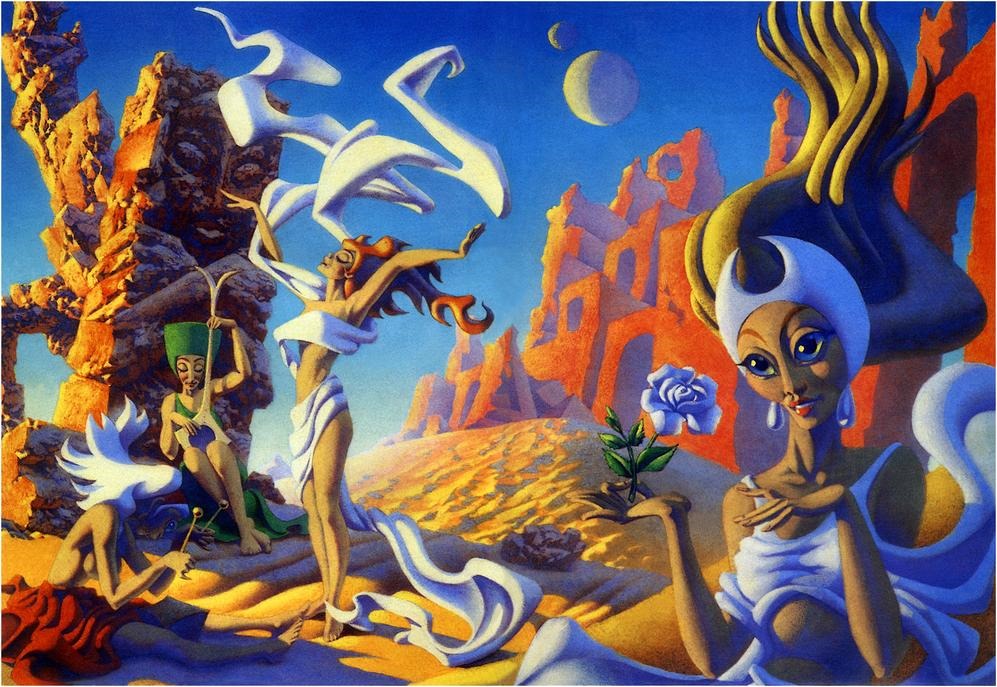
Right off the bat, I should say dated science has no affect on the expiration date of science fiction. I’m still passionately in love with “A Rose for Ecclesiastes” by Roger Zelazny.  Stories about Mars and Venus having inhabitants, or humans being able to breathe their atmospheres, do not detract from their freshness – if the writing was wonderful.

bok_fsf

I do know that science fiction can go stale – just look at the books by E. E. “Doc” Smith, who was the brightest star among the science fiction writers of the 1930s. If Smith had been a better writer, more savvy about race and gender, he might be remembered along with H. G. Wells and Jules Verne. There were legions of science fiction writers between Wells and Heinlein, but how many of their books are fresh today? It seems like science fiction goes stale pretty fast. Why?

And the taste of staleness isn’t universal from reader to reader. Some people enjoy eating two-day-old pizza, and E. E. Smith is still read by a limited number of fans, especially those who acquired the pulp fiction habit. On the other hand, how many young science fiction readers today fall in reading love with Jack Williamson, Edmund Hamilton, Murray Leinster, John W. Campbell, Ray Cummings,  E. E. Smith, Eric Temple Bell, George O. Smith or Eric Frank Russell?

Smith-Skylark

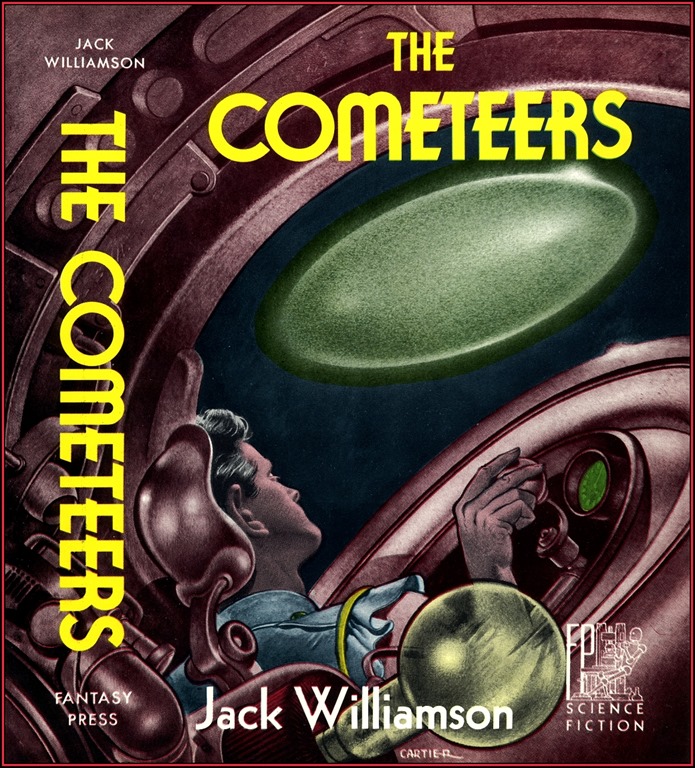
When I was growing up in the 1960s, fans talked about The Big Three of Science Fiction – Heinlein/Clarke/Asimov.  Fifty years on, I’m rereading their books and I realize they are starting to go stale like some SF books I read when I was a kid. Me and my buddies found E. E. Smith and Jack Williamson thrilling but also laughable. And like I said, it’s not the science, or the fact that we’re now living a future that’s overwritten those science fiction writer’s dreams of things to come.

I loved the Heinlein juveniles and assumed they were such obvious classics that kids would be reading them for centuries, like Treasure Island, Little Women and Alice in Wonderland. I still love them because of nostalgia, but I’m not sure they are as fresh today as they were to me in the 1960s.

cartier_cometeers

What exactly goes stale? When you read an old science fiction story that’s as flat as a Coke without its fizz, what went wrong? I talked about this with members of the Classic Science Fiction Book Club and the Defining 1950s Science Fiction Reading Challenge. The consensus is writing style and political correctness.  Readers don’t mind antiquated stories as long as they are well told, or even antiquated point of views, if they are part of the story. Good storytelling stays fresh. Good storytelling can override decaying style. But it’s very hard to maintain a story if the characters are very out of touch modern sensibilities of right and wrong.

Sadly, a lot of old science fiction wasn’t that well written. It impressed young people at the time with far out ideas, rather than with good writing and characterization.  It’s funny how much a science fiction writer can get things wrong, and yet the story will stay fresh because of the storytelling, and not the idea.

the door into summer

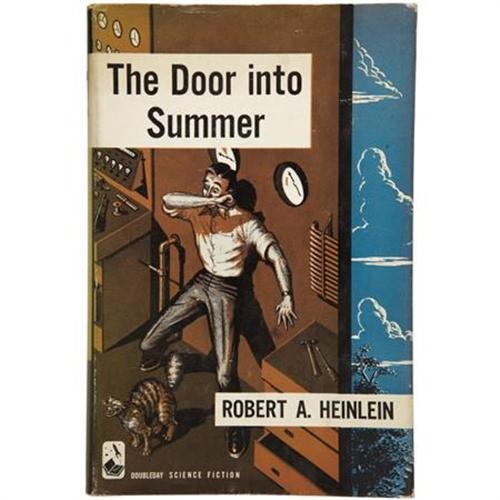
I still love reading The Door Into Summer by Robert A. Heinlein, even though the story was written in 1957, about a robot inventor living in the year 1970, who buys suspended animation time so he can sleep till the year 2000 to get away from his cheating girlfriend. We didn’t have household robots in 1970, and Heinlein’s year 2000 was nothing like our year 2000. Yet, the story is still readable!  Why? Heinlein had an engaging writing style, a sympathetic character, facing interesting problems, and who comes up with emotionally solid solutions, although the ending is becoming a little questionable.

The writing, characters and motivations are still functional. Yet, if we try to read something like E. E. “Doc” Smith Lensman books today, they feel archaic in their writing style, and the plot and character motivations seem simplistic – too much like an ancient comic book. Yet, a book like Out of a Silent Planet by C. S. Lewis written during the same decade as the Smith stories, still works. Lewis gets everything wrong about Mars, has a weird Christian take on space travel, and yet the story still works. And how did John Wyndham get away with writing a story about walking killer plants? Because the characters are very realistic and react in a realistic way, and we the readers care about them, plus we love to imagine what we would have done in their place.

out of the silent planet

Dime novels are seldom read today. Nor do people still read the popular girls and boys books of the early 20th century, like those by Roy Rockwood, who wrote the Great Marvel series (1906-1935). Many of these old books are so filled with racism and sexism that we cringe to read them today, but at one time they offered kids a thrilling sense of wonder. It’s a shame that those old authors weren’t better writers, because their stories captured their times in a unique way – their view of the future. Even the racism and sexism is historical. So I think that it’s the quality of writing that most makes a book go stale.

through space to mars

We still read H. G. Wells stories written in the 1890s. Why does Wells survive while so many other SF&F books from the same time faded from our reading awareness? Is it merely bad writing? I tend to think so. Books that become classics, like Pride and Prejudice or Great Expectations, have something more that good storytelling though. They tap into the core of human nature, and most science fiction never aims for such psychological depths. Wells was no Dickens, but he did have great intellectual ambitions. I think that’s why he’s stayed fresh while Jules Verne trails Wells in popularity. Verne still can engage people with his storytelling, but Wells was a scientific prophet of his age.

Bad science won’t ruin a story, if the story is wonderful, but does cause a kind of staleness. 1930s and 1940s space operas just seem silly today, often hokey, or even campy and kitschy.  One reason Nineteen Eighty-Four is still so damn fresh, it’s it’s about politics and human nature, and not galactic empires and robots. If you’re a science fiction writer who hopes to enchant readers next century then it’s wise to write about common denominators that people now and in the future will have. But if you really want to dazzle the people of today, you want to write about things they never imagined. Which is what E. E. “Doc” Smith and Jack Williamson did in the 1930s. What will awe people in the 2010s will probably feel silly and stale by the 2040s, but maybe that’s just part of the science fiction game.

JWH

The State of Freedom 100 Years Ago

By James Wallace Harris, Wednesday, January 14, 2015

If you think terrorism and war is bad now, just study how things were one hundred years ago. We think of America as the land of the free, but during the 1910s people were being jailed for printing words and jokes about things we commonly see in sitcoms. Language we’d consider G-rated would get you jailed back then if you used it in a literary work that was sent through the U.S. mails.  Writing about contraception, condoms or abortion could also get you thrown in the slammer. Using phrases like “snot-green” or “old fart” would get you labeled as a horrible lower-class person. And it sickened and horrified cultured people when James Joyce wrote about Leopold Bloom eating organ meats, even though everyone ate organ meats. One hundred years ago people just didn’t like facing up to the gritty details of life, details we embrace today.

Because of laws regulating decency, sedition, sexual practices and other moral issues, most of 21st century writers, movie makers, publishers would be jailed if their work appeared a hundred years ago. This doesn’t mean the common people didn’t say anything they wanted, but state and federal governments tried very hard to control what people printed and shipped through the mails. If liberals think conservatives are controlling now, just read about the history of censorship in America. We’ve come a long way baby.

The Most Dangerous Book - Kevin Birmingham

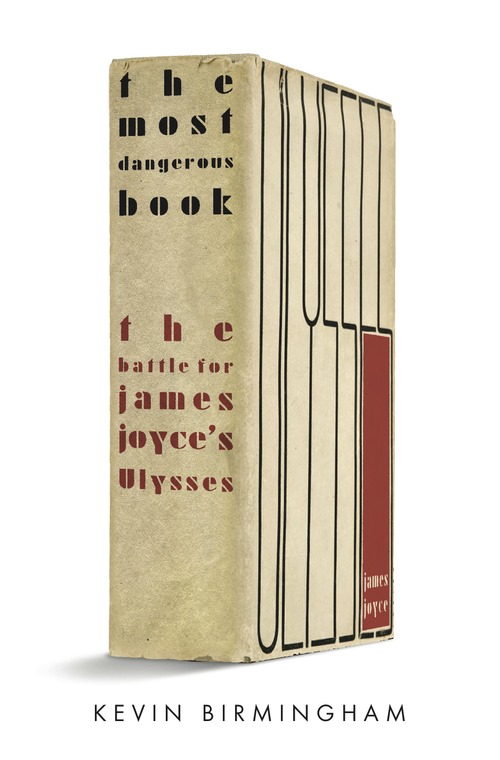
The Most Dangerous Book: The Battle for James Joyce’s Ulysses by Kevin Birmingham thoroughly entertained me with his history of censorship and legal battles to publish what is now considered the best novel in English literature. Even if you have no interest in James Joyce, this book is fascinating history. It does deal with Joyce’s immense struggle to be an artist, and to push the limits of literary expression, but it’s also about why and how our society wanted to rein in artists. It’s about the editors and publishers that risked jail to publish writers like Joyce. In 1920, the year my father was born, Jon Stewart would probably have been sentenced to ten years in jail for each episode of his show, if they could have seen The Daily Show back then.

I listened to The Most Dangerous Book to prepare me to listened to Ulysses. I keep trying to get into Ulysses but I always fail. Ulysses is an almost impossible book to get into, very tough going, but not because Joyce was so intellectual and learned. Joyce wrote about ordinary events and people, but used new writing techniques to show how people actually thought and felt.  Since we often think about sex and bodily functions, or feel thoughts about people we’d never express, our minds are chaotic tangles of incoherent phrases and perceptions, and Ulysses tries to capture this stream of consciousness. In the 1910s and 1920s, readers found his experiments startling, offensive, unnerving and threatening.  Some European and American government officials thought Joyce’s apparent nonsense could be coded messages of espionage. Even his most ardent admirers struggled to decode his prose.

Joyce set the stage for comic observations about humanity that armies of standup comics still mine today. Yet, a hundred years ago, this so horrified government officials they did their damnedest to erase, and keep from the public. Their paranoia over strange ideas was fueled by radicals and anarchists who promoted conflict, disorder and social unrest. There were hundreds of terrorists bombings back then each year. The government associated anything Avant-garde with radicalism.

We have practically no censorship now, and a lot less social unrest and terrorist bombs. Strangely, the lingering forms of censorship we see today often come from terrorist bombers who want to revert our freedoms. The Comstock Law of 1873 was a kind of American Sharia Law, and the people who terrorized the literary world back then was the U.S. Post Office.

The founding fathers made free speech legal, but they didn’t understand what that meant. We’re still exploring the social implications of real free speech.  Kevin Birmingham’s book is a stunning history of the fight for free speech in the early part of the 20th century. He focuses on an array of literary freedom fighters who were directly or indirectly connected to helping James Joyce get his book published. Whether or not you’re interested in literary history hardly matters if you love history itself when considering reading this book.

History is like a jigsaw puzzle with an infinite number of pieces. A great history book is one that helps you put hundreds of pieces together to reveal the big image of the past. A great history book also helps connect its images with pieces of images you’ve assembled from other great history books. The Most Dangerous Book helped me see a lot more of 20th century American and European history.

I still find listening to Ulysses hard going, but I’m making a greater effort because of The Most Dangerous Book. Birmingham explained the tremendous struggle by Joyce to write his book, and why. Birmingham gives a great deal of background facts that interpret each chapter in Ulysses. But most important, he testifies to the valiant effort so many people made that allows us to read Ulysses and books like it. I’m very grateful to those people. I think we all should be.

JWH

Picking 52 Books to Read in 2015

By James Wallace Harris, Tuesday, January 13, 2015

Last year I read 67 books. At first thought, I wondered if I could read 100 books in 2015.  But I neither want to spend all my time reading, nor do I want to be in a race to finish 100 books. Reading one book a week is a nice pace for me, however for many years now, I’ve been buying about five books a week. This certainly presents a problem if I don’t want to speed up my reading pace.

To complicate the situation, I’ve been buying some rather outstanding books that I’m lusting to read soon. I’ve gathered books for decades in anticipation of retiring. I thought for sure retiring would let me read 100-200 books a year, but after my first year of not working I’ve discovered I’m not inclined to be a superbookworm. I now have more books than I could read in five retired lives. Once on my bookshelf, books are out-of-sight out-of-mind, leaving me literary hungry to prowl the bookstores. I need to fix that.

Since I’m always compelled to start projects I never finished, I thought this week’s ambitious endeavor would be to go through my physical bookshelves, my library at Audible.com and my Kindle library at Amazon.com and pick the 52 books I’d most loved to read most. To nag myself daily of this project, I thought I’d pile them up somewhere very visible so they will sneer at me to be read. But since so many are digital, invisible from view, I figured I needed to slightly amend that inspiration. Thus the muse for this blog post. I’ll make a list that I will meditate on daily, and keep it near the pile of physical books that are begging me to be read.

Here are the 52 books I’d love to read in 2015. I’d be immensely satisfied with myself if I did, and very proud if I read half their number. They will be in no order – just listed as I pull them from the shelves and stack them in their special pile. This is a nice snapshot of my interests at the beginning of 2015. It will be revealing to see how I do at the beginning of 2016. I’m pretty sure I’ll have read 52 books, but will it be these books?

I know myself well enough to know I won’t stick to the plan exactly, but I’m curious how close I can get at predicting my reading future. I know I will read a bunch of science fiction books I haven’t listed, and books for my book clubs that haven’t been selected yet. I will promote these books when we nominate books though, so I can get some extra incentive to read them. In fact, some of the books listed here are books I was supposed to read in 2014 for book clubs, but didn’t. And some of these books are ones I’ve started and never completed.

What’s interesting, is 52 books is probably more books than I read to get my Bachelor’s degree. And this list covers a lot of subjects. If I do read and comprehend them, it will be like getting another degree.

  1. This Changes Everything: Capitalism vs. The Climate by Naomi Klein
  2. The Most Dangerous Book: The Battle for James Joyce Ulysses by Kevin Birmingham
  3. The Age of Atheists: How We Have Sought to Live Since the Death of God by Peter Watson
  4. Ulysses by James Joyce
  5. The Man Who Knew Too Much: Alan Turing and the Invention of the Computer by David Leavitt
  6. Grace Hopper and the Invention of the Information Age by Kurt W. Beyer
  7. ENIAC: The Triumphs and Tragedies of The World’s First Computer by Scott McCartney
  8. Old Friends by Tracy Kidder
  9. What Makes This Book so Great by Jo Walton
  10. Consciousness Explained by Daniel C. Dennett
  11. Consilience: The Unity of Knowledge by Edward O. Wilson
  12. Alone Together: Why We Expect More From Technology and Less From Each Other by Sherry Turkle
  13. On Writing Well by William Zinsser
  14. Lord of the Flies by William Golding
  15. The History of Mr. Wells by Michael Foot
  16. About Town: The New Yorker and the World it Made by Ben Yagoda
  17. Age of Ambition: Chasing Fortune, Truth and Faith in the New China by Evan Osnos
  18. Superintelligence: Paths, Dangers, Strategies by Nick Bostrom
  19. It’s Complicated by Danah Boyd
  20. The Origins of Political Order: From Prehuman Times to the French Revolution by Francis Fukuyama
  21. This Will Make You Smarter: New Scientific Concepts to Improve Your Thinking by John Brockman
  22. Under the Volcano by Malcolm Lowry
  23. Darwin’s Dangerous Idea: Evolution and the Meaning of Life by Daniel C. Dennett
  24. The End of Growth: Adapting to Our New Economic Reality by Richard Heinberg
  25. Thinking, Fast and Slow by Daniel Kahnerman
  26. Civilization: The West and the Rest by Niall Ferguson
  27. The Social Conquest of Earth by Edward O. Wilson
  28. Can You Forgive Her? by Anthony Trollope
  29. The Age of Wonder: How the Romantic Generation Discovered the Beauty and Terror of Science by Richard Holmes
  30. Turing’s Cathedral: The Origins of the Digital Universe by George Dyson
  31. The Better Angels of Our Nature: Why Violence Has Declined by Steven Pinker
  32. Fooled by Randomness: The Hidden Role of Chance in Life and in the Markets by Nassim Nicholas Taleb
  33. Before the Dawn: Recovering the Lost History of Our Ancestors by Nicholas Wade
  34. The Dream of Reason: A History of Philosophy from the Greeks to the Renaissance by Anthony Gottlieb
  35. The Origin of Species by Charles Darwin
  36. Atonement by Ian McEwan
  37. The Math Book by Clifford Pickover
  38. Mathematics: The Loss of Certainty by Morris Kline
  39. A Path Appears: Transforming Lives, Creating Opportunity by Nicholas D. Kristof and Sheryl WuDunn
  40. Emergence: The Connected Lives of Ants, Brains, Cities, and Software by Steven Johnson
  41. Darwin Among the Machines: The Evolution of Global Intelligence by George B. Dyson
  42. The Roads to Modernity: The British, French, and American Enlightenments by Gertrude Himmelfarb
  43. The Meaning of Human Existence by Edward O. Wilson
  44. A City So Grand: The Rise of an American Metropolis, Boston 1850-1900 by Stephen Puleo
  45. The Closing of the Western Mind: The Rise of Faith and the Fall of Reason by Charles Freeman
  46. The Violinist’s Thumb by Sam Kean
  47. Madame Bovary by Gustave Flaubert
  48. How To Live or A Life of Montaigne by Sarah Bakewell
  49. Glut: Mastering Information Through the Ages by Alex Wright
  50. The Stone Diaries by Carol Shields
  51. We Are All Completely Beside Ourselves
  52. Children of God by Mary Doria Russell

JWH

The Definitive 1950s Science Fiction Reading Challenge

By James Wallace Harris, Tuesday, January 13, 2015

Over at Worlds Without End, they routinely offer reading challenges for people who use their science fiction book database. My post “The Defining Science Fiction Books of the 1950s” inspired their page, “The Defining Science Fiction Books of the 1950s” which displays the books from the list in their database format, nicely illustrated by book covers. You can join and tag books you own, want to read, have read, or want to buy and read. You’ll need to sign up and set a password, but that’s no big deal.

World Without End has collected many award list and best-of book lists, so it’s a great way to find outstanding science fiction books to read.

If you click on “Roll-Your-Own” image, you’ll be taken to a list of Reading Challenges.

2015 Reading Challenge

Then look for this icon.

1950s challenge

After you sign up, you can always go directly here, where you can see a list of members in the challenge, and which books they are reading or have read. The challenge is to read one book from each year 1950-1959 from the Defining List of 1950s SF. Look through the years to select each book you want. Clicking on the cover will allow you to mark the book read, reading or unread, and you can check to use it for the challenge.

The books go in the list 10, 9, 8, 7, 6, 5, 4, 3, 2, 1. So if you want the books to read 1950-1959, left to right, you’ll need to enter all 10 starting with the 1959 first, and go reverse order years. Otherwise, if you add them one year at a time, the final list will read 1959-1950. Since I don’t want to commit what book I’ll read for each year until I read them, I’m entering in reverse order.

This is a fun reading challenge for those people who love classic science fiction. The 1950s were when science fiction book publication ramped up, and many of the classic stories from the 1920s, 1930s and 1940s were reprinted in hardcover and paperback. I started 1950 by rereading The Martian Chronicles, which were short stories Bradbury wrote in the late 1940s, but collected together to create a fix-up novel of related tales. I listened to an audiobook edition read by Stephen Hoye, and it was excellent. The characters sound like I’m listening to a 1940s movie.

There is also a forum at the WWE site for discussing the books in the challenge.

If you love old SF, and want to see what other people are reading and saying about these old books, give it a try.  After the 1950s are finished, DrNefario, the creator of the challenge, plans to create one for the 1960s.

JWH