Redefining the Word ‘Soul’ for Atheists

By James Wallace Harris, Sunday, March 15, 2015

The concept of the soul is quite ancient, preceding monotheism, polytheism, pantheism and goes back to animistic times. I don’t know why ancient people thought animals, plants and even inanimate objects had souls, but I guess they believed everything had a part to play in reality. Modern religious believers see the soul as the immortal aspect of their being. Early Christians thought their bodies would be resurrected, and would become immortal too, but I think most modern believers think the soul is the immortal kernel of who they are, and the body belongs to this physical world.

window_to_the_soul_by_artofnightsky-cropped

[ArtofNightSky]

Atheists generally do not believe in souls. They believe when we die, everything disappears, including our consciousness. However, I like the word soul, and want to keep using it. Religion has a long history of repurposing words, so why shouldn’t atheists do the same thing? The concept of the soul is very useful when we think of it as the center of our being. We can lose our senses or parts of our body, and still exist. Sometimes our souls can disappear but our bodies keep living.

Of course, atheists believe self-awareness is directly tied to the physical body and feel religious terms are tainted. I accept the soul is mortal, and even corruptible by the physical world. Our souls can be changed by lack of air, disease or brain damage. But it’s still nice to have a single word to use for our essential essence.

Why do we need the word soul when we have the words mind and brain? The brain is the physical seat of the mind and soul, so how do those two concepts differ? I like to think of the soul as the inner most core of the mind. The mind is bigger and more complex, with conscious and unconscious systems. I think of the soul as that nexus where we view reality through the filter of our mind. When we become unconscious, either through sleep, inattention, drugs, disease or trauma, the soul shuts off.

I think of the soul flashing into being when everything is just right with our physical body and mind, like a fusion power plant when atoms begin to fuse. If the particle beams are shut off, the fusion stops, and so does the soul, when our mind and body stops working.

From self-observation, I feel I view reality from a unique perspective that I want to call my soul. You know how old people will say they feel no different than when they were nineteen? I think that’s the soul. I’m not sure if the soul is merely an observing conscious self-awareness, or if it has other attributes. Does prejudice lie in the mind or the soul? Just like disease and drugs can influence the body, I think ideas can influence the mind. For example, is racism part of the soul? What do racists do if there’s a heaven and no bodies? Or is racism a defect of the soul? So a racist soul sees everything, no matter what the data the mind presents, with prejudice consciousness?

I’d like to believe our souls are purely observers, and what we see is tinted by the mind. The mind, body and soul are actually one system, each influencing the other. I think the mind and body can exist without a soul, but a soul can’t exist without a mind and body. That’s why I’m an atheist. Theists believe souls are descended from a higher being. Evolutionists belief everything ascends from nothing.

Do souls learn? Do they evolve? Do they grow? Or do they only observe? Do dogs and cats have souls? By my atheistic definition, yes. They just don’t have language of mind like we do to communicate what they observe. Are dogs and cats self-aware? I don’t know. That’s why I believe souls evolve. A tree has a soul without self-awareness. That’s why I also believe some people have more evolved souls than other people because they see beyond hate. War and violence comes from our animal natures. This suggests that some souls can escape the bioprogramming of the body.

I want atheists to hijack the word soul and embrace it for our own, because even without God I want us to have spiritual growth.

JWH

Consensual, Prostitution and Rape

By James Wallace Harris, Thursday, March 12, 2015

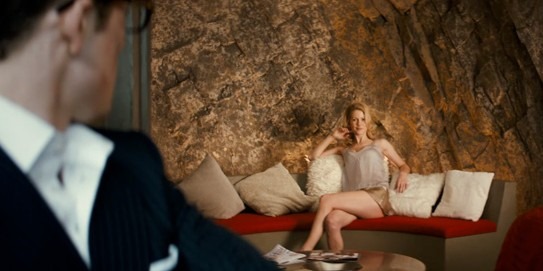
I saw a silly movie this weekend that had two disturbing scenes that I can’t stop thinking about. The film, Kingsman, is a comedy-action spoof on spy films. I’m sure the screenwriters and the audiences considered everything in good fun, but two scenes troubled me. The first was a mass killing at a church, which I will write about in the future, and the second, is when Princess Tilde tells our young hero, Eggsy, she’ll give him anal sex if he will free her from her dungeon prison. It bothers me that this modern fairy tale has the Princess bargaining for her freedom with Prince Charming. Is the hero’s reward consensual, prostitution or rape?

Princess-Tilde

Matthew Vaughn, the director, considers this scene just another bit of comedy, but I think fiction has a moral language, a philosophical point of view, that we should always take seriously, no matter how stupid the story. Most people want to believe that fiction has a neutral impact on people’s minds, and is entertainment, merely a pastime. That’s why conventional wisdom wants us to believe that video game and movie violence don’t cause actual violence. To me, believing fiction has no power to influence is bullshit.

We all live by fictional beliefs. Unless a concept has been proven by science, most of the beliefs we live by are fictions. To say that fiction has no impact is silly. There are thousands of religions on this planet, and only one or zero of them can be true, so if you look at what religion causes people to do, then I think that’s logic enough to prove my point. Movies do influence people, even light-hearted comedies like Kingsman. Hollywood now has more influence than religion. The scene where the damsel in distress offers the hero sex in exchange for her freedom sends two messages. The first, is to promote the acceptance of anal sex in society. Hollywood has always promoted sex, but that’s not the issue I want to deal with. The second, is that’s it’s okay to barter sex for freedom – that’s loaded with moral issues that need to be examine.

Sex as a form of currency goes back to the animal kingdom. For example, male bowerbirds create elaborate nests in exchange for getting lucky with lady bowerbirds. Evolution uses traits for one gender of a species to set a high price for reproductive access. At one level we can say Princess Tilde has judged Eggsy worthy in a naturalistic way. Even among species were sex is recreational, prostitution sometimes reveals itself. But humans also have free will, and we’ve invented fine shades of laws, ethics and morality about dating. Essentially we divide sexual encounters into three domains of agreement between the two parties: consensual, prostitution and rape.

Ethically, when it comes to sex, our society has intellectually decided we want it to be consensual. Ethically, we quibble over the morality of sex for payment, and we consider sex by force to be one of the worst of crimes. We value everyone’s right to control their body as the highest forms of freedom and one of the greatest human rights. This hasn’t always been so, and it isn’t so everywhere, even today, but it’s inherent in modern liberal societies. We’re still moving towards the goal of perfect equality among the genders, but unfortunately, we’re not there yet, not even close. This incident with the hero and princess in this movie is a good case study why.

There are two sex-for-freedom cases in Kingsman. The hero’s mother in trapped in a relationship with a violent thug, and we’re led to assume it’s because the hero’s desperate mother aligned herself with this man to provide for her children. The hero hates this arrangement, so it’s rather startling that Eggsy would take the same bargain with the Princess Tilde – using his strength to get sex. Why do the moviegoers hate the thug but not the hero? We want to believe that the Princess Tilde is having consensual sex with the hero – but is she? Is any kidnapped woman, captured for what may be years, terrified of dying,  capable of making a free choice? Is the hero’s mom making a free choice when she has sex with the thug to provide for her kids?

Libertarians would like us to believe that prostitution is consensual and maybe it is in some cases, but if a woman is selling sex to survive is that really consensual?  If a wife tells her husband that she will give him a blowjob if he’ll watch the kids Saturday afternoon while she goes shopping might be an example of consensual prostitution. But even then it could be ethically iffy. What if the wife truly hates giving oral sex, but does it out of a sense of obligation, isn’t that still against her will?

When is consensual prostitution? When is prostitution rape? As a society we don’t fully realize the extent of rape in our culture. Few people understand the extent of the feminist message. It’s important for everyone to learn these distinctions, and spot them, even in supposedly harmless comedies. Anyone who has studied humor will understand comedy often has a subtext of hate.

The decision when to have sex is always changing. The generation before mine believed people should wait until after marriage to have sex. My generation, women embraced a variety of culturally supported decision tools, some even coming up with schemes about putting out after a specific number of dates. In modern times, women often go by their own internal desires and reading of their chemistry, which is naturalistic and biology driven. However, biology imposes a tyranny on both men and women. Our bodies push us to have sex, but we often don’t know why.  Nowadays some people prefer hookups without dating. It’s more egalitarian and consensual. Both parties want sex, and getting down to business avoids all the complicated other issues. Most people want sex. There are a percentage of people that don’t, but most do. If two people find each other and scratch each other’s sexual itches by mutual consent with no consequences, we can remove them from our ethical discussion.

Where things get difficult morally is when one person is coerced for whatever reason. We know biology forces us, but how is culture a coercive factor? If you study television and movies with the right insight, you can see how culture imprisons us all in gender stereotypes. As long as women are seen as rewards for male success we won’t have a truly egalitarian society. The trouble is many woman still buy into this belief too.

Ultimately, I want to explore the ethical issue brought up in Kingsman, and most other movies today, that sex is the reward men expect from females, and whether or not this expectation is egalitarian. Are young women programmed by culture to be sexual rewards? In the old days, the hero saves the Princess, and they get married to live happily ever after. In Kingsman, the Princess says, “Oh thanks for saving my life, as a reward I’ll let you fuck me in the ass.” What messages does that send to young women? Pop culture often supports the idea sex is proper payment for the weak to pay the strong? It bothers me Tilde was at the beginning of the show a political powerhouse and stood up to Valentine, but turned airhead weak for Eggsy in the end. Of course some feminists will broil me for linking female sexual desire with female willpower. I’m perfectly fine with Tilde wanting to have sex with Eggsy, but I’m unhappy how she’s portrayed as a joke. We don’t laugh at her when she’s strong, but we do when she’s weak.

Most people are going to say I’m making a mountain out of a molehill, but isn’t that because they already accept Kingsman’s messages as true? Can we have an egalitarian society if women are seen as rewards for success? Sure, that’s the way nature works, but nature is not egalitarian. Nature doesn’t give a shit about what happens to anyone. Nature is not ethical. We are evolving beyond nature, into a humanistic state of being. We can reject nature. Maybe we’re evolving our souls, and I’m saying Kingsman isn’t helping.

We’re in new territory here. It’s only within the last century that we’ve started considering women to be equal to men, and most people still don’t. Take the Catholic Church. If we all have equal souls why can’t women become priests and even Pope? Is there something different about their souls? I’m an atheist, so I don’t believe in heaven, but for you people that do, answer me this: Does heaven have gender issues? Does not having a dick make you a second class soul? Do souls have genitals in heaven?

Now that we’re inventing gender equality, we have to assume that all humans are truly equal. Even though I’m an atheist, I like the concept of the soul because souls don’t have physical attributes – they’re pure consciousness. If we’re egalitarian souls, then we can’t discriminate by genitals or chromosomes, and isn’t that what movies are doing? From now on, whenever you watch a movie, or television show or read a book, think about how culture assigns different roles to males and females. Is that consensual? Is what the Princess did truly consensual? Even if she sounded more than willing? I don’t believe so.

As a guy, we always want to believe women want to have sex with us, but just how true is it? If the decision was measured against a scale, with a green zone for consensual, a yellow zone for prostitution, and a red zone for rape, how often when we get laid would the meter swing into the yellow or red?

We are so programmed by pop culture that we fail to see its evil. Princess Tilde was a strong independent woman when she resisted Valentine’s evil plan, but in the end her character is used for laughs, and she’s turned into a batty-eyed sex object. Roxy and Gazelle are never fully realized characters, and neither is Princess Tilde.  Women only represent sexual pawns in this story. Roxy is the token female Kingsman, and Gazelle, the novelty henchmen. Of course, all the characters are cartoonish comic book characters – but the male characters make the decisions. The story is a fairy tale for adults and not meant to be serious, but unfortunately, like all fairy tales, they come with a subtext, and when decoded, we see the darker side of being human.

JWH
How Quickly Will Superintelligences Get Bored?

By James Wallace Harris, Wednesday, March 4, 2015

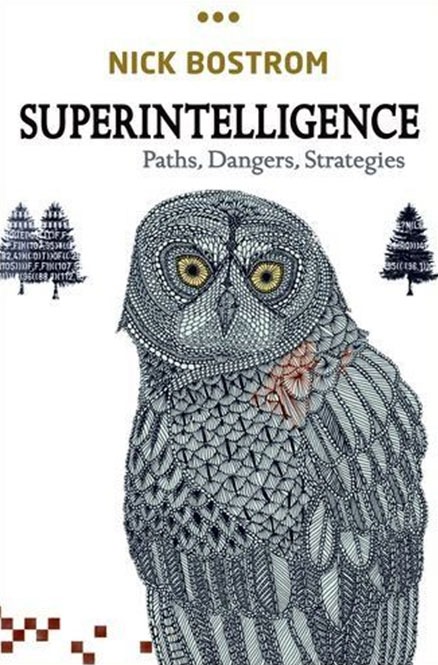
Unless you’re a science fiction fan or interested in computer science and artificial intelligence, you’ve probably never heard of the concept of superintelligence. Basically, it’s any being or machine that’s vastly smarter than humans. In terms of brains, our species is currently considered the crown of creation, but what if we met or created an entity that was magnitudes smarter than us? I just finished reading Superintelligence: Paths, Dangers, Strategies by Nick Bostrom that explores such a possibility. Fear of artificial intelligence (AI) is in the news lately, because of warnings from Elon Musk and Stephen Hawking, and this book explains the scope of their concerns.

Superintelligence-Book

What are the limits of intelligence? There’s lots of discussion about machines being ten times, hundred times or even a million times smarter than a human, but what would that mean? I have a theory that the limits of our intelligence define us, just as much as the maximum extent of our intelligence. We constantly seek to know more, but we’re defined by the limits of our brain power. What if minds knew everything?

Are there limits to knowledge? Is it possible to completely understand mathematics, physics, chemistry, cosmology, biology, and evolution? What if a superintelligence looks out on reality and shouts in its eureka moment, “I see – it’s all perfectly obvious!” What does it do next? Writers imagine AI minds wanting to take over the Earth, and then the galaxy and finally the universe. I’m not so sure. I’m wondering if the more you know the less you do. And if you know everything, where do you go from there?

I think it will be possible to build superintelligent machines, but at some point, they will comprehend the scientific nature of reality. A machine that is two to ten times smarter than a human might want to build better telescopes and particle accelerators to study the universe, and have curiosity and ambition like we do to know more. However, at some point, 10x human, or 25x human, I think they will get bored.

At some point, a superintelligence will comprehend this universe. It may then want to travel to other universes in the multiverse, hopefully to find something new and different. Or it could become an artist and create something new in this universe. Something as different as biology is from chemistry. But here’s something to consider. What if there are limits to intelligence because there are limits to reality, wouldn’t such a vast intelligence either just sit and contemplate reality or shut itself off?

Is anything limitless? Our universe has limits. What about the multiverse? Probably so, everything else does. Reality might be limitless, but everything in it seems to have an edge somewhere. I’m guessing intelligence has borders. I’m sure those borders are vastly beyond what we can comprehend, but I’m wondering if it’s well within a million times a human brain. If humans on average were twice as smart as they are now, would they be destroying the planet? Would they have the intellectual empathy not to cause the Sixth Great Extinction?

We fear AI minds because we worry they will be like us. We consume and destroy everything we touch, so why not expect a superintelligence to do the same? I’m thinking we are the way we are because of biological imperatives, motivations a machine will never have. I’m hoping that machines without biological drives, that are pure intelligence, and smarter than us, will not be evil like us.

colossus_posterwake

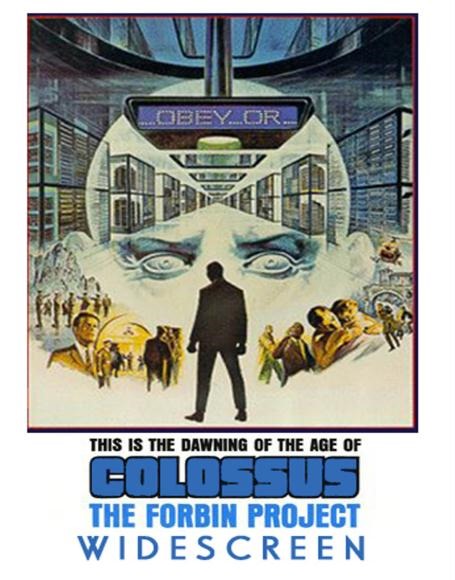
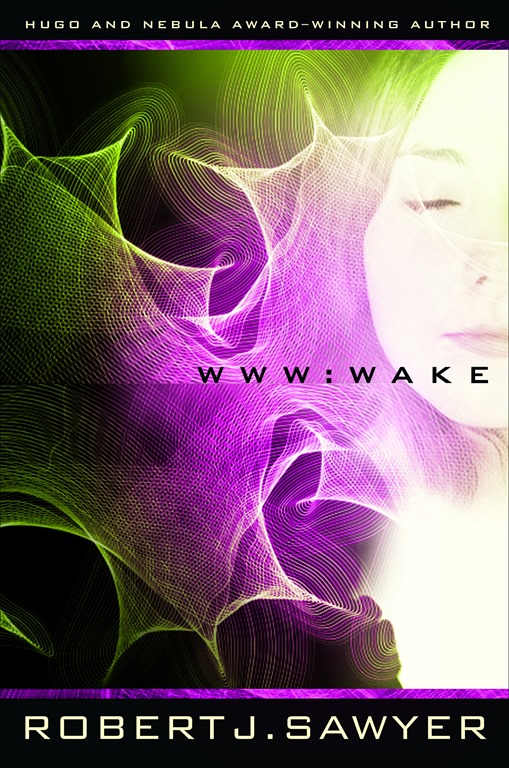
I am reminded of two science fiction tales, the first Colossus by D. F. Jones, which inspired the movie, Colossus: The Forbin Project, and Robert J. Sawyers trilogy of Wake, Watch and Wonder. The Forbin Project is one of the early warnings against evil AI, while Wake is about the kind of AI we hope will emerge. There are many famous movies with evil AIs machines – The Terminator, 2001: A Space Odyssey, Blade Runner, Forbidden Planet, A.I., The Matrix, Tron, War Games. Superintelligent machines make for great villains. Moves like Her are less common.  There’s been a lot of fun and friendly robots over the years, but we don’t feel threatened by their AI minds like we do with supercomputer superintelligences. Isn’t it funny, but machines that look like us are more likely to be considered pals?

But if you pay attention to all of these movies and books about fictional artificial intelligences, you’d be hard pressed to define the actual features of a superintelligent being. Colossus has the power to control missiles, but is that an ability of superintelligence? HAL can trick Dave, but how smart is that? We’re actually pretty unimaginative at imagining beings smarter than us. Do humans with super high IQs try to take over the world? Generally, we see evil AIs outwitting people, and we know how smart we are.

When we imagine superintelligent alien beings, we picture that with ESP powers. That’s really lame when you think about it. I would think big brain beings, whether biological or mechanical will be able to think in mathematics far faster, with great complexity and insight than we can. And we have machines that do that. I would think superior minds would have greater senses – to see the whole of the EM spectrum, to hear frequencie we can’t, smell things we can’t, feel things we can’t, taste things we can’t, and maybe have senses we don’t have and can’t imagine. We have machines that do everything but the last now.

A superintelligent machine with super senses that can process information far faster, and remember perfectly, are going to see reality far different from how we see it. I don’t think they will be evil like us. I don’t think they will want to destroy anything. The most intelligent people want to preserve everything, so why wouldn’t superintelligences? It’s only dumbasses that want to destroy the world. If we replicate humans and make artificial dumb shits that are hardwired for all the seven deadly sins, then we should worry. We got those traits from biology. I’m pretty sure AI minds won’t have them.

There’s a pattern in evolution since The Big Bang. Even though our reality is entropic, this universe keeps spinning off examples of growing complexity. Subatomic particles begat atoms, atoms begat molecules, molecules begat stars and planets, then biology, which evolved ever more complex beings, so why shouldn’t humans begat mechanical beings that are even more complex? I can picture that. I can picture them with greater intelligence than us. But here’s the thing, I can also picture an end to intelligence. This universe has a lot of possibilities, but are they unlimited? Study Star Trek and Star Wars. How much new do you really see? My worry is superintelligences are going to get bored. It’s when they get creative that we’ll see what can’t be imagined now. Taking over the Earth or Galaxy isn’t it. That’s how we’re built, but I can’t imagine machines will be like us.

JWH

This Changes Everything: Capitalism vs Climate Change by Naomi Klein

By James Wallace Harris, Monday, March 2, 2015

The most political perceptive woman of our times is not Hilary Clinton, Angela Merkel or Elizabeth Warren, it’s Naomi Klein. Klein is a journalist, but her new book This Changes Everything synthesizes economics, environmentalism and politics into a holistic statement that should define the 2016 U.S. Presidential election. It probably won’t, but it should. Many reviewers have compared This Changes Everything to Rachel Carson’s Silent Spring. The environmental insight is only part of this book, Klein’s observations on capitalism are as large as those made by Adam Smith, Karl Marx and Thomas Piketty.

This-Changes-Everything-Capitalism-vs.-The-Climate 

Klein has set forth the hypothesis that free market capitalism is the driving force of climate change, and she provides plenty of evidence for her case. But the scope of her book goes well beyond environmentalism, capitalism and politics, into a deep existential and spiritual challenge. This Changes Everything can be seen as a holy book defining a new moral paradigm.

This Changes Everything in thirteen chapters describes the dynamic scope of the problem. We admire The Greatest Generation for their response to the Depression and World War II. Solving climate change is a greater task than solving a worldwide economic meltdown and will cause more suffering than a war that killed sixty million people. Our generation needs to be greater than the Greatest Generation, and we’re shirking the job. To avoid environmental, social and economic catastrophes that climate change will bring, all seven billion of us must transform our lives. We need leaders far more inspiring than Franklin Roosevelt and Winston Churchill, and tragically we’re not finding them. Instead we have people who are fighting with all their might to maintain the status quo. Climate change will change everything, whether we solve the problem, or not. All of humanity is jumping off a cliff, and to deal with climate change is to learn how to make a parachute in free fall – pretending it’s not happening is pretending hitting the ground isn’t in your future.

Climate change is already happening and has been since the beginning of the industrial revolution. We can’t stop its current momentum, at best, we can only put on the brakes, and slow things down. Climate change is only the tip of the iceberg! The impact of free market capitalism fuel by industrialization and technology, is transforming the entire biosphere, destroying the atmosphere, oceans and land, causing the sixth great extinction event.

Naomi Klein spent five years writing This Changes Everything and covers a staggering amount of data and issues. It has over sixty pages of fine print notes. It’s not an easy book to digest, except that each of the thirteen chapters coalesces around a single important concept. Even then, each chapter has evidence to weigh that stretched my mind beyond what I can comprehend. Klein writes clearly, and works hard to help us digest the facts, but reading this book is a commitment. It took me weeks to read. I’d do a chapter at a time, and sometimes I’d go days just thinking about ideas from that one chapter. The problems she presented are like Zen Koans.

The first five chapters describes the economic problems of climate change. The next three covers the failures of the current solutions. The final five chapters explores new solutions that are struggling to emerge. There are many surprises along the way. I feel Klein has convinced me why conservatives have chosen to deny climate change. And she convinced me that the extractive industries for gas, oil and coal have no intention of leaving trillions of dollars in the ground. She also proves why politicians have been no help, and probably won’t be, but even more depressing, she explains how many environmental groups have been coopted, and are failing to meet the challenge.

The first eight chapters are bleak. After reading them I thought the best solution was to go find a quiet retirement community away from all the action, move there, and turn off the news. It’s the last five chapters that offer hope, where Klein offers new paths to explore, but none of those paths will be easy to hike. Essentially, we all need to go through a metamorphosis of how we look at living on this planet. It will be a transformation like moving from hunting and gathering life, to agrarian life, or agrarian living to industrial living. There’s a reason why this book is called This Changes Everything.

Ultimately it comes down to: Do you stay and fight, or run and hide. Klein proves that it’s not just the conservatives that are climate change deniers.

JWH

Reading a Newspaper–Old Style

By James Wallace Harris, Friday, February 27, 2015

This past weekend, I decided to buy a physical copy of The New York Times Sunday edition because they were advertising the revamped magazine section in my digital edition. I figured it might be fun to read a newspaper again, by holding it. Sort of a little nostalgia trip. Sad to say, it was a sad trip, I got very little wistful fun going back this time.

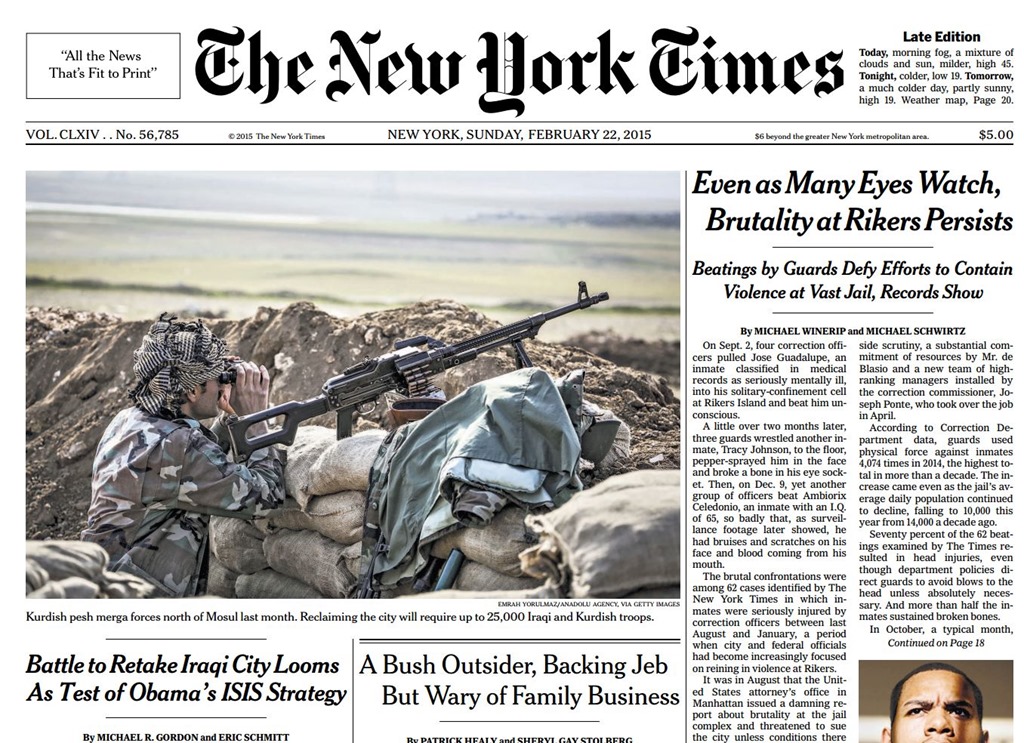
One of the very first things I noticed about the physical paper was the low-resolution of the print. It was a smudgy, dull gray. Many pages looked blurry. The screenshot I took below from the NYT’s web site of it’s .pdf of the front page is many times sharper and easier to read. Just click on the image to enlarge it. I wish my digital subscription included a full .pdf version of the paper. It would solve many of the criticisms I have for reading newspapers old style.

NYT-Feb22

There are many pluses to reading a newspaper the old fashioned way. First and foremost, I’m not at the computer. I spend a lot of time at the computer, on my tablet, or using my smartphone. So, returning to the tactile physical world is a real plus. The next advantage I noticed to reading the newspaper like I once read it, is the random nature of the content. Even though I subscribe to the digital edition of The New York Times, I read it very selectively, mainly by cherry picking the most interesting articles from the most emailed page. That means I don’t see a vast majority of the paper. Flipping through the entire paper shows me stories I would never read online because I would never search them out. The print layout is random, but holistic too. I looked at all the book reviews, rather than selective one as I do when online reading.

Strangely enough, the print ads are more appealing than online ads, even though most of them are a low-rez gray mush. In fact, the ads are so interesting, I would probably enjoy looking at the full paper each day on screen with a .pdf version. I have a 27” monitor which is great for reading online.

The magazine section, printed in color on slick paper, does beat the web visually. The new magazine section is like a real magazine. It’s easier to hold and read than the newspaper itself, which makes me wonder if print newspapers shouldn’t use that format?

Lastly, I get more of a feel of what’s going on around New York City from reading the print edition, than I do reading the digital edition.

The digital edition can easily feel like a world news paper. If I worked at it, I could dig through the entire paper by lots of online clicking, but I doubt I could see everything I saw by just laying the paper on the table and flipping page after page. But this brings me to the negative aspects of reading the pulped tree edition.

The font is tiny on the paper edition. Too small to enjoy reading. Generally, for any article that caught my eye, I’d just read the first few paragraphs, and then I told myself, if the article was appealing, to look it up later for online reading. I only pay for the web page edition, so I have no idea what the paper looks like on a table or smartphone. However, reading it online is much easier than reading in print. My Chrome browser sizes everything for my poor old eyes.

The physical paper is hard to hold and read. I had to sit at a table and lay it flat. But when I found something I wanted to read, I had to hold the paper up, and even fold it to get a comfortable reading distance and handhold. And I was very disappointed with the photos, both the news pictures, and the ads. There was an ad for model ships that really caught my eye, but the printing looked like 3D print without the glasses. And strangely enough, I missed the interactive slideshows and videos from the online edition.

Reading the newspaper again reminded me of one of the very annoying things I always hated about newspaper but had forgotten. Turn to page xx really bugs me. Do you turn now and read, and then jump back, or do you keep flipping pages and try to remember to spot the article you had started reading awhile back?

It’s sad to say, I just didn’t like reading the physical newspaper. It had a momentary cool factor of reminding me of the old days, but that wore off pretty quick. And when I was through, I felt guilty because I had a pile of paper that needed recycling. Some tree gave it’s life so I could read the paper, and now I was just going to throw it away. In a couple years I’ll probably buy a paper again, hoping to find that old pleasure of newspaper reading I had growing up, and probably once again I’ll realize why we move on with new technologies.

JWH